
North Carolina
North Carolina Nursing Home Camera Laws: The G.U.A.R.D. Act (HB 591)
Independently fact-checked against primary sources (last audited August 14, 2026). · 5 primary sources cited on this page. How we verify our legal content
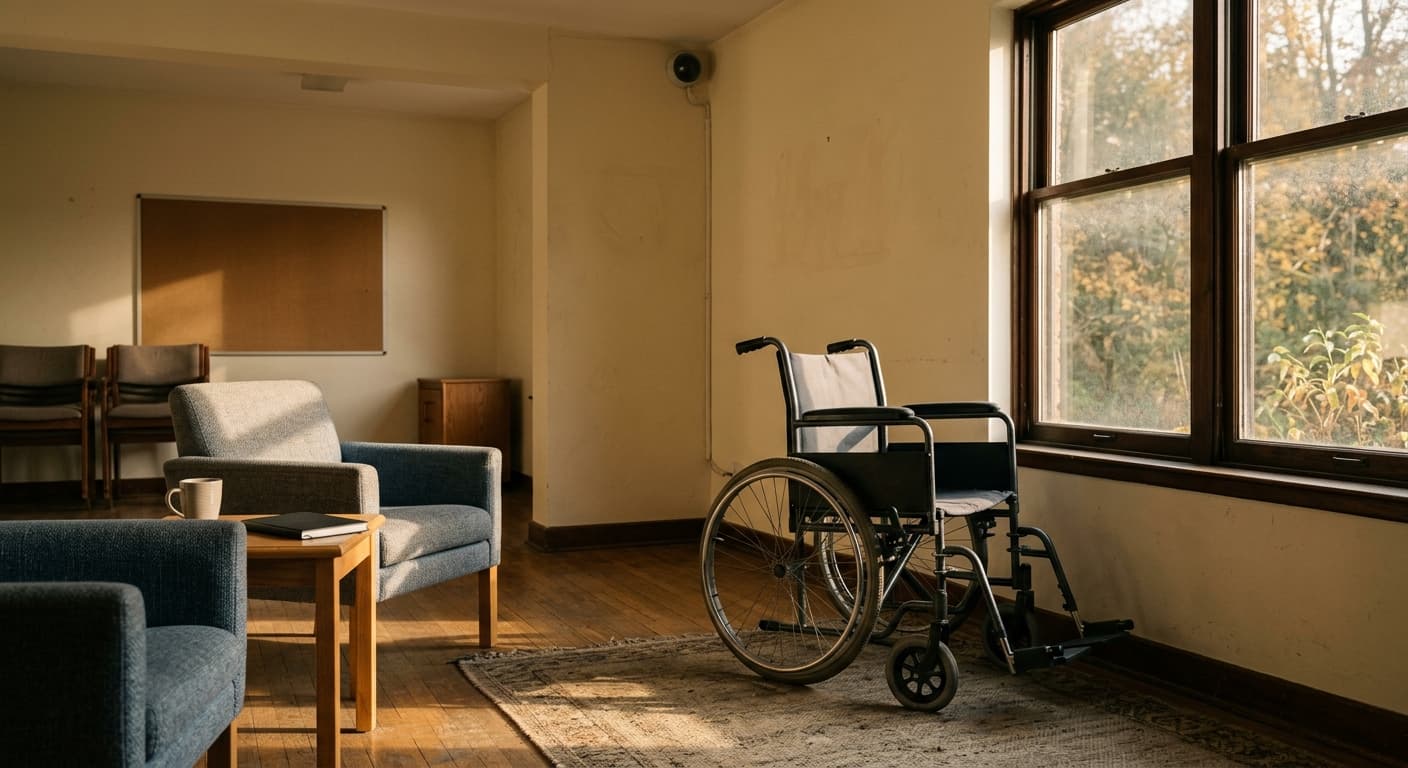
North Carolina has no law giving a nursing home or adult care home resident a right to install a monitoring camera. House Bill 591, the G.U.A.R.D. Act, would create one, but it has sat in a House committee without further action since April 2025.
Information last verified on 2026-08-14. This article has not yet been reviewed by a licensed lawyer.
This article covers North Carolina law as it stands for a nursing home or adult care home resident considering a monitoring camera: the absence of a facility-specific statute, the two general statutes that do apply (one-party consent for audio under section 15A-287, and the secret-peeping statute, section 14-202, for video), and the pending G.U.A.R.D. Act's real status and terms. It does not address North Carolina's general recording law outside a care facility in full; see North Carolina Recording Laws for that framework.
Does North Carolina Have a Nursing Home Camera Law?
No. N.C. Gen. Stat. section 131E-117, the nursing home Patients' Bill of Rights, which HB 591 would amend to add a monitoring right, contains no reference to cameras, video, surveillance, or electronic monitoring anywhere in its current text. Section 131D-4.3, which governs adult care home staffing and supervision rules, uses the word "monitoring" only to mean staff oversight of resident care needs, not video surveillance, a distinction worth noting since a keyword search alone can mislead. North Carolina's adult care home administrative rules, 10A NCAC 13G, are silent on cameras as well.
Because no statute exists, a North Carolina resident or family has no state-mandated consent form, no required notice signage, and no statutory anti-retaliation protection specific to installing a monitoring device. The decision runs on the facility's own policy, layered on the two general criminal statutes described below.
North Carolina's One-Party Consent Law
North Carolina Gen. Stat. section 15A-287 makes it a Class H felony to intercept a wire, oral, or electronic communication without the consent of at least one party to the communication, meaning a participant in a conversation, such as a resident present in their own room, may record it without every other party's separate consent. This is a materially more permissive starting point than the all-party consent states covered elsewhere in this cluster, though it does not resolve every question a shared room raises, particularly a roommate's own privacy interest in conversations the resident is not part of.
Note the limit of what that statute does. Section 15A-287 reaches communications, not images. Nothing in it authorizes covert video, and a silent camera falls outside it entirely. The video side of a nursing home camera runs through a different statute, section 14-202, covered below. For the general framework governing recorded conversations anywhere in North Carolina, not just a care facility, see North Carolina Recording Laws.

The Pending Bill: The G.U.A.R.D. Act (HB 591)
House Bill 591, officially titled "Elec. Monitoring in Nursing/Adult Care Homes" and commonly called the G.U.A.R.D. Act, was filed March 31, 2025 by a bipartisan group of sponsors led by Reps. Willis, Loftis, and Brody. It passed a first reading and was referred to committee on April 1, 2025, and its last recorded action remains a re-referral to the House Rules, Calendar, and Operations Committee that same day. No committee substitute or amendment has been filed since, and the bill has been dormant for more than 16 months as of this writing.
The bill would create parallel new statutes for nursing and combination homes (new section 131E-112.10) and adult care homes (new section 131D-7.10), and amend both facilities' residents'-rights lists to add the new right. Under it, electronic monitoring would be resident-funded and entirely voluntary; a facility could not refuse admission or discharge a resident over a monitoring request; the facility would have to provide reasonable accommodations like power access and mounting; the resident would have to post a notice on their own door stating the room is monitored; and recordings would be admissible in civil or criminal proceedings, subject to the state's Rules of Evidence. The bill sets two separate penalties: operating a facility in violation of the section is a Class A1 misdemeanor with up to a year in prison, while a person who tampers with or destroys a device without the resident's consent commits a separate Class A1 misdemeanor capped at 90 days, both carrying a 2,000-dollar fine ceiling.
The bill's own effective-date clause specified October 1, 2025. That date has already passed while HB 591 remains stuck in committee, which means the bill's own timeline is now stale even if it eventually advances; any future enactment would need a new effective date. Nothing in HB 591 is current law, and it should not be described to a reader as close to taking effect.
Practical Guidance Under the No-Statute Reality
Without an enacted statute, a North Carolina family's options run through the facility's own policy rather than a state-mandated procedure.
- Check the admission agreement and ask the facility in writing before installing anything, mirroring the notice and disclosure approach HB 591 would eventually formalize.
- One-party consent under section 15A-287 covers the audio a camera records, not the video it captures, so a disclosed camera the facility has agreed to is a very different legal position from a concealed one. Read the section 14-202 discussion below before installing anything covertly.
- Get a roommate's consent in a shared room, and disclose the camera. No electronic monitoring statute requires it, but section 14-202 makes a covertly installed imaging device trained on a room another person occupies a criminal exposure, not merely an etiquette problem.
- Understand that North Carolina's one-party consent rule protects a participant recording their own conversation, not necessarily a device that captures a private conversation between other people, such as staff or a roommate, that the resident is not part of.
Hidden Cameras: The Practical and Legal Risk
One-party consent is not a green light for a hidden camera. Section 15A-287 governs the interception of communications, so at most it speaks to the audio a camera picks up. The images are governed by a different statute, N.C. Gen. Stat. section 14-202, "Secretly peeping into room occupied by another person," and it cuts the other way.
Subsection (c) makes it a Class A1 misdemeanor to secretly peep into any room while in possession of a device that can create a photographic image and with the intent to create one. That subsection contains no sexual-purpose element. Subsection (e1) makes it a Class I felony to knowingly create an image of a person's private area, defined in subsection (b)(2) as the naked or undergarment-clad genitals, pubic area, buttocks, or female breast, without that person's consent and under circumstances in which they have a reasonable expectation of privacy. Subsection (f) reaches the surreptitious use or installation of an imaging device in a room, though unlike (c) and (e1) it applies only where the purpose is sexual arousal or gratification. Subsection (b)(3) defines "room" to include a bedroom, a rest room, a bathroom, or a shower, which describes a resident's room and its attached bath.
The exemptions in subsection (m) cover only law enforcement officers and correctional personnel. There is no exemption for a resident, a family member, or a facility. Subsection (k) separately gives a person whose image is captured in violation of the section a civil claim for actual and punitive damages plus attorneys' fees.
How section 14-202 applies to a camera a resident knowingly consents to in their own private room has not been settled by a North Carolina appellate court, and this article does not claim otherwise. The concrete exposure is the shared room: a concealed camera covering space a roommate occupies, particularly where that roommate is undressed, bathed, or receiving personal care, can put whoever installed it inside subsection (c) and potentially subsection (e1), regardless of the family's motive for placing it.

There is also a practical risk separate from the legal one: a facility that discovers an undisclosed camera can treat it as a violation of the admission agreement, and North Carolina has no statute today barring a facility from responding with discharge or non-renewal the way HB 591 would if it were enacted. Families should weigh the section 14-202 exposure and the facility-relations risk before relying on a hidden device.
Using Camera Footage as Evidence of Abuse or Neglect
Camera footage that appears to show abuse or neglect can support a report to the North Carolina Long-Term Care Ombudsman Program or the Department of Health and Human Services, and it can support a civil claim. Footage generally works alongside the resident's medical records, staffing records, and care plan rather than establishing a claim on its own. For a broader look at how a nursing home abuse or neglect claim works, see Nursing Home Abuse & Neglect.
Harmed by a product or exposure? Speak with an attorney about your options
If you or a loved one may have been harmed, you can speak with an attorney about your legal options at no cost. Whether you have a claim depends on the specific facts. This is attorney advertising, not a guarantee that you qualify or of any particular outcome.
North Carolina's Long-Term Care Ombudsman Program
The North Carolina Long-Term Care Ombudsman Program, with a State Office and 16 regional offices housed in Area Agencies on Aging, assists residents of long-term care facilities with rights and grievance resolution. It is the state's established channel for residents and families to raise care concerns, including anything a camera reveals, reachable at 1-800-662-7030.

Related Resources
- Nursing Home Camera Laws by State covers which states have an enacted electronic monitoring statute and how North Carolina compares.
- North Carolina Recording Laws covers the state's general one-party consent framework for conversations outside a nursing facility.
- Nursing Home Abuse & Neglect covers how an abuse or neglect claim works once evidence, including camera footage, is in hand.
Last updated: 2026-08-14.
Frequently Asked Questions
Is it legal to put a camera in a North Carolina nursing home room?
North Carolina has no electronic monitoring statute for care facilities, so the question runs on the facility’s own policy plus two general criminal statutes. Section 15A-287, the one-party consent rule, covers the audio. Section 14-202 covers the images, and it makes secretly peeping into a room while holding an imaging device, with intent to create an image, a Class A1 misdemeanor. A disclosed camera the facility and any roommate have agreed to is a very different position from a concealed one.
What is the G.U.A.R.D. Act?
The G.U.A.R.D. Act is House Bill 591, North Carolina's pending bill that would create a right for nursing and adult care home residents to install a monitoring device, with roommate protections, mandatory door signage, and evidentiary admissibility rules. It has not passed and is not current law.
What is the current status of HB 591?
The bill was filed March 31, 2025 and has been sitting in the House Rules, Calendar, and Operations Committee since a referral on April 1, 2025, with no further recorded action for more than 16 months as of this writing.
Does the G.U.A.R.D. Act cover assisted living or adult care homes?
Yes. HB 591 would cover both nursing and combination homes and adult care homes, through two parallel new statutes, unlike some other states’ bills that are limited to nursing facilities only.
Is North Carolina one-party or all-party consent for a nursing home camera?
North Carolina is a one-party consent state under N.C. Gen. Stat. section 15A-287. A resident present in their own room may generally record their own interactions without every other party’s separate consent, though a roommate’s own private conversations raise a separate, less settled question. That rule governs communications only. It says nothing about video, which falls under section 14-202, the secret-peeping statute.
Is a hidden camera illegal in a North Carolina nursing home?
There is no statute banning cameras in care facilities, but a concealed one can run into N.C. Gen. Stat. section 14-202. Subsection (c) makes secretly peeping into a room while holding an imaging device, with intent to create an image, a Class A1 misdemeanor with no sexual-purpose element, and subsection (e1) makes knowingly imaging a person’s private area where they have a reasonable expectation of privacy a Class I felony. The exemptions in subsection (m) cover only law enforcement and correctional staff. The risk is sharpest in a shared room, where the camera covers a roommate who never agreed to it.
Where do I report suspected abuse if I see something on a camera in North Carolina?
Contact the North Carolina Long-Term Care Ombudsman Program at 1-800-662-7030, or the Department of Health and Human Services. Footage can support a report or a civil claim, though it is typically reviewed alongside medical and staffing records.
Updates
Corrected the hidden-camera analysis: North Carolina’s one-party consent statute governs audio only, and the page now explains the secret-peeping statute, N.C. Gen. Stat. § 14-202, that actually applies to a concealed camera in a shared resident room.
Independently fact-checked against the cited primary sources
The Law Behind This Article
This article rests on the statutory provisions below, held in our own legal record and retrieved from the official source. Tap a section to read the operative text.
North Carolina General Statutes, Chapter 15A: Criminal Procedure Act.
§ 15A-287Interception and disclosure of wire, oral, or electronic communications prohibitedIn forcecited in 18 of our articles
(a) Except as otherwise specifically provided in this Article, a person is guilty of a Class H felony if, without the consent of at least one party to the communication, the person: (1) Willfully intercepts, endeavors to intercept, or procures any other person to intercept or endeavor to intercept, any wire, oral, or electronic communication. (2) Willfully uses, endeavors to use, or procures any other person to use or endeavor to use any electronic, mechanical, or other device to intercept any oral communication when: a. The device is affixed to, or otherwise transmits a signal through, a wire, cable, or other like connection used in wire communications; or b. The device transmits communications by radio, or interferes with the transmission of such communications.
Official text (excerpt) · last checked 2026-07-29 · Read the full text in our law library · Verify at ncleg.gov
Cited in 12 court opinions in our collectionLatest citing opinion in our collection: 2026
In the courts (editorial summary, independently checked):North Carolina courts apply Section 15A-287 to private recording. Kroh v. Kroh (2002) held it reaches one spouse's nonconsensual audio recording of the other in the family home, not video without sound, and adopted vicarious consent by a custodial parent. State v. McGriff (2002) held interception is not willful absent a bad purpose.
Opinions citing this section in our collection:
- State v. McGriff (Court of Appeals of North Carolina 2002, 151 N.C. App. 631)✓A neighbor's cordless phone picked up a call in which a girl said McGriff had tried to force oral sex on her, and she listened about an hour; the court held listening out of concern for a minor was not willful interception under Section 15A-287(a)(1), so the evidence came in.
- Wright v. TOWN OF ZEBULON (Court of Appeals of North Carolina 2010, 202 N.C. App. 540)✓A police chief hid a transmitter under a sergeant's patrol car seat to test whether he tipped off drug dealers; the court affirmed summary judgment on his Section 15A-287(a)(1) claim, finding the public safety purpose meant the interception was not willful.
- Kroh v. Kroh (Court of Appeals of North Carolina 2002, 152 N.C. App. 347)“…rs to intercept, . . . any . . . oral . . . communication.” G.S. § 15A-287(a)(l). An “oral communication” includes…”
Identified automatically from the court opinions citing this section — not a ranking of which case controls.
Also relied on in: North Carolina Smart Glasses Recording Laws 2026, North Carolina Video Recording Laws: Public, Private, and Voyeurism Rules, North Carolina Recording Laws (2026): One-Party Consent Rules
North Carolina General Statutes, Chapter 131E: Health Care Facilities and Services.
§ 131E-117Declaration of patient's rightsIn force
All facilities shall treat their patients in accordance with the provisions of this Part. Every patient shall have the following rights: (1) To be treated with consideration, respect, and full recognition of personal dignity and individuality; (2) To receive care, treatment and services which are adequate, appropriate, and in compliance with relevant federal and State statutes and rules; (3) To receive at the time of admission and during the stay, a written statement of the services provided by the facility, including those required to be offered on an as-needed basis, and of related charges. Charges for services not covered under Medicare or Medicaid shall be specified. Upon receiving this statement, the patient shall sign a written receipt which must be on file in the facility and available for inspection; (4) To have on file in the patient's record a written or verbal order of the attending physician containing any information as the attending physician deems appropriate or necessary, together with the proposed schedule of medical treatment. The patient shall give prior informed consent to participation in experimental research.
Official text (excerpt) · last checked 2026-07-29 · Read the full text in our law library · Verify at ncleg.gov
Cited in 2 court opinions in our collectionLatest citing opinion in our collection: 1992
Opinions citing this section in our collection:
- House v. Hillhaven, Inc. (Court of Appeals of North Carolina 1992, 105 N.C. App. 191)“…the provisions of the Nursing Home Patients Bill of Rights, G.S. § 131E-117 (1988 and Cum. Supp. 1990), and state l…”
- Makas v. Hillhaven, Inc. (District Court, M.D. North Carolina 1984, 589 F. Supp. 736)“…ard of care other than the declaration of patients’ rights, N.C.Gen. Stat. § 131E-117, of the Nursing Home Patients’ Bill of…”
Identified automatically from the court opinions citing this section — not a ranking of which case controls.
Search our full record of US law — 2.1 million sections, every state + federal →
Sources and References
- N.C. Gen. Stat. § 15A-287, interception and disclosure of communications, one-party consent(ncleg.gov).gov
- N.C. Gen. Stat. § 131E-117, nursing home patients’ bill of rights(ncleg.gov).gov
- North Carolina House Bill 591 (2025), the G.U.A.R.D. Act, official bill status(ncleg.gov).gov
- North Carolina House Bill 591 (2025), full bill text(ncleg.gov).gov
- North Carolina Long-Term Care Ombudsman Program, Department of Health and Human Services(ncdhhs.gov).gov
- N.C. Gen. Stat. § 14-202, secretly peeping into a room occupied by another person(ncleg.gov)