
Missouri
Missouri Nursing Home Camera Laws: RSMo §§ 198.610-198.632 Electronic Monitoring
Independently fact-checked against primary sources (last audited August 14, 2026). · 5 primary sources cited on this page. How we verify our legal content
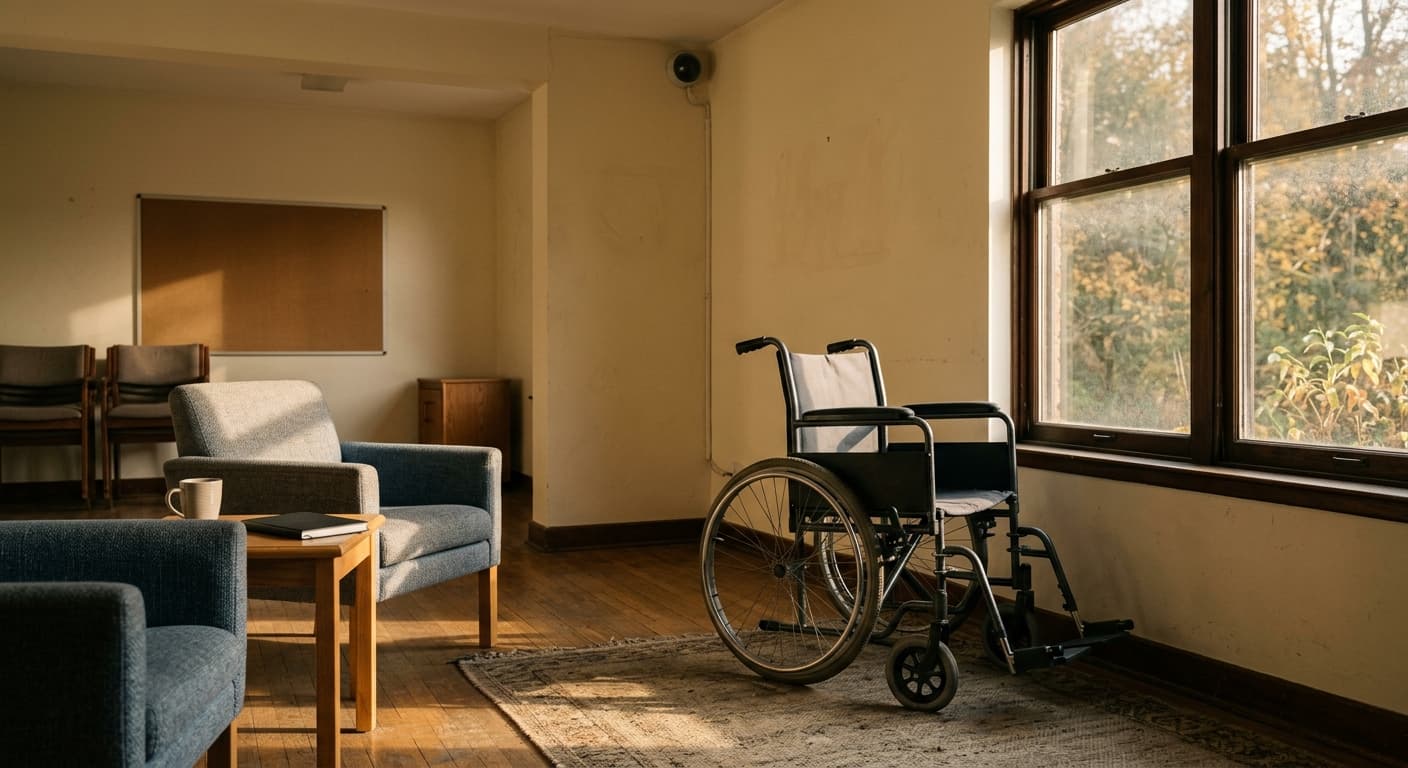
Missouri gives a resident of a nursing home, assisted living facility, intermediate care facility, or residential care facility the right to install a video or audio monitoring device in the resident's own room, under the Authorized Electronic Monitoring in Long-Term Care Facilities Act, RSMo Sections 198.610 through 198.632. Who may make that request is fixed by statute: under Section 198.618, a resident who still has capacity is the only person who can request monitoring, even if a family member holds a power of attorney, and a guardian or legal representative may act only after a court or a physician has found the resident to lack capacity.
Information last verified on 2026-08-14. This article has not yet been reviewed by a licensed lawyer.
This article covers Missouri's Authorized Electronic Monitoring in Long-Term Care Facilities Act, RSMo Sections 198.610 through 198.632, effective since August 28, 2020. It does not cover Missouri's general one-party consent recording law in full, which has its own dedicated page linked below.
What Missouri's Electronic Monitoring Law Grants
Section 198.622 requires a facility to permit a resident to monitor the resident's own room with an electronic monitoring device, and the request itself is submitted on the department-prescribed form under Section 198.620. Section 198.618 controls who is allowed to make that request, and the hierarchy is strict.
If the resident has capacity, and has not been judicially declared to lack it, Section 198.618 provides that only the resident may request authorized electronic monitoring, "notwithstanding the terms of any durable power of attorney, general power of attorney, or similar instrument." Holding a power of attorney does not let a family member make the request over a resident who is still competent to make it.
If a court has declared the resident to lack the capacity required for taking an action such as requesting electronic monitoring, only the resident's guardian may request it.
If a physician has determined the resident lacks capacity to request monitoring but no court has declared it, only the resident's legal representative may request it.
Monitoring is never compulsory; under Section 198.622 it is conducted only at the request of the resident or the resident's guardian or legal representative. The institution must make reasonable physical accommodations, including a secure mounting place and access to power, and monitoring must be conducted in plain view using a fixed-position device, not hidden.
Does Missouri's Law Cover Assisted Living?
Yes, and broadly. Section 198.610 defines "facility" or "long-term care facility" to mean "any residential care facility, assisted living facility, intermediate care facility, or skilled nursing facility." That single definition covers the full spectrum of Missouri long-term care licensure categories, so an assisted living resident has exactly the same statutory right as a nursing home resident, not a scaled-down version of it.
Roommate Consent and the Request Form
Before a device goes up, Section 198.616 requires each facility to use an electronic monitoring device acknowledgment form developed by the department and adopted by regulation. That form must be completed and signed by or on behalf of the resident prior to the installation of, or any use of, an electronic monitoring device in the facility. Among the things it has to state is that if the facility refuses to permit the electronic monitoring, or fails to make reasonable physical accommodations for it, the person should contact the department. That is the reader's escalation path when a facility stalls.
Under Section 198.620, the resident, guardian, or legal representative must then submit a department-prescribed request form. That form must release the facility from privacy-related civil liability, and it lets the resident choose whether the camera stays unobstructed or is blocked during specified circumstances "to protect the dignity of the resident." Separately, any other resident in the room, or their guardian or legal representative, must consent on a distinct department-prescribed roommate-consent form. A consenting roommate may condition that consent on the camera being pointed away from them, and on limiting or prohibiting audio monitoring.

Monitoring cannot begin until all forms are completed and returned, and devices must be fixed-position only. If a new, non-consenting resident moves into the room, monitoring must cease until the new resident consents. Missouri's statute does not spell out a separate formal withdrawal procedure beyond that new-roommate-triggers-cessation rule.
Notice and Signage
Each facility must post a notice at its entrance stating that the rooms of some residents may be monitored electronically by, or on behalf of, the residents, and that the monitoring is not necessarily open and obvious, per Section 198.628. The department prescribes the exact format and content of that notice by rule.
Who Pays for the Device
The resident, guardian, or legal representative pays all costs except electricity, including installation and maintenance. The facility is not required to provide internet service. Monitoring must be conducted in plain view, and the facility cannot refuse to admit an individual, or remove a resident, because of a request to conduct authorized electronic monitoring.
Tampering and Unauthorized Placement Penalties
Section 198.632 sets out two distinct offenses. First, intentionally hampering, obstructing, tampering with, or destroying a lawfully installed device, or destroying or corrupting the data it recorded, is a class B misdemeanor, with consent from the resident, guardian, or legal representative as an affirmative defense. Second, a person other than a resident who places a device in a resident's room without authorization, or who consents to or acquiesces in such unauthorized placement, commits a class B misdemeanor if the conduct continues after receiving written notice to stop.
Using Recordings as Evidence of Abuse or Neglect
Footage from an authorized monitoring device in a Missouri long-term care facility can support a report to the facility, the Department of Health and Senior Services, or Missouri's Long-Term Care Ombudsman program, and it can support a civil claim if it shows signs of abuse or neglect. Because a resident's consent form allows the resident to keep the camera unobstructed specifically to protect their own dignity, footage that a family reviews is captured on the terms the resident or their representative set going in.

Harmed by a product or exposure? Speak with an attorney about your options
If you or a loved one may have been harmed, you can speak with an attorney about your legal options at no cost. Whether you have a claim depends on the specific facts. This is attorney advertising, not a guarantee that you qualify or of any particular outcome.
Camera vs. Microphone: Missouri's Consent Law
Missouri is a one-party consent state for recording generally: see Missouri Recording Laws for the full framework. Because only one participant needs to consent, a resident present in their own room who consents to their own device generally satisfies the general consent rule for their own conversations. A device that also picks up a conversation the resident is not part of, such as two staff members talking, is the scenario where the general one-party consent rule still has to be satisfied independently of the Act's roommate-consent process, since staff are not "roommates" the Act's consent mechanics reach.
Installing a Camera in a Missouri Long-Term Care Facility
- Confirm the facility type is covered. Residential care, assisted living, intermediate care, and skilled nursing facilities are all included.
- Confirm who is allowed to make the request. Under Section 198.618, a resident who has capacity must make the request personally, even if a relative holds a power of attorney. A guardian may request only after a judicial declaration of incapacity, and a legal representative only after a physician has determined the resident lacks capacity.
- Complete the acknowledgment form. Section 198.616 requires the department-developed acknowledgment form to be completed and signed by or on behalf of the resident before the device is installed or used at all.
- Submit the department-prescribed request form under Section 198.620, including the resident's dignity-related camera-blocking election if desired.
- Obtain roommate consent on the separate prescribed form, with any conditions on camera direction or audio.
- Wait for all forms to be filed with the facility administrator before installing.
- Budget for the ongoing cost. The resident or family covers everything except electricity.
If You Suspect Abuse or Neglect
Missouri residents and families can report suspected abuse or neglect to the Department of Health and Senior Services or to Missouri's Long-Term Care Ombudsman program. The federal Long-Term Care Ombudsman program, created under the Older Americans Act and operating in every state, investigates complaints about action or inaction that may adversely affect a resident's health, safety, welfare, or rights, and covers both assisted living and nursing home residents.

Related Resources
- Nursing Home Camera Laws by State covers the national picture across all 18 statute states.
- Missouri Recording Laws covers Missouri's general one-party consent rule for audio recording.
- Nursing Home Abuse & Neglect covers how an abuse or neglect claim works once evidence, including camera footage, is in hand.
Last updated: 2026-08-14.
Frequently Asked Questions
Can you install a camera in a Missouri nursing home room?
Yes. RSMo Sections 198.610 through 198.632 give a resident the right to install a video or audio monitoring device in the resident's own room, in force since August 28, 2020. Section 198.618 controls who makes the request: a resident who has capacity must make it personally, notwithstanding any power of attorney, while a guardian may request only after a judicial declaration of incapacity and a legal representative only after a physician determines the resident lacks capacity.
Can a family member with power of attorney request a camera for a Missouri nursing home resident?
Not if the resident still has capacity. Section 198.618 says that where a resident has capacity and has not been judicially declared to lack it, only the resident may request authorized electronic monitoring, notwithstanding the terms of any durable power of attorney, general power of attorney, or similar instrument. A guardian may request only after a court declares the resident to lack capacity, and a legal representative only after a physician determines the resident lacks capacity.
What form has to be signed before a camera goes up in a Missouri facility?
Section 198.616 requires each facility to use an electronic monitoring device acknowledgment form developed by the department, and it must be completed and signed by or on behalf of the resident before the device is installed or used at all. The form also states that if the facility refuses to permit the monitoring or fails to make reasonable physical accommodations, the person should contact the department.
Does Missouri's monitoring law cover assisted living facilities?
Yes. Section 198.610 defines a covered facility broadly as any residential care facility, assisted living facility, intermediate care facility, or skilled nursing facility, so an assisted living resident has the same right as a nursing home resident.
Does a roommate have to consent to a camera in a shared Missouri facility room?
Yes, in writing, on a department-prescribed roommate consent form under Section 198.620. The roommate can condition consent on the camera pointing away from them and can limit or prohibit audio monitoring specifically.
Who pays for a nursing home camera in Missouri?
The resident, guardian, or legal representative pays all costs except electricity, including the device, installation, and maintenance, under Section 198.622. The facility must make reasonable physical accommodations, such as a secure mounting place and access to power.
Is it a crime to tamper with a Missouri nursing home camera?
Yes. Section 198.632 makes intentionally hampering, obstructing, tampering with, or destroying a lawfully installed device, or destroying or corrupting its data, a class B misdemeanor. Consent from the resident, guardian, or legal representative is a defense.
Can someone else install a hidden camera in a Missouri nursing home resident's room without authorization?
That is a separate offense under Section 198.632. A person other than the resident who places a device without authorization, or consents to an unauthorized placement, commits a class B misdemeanor if the conduct continues after written notice to stop.
Updates
Corrected who may request electronic monitoring under RSMo 198.618 (a resident with capacity must request it personally, notwithstanding any power of attorney), added the RSMo 198.616 acknowledgment form that must be signed before any device is installed or used, and re-cited the request procedure to RSMo 198.620.
Independently fact-checked against the cited primary sources
The Law Behind This Article
This article rests on the statutory provisions below, held in our own legal record and retrieved from the official source. Tap a section to read the operative text.
Revised Statutes of Missouri, Title XII (PUBLIC HEALTH AND WELFARE), Chapter 198
§ 198.612Placement of electronic monitoring device — immunity from liability, when — release of recordings, when — rulemaking authority.In forcecited in 2 of our articles
1. Residents of long-term care facilities in this state shall have the right to place in the resident's room an authorized electronic monitoring device that is owned and operated by the resident or provided by the resident's guardian or legal representative. 2. No facility shall be civilly or criminally liable for activity or action arising out of the use by any resident or any resident's guardian or legal representative of any electronic monitoring device, including the facility's inadvertent or intentional disclosure of a recording made by a resident, or by a person who consents on behalf of the resident, for any purpose not authorized under sections 198.610 to 198.632. 3. No facility shall be civilly or criminally liable for a violation of the Health Insurance Portability and Accountability Act (HIPAA) or any resident's right to privacy arising out of any electronic monitoring conducted under sections 198.610 to 198.632. 4. Except for cases of abuse and neglect, no person shall release any recording made under sections 198.610 to 198.632 without the written permission of the resident or the resident's guardian or legal representative and the long-term care facility.
Official text (excerpt) · last checked 2026-08-31 · Read the full text in our law library · Verify at revisor.mo.gov
§ 198.622Facility to permit monitoring, requirements.In forcecited in 2 of our articles
1. A facility shall permit a resident or the resident's guardian or legal representative to monitor the room of the resident through the use of electronic monitoring devices. 2. The facility shall require a resident who conducts authorized electronic monitoring, or the resident's guardian or legal representative, to post and maintain a conspicuous notice at the entrance to the resident's room. The notice shall state that the room is being monitored by an electronic monitoring device. 3. Authorized electronic monitoring conducted under sections 198.610 to 198.632 shall not be compulsory and shall be conducted only at the request of the resident or the resident's guardian or legal representative. 4. A facility shall not refuse to admit an individual to residency in the facility and shall not remove a resident from the facility because of a request to conduct authorized electronic monitoring. A facility shall not remove a resident from the facility because unauthorized electronic monitoring is being conducted by or on behalf of a resident.
Official text (excerpt) · last checked 2026-07-31 · Read the full text in our law library · Verify at revisor.mo.gov
§ 198.620Request procedure — form, contents — consent requirements — recordkeeping requirements — access to footage, when.In force
1. A resident or the guardian or legal representative of a resident who wishes to conduct authorized electronic monitoring shall make the request to the facility on an electronic monitoring request form prescribed by the department and provided to the resident by the facility. 2. The form shall require the resident or the resident's guardian or legal representative to: (1) Release the facility from any civil liability for a violation of the resident's privacy rights in connection with the use of the electronic monitoring device; (2) Choose whether the camera will always be unobstructed or whether the camera should be obstructed in specified circumstances to protect the dignity of the resident, if the electronic monitoring device is a video surveillance camera; and (3) Obtain the consent of other residents residing in the room, using a form prescribed for such purpose by the department.
Official text (excerpt) · last checked 2026-07-31 · Read the full text in our law library · Verify at revisor.mo.gov
§ 198.632Unauthorized acts, electronic monitoring devices and data — penalties — affirmative defense, when.In force
1. A person who intentionally hampers, obstructs, tampers with, or destroys an electronic monitoring device installed in a resident's room in accordance with sections 198.610 to 198.632 or who destroys or corrupts any data collected by the device is guilty of a class B misdemeanor. 2. Evidence that the person had the consent of the resident or the resident's guardian or legal representative to engage in the conduct described in subsection 1 of this section shall be an affirmative defense to any prosecution brought under the provisions of subsection 1 of this section. 3. A person other than a resident of the facility who, without authorization, places an electronic monitoring device in the room of a resident or who consents to or acquiesces in the unauthorized placement of the device in the room of a resident is guilty of a class B misdemeanor if the person continues the conduct after a written warning to cease and desist from that conduct.
Official text (excerpt) · last checked 2026-07-31 · Read the full text in our law library · Verify at revisor.mo.gov
§ 198.610Citation of law — definitions.In forcecited in 3 of our articles
1. The provisions of sections 198.610 to 198.632 shall be known and may be cited as the "Authorized Electronic Monitoring in Long-Term Care Facilities Act". 2. For purposes of sections 198.610 to 198.632, the following terms shall mean: (1) "Authorized electronic monitoring", the placement and use of an electronic monitoring device by a resident in his or her room in accordance with the provisions of sections 198.610 to 198.632; (2) "Department", the department of health and senior services; (3) "Electronic monitoring device", a surveillance instrument capable of recording or transmitting audio or video footage of any activity occurring in a resident's room; (4) "Facility" or "long-term care facility", any residential care facility, assisted living facility, intermediate care facility, or skilled nursing facility, as such terms are defined under section 198.006; (5) "Guardian", the same meaning as defined under section 475.010; (6) "Legal representative", a person authorized under a durable power of attorney that complies with sections 404.700 to 404.737 to act on behalf of a resident of a facility; (7) "Resident", a person residing in a facility.
Official text (excerpt) · last checked 2026-07-31 · Read the full text in our law library · Verify at revisor.mo.gov
United States Code Title 18
§ 2511Interception and disclosure of wire, oral, or electronic communications prohibitedIn forcecited in 422 of our articles
Except as otherwise specifically provided in this chapter any person who— intentionally intercepts, endeavors to intercept, or procures any other person to intercept or endeavor to intercept, any wire, oral, or electronic communication; intentionally uses, endeavors to use, or procures any other person to use or endeavor to use any electronic, mechanical, or other device to intercept any oral communication when— such device is affixed to, or otherwise transmits a signal through, a wire, cable, or other like connection used in wire communication; or such device transmits communications by radio, or interferes with the transmission of such communication; or such person knows, or has reason to know, that such device or any component thereof has been sent through the mail or transported in interstate or foreign commerce; or such use or endeavor to use (A) takes place on the premises of any business or other commercial establishment the operations of which affect interstate or foreign commerce; or (B) obtains or is for the purpose of obtaining information relating to the operations of any business or other commercial establishment the operations of which affect interstate or foreign…
Official text (excerpt) · last checked 2026-08-28 · Read the full text in our law library · Verify at uscode.house.gov
Cited in 2,045 court opinions in our collectionLatest citing opinion in our collection: 2026
In the courts (editorial summary, independently checked):Griggs-Ryan v. Smith (1990) applied the Section 2511(2)(d) prior-consent exception, treating a tenant repeatedly told that all incoming calls were taped as having impliedly consented. United States v. United States District Court (1972) read the then-current Section 2511(3) as conferring no presidential surveillance power.
Opinions citing this section in our collection:
- Mitchell v. Forsyth (Supreme Court of the United States 1985, 472 U.S. 511)✓The Attorney General authorized a warrantless 1970 national security wiretap that caught the plaintiff's calls; the Court held the since-repealed Section 2511(3) disclaimer left the tap lawful under Title III, and that Mitchell had qualified immunity.
- United States v. United States District Court for the Eastern District of Michigan (Supreme Court of the United States 1972, 407 U.S. 297)✓The Attorney General approved warrantless wiretaps on members of a domestic group accused of bombing a CIA office; the Court read Section 2511(3) as a congressional disclaimer conferring no surveillance power, then held the Fourth Amendment required prior judicial approval.
- Forsyth v. Barr (Court of Appeals for the Fifth Circuit 1994, 19 F.3d 1527)✓Dallas police used, in an internal affairs probe of an officer, calls private parties allegedly intercepted illegally; assuming that was unlawful, the Fifth Circuit held Section 2517(1) and (2) allowed the disclosure and use, defeating the Section 2511(1)(c) and (d) claims.
Identified automatically from the court opinions citing this section — not a ranking of which case controls.
Also relied on in: Connecticut Recording Laws (2026): Hybrid Consent Rules Explained, Oregon Recording Laws (2026): Hybrid One-Party and All-Party Rules, US Recording Laws by State (2026): All 50 States Explained
Search our full record of US law — 2.1 million sections, every state + federal →
Sources and References
- RSMo § 198.610, Authorized Electronic Monitoring in Long-Term Care Facilities Act, Definitions(revisor.mo.gov).gov
- RSMo § 198.620, Request and consent form procedure(revisor.mo.gov).gov
- RSMo § 198.622, General provisions, cost, accommodation(revisor.mo.gov).gov
- RSMo § 198.632, Tampering and unauthorized placement penalties(revisor.mo.gov).gov
- 18 U.S.C. § 2511, federal Wiretap Act, one-party consent exception(law.cornell.edu)
- Administration for Community Living, State Long-Term Care Ombudsman Program(acl.gov).gov
- RSMo § 198.618, Who may request authorized electronic monitoring (resident capacity, guardian, legal representative)(revisor.mo.gov)
- RSMo § 198.616, Electronic monitoring device acknowledgment form required before installation or use(revisor.mo.gov)