
Illinois
Illinois Nursing Home Camera Laws: 210 ILCS 32 and the 2027 Assisted Living Expansion
Independently fact-checked against primary sources (last audited August 14, 2026). · 5 primary sources cited on this page. How we verify our legal content
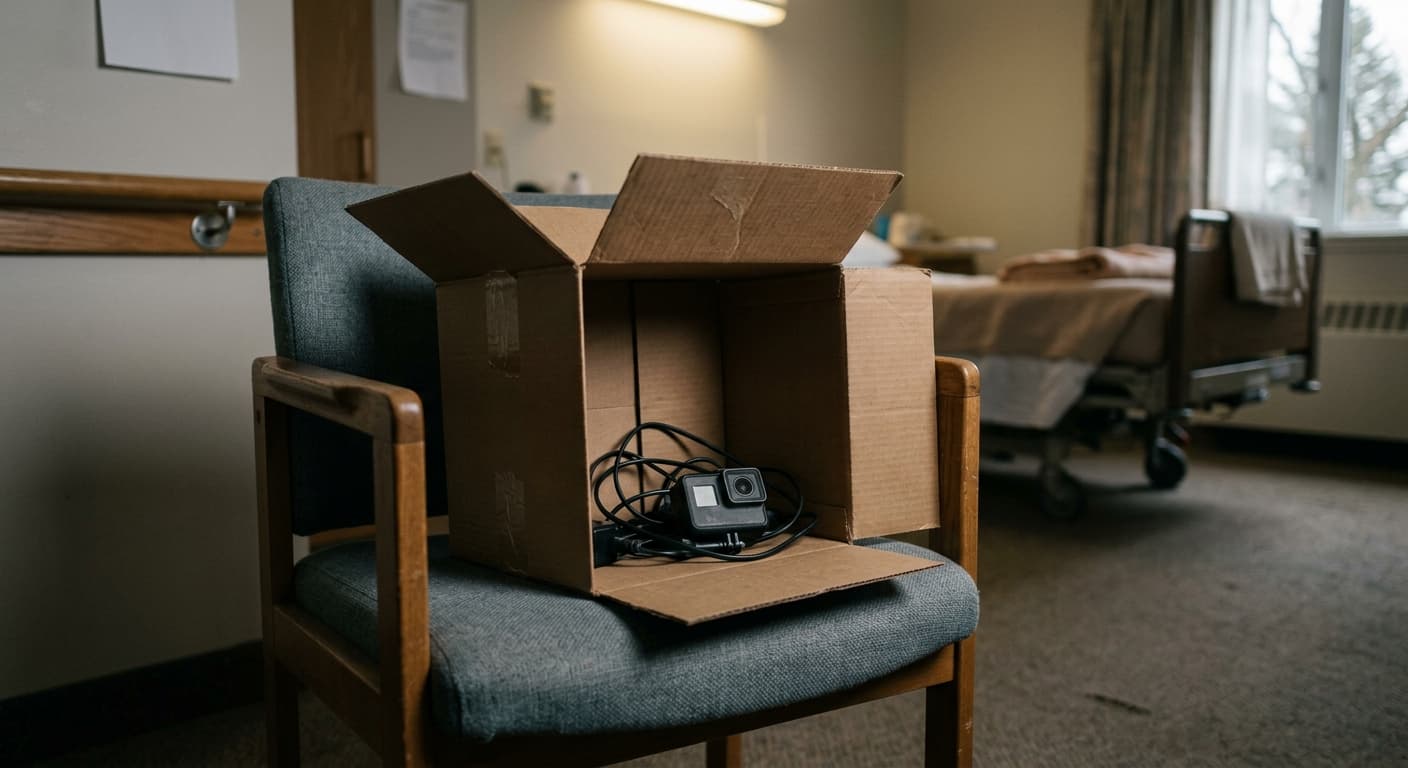
Illinois gives a nursing home resident the right to install a video camera, audio recorder, or both in their own room under the Authorized Electronic Monitoring in Long-Term Care Facilities Act, 210 ILCS 32. A major expansion adding assisted living is already signed into law, but it does not take effect until January 1, 2027.
Information last verified on 2026-08-14. This article has not yet been reviewed by a licensed lawyer.
This article covers Illinois's Authorized Electronic Monitoring in Long-Term Care Facilities Act, 210 ILCS 32, as currently in force, and explains the assisted living expansion that is enacted but not yet operative. It does not cover Illinois's general two-party consent recording law in full, which is addressed in its own section below and has its own dedicated page.
What Illinois's Electronic Monitoring Law Covers Today
The Act's current "facility" definition, in force since 2019, reaches intermediate care facilities for developmental disabilities with 30 or more beds under the ID/DD Community Care Act, facilities under the MC/DD Act, long-term care facilities under the Nursing Home Care Act, and facilities or wings that provide housing specifically for individuals with dementia. It does not currently include assisted living establishments or shared housing establishments. For dementia-care facilities, the right is limited to rooms in buildings or wings dedicated entirely to dementia care.
An "electronic monitoring device" under the Act means a fixed-position video camera, an audio recording device, or a combination of the two. The Act bars using a device to take still photographs or to intercept private communications without consent.
The 2027 Assisted Living Expansion: What Changes and When
Public Act 104-0494, signed June 26, 2026, broadens the Act's "facility" definition to include assisted living establishments licensed under the Assisted Living and Shared Housing Act and expands the dementia-housing category, replacing "facility" with "facility or establishment" throughout the statute. That expansion is effective January 1, 2027, not today. As of the current date, an Illinois assisted living or shared housing resident has no right to authorized electronic monitoring under this Act.
One detail worth flagging for a family planning ahead: the amendment also exempts assisted living establishments from the Act's building-entrance signage requirement once the expansion takes effect, while the room-door notice ("This room is electronically monitored") still applies to every covered facility type.
Roommate Consent and Withdrawal
If a resident shares a room, the roommate, or that roommate's own surrogate, must give written consent on the same Department-prescribed form. Before a non-guardian surrogate can consent on a resident's behalf, the resident, if 18 or older, must be asked directly, in front of a facility employee, whether they want monitoring, with the device type and its recording implications explained to them first.

A roommate's consent can come with real conditions: prohibiting audio recording or broadcasting outright, or disabling recording during medical exams, bathing, or visits with an attorney, ombudsman, or spiritual advisor. Either the resident's consent or the roommate's consent can be withdrawn at any time. If a roommate refuses to consent at all, the facility must make reasonable efforts to accommodate the resident who wants monitoring, which can include a room transfer or a private room at the resident's expense.
If the resident lacks capacity and has not objected, a surrogate hierarchy applies in order: health care agent, then resident representative, then spouse, then parent, then adult child (with sibling consent), then adult sibling (with other siblings' consent).
Notice and Signage
A building-entrance sign, titled "Electronic Monitoring," must be posted at every visitor-accessible entrance, stating: "The rooms of some residents may be monitored electronically by or on behalf of the residents." Separately, each monitored resident's own room entrance must display: "This room is electronically monitored." The facility bears full responsibility for installing and maintaining all required signage, a different cost allocation than the device itself, which the resident pays for.
Who Pays for the Device
The resident bears the cost of purchase, installation, maintenance, and removal, and must independently arrange internet service if using an internet-connected device. The facility must make reasonable efforts to support installation, such as providing access to telecom infrastructure, and bears the burden of proving that an accommodation is not feasible if it tries to refuse one. The facility may not charge for electricity. Installations must meet current NFPA 101 Life Safety Code standards, and the device must be visibly placed.
Illinois also has a low-income assistance program on the books, but it is a conditional one. 210 ILCS 32/27 directs the Department, subject to appropriation, to establish a program helping residents receiving medical assistance access authorized electronic monitoring, and, again subject to appropriation, to distribute up to $50,000 a year statewide for the purchase and installation of devices. Because both duties depend on the General Assembly appropriating the money, that funding may not exist in a given year. Treat it as a question to ask the Department, not as money you can assume is waiting.
Dissemination of Recordings
A facility cannot view a resident's recordings without written permission from the resident or their representative. Recordings may only be shared for the purpose of addressing a resident's health, safety, or welfare, except when required by the Freedom of Information Act. On request, the resident or representative must provide copies to parties in a civil, criminal, or administrative proceeding for the relevant time period.
Tampering and Obstruction Penalties
Knowingly hampering, obstructing, tampering with, or destroying a monitoring device, or a lawfully obtained recording, without consent, is a Class B misdemeanor at baseline, a Class A misdemeanor if done to commit or conceal a misdemeanor, and a Class 4 felony if done to commit or conceal a felony. Turning off a device, or blocking its view, at the resident's or a consenting person's own direction, is not a violation.

Using Recordings as Evidence
Recordings may be admitted into evidence in a civil, criminal, or administrative proceeding if they are unedited, unenhanced, and, for video, show a date and time stamp. The facility is shielded from civil or criminal liability connected to a resident's or representative's disclosure of a recording for a purpose the Act does not authorize, and for privacy claims arising from monitoring that otherwise complies with the Act.
The Nursing Home Care Act reinforces this right directly in the general resident bill of rights: "A resident shall be permitted to conduct authorized electronic monitoring of the resident's room through the use of electronic monitoring devices placed in the room pursuant to the [Authorized Electronic Monitoring in Long-Term Care Facilities] Act." If footage from an Illinois facility appears to show abuse or neglect, it can support a report and a civil claim.
Harmed by a product or exposure? Speak with an attorney about your options
If you or a loved one may have been harmed, you can speak with an attorney about your legal options at no cost. Whether you have a claim depends on the specific facts. This is attorney advertising, not a guarantee that you qualify or of any particular outcome.
Camera vs. Microphone: Illinois's All-Party Consent Law
This is the sharpest audio-stakes state in this group. Illinois is a two-party, or all-party, consent state generally: see Illinois Recording Laws for the full framework, which was substantially narrowed in 2014 after the Illinois Supreme Court struck down the prior eavesdropping statute as overbroad. Under the current version, 720 ILCS 5/14-2(a)(1) and (a)(2), it is eavesdropping to use a device surreptitiously to record a private conversation unless every party to it consents. Someone who is not part of the conversation needs "the consent of all of the parties"; someone who is part of it needs "the consent of all other parties." One person agreeing is not enough.
A device installed through 210 ILCS 32's own written-consent and signage process is authorized under both statutes at once, because the resident and any roommate have already consented. The real exposure is a covert device, one installed outside the Act's process, or one that picks up a private conversation among staff or visitors who never consented to being recorded. A resident's or family member's consent does not supply consent for the other people on the recording. That combination, all-party consent plus an in-room device, is a materially higher-stakes overlay in Illinois than in the one-party states covered elsewhere in this series.
Installing a Camera in an Illinois Long-Term Care Facility
- Confirm the facility is currently covered. Today that means a nursing home, an ICF-DD or MC/DD Act facility, or a dementia-dedicated unit, not assisted living until 2027.
- Complete the Department-prescribed consent form for the resident and, if applicable, ask the capacitated resident directly before a surrogate consents.
- Obtain written roommate consent, including any conditions on audio or specific activities.
- Budget for the device, installation, maintenance, and internet service if applicable; if cost is a barrier, ask the Department whether the 210 ILCS 32/27 assistance program is currently funded, since it operates only subject to appropriation.
- Confirm signage is posted at the building entrance and the resident's room door, both the facility's responsibility.
If You Suspect Abuse or Neglect
Illinois residents and families can report suspected abuse or neglect to the facility, to the Illinois Department of Public Health, or to the state's Long-Term Care Ombudsman program. That federally created ombudsman program, operating in every state under the Older Americans Act, investigates complaints about action or inaction that may adversely affect a resident's health, safety, welfare, or rights, and it covers assisted living residents too, even ahead of the Act's own 2027 assisted-living expansion.

Related Resources
- Nursing Home Camera Laws by State covers the national picture across all 18 statute states.
- Illinois Recording Laws covers Illinois's general all-party consent rule for audio recording.
- Nursing Home Abuse & Neglect covers how an abuse or neglect claim works once evidence, including camera footage, is in hand.
Last updated: 2026-08-14.
Frequently Asked Questions
Can you put a camera in an Illinois nursing home room?
Yes. The Authorized Electronic Monitoring in Long-Term Care Facilities Act, 210 ILCS 32, lets a resident of a covered facility, with written consent from any roommate, install a video camera, audio recorder, or both in their own room.
Does Illinois's nursing home camera law cover assisted living?
Not yet. As of today, the Act covers nursing homes, ICF-DD and MC/DD Act facilities, and dementia-dedicated units. Public Act 104-0494 adds assisted living and shared housing establishments, but that expansion is not effective until January 1, 2027.
Is Illinois a one-party or two-party consent state for nursing home camera audio?
Two-party (all-party) consent. Under 720 ILCS 5/14-2(a)(1) and (a)(2), surreptitiously recording a private conversation is eavesdropping unless every party to it consents: a non-participant needs the consent of all of the parties, and a participant needs the consent of all other parties. A device installed under 210 ILCS 32's consent process is authorized, but a covert audio device that records a private conversation without the consent of every person in it, staff and visitors included, risks exposure under that statute.
Does a roommate have to agree to a camera in a shared Illinois nursing home room?
Yes, in writing, using the same Department-prescribed consent process as the resident. A roommate can prohibit audio recording entirely, or disable recording during medical exams, bathing, or visits with an attorney, ombudsman, or spiritual advisor, and can withdraw consent at any time.
What happens if someone tampers with a monitoring device in an Illinois facility?
It is a Class B misdemeanor at minimum under 210 ILCS 32/40, a Class A misdemeanor if done to conceal a misdemeanor, and a Class 4 felony if done to conceal a felony. Turning off a device at the resident's or consenting person's own direction is not a violation.
Who pays for a monitoring device in an Illinois nursing home?
The resident bears the purchase, installation, maintenance, and removal costs, plus internet service if the device is internet-connected. The facility cannot charge for electricity and must make reasonable efforts to support installation, such as access to telecom infrastructure.
Is help available for low-income Illinois residents who want a monitoring device?
There is a program on the books, but it is conditional. 210 ILCS 32/27 directs the Department, subject to appropriation, to establish a program for residents receiving medical assistance and, also subject to appropriation, to distribute up to $50,000 a year statewide toward purchasing and installing devices. Because both duties depend on the money being appropriated, ask the Department whether the program is funded before relying on it.
Updates
Corrected the Illinois eavesdropping rule to state that all parties to a private conversation must consent, not merely one, and clarified that the state's Medicaid monitoring-device assistance program and its $50,000 annual fund operate only subject to appropriation.
Independently fact-checked against the cited primary sources
The Law Behind This Article
This article rests on the statutory provisions below, held in our own legal record and retrieved from the official source. Tap a section to read the operative text.
Illinois Compiled Statutes Chapter 210, Act 32 (Authorized Electronic Monitoring in Long-Term Care Facilities Act)
§ 10Authorized electronic monitoringIn force
(a) A resident shall be permitted to conduct authorized electronic monitoring of the resident's room through the use of electronic monitoring devices placed in the room pursuant to this Act. (b) Nothing in this Act shall be construed to allow the use of an electronic monitoring device to take still photographs or for the nonconsensual interception of private communications. (c) A facility that houses dementia residents may allow electronic monitoring devices only in rooms: (1) that are located in a building that is entirely dedicated to dementia care; or (2) that are located in a building wing that is solely dedicated to dementia care.
Official text (excerpt) · last checked 2026-08-31 · Read the full text in our law library · Verify at ilga.gov
United States Code Title 18
§ 2511Interception and disclosure of wire, oral, or electronic communications prohibitedIn forcecited in 422 of our articles
Except as otherwise specifically provided in this chapter any person who— intentionally intercepts, endeavors to intercept, or procures any other person to intercept or endeavor to intercept, any wire, oral, or electronic communication; intentionally uses, endeavors to use, or procures any other person to use or endeavor to use any electronic, mechanical, or other device to intercept any oral communication when— such device is affixed to, or otherwise transmits a signal through, a wire, cable, or other like connection used in wire communication; or such device transmits communications by radio, or interferes with the transmission of such communication; or such person knows, or has reason to know, that such device or any component thereof has been sent through the mail or transported in interstate or foreign commerce; or such use or endeavor to use (A) takes place on the premises of any business or other commercial establishment the operations of which affect interstate or foreign commerce; or (B) obtains or is for the purpose of obtaining information relating to the operations of any business or other commercial establishment the operations of which affect interstate or foreign…
Official text (excerpt) · last checked 2026-08-28 · Read the full text in our law library · Verify at uscode.house.gov
Cited in 2,045 court opinions in our collectionLatest citing opinion in our collection: 2026
In the courts (editorial summary, independently checked):Griggs-Ryan v. Smith (1990) applied the Section 2511(2)(d) prior-consent exception, treating a tenant repeatedly told that all incoming calls were taped as having impliedly consented. United States v. United States District Court (1972) read the then-current Section 2511(3) as conferring no presidential surveillance power.
Opinions citing this section in our collection:
- Mitchell v. Forsyth (Supreme Court of the United States 1985, 472 U.S. 511)✓The Attorney General authorized a warrantless 1970 national security wiretap that caught the plaintiff's calls; the Court held the since-repealed Section 2511(3) disclaimer left the tap lawful under Title III, and that Mitchell had qualified immunity.
- United States v. United States District Court for the Eastern District of Michigan (Supreme Court of the United States 1972, 407 U.S. 297)✓The Attorney General approved warrantless wiretaps on members of a domestic group accused of bombing a CIA office; the Court read Section 2511(3) as a congressional disclaimer conferring no surveillance power, then held the Fourth Amendment required prior judicial approval.
- Forsyth v. Barr (Court of Appeals for the Fifth Circuit 1994, 19 F.3d 1527)✓Dallas police used, in an internal affairs probe of an officer, calls private parties allegedly intercepted illegally; assuming that was unlawful, the Fifth Circuit held Section 2517(1) and (2) allowed the disclosure and use, defeating the Section 2511(1)(c) and (d) claims.
Identified automatically from the court opinions citing this section — not a ranking of which case controls.
Also relied on in: Connecticut Recording Laws (2026): Hybrid Consent Rules Explained, Oregon Recording Laws (2026): Hybrid One-Party and All-Party Rules, US Recording Laws by State (2026): All 50 States Explained
Search our full record of US law — 2.1 million sections, every state + federal →
Sources and References
- 210 ILCS 32/5, Authorized Electronic Monitoring in Long-Term Care Facilities Act, Definitions(ilga.gov).gov
- 210 ILCS 32/15, Consent to authorized electronic monitoring(ilga.gov).gov
- 210 ILCS 32/40, Obstruction of electronic monitoring devices(ilga.gov).gov
- Illinois Public Act 104-0494 (assisted living/shared housing expansion, eff. Jan. 1, 2027)(ilga.gov).gov
- 18 U.S.C. § 2511, federal Wiretap Act, one-party consent exception(law.cornell.edu)
- Administration for Community Living, State Long-Term Care Ombudsman Program(acl.gov).gov
- 720 ILCS 5/14-2, Illinois eavesdropping statute (all-party consent for private conversations)(ilga.gov)
- 210 ILCS 32/27, Assistance program (subject to appropriation; up to $50,000 annually)(ilga.gov)