
Illinois
Illinois Employee Monitoring Laws (2026): BIPA, Recording & More
Independently fact-checked against primary sources (last audited August 17, 2026). · Reviewed by the RecordingLaw editorial team. · Law checked current as of August 17, 2026. · 7 primary sources cited on this page. How we verify our legal content
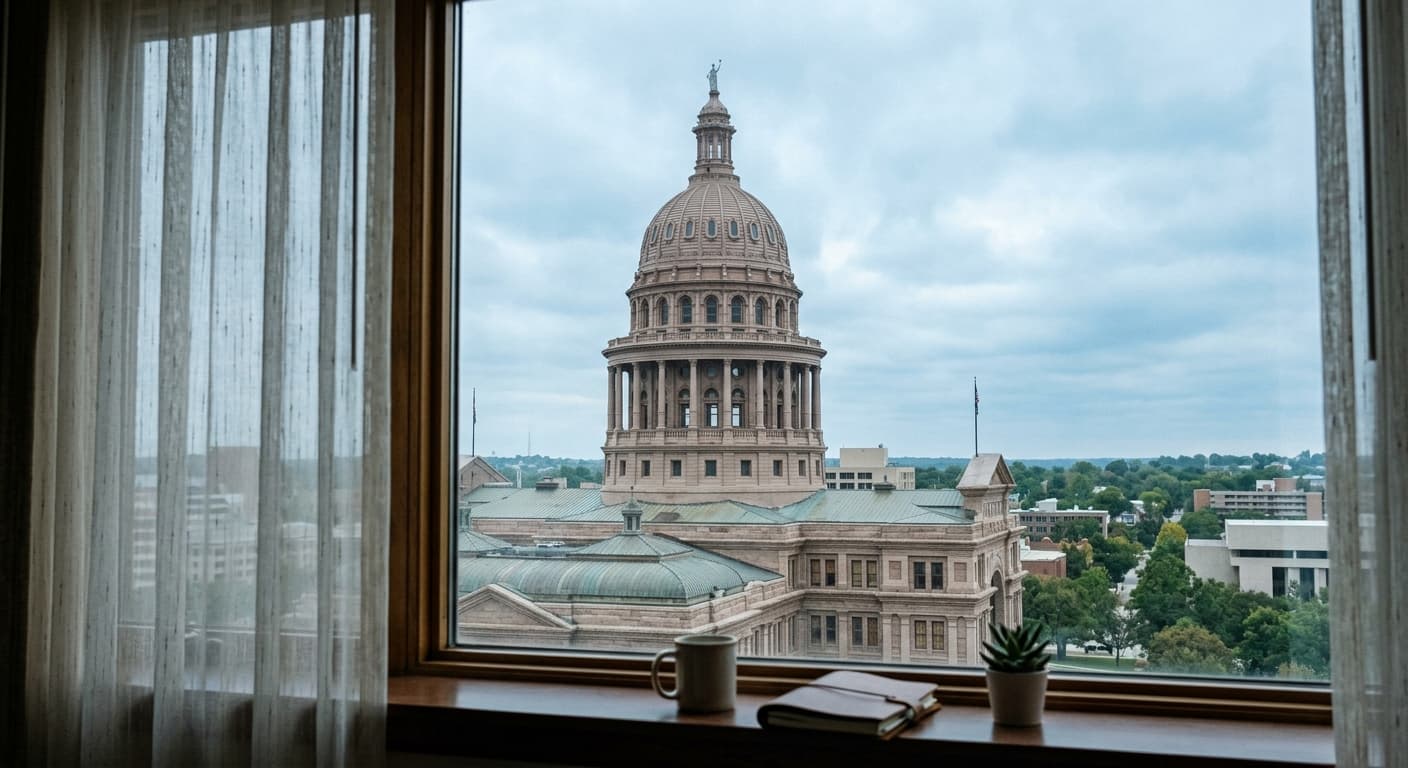
Illinois regulates employee monitoring more heavily than almost any other state, combining an all-party consent recording law, a social-media-password ban, and the Biometric Information Privacy Act, whose fingerprint and face-scan rules have produced some of the largest employment-privacy settlements in the country.
This guide is part of our Employee Monitoring Laws by State series, which covers electronic-monitoring notice duties, social-media-password protections, and workplace video and GPS surveillance limits nationwide.
Information last verified on 2026-07-09. This article has not yet been reviewed by a licensed lawyer.
Does Illinois require employers to give notice before monitoring employees?
No, not in the form Connecticut, Delaware, New York, or Maine use. Those four states require a written or posted notice before an employer monitors phone, email, or internet activity. Illinois has not adopted a comparable general notice statute, so an Illinois employer monitoring its own email or computer systems starts from the same federal baseline that applies nationally: the Electronic Communications Privacy Act, 18 U.S.C. Sections 2510-2523, prohibits intercepting communications without consent (18 U.S.C. § 2511), but the business-extension exemption in Section 2510(5)(a) excludes employer-provided communications equipment from the Act's definition of an interception device when it is used in the ordinary course of business, subject to the limits federal courts have placed on continued monitoring once a call is identified as personal.
That federal baseline is not the whole picture, though. The Personnel Record Review Act, 820 ILCS 40/9, provides that an employer "shall not gather or keep a record of an employee's associations, political activities, publications, communications or nonemployment activities, unless the employee submits the information in writing or gives the employer express, written consent." The section carves out activities or associations involving the exploitation of a minor, activities occurring on the employer's premises or during working hours that interfere with the employee's or other employees' duties, and activities that constitute criminal conduct or may reasonably be expected to harm the employer's property, operations, or business. Any record the employer is permitted to keep becomes part of the employee's personnel file. So while Illinois does not tell an employer when it must announce monitoring, it does limit what an employer may retain about an employee's communications and off-duty life.
What makes Illinois distinctive beyond that are three other laws layered on top of the federal baseline: the state's all-party consent recording rule, its social-media-password statute, and BIPA. Each is addressed below, and none of them should be confused with the electronic-monitoring notice category that Connecticut, Delaware, New York, and Maine occupy.
Recording employee calls and conversations in Illinois
Illinois is one of the strictest all-party consent states in the country. Under 720 ILCS 5/14-2, using an eavesdropping device to record a private conversation, defined as one where at least one participant had a reasonable expectation of privacy, without the consent of every party is a felony, generally a Class 4 felony for a first offense and a Class 3 felony for a subsequent one. This is a materially different baseline from the one-party consent rule most states use, and it means an Illinois employer cannot simply record a call it participates in the way an employer in a one-party state can; every party on the line, including the employee, generally needs to consent.
In practice, employers satisfy this through an acknowledged monitoring policy that puts employees on notice and secures their consent up front, which functions as the "all parties consented" element the statute requires. This cluster addresses only the employment overlay; the full consent framework, including exceptions, penalties, and the law's post-ACLU v. Alvarez history, is covered in depth on our Illinois Recording Laws: Workplace guide and is not repeated here.
Illinois' social media password law for employees
The Right to Privacy in the Workplace Act, 820 ILCS 55/10, added social media protections in 2013 and makes Illinois one of 27 states, per the National Conference of State Legislatures, with a law of this kind. Under Section 10(b)(1), it is unlawful for an employer or prospective employer to request, require, or coerce an employee or applicant to provide a username and password, or any other means of accessing a personal online account, or to demand access to that account in any other manner. Two separate paragraphs protect a refusal. Section 10(b)(1)(E) bars an employer from discharging, disciplining, discriminating or retaliating against, or otherwise penalizing an existing employee for declining to hand over that access, for refusing to open the account in the employer's presence, or for filing a complaint under the Act. Section 10(b)(1)(F) covers the hiring side, barring an employer from failing or refusing to hire an applicant because of the same refusal.
The Act does not stop an employer from doing two things: maintaining lawful policies governing use of the employer's own electronic equipment, including internet, social-networking, and email policies, or monitoring use of the employer's own equipment and email accounts, so long as the employer does not request or use an employee's personal account password to do it. The practical line is between an employer's own systems, which it can monitor, and an employee's personal account, whose password it cannot demand.
Illinois' Biometric Information Privacy Act and employer time clocks
BIPA, 740 ILCS 14, enacted in 2008, is the country's strongest biometric-privacy law and is directly relevant to any Illinois employer using a fingerprint scanner, hand-geometry reader, or facial-recognition system for time-and-attendance or building access. Under Section 15(b), before collecting a biometric identifier or biometric information, an employer must inform the employee in writing that the data is being collected or stored, disclose the specific purpose and length of time it will be retained, and obtain a written release, which the statute now allows to be an electronic signature. Under Section 15(a), the employer must develop and make public a written policy establishing a retention schedule and guidelines for permanently destroying the biometric data, generally no later than three years after the employee's last interaction with the employer or when the purpose for collecting it has been satisfied, whichever comes first.
Section 20 gives "any person aggrieved" by a violation a private right of action, a remedy most other states' biometric laws do not provide. For a negligent violation the prevailing party recovers liquidated damages of $1,000 or actual damages, whichever is greater; for an intentional or reckless violation, liquidated damages of $5,000 or actual damages, whichever is greater. Liquidated and actual damages are alternatives, not additive. The section separately allows reasonable attorneys' fees and costs, including expert witness fees, and other relief such as an injunction. A 2024 amendment, Public Act 103-769, effective August 2, 2024, limits a plaintiff to a single recovery per person per method of collection, overturning the earlier reading that each individual fingerprint scan could generate its own violation, which had driven the largest exposure numbers.
That earlier per-scan exposure is what produced Rogers v. BNSF Railway Co., the first BIPA case to reach a jury. In October 2022, a federal jury in the Northern District of Illinois found BNSF recklessly or intentionally violated BIPA by fingerprint-scanning roughly 45,600 truck drivers and other workers at its facilities without the required consent, and the court initially entered judgment for $228 million (45,600 violations multiplied by the $5,000 statutory rate). U.S. District Judge Matthew Kennelly later vacated that damages figure and ordered a new trial limited to damages; rather than retry the issue, the parties settled for $75 million, distributed to roughly 46,500 class members after fees and costs. More recently, trucking-camera vendor Lytx Inc. finalized a $4.25 million BIPA settlement, approved July 26, 2025, after truckers alleged its driver-facing safety cameras collected face-geometry data without consent between October 2016 and January 2025; claimants received payouts between roughly $631 and $845 each. Both cases illustrate the same pattern: equipment marketed for safety or time-and-attendance purposes still triggers BIPA's consent and retention duties when it captures biometric data from an Illinois workforce.
Our Illinois Biometric Privacy (BIPA) guide covers the statute's full definitions, exemptions, and litigation history; the summary above is limited to the employer-monitoring angle.
Video surveillance in Illinois workplaces
Illinois' unauthorized video recording statute, 720 ILCS 5/26-4, makes it unlawful to knowingly record or transmit live video of another person, without that person's consent, in a restroom, tanning bed, tanning salon, locker room, changing room, or hotel bedroom, and separately bars placing or causing a device to be placed in one of those locations with intent to do so. The offense escalates from a misdemeanor for placing a device with that intent to a felony for actually capturing the recording. The statute applies directly to an Illinois employer's camera placement: cameras in break rooms, sales floors, warehouses, and other common work areas are not covered, but a camera in a restroom or locker room is a criminal exposure regardless of the employer's stated security rationale.

GPS and vehicle tracking in Illinois
Illinois has no dedicated employer-vehicle-tracking notice statute comparable to New Jersey's. Its general electronic-tracking-device statute, 720 ILCS 5/21-2.5, makes unauthorized use of a tracking device a Class A misdemeanor, but the exemption list in subsection (c) contains a provision written for exactly this situation. Subsection (c)(3) exempts tracking "when the vehicle is owned or leased by a business that is authorized to transact business in this State and the tracking device is used by the business for the purpose of tracking vehicles driven by employees of that business, its affiliates, or contractors of that business or its affiliates." A separate exemption at (c)(1) covers tracking a vehicle's registered owner, lessor, or lessee has consented to. Between them, routine GPS tracking of an employer's own fleet vehicles is generally outside the offense. Illinois' stalking statute, 720 ILCS 5/12-7.3, separately criminalizes placing a tracking device on a person or their property as part of a course of conduct meant to cause fear, which targets malicious tracking rather than ordinary fleet management. For the state's full tracking-device framework, see our Illinois GPS Tracking Laws guide.
Disclaimer
This article provides general legal information about Illinois employee monitoring law as verified on 2026-07-09. It does not constitute legal advice and does not create an attorney-client relationship. Readers with a specific workplace monitoring or biometric-privacy dispute should consult a lawyer licensed in Illinois.
Related articles
- Employee Monitoring Laws by State: the complete hub
- Illinois Recording Laws: Workplace
- Illinois Biometric Privacy (BIPA)
- Illinois GPS Tracking Laws
- Indiana Employee Monitoring Laws

Last updated: 2026-07-09. Statutes cited reflect their in-force version as of 2026-07-09.
More Illinois Laws
Frequently Asked Questions
Can my employer record my phone calls or meetings in Illinois?
Only with the consent of everyone on the call, because Illinois is an all-party consent state under 720 ILCS 5/14-2. Employers typically obtain that consent through an acknowledged monitoring policy rather than asking each party in the moment.
Can my employer ask for my Facebook or Instagram password in Illinois?
No. The Right to Privacy in the Workplace Act, 820 ILCS 55/10, makes it unlawful for an Illinois employer to request, require, or coerce an employee's or applicant's personal online account password, or to retaliate against a refusal to provide it. Section 10(b)(1)(E) covers discipline or retaliation against an existing employee, and Section 10(b)(1)(F) covers refusing to hire an applicant.
Can my employer keep records about what I do outside of work in Illinois?
Generally not without your express written consent. The Personnel Record Review Act, 820 ILCS 40/9, bars an employer from gathering or keeping a record of an employee's associations, political activities, publications, communications, or nonemployment activities unless the employee submits the information in writing or consents in writing. It carves out conduct on the employer's premises or during work hours that interferes with job duties, and conduct that is criminal or may reasonably be expected to harm the employer's business.
What does my employer have to tell me before using a fingerprint time clock in Illinois?
Under BIPA, 740 ILCS 14/15(b), the employer must inform you in writing that it is collecting biometric data, explain the specific purpose and how long it will be kept, and get your written release before the first scan. It must also publish a public retention and destruction policy.
How much has BIPA cost employers in real cases?
The largest single figure came from Rogers v. BNSF Railway Co., where a 2022 jury verdict of $228 million was later vacated and the case settled for $75 million covering about 46,500 workers whose fingerprints were scanned without consent. Trucking-camera vendor Lytx separately settled a related BIPA claim over driver-facing cameras for $4.25 million, approved in July 2025.
Did the 2024 BIPA amendment reduce employer liability?
It narrowed it. Public Act 103-769, effective August 2, 2024, limits a plaintiff to one recovery per person per method of collection instead of a separate violation for every individual scan, which had been the primary driver of very large damages figures like the initial BNSF verdict.
Can my employer put a camera in the employee locker room in Illinois?
No. Illinois' unauthorized video recording statute, 720 ILCS 5/26-4, prohibits recording or transmitting video of a person in a restroom, locker room, or changing room without consent, and separately bars placing a device there with intent to record.
Can my employer track my movements with GPS on a company vehicle in Illinois?
Generally yes for a vehicle the employer owns or leases. Illinois' tracking-device statute, 720 ILCS 5/21-2.5, exempts tracking at subsection (c)(3) when a business owns or leases the vehicle and uses the device to track vehicles driven by its employees, affiliates, or contractors.
Does BIPA apply outside of Illinois?
No. BIPA is an Illinois statute and its private right of action applies to biometric data collected from individuals in Illinois. Employers with workers who scan in or drive through Illinois, such as trucking fleets, can still trigger BIPA even if the company is headquartered elsewhere.
Updates
Corrected the Illinois fleet-tracking analysis to cite the statute’s business exemption at 720 ILCS 5/21-2.5(c)(3), corrected BIPA’s damages provision (liquidated or actual damages, whichever is greater, not both), pinned employee adverse-action protection to 820 ILCS 55/10(b)(1)(E), and added the Personnel Record Review Act limit at 820 ILCS 40/9.
Replaced six dead ilga.gov statute citation links with their current addresses and corrected the Lytx BIPA settlement's final-approval date by one day (July 26, 2025, not July 25).
Independently fact-checked against the cited primary sources; governing law re-checked for recent changes
Re-anchored the employer ordinary-course monitoring doctrine to the correct statute, 18 U.S.C. 2510(5)(a)'s business-extension exemption, rather than the service-provider exception at 2511(2)(a)(i).
Reviewed and approved by an editor
The Law Behind This Article
This article rests on the statutory provisions below, held in our own legal record and retrieved from the official source. Tap a section to read the operative text.
United States Code Title 18
§ 2511Interception and disclosure of wire, oral, or electronic communications prohibitedIn forcecited in 418 of our articles
Except as otherwise specifically provided in this chapter any person who— intentionally intercepts, endeavors to intercept, or procures any other person to intercept or endeavor to intercept, any wire, oral, or electronic communication; intentionally uses, endeavors to use, or procures any other person to use or endeavor to use any electronic, mechanical, or other device to intercept any oral communication when— such device is affixed to, or otherwise transmits a signal through, a wire, cable, or other like connection used in wire communication; or such device transmits communications by radio, or interferes with the transmission of such communication; or such person knows, or has reason to know, that such device or any component thereof has been sent through the mail or transported in interstate or foreign commerce; or such use or endeavor to use (A) takes place on the premises of any business or other commercial establishment the operations of which affect interstate or foreign commerce; or (B) obtains or is for the purpose of obtaining information relating to the operations of any business or other commercial establishment the operations of which affect interstate or foreign…
Official text (excerpt) · last checked 2026-08-28 · Read the full text in our law library · Verify at uscode.house.gov
Cited in 2,045 court opinions in our collectionLatest citing opinion in our collection: 2026
In the courts (editorial summary, independently checked):Griggs-Ryan v. Smith (1990) applied the Section 2511(2)(d) prior-consent exception, treating a tenant repeatedly told that all incoming calls were taped as having impliedly consented. United States v. United States District Court (1972) read the then-current Section 2511(3) as conferring no presidential surveillance power.
Opinions citing this section in our collection:
- Mitchell v. Forsyth (Supreme Court of the United States 1985, 472 U.S. 511)✓The Attorney General authorized a warrantless 1970 national security wiretap that caught the plaintiff's calls; the Court held the since-repealed Section 2511(3) disclaimer left the tap lawful under Title III, and that Mitchell had qualified immunity.
- United States v. United States District Court for the Eastern District of Michigan (Supreme Court of the United States 1972, 407 U.S. 297)✓The Attorney General approved warrantless wiretaps on members of a domestic group accused of bombing a CIA office; the Court read Section 2511(3) as a congressional disclaimer conferring no surveillance power, then held the Fourth Amendment required prior judicial approval.
- Forsyth v. Barr (Court of Appeals for the Fifth Circuit 1994, 19 F.3d 1527)✓Dallas police used, in an internal affairs probe of an officer, calls private parties allegedly intercepted illegally; assuming that was unlawful, the Fifth Circuit held Section 2517(1) and (2) allowed the disclosure and use, defeating the Section 2511(1)(c) and (d) claims.
Identified automatically from the court opinions citing this section — not a ranking of which case controls.
Search our full record of US law — 2.1 million sections, every state + federal →
Sources and References
- 740 ILCS 14, Biometric Information Privacy Act(ilga.gov).gov
- 820 ILCS 55/10, Right to Privacy in the Workplace Act, social media/personal online accounts(ilga.gov).gov
- 720 ILCS 5/14-2, Eavesdropping (all-party consent)(ilga.gov).gov
- 720 ILCS 5/26-4, Unauthorized video recording and live video transmission(ilga.gov).gov
- 720 ILCS 5/21-2.5, Unauthorized use of an electronic tracking device(ilga.gov).gov
- Public Act 103-0769 (2024 BIPA damages amendment)(ilga.gov).gov
- Rogers v. BNSF Railway Co. settlement notice (N.D. Ill.), $75 million settlement fund following the $228 million jury verdict(bnsfbipaclassaction.com)
- Milberg, Final Approval Given to Truckers' $4.25M Lytx BIPA Settlement (July 2025)(milberg.com)
- 18 U.S.C. § 2511 – Interception and disclosure of wire, oral, or electronic communications prohibited(uscode.house.gov).gov
- 820 ILCS 40/9, Personnel Record Review Act, limits on employer records of employee associations, communications, and nonemployment activities(ilga.gov)