
Oregon
Oregon Marriage & Divorce Records: How to Get a Copy (2026)
Independently fact-checked against primary sources (last audited August 4, 2026). · Law checked current as of August 9, 2026. · 4 primary sources cited on this page. How we verify our legal content

Oregon keeps marriage and divorce records at the state level, and for 50 years it issues certified copies of both only to applicants who prove eligibility. That rule governs the state registrar's copies rather than every record of the event: under ORS 432.360, marriage records in a county clerk's custody and dissolution records in the custody of the state courts are open and subject to full disclosure. The Oregon Health Authority issues a marriage certificate and a Record of Dissolution to eligible applicants for $25, while the certified divorce judgment itself stays with the circuit court that granted it.
Information last verified on 2026-08-04. This article has not yet been reviewed by a licensed lawyer.
This page is part of our guide to marriage and divorce records by state, and it explains which Oregon office holds what, who is allowed to order, and what the state record does and does not prove.
Who Holds Oregon Marriage and Divorce Records
Oregon runs a genuinely centralized system, which puts it in the minority nationally. The Center for Health Statistics within the Oregon Health Authority holds both marriage records and dissolution records for events that occurred in Oregon, and it issues certified copies of both. Many Oregonians never need to contact a county office at all.
The exception is the divorce judgment. Oregon circuit courts grant divorces, and the court file, including the general judgment of dissolution with its property, support, and parenting terms, stays with the circuit court in the county where the case was filed. The state's vital-records copy is a summary certificate, not the judgment.
So the practical first question for an Oregon divorce is which document the requesting agency wants. Proof that the marriage ended is one thing; the terms on which it ended is another. The answer also decides which access rule you are working under, because the state layer and the county and court layers are governed by different statutes.
Oregon's 50-Year Restriction
This is the rule that surprises people, and it applies on both sides.

For marriage, the Oregon Health Authority states that under Oregon law, access to marriage records is restricted for 50 years after the date of the marriage, that anyone wanting a marriage certificate must complete an application process and prove eligibility, and it points readers to ORS 432.380. For divorce, the state applies the same span: access to divorce or dissolution of Oregon Registered Domestic Partnership records is restricted for 50 years after the date of the divorce or dissolution.
The statute builds that result in two steps, and it is worth seeing them in order. ORS 432.380(2) requires every applicant for a certified copy to submit a signed application, documentation of identity, and evidence of eligibility. ORS 432.380(3) then lifts the eligibility half once 50 years have elapsed after the date of the marriage or dissolution, for events occurring after 1964, leaving proof of identity as the only requirement. So the 50-year mark is not the moment a sealed record opens; it is the moment the registrar stops asking who you are to the family.
That is not a sealing rule and it is not a confidentiality order from a judge. It is a standing access rule built into how the state issues copies. A marriage from 2005 or a divorce from 2019 is restricted in that sense, and only someone on the eligibility list can obtain a certified copy from the registrar. Records past the 50-year mark fall outside the restriction, which is why older records are the ones genealogists can generally reach through the state.
Note what the restriction does not cover, because this is the part the state's own ordering pages do not explain. ORS 432.360(1) provides that, notwithstanding any other provision of law, all marriage and domestic partnership records and all dissolution records in the custody of a county clerk or county recording officer, and all dissolution records in the custody of the state courts, are open and subject to full disclosure. A divorce that is restricted on the vital-records side therefore still has a circuit court file that is open by statute, and a marriage record in a county clerk's custody is open on the same terms. The one exception the statute carves out is in subsection (2): the Social Security numbers of the parties in court dissolution files are kept confidential and exempt from public inspection under the procedures established by ORS 107.840.
Open by statute still means going through the custodian. You ask the county clerk or the circuit court under its ordinary records process and pay its copy fees; it does not mean the file is posted online for free. Two layers, two different rules, and the layer the 50-year restriction closes is the narrower of the two.
Who Can Order an Oregon Marriage or Divorce Certificate
Oregon publishes the same eligibility list for both record types: the person named on the record, a parent or grandparent, a child, grandchild, or sibling, a spouse or registered domestic partner, a legal guardian, legal representative, or authorized representative, and government agencies acting in an official capacity. Other relationships are evaluated against the application's supporting documentation rather than assumed to qualify.
Relationship proof is the part applicants underestimate. A sibling generally has to show the documents that establish the shared parentage, and a representative has to show the authority to act. Building that packet before you apply saves a rejected application and a nonrefundable fee.
An ex-spouse asking about a former partner's later marriage is a common request and usually not an eligible one. If your reason for asking is a support or custody issue rather than obtaining your own record, the route generally runs through the court handling that matter rather than through vital records.
Fees and How to Order
The fee is $25.00 for the initial record search, which includes the first certificate, and $25.00 for each additional certificate ordered at the same time. The search fee is nonrefundable, meaning you pay it even if the search finds no record, so accuracy on names, dates, and county matters.
If you do not know the exact date, the state's fee schedule builds in a search window, with an added per-year charge for searching beyond it. Records that are more than 50 years old are treated differently for that extended-search charge, which reflects the same 50-year line described above.
Oregon names VitalChek as its contracted vendor for online and telephone orders, and it publishes a consumer alert encouraging customers to order certified copies only from the Oregon Center for Health Statistics, a local Oregon county health department, or through VitalChek. Ordering through the vendor adds vendor and expedite charges on top of the state fee, so compare the mail route if speed is not critical. Any other site offering to sell you an Oregon certificate is an unaffiliated reseller.
The Record of Dissolution Is Not the Divorce Decree
Oregon's state-issued divorce document has a long formal name, the Record of Dissolution of Marriage, Annulment or Registered Domestic Partnership Certificate, and the state is direct about its limits. In the Oregon Health Authority's own words, it does not have all the information contained in the decree but may be used as proof of divorce.
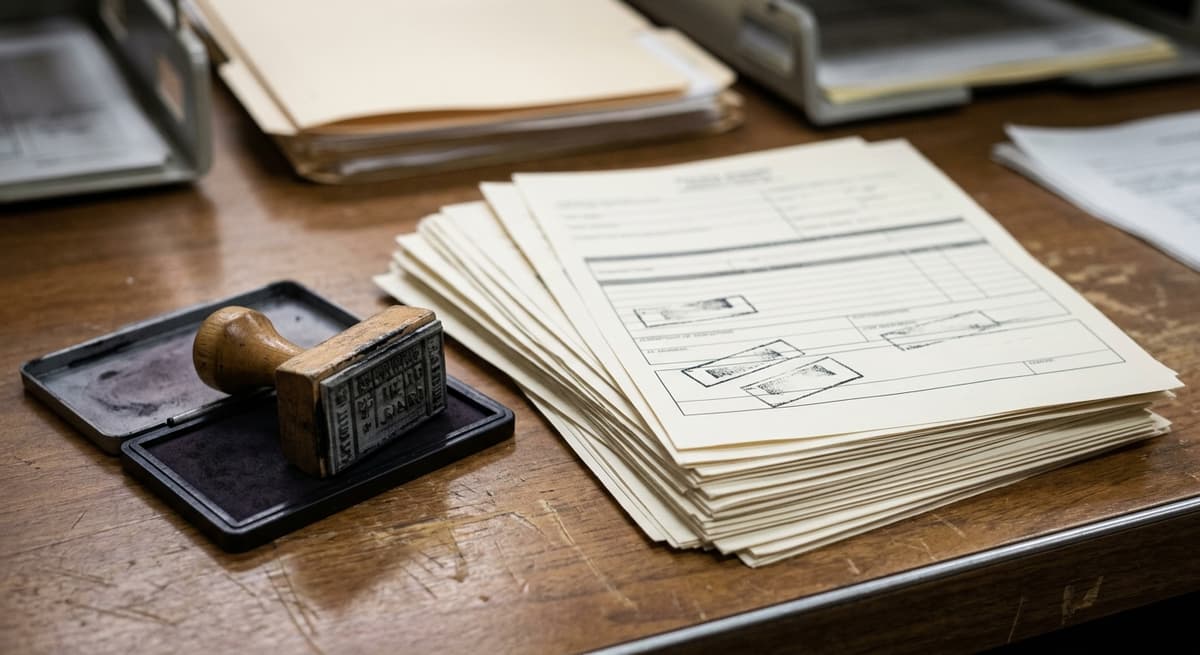
That is usually enough for the everyday uses: remarrying, changing a name back, updating Social Security or a driver license, satisfying an employer's benefits administrator. It is not enough when someone needs to read the terms. Enforcing a property division, showing a lender who received the house, proving a support obligation, or supporting an immigration filing that requires the full judgment all call for the certified court document.
For that, contact the circuit court in the county where the divorce was granted and ask for a certified copy of the general judgment of dissolution. That request does not depend on the 50-year rule, because ORS 432.360 makes dissolution records in the custody of the state courts open and subject to full disclosure. If you are not sure which county, the state certificate names it, which makes the $25 state copy a reasonable first step even when the court document is the real goal.
For the law governing how Oregon divorces work rather than how to obtain the paperwork, see Oregon divorce laws.
Historical and Genealogical Research
Once a marriage or divorce passes the 50-year mark, the state's eligibility requirement no longer applies to it and an applicant needs only proof of identity, which is one practical opening for family history research.
The county layer does not depend on that clock at all, and this is the route most genealogy guidance misses. Because ORS 432.360 makes marriage and dissolution records in the custody of a county clerk or county recording officer open and subject to full disclosure, a researcher blocked by the 50-year vital-records rule can ask the county clerk in the county that issued the license, or the circuit court that granted the dissolution, instead of waiting out the state's restriction. County clerks also issued marriage licenses long before the modern centralized system, so for the earliest events the county is often the only place the record exists at all.
We were not able to confirm a current Oregon State Archives page stating exactly which marriage and dissolution series the Archives holds and for which years. The page that search engines point to for that information returns a 404 at present, so rather than repeat year ranges we cannot source, we suggest contacting the Oregon State Archives reference staff directly with the county and period you are researching.
If your question is whether a marriage existed at all, remember that Oregon does not recognize new common-law marriages formed in the state, so there may be no license or certificate to find. See Oregon common law marriage for how those situations are handled.
Related Oregon Records
Oregon's death certificate process runs through the same Center for Health Statistics with its own eligibility and fee rules, covered in Oregon death records. For the state's broader public-records framework, including how to request records from an Oregon public body, see Oregon public records laws.
If you are still working out which document you need or how to check someone's marital status lawfully, see our guides to getting a copy of a marriage certificate and finding out if someone is married or divorced.
Disclaimer
This article provides general information about obtaining Oregon marriage and divorce records. It is not legal advice. Fees, eligibility documentation standards, and ordering channels change without notice, so confirm current details with the Oregon Health Authority or the relevant circuit court before relying on them. Consult a licensed Oregon attorney for advice about your specific situation.

Last updated: 2026-08-04. Fees and access rules reflect their published status as of 2026-08-04.
Frequently Asked Questions
Are Oregon marriage records public?
It depends which copy you mean. The Oregon Health Authority restricts access to the certified copies it issues for 50 years after the date of the marriage, citing ORS 432.380, and applicants must prove eligibility until that period runs. The records held elsewhere are open by statute: ORS 432.360 makes all marriage and domestic partnership records in the custody of a county clerk or county recording officer, and all dissolution records in county or state court custody, open and subject to full disclosure, with the parties' Social Security numbers in court files exempted.
How much does an Oregon marriage or divorce certificate cost?
$25.00 for the initial record search and first certificate, and $25.00 for each additional certificate. The search fee is nonrefundable, so it is charged even if no record is found.
Who can request an Oregon marriage certificate?
For a certified copy from the state registrar: the person named on the record, a spouse or registered domestic partner, parents, grandparents, children, grandchildren, siblings, legal guardians, legal or authorized representatives, and government agencies. Relationship proof is required. After 50 years, ORS 432.380(3) drops the eligibility requirement and asks only for proof of identity.
Is the state's Record of Dissolution the same as my divorce decree?
No. The Oregon Health Authority says the Record of Dissolution does not have all the information contained in the decree but may be used as proof of divorce. For the judgment and its terms, request a certified copy from the circuit court that granted the divorce.
Where do I get a certified copy of an Oregon divorce judgment?
From the circuit court in the county where the divorce was granted. Ask for a certified copy of the general judgment of dissolution rather than for the state's summary certificate. ORS 432.360 makes dissolution records in the custody of the state courts open and subject to full disclosure, so this route is not limited by the 50-year vital-records rule.
Does Oregon use VitalChek?
Yes. VitalChek is Oregon's contracted vendor for online and phone orders. The state advises ordering certified copies only from the Center for Health Statistics, a local county health department, or VitalChek, and vendor and expedite charges apply on top of the state fee.
Can I look up an Oregon divorce online for free?
The state does not publish a free public index of marriage or dissolution certificates, and the 50-year rule governs who may obtain a certified copy from the registrar. The court layer is different: ORS 432.360 makes dissolution records in the custody of the state courts open and subject to full disclosure, so the circuit court file is available even when the vital record is restricted. Access still runs through the court's own records process and copy fees rather than a free statewide search.
What if I do not know the exact date of the marriage?
The state's search fee covers a set span of years, with an added per-year charge for searching beyond it. Narrow the date range as much as you can before applying, because the search fee is not refunded if the record is not located.
Updates
Clarified that Oregon’s 50-year rule applies to the certified copies the state registrar issues, and added ORS 432.360, which makes marriage and dissolution records held by a county clerk and dissolution records held by the state courts open and subject to full disclosure.
Removed 'stepparent' from the ORS 432.380 marriage/divorce record requester-eligibility list (the statute's actual list does not include stepparents) so the prose and FAQ now match the article's own correct KeyTakeaways bullet.
Governing law re-checked for recent changes
Independently fact-checked against the cited primary sources
The Law Behind This Article
This article rests on the statutory provisions below, held in our own legal record and retrieved from the official source. Tap a section to read the operative text.
Oregon Revised Statutes, Chapter 432: Vital Statistics
§ 432.380Issuance of certified copies of records; applicant qualificationsIn forcecited in 4 of our articles
(1)(a) A certified copy of a record of live birth or any part of a record of live birth that is issued under this section shall be considered the same as the original record of live birth and is prima facie evidence of the facts stated on the certified copy. However, the evidentiary value of a certified copy of a record of live birth submitted more than one year after the birth, an amended record of live birth or a record of foreign live birth must be determined by the judicial or administrative body or official before whom the certified copy is offered as evidence. (b) A certified copy of a record of death, fetal death, marriage, domestic partnership, dissolution of marriage or dissolution of domestic partnership or any part of such records that is issued under this section shall be considered the same as the original record of death, fetal death, marriage, domestic partnership, dissolution of marriage or dissolution of domestic partnership and is prima facie evidence of the facts stated on the certified copy.
Official text (excerpt) · last checked 2026-09-04 · Read the full text in our law library · Verify at oregonlegislature.gov
Also relied on in: Oregon Death Records: Are They Public + How to Get Them, How to Find a Cause of Death in Oregon (2026), How to Get an Oregon Death Certificate (2026)
Search our full record of US law — 2.1 million sections, every state + federal →
Sources and References
- Oregon Health Authority, Order a Marriage Certificate(oregon.gov).gov
- Oregon Health Authority, Order a Divorce or Dissolution Certificate(oregon.gov).gov
- Oregon Health Authority, Vital Records Fees(oregon.gov).gov
- Oregon Revised Statutes Chapter 432 (ORS 432.380, issuance of certified copies; applicant qualifications)(oregonlegislature.gov).gov