
South Dakota
South Dakota Final Paycheck Laws: When the Deadline Depends on Returning Company Property
Independently fact-checked against primary sources (last audited August 13, 2026). · 2 primary sources cited on this page. How we verify our legal content

South Dakota's final-paycheck deadline is not a fixed date. By the statute's own plain text, wages are due on the next regular payday, or as soon afterward as the employee returns all of the employer's property, whichever comes later.
Information last verified on 2026-08-12. The property-return clause discussed below is flagged for an independent second read and possible South Dakota case law or Attorney General confirmation before its full implications are treated as settled; this article states the statute's plain text precisely without resolving every open question about its scope. This article has not yet been reviewed by a licensed lawyer.
The Deadline: Next Payday, or When Property Comes Back
South Dakota's separation and resignation statutes carry the same deadline language, and both build in a condition that does not appear this way in most other states in this cluster. SDCL Section 60-11-10 applies "whenever an employer separates an employee from the payroll," which reaches a layoff, a reduction in force, or a position elimination just as much as a firing. Section 60-11-11 applies to "an employee not having a written contract for a definite period" who quits or resigns, a carve-out with no counterpart in Section 60-11-10, so an employee who resigns while under a definite-term written contract falls outside it. Each section states that final wages are due "not later than the next regular stated pay day for which those hours would have normally been paid or as soon thereafter as the employee returns to the employer all property of the employer in the employee's possession."
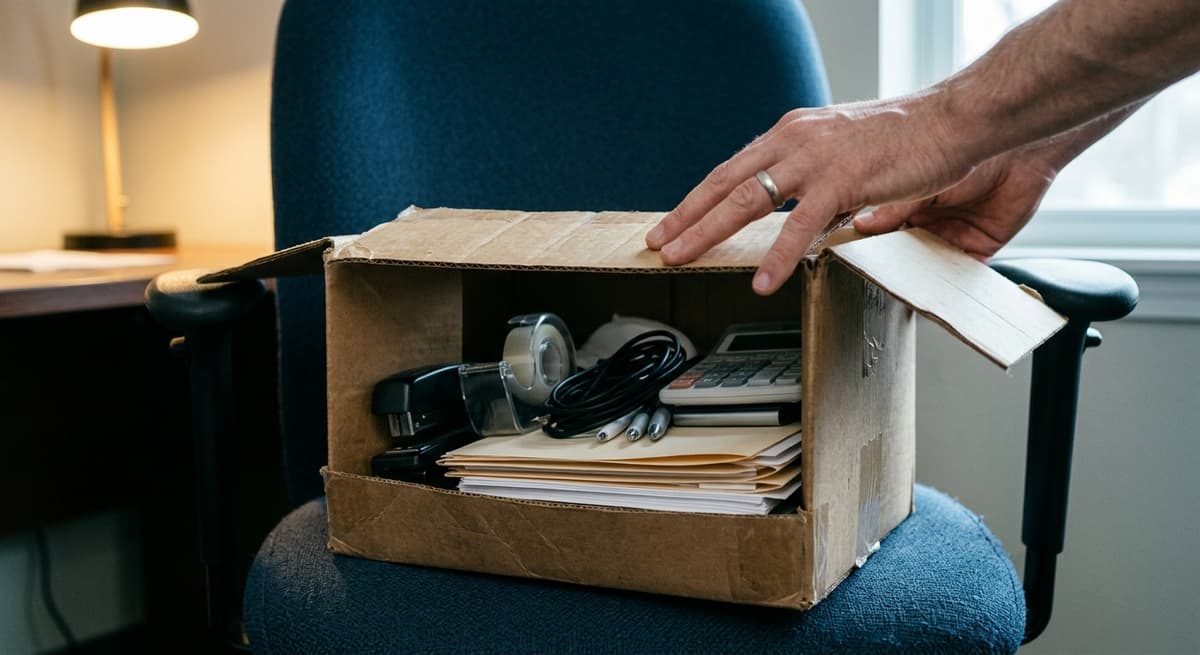
Read on its plain text, that is not simply a next-payday rule with a permitted deduction bolted on. It ties the payment deadline itself to two conditions, the ordinary next payday and the return of employer property, and pays on whichever comes later. That is a real departure from the federal deduction framework, which caps how much an employer can withhold for unreturned property but does not let an employer delay the entire paycheck's due date over it. Under South Dakota's own statutory language, an employer arguably can.
This is a legally significant enough implication that it deserves a second, independent read against South Dakota case law or Attorney General guidance before anyone treats its full scope as settled. This article states the statute's plain words precisely, but it does not resolve exactly how far an employer can stretch the "as soon thereafter" language in practice. A South Dakota employee facing an actual delayed paycheck over unreturned property should raise this specific clause with the state Division of Labor and Management or a South Dakota employment attorney rather than assume either the broadest or the narrowest reading.
Why This Matters for the Equipment-Withholding Question
Most states in this cluster answer the common "can my employer hold my whole paycheck until I return the laptop" question with a fairly clean no: federal Fact Sheet #16 only allows a capped deduction, never full withholding, and most state final-pay statutes set a fixed deadline that does not bend for property return. South Dakota is one of the few states where the state statute's own text does not give that clean answer, because the deadline clause is written to accommodate exactly that scenario. See can an employer withhold your paycheck for how South Dakota compares to the general rule, and to Tennessee, the other state in this cluster where the usual answer needs a real caveat.

The Dual Civil-and-Criminal Penalty
South Dakota backs its deadline with two separate remedies that can both apply to the same failure to pay. Civilly, SDCL Section 60-11-7 doubles the damages: "if a private employer has been oppressive, fraudulent, or malicious, in the employer's refusal to pay wages due to the employee, the measure of damages is double the amount of wages for which the employer is liable." Criminally, SDCL Section 60-11-15 makes it a Class 2 misdemeanor for an employer who "intentionally refuses to pay the wages due and payable when demanded as in" Sections 60-11-9 to 60-11-13, or who "falsely denies the amount thereof, or that the same is due" with the intent to secure a discount on the debt or with any intent to annoy, harass, oppress, hinder, delay, or defraud the person owed. Two limits in that text matter. The demand is part of the offense, so the statute reaches a refusal after wages have been demanded rather than non-payment standing alone, and the false-denial prong is tied to one of those listed intents rather than standing on its own. The criminal charge is prosecuted by the state, not filed by the employee; an individual worker's own remedy remains the civil claim.
PTO and Vacation Pay
No general private-sector PTO or vacation-payout statute was found in South Dakota's wage-payment chapter. A vacation-related provision does exist elsewhere in South Dakota law, in Chapter 3-6C, but that chapter applies only to state government employees and says nothing about private-sector workers. That leaves South Dakota, for private employment, without a confirmed statutory answer either way; payout most likely depends on what the employer's own written policy promises. See PTO payout laws by state for how South Dakota's silence compares to states with a confirmed rule.
Filing a South Dakota Wage Claim
The South Dakota Department of Labor and Regulation's Division of Labor and Management handles a "Claim of Unpaid Wages" process, referencing SDCL Title 60 and Administrative Rule 47:04 for the detailed procedure. The Division can be reached at 605-773-3681 for wage and hour matters, or 605-773-3101 generally, at 123 W. Missouri Avenue, Pierre, SD 57501. Whether the administrative claim process has its own filing deadline, separate from any private civil action, was not confirmed this session. See unpaid wages: how to file a claim for the general escalation path.
Disclaimer
This article provides general information about South Dakota final-paycheck law and does not constitute legal advice. It does not create an attorney-client relationship. The full scope of the property-return clause in SDCL Sections 60-11-10 and 60-11-11 has not been confirmed against South Dakota case law or Attorney General guidance and is flagged as an open question. Confirm current requirements with the South Dakota Division of Labor and Management or a licensed South Dakota employment attorney before relying on anything here for a specific situation.
Related Articles
- Final Paycheck Laws by State
- South Dakota At-Will Employment Laws
- South Dakota Whistleblower Laws
- South Dakota Statute of Limitations
- How to Stop Wage Garnishment
- South Dakota Debt Collection Laws
- South Dakota Unclaimed Property
- South Dakota Bankruptcy

Last updated: 2026-08-12.
More South Dakota Laws
Frequently Asked Questions
How fast does a South Dakota employer have to pay a final paycheck?
By the next regular stated payday, or as soon afterward as the employee returns to the employer all employer property in the employee's possession, whichever comes later. SDCL Section 60-11-10 covers any employer-initiated separation from the payroll, including a layoff or a position elimination, and Section 60-11-11 covers an employee without a written contract for a definite period who quits or resigns.
Can a South Dakota employer really hold my paycheck until I return company property?
The statute's plain text ties the deadline itself to property return, an unusual clause among the states in this cluster. Its full scope has not been confirmed against South Dakota case law or Attorney General guidance, so treat this as a flagged open question, not a settled answer, and raise it directly with the state Division of Labor and Management or an employment attorney if it applies to you.
What penalty applies if a South Dakota employer refuses to pay wages?
Civil double damages if the refusal was oppressive, fraudulent, or malicious, under Section 60-11-7, plus a Class 2 misdemeanor under Section 60-11-15 for an employer who intentionally refuses to pay wages due and payable when demanded, or who falsely denies the amount or that it is due with intent to secure a discount or to annoy, harass, oppress, hinder, delay, or defraud the person owed. The misdemeanor turns on a refusal after demand, not on late payment alone.
Does South Dakota require PTO payout when you leave a job?
No general private-sector statute was found. A vacation-payout statute exists in Chapter 3-6C, but it applies only to state government employees.
Where do I file a wage claim in South Dakota?
The South Dakota Department of Labor and Regulation's Division of Labor and Management, at 605-773-3681, handles a Claim of Unpaid Wages process.
Updates
Corrected the South Dakota statute descriptions against the official code: SDCL 60-11-10 covers any employer-initiated separation from the payroll rather than only a discharge, SDCL 60-11-11 applies only to employees without a written contract for a definite period, the property-return quotation now runs to its full text, and the SDCL 60-11-15 misdemeanor is stated with its demand predicate and intent element, with an inaccurate separate-offense clause removed.
Independently fact-checked against the cited primary sources
The Law Behind This Article
This article rests on the statutory provisions below, held in our own legal record and retrieved from the official source. Tap a section to read the operative text.
South Dakota Codified Laws, Chapter 60-11: WAGES, HOURS AND CONDITIONS OF EMPLOYMENT
§ 60-11-10Prompt payment of wages due on separation by employer--Withholding for return of employer's property.In force
Whenever an employer separates an employee from the payroll, the unpaid wages or compensation of such employee are due and payable not later than the next regular stated pay day for which those hours would have normally been paid or as soon thereafter as the employee returns to the employer all property of the employer in the employee's possession.
Official text (excerpt) · last checked 2026-09-03 · Read the full text in our law library · Verify at sdlegislature.gov
§ 60-11-11Payment on regular pay day after resignation by employee--Withholding for return of employer's property.In force
Whenever an employee not having a written contract for a definite period quits or resigns that employment, the wages or compensation earned are due and payable not later than the next regular stated pay day for which those hours would have normally been paid or as soon thereafter as the employee returns to the employer all property of the employer in the employee's possession.
Official text (excerpt) · last checked 2026-07-30 · Read the full text in our law library · Verify at sdlegislature.gov
§ 60-11-7Liability of employer for double damages for breach of obligation to pay wages.In force
In any action for the breach of an obligation to pay wages, if a private employer has been oppressive, fraudulent, or malicious, in the employer's refusal to pay wages due to the employee, the measure of damages is double the amount of wages for which the employer is liable.
Official text (excerpt) · last checked 2026-07-30 · Read the full text in our law library · Verify at sdlegislature.gov
Cited in 10 court opinions in our collectionLatest citing opinion in our collection: 2024
Opinions citing this section in our collection:
- Nelson v. WEB Water Development Ass'n, Inc. (South Dakota Supreme Court 1993, 507 N.W.2d 691)“…n Family Ins. Co., 292 N.W.2d 109 (S.D.1980). However, SDCL 60-11-7, which Nelson pled in his amended compl…”
- Baldwin v. National College, a Division of Dlorah, Inc. (South Dakota Supreme Court 1995, 537 N.W.2d 14)“…s conduct was “oppressive” and invoked double damages under SDCL 60-11-7. SDCL 60-11-7 provides: “In any action…”
- Crisman v. Determan Chiropractic, Inc. (South Dakota Supreme Court 2004, 687 N.W.2d 507)“…mber 2001 wages. Dr. Crisman asked for double damages under SDCL 60-11-7 which provides: In any action fo…”
Identified automatically from the court opinions citing this section — not a ranking of which case controls.
§ 60-11-15Employer's intentional refusal to pay wages--Misdemeanor.In force
Any employer who intentionally refuses to pay the wages due and payable when demanded as in §§ 60-11-9 to 60-11-13, inclusive, or who falsely denies the amount thereof, or that the same is due with the intent to secure for the employer or any other person any discount upon such indebtedness, or with any intent to annoy, harass, oppress, hinder, delay, or defraud the person to whom such indebtedness is due, commits a Class 2 misdemeanor.
Official text (excerpt) · last checked 2026-07-30 · Read the full text in our law library · Verify at sdlegislature.gov
Search our full record of US law — 2.1 million sections, every state + federal →
Sources and References
- SDCL Chapter 60-11, Wage Payment(sdlegislature.gov).gov
- SD Dept. of Labor and Regulation, Wage and Hour Issues(dlr.sd.gov).gov
- SDCL 60-11-10, Prompt payment of wages due on separation by employer(sdlegislature.gov)
- SDCL 60-11-11, Payment on regular pay day after resignation by employee(sdlegislature.gov)
- SDCL 60-11-15, Employer's intentional refusal to pay wages, misdemeanor(sdlegislature.gov)
- SDCL 60-11-7, Liability of employer for double damages for breach of obligation to pay wages(sdlegislature.gov)