
Rhode Island
Rhode Island License Plate Reader Laws (2026)
Independently fact-checked against primary sources (last audited October 1, 2026). · 8 primary sources cited on this page. How we verify our legal content
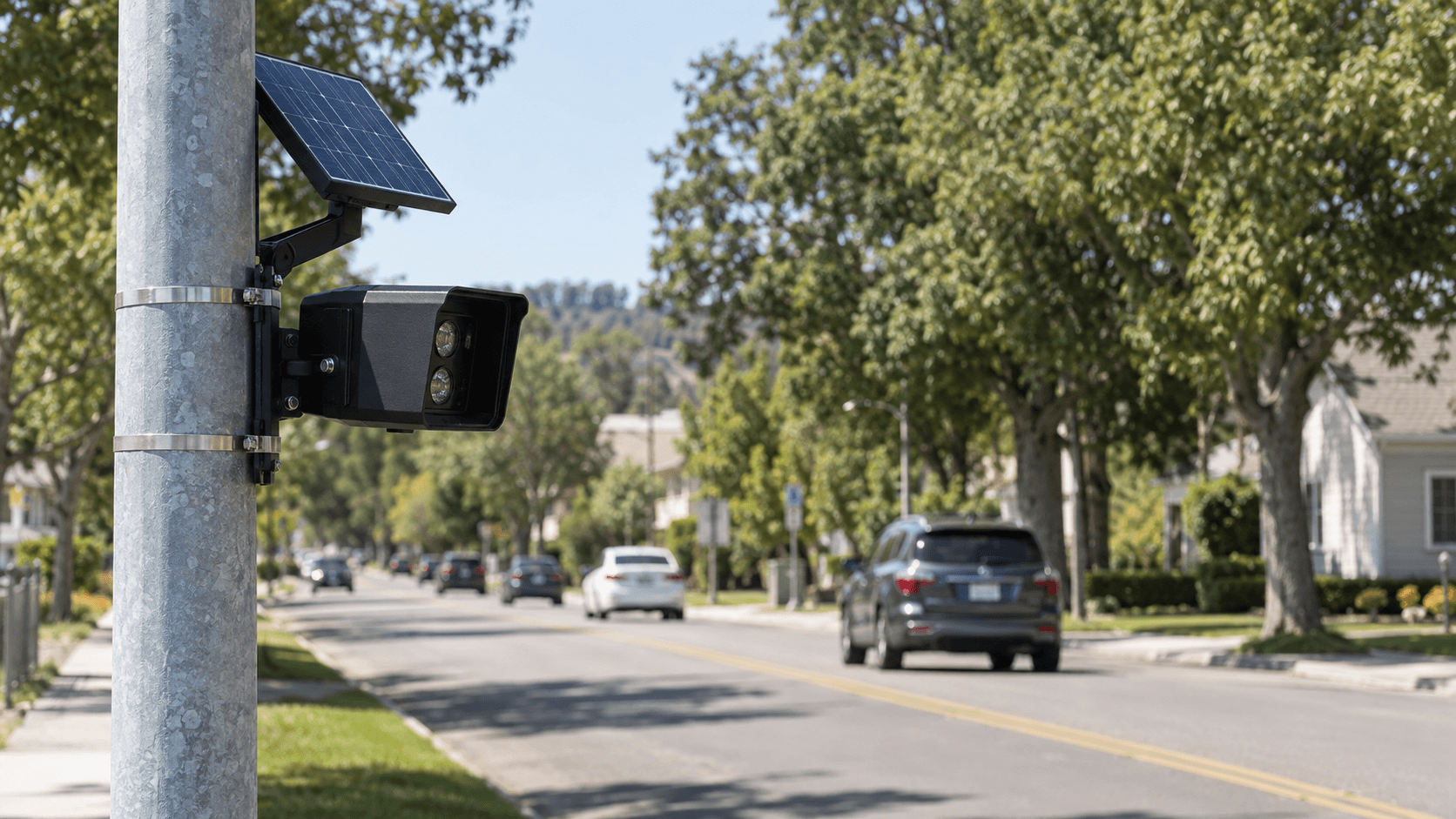
We found no Rhode Island statute that names or regulates license plate readers, after scanning the full text of every section of the General Laws on September 30, 2026. A 2026 bill to regulate them was held for further study. On August 18, 2026, Governor Dan McKee announced that the State Police would not install or activate new readers during a 60-day review of statewide standards, and urged cities and towns to pause new installations. Without a statute, the rules that exist come from agency policies, such as the Providence Police Department's general order.
Information reviewed September 30, 2026.
For related pages, see the Rhode Island entry in the state comparison, the ALPR laws hub, Are Flock cameras legal?, What are Flock cameras?, and our Rhode Island surveillance camera laws guide.
Does Rhode Island have a license plate reader law?
Our search found none. Rather than relying on a keyword search box, we opened the General Laws on the official Law Revision site page by page on September 30, 2026: the index of all 49 titles, all 2,817 chapter index pages, and every one of the 32,852 section pages, with no fetch failures. We then scanned the full text of each section.
- "Plate reader," "plate recognition," "ALPR" and "LPR" appear in no section of the General Laws.
- "Automated traffic" appears only in chapter 31-41.2, the automated traffic violation camera law described below.
- "License plate," "registration plate" and "number plate" appear in specialty plate and registration sections and in a few others, such as secondhand dealer records and sex offender registration. None concerns plate reader data.
- "Location data" and "geolocation" appear in an aircraft monitoring section, a confidentiality section in chapter 39-21.1 that we did not open, and the consumer privacy act's definitions.
The scan covers statutes only. We did not search the Rhode Island Code of Regulations, Attorney General opinions or open-records findings, the Providence Code of Ordinances, or Turnpike and Bridge Authority documents, and we did not search 2025 bills.
What did the Governor announce in August 2026?
On August 18, 2026, the Governor's office published a press release saying that Governor McKee "called for a statewide pause on the installation and activation of any new automated license plate reader (ALPR) cameras and ordered a comprehensive 60-day review aimed at establishing uniform statewide standards governing the use of the technology and the data it collects."
The release directs Colonel Darnell Weaver and the Department of Public Safety, consulting the Rhode Island Police Chiefs' Association, the Rhode Island League of Cities and Towns and other stakeholders, to review the technology and "provide recommendations within 60 days for uniform statewide standards and controls governing the use of ALPR cameras and the data they produce."
What it does and does not require matters:
- State Police. "During the review, the Rhode Island State Police will not install or activate additional ALPR cameras. Existing State Police ALPR cameras may continue to operate subject to current Rhode Island State Police policies and safeguards during the pendency of the review."
- Cities and towns. The Governor is "urging" them to pause new installations during the review. The release does not order them to.
- Legislation. "The Governor will work with lawmakers when they are back in session to advance legislation that codifies these protections."
The announcement is a press release, not a numbered executive order, and it does not itself change any statute. The release gives the review period as 60 days and does not state a calendar date for the recommendations. We did not locate the State Police plate reader policy the release refers to; a search of the State Police website returned no plate reader policy page on its first page of results.
Is Rhode Island considering a plate reader bill?
One bill was filed in 2026. House Bill 8077, An Act Relating to Criminal Procedure, Automated License Plate Readers, sponsored by Representative Dawson and others, would, in the words of its official summary, provide "for municipal and state police authorities to acquire and to utilize automated license plate readers and identify what data may be collected and in what ways the data can be used."
The official bill history shows it was introduced and referred to House Judiciary on February 27, 2026, scheduled for a hearing on March 24, 2026, and on that date the "Committee recommended measure be held for further study." It is not law. We found no Senate companion among the 2026 bills in the Legislature's motor vehicle plates category, and we did not open the bill's full text.
Does Rhode Island's traffic camera law cover plate readers?
No. Chapter 31-41.2, the Rhode Island Automated Traffic Violation Monitoring System Act of 2005, governs automated traffic violation detection systems. Its records section, R.I. Gen. Laws 31-41.2-8, provides:
- The recorded images are not "public records" subject to disclosure "pursuant to subsection 38-2-2(4)(i)" of the public records law.
- "All recorded images that do not identify a violation shall be destroyed within ninety (90) days of the date the image was recorded, unless ordered by a court of competent jurisdiction."
- Images that identify a violation must be destroyed within one year after the citation is resolved, unless a court orders otherwise.
- The privacy of the records must be maintained, though aggregate data without personal identifying information may be released.
These rules apply to automated traffic violation detection systems. Our scan found no mention of plate readers anywhere in the chapter.
Are Rhode Island plate reader records public?
There is no plate-reader-specific rule in the Access to Public Records Act. The general law enforcement exemption in R.I. Gen. Laws 38-2-2(4) covers "[a]ll records maintained by law enforcement agencies for criminal law enforcement and all records relating to the detection and investigation of crime."
That exemption is conditional. Such records are not public "only to the extent that the disclosure" could reasonably be expected to interfere with investigations or enforcement proceedings, would deprive a person of a fair trial or impartial adjudication, or could reasonably be expected to constitute an unwarranted invasion of personal privacy, among other listed harms. We found no court ruling on plate reader data under the Act, and we did not search the Attorney General's open-records findings.
Do other Rhode Island laws reach plate data?
Two came up in our scan, and neither regulates plate readers.
- Consumer privacy. The Rhode Island Data Transparency and Privacy Protection Act, chapter 6-48.1, effective January 1, 2026, defines "precise geolocation data." But R.I. Gen. Laws 6-48.1-3(d) says the chapter "does not apply to any body, authority, board, bureau, commission, district, or agency of this state, or any political subdivision of this state," so it does not reach police plate data. We did not analyze whether it applies to a private company's plate data.
- Tolls. In chapter 24-12, on the Rhode Island Turnpike and Bridge Authority, we opened the toll nonpayment section, 24-12-37, and found no sentence about plate images, records or privacy. We identified no toll-data confidentiality section in that chapter.
How does Providence regulate its plate readers?
Through a police general order. Providence Police General Order 350.05, Automated License Plate Readers, was issued and took effect November 25, 2025, replacing a 2022 version. It is city policy, not state law. As written, it provides:
- Retention. "All ALPR data downloaded to the server should be stored for no longer than thirty (30) days," consistent with the state records retention schedule (LG6), and is then purged unless it is or will likely become evidence in a criminal or civil action or is subject to discovery, in which case it is logged into evidence. The vendor, Flock Safety, purges at 30 days.
- Use. Data "will not be sold, accessed, or used for any purpose other than legitimate law enforcement or public safety purposes" and is used exclusively for criminal investigations.
- Prohibited uses. Personal use, use based solely on a protected characteristic, use that infringes First Amendment rights, targeted surveillance of lawful activity without reasonable suspicion or a judicial warrant, and use "to enforce, comply, or assist with federal immigration enforcement" unless the department is presented with a judicial warrant. The order describes the last two as violations of "this policy and local ordinance." We did not open the ordinance.
- Logging and audits. Every search must be documented with a case or incident number or a reason, and access is logged by user name, date and time. The Office of Professional Standards audits quarterly and "shall randomly select at least 10 detection browsing inquiries" from the preceding period.
- Sharing and transparency. Data may be released to other authorized and verified law enforcement agencies for legitimate purposes, and the order requires a public transparency portal.
- Consequences. Violations can lead to criminal prosecution, civil liability or administrative sanctions.
The department's plate reader web page, which is undated, says 60 Flock cameras are in use under the city's contract, after a 25-camera pilot that began in April 2022. It lists 45 authorized department users and formal memoranda of understanding with 9 partner law enforcement agencies, all within Rhode Island, and says the cameras are not used to issue traffic tickets.
Where are plate readers reported in Rhode Island?
This list is not complete. Besides Providence's active system, our deployment records list the Rhode Island State Police plate reader deployment as approved as of July 30, 2026, citing a Turn to 10 report. Under the Governor's August 18 announcement, the State Police may keep operating existing cameras but will not install or activate additional ones during the review. We did not confirm the number of State Police cameras from an official source.
What have Rhode Island courts said?
We found no Rhode Island court ruling on plate readers, but we were not able to search the courts' decisions effectively, so this is not proof that none exists.
How can I check my local system?
Start with the department's own policy. In Providence, General Order 350.05 and the department's plate reader page are posted online, and the order requires a public transparency portal. Elsewhere, ask the police department for its written plate reader policy, its retention setting, who may search the data and with whom it is shared, its vendor contract, and whether it paused new installations after the Governor's request.
A public records request for plate data would be decided under the conditional law enforcement exemption described above. For how the technology works, see What are Flock cameras?.
Last updated: September 30, 2026. This page reflects the statutes and records described above as we reviewed them; it is general legal information, not legal advice.
Frequently Asked Questions
Is it legal to use a license plate reader in Rhode Island?
We found no Rhode Island statute that prohibits, authorizes or regulates plate readers, after scanning every section of the General Laws on September 30, 2026. Use is governed by agency policy, such as Providence Police General Order 350.05, and by the Governor's August 2026 directive for the State Police.
Did Rhode Island ban license plate readers?
No. The Governor's August 18, 2026 announcement says the State Police will not install or activate additional readers during a 60-day review, while existing State Police cameras continue operating. Cities and towns were urged, not ordered, to pause new installations. It is a press release, not a statute or numbered executive order.
How long does Providence keep plate reader data?
General Order 350.05 says data downloaded to the server should be stored no longer than 30 days and then purged unless it is or will likely become evidence or is subject to discovery. That is Providence policy. We found no state statute setting a retention period.
Does the Rhode Island traffic camera law apply to plate readers?
No. R.I. Gen. Laws 31-41.2-8 makes images from automated traffic violation systems non-public and sets 90-day and one-year destruction deadlines, but it applies only to those enforcement systems and does not mention plate readers.
Is there a pending Rhode Island plate reader bill?
House Bill 8077 (2026) was held for further study by House Judiciary on March 24, 2026 and is not law. The Governor's release says he will work with lawmakers on legislation when they are back in session.
Updates
Independently fact-checked against the cited primary sources
Sources and References
- Rhode Island General Laws, official Law Revision site(webserver.rilegislature.gov).gov
- Governor McKee press release, Aug. 18, 2026: pause of new ALPR installations and 60-day review(governor.ri.gov).gov
- R.I. Gen. Laws 31-41.2-8, security of records (automated traffic violation monitoring systems)(webserver.rilegislature.gov).gov
- R.I. Gen. Laws 38-2-2, Access to Public Records Act definitions(webserver.rilegislature.gov).gov
- R.I. Gen. Laws 6-48.1-3, Data Transparency and Privacy Protection Act scope(webserver.rilegislature.gov).gov
- Providence Police Department General Order 350.05, Automated License Plate Readers (ALPR)(ppd.providenceri.gov).gov
- Providence Police Department, Automated License Plate Readers(ppd.providenceri.gov).gov
- Turn to 10, Rhode Island State Police plate readers under Flock contract (July 30, 2026)(turnto10.com)
- H 8077 (2026), bill text, Rhode Island General Assembly(webserver.rilegislature.gov).gov