
Georgia
Georgia License Plate Reader Laws (2026)
Independently fact-checked against primary sources (last audited October 1, 2026). · 7 primary sources cited on this page. How we verify our legal content
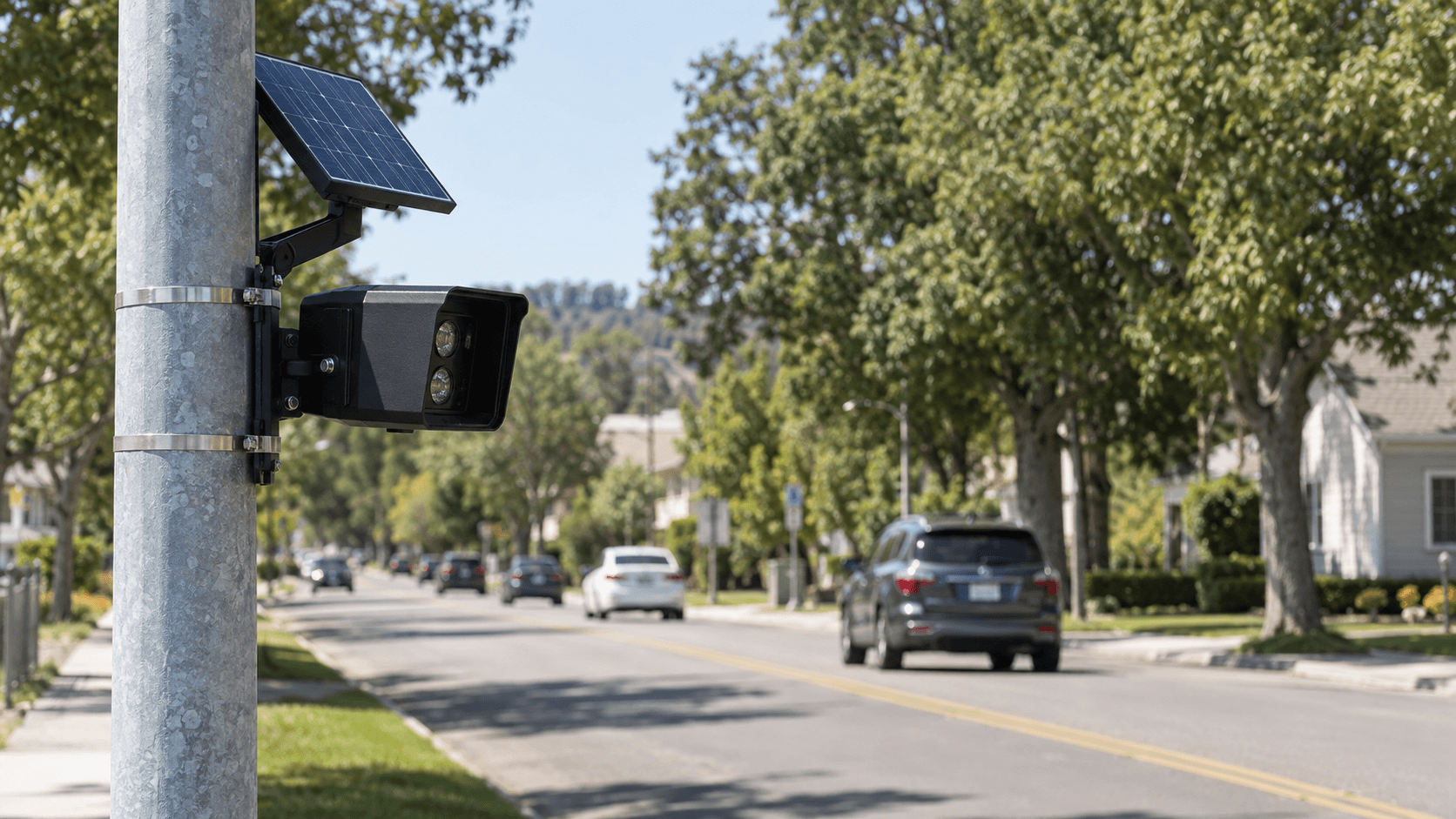
Georgia's main license plate reader statute is O.C.G.A. § 35-1-22, added by HB 79 in 2018. It lets law enforcement agencies collect plate reader data, bars access except for a law enforcement purpose, requires the data to be destroyed within 30 months unless it is tied to a toll violation or a law enforcement purpose, and keeps the data out of the Open Records Act. It is short: it sets no list of approved uses, no audit or public reporting duty, and no warrant requirement.
Information reviewed September 30, 2026.
For related pages, see the Georgia entry in the state comparison, the ALPR laws hub, Are Flock cameras legal?, What are Flock cameras?, and our Georgia surveillance camera laws guide.
Does Georgia have a license plate reader law?
Yes. HB 79 added O.C.G.A. § 35-1-22 to the chapter of general provisions on law enforcement officers and agencies. The official status page shows it as Act 452, signed by the Governor on May 8, 2018, with an effective date of July 1, 2018.
A note on our source. The official public-access site for the Official Code of Georgia Annotated opens a full code section only after a Captcha, and we did not attempt it. What we read is the text of HB 79 as passed on the General Assembly's site, plus the current text of § 35-1-22 that the official code site displays in its search results. Those excerpts match the 2018 act, with one wording change we could see: the definition of "law enforcement agency" in subsection (a)(3) now begins with "the department" where the 2018 act said "the Department of Public Safety."
Georgia's 2025 code revision act, SB 153 (Act 371, signed May 14, 2025, effective July 1, 2025), made one change to § 35-1-22: it replaced "Department of Public Safety" with "department" each time the term appears in the section. We found no other change in that act and no 2026 bill amending the section. The quotations on this page come from the 2018 act; apart from that substitution, they match the current-code excerpts we saw.

What does the statute cover?
Its definitions set the scope. An "automated license plate recognition system" is "one or more high-speed cameras combined with computer algorithms used to convert images of license plates into computer readable data." "Captured license plate data" is broad: "the global positioning device coordinates, date and time, photograph, license plate number, and any other data captured by or derived from an automated license plate recognition system or any other source."
"Law enforcement agency" is also broad. Besides "the department" (the Department of Public Safety in the 2018 text) and the Department of Transportation, it reaches "any other state, federal, local, public transit, school, college, or university agency" responsible for preventing and detecting crime, local government code enforcement, or enforcing penal, traffic, toll violation, regulatory, game or controlled substance laws.
The key limit is the phrase "law enforcement purpose," which the statute defines as "the investigation of an offense or activity initiated by a law enforcement agency."
Who may use plate readers in Georgia, and for what?
Subsection (b) begins: "Law enforcement agencies may collect captured license plate data. Such data shall be stored immediately upon collection and not accessed except for a law enforcement purpose."
That is the whole use rule. Unlike statutes in states such as Utah or Nebraska, § 35-1-22 does not list approved uses (stolen cars, warrants, missing persons and so on). Collection is permitted; access is limited to a law enforcement purpose as defined above.
The section is written around data that law enforcement agencies collect. It does not set separate rules for a business or homeowners association that runs its own readers and keeps the data itself, and we did not complete a search of Georgia's other titles for rules that might (see the last section of this page).
How long can Georgia agencies keep plate reader data?
Thirty months. The statute says: "All such data collected shall be destroyed no later than 30 months after such data were originally collected unless such data are the subject matter of a toll violation or for a law enforcement purpose."
Two exceptions are written into that sentence: data tied to a toll violation and data kept for a law enforcement purpose. The section does not set a separate time limit for data held under either exception.
Thirty months is a ceiling, not a requirement to keep data that long. An agency's own policy or vendor contract can set a shorter period, so the retention for a particular system is a question for that agency's documents.
Who can Georgia plate reader data be shared with?
Subsection (c) says: "Law enforcement agencies may exchange or share captured license plate data with other law enforcement agencies for law enforcement purposes." Because the definition of law enforcement agency includes federal agencies, the section's text does not set a separate federal or out-of-state sharing bar beyond that purpose limit.
Subsection (d)(2) allows an agency to contract with a person "to hold and maintain captured license plate data" for it, and that person is "subject to the policies of the law enforcement agency" and to the criminal provision in (d)(1). In practice, that is the provision that covers a vendor storing an agency's data.
What is the penalty for misusing plate reader data?
Under subsection (d)(1), "[a]ny person who knowingly requests, uses, obtains, or attempts to obtain captured license plate data of a law enforcement agency under false pretenses or for any purpose other than for a law enforcement purpose shall for each such offense, upon conviction thereof, be guilty of a misdemeanor of a high and aggravated nature."
The section does not create a civil damages claim for a person whose data is misused, and it has no rule excluding evidence obtained in violation of it.
Does Georgia require ALPR policies, audits or reports?
Policies, yes. Subsection (e) says any agency deploying a system "shall maintain policies for the use and operation of such system, including but not limited to policies for the training of law enforcement officers in the use of captured license plate data consistent with this Code section."
The section says nothing about audits, access logs, public reports or signs. It does not say the policies must be published. We did not open the Georgia Department of Public Safety's own plate reader policy.
What does Georgia DOT require for readers on state roads?
Georgia DOT's License Plate Reader Guidance, effective October 16, 2024, governs readers placed on its right of way. It is agency guidance, not a statute.
For a state route within a city, a minimum of one reader is permitted per direction of travel. A second may be permitted per direction if the route runs more than 2 center-line miles through the city, and one more per direction for each additional 2 miles. The same spacing applies to state route segments in unincorporated areas. The guidance allows extra readers near limited-access interchanges, at intersections of two principal arterials where at least one is a state route, and at a city or county line for traffic entering the jurisdiction.
On interstates, one reader permit (which can cover more than one reader across the mainline lanes) is allowed in each direction between each interchange, plus one more at the jurisdictional limit.
Readers may be installed on existing GDOT-owned vertical tubular poles, whether concrete or steel. "The only type of attachment that will be permitted will be strapping; no drilling into GDOT poles is permitted," and existing electrical power may not be used.
The permit process ties placement to data sharing. The requesting local agency submits a letter of concurrence that includes a commitment to make the data available, at no additional cost, across the law enforcement community. The letter goes to the Department of Public Safety and, through the Georgia State Patrol, to GDOT. If the reader's data stops being available across the law enforcement community, GDOT will revoke the permit on notification.
Can you get Georgia plate reader data through an open records request?
Not the data itself. Subsection (f) says: "Captured license plate data collected by a law enforcement agency shall not be subject to public disclosure pursuant to Article 4 of Chapter 18 of Title 50," which is the Georgia Open Records Act.
That bar covers captured plate data. The section does not mention camera locations, contracts, policies or audit records, and we did not open the Open Records Act itself or find a court or Attorney General ruling on those records. Whether they can be obtained is a separate question we did not resolve.
What have Georgia courts said?
A CourtListener phrase search for "license plate reader" in published Georgia Supreme Court and Court of Appeals opinions returned 17 results on September 30, 2026, some of them duplicate entries for the same case. We read one in full, Hernandez-Lopez v. State, 319 Ga. App. 662 (2013). A patrol car's reader gave a "wanted person" alert for someone sought for failure to appear in court, and the officer stopped the vehicle. The Court of Appeals affirmed the denial of the driver's motion to suppress, holding that the alert gave the officer reasonable, articulable suspicion for the stop, and that the foundation rules for radar evidence did not apply because the reader was used only to justify the stop, not to prove the offense. It predates § 35-1-22.
The official code site also matched O.C.G.A. § 17-5-30, the general motion to suppress statute, to the phrase "license plate recognition," apparently through its annotations. We did not read that annotation. Beyond the CourtListener phrase search described above, we did not research Georgia case law.
Is Georgia changing its plate reader law?
Not that we found. A phrase search of 2025-2026 bills on the General Assembly's site returned these:
- SB 97 (2025). The official bill page shows it read and referred to the Senate Judiciary Committee on February 5, 2025, with no later action. Its text would add to O.C.G.A. § 16-11-62, the eavesdropping and surveillance statute, a subsection saying "Nothing in this Code section shall apply to an automated license plate recognition system as defined in Code Section 35-1-22." It is not law.
- HB 1553 (2026). This local act for the City of Forest Park became Act 592, signed and effective May 11, 2026. It lets municipal court technology fee proceeds pay for police technology, including "license plate reader systems." HB 1569, a similar act for McDonough, was also signed May 11, 2026. These are funding measures, not limits on use.
- SB 153 (2025), the code revision act described above.
Where are plate readers reported in Georgia?
This list is not complete.
- Atlanta. Our deployment records mark the Atlanta Police Department's system as active, citing an Atlanta News First report dated September 15, 2026.
- Savannah. Our records mark a Savannah Police Department system as approved, citing the city council's action minutes of December 11, 2025.
How can I check my local system?
Start with the agency. Section 35-1-22(e) requires every deploying agency to maintain use and training policies, so ask for that policy and its retention setting, which may be shorter than 30 months. If a vendor holds the data, ask for the contract, since subsection (d)(2) makes the vendor subject to the agency's policies.
For readers on state routes or interstates, ask whether the agency holds a GDOT permit and signed the letter of concurrence. Because the plate data itself is barred from Open Records Act disclosure, a request is likelier to produce a policy, contract or council record than a list of plate reads. For the technology itself, see What are Flock cameras?.
What did we not check?
The official code site's search found § 35-1-22 and § 17-5-30 for "license plate recognition." Searching "license plate" with "toll" also returned §§ 35-3-33, 48-1-2 and 40-1-1, which we did not read for plate data. A plain "license plate" search returned 184 results, mostly about plate issuance and display, which we did not read one by one. Later searches on the site stopped responding.
We did not complete searches for location data, immigration-related data sharing, toll authority data or consumer privacy, and we did not review Titles 40 and 17 in full. Those remain open questions, not confirmed gaps.
Last updated: September 30, 2026. This page reflects the statute and records described above as we reviewed them; it is general legal information, not legal advice.
Frequently Asked Questions
Is it legal for Georgia police to use license plate readers?
O.C.G.A. § 35-1-22 says law enforcement agencies may collect captured license plate data, but the data may not be accessed except for a law enforcement purpose, meaning the investigation of an offense or activity initiated by a law enforcement agency. The statute does not list specific approved uses.
How long can Georgia keep license plate reader data?
The statute requires destruction no later than 30 months after collection unless the data is the subject matter of a toll violation or is kept for a law enforcement purpose. An agency policy or contract may set a shorter period.
Can Georgia agencies share plate reader data with other agencies?
Yes, with other law enforcement agencies for law enforcement purposes. The statute's definition of law enforcement agency includes federal agencies, and the section has no separate federal or out-of-state sharing rule.
Can I get Georgia plate reader data through an open records request?
Captured license plate data collected by a law enforcement agency is not subject to public disclosure under the Open Records Act, according to § 35-1-22(f). Policies, contracts and council records are different documents; we did not verify how the Act treats them.
What happens if someone misuses Georgia plate reader data?
Knowingly requesting, using or obtaining an agency's plate data under false pretenses or for a non-law-enforcement purpose is a misdemeanor of a high and aggravated nature for each offense. The section has no civil damages provision.
Did Georgia pass a new plate reader law in 2025 or 2026?
We found none. SB 97 (2025) shows no action after committee referral. Two 2026 local acts, for Forest Park and McDonough, let court technology fees fund police equipment including license plate reader systems, which is funding rather than regulation. SB 153 (2025), a general Code revision act, changed § 35-1-22 only by shortening references to the Department of Public Safety to the department.
Updates
Independently fact-checked against the cited primary sources
The Law Behind This Article
This article rests on the statutory provisions below, held in our own legal record and retrieved from the official source. Tap a section to read the operative text.
Official Code of Georgia Annotated
§ 35-1-22Prohibition on law enforcement retaining license plate data obtained from automated license plate recognition systems; limited use of data; public disclosure prohibited.In forcecited in 4 of our articles
(a) As used in this Code section, the term: (1) "Automated license plate recognition system" means one or more high-speed cameras combined with computer algorithms used to convert images of license plates into computer readable data. (2) "Captured license plate data" means the global positioning d
Official text (excerpt) · last checked 2026-10-01 · Read the full text in our law library · Verify at legis.ga.gov
Also relied on in: License Plate Reader Laws by State: 2026 Comparison
Search our full record of US law — 2.1 million sections, every state + federal →
Sources and References
- Georgia HB 79 (2017-2018) status page, Act 452(www.legis.ga.gov).gov
- Georgia HB 79 as passed, enacting O.C.G.A. § 35-1-22(www.legis.ga.gov).gov
- Georgia SB 153 (2025) status page, Act 371(www.legis.ga.gov).gov
- Georgia DOT License Plate Reader Guidance (effective Oct. 16, 2024)(www.dot.ga.gov).gov
- Hernandez-Lopez v. State, 319 Ga. App. 662 (2013)(www.courtlistener.com)
- Georgia SB 97 (2025) bill page(www.legis.ga.gov).gov
- Georgia HB 1553 (2026) bill page, Act 592(www.legis.ga.gov).gov
- Atlanta News First report (Sept. 15, 2026)(www.atlantanewsfirst.com)
- Savannah City Council action minutes (Dec. 11, 2025)(www.savannahga.gov).gov