Georgia Supreme Court Holds Autopsy Photographs Are Confidential Under the Open Records Act
Independently fact-checked against primary sources (last audited August 24, 2026). · Reviewed by the RecordingLaw editorial team. · Law checked current as of August 24, 2026. · 2 primary sources cited on this page. How we verify our legal content
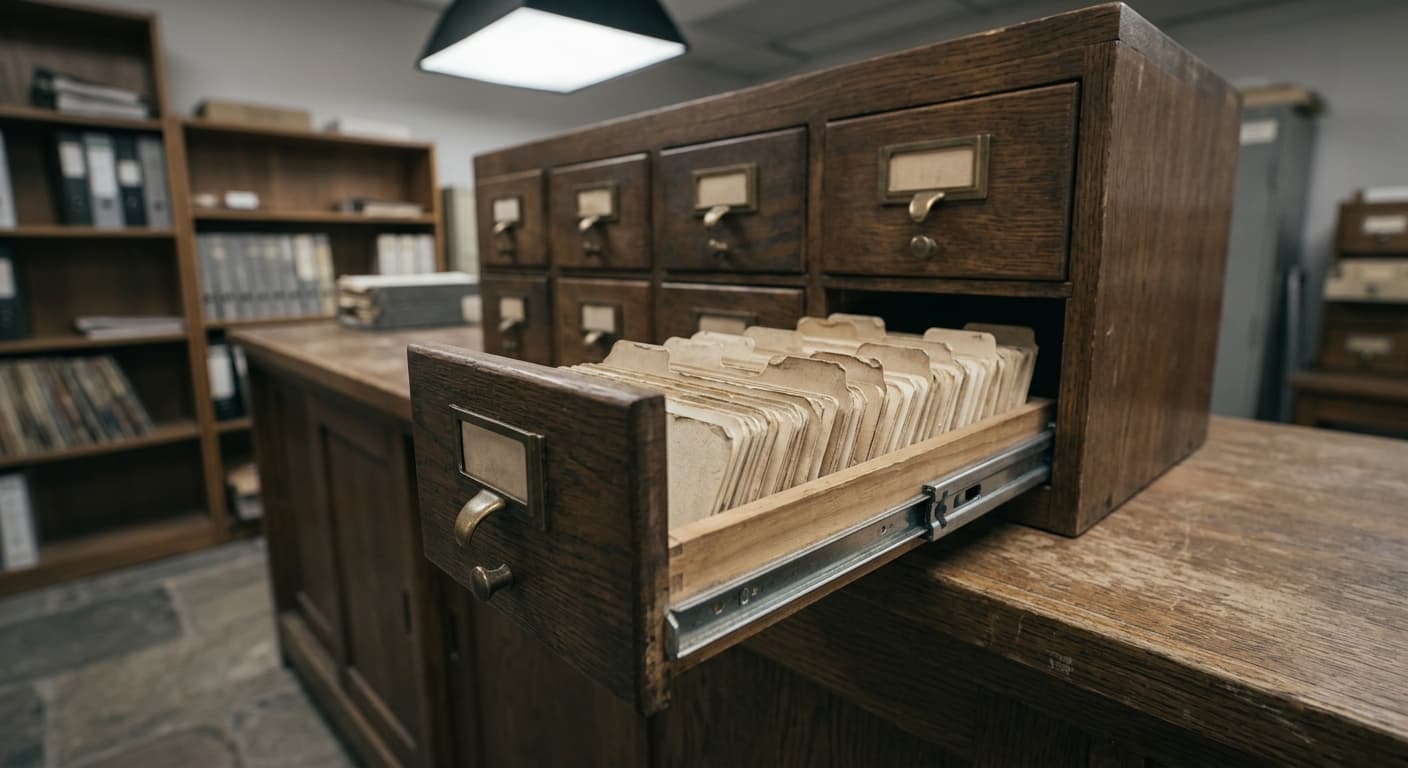
Are autopsy records public? In Georgia, the answer for autopsy photographs is now clearer than ever. On May 6, 2025, the Supreme Court of Georgia unanimously ruled that autopsy photographs held by the government are shielded from disclosure under the state Open Records Act, and that the statute's narrow escape hatches are not easy to pry open.
The case is Wallace v. The State, reported at 321 Ga. 505 and 915 S.E.2d 625, Docket S25A0416. Presiding Justice Warren wrote for a unanimous Court.
Information last verified on June 20, 2026.
What the Case Was About
Antonio Wallace was convicted of felony murder in 2011 and has a pending habeas corpus case. To support that petition, he retained Dr. Jan Gorniak, the former Chief Medical Examiner of Fulton County, to review the victim's autopsy. According to the opinion, Dr. Gorniak asked to see the original autopsy photographs because the copies provided in discovery were blurry and in black and white.
Wallace's counsel then filed a request under the Open Records Act asking the District Attorney's office to send the original autopsy photographs to Dr. Gorniak. The office declined, citing OCGA 45-16-27(d). When Wallace moved for disclosure in the superior court, the trial court denied it, and the Supreme Court affirmed.
A key fact shaped the outcome. The victim died in a hospital in Florida, and the autopsy was performed there by a Florida-licensed medical examiner. The victim's sister testified that the family opposed releasing the photographs.
The Statute: Autopsy Photographs Are Exempt
The Open Records Act sets a general rule of openness. As the Court noted, OCGA 50-18-71(a) provides that all public records shall be open for inspection and copying, except those that by court order or by law are specifically exempted from disclosure.

Autopsy photographs are one such exemption. Quoting the statute, the Court explained that OCGA 45-16-27(d) provides a specific exemption from disclosure for autopsy photographs: "Autopsy photographs shall not be subject to disclosure pursuant to [the Open Records Act]."
That default is strong, but it is not absolute. The same subsection carves out two paths to release. First, the exemption does not apply to disclosure of such photographs to physicians for medical purposes. Second, the statute allows a superior court to order disclosure in closed criminal investigations upon written findings that disclosure is in the public interest and that it outweighs any privacy interest that may be asserted by the deceased's next of kin. Wallace argued he fit both. The Court disagreed on each.
For readers comparing how access works across the country, our overview of death records laws across the United States explains how each state treats death certificates, autopsy reports, and the cause-of-death entry differently.
Why the "Medical Purposes" Exception Did Not Apply
Wallace argued that sending the photos to Dr. Gorniak, a physician, satisfied the medical-purposes exception on its face. The Court read the exception more narrowly. The purpose of Wallace's request was to build a legal claim, specifically to support an ineffective-assistance-of-counsel argument in his habeas case, not to obtain medical care or a medical service for the deceased.
In the Court's view, hiring a physician as a litigation expert does not convert a legal purpose into a medical one. Reading the exception the way Wallace proposed would have let any litigant route an autopsy-photo request through a retained doctor and thereby defeat the confidentiality rule. The Court declined to open that door.
Why the "Public Interest" Exception Did Not Apply
The public-interest exception requires a superior court to make written findings that disclosure is in the public interest and outweighs the next of kin's privacy interest. Two facts sank Wallace's argument here.
First, the victim's family opposed disclosure, which placed a concrete privacy interest on the other side of the scale. Second, Wallace's main public-interest theory rested on a Georgia statute governing who may perform an autopsy, but that statute did not apply because the autopsy took place in Florida, not Georgia. With his central argument removed, the Court found he had not shown a public interest that outweighed the family's objection.
The Court's conclusion was direct. Because the autopsy photographs were not subject to disclosure under the Open Records Act, and the request was not for medical purposes and did not meet the requirements to be in the public interest under OCGA 45-16-27(d), the District Attorney was not required to disclose them. The judgment was affirmed, with all seven justices concurring.
The Concurrence: A Due Process Warning
Chief Justice Peterson agreed with the result but wrote separately to flag a concern for future cases. He noted that the confidentiality statute could collide with a defendant's rights if courts apply it too rigidly.

In his words, OCGA 45-16-27(d) raises serious due process concerns if applied restrictively and, in the proper case, those concerns would require disclosure of autopsy photos under the public interest exception. The point is that the public-interest balancing test must leave room to weigh a prisoner's legitimate need for evidence, not just the family's privacy. Because Wallace had not properly framed that argument, the issue was left for another day. The concurrence signals that the confidentiality rule, while strong, is not immune from constitutional limits.
How This Compares to Other States
Georgia is not unusual in treating autopsy imagery as especially sensitive. The victim in this case died in Florida, which is notable because Florida pioneered strict autopsy-confidentiality rules after the death of NASCAR driver Dale Earnhardt. Under Fla. Stat. 406.135, a photograph or video or audio recording of an autopsy held by a medical examiner is confidential and exempt from the state's public-records law, releasable to the public only by court order upon a showing of good cause.
State approaches to death records more broadly vary widely, and the autopsy photo is often the most protected piece. Ohio, for instance, treats the death certificate as a public record while restricting the medical cause-of-death portion, as detailed in our guide to Ohio death records. Utah is more restrictive about who may obtain a death certificate at all and treats recent records as confidential for a set period, which we cover in our guide to Utah death records. Reading those two against the Georgia ruling shows that the answer to "can I get this record" depends heavily on the state, the specific document, and who is asking.
Analysis: Why This Matters
The following analysis reflects the views of the Recording Law Editorial Team.

The lasting value of Wallace is not the headline that autopsy photos are confidential. That much was already in the statute. The lasting value is the Court's tight reading of the two exceptions, which makes the confidentiality rule far more durable in practice. By holding that a litigation-driven request routed through a retained physician is a legal purpose rather than a medical one, the Court closed a workaround that could otherwise have swallowed the exemption.
The family-privacy thumb on the scale is the other quiet but important move. By treating an objection from the next of kin as a real and weighty interest, the Court signaled that grieving families are not bystanders in these disputes. That is a humane instinct, but it also raises the bar for journalists, researchers, and even defendants who have legitimate reasons to examine how a death was investigated.
The Peterson concurrence is where the next fight lives. A blanket confidentiality rule that lets the State use autopsy evidence to defend a conviction while denying a prisoner access to the same evidence to challenge it would sit uneasily with due process. The Chief Justice all but invited a future litigant to present that argument cleanly. How Georgia courts handle that case will determine whether the public-interest exception has real teeth or is mostly theoretical.
None of this is legal advice. Whether a particular record is releasable, and under which exception, is a fact-specific question that turns on the statute, the court, and the requester's purpose. Anyone seeking or contesting access to autopsy records should consult a licensed attorney in the relevant state.
Frequently Asked Questions
What did the Georgia Supreme Court decide about autopsy photographs?
In Wallace v. The State, decided May 6, 2025, the Court unanimously held that autopsy photographs are exempt from release under the Georgia Open Records Act pursuant to OCGA 45-16-27(d), except for narrow disclosures for medical purposes or where a court finds disclosure is in the public interest and outweighs the family's privacy interest.
What is the citation for the case?
Wallace v. The State, 321 Ga. 505, 915 S.E.2d 625, Docket S25A0416, Supreme Court of Georgia, decided May 6, 2025. Presiding Justice Warren wrote for a unanimous Court, with a concurrence by Chief Justice Peterson.
Why couldn't the requester get the autopsy photos for his expert?
The requester wanted the photos sent to a retained forensic pathologist to support a habeas claim. The Court held that hiring a physician to build a legal claim is a legal purpose, not a medical one, so the medical-purposes exception did not apply. The public-interest exception also failed because the family opposed disclosure and the autopsy occurred in Florida, which defeated his main argument.
Are autopsy photographs ever releasable in Georgia?
Yes, but only narrowly. Under OCGA 45-16-27(d), they may be disclosed to physicians for medical purposes, or a superior court may order disclosure in closed criminal investigations if it finds in writing that disclosure is in the public interest and outweighs the next of kin's privacy interest.
What was the due process concern in the concurrence?
Chief Justice Peterson wrote that OCGA 45-16-27(d) raises serious due process concerns if applied restrictively, and that in the proper case those concerns would require disclosure of autopsy photos under the public interest exception. The issue was not properly raised by Wallace, so the Court left it for a future case.
Does this ruling affect death certificates too?
Not directly. The case is about autopsy photographs, which are a distinct and especially protected record. Access to a death certificate is governed by separate state vital-records rules, and the cause-of-death entry is often treated differently from the rest of the certificate.
Updates
Independently fact-checked against the cited primary sources; governing law re-checked for recent changes
Governing law re-checked for recent changes
Reviewed and approved by an editor
The Law Behind This Article
This article rests on the statutory provisions below, held in our own legal record and retrieved from the official source. Tap a section to read the operative text.
Florida Statutes
§ 406.135Autopsies; confidentiality of photographs and video and audio recordings; confidentiality of reports of minor victims of domestic violence; exemption.In forcecited in 3 of our articles
(1) As used in this section, the term:(a) “Domestic violence” has the same meaning as in s. 741.28. (b) “Medical examiner” means any district medical examiner, associate medical examiner, or substitute medical examiner acting pursuant to this chapter, as well as any employee, deputy, or agent of a medical examiner or any other person who may obtain possession of a report, photograph, or audio or video recording of an autopsy in the course of assisting a medical examiner in the performance of his or her official duties. (c) “Minor” means a person younger than 18 years of age who has not had the disability of nonage removed pursuant to s. 743.01 or s. 743.015. (2)(a) A photograph or video or audio recording of an autopsy held by a medical examiner is confidential and exempt from s. 119.07(1) and s. 24(a), Art. I of the State Constitution, except that a surviving spouse may view and copy a photograph or video recording or listen to or copy an audio recording of the deceased spouse’s autopsy. If there is no surviving spouse, then the surviving parents shall have access to such records. If there is no surviving spouse or parent, then an adult child shall have access to such records.
Official text (excerpt) · last checked 2026-09-03 · Read the full text in our law library · Verify at leg.state.fl.us
Cited in 5 court opinions in our collectionLatest citing opinion in our collection: 2024
In the courts (editorial summary, independently checked):Campus Communications, Inc. v. Earnhardt (2002) upheld 406.135 as constitutional and retroactive and affirmed that no good cause was shown to view the autopsy photographs. Sarasota Herald-Tribune v. State (2005) held the exemption does not reach autopsy photographs admitted into evidence and held by the clerk of court.
Opinions citing this section in our collection:
- Campus Communications, Inc. v. Earnhardt (District Court of Appeal of Florida 2002, 821 So. 2d 388)✓A company sought under the Public Records Act to inspect and copy Dale Earnhardt's autopsy photographs; the court held 406.135 is a constitutional, not overbroad, exemption, applied it retroactively to the pending request, and affirmed the finding of no good cause.
- Sarasota Herald-Tribune v. State (District Court of Appeal of Florida 2005, 924 So. 2d 8)✓News organizations were barred from viewing crime scene and autopsy photographs admitted at a murder trial; the court held 406.135 did not make those exhibits confidential because they were held by the court clerk, not a medical examiner, and (3)(c) exempts criminal cases.
- Atkins v. Bennett (District Court, M.D. Florida 2024)✓Defendants moved to seal summary judgment exhibits containing sheriff's office surveillance techniques and autopsy photographs; the court granted sealing for good cause, noting that 406.135(2) exempts autopsy photographs and that its purposes are served by sealing.
Identified automatically from the court opinions citing this section — not a ranking of which case controls.
Also relied on in: Are Autopsy Reports Public Record in Florida? (2026), How to Find a Cause of Death in Florida (2026)
Official Code of Georgia Annotated
§ 45-16-27When inquest to be held; special situations; coroner's fee; issuance of subpoenas; cost of copying; limited disclosure of photographs.In forcecited in 2 of our articles
(a) Coroners shall require an inquest to be conducted in their respective counties as follows: (1) When any individual dies under any circumstances specified in paragraphs (1) through (11) of subsection (a) of Code Section 45-16-24; provided, however, that an inquest shall not be required to b
Official text (excerpt) · last checked 2026-08-04 · Read the full text in our law library · Verify at legis.ga.gov
Cited in 4 court opinions in our collectionLatest citing opinion in our collection: 2025
Opinions citing this section in our collection:
- Wallace v. State (Supreme Court of Georgia 2025, 321 Ga. 505)“…losure in the superior court where he was convicted. OCGA § 45-16-27 (d) excludes autopsy photographs from…”
- Georgia Lions Eye Bank, Inc. v. Lavant (Supreme Court of Georgia 1985, 255 Ga. 60)“…stices concur, except Marshall, P. J., who dissents. OCGA § 45-16-27 (a) (1) provides, in part, that coroner…”
- Fortner v. State (Court of Appeals of Georgia 2019, 350 Ga. App. 226)“…o commit a felony, but was acquitted of those counts. OCGA § 45-16-27 (b) provides: "On and after January 1,…”
Identified automatically from the court opinions citing this section — not a ranking of which case controls.
Also relied on in: Are Autopsies Public Records? Vital Records Explained
§ 50-18-71Right of access; timing; fees; denial of requests; impact of electronic records.In forcecited in 3 of our articles
(a)(1) All public records shall be open for personal inspection and copying, except those which by order of a court of this state or by law are specifically exempted from disclosure. Records shall be maintained by agencies to the extent and in the manner required by Article 5 of this chapter.
Official text (excerpt) · last checked 2026-09-03 · Read the full text in our law library · Verify at legis.ga.gov
Cited in 50 court opinions in our collectionLatest citing opinion in our collection: 2026
In the courts (editorial summary, independently checked):McFrugal Rental of Riverdale, Inc. v. Garr (1992) held OCGA 50-18-71 must be narrowly construed, bars an inspection fee when a citizen seeks only to inspect routinely public records, and puts the burden of justifying a fee on the custodian. Campaign for Accountability (2018) held ORA exemptions permit, not prohibit, disclosure.
Opinions citing this section in our collection:
- Deal v. Coleman (Supreme Court of Georgia 2013, 294 Ga. 170)✓Rejected Kia job applicants sought state hiring records; reading the Open Records Act's access provisions, including 50-18-71(a), the court held the right of access is a public right that cannot vest in a requester, so a new exemption applied to their pending suit.
- McFrugal Rental of Riverdale, Inc. v. Garr (Supreme Court of Georgia 1992, 262 Ga. 369)✓A company asked to inspect city council minutes, zoning maps and ordinances, and the city demanded an hourly supervision fee; the court read 50-18-71 narrowly, holding no fee may be charged for inspecting routinely public records and that the custodian must justify any fee.
- Schick v. Board of Regents of the University System of Georgia (Court of Appeals of Georgia 2015, 334 Ga. App. 425)✓A student editor sought records on college layoffs; the trial court fined the Board $1,000 for withholding records without citing the specific exemption by Code section as 50-18-71(d) requires, a ruling left undisturbed while the appeal turned on a different exemption.
Identified automatically from the court opinions citing this section — not a ranking of which case controls.
Also relied on in: Georgia Public Records Laws: The Georgia Open Records Act Explained, Are Autopsy Reports Public in Georgia? (2026 Guide)
Search our full record of US law — 2.1 million sections, every state + federal →
Sources and References
- Wallace v. The State, S25A0416, Supreme Court of Georgia, slip opinion (decided May 6, 2025): holding that autopsy photographs are exempt from the Open Records Act under OCGA 45-16-27(d); unanimous opinion by Presiding Justice Warren with concurrence by Chief Justice Peterson quoting OCGA 50-18-71(a) and the medical-purposes and public-interest exceptions(gasupreme.us).gov
- CourtListener (Free Law Project) record for Wallace v. State, Supreme Court of Georgia, decided May 6, 2025; reporter citations 321 Ga. 505 and 915 S.E.2d 625; docket S25A0416(courtlistener.com)
- CourtListener API search by docket S25A0416 confirming Wallace v. State, Supreme Court of Georgia, date filed 2025-05-06, citations 321 Ga. 505 and 915 S.E.2d 625(courtlistener.com)
- Fla. Stat. 406.135, confidentiality of autopsy photographs and recordings held by a medical examiner; exempt from the public-records law (s. 119.07(1)) and releasable to the public only by court order upon a showing of good cause (origin s. 1, ch. 2001-1)(leg.state.fl.us).gov