Braun's Law Signed: Two of California's Four DUI Bills Wait Until 2031
Independently fact-checked against primary sources (last audited September 26, 2026). · 14 primary sources cited on this page. How we verify our legal content
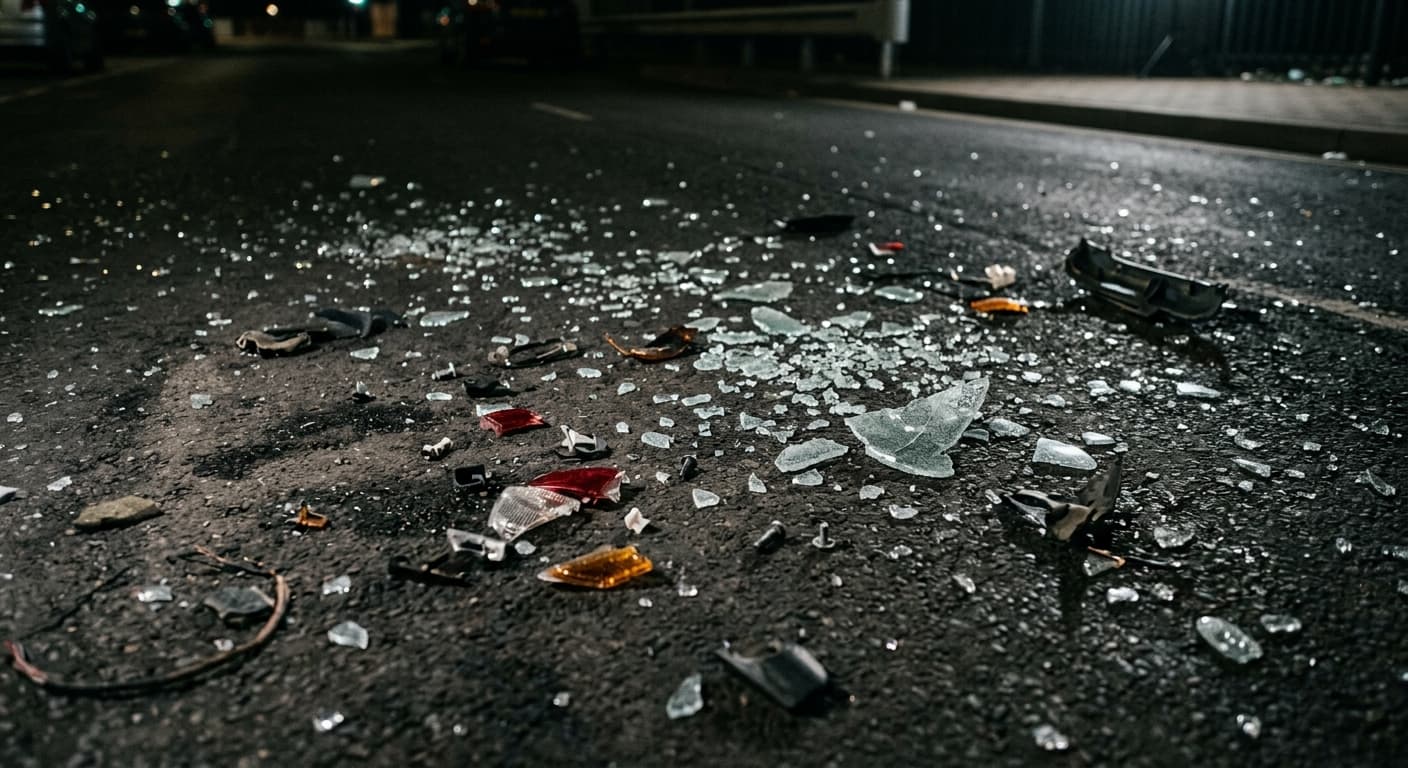
Governor Newsom announced on September 25, 2026 that he had signed a four-bill California DUI package headed by SB 907, called Braun's Law. All four bills are now chaptered, and the toughest provisions in the package do not become operative until January 1, 2031.
Information last verified on September 28, 2026. This is a developing story; we update it as the record changes.
Status: All four bills are law. The Legislature's own action log now carries "Approved by the Governor." and a chaptering entry for each, every entry dated 09/25/26: SB 907 as Chapter 443, AB 1546 as Chapter 444, AB 1685 as Chapter 445 and AB 1687 as Chapter 446, Statutes of 2026. When this article first published on September 26, the three Assembly bills still showed only "Enrolled and presented to the Governor" with no chapter number. We re-read each action log on September 28, 2026 and the missing entries are now in place.
Jurisdiction scope: This article covers California statutes only, and it addresses what the enacted and enrolled bill texts say. It does not cover DUI law in any other state, and it does not address federal law. For the penalties that apply to a California DUI arrest today, see our guide to California's current DUI penalty ladder.
What Happened
The Governor's Office published a release on September 25, 2026 announcing the signing of SB 907 and a package of DUI bills. SB 907 is authored by Senator Bob Archuleta of Pico Rivera. It is named for Braun Levi, an 18-year-old Loyola High School student from Pacific Palisades who, according to the Governor's release, was struck and killed by a suspected repeat drunk driver in May 2025 while walking in Manhattan Beach.
Governor Newsom is quoted in that release saying that "Getting behind the wheel when you are impaired is inexcusable", a sentence the release continues by adding that this is especially so where a life is lost. Jennifer Levi, Braun's mother, is quoted saying: "Today, I am proud to be a Californian and inspired by what can happen when people use their voices and leaders choose to take action."
The official legislative record told a more precise story than the announcement did, and for three days the difference mattered to anyone trying to work out what the law was.
For SB 907, the record is complete. The bill history shows it was enrolled and presented to the Governor at 2 p.m. on September 9, 2026, then two entries dated September 25, 2026: "Approved by the Governor." and "Chaptered by Secretary of State. Chapter 443, Statutes of 2026."
For the other three, the record is now complete as well. When this article first published, at 11:24 UTC on September 26, 2026, the action log for AB 1546 ended at "Enrolled and presented to the Governor at 1:30 p.m." on September 14, AB 1685 ended at "Enrolled and presented to the Governor at 4 p.m." on September 3, and AB 1687 ended at "Enrolled and presented to the Governor at 1 p.m." on September 9. None carried an approval entry or a chapter number. We declined to treat that silence as a contradiction of the Governor's announcement, because the chaptering step routinely lags a public signing.
Re-reading each action log on September 28, 2026 confirms it did lag, and has now caught up. Each of the three bills carries "Approved by the Governor." dated 09/25/26 and a chaptering entry of the same date: "Chaptered by Secretary of State - Chapter 444, Statutes of 2026." for AB 1546, Chapter 445 for AB 1685 and Chapter 446 for AB 1687. The clerical entries trailed the signing announcement by three days.
The signing window itself is close to closing. Article IV, Section 10(b)(2) of the California Constitution provides that "Any bill passed by the Legislature before September 1 of the second calendar year of the biennium of the legislative session and in the possession of the Governor on or after September 1 that is not returned on or before September 30 of that year becomes a statute." All four bills were passed in August and presented in September, so September 30 was the outside date, and the Governor acted on September 25, five days inside it.
What Braun's Law Actually Changes
SB 907 is titled "An act to amend Sections 20001 and 23635 of the Vehicle Code, relating to driving offenses." Two sections, and each does something quite different.
Vehicle Code 23635, the advisement. This is the part the bill is named for, and it is narrower than the coverage suggests. The section already existed. Added by Stats. 1998, Ch. 118, it already required a court to state on the record its reasons when a DUI allegation is dismissed, when a lesser offence is substituted, or when a prior conviction is stricken, and required the prosecution to file a written statement of reasons when it moves for one of those things. Anyone describing those requirements as new is describing 1998 law.
What changes is the structure. The section as currently codified carries no subdivision letters at all; it runs as continuous unlettered text. SB 907 is what breaks it into (a) through (d), carrying the 1998 requirements forward as (b) and (c). So a citation to "Vehicle Code 23635(b)" does not refer to anything until the amendment is operative.
What SB 907 adds is subdivision (a), which gives the section its name, and subdivision (d), which reads in full:
"(d) If a defendant pleads guilty or no contest to a different or lesser offense as a substitute for an alleged violation of Section 23152, the court shall give an advisement pursuant to Section 23593."
Section 23593 is the existing Watson advisement. Its operative text is a script the court must read:
"You are hereby advised that being under the influence of alcohol or drugs, or both, impairs your ability to safely operate a motor vehicle. Therefore, it is extremely dangerous to human life to drive while under the influence of alcohol or drugs, or both. If you continue to drive while under the influence of alcohol or drugs, or both, and, as a result of that driving, someone is killed, you can be charged with murder."
Until now that advisement attached to convictions: Section 23593(a) requires it for a person convicted of a violation of Section 23103 as specified in Section 23103.5, or of Section 23152 or 23153. The gap SB 907 closes is the plea to a substituted charge. A driver whose DUI is negotiated down to something that is not one of those listed offences could previously walk out without ever having been read the warning. From January 1, 2027, the court must read it whenever the plea is to a lesser or different offence substituted for a Section 23152 allegation.
That warning is not decorative. California recognises second-degree murder on an implied-malice theory for a later drunk-driving death, the doctrine that takes its name from People v. Watson (1981) 30 Cal.3d 290. The advisement is the record that the driver was told. Section 23593(c) requires the fact of the advisement to be noted on the abstract of conviction sent to the DMV, which is how it surfaces in a later prosecution.
Vehicle Code 20001, the hit and run penalties. This is the half of SB 907 that changes exposure the most, and it is barely mentioned in the announcement. The enacted text adds a new subparagraph (b)(1)(B):
"A person who violates subdivision (a) within 10 years of a separate violation of Section 23103, as specified in Section 23103.5, 23152, or 23153, or a violation of Section 191.5 of the Penal Code, or paragraph (1) of subdivision (c) of Section 192 of the Penal Code, that resulted in a conviction, shall be punished by imprisonment in the state prison for two, three, or four years, or in a county jail for not more than one year, or by a fine of not less than one thousand dollars ($1,000) nor more than ten thousand dollars ($10,000), or by both that imprisonment and fine."
A parallel new subparagraph (b)(2)(B) covers the worse case. Where the crash caused death or permanent serious injury and the driver has one of those qualifying priors within 10 years, the term becomes three, four or five years in state prison, or 90 days to one year in county jail, and a fine of $1,000 to $10,000. Note the conjunction: in (b)(2)(B) the fine is joined by "and" rather than the "or" used elsewhere in the section. As in (b)(2)(A), the subparagraph keeps the proviso that the court, "in the interests of justice and for reasons stated in the record, may reduce or eliminate the minimum imprisonment required by this paragraph."
The Legislative Counsel's Digest summarises the shift as making the injury-crash offence "punishable as a misdemeanor or a felony" where existing law made it a misdemeanour, and imposing "an increased felony penalty" for the death or serious-injury offence. The qualifying prior is a condition of both halves, not only the second. The Digest attaches the new penalties "if either of those violations occurred within 10 years of a separate driving under the influence, reckless driving, or gross vehicular manslaughter violation, as specified." An injury hit and run by a driver with no such prior stays where it was, under subparagraph (b)(1)(A). The definition of "permanent, serious injury" is unchanged and still means, under subdivision (d), "the loss or permanent impairment of function of a bodily member or organ."
The practical reach here is wider than DUI. The qualifying priors include wet reckless under Section 23103.5, DUI under Sections 23152 and 23153, gross vehicular manslaughter while intoxicated under Penal Code 191.5, and vehicular manslaughter under Penal Code 192(c)(1). A driver with any of those on the record in the last decade who then leaves an injury scene is now looking at a state prison triad. Readers dealing with the underlying offence can start from California's hit and run statute and its penalties.
The Parts That Wait Until 2031
This is the finding that most changes how the package should be read, and it comes from the bills themselves rather than from any summary of them.
AB 1687, Irene's Law (Assemblymember Tom Lackey, R-Palmdale). The bill adds a new Vehicle Code 13352.7. Subdivision (a) provides:
"Notwithstanding any other law, upon a conviction or finding of a violation of subdivision (a), (b), (d), (e), or (g) of Section 23153 and if the offense occurred within 10 years of four or more separate violations of Section 23103, as specified in Section 23103.5, 23152, 23153, or any combination thereof, that resulted in a conviction, the privilege of a person to operate a motor vehicle shall be suspended for 72 months."
Subdivision (b) sets the reinstatement conditions: proof of financial responsibility plus successful completion of a 30-month DUI programme, an 18-month programme where a 30-month one is unavailable in the person's county of residence or employment, or a programme specified in Penal Code Section 8001. The interlock requirement sits in a different place in the section. Subdivision (c) lets the person apply for a restricted licence after 12 months of the revocation period, and subdivision (c)(4) makes that restricted licence conditional on agreeing "to maintain a functioning, certified ignition interlock device for a mandatory term of 72 months." The Legislative Counsel's Digest describes the same interlock term as one of the requirements attaching to reinstatement, so the two read slightly differently; the operative text is subdivision (c).
Then subdivision (d): "This section shall become operative January 1, 2031." The Legislative Counsel's Digest says the same thing in its own words, describing a requirement on the department "commencing on January 1, 2031."
AB 1685 (Lackey). The bill amends, repeals and adds Vehicle Code 1808 and 12810. Its substantive change assigns three DMV violation points to a conviction for gross vehicular manslaughter while intoxicated under Penal Code 191.5(a), an offence that currently carries no specific point value in Section 12810 at all, while the less serious Penal Code 191.5(b) already carries two. It also extends the ten-year abstract-disclosure window in Section 1808 to cover Penal Code 191.5(a). Each amended section is paired: the current version "shall remain in effect only until January 1, 2031, and as of that date is repealed," and the replacement "shall become operative on January 1, 2031." The Digest states flatly: "This bill would make its provisions operative January 1, 2031."
AB 1546 (Assemblymember Nick Schultz, D-Burbank) is the exception, and it takes a little care. The bill contains both an ordinary set of amendments (Sections 4, 5 and 6) and an alternative set carrying 2031 dates (Sections 4.1, 4.2, 5.1, 5.2, 6.1 and 6.2). It would be easy to read those 2031 dates as the bill's timetable. They are not. They are double-jointing, the drafting device California uses when two bills amend the same code section in the same year. Section 9 of AB 1546 says the alternatives "shall only become operative if (1) both bills are enacted and become effective on or before January 1, 2027, (2) each bill amends Section 23550 of the Vehicle Code, and (3) this bill is enacted after Assembly Bill 1830."
AB 1830 was not enacted. Its action log ends on August 19, 2026 with "Read second time. Ordered to third reading." It never passed the Senate. So the condition fails, the alternatives never operate, and Section 5 is the version that governs, on the ordinary January 1, 2027 date. Section 5 rewrites Vehicle Code 23550 into two subdivisions. Subdivision (a) covers three priors in 10 years and keeps the existing wobbler structure. Subdivision (b) is the change:
"If a person is convicted of a violation of Section 23152 and the offense occurred within 10 years of four or more separate violations of Section 23103, as specified in Section 23103.5, or Section 23152 or 23153, or any combination thereof, that resulted in convictions, that person shall be punished by imprisonment pursuant to subdivision (h) of Section 1170 of the Penal Code, and by a fine of not less than three hundred ninety dollars ($390) nor more than one thousand dollars ($1,000)."
The county-jail alternative that appears in subdivision (a) is absent from subdivision (b). That is what turns the four-prior case from a wobbler into a straight felony.
So the package splits cleanly in two. SB 907 and AB 1546 operate from January 1, 2027. AB 1685 and AB 1687 wait until January 1, 2031.
What California DUI Law Says Today
None of this changes anything for a DUI arrest that happens this week. Until January 1, 2027 the existing structure governs, and it is worth restating so the new law can be measured against it.
California counts priors within a 10-year lookback. Vehicle Code 23550 currently treats a DUI with three or more priors in that window as a wobbler, punishable under Penal Code 1170(h) or by 180 days to one year in county jail, with a $390 to $1,000 fine, DMV revocation, and a three-year habitual traffic offender designation. The words "or more" are what AB 1546 strikes from subdivision (a), which is how the four-prior case is split into a subdivision of its own and loses the jail alternative. Vehicle Code 23550.5 covers the felony-prior cases. The full ladder, including the first-offence and administrative suspension tracks, is set out in our California DUI penalties guide, and the state-by-state differences are collected on the DUI laws by state hub.
Two related points readers commonly run into. A DUI arrest that also produces a collision claim runs on a separate civil track, covered in our note on how fault and insurance work after a California crash. And a DUI conviction has a long tail on a record, which is the subject of our guide to record relief and dismissal in California.
Analysis: Why This Matters
The following is analysis from the Recording Law Editorial Team.
The gap between how this package was announced and how it was drafted is the story, and it is not a gotcha. It is a legislative design choice with consequences readers should be able to see.
Two of the four bills carry a January 1, 2031 operative date. That is four years and three months after the signing. Delayed operative dates in California usually signal one of a few things: a department needs lead time to build systems, a fiscal committee wanted the cost pushed outside the current planning window, or the delay was the price of moving the bill at all. Vehicle Code 13352.7 and the Section 12810 point schedule both run through DMV systems, so a lead time is not surprising. Four years is a long lead time. We are not in a position to say which explanation applies here, and we will not guess.
What we can say is what the delay does. A reader who takes the announcement at face value would believe that a fourth DUI conviction with an injury now brings a six-year licence suspension and a six-year interlock. It does not, and will not until 2031, and the record of the bill says so in a single sentence in subdivision (d). Between now and then, the governing provisions are the ones already on the books.
The AB 1546 point is the opposite kind of trap. Read quickly, the bill looks like another 2031 measure, because six of its sections carry 2031 dates. Reading the contingency clauses and then checking AB 1830's status is what shows those sections to be dead letters and the 2027 version to be the operative one. A summary that reported AB 1546 as a 2031 change would understate what actually happens in fifteen months.
On Braun's Law itself, the advisement extension is a modest provision doing a specific job. The Watson doctrine only works as a deterrent if the driver was told, and the abstract records that they were told. Plea bargaining was the hole in that record, because the advisement statute keys to a list of convictions rather than to the DUI allegation that was charged. Closing that hole is a sensible, narrow fix. It is also, by design, a fix whose effect shows up only in a later prosecution of a later offence, which is a slower and less visible mechanism than the announcement's framing implies.
The hit and run amendments in the same bill are, in our reading, the provision most likely to change a real sentence in 2027, and they received the least attention.
What Happens Next
Three things were worth watching, each with a date attached. The first has now closed.
First, chaptering, which is done. AB 1546, AB 1685 and AB 1687 acquired their approval entries and chapter numbers on the leginfo action log, all dated 09/25/26 and confirmed there on September 28, 2026, as Chapter 444, Chapter 445 and Chapter 446, Statutes of 2026. Nothing in the package is waiting on the Governor.
Second, January 1, 2027, when SB 907 and the operative sections of AB 1546 take effect. From that date the Section 23593 advisement attaches to substituted pleas, and a DUI with four or more priors in 10 years is a straight felony.
Third, January 1, 2031, when Vehicle Code 13352.7 and the AB 1685 amendments become operative.
How This Affects You
These are general observations, not advice about any particular case.
Nothing in this package changes the penalty for an offence committed before its operative date. California applies the law in force when the offence occurred, so a 2026 arrest is measured against the 2026 statutes.
Anyone reading a summary that says California has just imposed six-year licence revocations on repeat DUI offenders should check the operative date before relying on it. The provision exists, it is enacted or on the verge of being enacted, and it does not operate until 2031.
The prior-conviction definitions in these bills are broader than the word DUI suggests. A wet reckless under Section 23103.5 counts as a prior for the new hit and run enhancement and for the four-prior triggers, and so do the vehicular manslaughter offences in Penal Code 191.5 and 192(c)(1). A person who believes a plea to a reduced charge left them with a clean slate for these purposes would be reading the statutes too narrowly.
This is general legal information, not legal advice. It covers California statutes as recorded on the Legislature's own bill texts and action logs, verified on September 28, 2026, and it reports the state of the record on that date. Bill status and chaptering can change, and how any provision applies turns on the specific offence date and charging decisions in an individual case. Consult a lawyer licensed in California about your own situation.
Related articles
- California DUI penalties, BAC limits and licence consequences
- DUI laws by state
- California hit and run law and its penalties
- Fault and insurance after a California car accident
- Record relief and dismissal in California
Last updated: 2026-09-28. This is a developing story; details verified as of 2026-09-28.
Frequently Asked Questions
Is Braun's Law in effect now?
No. SB 907 was approved by the Governor and chaptered as Chapter 443, Statutes of 2026 on September 25, 2026, but it carries no urgency clause and no special operative date. Under Article IV, Section 8(c)(1) of the California Constitution a statute enacted at a regular session goes into effect on January 1 following a 90-day period from enactment, which puts SB 907 at January 1, 2027.
What does Braun's Law actually require?
It names Vehicle Code 23635 as Braun's Law and adds a new subdivision (d) requiring the court to give the Vehicle Code 23593 advisement when a defendant pleads guilty or no contest to a different or lesser offence substituted for an alleged Vehicle Code 23152 violation. The same bill separately rewrites the hit and run penalties in Vehicle Code 20001.
Did Braun's Law create the requirement that judges explain why they reduce a DUI charge?
No. Vehicle Code 23635 already required the court to state its reasons on the record for a dismissal, substitution or striking of a prior, and required the prosecution to file a written statement of reasons. Those requirements date from Stats. 1998, Ch. 118. The section as currently codified has no subdivision letters; SB 907 restructures it into (a) through (d), carrying the 1998 requirements forward as (b) and (c) and adding the plea advisement as (d).
What is the Watson advisement?
It is the warning scripted in Vehicle Code 23593(a), which tells a driver that impaired driving is extremely dangerous to human life and that if they continue and someone is killed they can be charged with murder. It refers to People v. Watson (1981) 30 Cal.3d 290, under which a drunk-driving death can support second-degree murder on an implied-malice theory. Section 23593(c) requires the fact that the advisement was given to be recorded on the abstract of conviction sent to the DMV.
When does the 72-month licence suspension for repeat DUI offenders start?
January 1, 2031. AB 1687, Irene's Law, adds Vehicle Code 13352.7, whose subdivision (d) states that the section becomes operative January 1, 2031. It applies to a conviction under specified subdivisions of Section 23153, DUI causing injury, where the offence occurred within 10 years of four or more qualifying prior violations, and it pairs the 72-month suspension with a 72-month mandatory ignition interlock condition.
When does the extra DMV point for gross vehicular manslaughter while intoxicated start?
January 1, 2031. AB 1685 assigns three violation points to a conviction under Penal Code 191.5(a). Its Legislative Counsel's Digest states that the bill makes its provisions operative January 1, 2031, and each amended section is paired with a current version that is repealed on that date.
Does a fourth DUI become an automatic felony in California?
Under AB 1546 the four-prior case moves to Vehicle Code 23550(b), which prescribes imprisonment under Penal Code 1170(h) and a fine of $390 to $1,000 with no county-jail alternative, which is what makes it a straight felony rather than a wobbler. That change is on the ordinary January 1, 2027 timetable. The three-prior case stays in subdivision (a) and keeps its jail alternative.
Why do some sections of AB 1546 say 2031?
Those are double-jointing sections. California uses them when two bills amend the same code section in the same year. Sections 8, 9 and 10 of AB 1546 make the alternative versions operative only if AB 1830 was also enacted and was enacted first. AB 1830's action log ends on August 19, 2026 with a second reading, so it was not enacted and those alternative sections do not operate.
Were all four bills definitely signed?
Yes. The Governor's Office announced on September 25, 2026 that all four were signed, and the Legislature's action log now confirms it for every one of them. SB 907 is Chapter 443, AB 1546 is Chapter 444, AB 1685 is Chapter 445 and AB 1687 is Chapter 446, Statutes of 2026, and each approval and chaptering entry is dated 09/25/26. The three Assembly bills still showed only enrolled and presented on September 26; their entries were confirmed on the action log on September 28, 2026.
Does this package change the penalty for a DUI arrest that happened in 2026?
No. California measures an offence against the law in force when the offence occurred, so an arrest before an operative date is governed by the existing statutes. The current penalty structure, including the 10-year lookback and the existing revocation and interlock terms, continues to apply until the relevant provisions take effect.
Updates
Updated after re-reading the Legislature's action log: AB 1546, AB 1685 and AB 1687 now carry approval and chaptering entries dated 09/25/26 as Chapter 444, Chapter 445 and Chapter 446, Statutes of 2026. The article previously reported that only SB 907 had been chaptered, because those three entries had not yet been posted when it published on September 26, 2026.
Independently fact-checked against the cited primary sources
The Law Behind This Article
This article rests on the statutory provisions below, held in our own legal record and retrieved from the official source. Tap a section to read the operative text.
California Vehicle Code
§ 23593In force
(a) The court shall advise a person convicted of a violation of Section 23103, as specified in Section 23103.5, or a violation of Section 23152 or 23153, as follows: “You are hereby advised that being under the influence of alcohol or drugs, or both, impairs your ability to safely operate a motor vehicle. Therefore, it is extremely dangerous to human life to drive while under the influence of alcohol or drugs, or both. If you continue to drive while under the influence of alcohol or drugs, or both, and, as a result of that driving, someone is killed, you can be charged with murder.” (b) The advisory statement may be included in a plea form, if used, or the fact that the advice was given may be specified on the record. (c) The court shall include on the abstract of the conviction or violation submitted to the department under Section 1803 or 1816, the fact that the person has been advised as required under subdivision (a).
Official text (excerpt) · last checked 2026-07-28 · Read the full text in our law library · Verify at leginfo.legislature.ca.gov
Cited in 23 court opinions in our collectionLatest citing opinion in our collection: 2026
Opinions citing this section in our collection:
- People v. Western (In re Western) (California Court of Appeal, 5th District 2017, 224 Cal. Rptr. 3d 745)“…ced on probation. The ward signed an advisement pursuant to Vehicle Code section 23593 and People v. Watson (1981) 30 Cal…”
- In re Dean W. (California Court of Appeal 2017)“…ced on probation. The ward signed an advisement pursuant to Vehicle Code section 23593 and People v. Watson (1981) 30 Cal.3d 2…”
- People v. Hendrix (California Court of Appeal 2013, 214 Cal. App. 4th 216)“…[ 224 Cal.Rptr. 846 ]) or from the admonition required by Vehicle Code section 23593 8 upon a DUI-related conviction. While…”
Identified automatically from the court opinions citing this section — not a ranking of which case controls.
§ 23635In force
When an allegation of a violation of Section 23152 is dismissed by the court, an allegation of a different or lesser offense is substituted for an allegation of a violation of Section 23152, or an allegation of a separate conviction is dismissed or stricken, the court shall specify on the record its reason or reasons for the order. The court shall also specify on the record whether the dismissal, substitution, or striking was requested by the prosecution and whether the prosecution concurred in or opposed the dismissal, substitution, or striking. When the prosecution makes a motion for a dismissal or substitution, or for the striking of a separate conviction, the prosecution shall submit a written statement which shall become part of the court record and which gives the reasons for the motion. The reasons shall include, but need not be limited to, problems of proof, the interests of justice, why another offense is more properly charged, if applicable, and any other pertinent reasons. If the reasons include the “interests of justice,” the written statement shall specify all of the factors which contributed to this conclusion.
Official text (excerpt) · last checked 2026-07-28 · Read the full text in our law library · Verify at leginfo.legislature.ca.gov
Search our full record of US law — 2.1 million sections, every state + federal →
Sources and References
- California Legislature, SB 907 (Archuleta) bill history: 'Approved by the Governor.' and 'Chaptered by Secretary of State. Chapter 443, Statutes of 2026.', both 09/25/26; 'Enrolled and presented to the Governor at 2 p.m.' 09/09/26. Accessed 26 September 2026(leginfo.legislature.ca.gov).gov
- SB 907, 'An act to amend Sections 20001 and 23635 of the Vehicle Code, relating to driving offenses' (Sec. 1 amending Veh. Code 20001 incl. new subparagraphs (b)(1)(B) and (b)(2)(B); Sec. 2 amending Veh. Code 23635 incl. new subdivisions (a) and (d); Sec. 3 no-reimbursement clause; Legislative Counsel's Digest)(leginfo.legislature.ca.gov).gov
- Cal. Vehicle Code sec. 23593 (the murder advisement script; subdivision (a) listing Sections 23103 as specified in 23103.5, 23152 and 23153; subdivision (c) abstract requirement). Amended by Stats. 2005, Ch. 279, Sec. 24(leginfo.legislature.ca.gov).gov
- Cal. Vehicle Code sec. 23635 as it stood before SB 907, showing subdivisions (b) and (c) already in force. Added by Stats. 1998, Ch. 118, Sec. 84(leginfo.legislature.ca.gov).gov
- AB 1546 (Schultz), amending Ins. Code 1861.025 and Veh. Code 14601.2, 14601.3, 23546, 23550, 23550.5 and 23572 (Sec. 5 new Veh. Code 23550(a) and (b); Secs. 4.1/4.2, 5.1/5.2, 6.1/6.2 the 2031-dated alternates; Secs. 8-10 the AB 1830 double-jointing conditions)(leginfo.legislature.ca.gov).gov
- California Legislature, AB 1546 (Schultz) bill history: 'Approved by the Governor.' and 'Chaptered by Secretary of State - Chapter 444, Statutes of 2026.', both 09/25/26; 'Enrolled and presented to the Governor at 1:30 p.m.' 09/14/26; Assembly concurrence in Senate amendments (Ayes 79, Noes 0) 08/31/26. Re-read and confirmed 28 September 2026(leginfo.legislature.ca.gov).gov
- AB 1685 (Lackey), amending, repealing and adding Veh. Code 1808 and 12810 (new 12810(d)(3) three-point value for Pen. Code 191.5(a); paired sunset and operative clauses; Legislative Counsel's Digest: 'This bill would make its provisions operative January 1, 2031.')(leginfo.legislature.ca.gov).gov
- California Legislature, AB 1685 (Lackey) bill history, 'Driving privilege: points': 'Approved by the Governor.' and 'Chaptered by Secretary of State - Chapter 445, Statutes of 2026.', both 09/25/26; 'Enrolled and presented to the Governor at 4 p.m.' 09/03/26. Re-read and confirmed 28 September 2026(leginfo.legislature.ca.gov).gov
- AB 1687 (Lackey), Irene's Law, adding Veh. Code 13352.7 (subdivision (a) 72-month suspension; (b) programme requirements; (c)(4) 72-month certified ignition interlock; (d) 'This section shall become operative January 1, 2031.')(leginfo.legislature.ca.gov).gov
- California Legislature, AB 1687 (Lackey) bill history, 'Driver's licenses: revocation': 'Approved by the Governor.' and 'Chaptered by Secretary of State - Chapter 446, Statutes of 2026.', both 09/25/26; 'Enrolled and presented to the Governor at 1 p.m.' 09/09/26; Assembly concurrence in Senate amendments (Ayes 75, Noes 0) 08/30/26. Re-read and confirmed 28 September 2026(leginfo.legislature.ca.gov).gov
- California Legislature, AB 1830 bill history, last action 08/19/26 'Read second time. Ordered to third reading.'; never passed the Senate, never enrolled, never chaptered, which defeats the double-jointing condition in AB 1546 Secs. 8-10(leginfo.legislature.ca.gov).gov
- California Constitution, art. IV, sec. 10(b)(2): a bill passed before September 1 of the second calendar year and in the Governor's possession on or after September 1 becomes a statute if not returned on or before September 30(leginfo.legislature.ca.gov).gov
- California Constitution, art. IV, sec. 8(c)(1): a statute enacted at a regular session goes into effect on January 1 next following a 90-day period from the date of enactment, unless it is an urgency statute or otherwise excepted(leginfo.legislature.ca.gov).gov
- Office of Governor Gavin Newsom, 'Governor Newsom signs Braun's Law, and package of bills to crack down on DUI offenders', 25 September 2026 (naming SB 907, AB 1546, AB 1685 and AB 1687; quotes from Governor Newsom and Jennifer Levi)(gov.ca.gov).gov