Japan Self-Driving Car Laws: Level 3, Level 4, Robotaxis (2026)
Independently fact-checked against primary sources (last audited October 1, 2026). · 17 primary sources cited on this page. How we verify our legal content

Yes, self-driving cars are legal in Japan, within limits set by two statutes. Since 1 April 2020 the Road Traffic Act (道路交通法) has let a driver use an approved "automated operation device" (自動運行装置, roughly SAE Level 3) only while the device's conditions of use are met, and the person in the driver's seat stays the legal driver. Since 1 April 2023 driverless operation (roughly Level 4) has been possible, but only with a permit for "specified automated operation" (特定自動運行) from the prefectural public safety commission, under a written plan, with a designated supervisor watching remotely or riding on board.
Driver-assistance systems such as Tesla FSD (Supervised) are not automated driving under this law. As of 30 September 2026, Tesla does not list Japan among the markets where FSD (Supervised) is available, and no approval by Japan's transport ministry has been announced.
Scope and date: This page covers Japanese national law on automated and driverless vehicles: the Road Traffic Act, the Road Transport Vehicle Act and the Automobile Liability Security Act, as of 30 September 2026. It does not cover prefectural rules or local road-use permits for trials. Deployment and approval status changes quickly, so each status statement carries a date. Statute quotations are in the original Japanese with an English gloss in parentheses; the gloss is our translation, not official text.
Are self-driving cars legal in Japan?
Yes, under conditions. Japan did not write a separate self-driving car act. Instead, it amended two existing laws in 2019 and the Road Traffic Act again in 2022, and the two statutes work as a pair:

- The Road Transport Vehicle Act decides whether a vehicle and its automated operation device meet the national safety standards. The transport ministry (MLIT) attaches conditions of use (走行環境条件, the operational design domain) to each device.
- The Road Traffic Act decides how the vehicle may be used on public roads: what a Level 3 driver must do, and who may run a driverless Level 4 service and on what terms. The National Police Agency (NPA) and the prefectural public safety commissions administer it.
The Road Traffic Act borrows its definition of an automated operation device directly from the Road Transport Vehicle Act. Article 2(1)(xiii-2) defines "自動運行装置" as the device "道路運送車両法...第四十一条第一項第二十号に規定する" (provided for in Article 41(1)(xx) of the Road Transport Vehicle Act). So a system the vehicle side has not approved as an automated operation device cannot benefit from the Road Traffic Act's automated driving rules.
| Level (approximate SAE) | Japanese legal category | Who is driving in law | Approval or permit needed |
|---|---|---|---|
| Level 2 driver assistance (adaptive cruise, lane keeping, hands-off assist, Tesla FSD Supervised) | 運転支援機能 (driver-assistance function); not an automated operation device | The human driver, who must watch the road at all times | Ordinary vehicle approval |
| Level 3 conditional automation | Driving with an automated operation device (Road Traffic Act Art. 71-4-2) | The person in the driver's seat remains the driver | MLIT approval of the vehicle and its device, with conditions of use set for the device |
| Level 4 driverless operation in a set area | 特定自動運行 (specified automated operation) (Road Traffic Act Arts. 75-12 to 75-29) | No driver; the permit holder and its designated supervisor carry the duties | MLIT vehicle approval plus a prefectural public safety commission permit |
Level 3 in Japan: the driver's rules (Road Traffic Act Article 71-4-2)
When can a Level 3 car drive itself?
Only inside the conditions MLIT set for that device. Article 71-4-2(1), added by Act No. 20 of 2019 and in force since 1 April 2020, says:
「自動運行装置を備えている自動車の運転者は、当該自動運行装置に係る使用条件を満たさない場合においては、当該自動運行装置を使用して当該自動車を運転してはならない。」 (The driver of a car equipped with an automated operation device must not drive the car using the device when the device's conditions of use are not met.)
The conditions of use are those MLIT attaches to each device under Article 41(2) of the Road Transport Vehicle Act. For the Honda Legend's Traffic Jam Pilot, MLIT described them as a traffic jam on an expressway, and said the system warns the driver and asks for manual driving when the conditions stop being met or a fault occurs.
Are you still the driver?
Yes. The 2019 amendment wrote into the definition of "運転" (driving) in Article 2(1)(xvii) that it includes using an automated operation device; the 2022 amendment replaced those words with "特定自動運行を行う場合を除く" (excluding the case of performing specified automated operation), so only driverless Level 4 operation falls outside "driving". The NPA's summary of the 2019 amendment says using the device to operate a car is included in "driving." The person in the driver's seat of a Level 3 car therefore keeps a driver's legal position, including the duty to take over when the system asks.
The NPA's guidance on Level 3 says that when the device's conditions of use stop being met, the driver is required to take over the driving from the device "直ちに確実に" (immediately and reliably).
Can you use your phone in a Level 3 car in Japan?
Only in narrow circumstances. Article 71, item 5-5 of the Road Traffic Act bans drivers from holding a phone for calls and from gazing at images on a display while the car is moving. Article 71-4-2(2) switches off that ban for a driver using an automated operation device, but only when all three of the following are true ("次の各号のいずれにも該当するとき", when every one of the following items applies):
- "当該自動車が整備不良車両に該当しないこと" (the car is not a defectively maintained vehicle);
- "当該自動運行装置に係る使用条件を満たしていること" (the device's conditions of use are being met); and
- "当該運転者が、前二号のいずれかに該当しなくなつた場合において、直ちに、そのことを認知するとともに、当該自動運行装置以外の当該自動車の装置を確実に操作することができる状態にあること" (the driver is in a state to notice immediately if either of those stops being true and to reliably operate the car's other controls).
The conditions are cumulative. If the traffic jam clears, the car leaves the approved road, or a fault appears, the phone and screen ban applies again at once. The exemption lifts only that one ban: every other rule, such as the drink-driving ban, still applies, and a driver who is asleep cannot meet the third condition. Violating Article 71-4-2(1), by driving with the device outside its conditions of use, is itself an offence.
What data does a Level 3 car have to record?
The Road Transport Vehicle Act definition of an automated operation device requires it to carry a device that records "当該機能の作動状態の確認に必要な情報" (the information needed to confirm the function's operating state). The 2019 Road Traffic Act amendment then added Article 63-2-2, under which a driver must not drive a car whose operating-state recorder cannot accurately record that information, and the car's user must keep the recorded data as a Cabinet Office ordinance prescribes. Police can ask to see the record when they suspect the car is defectively maintained (Article 63(1)).
The Honda Legend: the first Level 3 type designation
On 11 November 2020, MLIT granted a type designation to Honda Motor's Legend, which it described as "自動運行装置を備えた車両としては世界初の型式指定" (the world's first type designation for a vehicle equipped with an automated operation device). The system, named Traffic Jam Pilot, takes over driving in expressway traffic jams within conditions MLIT set, and MLIT's announcement stresses that the driver must not over-rely on it and must always stay able to drive.
Level 4 in Japan: the 特定自動運行 permit system
What counts as "specified automated operation"?
The 2022 amendment (Act No. 32 of 2022, in force for these provisions since 1 April 2023) added Article 2(1)(xvii-2), which defines 特定自動運行 as operating a car on a road with an automated operation device used within its conditions of use, where the device can "直ちに自動的に安全な方法で当該自動車を停止させる" (immediately, automatically and safely stop the car) if the car becomes defectively maintained or the conditions of use stop being met. It excludes cases where someone operates the car's controls according to the road, traffic and vehicle situation.
In short: no one is driving, and the vehicle must be able to bring itself to a safe stop. The NPA describes this as automated driving "SAEレベル4に相当する" (equivalent to SAE Level 4) "運転者がいない状態での" (in a state with no driver).
Who grants a Level 4 permit?
The prefectural public safety commission. Article 75-12(1) says:
「特定自動運行を行おうとする者は、特定自動運行を行おうとする場所を管轄する公安委員会の許可を受けなければならない。」 (Anyone who intends to carry out specified automated operation must obtain a permit from the public safety commission with jurisdiction over the place where it will be carried out.)
The application must include a 特定自動運行計画 (specified automated operation plan) covering the vehicle and its conditions of use, the route, the days and hours of operation, the people or goods to be carried, and the location and contact details of the place that will manage the operation (Article 75-12(2)).
What does the commission check before granting a permit?
Article 75-13(1) lists five criteria the plan must meet:
- the vehicle can carry out specified automated operation;
- the planned operation stays within the device's conditions of use;
- the duties the operator and its staff must carry out are expected to be carried out smoothly and reliably;
- the operation, including when it ends on the road, is not likely to significantly obstruct other traffic; and
- the operation is for transporting people or goods and "当該運送が地域住民の利便性又は福祉の向上に資すると認められる" (the transport is recognised as contributing to the convenience or welfare of local residents).
Before granting a permit, the commission must hear the views of the Minister of Land, Infrastructure, Transport and Tourism (or a delegated body) on the first two criteria, and the mayor of each municipality the route passes through on the fifth (Article 75-13(2)). The fifth criterion means the permit system, as written, is built around transport services rather than private cars.
The commission may attach conditions to a permit (Article 75-15), changes to the plan need a further permit except for minor changes (Article 75-16), and each permit is publicly announced (Article 75-17). Someone whose permit was revoked within the previous five years cannot get a new one (Article 75-14).
Does a Level 4 vehicle need a remote operator?
It needs a designated supervisor, either remote or on board. The permit holder must appoint a 特定自動運行主任者 (specified automated operation supervisor) who meets aptitude requirements set by Cabinet Office ordinance, and must train its staff (Article 75-19). During operation, Article 75-20(1) requires one of two arrangements:
- a device that lets staff check the surrounding road and traffic and the vehicle's condition "映像及び音声により" (by video and audio), installed at the management location, with the supervisor stationed there; or
- the supervisor riding in the vehicle.
The vehicle must also display, in a visible place, that it is in specified automated operation (Article 75-20(2)).
A remote supervisor "装置の作動状態を監視していなければならない" (must be monitoring the operating state of the device) and, on finding it is not working normally, must immediately take steps to end the automated operation (Article 75-21(1)). When the operation ends on the road, the supervisor must make sure the vehicle follows police instructions, gets out of the way of emergency vehicles, and is moved if it is illegally parked (Article 75-22).
What happens after a Level 4 accident?
For a remotely supervised service, Article 75-23(1) requires the supervisor to immediately notify the nearest fire service and send the designated on-site responder (現場措置業務実施者) to the scene; if it is clear no one was killed or injured, only the responder needs to be sent. The supervisor must also immediately report the accident to the nearest police station. The responder must take the steps needed to prevent danger on the road once at the scene (Article 75-23(2)). If the supervisor is on board, the supervisor and any crew must help the injured, prevent further danger and report to the police (Article 75-23(3)).
Can a Level 4 permit be suspended or revoked?
Yes. The commission can instruct an operator to take corrective steps, including stopping operation until they are taken (Article 75-26). It can revoke a permit or suspend it "六月を超えない範囲内で" (for a period not exceeding six months) if the operator or its staff break the Act, the plan stops meeting the Article 75-13 criteria, or the operator becomes disqualified (Article 75-27). Where there is an urgent need to prevent danger on the road after an accident or a violation, the local police chief can impose a provisional suspension that ends no later than 30 days after the event (Article 75-28).
The first Level 4 permit: Eiheiji, Fukui
Japan's first Level 4 service ran on a converted railway path in Eiheiji Town, Fukui Prefecture. On 30 March 2023, MLIT's Chubu District Transport Bureau approved the vehicle under the Road Transport Vehicle Act as a Level 4 automated vehicle that needs no driver. It followed electromagnetic guide wires at 12 km/h on a section of about 2 km. MLIT noted that, once a permit under the amended Road Traffic Act was obtained, the service could run without a driver.
That permit followed: the National Institute of Advanced Industrial Science and Technology (AIST) reported that the local company Machizukuri ZEN Connect obtained "国内で初めての許可" (Japan's first permit) from the Fukui Prefectural Public Safety Commission, dated 11 May 2023. The vehicle side (MLIT approval) and the operation side (public safety commission permit) are separate steps, and a service needs both.
The vehicle side: Road Transport Vehicle Act
The Road Transport Vehicle Act sets the safety standards a vehicle must meet before it can be registered and used. The 2019 amendment (Act No. 14 of 2019, in force 1 April 2020) added the automated operation device to the list of equipment that must meet those standards (Article 41(1)(xx)) and defined it in Article 41(2) as a device that, when used under "当該装置ごとに国土交通大臣が付する条件" (conditions the Minister attaches to each device), has a function that wholly replaces the driver's abilities of "認知、予測、判断及び操作" (recognition, prediction, judgement and operation), and that carries a recorder of the function's operating state.

MLIT's own comparison of the two levels is the clearest way to see the difference. Under the Level 3 standard, the system must warn the driver to take over when automated operation becomes difficult, so a driver is needed. Under the Level 4 standard, the system must stop safely by itself, so no driver is needed.
Software updates need ministry permission
The same 2019 amendment created a permit for "特定改造等" (specified modifications), now in Article 99-3. Anyone who intends to modify a vehicle that has been issued an inspection certificate (自動車検査証交付済自動車等) by changing the programs built into "自動運行装置その他の装置" (an automated operation device or other devices), where a faulty program could make the car stop meeting the safety standards and the change is made over a telecommunications line or another method set by ministry ordinance, must first obtain MLIT's permission. MLIT began operating the permit system on 23 November 2020, describing it as a way to ensure appropriate software updates for automated vehicles and other cars.
Who is responsible in a self-driving car in Japan: Level 3 vs Level 4
Traffic-law duties and compensation for injuries are two separate questions in Japan, and the answers differ.
| Question | Level 3 (automated operation device, driver on board) | Level 4 (特定自動運行, no driver) |
|---|---|---|
| Who has the traffic-law duties while the system drives? | The driver. Driving under Art. 2(1)(xvii) excludes only specified automated operation, and the driver must keep within the conditions of use (Art. 71-4-2) | The permit holder (特定自動運行実施者) and its designated supervisor and on-site responder (Arts. 75-18 to 75-23) |
| Who must take over or end the operation? | The driver, immediately and reliably, when the conditions are no longer met | The remote supervisor ends the operation if the monitoring device is not working normally; the vehicle must stop safely by itself |
| Who handles police, emergency vehicles and accidents? | The driver, under the ordinary accident duties | The supervisor and on-site responder (Arts. 75-22, 75-23) |
| Who compensates injured people? | The 運行供用者 (the person operating the car for their own benefit, usually the owner) under the Automobile Liability Security Act | The same rule; for a robotaxi, MLIT's April 2025 report treats the transport provider (for example the licensed taxi business), not the passenger, as the 運行供用者 |
Compensation: the Automobile Liability Security Act
Personal-injury claims after a car accident in Japan run first through the Automobile Liability Security Act (自動車損害賠償保障法, 自賠法). It makes the "運行供用者" (a person who puts a car into operation for their own benefit) liable for death or injury caused by the operation, and in practice that is usually the owner. MLIT's April 2025 report summarises the narrow escape route in Article 3: the operator avoids liability only by proving that they and the driver took due care, that the victim or a third party other than the driver was at fault, and that the car had no structural defect or functional impairment.
The Act has no separate liability rule for automated vehicles. MLIT's 2018 study group concluded that during the "過渡期" (transition period) when Level 0 to Level 4 vehicles share the road, the existing operator liability should be kept, while considering a mechanism that lets insurers effectively exercise rights of recourse against manufacturers. MLIT's report of 30 April 2025, prepared with robotaxis in mind, found no change large enough to alter that, and said the same approach should be kept into the period of wider deployment expected from early 2026.
The 2025 report also concluded that a passenger who does not take part in operating a Level 4 vehicle is not a 運行供用者, and that in the business models it examined, the transport provider is: a licensed passenger transport business, or a municipality or non-profit running a public ride-share service. For victims, that means a claim after a robotaxi accident is made against the operator of the service. Whether a manufacturer is ultimately responsible for a defect is a separate question between the insurer and the manufacturer.
For how other countries answer the liability question, see who is liable in a self-driving car accident (US law) and the German self-driving car laws, where the keeper's liability caps double for automated driving.
Robotaxis in Japan: what is running and what is planned
As of 30 September 2026, the robotaxi services that have been announced remain plans subject to approval.
Waymo, Nihon Kotsu and GO (Tokyo). On 14 September 2026, Waymo announced that it, the taxi operator Nihon Kotsu and the ride-hailing app GO had agreed to prepare for the commercial launch of an unmanned ride-hailing service in Tokyo in 2027. The companies said their intent is to serve their first fully autonomous public trips in 2027, with the timeline "contingent on securing regulatory approval from national and local authorities" and on completing validation of the technology, starting with an initial fleet and growing to around 100 vehicles. Waymo said its vehicles had been driving autonomously in Tokyo over the past year while supervised by trained Nihon Kotsu crew members. Under the law described above, a driverless service would need a public safety commission permit for each area, and the vehicle would need MLIT approval.
A common misconception is that Japanese law requires a human in the driver's seat at every level of automation. It does not: Articles 75-12 to 75-29 of the Road Traffic Act have allowed driverless operation under a permit since 1 April 2023.
Government targets. An MLIT policy document, citing the government's December 2022 Digital Garden City Nation strategy, set a goal of self-driving mobility services in "2025年度目途50か所程度、2027年度100か所以上" (about 50 locations by around fiscal 2025, and 100 or more by fiscal 2027). The fiscal 2025 period ended on 31 March 2026. MLIT's 2026 material notes that the Cabinet's June 2025 growth plan repeats the goal of driverless mobility services at 100 or more locations by fiscal 2027, and that the Third Basic Plan on Transport Policy, adopted by the Cabinet on 16 January 2026, sets a new target of 10,000 self-driving service vehicles (buses, taxis and trunk-route trucks) by fiscal 2030.
Is Tesla FSD legal in Japan?
As of 30 September 2026, Tesla FSD (Supervised) is not available in Japan. Tesla's May 2026 list of markets where it offers FSD (Supervised) does not include Japan, and no approval by MLIT has been announced. Any launch date reported in the press is a company target, not a regulatory decision.
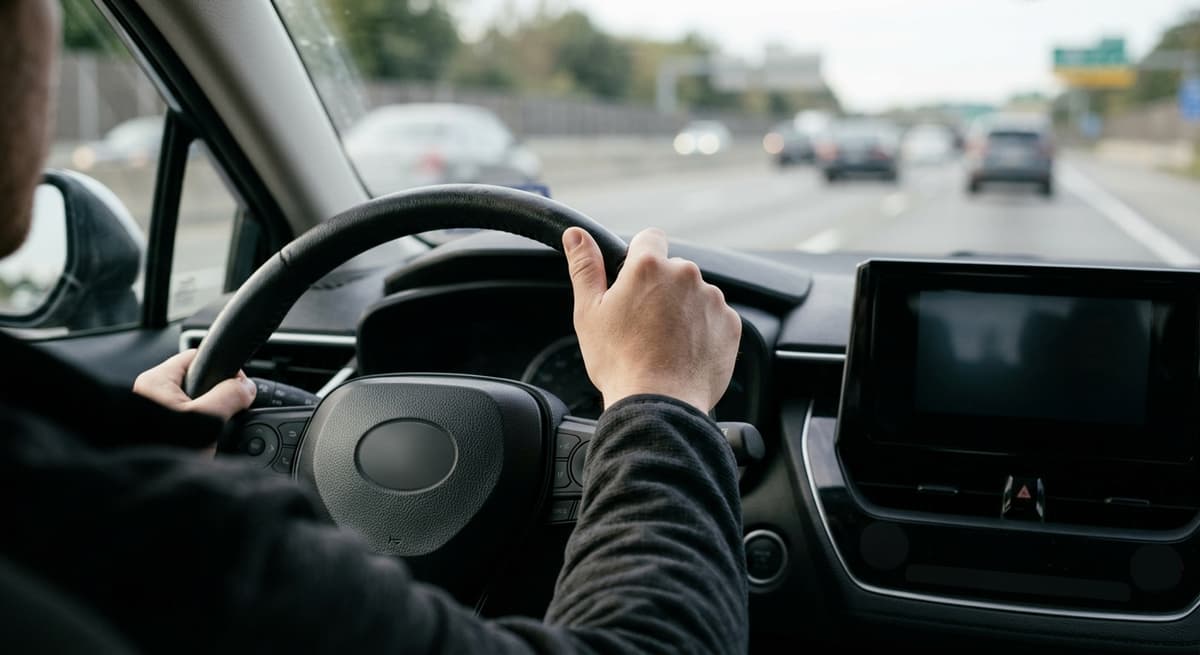
Even if it launches, FSD (Supervised) is a Level 2 driver-assistance system, not an automated operation device under Japanese law. The NPA warns that with driver-assistance functions "運転操作の主体は運転者" (the driver is the one operating the car), and that a "ハンズ・オフ" (hands-off) assist is "自動運転ではなく" (not automated driving): the driver must keep watching ahead and be ready to steer immediately. The Level 3 phone and screen exemption in Article 71-4-2(2) applies only to a driver using an automated operation device, so it would not cover a driver using FSD (Supervised).
For the current status country by country, see where Tesla FSD is legal.
What changed in 2026?
The 2026 amendment to watch is Act No. 52 of 2026, in force on 21 July 2026, which mainly reformed the offences of dangerous driving causing death or injury. According to the enacted text published by the Ministry of Justice, its Road Traffic Act part only adds blood and breath alcohol thresholds to the drink-driving penalties in Articles 117-2 and 117-2-2; it does not amend any automated-driving provision.
Most recent change has come in policy and guidance rather than in the statute: a second edition of the government guide to deploying self-driving mobility services was issued in July 2025, the Cabinet set the fiscal 2030 vehicle target in January 2026, and an MLIT study of passenger-transport liability for robotaxis was published in April 2025. The NPA also confirmed in 2025 that robot farm machinery fitted with an automated operation device can use the Level 4 permit system to travel on public roads between fields.
Japanese legal terms for self-driving cars
| Japanese | Reading | Meaning |
|---|---|---|
| 自動運転 | jidō unten | Automated driving (general term) |
| 自動運行装置 | jidō unkō sōchi | Automated operation device (the legal term for a Level 3 or Level 4 system) |
| 使用条件 / 走行環境条件 | shiyō jōken / sōkō kankyō jōken | Conditions of use / operational design domain set by MLIT |
| 特定自動運行 | tokutei jidō unkō | Specified automated operation (driverless Level 4 under a permit) |
| 特定自動運行主任者 | tokutei jidō unkō shuninsha | Designated supervisor of a Level 4 operation |
| 現場措置業務実施者 | genba sochi gyōmu jisshisha | On-site responder sent to an accident |
| 公安委員会 | kōan iinkai | Prefectural public safety commission (grants Level 4 permits) |
| 運行供用者 | unkō kyōyōsha | Person liable to compensate under the Automobile Liability Security Act |
Self-driving cars collect camera and location data. For the rules on that data and on recording in Japan, see Japan's data privacy laws and Japan's recording laws. For the global picture, see the world self-driving car laws hub, and for what each automation level means, the levels of driving automation.
This page provides general legal information about Japanese law as of 30 September 2026, not legal advice. Permits, approvals and company plans change frequently. For advice about a specific vehicle, accident or service, consult a lawyer qualified in Japan.
Frequently Asked Questions
Is Level 3 self-driving legal in Japan?
Yes, since 1 April 2020, in a vehicle with an MLIT-approved automated operation device and only while the device's conditions of use are met (Road Traffic Act Article 71-4-2). The person in the driver's seat remains the legal driver and must take over immediately when the conditions are no longer met.
Is Level 4 driverless driving legal in Japan?
Yes, with a permit. Since 1 April 2023, anyone who wants to run driverless 'specified automated operation' must get a permit from the public safety commission of the prefecture where it will run (Article 75-12). The service must carry people or goods, contribute to local residents' convenience or welfare, and have a designated supervisor monitoring remotely or riding on board.
Can I use my phone while a Level 3 car drives in Japan?
Only while all three conditions in Article 71-4-2(2) are met: the car is properly maintained, the automated operation device's conditions of use are met, and you are able to notice immediately when either stops being true and reliably take over. Once a condition fails, the ordinary ban on hand-held phone calls and gazing at screens applies again. The exemption does not apply to Level 2 driver-assistance systems.
Who is liable if a self-driving car crashes in Japan?
Compensation for death or injury runs through the Automobile Liability Security Act, which makes the person operating the car for their own benefit (usually the owner) liable unless they prove due care, fault by the victim or a third party, and no vehicle defect. MLIT's April 2025 report concluded this should remain the rule while Level 0 to Level 4 vehicles share the road, and that for a robotaxi the passenger transport operator, not the passenger, is liable.
When will Waymo launch in Tokyo?
Waymo, Nihon Kotsu and GO said on 14 September 2026 that they intend to serve their first fully autonomous public trips in Tokyo in 2027, contingent on regulatory approval from national and local authorities and on completing validation, with a fleet growing to around 100 vehicles. As of 30 September 2026 that is a company plan, not an approved service.
Is Tesla FSD available in Japan?
Not as of 30 September 2026. Japan is not on Tesla's May 2026 list of markets where FSD (Supervised) is available, and no MLIT approval has been announced. FSD (Supervised) is a Level 2 driver-assistance system, so the driver would remain fully responsible and could not rely on the Level 3 phone exemption.
What was the first Level 3 car approved in Japan?
The Honda Legend. MLIT granted it a type designation on 11 November 2020, which MLIT called the world's first type designation for a vehicle with an automated operation device. Its Traffic Jam Pilot works in expressway traffic jams within conditions MLIT set.
Where was Japan's first Level 4 service?
Eiheiji Town in Fukui Prefecture. MLIT approved the vehicle on 30 March 2023, and the Fukui Prefectural Public Safety Commission issued Japan's first specified automated operation permit, dated 11 May 2023, for a route of about 2 km on a converted railway path.
Updates
Independently fact-checked against the cited primary sources
Sources and References
- Road Traffic Act (道路交通法, Act No. 105 of 1960), current consolidated text on e-Gov: Arts. 2, 63-2-2, 71-4-2, 75-12 to 75-29(laws.e-gov.go.jp).gov
- Act No. 20 of 2019 amending the Road Traffic Act (enacted text, House of Representatives): automated operation device definition, 'driving' originally extended to using the device (later reworded by Act No. 32 of 2022), Art. 63-2-2 recorder duties, Art. 71-4-2 Level 3 driver duties(shugiin.go.jp).gov
- Act No. 32 of 2022 amending the Road Traffic Act (enacted text, House of Representatives): definition of specified automated operation, Art. 2(1)(xvii) 'driving' now excludes specified automated operation, the Level 4 permit system, Arts. 75-12 to 75-29(shugiin.go.jp).gov
- Act No. 14 of 2019 amending the Road Transport Vehicle Act (enacted text): Art. 41(2) definition of automated operation device; Art. 99-3 permit for specified modifications (software)(shugiin.go.jp).gov
- National Police Agency, 自動運転 (automated driving): Level 3 provisions in force April 2020, Level 4 permit system in force April 2023, driver-assistance warning(npa.go.jp).gov
- National Police Agency, summary of the 2019 Road Traffic Act amendment (Level 3)(npa.go.jp).gov
- National Police Agency, summary of the specified automated operation permit system (Level 4)(npa.go.jp).gov
- National Police Agency, warning on driver-assistance and hands-off functions(npa.go.jp).gov
- MLIT press release, 11 November 2020: world's first type designation of a vehicle with an automated operation device (Honda Legend)(mlit.go.jp).gov
- MLIT press release, 31 March 2023: first approval of a Level 4 vehicle that needs no driver (Eiheiji, Fukui)(mlit.go.jp).gov
- AIST news release, 12 May 2023: first specified automated operation permit, dated 11 May 2023, from the Fukui Prefectural Public Safety Commission(aist.go.jp).gov
- MLIT press release, 5 August 2020: specified modification (software update) permit system starts 23 November 2020(mlit.go.jp).gov
- MLIT, report on liability under the Automobile Liability Security Act for robotaxis, 30 April 2025(mlit.go.jp).gov
- MLIT, 自動運転を巡る動きについて (2026 material): Cabinet targets for fiscal 2027 and fiscal 2030(mlit.go.jp).gov
- MLIT policy document: target of about 50 locations by around fiscal 2025 and 100 or more by fiscal 2027(mlit.go.jp).gov
- Government guide to deploying self-driving mobility services, 2nd edition (July 2025), RoAD to the L4 project(road-to-the-l4.go.jp).gov
- Ministry of Justice, enacted text of Act No. 52 of 2026 (法律第52号, promulgated 1 July 2026, in force 21 July 2026): Road Traffic Act Arts. 117-2(1)(i) and 117-2-2(1)(iii) drink-driving penalty thresholds(moj.go.jp).gov
- Waymo blog, 14 September 2026: Tokyo launch plan with Nihon Kotsu and GO, contingent on regulatory approval (company statement)(waymo.com)
- Tesla on X, May 2026: list of countries where FSD Supervised is available (company statement)(x.com)