
Panama
Panama Recording Laws: All-Party Consent Rules & Penalties (2026)
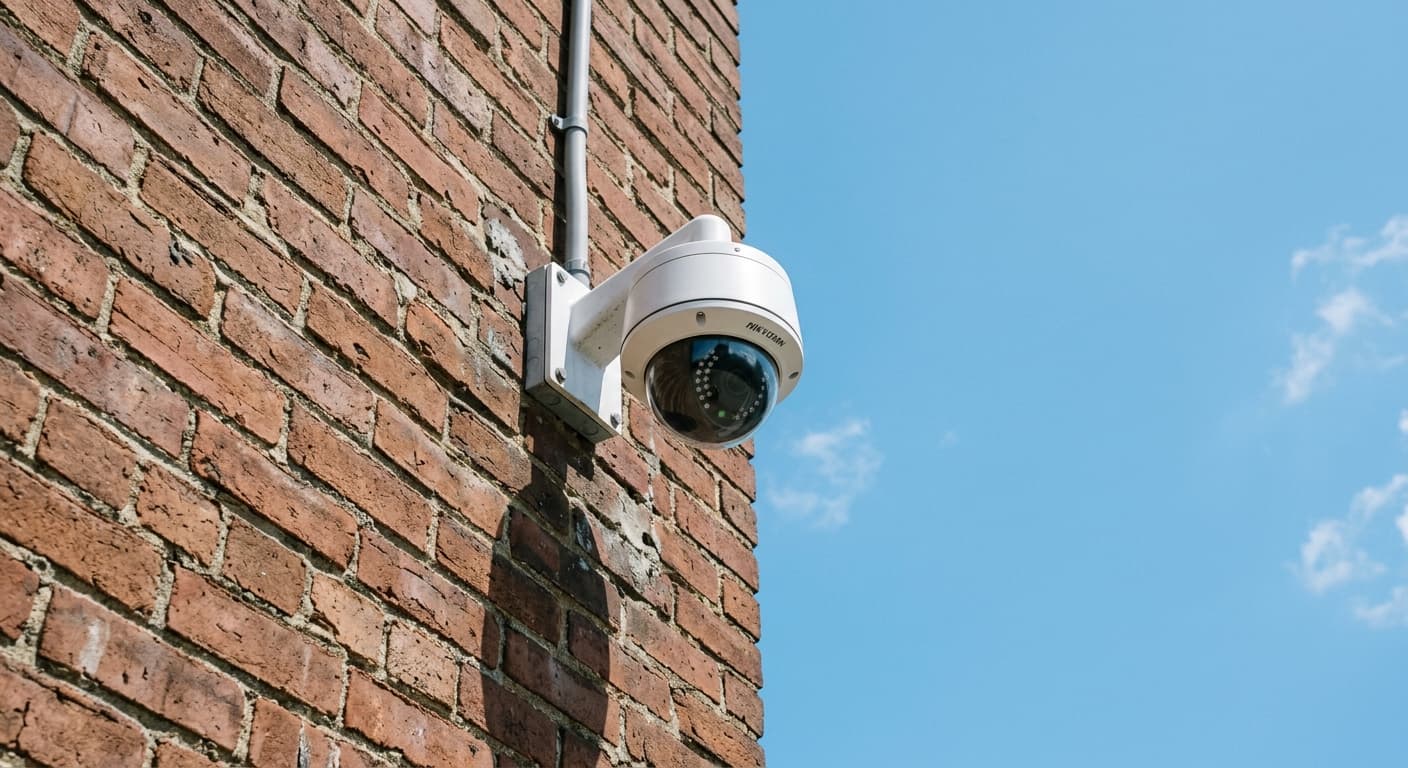
Panama is an all-party consent country. Every person in a private conversation must consent to being recorded, or the recording violates both the Constitution and the Código Penal. This article covers the full legal framework: constitutional foundations (Articles 26 and 29), the criminal statutes in Articles 165 through 170, Ley 81 of 2019 data protection rules, and the major new Ley 478 of August 2025 that added Panama's first non-consensual intimate image offense.
Information last verified on May 15, 2026. This article has not yet been reviewed by a licensed Panamanian attorney.
Quick Answer: Is Panama an All-Party Consent Country?
Yes. Panama requires every party to a private communication to consent before anyone can lawfully record it. This makes Panama a strict all-party consent jurisdiction under both constitutional and criminal law.
The prohibition covers phone calls, VoIP calls, in-person conversations, digital messaging, and any other form of private communication. A person who is a participant in a conversation cannot legally record it without the knowledge and agreement of every other participant. Panama does not adopt the one-party consent model used in the United States at the federal level and in most US states.
This framework rests on two independent sources: a constitutional guarantee declaring private communications inviolable (Article 29), and a Penal Code that criminalizes violations of that guarantee with fines and imprisonment. The constitutional exclusionary rule means that evidence from unauthorized recordings is also inadmissible in court, adding a second layer of deterrence beyond the criminal penalties themselves.
Jurisdiction scope: This article addresses recording consent law in the Republic of Panama under the Constitución Política, the Código Penal (Ley 14 de 2007, Texto Único 2019), Ley 81 de 2019, and Ley 478 de 2025. It does not address US state recording laws. For US recording law, see our US recording laws overview.
Constitutional Foundation: Articles 26 and 29
Panama's recording law framework is grounded in two constitutional provisions, both in Título III (Individual and Social Rights and Duties), Capítulo 1 (Fundamental Guarantees) of the Constitución Política de la República de Panamá.
Article 26: Inviolability of Home and Residence
Article 26 establishes that the home and residence are inviolable. No one may enter them without the owner's consent except by written order from a competent authority for specific purposes, or to assist victims of crime or disaster.
While Article 26 focuses on physical entry, its significance for recording law lies in its scope: the home is the most protected private space. Any recording of conversations taking place inside a private residence without consent implicates both Article 26 and Article 29 simultaneously. The home's constitutional inviolability reinforces the expectation that conversations within it are private.
Article 29: Inviolability of Private Communications
Article 29 is the primary constitutional anchor for Panama's recording laws. Its full text reads:
La correspondencia y demás documentos privados son inviolables y no pueden ser ocupados o examinados sino por disposición de autoridad competente, para fines específicos y mediante formalidades legales. En todo caso se guardará reserva sobre los asuntos ajenos al objeto de la ocupación o del examen. Igualmente, las comunicaciones telefónicas privadas son inviolables y no podrán ser interceptadas. El registro de papeles se practicará siempre en presencia del interesado o de una persona de su familia, o en su defecto, de dos vecinos honorables del mismo lugar.
In translation: Private correspondence and documents are inviolable and cannot be seized or examined except by order of a competent authority, for specific purposes, and through legal formalities. In all cases, confidentiality shall be maintained regarding matters unrelated to the purpose of the seizure or examination. Likewise, private telephone communications are inviolable and may not be intercepted. The search of papers shall always be conducted in the presence of the interested party or a family member, or failing that, two honorable neighbors of the same locality.
Three features of Article 29 shape everything that follows in statute law.
First, the protection is absolute in its language. Private telephone communications "are inviolable and may not be intercepted." The Constitution does not carve out an exception for participants. It does not distinguish between a third-party eavesdropper and someone who is part of the conversation. The text simply prohibits interception.
Second, the only exception is a judicial order issued by a competent authority for specific purposes and through legal formalities. This means even law enforcement cannot intercept communications without a court order.
Third, the constitutional exclusionary rule applies. Evidence obtained through unauthorized interception of private communications is inadmissible. Courts cannot rely on it, and the individuals responsible for the illegal interception face criminal liability. This creates a powerful disincentive: not only is unauthorized recording a crime, but the fruits of that crime are worthless as evidence.
The Criminal Chamber of the Corte Suprema de Justicia has confirmed that only a court can authorize the interception and recording of private telephone conversations under Article 29.

Código Penal: Articles 165 Through 170
Panama's current Código Penal was enacted by Law 14 of May 18, 2007, and entered into force on May 22, 2008. The 2019 Texto Único is the authoritative current version. The recording and privacy offenses appear in Título II (Crimes Against Liberty), Capítulo III (Crimes Against the Inviolability of Secret and the Right to Privacy), published by the Ministerio Público.
Article 165: Unauthorized Telecommunications Interception (2-4 Years)
Article 165 is the most serious recording offense in the ordinary criminal law. It imposes 2 to 4 years imprisonment on anyone who, without judicial authorization, intercepts telecommunications or uses technical devices for listening, transmitting, recording, or reproducing conversations not directed at the public.
The statutory text targets the use of technology to invade communications: phone tapping, installation of listening software, interception of digital calls, or deployment of surveillance equipment. A person who taps a phone line, installs spyware on another's device, or intercepts a VoIP call without a court order faces this custodial sentence.
This article is separate from and heavier than the basic recording offense in Article 169. The distinction matters in practice: covert electronic surveillance of communications is treated as fundamentally more threatening than simple unauthorized recording by hand.
Article 166: Unauthorized Disclosure of Private Correspondence
Anyone who lawfully possesses correspondence, recordings, or private documents not intended for public disclosure and makes them public without proper authorization commits an offense when the act could cause harm.
Penalty: 15 to 60 days-fine. If committed by an employee of a telecommunications company or private communications enterprise, the penalty increases by one-sixth to one-half.
This provision catches a scenario many people overlook. Even if you come to possess a recording through legitimate means (for example, someone sends it to you voluntarily), publishing or distributing it without authorization from the person recorded can result in criminal liability.
Article 166-A: Non-Consensual Intimate Images (Ley 478, August 2025)
Ley 478 of August 4, 2025 (Gaceta Oficial No. 30337) added Article 166-A to the Código Penal, creating Panama's first dedicated offense for non-consensual intimate image distribution.
Article 166-A imposes 3 to 6 years imprisonment on anyone who distributes, produces, or commercializes intimate, sexual, or nudity content (images, graphic prints, audio files, or video files, whether real, simulated, or AI-generated) of a person without their consent, approval, or authorization.
The penalty increases by one-third to one-half in aggravated circumstances, including when the offense is committed by a current or former intimate partner (married, in a de facto union, or in a similar affective relationship), or when committed for profit, pleasure, or hatred.
Critically, the statute covers "real, simulated, or generated" content. AI-synthesized intimate images fall within Article 166-A's scope. This makes Ley 478 one of the first Latin American statutes to explicitly address deepfake intimate imagery in its criminal text.
Ley 478 also amended the extortion provisions (Article 151) to expressly aggravate the penalty when extortion involves intimate content, covering sextortion scenarios.
Article 167: Interception of Correspondence
Seizing, destroying, substituting, concealing, mislaying, intercepting, or blocking correspondence or documents directed to another person carries imprisonment.
Base penalty: 1 to 2 years imprisonment.
Aggravated penalty: If the offender is an employee of a postal service, telecommunications company, or private communications firm, the sentence increases by one-sixth to one-half. If the offender discloses the contents to the detriment of another, the penalty rises to 15 to 30 months imprisonment.
Article 169: Recording Without Consent (Days-Fine)
Article 169 is the provision most directly aimed at the act of recording. It criminalizes two forms of conduct:
- Recording the words of another person that are not intended for the public, without that person's consent.
- Using technical procedures to listen to private conversations that are not directed at the listener.
Penalty: 15 to 50 days-fine.
The days-fine (días-multa) system in Panamanian law ties the fine amount to the offender's economic situation, considering income, assets, means of subsistence, and spending level. The judge determines the daily rate, then multiplies it by the number of days imposed.
The key phrase in Article 169 is "not intended for the public." Words spoken publicly (a speech, a press conference, remarks at an open hearing) are outside Article 169's protection. Words spoken privately are protected regardless of the physical location.
Article 170: Disclosure of Professional Secrets
A person who, by reason of their office, employment, profession, or trade, learns secrets whose disclosure could cause harm and reveals them without the consent of the interested party or without justified cause faces harsher penalties.
Penalty: 10 months to 2 years imprisonment, or 30 to 150 days-fine, plus disqualification from exercising the relevant office, employment, profession, or trade for up to 2 years.
This article applies to lawyers, doctors, accountants, counselors, and other professionals who handle confidential client communications. Recording and then disclosing privileged information compounds the criminal exposure under both this article and Article 169.

Phone Calls and In-Person Conversations
Phone and Digital Calls
All private telephone communications are constitutionally protected under Article 29. Recording a phone call without the consent of every party on the line violates both the constitutional guarantee and the Código Penal.
This applies equally to landline calls, mobile calls, VoIP conversations, and calls conducted through apps like WhatsApp, Telegram, Signal, or Zoom. The legal analysis does not depend on the technology used. It depends on whether the communication is private and whether all parties consented to the recording.
Panama's Código Procesal Penal, in Article 311, specifies that judicial authorization is required for any interception or recording of personal communications by "any technical means." The breadth of that language captures modern digital communication tools.
In-Person Conversations
Article 169 of the Código Penal covers in-person recording directly. Recording the "words of another not intended for the public, without their consent" is the textual prohibition. A face-to-face conversation between individuals conducted in a private setting qualifies.
The key question is whether the words are "intended for the public." A speech at a rally, statements at a press conference, or remarks made in a public hearing are intended for public consumption. A conversation between two people in a private office, home, or restaurant is not. Recording the latter without consent triggers criminal liability.
Video Recording and Image Rights
Panama adds a separate layer of protection through the Código de la Familia (Family Code). Article 575 provides that the State guarantees respect for privacy, personal freedom, family security, honor, and the right to one's own image. Article 577 establishes that every person has an exclusive right over their own image, which may not be publicly reproduced in any form without the holder's consent, even if captured in a public place.
Exceptions exist for images disseminated for news purposes, public interest, or cultural purposes, so long as human dignity is respected. Outside those carve-outs, recording and publishing someone's image without permission exposes you to legal liability, even when the recording occurs in a public space.
Recording in Public Spaces
Panama does not have a standalone statute governing audio or video recording in public places. The analysis turns on the nature of the conversation and the expectation of privacy.
Conversations held at normal volume in genuinely public settings carry a reduced expectation of privacy. A person shouting on a street corner or addressing a crowd in a park is not speaking privately.
But two people having a quiet conversation in a public park, at a cafe table, or on a bus are still speaking privately. The physical location does not automatically strip away the constitutional protection. If the words are not "intended for the public," recording them without consent can violate Article 169.
Video-only recording in public (security cameras, dashcams) that does not capture private conversations occupies different legal ground. Business surveillance cameras in commercial establishments are common throughout Panama and are not generally treated as criminal under the recording statutes, provided they do not capture private audio communications. However, the image rights provisions of the Family Code still apply to publication or dissemination of footage showing identifiable individuals.
Recording Police Officers in Panama
Panama has no specific statute that creates an explicit right to record police officers, nor does it create a specific criminal prohibition on doing so.
The legal analysis under Panama's framework depends on Article 169's "intended for the public" standard. A police officer exercising official duties in a public space (making an arrest, directing traffic, responding to a public call) is engaged in conduct that is public-facing by nature. Their official speech and actions in that context are not "private" in the sense Article 169 intends. Recording a police officer's public conduct from a public space with a visible device should not ordinarily constitute the criminal offense of recording "words not intended for the public."
However, several practical considerations apply:
- No Panamanian court decision has formally established a constitutional right to record police. The analysis above rests on the text of Article 169, not a decided case.
- Intercepting communications between officers using technical means would still engage Article 165 (2-4 years) regardless of who the parties are.
- Recording private conversations that happen to involve an officer (for example, a private meeting in someone's home) would require all-party consent like any other private conversation.
- Freedom House's 2024 Panama Country Report noted ongoing concerns about police accountability and lack of an impartial internal investigative body. In practice, journalists and activists documenting protests in public spaces have recorded police without systematic prosecution under the recording statutes.
Watch out: Never record a private conversation involving police without consent on the theory that police have no privacy rights. The all-party consent framework applies to the conversation's private character, not solely to the identity of the parties.
Workplace Recording and Employee Privacy
The Gap in Labor Law
Panama's Código de Trabajo (Labour Code) does not contain specific provisions regulating workplace surveillance, employee monitoring, or the recording of workplace communications. This represents a significant legislative gap.
However, Article 128 of the Labour Code establishes that one of the employer's obligations is to give employees "proper treatment." Panamanian labor courts have interpreted this as requiring employers to respect employee dignity. Recording employees without their knowledge or consent could be challenged as a violation of this dignity standard.
Constitutional and Criminal Protections Still Apply
The absence of specific labor regulations does not create a recording free-for-all. Article 29 of the Constitution applies in the workplace just as it does everywhere else. Recording a private conversation between employees, or between an employee and a manager, without all-party consent is still a criminal offense under the Código Penal.
Law 81 in the Workplace
Ley 81 of 2019 adds a data protection layer to workplace surveillance. Employee voice recordings, call recordings from customer service lines, and meeting recordings involving identifiable individuals all constitute personal data processing under the law. Employers must obtain the prior, informed, demonstrable consent of participants before making such recordings. Consent buried in an employment contract clause may not satisfy the "informed" standard; a clear, specific notice at the time of recording is the safer practice.
ANTAI enforces Law 81 against private-sector entities. A telecommunications company was fined B/.3,000 for making unsolicited phone calls without consent under Law 81 principles. Employers who record employee communications without consent face similar exposure.
Employer Best Practices
Given the lack of dedicated workplace privacy legislation, Panamanian employment lawyers consistently recommend that employers:
- Obtain prior written consent from employees before implementing any recording, monitoring, or surveillance system.
- Clearly disclose the scope and purpose of any monitoring in employment contracts or company policies.
- Limit monitoring to what is proportionate and necessary for legitimate business objectives.
- Refrain from recording private employee conversations or monitoring personal communications.
Failure to obtain consent does not just create criminal risk under the Código Penal. It also exposes employers to civil claims for violation of constitutional rights, potential labor disputes over breach of the dignity obligation, and administrative fines under Law 81.
Law Enforcement Intercepts: Judicial Authorization Required
Código Procesal Penal Article 311
Panama's Code of Criminal Procedure governs when and how the state may intercept private communications. Article 311 establishes that the interception or recording of personal communications by any technical means requires judicial authorization.
The process works as follows:
- The Ministerio Público (Public Prosecutor) requests authorization from a Juez de Garantías (Judge of Guarantees).
- The judge evaluates the nature of the case and decides whether to authorize recording of conversations, interception of cybernetic communications, satellite tracking, electronic surveillance, or telephone monitoring.
- If authorized, the judge sets a time limit not exceeding 20 days.
- Extensions must be individually requested by the Public Prosecutor, who must explain the justification. Each extension is subject to judicial review.
Under the pre-2008 criminal procedure regime, the Sala Penal (Criminal Chamber) of the Corte Suprema de Justicia held exclusive authority to authorize wiretapping. The 2008 Código Procesal Penal shifted that authorization to Jueces de Garantías for ongoing criminal investigations, while the Corte Suprema retains a supervisory constitutional role.
Law 23 of 1986, Article 21B
An earlier provision, Article 21B of Law 23 of 1986 (added by Article 18 of Law 13 of 1994), established a parallel authorization pathway. When there are "indications of the commission of a serious crime," the Attorney General of the Nation may authorize the filming or recording of conversations and telephone communications of persons connected to the unlawful act.
This provision is subject to Article 29 of the Constitution. The simple existence of intelligence information is insufficient. The law requires actual "indications" of criminal activity before the measure can be authorized.
Ley 478 and Data Retention: Updated Rules
Ley 478 of August 2025 amended the Código Procesal Penal to add Article 338-A, authorizing the Ministerio Público to order the retention of digital data (including data on servers, digital networks, or stored communications) for up to 90 days, extendable. This is a separate measure from Ley 51's metadata retention obligations; it applies during active criminal investigations.
Data Retention: Ley 51 of 2009
Ley 51, enacted on September 18, 2009, imposes data retention obligations on telecommunications providers, mobile phone distributors, authorized agents, resellers, internet cafes, and communications networks operating in Panama.
These entities must maintain a record of user identification and address data for six months from the date the information was generated. At the request of a judicial authority, the retention period may be extended for up to six additional months for specific data.
Critically, Ley 51 draws a bright line: the data retention obligation "in no case involves activities aimed at intercepting, recording, or accessing the content of fixed or mobile telephone communications." Metadata must be retained. Content remains constitutionally protected and requires judicial authorization.
Ley 81 of 2019: Data Protection
Panama's Ley 81 de 2019, the personal data protection law, entered into force in March 2021 and is regulated by Executive Decree 285 of May 28, 2021. ANTAI (the Autoridad Nacional de Transparencia y Acceso a la Información) administers and enforces it.
Core Principles
Law 81 establishes that personal data processing can only occur when the law permits it or when the data subject has given consent. Voice recordings qualify as personal data. Any business or organization that records calls, meetings, or interactions involving identifiable individuals must comply with the law's requirements.
The key principles include:
- Consent: Data processing requires the prior, informed consent of the data subject, unless a specific legal exception applies. Consent must be expressly given, demonstrable, and purpose-specific.
- Purpose limitation: Data collected for one purpose cannot be repurposed without new consent. A recording made for "quality assurance" cannot be repurposed for marketing or HR discipline without fresh consent.
- Data subject rights: Individuals have the right to access their personal data held by an organization, request rectification of errors, and request deletion of data that is no longer necessary for its original purpose.
- Data security: Organizations must implement appropriate security measures to protect stored recordings against unauthorized access, loss, or alteration.
- Confidentiality: Personal data is confidential and may only be disclosed with consent or as required by law.
ANTAI Enforcement
ANTAI received 43 complaints and issued 8 monetary sanctions in approximately the first year of active enforcement (through mid-2022). Documented sanctions included:
- B/.4,000 against a condominium for photographing visitor ID cards without consent.
- B/.1,000 against a digital media outlet for publishing personal documents without authorization.
- B/.3,000 against a telecommunications company for making unsolicited calls without consent.
Current maximum fines under Law 81 are B/.10,000 (the balboa is pegged 1:1 to the US dollar). A reform bill circulating as of 2025 proposes raising the maximum to B/.100,000 to deter large corporations and create more proportionate deterrence. The bill had not been enacted as of the research date for this article (May 2026; verify current status at asamblea.gob.pa before advising on compliance).
ANTAI Compliance Guide
ANTAI published a compliance guidance document (Guía para cumplir la normativa) available at antai.gob.pa. Organizations subject to Law 81 should consult that guide for current registration, notice, consent, and audit requirements.
Civil Remedies and Personality Rights
Panama's constitutional and civil law framework provides remedies beyond criminal prosecution for privacy violations from unauthorized recording.
Civil Code Article 16
Article 16 of the Código Civil de la República de Panamá (Ley 2 de 1916, as amended) establishes that communications of any kind or voice recordings with a confidential character, or referring to personal or family privacy, cannot be intercepted or disclosed without the consent of both the author and the recipient.
A person whose private communications are recorded and published without consent can bring a civil action for damages under Article 16 independently of any criminal prosecution. The civil and criminal tracks run in parallel.
Constitutional Damages Action
Article 29's guarantee of inviolability of private communications is a directly enforceable constitutional right. A person harmed by unauthorized recording can pursue a constitutional damages action (acción de amparo or civil damages claim for constitutional tort) against the person who made or disclosed the recording.
Family Code Image Rights
As noted in the phone calls and in-person recording section, the Código de la Familia (Articles 575 and 577) establishes the exclusive right to one's own image. A person whose image (including video of their person) is recorded and published without consent can seek civil damages under the Family Code provisions, regardless of whether the recording constituted a criminal offense.
These civil remedies are particularly relevant for workplace recording scenarios, neighbor surveillance disputes, and situations where the recording itself was technically lawful (for example, recording public conduct) but the subsequent publication was not.
Penalties at a Glance
| Violation | Statute | Penalty |
|---|---|---|
| Unauthorized telecommunications interception (technical means) | Código Penal Art. 165 | 2 to 4 years imprisonment |
| Recording someone's private words without consent | Código Penal Art. 169 | 15 to 50 days-fine |
| Eavesdropping on private conversations via technical means | Código Penal Art. 169 | 15 to 50 days-fine |
| Distributing intimate/sexual content without consent (NCII) | Código Penal Art. 166-A (Ley 478/2025) | 3 to 6 years imprisonment |
| Publishing lawfully held private recordings without authorization | Código Penal Art. 166 | 15 to 60 days-fine |
| Intercepting or seizing correspondence directed to another | Código Penal Art. 167 | 1 to 2 years imprisonment |
| Same offense committed by telecom employee | Código Penal Art. 167 (aggravated) | Increased by 1/6 to 1/2 |
| Disclosing professional secrets | Código Penal Art. 170 | 10 months to 2 years imprisonment |
| Sextortion using intimate content | Código Penal Art. 151 (aggravated, Ley 478) | Extortion base + 1/3 to 1/2 increase |
| Data protection violations (administrative) | Ley 81 de 2019 | B/.1,000 to B/.10,000 administrative fine |
| Civil damages for unauthorized recording or publication | Civil Code Art. 16; Family Code Arts. 575, 577 | Civil damages (court-determined) |
Voyeurism and Non-Consensual Intimate Images (NCII)
Before August 2025, Panama lacked a dedicated offense for non-consensual intimate image distribution. Victims could pursue prosecution under Article 169 (recording without consent, days-fine) or Article 166 (unauthorized publication of private recordings, days-fine), but neither provision was designed for the harm caused by NCII sharing, and the penalties were widely regarded as inadequate.
Ley 478 of August 4, 2025 changed that. New Article 166-A imposes 3 to 6 years imprisonment for distributing, producing, or commercializing intimate, sexual, or nudity content showing a person without their consent. The statute explicitly covers:
- Images, graphic prints, audio files, and video files.
- Real, simulated, or AI-generated (synthetically generated) content.
- Distribution by any means and through any channel.
The aggravation provision is particularly significant for domestic violence and relationship contexts: the penalty increases by one-third to one-half when the offender is or was in an intimate relationship with the victim (married, de facto union, or affective relationship), even if they no longer cohabitate.
Sextortion (using intimate images as leverage to extort money or sexual favors) is separately addressed through the aggravated extortion provision in Article 151 as amended by Ley 478.
Watch out: The pre-2025 gap is closed but Article 166-A is relatively new. Reporting mechanisms and ANTAI/Ministerio Público enforcement practices for this offense are still developing. Victims should contact the Ministerio Público directly.
Deepfake and AI-Generated Content
As of the research date for this article (May 2026), Panama has no standalone deepfake statute. However, three legal anchors address AI-generated content:
1. Ley 478, Art. 166-A (NCII, "real or simulated" language): Panama's new NCII offense explicitly covers content that is "generated," meaning AI-synthesized intimate imagery falls within the criminal prohibition. This is the most directly applicable provision for deepfake intimate images.
2. Constitutional exclusionary rule: Using AI-generated or manipulated audio or video to fabricate evidence of private communications still engages Article 29's protections. Evidence manufactured through AI deepfakes of private conversations would face inadmissibility arguments grounded in Article 29.
3. Bill 413 (2025, pending): A proposed law to regulate the development, implementation, and use of artificial intelligence in Panama is under legislative consideration as of 2025. The bill focuses on protecting human dignity and human rights in AI deployment. It had not been enacted as of the research date; check asamblea.gob.pa for current status.
Panama is among the Latin American countries actively processing AI-related legislation in 2025. The region's broader trend is toward AI risk regulation, with deepfakes and privacy among the primary concerns. Practitioners should monitor legislative developments; the framework described here may be supplemented by new AI-specific provisions within the next 12-18 months.
Business Compliance in Panama
Companies operating in Panama that record phone calls, meetings, or customer interactions must build their compliance programs around the all-party consent requirement and Law 81. Here is what that looks like in practice.
Get consent before recording. Every party to a communication must consent before the recording begins. For phone calls, this means providing clear notice at the start of the call and obtaining affirmative agreement. "This call may be recorded for quality purposes" is not sufficient under Panamanian law unless the caller has the opportunity to object or end the call. Continuing with the call after a clear notice and with no objection may constitute implicit consent, but explicit, documented consent is safer.
Document the consent. Under Law 81, consent must be prior, informed, and demonstrable. Maintain records showing when consent was obtained, from whom, and for what purpose. Time-stamped consent logs are best practice.
Define retention periods. Establish and enforce written policies governing how long recordings are kept. Ley 51 of 2009 provides a reference point for metadata (six months); apply proportionate retention periods to voice recordings based on the business purpose.
Restrict internal access. Limit access to recordings to authorized personnel and maintain access logs. Law 81's data security principle requires proportionate access controls.
Watch the ANTAI reform. The proposed increase of Law 81 fines from B/.10,000 to B/.100,000 would substantially change the risk calculus for large organizations. Build compliance programs to the higher standard now rather than retrofitting after enactment.
Address AI meeting recorders and call-recording SaaS. Cloud-based call recording platforms (Zoom, Teams, AI meeting assistants) deployed by Panama-based businesses or businesses with Panamanian staff must meet the all-party consent standard. Recording a call on Zoom with a Panamanian party requires consent from that party under Panama law, regardless of where the recording server is located.
Train employees. Workers need to understand that recording any workplace conversation without all-party consent is a criminal offense in Panama. Training should cover the constitutional and criminal framework, Law 81 obligations, and the company's internal recording policies.
Cross-Border Recording
Foreigners and Visitors
Panama's recording laws apply to everyone on Panamanian territory, regardless of nationality. A foreign visitor, business traveler, or expatriate who records a private conversation without consent in Panama is subject to the same criminal penalties as a Panamanian citizen.
Conflict of Laws for Cross-Border Calls
Cross-border calls present a compliance challenge. When one party is in Panama and the other is in a one-party consent jurisdiction (for example, in most US states where the federal Wiretap Act's one-party baseline applies), the stricter Panamanian standard governs the Panamanian party's conduct.
A recording that is legal where the caller sits may still be criminal where the called party sits. Risk-management best practice: apply all-party consent to any call where at least one party is in Panama, regardless of where the recording device or server is located.
Multinationals with Panama Operations
International businesses with offices, call centers, or operations in Panama must configure their call-recording policies for the all-party consent standard. This applies to inbound and outbound calls handled by Panama-based staff. Law 81 compliance is also required for any personal data (including voice data) collected from Panamanian individuals, even if the data is processed on servers outside Panama.
Disclaimer
This article provides general legal information about Panama's recording consent laws as of May 2026. It does not constitute legal advice and should not be relied upon as a substitute for advice from a licensed attorney in Panama. Laws change; verify the current version of any statute before acting. If you are subject to Panamanian law, consult a licensed Panamanian attorney for advice specific to your situation.
About the Author
[PLACEHOLDER: author roster pending. Information last verified May 15, 2026.]
Authorities Cited
- Constitución Política de la República de Panamá, Art. 26 (1972, rev. 2004): Inviolabilidad del domicilio. https://ministeriopublico.gob.pa/wp-content/uploads/2016/09/constitucion-politica-con-indice-analitico.pdf
- Constitución Política de la República de Panamá, Art. 29 (1972, rev. 2004): Inviolabilidad de comunicaciones privadas. https://www.gacetaoficial.gob.pa/pdfTemp/25796/4580.pdf
- Código Penal de la República de Panamá (Ley 14 de 2007, Texto Único 2019), Arts. 165-170: Ministerio Público de Panamá. https://ministeriopublico.gob.pa/wp-content/uploads/2016/09/CODIGO-PENAL-2019-FINAL-1.pdf
- Ley 478 de 4 de agosto de 2025: adicionando Art. 166-A al Código Penal (NCII offense, cybercrime measures), Gaceta Oficial No. 30337. https://s3-legispan.asamblea.gob.pa/legispan/NORMAS/2020/2025/LEY/JOSEPH%20VALENCIA_30337_2025_8_5_ASAMBLEA%20NACIONAL_478.pdf
- Código Procesal Penal de la República de Panamá, Art. 311: Interceptación de comunicaciones. https://sherloc.unodc.org/cld/en/legislation/pan/codigo_procesal_penal/libro_tercero/articulo_311/articulo_311.html
- Ley 81 de 26 de marzo de 2019 sobre Protección de Datos Personales, Gaceta Oficial No. 28743-A. https://www.gacetaoficial.gob.pa/pdfTemp/28743_A/GacetaNo_28743a_20190329.pdf
- Decreto Ejecutivo No. 285 de 28 de mayo de 2021: Reglamento de Ley 81. https://antai.gob.pa/reglamentan-ley-81-de-proteccion-de-datos-personales/
- Ley 51 de 18 de septiembre de 2009: Conservación, Protección y Suministro de Datos de Usuarios de Telecomunicaciones. https://docs.panama.justia.com/federales/leyes/51-de-2009-sep-23-2009.pdf
- Código Civil de la República de Panamá (Ley 2 de 1916), Art. 16. https://docs.panama.justia.com/federales/codigos/codigo-civil.pdf
- Código de la Familia de la República de Panamá, Arts. 575, 577. https://ministeriopublico.gob.pa/
- Ley 23 de 1986, Art. 21B (adicionado por Ley 13 de 1994): autorización del Procurador para grabaciones en investigaciones de delitos graves. https://www.gacetaoficial.gob.pa/
- ANTAI: Guía para cumplir la normativa de protección de datos. https://antai.gob.pa/wp-content/uploads/2024/01/Guia-para-cumplir-la-normativa-1.pdf
- Constitución Política de la República de Panamá (1972, rev. 2004): Constitute Project (English-language reference). https://www.constituteproject.org/constitution/Panama_2004
- Freedom House: Panama: Freedom in the World 2024. https://freedomhouse.org/country/panama/freedom-world/2024
Related Articles
- World Recording Laws Overview
- Recording Laws by US State
- Can an Employer Record Conversations Without Consent?
- Is It Illegal to Record Someone Without Their Consent?
Last updated: May 15, 2026. Statutes cited reflect their in-force version as of May 15, 2026. Ley 478 of August 4, 2025 is reflected. Law 81 reform proposals described are as of research date and had not been enacted.
Frequently Asked Questions
Is Panama a one-party or all-party consent country for recording?
Panama is an all-party consent country. Article 29 of the Constitution declares all private communications inviolable and prohibits interception. The Código Penal (Article 169) criminalizes recording the words of another person without their consent. Unlike one-party consent countries, Panama does not permit a participant in a conversation to record it without the knowledge and agreement of every other party.
What are the penalties for illegally recording someone in Panama?
Penalties depend on the nature of the offense. Recording someone's private words without consent carries 15 to 50 days-fine under Article 169 of the Código Penal. Unauthorized interception of telecommunications using technical devices carries 2 to 4 years imprisonment under Article 165. Distributing intimate content without consent carries 3 to 6 years under Article 166-A (added by Ley 478 of 2025). Publishing private recordings without authorization results in 15 to 60 days-fine under Article 166. Intercepting correspondence directed to another carries 1 to 2 years under Article 167. Businesses also face administrative fines of B/.1,000 to B/.10,000 under Law 81.
Can a secretly recorded conversation be used as evidence in Panama?
No. Article 29 of the Constitution contains an exclusionary rule. Evidence obtained through unauthorized interception or recording of private communications is inadmissible in court. Beyond inadmissibility, the person who made the unauthorized recording also faces criminal liability under the Código Penal. This dual consequence makes covert recording an especially poor strategy for building a legal case in Panama.
Can employers record workplace conversations in Panama?
Not without the consent of every participant. Panama's Labour Code does not specifically regulate workplace surveillance, but the constitutional and criminal protections apply in full. Article 128 of the Labour Code obligates employers to provide 'proper treatment' to employees, which courts interpret as a dignity standard. Employers who wish to monitor or record workplace communications must obtain prior written consent, disclose the scope and purpose of monitoring, and comply with the data protection requirements of Ley 81 of 2019.
When can law enforcement record or intercept communications in Panama?
Only with judicial authorization. Under Article 311 of the Código Procesal Penal, the Public Prosecutor must request a court order from a Juez de Garantías (Judge of Guarantees). The judge sets a time limit not exceeding 20 days, and extensions require individual justification. Article 21B of Law 23 of 1986 provides a parallel pathway allowing the Attorney General to authorize recording when there are indications of a serious crime. In both cases, the authorization must comply with Article 29 of the Constitution. Without a valid court order, intercepted communications are inadmissible.
Can I legally record a police officer in Panama?
Panama has no specific statute creating an explicit right to record police. However, Article 169's 'not intended for the public' standard suggests that a police officer's official public-duty conduct in a public space is not a private conversation in the Article 169 sense. Recording a police officer's visible public actions from a public space with an open device should not ordinarily constitute the criminal recording offense. Recording private conversations that happen to involve an officer, or using technical interception of police communications, is a different matter and requires consent or judicial authorization respectively. No Panamanian court has formally decided this question.
What is Panama's law on revenge porn or non-consensual intimate images?
Panama enacted Ley 478 on August 4, 2025, adding Article 166-A to the Código Penal. It imposes 3 to 6 years imprisonment for distributing, producing, or commercializing intimate, sexual, or nudity content of a person without their consent. The statute covers images, audio, and video, including AI-generated or simulated content. The penalty increases by one-third to one-half when committed by a current or former intimate partner.
Does Panama's recording law apply to WhatsApp and other messaging apps?
Yes. Panama's recording prohibition applies to any private communication regardless of the technology. The Código Procesal Penal's reference to 'any technical means' captures digital communication platforms. Recording a WhatsApp, Telegram, Signal, or Zoom call without the consent of every participant violates Código Penal Article 169 (days-fine for basic recording) or Article 165 (2-4 years for technical interception), depending on the method used.
What is ANTAI and what fines can it impose for recording violations?
ANTAI is the Autoridad Nacional de Transparencia y Acceso a la Información, Panama's data protection authority. It enforces Ley 81 of 2019. For organizations that process voice recordings or other personal data without proper consent, ANTAI can impose administrative fines of B/.1,000 to B/.10,000 per violation. A pending legislative reform proposes raising the maximum fine to B/.100,000. ANTAI also has authority to order suspension of data processing operations.
What is Article 26 of Panama's Constitution and how does it differ from Article 29?
Article 26 protects the inviolability of the home and residence: no one may enter without owner consent or a written order from competent authority. Article 29 protects the inviolability of private correspondence, documents, and telephone communications, including an explicit prohibition on interception. Together, they form Panama's constitutional privacy framework. Article 29 is the more directly applicable provision for recording and wiretapping law; Article 26 reinforces that conversations occurring inside a private residence carry the strongest privacy protection.
Can I record a conversation if I am one of the participants in Panama?
No. Panama does not recognize a one-party consent exception. Even if you are participating in the conversation, you cannot record it without the knowledge and consent of every other party. Recording your own phone call without telling the other party is a criminal offense under Código Penal Article 169. This is one of the most significant differences between Panama's law and the one-party consent standard that applies in the United States at the federal level.
Sources and References
- Constitución Política de la República de Panamá, Art. 26, Ministerio Público(ministeriopublico.gob.pa).gov
- Constitución Política de la República de Panamá, Art. 29, Gaceta Oficial(gacetaoficial.gob.pa).gov
- Código Penal de la República de Panamá (Ley 14 de 2007, Texto Único 2019), Ministerio Público(ministeriopublico.gob.pa).gov
- Ley 478 de 4 de agosto de 2025, Art. 166-A, Gaceta Oficial No. 30337, Asamblea Nacional(s3-legispan.asamblea.gob.pa).gov
- Código Procesal Penal de Panamá, Art. 311, UNODC SHERLOC(sherloc.unodc.org)
- Ley 81 de 2019, Protección de Datos Personales, Gaceta Oficial No. 28743-A(gacetaoficial.gob.pa).gov
- Decreto Ejecutivo No. 285 de 2021, Reglamento de Ley 81, ANTAI(antai.gob.pa).gov
- ANTAI, Guía para cumplir la normativa de protección de datos personales (2024)(antai.gob.pa).gov
- Ley 51 de 2009, Conservación de Datos de Usuarios de Telecomunicaciones(docs.panama.justia.com)
- Código Civil de la República de Panamá (Ley 2 de 1916), Art. 16(docs.panama.justia.com)
- Panama Constitution of 1972 (rev. 2004), Constitute Project(constituteproject.org)
- Freedom House, Panama: Freedom in the World 2024(freedomhouse.org)
- Código Penal de Panamá, OAS / MESICIC Anti-Corruption Mechanism (Texto Único)(oas.org)