
Hong Kong
Hong Kong Recording Laws: One-Party Consent, NSL & Privacy Rules (2026)

Hong Kong operates as a de facto one-party consent jurisdiction: no statute bars a participant from recording their own conversation. The Interception of Communications and Surveillance Ordinance (ICSO, Cap. 589) applies only to law enforcement, leaving private recording governed by the Personal Data (Privacy) Ordinance (Cap. 486).
Hong Kong is a de facto one-party consent jurisdiction for private participant recording. No statute prohibits a party to a conversation from recording it. The Interception of Communications and Surveillance Ordinance (ICSO, Cap. 589) restricts only law enforcement. What governs private recording is the Personal Data (Privacy) Ordinance (Cap. 486) plus a national security overlay that has grown substantially since 2020.
Information last verified on 2026-05-15. This article has not been reviewed by a licensed lawyer. Statutes cited reflect their in-force versions as of 2026-05-15.
Jurisdiction scope: This article addresses recording law in Hong Kong under the Interception of Communications and Surveillance Ordinance (Cap. 589), the Personal Data (Privacy) Ordinance (Cap. 486), the Crimes Ordinance (Cap. 200), the Basic Law, the National Security Law 2020, and the Safeguarding National Security Ordinance 2024. It does not address mainland China recording law; for that, see our China recording laws article.
Quick Answer: Is Recording Legal in Hong Kong?
Hong Kong operates closer to a one-party consent model by default, but the label "one-party consent" does not appear in any statute. The correct position is that no Hong Kong law prohibits a party to a private conversation from recording it. The Interception of Communications and Surveillance Ordinance (Cap. 589) addresses law enforcement only. A 2017 Legislative Council response (LCQ17, 14 June 2017) confirmed that the law "does not prohibit a party to a conversation from recording the conversation." The critical caveat post-2020 is the national security overlay: sharing recordings that could assist hostile forces, reveal state secrets, or relate to national security investigations creates serious criminal risk under the National Security Law 2020 and the Safeguarding National Security Ordinance 2024. The table below summarizes the key frameworks at a glance.
| Framework | Governs | Key Rule | Penalty Range |
|---|---|---|---|
| ICSO (Cap. 589) | Law enforcement interception only | Requires judicial authorization for LEAs; silent on private recording | Up to 10 years (unauthorized LEA interception) |
| PDPO (Cap. 486) | Private recordings capturing personal data | Lawful purpose, fairness, limited retention required | HK$50,000–$100,000 fine + 2 years for non-compliance with enforcement notice |
| Doxxing (s.64(3A)-(3B) PDPO) | Harmful disclosure of personal data | Criminal if disclosure intends or causes harm | Up to 5 years imprisonment and HK$1,000,000 fine |
| Voyeurism (ss.159AAB-159AAE Crimes Ord.) | Recording in intimate/private contexts | Prohibited without consent | Up to 5 years imprisonment |
| NSL 2020 + SNSO 2024 | Recording/sharing national security-related material | Recording at prohibited places or sharing material assisting hostile forces | Up to 20 years (espionage); life imprisonment (most serious NSL cases) |
How the ICSO (Cap. 589) Actually Works
The Interception of Communications and Surveillance Ordinance (ICSO, Cap. 589) provides the statutory framework for authorizing and regulating interception of communications and covert surveillance by law enforcement agencies (LEAs) in Hong Kong. Its scope is limited to activities carried out "by or on behalf of public officers" in the course of preventing or detecting serious crime, or protecting public security. The ICSO has never been invoked against a private individual.

Who the ICSO Covers
Only designated law enforcement agencies fall within the ICSO's authorization regime. Before conducting any interception or covert surveillance, these agencies must obtain authorization from a panel judge, or in urgent cases from a designated authority. An independent Commissioner on Interception of Communications and Surveillance (CICS), appointed by the Chief Executive on the recommendation of the Chief Justice, oversees the entire process and publishes annual reports to the Legislative Council. The CICS reports record zero invocations of the ICSO against private individuals.
Who the ICSO Does Not Cover
The ICSO does not regulate, restrict, or mention recording by private individuals, employees, journalists, or corporations. If you pull out your phone and record a conversation you are a party to, the ICSO simply does not apply. Its penalty provisions address only government officers who conduct unauthorized interception without the required judicial authorization.
This design was intentional. The legislature's stated purpose was to bring law enforcement surveillance within a rule-of-law framework, not to create a general prohibition on private recording. The resulting statutory gap has been the subject of ongoing legal commentary but has never been legislatively closed.
The Personal Data (Privacy) Ordinance (Cap. 486) and the PCPD
While the ICSO is silent on private recording, the Personal Data (Privacy) Ordinance (PDPO, Cap. 486) applies whenever a recording captures identifiable personal data. The PDPO, enacted in 1995 and substantially amended in 2012 and 2021, is Hong Kong's primary data protection law. It defines "personal data" as information relating to a living individual from which the identity of the individual can be directly or indirectly ascertained and which exists in a form that allows practical access and processing.
An audio or video recording qualifies as personal data when it captures identifiable information about the speakers or subjects. When it does, the person making the recording becomes a "data user" under the PDPO and must comply with the six Data Protection Principles (DPPs) administered by the Privacy Commissioner for Personal Data (PCPD).
The Six Data Protection Principles
DPP1, Purpose and Manner of Collection: Personal data must be collected for a lawful purpose directly related to a function or activity of the data user. The collection method must be fair in the circumstances, and data subjects must be informed of the purpose and the classes of persons to whom the data may be transferred.
DPP2, Accuracy and Retention: Data must be kept accurate and must not be retained longer than necessary for the purpose for which it was collected.
DPP3, Use of Data: Personal data cannot be used for a new purpose unrelated to the original collection purpose without the data subject's express consent.
DPP4, Data Security: Practicable steps must be taken to protect data against unauthorized or accidental access, processing, erasure, loss, or use.
DPP5, Openness and Transparency: Data users must make available their policies and practices regarding personal data, including the kinds of data held and the main purposes for holding it.
DPP6, Access and Correction: Individuals have the right to request access to and correction of their personal data.
How the DPPs Apply to Recording
Recording a conversation and then sharing or publishing it is where PDPO exposure is highest. DPP1 requires that the original collection had a lawful purpose and was conducted fairly. DPP3 bars using a recording for a purpose the subject was not told about. DPP4 requires safeguarding the recording against unauthorized access.
The PCPD has not issued a blanket prohibition on covert recording by individuals. The Commissioner evaluates complaints case by case, weighing the recorder's purpose, the context, proportionality of the recording, and whether any subsequent use exceeded the original collection purpose.
PDPO Penalties for Non-Compliance
Breaching the Data Protection Principles alone does not trigger automatic criminal liability. However, if the PCPD investigates a complaint and issues an enforcement notice directing a data user to remedy a contravention, failure to comply is a criminal offence:
- First conviction: Maximum fine of HK$50,000 and imprisonment for up to two years, plus HK$1,000 per day for a continuing offence.
- Subsequent conviction: Maximum fine of HK$100,000 and imprisonment for up to two years, plus HK$2,000 per day.
Direct marketing violations carry higher penalties: up to HK$1,000,000 and five years' imprisonment for the most serious breaches.
The 2021 PDPO Doxxing Amendments
The Personal Data (Privacy) (Amendment) Ordinance 2021, enacted by the Legislative Council in October 2021, substantially strengthened the PDPO by inserting criminal provisions targeting doxxing. Doxxing is the disclosure of personal data to threaten, intimidate, harass, or cause harm to the data subject or their family.
The Criminal Offences: Sections 64(3A) to 64(3D)
The amendments added four criminal doxxing offences directly relevant to anyone who records a conversation and then publishes or shares that recording with harmful intent:
Section 64(3A): Disclosing any personal data of a data subject without their consent, where the person making the disclosure intends to or is reckless as to whether the disclosure will cause harm (harassment, alarm, distress, threats, or intimidation) to the data subject or a family member. Penalty: maximum fine of HK$100,000 and imprisonment for two years.
Section 64(3B), Aggravated offence: The same disclosure where the actual result is that the data subject or a family member suffers specified harm. Penalty: maximum fine of HK$1,000,000 and imprisonment for five years.
Sections 64(3C) and 64(3D) extend equivalent offences to doxxing targeting witnesses or parties in civil or criminal proceedings.
Enforcement Statistics
The PCPD's enforcement record since the amendments took effect demonstrates active use of these powers. From October 2021 to December 2025, the PCPD initiated 519 criminal investigations, referred 150 cases to the Police, arrested 81 suspects, prosecuted 55 individuals, and obtained 43 convictions. Cumulatively, 2,104 cessation notices were issued to 57 online platforms for removal of 33,743 doxxing messages, with a 96% compliance rate. In 2025 alone, 32 cessation notices were issued to 13 platforms for removal of 56 doxxing messages, with a compliance rate exceeding 98%.
If you record a conversation and then publish that recording in a way that discloses personal data about an identifiable person with intent or recklessness as to causing harm, you face criminal liability under s.64(3A) and potentially s.64(3B). The recording itself is not the offence; the harmful disclosure of personal data within it is.
Article 30 of the Basic Law
Hong Kong's constitutional framework provides an additional protection layer. Article 30 of the Basic Law states:
"The freedom and privacy of communication of Hong Kong residents shall be protected by law. No department or individual may, on any grounds, infringe upon the freedom and privacy of communication of residents except that the relevant authorities may inspect communication in accordance with legal procedures to meet the needs of public security or of investigation into criminal offences."
This provision protects the privacy of communication as a constitutional right. A person whose conversation is covertly recorded could argue that the recording infringes their Article 30 rights. However, courts have not used Article 30 to establish a blanket prohibition on private participant recording. The provision primarily addresses government intrusion into private communication rather than recording by fellow participants.
In practice, Article 30 provides the constitutional foundation for the ICSO's restrictions on law enforcement surveillance. It has supported successful challenges to unauthorized government wiretapping but has not generated a private law cause of action against fellow citizens who record shared conversations.
Phone Calls and In-Person Conversations
Hong Kong law does not draw a meaningful distinction between recording a telephone call and recording a face-to-face conversation. The same statutory framework governs both: no ICSO prohibition on private recording, combined with PDPO obligations if personal data is captured.
Phone Calls
Because the ICSO governs only law enforcement, there is no statutory rule preventing a private individual from recording their own telephone call. The PDPO may apply if the call captures personal data about identifiable individuals, but there is no one-party consent or two-party consent rule analogous to those found in US federal law or Australian state legislation. The 2017 LCQ17 response confirmed that the law "does not prohibit a party to a conversation from recording the conversation."
In-Person Conversations
The same analysis holds for face-to-face conversations. No Hong Kong statute requires informing the other party that a recording is being made. The PDPO's fairness requirement under DPP1 is the primary legal consideration. The PCPD has not declared covert in-person recording to be inherently unfair or unlawful. Context and purpose matter more than the medium of communication.
Admissibility of Recordings in Court
The absence of a recording ban does not mean recordings automatically become useful courtroom evidence. Hong Kong courts apply nuanced rules about admissibility and weight.
Consensual Recordings
When all parties to a conversation know it is being recorded, the recording is generally admissible and treated as credible. This applies equally to audio and video recordings and to digital records of text conversations.
Covert Recordings
When only the recording party knows about it, courts retain discretion to admit the recording, weighing the evidential value, any prejudicial effects on the other party, the motive of the person who made the recording, and any breach of duty or trust involved. The government confirmed in the 2017 Legislative Council response that "in criminal trials, covert recordings are not absolutely inadmissible as evidence" and that courts consider the circumstances case by case.
Courts have drawn on UK authority as well. The principle from Khan v United Kingdom (ECHR) that admission of improperly obtained evidence does not automatically violate fair trial rights has been referenced in Hong Kong proceedings. Covert recordings typically receive less weight than consensual ones, and opposing parties regularly challenge their credibility and continuity.
Section 161 of the Crimes Ordinance: Secretary for Justice v Cheng Ka Yee
One provision frequently raised in recording-related prosecutions was Section 161 of the Crimes Ordinance (Cap. 200), which criminalizes obtaining access to a computer with criminal or dishonest intent. Because smartphones qualify as "computers" under the statute, prosecutors historically tried to use Section 161 against defendants who recorded material illicitly using their own phones.
The Court of Final Appeal settled this question definitively in Secretary for Justice v Cheng Ka Yee (2019) 22 HKCFAR 97. The court held that Section 161(1)(c) does not apply to the use by a person of their own computer or device. The ratio was that the provision was designed to address unauthorized access to another person's computer system, not the ordinary use of one's own device. Using your own smartphone to make a recording cannot constitute unauthorized computer access under Section 161.
This ruling materially narrowed Section 161 and removed one of the few criminal provisions that had been deployed against private recording. Prosecutors must now rely on purpose-specific offences: voyeurism, doxxing, non-consensual intimate images, or national security provisions.
The 2021 Voyeurism and Intimate Image Offences
The Crimes (Amendment) Ordinance 2021, in force from 8 October 2021, inserted Sections 159AA through 159AAH into the Crimes Ordinance (Cap. 200). Section 159AA is the Definitions section, establishing key terms including "intimate part" (genitals, buttocks, anal region, or breasts, whether exposed or covered with underwear) and "sexual purpose" (stimulation or satisfaction of sexual desire of any person). The substantive offences begin at Section 159AAB.
Section 159AAB: Voyeurism
Surreptitiously observing or recording another person in circumstances where they can reasonably be expected to be nude or reveal intimate parts, or doing so for a sexual purpose, without that person's consent. The recording may occur in a bedroom, bathroom, changing room, or any space giving rise to a reasonable expectation of privacy.
Penalty: Maximum five years' imprisonment.
Section 159AAC: Unlawful Recording of Intimate Parts
Recording another person's intimate parts (genitalia, buttocks, breasts) in circumstances where those parts would not otherwise be visible, without that person's consent. This provision specifically addresses upskirting, down-blousing, and similar covert photography.
Penalty: Maximum five years' imprisonment.
Section 159AAD: Publishing Voyeuristic Images
Publishing, distributing, or transmitting any image obtained by committing an offence under ss.159AAB(1) or 159AAC(1), whether or not the publisher was the original recorder.
Penalty: Maximum five years' imprisonment.
Section 159AAE: Non-Consensual Publication of Intimate Images
Publishing, distributing, or transmitting an intimate image of a person without their consent where the publisher intends to or is reckless as to causing humiliation, distress, or alarm. This is commonly described as the "revenge porn" provision. Per PCPD December 2025 guidance, this extends to AI-generated deepfake intimate images of identifiable persons.
Penalty: Maximum five years' imprisonment.
Section 159AAH defines the "disregards consent" mental element applicable across all these offences: a person disregards whether consent is given if they know the subject does not consent, or are reckless as to whether the subject consents. Courts may additionally order the removal, deletion, or destruction of intimate images upon conviction.
| Offence | Section | Conduct | Penalty |
|---|---|---|---|
| Voyeurism | s.159AAB | Observing/recording in private circumstances without consent | 5 years max |
| Unlawful recording of intimate parts | s.159AAC | Upskirting, down-blousing without consent | 5 years max |
| Publishing voyeuristic images | s.159AAD | Distributing images from s.159AAB/159AAC offences | 5 years max |
| Non-consensual intimate images | s.159AAE | Distributing intimate images (inc. deepfakes) without consent | 5 years max |
The National Security Law 2020 and SNSO 2024
Since 2020, a national security overlay has added a substantial dimension of legal risk for recording and sharing content in Hong Kong. This overlay operates independently of the PDPO and the Crimes Ordinance voyeurism framework.
The National Security Law 2020
The Law of the People's Republic of China on Safeguarding National Security in the Hong Kong Special Administrative Region (NSL), enacted in June 2020, criminalizes secession, subversion, terrorism, and collusion with foreign forces. Recordings of protests, public events, police operations, or persons that are shared in ways that could be characterized as assisting hostile forces, inciting subversion, or supporting separatism create potential NSL exposure.
The NSL applies to conduct inside and outside Hong Kong and carries maximum penalties of life imprisonment for the most serious cases.
The Safeguarding National Security Ordinance 2024
The Safeguarding National Security Ordinance (SNSO), enacted under Basic Law Article 23 on 23 March 2024, extended the security law framework. New offences include external interference, espionage, theft of state secrets, and possession of seditious publications.
Under the SNSO, recording or distributing material relating to state secrets or national security intelligence, including information about police operations, government facilities, or national security investigations, can trigger prosecution for espionage or handling of state secrets. "State secrets" is defined to cover major policy decisions, economic and social developments, technological developments, and diplomatic or foreign affairs. The Chief Executive is authorized to determine what constitutes a state secret in any given case.
May 2025 Subsidiary Legislation: Six Prohibited Places
In May 2025, subsidiary legislation under the SNSO designated six premises belonging to the Office for Safeguarding National Security of the Central People's Government in Hong Kong (OSNS) as prohibited places:
- Metropark Hotel, Causeway Bay
- City Garden Hotel, North Point
- Island Pacific Hotel, Sai Wan
- Metropark Hotel, Hung Hom
- Two sites at Hoi Fan Road, Tai Kok Tsui (future OSNS permanent headquarters)
The subsidiary legislation also created six new offences relating to the OSNS, including failing to comply with OSNS legal instruments, disclosing OSNS investigations, and forging OSNS documents, each carrying up to seven years' imprisonment. Resisting or obstructing OSNS staff carries up to three years.
Recording Police and State Activity: Exercise Extreme Caution
Watch out: Recording police officers or state activities in Hong Kong carries legal risks that have grown substantially since 2020. The combination of NSL, SNSO, and the May 2025 prohibited-places designation creates multiple exposure points for anyone who records or shares material involving law enforcement or national security locations.
The General Position
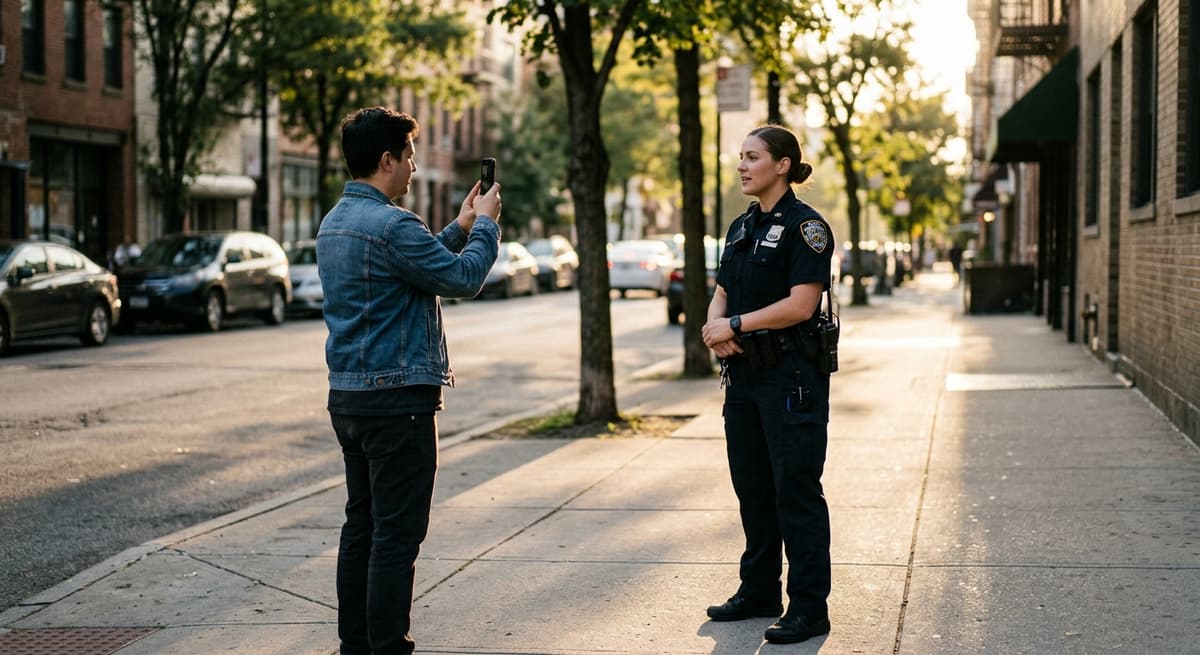
Recording in a public place, including filming police officers in the course of their duties, is not automatically illegal under any Hong Kong statute. The PCPD has not declared such recording unlawful. Section 161 of the Crimes Ordinance no longer applies to recording on your own device (per Cheng Ka Yee). No HK statute specifically prohibits filming police in public.
National Security Exposure
The risk arises from how the recording is used. Under the SNSO, sharing a recording in a way that could:
- assist an external force or hostile organization;
- disclose information about national security operations;
- constitute espionage by collecting information "directly or indirectly useful to an external force";
- reveal the activities of OSNS staff;
creates serious criminal liability, with penalties ranging from seven years for OSNS-related disclosure offences to twenty years for espionage at a prohibited place.
At Prohibited Places
Regarding the six OSNS-designated prohibited places, Security Chief Chris Tang stated in May 2025 that photographing these sites is only illegal if there is "criminal intent." However, officers have authority to issue orders to stop recording at or near these sites. Disobeying such an order carries up to two years' imprisonment. Espionage activities at prohibited places, including surveillance involving inspections, carry up to twenty years' imprisonment.
Practical Guidance
For ordinary members of the public, filming police officers in public is not a criminal act absent additional facts. Journalists and researchers should be aware that recordings may be subpoenaed in NSL and SNSO proceedings. The legal risk of recording at politically sensitive locations, near prohibited places, or at demonstrations has increased materially since 2020. Anyone intending to record in those contexts should obtain legal advice before doing so.
Workplace Recording and Employer Surveillance
Workplace recording is one area where the PDPO's requirements carry real operational weight. The PCPD published Privacy Guidelines: Monitoring and Personal Data Privacy at Work in December 2004, providing the most detailed official guidance on this topic.
Key Requirements for Employers
Under the PDPO's Data Protection Principles and the PCPD's 2004 Workplace Monitoring Guidelines, employers must:
- Have a lawful purpose directly related to their business function (DPP1). General curiosity about employees' private conversations does not satisfy this standard.
- Inform employees in writing about what monitoring devices are in use, what data is being collected, and the purposes for collection. Notice must be given before monitoring begins.
- Limit collection to the minimum necessary for the stated purpose. Comprehensive audio surveillance of all workspaces is unlikely to satisfy this proportionality requirement.
- Conduct monitoring fairly. Covert surveillance without prior notice is only permissible where the employer has reasonable grounds to suspect criminal activity and obtaining prior consent would undermine the investigation.
Employees Recording at Work
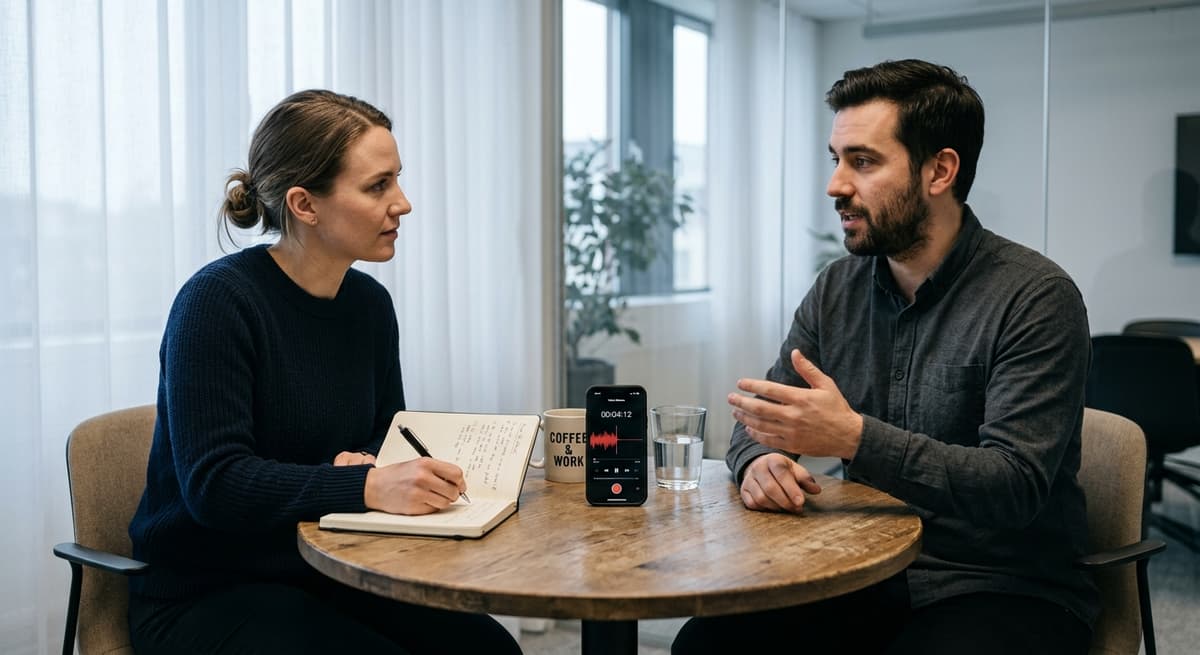
For employees who covertly record workplace conversations, the legal analysis follows the same framework as any private recording. No statute prohibits it outright, but using the recording in ways that violate PDPO principles or constitute doxxing creates liability.
Hong Kong employment tribunals and courts have wide discretion to admit covert workplace recordings in employment disputes covering discrimination, harassment, or unfair dismissal claims. Whether making such a recording constitutes gross misconduct justifying dismissal depends on the purpose of the recording, the existence of a workplace policy against recording, and whether the recording captured confidential business information.
Employers are well-advised to establish clear, communicated recording policies rather than relying on the absence of a statutory prohibition.
Recording in Public Places
Filming and photography in public places is generally permitted in Hong Kong. From a public street, you may photograph or record what is happening around you. The same principle applies to audio recording in public spaces: no statute prohibits capturing ambient conversations or public events.
Several restrictions apply:
- Government premises and courts: Photography and recording in law courts, government buildings, libraries, civic centres, and some museums typically requires express permission.
- Places of public entertainment: Recording in cinemas and indoor theatres is prohibited under the Places of Public Entertainment Ordinance.
- OSNS prohibited places: The six sites designated under May 2025 SNSO subsidiary legislation require caution. Surveillance-type recording at these sites with intent to assist a hostile organization constitutes espionage, carrying up to twenty years' imprisonment.
- Harassment: Where the manner of recording amounts to harassment or causes alarm to the subject, subsequent publication could engage the doxxing provisions if personal data is disclosed harmfully.
For audio recording in public, no law prohibits it, but the PDPO may be triggered if you are systematically collecting personal data about identifiable individuals and using that data for purposes beyond the moment of collection.
Deepfakes and AI-Generated Intimate Images
The intersection of recording law and artificial intelligence has become one of the most active areas of legal development in Hong Kong.
PCPD December 2025 Guidance
On 17 December 2025, the PCPD published "Abuse of AI Deepfakes: Toolkit for Schools and Parents," its first guidance document specifically addressing deepfake risks. The Toolkit confirms that publishing or distributing an AI-generated intimate image of an identifiable person without their consent falls within Section 159AAE of the Crimes Ordinance. The offence extends to synthetic images created by AI tools, not only to photographs or recordings of real persons. Maximum penalty: five years' imprisonment.
The reasoning is that s.159AAE focuses on the publication of an "intimate image" defined by its content and the identifiability of the subject, not on whether the image was captured by a camera or generated algorithmically.
The Creation Gap
The December 2025 guidance identified a gap: creating a deepfake intimate image without publishing or distributing it is not currently a specific criminal offence under any Hong Kong statute. The voyeurism and intimate image offences target recording or publication; creation alone falls outside their reach.
Government Response in 2026
The Hong Kong privacy watchdog joined 60 overseas authorities in February 2026 in issuing a joint warning against non-consensual AI-generated images. As of March 2026, the Secretary for Justice established the first meeting of a Steering Committee to set up an Inter-Departmental Working Group to Review Legislation to Support Wider Application of AI. That Working Group, coordinated by the Department of Justice, is reviewing existing laws across all policy bureaux to identify gaps and will address deepfake pornography and AI-generated false information as part of its mandate. No amending legislation had been enacted as of May 2026.
Practical Takeaway
Existing law clearly reaches publication of AI-generated intimate images. Creation without publication remains a legal gap under active government review. Organizations using AI image and video tools should adopt internal policies prohibiting non-consensual intimate images of identifiable individuals and should not wait for legislation to formalise the prohibition.
Cross-Border Recording and Data Transfer
Hong Kong's position as a gateway between mainland China and the rest of the world creates specific cross-border data transfer considerations for anyone who makes recordings involving subjects in multiple jurisdictions.
PDPO Section 33: The Dormant Transfer Restriction
Section 33 of the PDPO would restrict the transfer of personal data to places outside Hong Kong unless specified conditions are met, including equivalent data protection standards at the destination. However, Section 33 has never been brought into force. No Transfer Restriction Notice has been issued by the Privacy Commissioner as of May 2026.
In practice, there is currently no statutory prohibition on transferring recordings containing personal data from Hong Kong to other jurisdictions, including mainland China, even though the mainland's data protection regime differs materially from the PDPO.
The GBA Standard Contract
Notwithstanding the dormancy of s.33, the PCPD has published recommended model data transfer clauses for transfers to the mainland in the context of the Guangdong-Hong Kong-Macao Greater Bay Area (GBA). Organizations that regularly transfer recordings or other personal data to mainland-based entities as part of GBA operations are advised to use these contractual protections, which are designed to align with both PDPO principles and the mainland's PIPL requirements.
Mainland PIPL Overlay
If a recording captures information about individuals in mainland China, or if a Hong Kong-based organization processes personal data of mainland residents, the Personal Information Protection Law (PIPL), effective November 2021, may also apply. PIPL requires a legal basis for processing. For outbound transfers from mainland China, a security assessment or standard contract approved by the Cyberspace Administration of China (CAC) is required. Organizations operating across the Hong Kong-mainland border should maintain separate compliance frameworks for PDPO and PIPL rather than assuming Hong Kong compliance satisfies mainland requirements.
Penalties: Consolidated Reference
The following table consolidates criminal penalties across the key regimes. Civil liability is addressed in the next section.
| Offence | Statute | Maximum Fine | Maximum Imprisonment |
|---|---|---|---|
| PDPO: non-compliance with enforcement notice (first offence) | Cap. 486, s.50 | HK$50,000 + HK$1,000/day | 2 years |
| PDPO: non-compliance with enforcement notice (subsequent) | Cap. 486, s.50 | HK$100,000 + HK$2,000/day | 2 years |
| Doxxing (basic offence, s.64(3A)) | Cap. 486, s.64(3A) | HK$100,000 | 2 years |
| Doxxing (aggravated, s.64(3B)) | Cap. 486, s.64(3B) | HK$1,000,000 | 5 years |
| Voyeurism (s.159AAB) | Cap. 200, s.159AAB | Not specified; court discretion | 5 years |
| Unlawful recording of intimate parts (s.159AAC) | Cap. 200, s.159AAC | Not specified; court discretion | 5 years |
| Publishing voyeuristic images (s.159AAD) | Cap. 200, s.159AAD | Not specified; court discretion | 5 years |
| Non-consensual intimate images (s.159AAE, incl. deepfakes) | Cap. 200, s.159AAE | Not specified; court discretion | 5 years |
| SNSO: espionage near prohibited place | Cap. A406 | Court discretion | 20 years |
| SNSO: disobeying officer at prohibited place | Cap. A406 | Court discretion | 2 years |
| SNSO: disclosing OSNS investigation | Cap. A406 | HK$500,000 | 7 years |
| NSL: collusion with foreign forces (most serious) | NSL 2020, Art. 29 | Court discretion | Life imprisonment |
Courts may also order confiscation of recording devices and, for intimate image offences, destruction of the images. The ICSO provides separate penalties for unauthorized law enforcement interception: up to ten years' imprisonment under Cap. 589.
Civil Liability for Recording
Criminal penalties are only part of the picture. Several civil remedies can apply where a recording was made or used in a way that harmed an identifiable person.
Breach of Confidence
Hong Kong courts recognize breach of confidence as an equitable cause of action. The classic formulation (from Coco v A.N. Clark (Engineers) Ltd [1968] FSR 415, applied in Hong Kong) requires: (1) the information must have the necessary quality of confidence; (2) it must have been imparted in circumstances importing an obligation of confidence; and (3) there must be an unauthorized use of the information to the detriment of the party communicating it. A covert recording of a confidential communication, such as a private business meeting or a privileged conversation, may satisfy these elements. The remedy can include an injunction against disclosure and an account of profits.
The Privacy Tort Gap
Hong Kong does not have a statutory tort of invasion of privacy. The Law Reform Commission published a detailed report in 2004 recommending the creation of two statutory torts: (1) intrusion upon solitude or seclusion, and (2) public disclosure of private facts. The recommended standard for both was that the intrusion or disclosure must be "seriously offensive or objectionable to a reasonable person" in circumstances giving rise to a reasonable expectation of privacy. Neither recommendation has been enacted into law as of May 2026. Unlike England and Wales, which have developed a misuse of private information cause of action through the courts, Hong Kong does not currently recognize an equivalent common law privacy tort.
Prevention of Harassment Ordinance (Cap. 615)
Where recording forms part of a course of harassing conduct, the Prevention of Harassment Ordinance (Cap. 615) provides civil remedies including harassment orders. A pattern of covert recording of a particular individual, especially where accompanied by surveillance or threatening behaviour, could support a harassment claim. Criminal harassment liability under Cap. 615 carries up to five years' imprisonment.
PDPO Data Access and Compensation
Individuals whose personal data is mishandled in a recording can lodge complaints with the PCPD, which may issue an enforcement notice. Where loss results from a PDPO breach, individuals may also seek compensation through civil proceedings. The PDPO provides a right of action for damage caused by a contravention of the Ordinance by a data user.
Workplace Compliance and Best Practices
Organizations operating in Hong Kong should take a proactive approach to recording compliance. The PDPO's Data Protection Principles, the 2021 doxxing amendments, and the national security overlay together create material obligations even in the absence of a blanket recording prohibition.
For Businesses That Record Calls or Meetings
- Post clear notices before recording begins, stating the purpose and how the recording will be used and stored. Automated call-recording systems should play a disclosure message at the start of every call.
- Limit retention of recorded material to the minimum period necessary. Define retention periods in a data retention policy and enforce them systematically.
- Secure recordings against unauthorized access using encryption and access controls (DPP4). Recording libraries containing identifiable conversations require active protection measures.
- Establish a data access policy so individuals can request access to recordings containing their personal data and, where appropriate, request correction or deletion (DPP6).
- Review cross-border transfer practices if recordings are stored in cloud infrastructure outside Hong Kong or shared with entities in other jurisdictions.
- Adopt deepfake prohibitions as a matter of internal policy even though creation-only is not yet criminalized.
For Individuals
There is no legal requirement to obtain consent before recording a conversation you are a party to. Informing the other party is considered good practice but is not mandated by statute.
If you plan to use a recording as evidence in legal proceedings, consensual recordings carry greater weight. Covert recordings are admissible but attract judicial scrutiny.
The 2021 voyeurism amendments, the doxxing provisions, and the national security overlay all create significant criminal exposure for particular uses of recordings. Anyone contemplating recording in sensitive contexts (national security locations, intimate settings, or politically charged demonstrations) should consider the legal risk carefully before doing so.
Disclaimer
This article presents general legal information about recording laws in Hong Kong SAR. It is not legal advice and does not address any individual's specific circumstances. The law as described reflects statutes and guidance current as of 2026-05-15. Hong Kong law, including national security legislation, is subject to change. If you have questions about a specific recording situation, consult a solicitor admitted to practice in Hong Kong who can advise based on the facts of your case.
Authorities Cited
- Interception of Communications and Surveillance Ordinance (Cap. 589). https://www.elegislation.gov.hk/hk/cap589
- Personal Data (Privacy) Ordinance (Cap. 486). https://www.elegislation.gov.hk/hk/cap486
- Crimes Ordinance (Cap. 200), ss.159AA-159AAH, 161. https://www.elegislation.gov.hk/hk/cap200
- Basic Law of the HKSAR, Article 30. https://www.basiclaw.gov.hk/en/basiclaw/chapter3.html
- Law of the PRC on Safeguarding National Security in the HKSAR (NSL 2020). https://www.elegislation.gov.hk/hk/A305
- Safeguarding National Security Ordinance 2024 (Cap. A406). https://www.elegislation.gov.hk/hk/A406
- Commissioner on Interception of Communications and Surveillance. https://www.sciocs.gov.hk/en/interception-of-communications-and-surveillance-ordinance.html
- LCQ17: Audio Recording of a Conversation by a Party Thereto (14 June 2017). https://www.info.gov.hk/gia/general/201706/14/P2017061400482.htm
- Crimes (Amendment) Ordinance 2021 Takes Effect, GovHK Press Release. https://www.info.gov.hk/gia/general/202110/08/P2021100700545.htm
- Personal Data (Privacy) (Amendment) Ordinance 2021, LegCo Bill. https://www.legco.gov.hk/yr2020-21/english/bills/b202105281.pdf
- Privacy Commissioner for Personal Data: The PDPO at a Glance. https://www.pcpd.org.hk/english/data_privacy_law/ordinance_at_a_Glance/ordinance.html
- PCPD: Anti-Doxxing Guidance and Complaint Portal. https://www.pcpd.org.hk/english/data_privacy_law/anti_doxxing/anti-doxxing.html
- PCPD: Monitoring and Personal Data Privacy at Work (December 2004). https://www.pcpd.org.hk/english/publications/files/monguide_e.pdf
- PCPD: Cross-Boundary Data Transfer, GBA Model Clauses. https://www.pcpd.org.hk/english/data_privacy_law/cross_boundary_data_transfer/cross-boundary_data_transfer.html
- PCPD: Abuse of AI Deepfakes, Toolkit for Schools and Parents (December 2025). https://www.pcpd.org.hk/english/resources_centre/publications/files/ai_deepfake.pdf
- PCPD: Privacy Commissioner's Office Reports on its Work in 2025 (February 2026). https://www.pcpd.org.hk/english/news_events/media_statements/press_20260203.html
- Secretary for Justice v Cheng Ka Yee (2019) 22 HKCFAR 97, HKFP Report. https://hongkongfp.com/2019/04/04/catch-computer-offence-not-apply-person-using-device-hong-kongs-top-court-rules/
- HKFP Explainer: 6 New Offences, 6 Prohibited Places (18 May 2025). https://hongkongfp.com/2025/05/18/explainer-6-new-offences-6-prohibited-places-what-to-know-about-hong-kongs-article-23-security-law-update/
- HKFP: Taking Photos of Prohibited Sites (15 May 2025). https://hongkongfp.com/2025/05/15/taking-photos-of-prohibited-sites-illegal-under-article-23-only-if-criminal-intent-involved-security-chief-says/
- SCMP: Recording Conversations Not a Criminal Offence, Says HKU Lecturer (2015). https://www.scmp.com/news/hong-kong/education-community/article/1873738/recording-conversations-not-criminal-offence-says
- LCQ6: Regulation and Development of AI Technology (18 March 2026). https://www.info.gov.hk/gia/general/202603/18/P2026031800419.htm
- Mainland China Personal Information Protection Law (PIPL), NPC Full Text. http://www.npc.gov.cn/npc/c2/c30834/202108/t20210820_313055.html
- Hong Kong Law Reform Commission: Civil Liability for Invasion of Privacy (2004). https://www.hkreform.gov.hk/en/publications/rprivacy.htm
- CLIC: Voyeurism and Non-Consensual Sexual Offences. https://www.clic.org.hk/en/topics/sexual_offences/I_Non-consensual_Sexual_Offences/E_Voyeurism
Related Articles
Last updated: 2026-05-15. Statutes cited reflect their in-force versions as of 2026-05-15.
Frequently Asked Questions
Is it legal to record a phone call in Hong Kong without telling the other person?
There is no Hong Kong statute that prohibits a private individual from recording a phone call they are a party to, even without informing the other person. The ICSO (Cap. 589) governs only law enforcement interception, not private recording. The PDPO (Cap. 486) may apply if the recording captures personal data, requiring the recorder to have had a lawful purpose and to use the recording only for that purpose. A 2017 Legislative Council response (LCQ17) confirmed that no law prohibits a party to a conversation from recording it.
What is the doxxing law in Hong Kong, and can it apply to sharing a recording?
The 2021 PDPO Amendment inserted ss.64(3A)-(3D), creating criminal doxxing offences. Disclosing personal data, which can include a recording, without consent and with intent to or recklessly causing harassment, alarm, distress, or harm to the subject, carries a maximum fine of HK$100,000 and two years' imprisonment under s.64(3A). If actual harm results, the aggravated offence under s.64(3B) carries a maximum HK$1,000,000 fine and five years' imprisonment. The PCPD has power to require platform operators to remove doxxing content and had issued 2,104 cessation notices as of December 2025.
Does Secretary for Justice v Cheng Ka Yee affect recording law?
Yes. In Secretary for Justice v Cheng Ka Yee (2019) 22 HKCFAR 97, the Court of Final Appeal held that section 161 of the Crimes Ordinance does not apply to a person using their own device. This closed a route prosecutors had used to charge individuals for smartphone recording. Charges must now rely on purpose-specific offences such as voyeurism (s.159AAB), doxxing (s.64(3A)-(3B)), or national security provisions.
Is it illegal to record police officers in Hong Kong?
Recording police officers in a public place is not automatically illegal under any Hong Kong statute. However, the SNSO 2024 and its May 2025 subsidiary legislation create liability for sharing recordings in ways that could assist hostile organizations or constitute espionage. At the six designated OSNS prohibited places, officers may issue orders to stop recording; disobeying such an order carries up to two years' imprisonment. Espionage activities near prohibited places carry up to twenty years. The legal risk of recording at politically sensitive sites or police operations has increased substantially since 2020.
Are deepfake intimate images illegal in Hong Kong?
Publishing or distributing an AI-generated intimate image of an identifiable person without their consent is illegal under section 159AAE of the Crimes Ordinance, per PCPD December 2025 guidance. The offence covers synthetic images as well as real photographs, with a maximum penalty of five years' imprisonment. Creating such an image without publishing it is not yet a specific criminal offence. An inter-departmental working group coordinated by the Department of Justice is reviewing legislation to address this gap, but no amendments had been enacted as of May 2026.
Can a covert workplace recording be used as evidence in Hong Kong?
Yes. Hong Kong employment tribunals and courts have wide discretion to admit covert workplace recordings in employment disputes covering discrimination, harassment, or unfair dismissal claims. The recording is not automatically excluded because it was made without the other party's knowledge, but it may carry reduced weight. Whether making such a recording constitutes gross misconduct depends on the purpose, any workplace policy against recording, and whether confidential business information was captured.
What does PDPO Section 33 say about transferring recordings outside Hong Kong?
Section 33 of the PDPO would restrict the transfer of personal data outside Hong Kong, but it has never been brought into force. As of May 2026, there is no enforceable statutory prohibition on transferring recordings containing personal data to other jurisdictions. Organizations doing so as part of Greater Bay Area operations are advised to use the PCPD's recommended GBA model contractual clauses to align with both PDPO principles and mainland PIPL requirements.
Do employers need to tell employees they are being monitored in Hong Kong?
Yes, under the PDPO's Data Protection Principles and the PCPD's 2004 Workplace Monitoring Guidelines. Employers must inform employees in writing about surveillance devices in use, data being collected, and the purposes of collection before monitoring begins. Covert surveillance without prior notice is only permissible where the employer has reasonable grounds to suspect criminal activity and obtaining consent would undermine the investigation.
What are the penalties for voyeurism or filming intimate images without consent in Hong Kong?
Sections 159AAB through 159AAE of the Crimes Ordinance (inserted by the 2021 Amendment Ordinance) create four offences: voyeurism (s.159AAB), unlawful recording of intimate parts (s.159AAC), publishing voyeuristic images (s.159AAD), and non-consensual publication of intimate images including deepfakes (s.159AAE). Each carries a maximum penalty of five years' imprisonment. Courts may also order removal or destruction of intimate images. The section 159AA provision is the definitions section and is not itself an offence.
Is Hong Kong a one-party or two-party consent jurisdiction?
Hong Kong does not have a formal one-party or two-party consent framework. No statute expressly requires consent for participant recording. The practical effect is that Hong Kong operates closer to a one-party consent model by default because no law prohibits a party to a conversation from recording it. The PDPO's fairness requirements and the doxxing provisions serve as the primary legal checks on how recordings are subsequently used and shared.
Can I sue someone for secretly recording me in Hong Kong?
Hong Kong does not have a statutory privacy tort. The Law Reform Commission recommended in 2004 that two such torts be created (intrusion upon seclusion and public disclosure of private facts), but neither has been enacted. Existing civil remedies include breach of confidence (if the recording captured confidential communications), civil claims under the PDPO for loss caused by data misuse, and harassment proceedings under the Prevention of Harassment Ordinance (Cap. 615) where recording forms part of a course of harassing conduct.
What are the six prohibited places under the May 2025 SNSO subsidiary legislation?
In May 2025, subsidiary legislation designated six premises as prohibited places for the Office for Safeguarding National Security: Metropark Hotel Causeway Bay, City Garden Hotel (North Point), Island Pacific Hotel (Sai Wan), Metropark Hotel Hung Hom, and two sites at Hoi Fan Road in Tai Kok Tsui. Espionage activities at these sites, including surveillance-type recording, carry up to twenty years' imprisonment. Disobeying an officer's order to stop recording at a prohibited place carries up to two years.
When will Hong Kong legislate against AI deepfake creation?
As of May 2026, no legislation has been enacted specifically targeting the creation of AI-generated intimate images. The Secretary for Justice convened the first meeting of a Steering Committee in March 2026 to establish an Inter-Departmental Working Group to Review Legislation to Support Wider Application of AI. That group is studying whether to legislate against AI-generated indecent images and related harms. Monitor the Department of Justice and Legislative Council business portal for developments.
Updates
Governing law re-checked for recent changes
Full expansion refresh: corrected Crimes Ordinance section numbers (159AA is definitions; voyeurism offence is 159AAB); updated SNSO 2024 with May 2025 subsidiary legislation designating 6 prohibited places and specific penalties; replaced inaccurate 'Security Bureau 2026 consultation' with accurate DOJ inter-departmental working group status; added PCPD 2025 doxxing enforcement statistics; added Quick Answer, Recording Police, Penalties, and Civil Liability H2 sections; eliminated em-dashes throughout with context-aware rewrites; word count expanded from 2,850 to approximately 6,000 words.
Sources and References
- Interception of Communications and Surveillance Ordinance (Cap. 589)(elegislation.gov.hk).gov
- Personal Data (Privacy) Ordinance (Cap. 486)(elegislation.gov.hk).gov
- Crimes Ordinance (Cap. 200), ss.159AA-159AAH(elegislation.gov.hk).gov
- Basic Law of the HKSAR, Article 30(basiclaw.gov.hk).gov
- Law of the PRC on Safeguarding National Security in the HKSAR (NSL 2020)(elegislation.gov.hk).gov
- Safeguarding National Security Ordinance 2024 (Cap. A406)(elegislation.gov.hk).gov
- Commissioner on Interception of Communications and Surveillance(sciocs.gov.hk).gov
- LCQ17: Audio Recording of a Conversation by a Party Thereto (June 2017)(info.gov.hk).gov
- Crimes (Amendment) Ordinance 2021 Takes Effect(info.gov.hk).gov
- Personal Data (Privacy) (Amendment) Ordinance 2021, LegCo Bill(legco.gov.hk).gov
- Privacy Commissioner for Personal Data: The PDPO at a Glance(pcpd.org.hk).gov
- PCPD: Anti-Doxxing Guidance and Complaint Portal(pcpd.org.hk).gov
- PCPD: Monitoring and Personal Data Privacy at Work (December 2004)(pcpd.org.hk).gov
- PCPD: Cross-Boundary Data Transfer, GBA Model Clauses(pcpd.org.hk).gov
- PCPD: Abuse of AI Deepfakes Toolkit (December 2025)(pcpd.org.hk).gov
- PCPD 2025 Annual Media Statement, Enforcement Statistics(pcpd.org.hk).gov
- Secretary for Justice v Cheng Ka Yee (2019) 22 HKCFAR 97, HKFP Report(hongkongfp.com)
- HKFP Explainer: 6 Offences, 6 Prohibited Places, May 2025 SNSO Update(hongkongfp.com)
- HKFP: Photography at Prohibited Sites, Security Chief (May 2025)(hongkongfp.com)
- SCMP: Recording Conversations Not a Criminal Offence (2015)(scmp.com)
- LCQ6: AI Regulation and Development (18 March 2026)(info.gov.hk).gov
- Mainland China Personal Information Protection Law (PIPL)(npc.gov.cn).gov
- HKLRC: Civil Liability for Invasion of Privacy Report (2004)(hkreform.gov.hk).gov
- CLIC: Voyeurism and Non-Consensual Sexual Offences(clic.org.hk)