
Ghana
Ghana Recording Laws: All-Party Consent Rules and Penalties (2026)
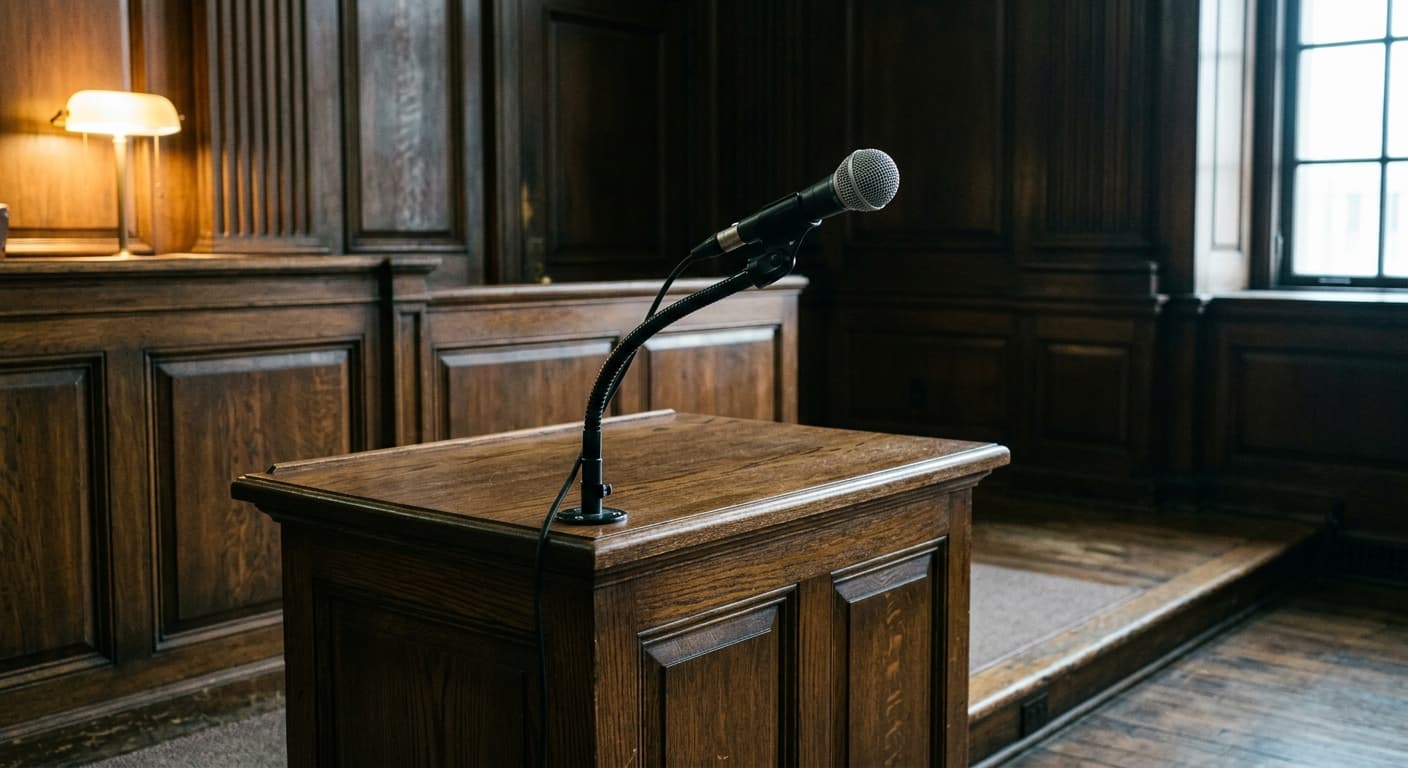
Ghana requires all parties to consent before any conversation is recorded. Article 18(2) of the 1992 Constitution protects the privacy of communication, and the Supreme Court confirmed in Cubagee v Asare [2018] GHASC 14 that even a call participant cannot secretly record the other party.
Quick Answer: What Is Ghana's Consent Standard for Recording?
Ghana requires the consent of all parties to a conversation before any participant may record it. This mutual-consent standard is grounded in Article 18(2) of the 1992 Constitution, which protects every person's privacy of communication. The Supreme Court confirmed and codified this standard in Cubagee v Asare [2018] GHASC 14, where it expressly declined to adopt the one-party consent rule used in some other jurisdictions. The Court held that even a participant to a telephone call has no right to secretly record the other party. Unauthorized recording exposes a person to civil damages under Article 33(1), exclusion of the recording as evidence, and potential criminal liability under the Data Protection Act, 2012 (Act 843) and the Cybersecurity Act, 2020 (Act 1038). Limited exceptions exist for lawfully authorized law enforcement interception, but no exception exists for ordinary citizens who simply want a record of a conversation for their own purposes.
Jurisdiction scope: This article covers recording and surveillance law in the Republic of Ghana under the 1992 Constitution, the Electronic Communications Act 2008 (Act 775), the Cybersecurity Act 2020 (Act 1038), the Data Protection Act 2012 (Act 843), the Criminal Offences Act 1960 (Act 29), and associated case law. It does not address the laws of other African nations. For US state recording consent rules, see our state recording laws hub.
Constitutional Foundation: Article 18(2)
The right to privacy in Ghana is a constitutionally protected fundamental right. Article 18(2) of the 1992 Constitution states:
"No person shall be subjected to interference with the privacy of his home, property, correspondence or communication except in accordance with law and as may be necessary in a free and democratic society for public safety or the economic well-being of the country, for the protection of health or morals, for the prevention of disorder or crime or for the protection of the rights or freedoms of others."
This provision sits within Chapter 5 of the Constitution, which deals with fundamental human rights and freedoms. Privacy protections in Ghana are classified as entrenched provisions, meaning they require extraordinary amendment procedures to change. That classification signals how seriously the framers treated privacy as a constitutional value.
The language of Article 18(2) protects four specific domains: home, property, correspondence, and communication. Recording a phone call or an in-person conversation without consent falls squarely within the "communication" category. The only permissible exceptions must be "in accordance with law" and meet the necessity test for one of the enumerated purposes -- such as crime prevention or national security -- and even then must satisfy the proportionality standard that Ghanaian courts apply to rights limitations under Article 12(2).
Under Article 33(1) of the Constitution, anyone whose privacy rights have been violated may apply to the High Court for redress. The Commission on Human Rights and Administrative Justice (CHRAJ) also has jurisdiction to investigate fundamental rights violations and may recommend remedies.
The Cubagee Ruling: Ghana's All-Party Consent Standard
The most authoritative statement on recording law in Ghana came from the Supreme Court in Raphael Cubagee v Michael Yeboah Asare & 2 Others [2018] GHASC 14 (Case No. J6/04/2017), decided February 28, 2018. The unanimous decision, delivered by Justice Gabriel Pwamang, established Ghana's mutual-consent standard for recording.
Facts of the Case
The dispute originated in a land case before the Sunyani District Court "A." The plaintiff attempted to introduce an audio recording of a telephone conversation with John Felix Yeboah, a Superintendent Minister of the Assemblies of God Church. The plaintiff had recorded the call without Yeboah's knowledge or consent, arguing the recording contained admissions relevant to the property dispute. The defendant's lawyer objected, arguing the recording violated Yeboah's constitutional right to privacy under Article 18(2). The admissibility question was referred to the Supreme Court for constitutional interpretation.
The Court's Reasoning and Departure from One-Party Consent
Justice Pwamang grounded the decision firmly in Article 18(2). The Court observed that when two people speak on the telephone, each party consents only to an oral conversation. Neither party consents to having that conversation captured in a permanent, reproducible form.
The Court stated: "To record someone with whom you are having a telephone conversation is to interfere with his privacy beyond what he has consented to."
Critically, the Court explicitly compared Ghana's position to other jurisdictions. It noted that some jurisdictions -- naming Germany and the US State of Florida as examples -- require all-party consent, while others permit one-party participant recording. The Court was not persuaded to join the one-party consent camp, and held that on the facts before it, the secret recording violated the Superintendent Minister's constitutional privacy right.
The ruling went further, rejecting the argument that secretly obtained recordings should be admitted in the interests of justice. The Court warned that "to allow such deliberate violation of rights would encourage litigants to sidestep the rules of evidence and thereby undermine the integrity of court proceedings." The ruling also covered loudspeaker use: activating a speaker so that third parties can overhear a call, without the caller's knowledge, constitutes the same type of privacy violation.
Judicial Discretion on Admissibility
The Cubagee decision created a strong presumption against admissibility for secretly obtained recordings, but the Supreme Court stopped short of an absolute bar. It acknowledged that its conclusion "could have been otherwise if there were countervailing factors." A judge may weigh the severity of the privacy violation, the gravity of the alleged crime, the manner of commission, and the potential sentence.
A second major Supreme Court case reinforced these principles. In Abena Opoku Ackah v Agricultural Development Bank, the Court held that "it is only by judicial scrutiny that a private conversation can be interfered with" and rejected arguments that requiring judicial authorization would be "cumbersome and inconvenient."
Electronic Communications Act, 2008 (Act 775)
The Electronic Communications Act, 2008 (Act 775) governs telecommunications infrastructure, services, and the regulatory framework for lawful interception. It does not create a statutory consent standard for private recording -- that is established by the Constitution and the Cubagee ruling -- but it defines the conditions under which government authorities may compel interception of communications.
Section 100 of the Act grants the President broad authority to issue executive instruments requiring telecommunications operators to intercept communications and provide user information in aid of law enforcement or national security. A significant gap in this framework: there is no judicial oversight requirement for presidential orders under Section 100. The President may issue these orders without prior court authorization, which has drawn criticism from digital rights organizations as inconsistent with the constitutional privacy guarantees of Article 18(2).
Section 99 addresses electronic communications during a state of emergency. The National Communications Authority (NCA), as the statutory regulator for electronic communications, has authority under Sections 4(2)(a) and 8(2) of the Act to obtain metadata including traffic data, service use information, and subscriber details.
An Electronic Communications Bill, 2025 has been tabled by the Ministry of Communications to replace Act 775. That Bill is at the consultation stage as of mid-2026 and has not yet been enacted.
Cybersecurity Act, 2020 (Act 1038) and the Cyber Security Authority
The Cybersecurity Act, 2020 (Act 1038) is Ghana's most comprehensive legislation addressing digital surveillance and interception. It established the Cyber Security Authority (CSA) as the national cybersecurity regulator and set out a judicial warrant process for the lawful interception of communications.
Interception Warrant Procedure (Sections 71-75)
Sections 71 through 75 of the Cybersecurity Act establish a two-track warrant framework distinguishing between traffic data and content data:
- Section 71 -- Application for interception of traffic data: an investigative officer authorized by a designated official applies ex parte to the High Court for a production order to collect or record traffic data (routing, timing, size, destination -- but not the content of communications).
- Section 72 -- Issue of warrant for traffic data: the High Court may grant the application if it is satisfied that the interception is commensurate, proportionate, and necessary for a specific criminal investigation or prosecution; that measures will be taken to protect the privacy of third parties; and that the investigation would otherwise be frustrated or seriously prejudiced.
- Section 73 -- Application for interception of content data: the same officer applies for a warrant to intercept the actual contents of communications.
- Section 74 -- Issue of warrant for content data: the High Court applies the same proportionality test, with heightened scrutiny given the greater privacy intrusion.
- Section 75 -- Duration and extension: a production order or interception warrant is valid for the period specified and may be extended by the Court on application.
Service providers that disclose the existence of a warrant to any unauthorized person commit an offense under the Act, liable on summary conviction to a fine of not less than 10,000 penalty units and not more than 20,000 penalty units.
Unauthorized Access Offenses
The Act makes it an offense to gain unauthorized access to another person's communications or data. Penalties for non-compliance with the Act's provisions range from fines of 250 to 50,000 penalty units (approximately GHS 3,000 to GHS 600,000) or imprisonment, depending on the specific section violated.
Cybersecurity Amendment Bill, 2025 (Pending)
A draft Cybersecurity (Amendment) Bill, 2025 was published for consultation and has attracted significant criticism from civil society and digital rights groups. The most contested provisions include:
- Section 20B: would grant CSA officers full police powers -- arrest, search, and seizure -- along with legal immunities typically reserved for law enforcement officers.
- Sections 59F-59J: would empower both law enforcement and the CSA to "intercept, monitor and record any communication or data transmission deemed necessary for national security or public order." Critics argue the phrase "deemed necessary" eliminates meaningful judicial oversight and conflicts with Article 18(2).
- Section 59J (Power of Entry, Inspection, and Audit): would allow CSA inspectors to enter premises and audit computer systems on seven days' notice based on a "reasonable belief" of non-compliance, potentially without a warrant.
Civil society groups, including the Institute for Liberty and Policy Innovation (ILAPI-Ghana), have argued that several provisions of the Amendment Bill are unconstitutional and should be remedied before the Bill proceeds to enactment.
Data Protection Act, 2012 (Act 843) and the Data Protection Commission
The Data Protection Act, 2012 (Act 843) governs the collection, processing, storage, and use of personal data in Ghana. Audio and video recordings of identifiable individuals constitute personal data under the Act, making the Act directly applicable to both private and commercial recording activities.
Registration Requirement
Under Section 27(1) of the Act, every data controller that intends to process personal data must register with the Data Protection Commission (DPC) before doing so. This applies to any individual or organization that collects audio or video recordings of others, operates CCTV systems, or records telephone calls as part of a business process.
2026 Enforcement Era
The Data Protection Commission announced at the Data Protection Month 2026 ceremony in Accra (January 26, 2026) that 2026 would be a year of active enforcement. The Communications Minister disclosed a policy directive mandating fines against organizations that have not registered or complied with the Act. In 2025, the DPC completed its largest nationwide public awareness campaign, reaching an estimated 25 million people, conducted compliance audits across key sectors, and trained more than 800 data protection officers.
Organizations that have not yet registered with the DPC face a heightened risk of enforcement action in 2026 and beyond.
Data Protection Bill, 2025 (Pending Replacement)
The Data Protection Bill, 2025 is before Parliament and, if enacted, would repeal and replace Act 843. Key changes include:
- Creation of a new Data Protection Authority with a broader mandate than the current Commission.
- A rights-based regulatory philosophy aligned more closely with the European GDPR.
- Specific provisions on cross-border data transfer and AI governance.
- Stronger individual rights including rights to erasure, data portability, and objection to automated decision-making.
As of mid-2026, the Bill is at the parliamentary consideration stage. Act 843 remains in force until any replacement is enacted.
Criminal Offences Act, 1960 (Act 29)
The Criminal Offences Act, 1960 (Act 29) is Ghana's foundational criminal statute. While it predates the modern digital communications era, several of its provisions bear on recording and privacy.
Sections within Act 29 addressing intrusion, unauthorized access to correspondence, and related offenses provide a criminal-law floor for privacy protection. Chapter 2, Section 14 addresses provisions relating to consent, and the Act's general framework on assault, threat, and harm has been applied in cases involving privacy violations where the recording or its use causes direct injury to the subject.
The Criminal Offences Act operates alongside the constitutional framework established by Article 18(2) and the Cubagee ruling. Conduct that violates constitutional privacy rights may also constitute a criminal offense under Act 29 depending on the manner of commission and the intent of the person who made the recording. Prosecutions under Act 29 for recording-related conduct have been brought in conjunction with charges under the Data Protection Act or the Cybersecurity Act rather than as standalone matters.
For invasive recording that causes harm -- for example, recording a person in a private space such as a bathroom or changing area and distributing that footage -- Act 29 provisions on indecency and harm may apply in addition to the civil and data protection remedies discussed elsewhere in this article.
Penalties for Illegal Recording in Ghana
Constitutional Remedies
Under Article 33(1) of the Constitution, anyone whose privacy rights have been violated may apply to the High Court for redress. The Commission on Human Rights and Administrative Justice (CHRAJ) investigates fundamental rights violations. In the Abena Opoku Ackah case, the Supreme Court awarded damages for wrongful conduct that followed an unlawful recording and privacy breach.
Data Protection Act, 2012 (Act 843) Penalties
The Data Protection Act treats recordings as a form of personal data processing. Specific penalties under the Act include:
- Unlawful use or disclosure of personal information: Fine of up to 1,500 penalty units or imprisonment of up to four years, or both.
- Failure to comply with an enforcement notice: Fine of up to 150 penalty units or imprisonment of up to one year, or both.
- General offenses without specified penalties: Fine of up to 5,000 penalty units or imprisonment of up to 10 years, or both.
- Data controller violations (processing without registration): Fine of up to 250 penalty units or imprisonment of up to two years, or both.
- Cross-border sale or offer to sell personal data: Fine of up to 2,500 penalty units or imprisonment of up to five years, or both.
The Data Protection Commission may also suspend or cancel an organization's registration for non-compliance.
Cybersecurity Act, 2020 (Act 1038) Penalties
Under the Cybersecurity Act, unauthorized acquisition or disclosure of another person's communication data carries penalties ranging from fines of 250 to 50,000 penalty units (approximately GHS 3,000 to GHS 600,000) or a term of imprisonment, depending on the specific provision violated.
Phone Calls and Telephone Recording
The Cubagee ruling directly and unambiguously addresses telephone recording. Before recording someone on a call -- or before allowing a third party to listen to the conversation via a loudspeaker -- the caller must inform the other party and obtain their consent. The other party must then have a meaningful opportunity to decline or to end the call.
This applies regardless of whether the person making the recording is a participant in the conversation or a third-party eavesdropper. Even a party to the call cannot secretly record the other party. Ghana's approach differs from jurisdictions such as England and Wales (where participant recording is generally lawful) and many US states (where one-party consent permits participant recording).
Business call centers and organizations that record calls for quality assurance or training purposes must obtain prior consent from the customer. The standard practice of playing a recorded message at the start of a call ("This call may be recorded for quality and training purposes") satisfies the consent requirement, provided the caller is given a reasonable opportunity to decline recording and continue the call, or to terminate the call if they object.
In-Person Conversations
While the Cubagee ruling was decided on facts involving a telephone call, the constitutional principle rests on Article 18(2)'s protection of "communication" broadly -- not telephone communication specifically. The same mutual-consent standard applies to in-person conversations.
Recording a private face-to-face conversation without the consent of all participants carries the same constitutional risk as secretly recording a call. The relevant factors are whether the conversation occurred in a setting where the participants had a reasonable expectation of privacy, and whether the recording was made without their knowledge and consent.
Conversations in genuinely public spaces -- such as a speech in a public square or a statement made loudly in a crowded market -- carry a reduced expectation of privacy. But private discussions that take place in semi-public settings (a quiet corner of a restaurant, a meeting room, a vehicle) may still attract full constitutional protection depending on the circumstances.
Recording Police Officers
Recording police officers during a stop-and-search or in the exercise of their official duties occupies a different legal position than recording private conversations. Under the Ghana Police Service Standard Operating Procedures and the Criminal and Other Offences (Procedure) Act, 1960 (Act 30), a member of the public does not need the permission of a police officer to record during a stop-and-search interaction.
The permissive approach to recording police reflects the principle that persons exercising public authority in public do so with a reduced expectation of privacy relative to their official conduct. This is consistent with Article 21(1)(a) of the Constitution, which guarantees freedom of expression, and Article 21(1)(f), which protects freedom of information.
In practice, however, the legal position does not always translate into frictionless exercise of this right. The US State Department's 2024 Country Reports on Human Rights Practices: Ghana documented instances of security officers attacking journalists who were filing reports or recording official activities. Journalists face physical attacks from politicians and their supporters in some cases, and security officers have acted with impunity in others.
Persons who choose to record police officers should be aware of the practical distinction between the legal right and the risk of confrontation. Filming discreetly, remaining calm, and identifying oneself as a member of the press or a concerned citizen reduces the risk of escalation.
Workplace Recording and CCTV Surveillance
CCTV and Video Surveillance
Ghanaian law treats surveillance cameras as tools that collect personal data. Under the Data Protection Act, 2012 (Act 843), any individual or organization operating CCTV systems must:
- Register with the Data Protection Commission as a data controller before collecting personal data through surveillance.
- Post clear signage notifying people that they are being recorded.
- Limit data collection to what is necessary for the stated purpose.
- Secure recorded footage against unauthorized access or breaches.
- Respond to access requests within 21 days (or 40 days if other personal data is also involved) from individuals whose images were captured.
With the DPC's 2026 enforcement push well underway, businesses operating CCTV systems without proper registration face a substantially heightened risk of audits, fines, and cancellation of their registration.
Employer Monitoring
Ghana does not have a standalone workplace surveillance statute. Employer monitoring of employees falls under the general framework of the Data Protection Act and the constitutional privacy protections of Article 18(2).
An employer who records employee conversations without consent would face the same constitutional objections established in the Cubagee ruling. Any audio or video monitoring in the workplace requires transparency, a lawful basis for processing, and respect for employees' privacy rights under Act 843.
Recording in areas with a heightened expectation of privacy -- such as break rooms, restrooms, or changing areas -- would almost certainly violate both constitutional protections and the Data Protection Act.
Voyeurism
Ghana does not have a standalone voyeurism statute comparable to those found in the United Kingdom or New Zealand. However, conduct that amounts to voyeurism -- covertly recording a person in a state of undress, in a bathroom, or in other contexts where they have a compelling expectation of intimate privacy -- is addressed through a combination of the Criminal Offences Act, 1960 (Act 29), the Data Protection Act, 2012 (Act 843), and the Cybersecurity Act, 2020 (Act 1038).
Under Act 843, covert recording of an individual in an intimate context constitutes unlawful collection of personal data. Distributing such recordings, whether digitally or otherwise, compounds the violation and brings additional penalties under the Act. Where the distribution is done electronically or through digital channels, the Cybersecurity Act provisions on unlawful data acquisition and disclosure also apply.
The Gender Ministry has pursued accountability in documented cases of non-consensual intimate recording and distribution. The general framework for redress combines a constitutional rights claim under Article 33(1), civil damages, and criminal prosecution under whichever statutory regime best fits the specific conduct.
For the clearest pathway to accountability, a victim of voyeuristic recording should report to both the Data Protection Commission and the Ghana Police Service. The DPC can issue an enforcement notice and seek erasure of the recordings; the police can pursue criminal charges.
Deepfakes and AI-Generated Content
Ghana does not yet have standalone legislation specifically targeting deepfake content, but existing law provides several pathways for accountability.
The Cybersecurity Act, 2020 (Act 1038) covers cyber deception, identity theft, disinformation, and unlawful data manipulation. The Ghana Police Service has publicly warned that creating, sharing, or promoting deepfake or AI-generated fraudulent content targeting public or private individuals constitutes a criminal offense under Ghanaian law and will be prosecuted. Penalties can reach 10 years of imprisonment in serious cases.
In March 2026, The Fourth Estate (a Ghanaian investigative outlet) documented a wave of AI-generated identity clones in which Ghanaian individuals -- including professionals and public figures -- had their images and voices used in deepfake advertisements without their consent. The individuals whose identities were used had legal recourse under the Cybersecurity Act and the Data Protection Act: using a person's likeness or voice without consent to generate commercial content constitutes unlawful processing of personal data under Act 843 and may constitute identity theft or disinformation under Act 1038.
The pending Data Protection Bill, 2025 addresses AI governance explicitly, including provisions that would regulate the automated processing of biometric data -- which encompasses voice and facial likeness. Until that Bill is enacted, the combined framework of Act 843 and Act 1038 provides the primary legal remedies.
Watch out: If you use AI tools that process recordings of other people's voices (for transcription, cloning, or synthesis), you must have a lawful basis under Act 843 to process that audio data. Consent is the most straightforward lawful basis. Processing voice recordings of identifiable Ghanaian residents without consent may constitute a data protection offense even if the processing occurs outside Ghana.
Cross-Border Recording
When a recording involves parties in different countries -- for example, a call between a person in Ghana and a person in the United Kingdom -- the legal analysis requires considering both jurisdictions' consent standards.
Ghana's mutual-consent standard under the Cubagee ruling applies to communications where one party is in Ghana. Under the ECOWAS Supplementary Act on Personal Data Protection (2010), regional harmonization principles require ECOWAS member states to process personal data -- including recordings -- lawfully and only for specified purposes, with consent as the typical legal basis.
Cross-border transfer of personal data from Ghana is addressed, albeit briefly, under the current Act 843: selling or offering to sell the personal data of another person anywhere constitutes an offense punishable by a fine of up to 2,500 penalty units or imprisonment of up to five years, or both. Transferring recordings of Ghanaian individuals to a foreign server without adequate data protection arrangements falls within the scope of this restriction.
The Data Protection Bill, 2025 introduces specific cross-border data transfer provisions designed to align Ghana more closely with international standards such as the GDPR's adequacy mechanism. Until that Bill is enacted, organizations that transfer recordings of Ghanaian individuals internationally should document their legal basis for the transfer and ensure the recipient jurisdiction provides equivalent protection.
For cross-border calls, the practical advice is to obtain clear consent from all Ghanaian parties at the start of the conversation before recording commences -- regardless of the recording consent rule in the other party's jurisdiction.
Exceptions: When Recording May Be Permitted
Ghana's mutual-consent framework is firm but not absolute. The Constitution itself carves out limited exceptions. Recording may be lawful when:
- In accordance with law and authorized by statute: A statute specifically authorizes the recording. Law enforcement may seek interception under the Anti-Terrorism Act, 2008 (Act 762) (requiring Circuit Court order and prior written consent of the Attorney-General), the Security and Intelligence Agencies Act, 1996 (Act 526) (requiring a warrant signed by a Justice of the Superior Court), or the Cybersecurity Act Sections 71-74 (requiring High Court warrant with proportionality finding).
- Ordered by a court: Judicial authorization for interception is the gold standard. The Supreme Court in Abena Opoku Ackah stated that "it is only by judicial scrutiny that a private conversation can be interfered with."
- Authorized by the President: Section 100 of the Electronic Communications Act allows the President to order telecommunications operators to assist with interception for national security, though this power lacks judicial oversight.
- Recording police in the exercise of official duties: Permissible under the Police Service Standard Operating Procedures and Act 30 without officer permission, as discussed above.
The burden of proving that an exception applies falls on the party who made the recording. Dr. Justice Srem-Sai, a Ghanaian legal commentator, has explained that the crime prevention exception "does not mean that you could secretly record others in the hope of discovering or establishing a crime. That will be surveillance, which is not allowed by our Constitution."
Using Recordings as Evidence in Ghanaian Courts
The Cubagee decision established a strong default rule: secretly obtained recordings are inadmissible. But the Supreme Court stopped short of an absolute bar.
Under the Evidence Act (NRCD 323), courts have discretion to exclude relevant evidence when its probative value is outweighed by considerations of unfair prejudice, confusion, or undue delay. Section 51(2) of that Act provides that "all relevant evidence is admissible except as otherwise provided by an enactment," creating a statutory mechanism for exclusion that the Cubagee ruling invokes.
In criminal matters, the calculus may shift. Where a recording captures evidence of serious criminal conduct, courts may exercise their discretion differently than in civil disputes. However, the constitutional presumption against admissibility of secretly obtained recordings remains the starting point in every proceeding.
Under Article 296 of the Constitution, judicial discretion must be exercised fairly and cannot be arbitrary, capricious, or biased. A judge who admits unconstitutionally obtained evidence must justify that decision. Lower courts encountering novel questions about admissibility should refer the constitutional interpretation question to the Supreme Court under Article 130(2) rather than making independent determinations.
Summary of Ghana Recording Laws
| Situation | Legal Status | Key Authority |
|---|---|---|
| Recording a phone call | Requires mutual consent of all parties | Cubagee [2018] GHASC 14; Art. 18(2) |
| Recording an in-person conversation | Requires mutual consent | Art. 18(2); Cubagee principles |
| Activating loudspeaker for third parties | Requires consent of caller | Cubagee ruling |
| CCTV surveillance | Lawful with DPC registration and signage | Data Protection Act, 2012 (Act 843) |
| Workplace audio monitoring | Restricted; consent and lawful basis required | Act 843; Art. 18(2) |
| Recording police officers on duty | Permissible; no officer permission required | Police SOP; Act 30 |
| Law enforcement interception | Lawful with court order or executive instrument | Act 762; Act 526; Act 1038 ss. 71-74 |
| Intelligence surveillance | Lawful with Superior Court Justice warrant | Security and Intelligence Agencies Act, 1996 (Act 526) ss. 29-30 |
| Recording in public spaces | Context-dependent; reduced but not eliminated privacy expectation | Art. 18(2); Act 843 |
| Deepfake / AI-generated recordings | Potentially criminal; consent required for voice/likeness use | Cybersecurity Act 1038; Act 843 |
| Cross-border recording or data transfer | Lawful with consent; cross-border sale of data is an offense | Act 843; ECOWAS Supplementary Act 2010 |
Disclaimer
This article presents general legal information about recording laws in the Republic of Ghana as of May 2026. It does not constitute legal advice. The statutes and case law discussed reflect their in-force or pending status as of May 15, 2026. Recording laws and data protection regulations are subject to change; readers should verify the current status of any cited statute before relying on it.
If you have a specific legal question about recording, surveillance, or data protection in Ghana, consult a lawyer licensed to practise in Ghana.
Authorities Cited
- Constitution of the Republic of Ghana, 1992, Art. 18(2). https://www.constituteproject.org/constitution/Ghana_1996
- Raphael Cubagee v Michael Yeboah Asare & 2 Others [2018] GHASC 14 (J6/04/2017). https://ghalii.org/gh/judgment/supreme-court/2018/14
- Electronic Communications Act, 2008 (Act 775), ss. 99-100. https://ghalii.org/akn/gh/act/2008/775/eng@2009-01-09
- Cybersecurity Act, 2020 (Act 1038), ss. 71-75. https://ghalii.org/akn/gh/act/2020/1038/eng@2020-12-29
- Data Protection Act, 2012 (Act 843), ss. 27(1), 56. https://nita.gov.gh/wp-content/uploads/2017/12/Data-Protection-Act-2012-Act-843.pdf
- Anti-Terrorism Act, 2008 (Act 762). https://www.mint.gov.gh/wp-content/uploads/2017/06/Anti-Terrorism-Act-2008-Act-762.pdf
- Security and Intelligence Agencies Act, 1996 (Act 526), ss. 29-30. https://gis.gov.gh/wp-content/uploads/2024/02/Security-and-Intelligence-Agencies-Act.pdf
- Electronic Transactions Act, 2008 (Act 772), s. 101. https://nita.gov.gh/wp-content/uploads/2017/12/Electronic-Transactions-Act-772.pdf
- Criminal Offences Act, 1960 (Act 29). https://ir.parliament.gh/bitstream/handle/123456789/2434/ACT%2029.pdf
- Criminal and Other Offences (Procedure) Act, 1960 (Act 30).
- Data Protection Commission of Ghana. https://dataprotection.org.gh/
- Cyber Security Authority of Ghana. https://cybersecurity.gov.gh/
- National Communications Authority -- Legal Instruments. https://nca.org.gh/regulatory-framework/
- Data Protection Bill, 2025 (draft). https://dataprotection.org.gh/wp-content/uploads/2025/11/DATA_PROTECTION_BILL1_DRAFT-1.pdf
- Cybersecurity (Amendment) Bill, 2025 -- GhanaFact analysis. https://ghanafact.com/draft-2025-cybersecurity-amendment-bill-csas-new-functions-police-powers-cyber-hygiene-other-major-amendments/
- US State Department, 2024 Country Reports on Human Rights Practices: Ghana. https://www.state.gov/reports/2024-country-reports-on-human-rights-practices/ghana
- ECOWAS Supplementary Act on Personal Data Protection, 2010. https://dataprotection.org.gh/
- The Fourth Estate, "AI clones hijack Ghanaian identities for profit" (March 2026). https://thefourthestategh.com/2026/03/i-never-did-this-advert-ai-clones-hijack-ghanaian-identities-for-profit/
Frequently Asked Questions
Is Ghana a one-party or all-party consent state for recording?
Ghana requires mutual consent from all parties to a conversation before any recording may be made. The Supreme Court held in Cubagee v Asare [2018] GHASC 14 that even a participant to a call cannot secretly record the other party. The Court explicitly compared Ghana's position to one-party consent jurisdictions and declined to adopt that standard. Ghana's consent requirement is grounded in Article 18(2) of the 1992 Constitution.
Is it legal to record a phone call in Ghana?
Not without consent. The Ghana Supreme Court ruled in Cubagee v Asare [2018] GHASC 14 that secretly recording a telephone conversation violates the constitutional right to privacy under Article 18(2) of the 1992 Constitution. You must inform the other party and obtain their consent before recording. This applies even if you are a participant in the call.
What are the penalties for illegal recording in Ghana?
Penalties vary by statute. Under the Data Protection Act 2012 (Act 843), fines range from 150 to 5,000 penalty units, with imprisonment of up to 10 years for serious offenses. The Cybersecurity Act 2020 (Act 1038) imposes fines of 250 to 50,000 penalty units. Victims may also pursue civil remedies through the High Court under Article 33(1) of the Constitution, including damages for privacy violations.
Can secretly recorded conversations be used as evidence in Ghana?
Generally, no. The Supreme Court held in Cubagee v Asare that secretly recorded conversations are inadmissible because they were obtained in violation of constitutional privacy rights under Article 18(2). However, judges retain limited discretion to admit such evidence in exceptional circumstances, particularly in criminal cases where the gravity of the offense may outweigh the privacy violation.
Can I record police officers in Ghana?
Yes. Recording police officers during a stop-and-search or in the exercise of their official duties is legally permissible in Ghana under the Ghana Police Service Standard Operating Procedures and the Criminal and Other Offences (Procedure) Act, 1960 (Act 30). You do not need the officer's permission. However, practical risks of confrontation exist, and the 2024 US State Department Human Rights Report documented incidents of security officers acting with impunity against journalists who were recording.
Are there exceptions that allow recording without consent in Ghana?
Yes, but they are narrow and apply primarily to law enforcement. Law enforcement may obtain interception warrants under the Anti-Terrorism Act 2008 (Act 762) (Circuit Court order with Attorney-General consent), the Security and Intelligence Agencies Act 1996 (Act 526) (Superior Court Justice warrant), and the Cybersecurity Act 2020 ss. 71-74 (High Court warrant with proportionality finding). The President may order interception under Section 100 of the Electronic Communications Act without judicial oversight. Private citizens cannot record others in the hope of discovering a crime.
Is creating or sharing deepfakes illegal in Ghana?
Creating, sharing, or promoting deepfake or AI-generated fraudulent content targeting individuals is a criminal offense under the Cybersecurity Act, 2020 (Act 1038). The Ghana Police Service has publicly warned of prosecution. Using someone's voice or likeness without consent also violates the Data Protection Act, 2012 (Act 843). Penalties under the Cybersecurity Act can reach 10 years imprisonment in serious cases.
What is the Data Protection Bill 2025 and how will it affect recording in Ghana?
The Data Protection Bill, 2025 is before Parliament and, if enacted, would repeal and replace the Data Protection Act 2012 (Act 843). It would create a new Data Protection Authority with broader powers, introduce GDPR-aligned rights for individuals (including data erasure and portability), and add specific provisions on AI governance and cross-border data transfers. Until enacted, Act 843 remains the governing law and the Data Protection Commission (which declared 2026 a year of active enforcement) continues to exercise enforcement powers.
Sources and References
- Constitution of the Republic of Ghana, 1992, Art. 18(2)(constituteproject.org)
- Cubagee v Asare & Others [2018] GHASC 14(ghalii.org)
- Electronic Communications Act, 2008 (Act 775), ss. 99-100(ghalii.org)
- Cybersecurity Act, 2020 (Act 1038), ss. 71-75(ghalii.org)
- Data Protection Act, 2012 (Act 843), ss. 27(1), 56(nita.gov.gh).gov
- Anti-Terrorism Act, 2008 (Act 762)(mint.gov.gh).gov
- Security and Intelligence Agencies Act, 1996 (Act 526), ss. 29-30(gis.gov.gh).gov
- Electronic Transactions Act, 2008 (Act 772), s. 101(nita.gov.gh).gov
- Criminal Offences Act, 1960 (Act 29)(ir.parliament.gh).gov
- Data Protection Commission of Ghana(dataprotection.org.gh).gov
- Cyber Security Authority of Ghana(cybersecurity.gov.gh).gov
- National Communications Authority -- Legal Instruments(nca.org.gh).gov
- Data Protection Bill, 2025 (draft)(dataprotection.org.gh).gov
- Cybersecurity (Amendment) Bill, 2025 -- GhanaFact analysis(ghanafact.com)
- US State Department, 2024 Country Reports on Human Rights Practices: Ghana(state.gov).gov
- The Fourth Estate -- AI clones hijack Ghanaian identities (March 2026)(thefourthestategh.com)
- Cybersecurity Amendment Bill 2025 -- GhanaFact analysis(ghanafact.com)