
West Virginia
West Virginia Windshield Mounting Laws
Independently fact-checked against primary sources (last audited August 17, 2026). · Reviewed by the RecordingLaw editorial team. · Law checked current as of August 17, 2026. · 2 primary sources cited on this page. How we verify our legal content
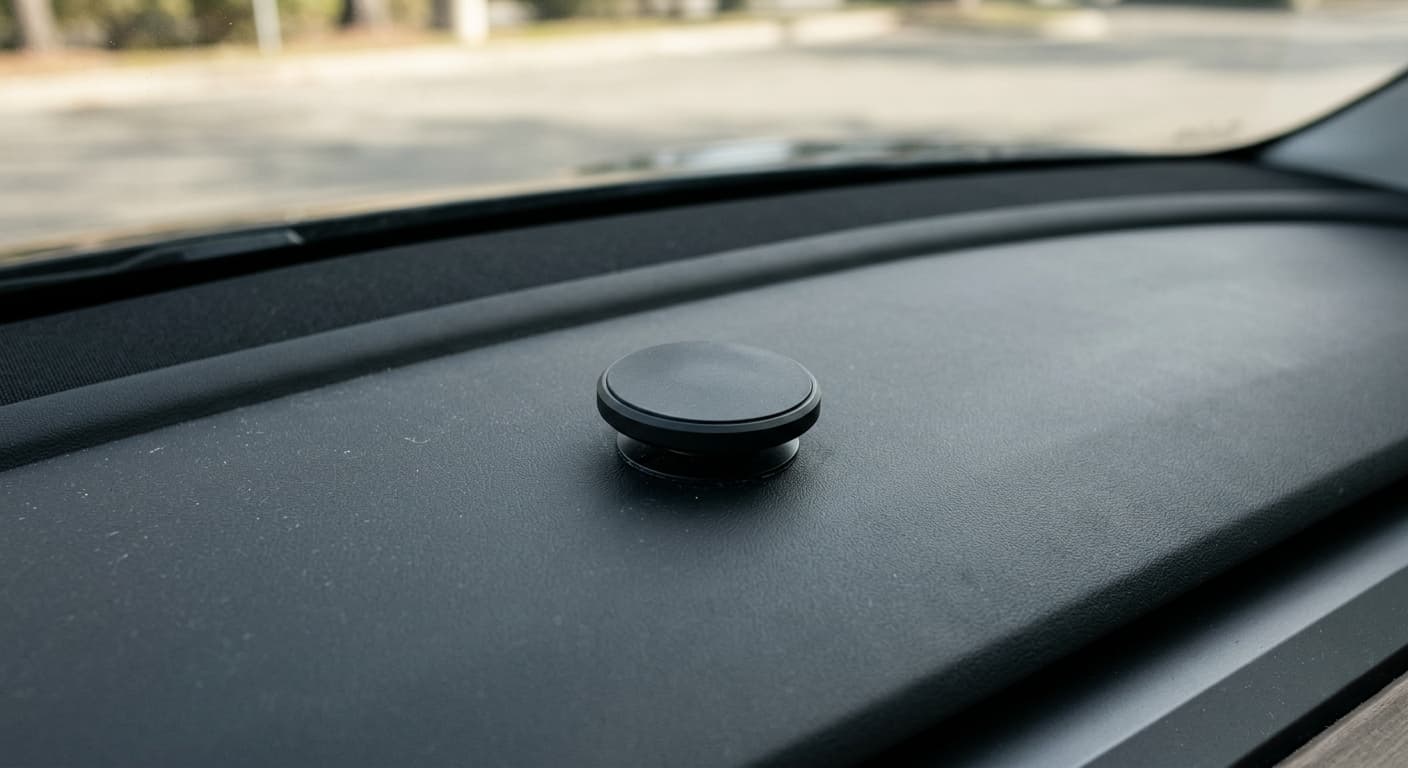
West Virginia permits dashcams, GPS units, and phone mounts on the windshield under W. Va. Code 17C-15-36, provided the device does not obstruct the driver's clear view of the highway. Safe placements include the lower windshield corners, behind the rearview mirror, or on the dashboard.
West Virginia law does not include a specific statute that addresses windshield-mounted devices such as GPS units, phone holders, or dashcams by name. Instead, the state regulates windshield obstructions through two statutes in West Virginia Code Chapter 17C: W. Va. Code 17C-15-36, which covers windshield obstruction, and W. Va. Code 17C-15-36a, which covers sun-screening devices and window tinting.
This guide explains what you can and cannot mount on your windshield in West Virginia, the tinting rules, how the 2023 hands-free law affects device mounting, and the penalties for violations.
West Virginia Windshield Obstruction Law (W. Va. Code 17C-15-36)
The primary statute governing windshield-mounted devices is W. Va. Code 17C-15-36. The statute states that no person shall drive any motor vehicle with any sign, poster, or other nontransparent material upon the front windshield, side wings, or side or rear windows of such vehicle which obstructs the driver's clear view of the highway or any intersecting highway.
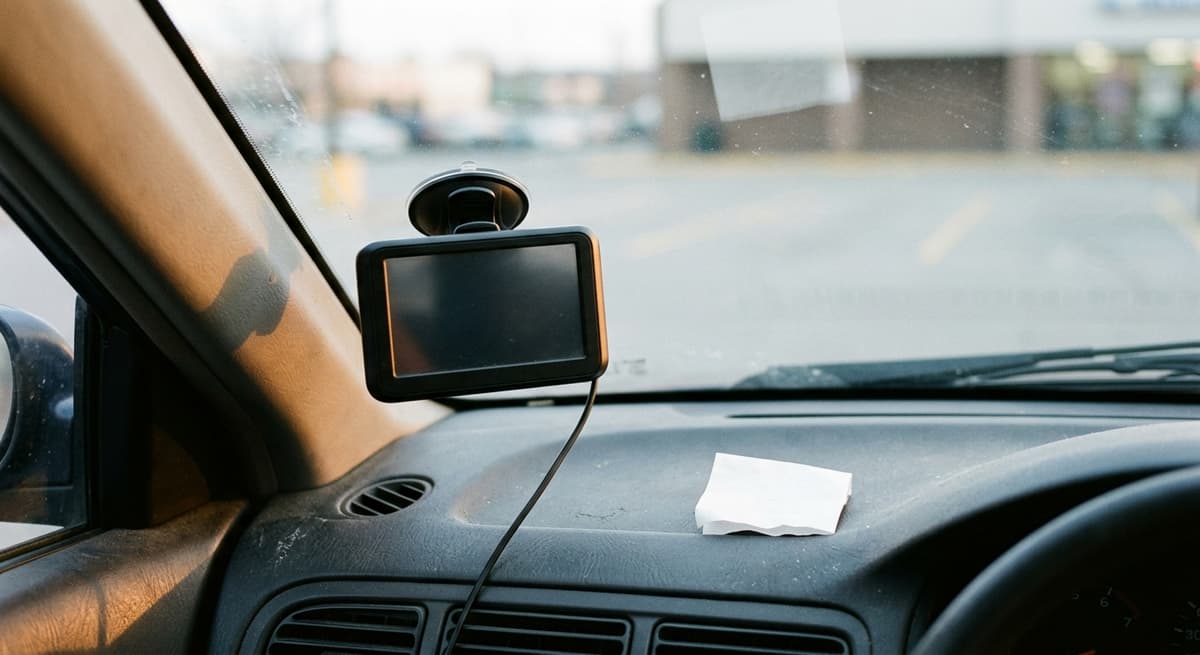
This language does not prohibit mounting devices on the windshield. It prohibits mounting them in a way that blocks the driver's view. The legal test is functional: does the device, as positioned, obstruct the driver's ability to see the road, traffic, and surroundings?
What W. Va. Code 17C-15-36 Covers
The statute addresses several requirements for windshields:
-
Obstruction prohibition: Drivers cannot operate vehicles with any sign, poster, or other nontransparent material on the front windshield, side wings, or side or rear windows that blocks the driver's view of the road or intersecting highways.
-
Wiper device requirement: Every motor vehicle windshield must have a cleaning device for removing rain, snow, or other moisture, constructed to be controlled by the driver.
-
Maintenance standard: Windshield wipers must be maintained in good working order at all times.
The obstruction prohibition is the provision most relevant to phone mounts, GPS devices, and dashcams. Because the statute targets materials that obstruct the driver's clear view, a small device positioned in a corner of the windshield that does not block the driver's line of sight is generally permissible.
Penalties for Obstruction Violations
West Virginia traffic law has no "infraction" category for this. Section 17C-15-36 sits in Article 15, and W. Va. Code 17C-15-1(a) makes it a misdemeanor for any person to drive a vehicle that "is equipped in any manner in violation of this article." Because section 36 sets no penalty of its own, the chapter-wide penalty section supplies one.
Under W. Va. Code 17C-18-1, a first conviction carries a fine of not more than $100 or imprisonment for not more than 10 days. A second conviction within one year carries a fine of not more than $200 or imprisonment for not more than 20 days, or both. A third or subsequent conviction carries a fine of not more than $500 or imprisonment for not more than six months, or both. Court costs are added on top of any fine.
If a windshield obstruction contributes to an accident, the driver may face additional civil liability. An obstruction that causes or contributes to a crash strengthens negligence claims in lawsuits and can result in elevated charges.
Sun-Screening Devices and Window Tinting (W. Va. Code 17C-15-36a)
W. Va. Code 17C-15-36a governs window tinting, sun-screening devices, and prohibited materials on vehicle windows. This statute sets specific transparency and reflectivity standards for all windows on vehicles registered in West Virginia.
Windshield Tint Requirements
| Rule | Requirement |
|---|---|
| Tint strip location | Top of the windshield only, above the AS-1 line or within 5 inches from the top (whichever is closer to the top) |
| Tint type | Must be non-reflective |
| Prohibited colors | Red, yellow, and amber |
| Full windshield tint | Not permitted at any VLT level |
The AS-1 line is a marking etched into the glass by the manufacturer, typically located 4 to 6 inches from the top of the windshield. West Virginia law uses the AS-1 line or the five-inch measurement, whichever is closer to the top of the windshield, as the maximum extent for applied tint material.
Other Window Tint Limits
| Window | Minimum VLT | Maximum Reflectivity |
|---|---|---|
| Windshield (top strip only) | Non-reflective, no color restriction beyond red/yellow/amber | N/A |
| Front side windows | 35% | 20% |
| Rear side windows | 35% (see vehicle-type exception below) | 20% |
| Rear window | 35% (see vehicle-type exception below) | 20% |
Front side windows adjacent to the driver must allow at least 35% visible light transmittance (VLT) and cannot exceed 20% reflectivity. These standards apply to the combination of factory glass and any aftermarket tinting material.
The Exception for Windows Behind the Driver
The 35% rule does not reach every vehicle. W. Va. Code 17C-15-36a(g) provides that the light transmittance requirement of the section does not apply to windows behind the driver on trucks, buses, trailers, mobile homes, and multipurpose passenger vehicles.
Subsection (h) defines a multipurpose passenger vehicle as a motor vehicle designed to carry ten persons or less that is constructed either on a truck chassis or with special features for occasional off-road operation. That definition covers many SUVs. So on a passenger car the 35% floor applies to the rear side windows and the rear window, while on a pickup, van, bus, or qualifying SUV it does not. The front side windows adjacent to the driver are never covered by this exception.
Medical Exemptions
West Virginia allows medical exemptions for window tinting. The exemption runs on an affidavit signed by a physician or an optometrist licensed to practice in this state, stating that the person has a physical condition that makes the non-compliant sun-screening material necessary. The affidavit must be in the possession of the affected person at all times when the vehicle is being operated.
Penalties for Tint Violations
Violating the sun-screening device provisions of W. Va. Code 17C-15-36a is a misdemeanor. Upon conviction, the fine is up to $200. No points are assessed on the driver's license for a tint violation, but a citation remains on the driving record.
Exemptions from Tint Law
The exemptions in W. Va. Code 17C-15-36a(a) are narrower than they are often described:
- Law-enforcement K-9 and other emergency vehicles that are designed to haul animals
- Unmarked law-enforcement vehicles primarily used for covert or undercover enforcement (the statute bars an unmarked vehicle exempted this way from engaging in routine traffic stops)
- Automobiles that have sun-screening devices installed at the factory by the manufacturer
Note what is not on that list: an ordinary marked police cruiser that is not designed to haul animals has no tint exemption, and the factory-tint exemption turns on the glazing having been installed by the manufacturer, not on a driver's belief that it met a federal standard.
GPS and Navigation Device Mounts
West Virginia permits GPS and navigation devices to be mounted on the windshield. The key legal requirements are:
-
The device must not obstruct the driver's view. Position the mount so it does not block your line of sight to the road, traffic signals, or pedestrians.
-
The display must show navigation, not entertainment. Under W. Va. Code 17C-14-15, watching video (other than navigation content) on a wireless device while driving is prohibited.
-
You must use the device hands-free. Under the 2023 Electronically Distracted Driving Act, you cannot hold or manually interact with any wireless device while driving. A securely mounted GPS that you operate by voice commands or set up before driving is compliant.
Best Placement Practices
For legal compliance, mount GPS devices in these locations:
- Lower corner of the windshield (driver or passenger side), below the line of sight to the road ahead
- On the dashboard, using a dashboard mount or friction pad
- Behind the rearview mirror, if the device is small enough not to extend beyond the mirror's profile
Avoid mounting a GPS in the center of the windshield at eye level. While not explicitly banned by statute, this placement creates the strongest argument for an obstruction citation.
Phone Mounts and the Hands-Free Law
West Virginia's Electronically Distracted Driving Act, also known as the Robin W. Ames Memorial Act, was codified as W. Va. Code 17C-14-15 and took effect on June 9, 2023. This law fundamentally changed how drivers can interact with phones in vehicles and makes windshield phone mounts more relevant than before.
What W. Va. Code 17C-14-15 Prohibits
The law prohibits drivers from:
- Physically holding or supporting a wireless telecommunications device or stand-alone electronic device with any part of the body (smartwatches are excepted)
- Writing, sending, or reading text-based communications
- Making phone calls or voice messages without hands-free technology
- Manually entering information into websites or applications
- Watching videos other than navigation-related content
- Recording, posting, sending, or broadcasting video, including a video conference, on a wireless telecommunications device or stand-alone electronic device
- Playing games on a device
The video-recording prohibition carries a proviso that matters for dashcam owners. W. Va. Code 17C-14-15(e)(7) states that the prohibition "does not apply to electronic devices used for the sole purpose of continuously recording or broadcasting video within or outside of the motor vehicle." That carve-out is what keeps a continuously recording dashcam legal under the hands-free act.
How Phone Mounts Help You Comply
A phone mount is one of the approved hands-free methods under the law. A "voice-operated or hands-free feature or function" is defined as a feature that allows a person to use a wireless telecommunications device without the use of either hand, except to activate, deactivate, or initiate the feature with a single touch or single swipe.
When your phone is securely mounted on the windshield or dashboard, you can:
- Use voice-activated calling and messaging
- Follow GPS navigation displayed on the screen
- Use CarPlay or Android Auto through the vehicle's system
- Accept calls through Bluetooth while the phone remains in the mount
You still cannot manually interact with the phone while the vehicle is in motion beyond a single touch or swipe. Setting your destination, queuing music, or sending a text must be done before you start driving or while the vehicle is safely parked.
Penalties for Hands-Free Law Violations
| Offense | Maximum Fine | License Points |
|---|---|---|
| First offense | $100 | None |
| Second offense (within 24 months) | $200 | None |
| Third or subsequent offense (within 24 months) | $350 | 3 points |
A third or subsequent conviction within 24 months may also result in a 90-day license suspension. If distracted driving causes injury or death, enhanced penalties apply, including possible incarceration.
Exemptions from the Hands-Free Law
The law does not apply to:
- Individuals contacting emergency services (911)
- Utility workers responding to utility emergencies
- Public safety personnel acting in their official capacity
- Commercial vehicle drivers using data terminals installed in the vehicle
- Drivers in vehicles that are lawfully parked
School Bus Operator Restrictions
School bus operators face stricter rules under the same statute. Bus drivers cannot use any wireless device while loading or unloading passengers, while the bus is in motion, while stationary in traffic, or while at a traffic signal. The only exception is communicating with school officials or public safety personnel.
Restrictions for Novice Drivers
West Virginia's graduated licensing statute, W. Va. Code 17B-2-3A, adds a stricter rule, and it is keyed to the driver's age rather than to the type of credential. A holder of a level one instruction permit, a level two intermediate driver's license, or a level three driver's license who is under the age of 18 years may not use a wireless communication device while operating a motor vehicle unless the use is for contacting a 9-1-1 system.
Two points follow that readers often get backwards. First, the restriction reaches level three license holders too, so a 17-year-old with a full driver's license is still barred from any use other than an emergency call. Second, hands-free technology does not cure it: for an under-18 driver, a mounted phone operated entirely by voice is still prohibited unless the call is to 9-1-1. A driver who is 18 or older is governed by the general hands-free rule in 17C-14-15.
Dashcam Rules in West Virginia
West Virginia does not have a statute specifically addressing dashcams or video event recorders. A dashcam is treated the same as any other windshield-mounted device under the general obstruction statute.
Legal Requirements for Dashcams
- The dashcam must not obstruct the driver's view of the road (W. Va. Code 17C-15-36)
- The dashcam display must not show visual entertainment to the driver while driving
- The dashcam itself must be positioned so it does not create a significant blind spot
The hands-free act's ban on recording or broadcasting video while driving does not reach dashcams. W. Va. Code 17C-14-15(e)(7) expressly excludes electronic devices used for the sole purpose of continuously recording or broadcasting video within or outside of the motor vehicle. A camera that runs continuously on its own is outside the prohibition; picking up your phone to start or stop a recording while driving is not.
Recommended Dashcam Placement
The safest legal placement for a dashcam in West Virginia is behind the rearview mirror, where the camera has a clear view of the road ahead without blocking the driver's line of sight. Small, compact dashcams that fit within the profile of the rearview mirror area are the least likely to draw a citation.
Dashboard-mounted dashcams are also permitted and avoid windshield obstruction concerns entirely.
Audio Recording Considerations
West Virginia is a one-party consent state for audio recordings. As the vehicle owner and operator, you can legally record conversations inside your own vehicle without notifying passengers. However, it is good practice to inform passengers that a dashcam with audio recording is in use.
Toll Transponders and Required Stickers
West Virginia participates in the E-ZPass toll system for the West Virginia Turnpike and other toll facilities. Transponders are permitted by an express statute, not by inference. W. Va. Code 17-16D-8 provides that an electronic toll collection device "properly affixed to the front windshield of a vehicle in accordance with rules promulgated by the Parkways Authority, or is mounted elsewhere on a vehicle in accordance with mounting instructions of the manufacturer of the device included with the device, or is otherwise used in a manner that makes it operate as intended, is not a violation of section thirty-six, article fifteen, chapter seventeen-c of this code."
The standard installation location is on the inside of the windshield behind the rearview mirror. This placement keeps the transponder out of the driver's direct line of sight and within the area that does not create an obstruction.
Do not read that carve-out as a general one. Section 17C-15-36 contains no exemption for government-issued stickers or inspection certificates, and the fact that the Legislature had to pass 17-16D-8 to protect transponders is a reason to assume other windshield items are not impliedly exempt. A vehicle does have to display a current certificate of inspection and approval under W. Va. Code 17C-16-9; place it, and anything else you affix to the glass, outside the driver's line of sight.
Windshield Damage and Replacement
W. Va. Code 17C-15-36 is not the source of West Virginia's cracked-windshield rules. That section reaches a sign, poster, or other nontransparent material placed upon the glass, and a crack in the glass is not material placed upon it.
Damage to the glass itself runs through the state's periodic inspection program instead. W. Va. Code 17C-16-4 directs the superintendent of the West Virginia State Police to require periodic inspection and authorizes the rules that administer it, and W. Va. Code 17C-16-9 makes it a misdemeanor to operate a vehicle without a current and valid certificate of inspection and approval displayed on it. The rejection criteria for cracked or chipped glass live in those inspection rules rather than in the windshield obstruction statute, so check the current rule or ask your inspection station before assuming a particular crack does or does not disqualify a vehicle.
Windshield Damage Most Likely to Cause a Problem
- Cracks or chips in the driver's direct line of sight
- Extensive spiderweb cracking that distorts visibility
- Multiple cracks or chips that collectively impair the view
- Damage that compromises the structural integrity of the windshield
When Damage Is Typically Allowed
- Small chips outside the driver's line of sight
- Minor cracks that do not extend into the driver's viewing area
- Damage on the passenger side that does not affect the driver's vision
Summary of West Virginia Windshield Laws
| Topic | Statute | Key Rule |
|---|---|---|
| Windshield obstruction | W. Va. Code 17C-15-36 | No nontransparent material that obstructs the driver's clear view |
| Windshield tint | W. Va. Code 17C-15-36a | Top of windshield only (AS-1 line or 5 inches), non-reflective, no red/yellow/amber |
| Front side window tint | W. Va. Code 17C-15-36a | Minimum 35% VLT, maximum 20% reflectivity |
| Rear window and rear side window tint | W. Va. Code 17C-15-36a | Minimum 35% VLT, maximum 20% reflectivity on passenger cars; the transmittance requirement does not apply to windows behind the driver on trucks, buses, trailers, mobile homes, and multipurpose passenger vehicles |
| Toll transponders | W. Va. Code 17-16D-8 | A properly affixed electronic toll collection device is not a violation of 17C-15-36 |
| Hands-free driving | W. Va. Code 17C-14-15 | No holding or manually using wireless devices while driving; continuously recording dashcams are excluded by (e)(7) |
| Drivers under 18 | W. Va. Code 17B-2-3A | No wireless communication device use at any license level except to contact 9-1-1 |
| Obstruction violation penalty | W. Va. Code 17C-15-1, 17C-18-1 | Misdemeanor; up to $100 or 10 days for a first conviction, up to $500 or six months for a third |
| Tint violation penalty | W. Va. Code 17C-15-36a | Misdemeanor, fine up to $200 |
| Hands-free violation | W. Va. Code 17C-14-15 | $100 first offense, up to $350 third offense |
More West Virginia Laws
Frequently Asked Questions
Can I mount a GPS or phone on my windshield in West Virginia?
Yes. West Virginia does not ban windshield-mounted GPS or phone devices. Under W. Va. Code 17C-15-36, the device must not obstruct the driver's clear view of the highway. Position the mount in a lower corner of the windshield, on the dashboard, or behind the rearview mirror for the safest legal placement.
Is it legal to use a dashcam in West Virginia?
Yes. West Virginia does not have a specific dashcam statute. A dashcam is permitted as long as it does not obstruct the driver's view under W. Va. Code 17C-15-36. The hands-free law's ban on recording or broadcasting video while driving does not reach it either: W. Va. Code 17C-14-15(e)(7) excludes electronic devices used for the sole purpose of continuously recording or broadcasting video within or outside of the motor vehicle. Mount it behind the rearview mirror or on the dashboard for the best legal protection.
What is West Virginia's hands-free driving law?
The Electronically Distracted Driving Act (W. Va. Code 17C-14-15), effective June 9, 2023, prohibits all drivers from holding or manually using a wireless telecommunications device while driving. Hands-free accessories such as phone mounts, Bluetooth headsets, CarPlay, and Android Auto are permitted. A first offense carries a fine up to $100, while a third offense within 24 months carries a fine up to $350 plus three license points and a possible 90-day license suspension.
How dark can I tint my windshield in West Virginia?
West Virginia allows a non-reflective tint strip on the top of the windshield, limited to the area above the AS-1 line or within five inches from the top, whichever is closer to the top. The tint cannot be red, yellow, or amber. Full windshield tinting is not permitted. Front side windows adjacent to the driver must allow at least 35% VLT with no more than 20% reflectivity. The same limit applies to the rear side windows and rear window of a passenger car, but W. Va. Code 17C-15-36a(g) exempts windows behind the driver on trucks, buses, trailers, mobile homes, and multipurpose passenger vehicles, a category the statute defines broadly enough to cover many SUVs.
What is the fine for a windshield tint violation in West Virginia?
Violating the sun-screening device provisions under W. Va. Code 17C-15-36a is a misdemeanor with a fine of up to $200. A windshield obstruction under W. Va. Code 17C-15-36 is a different offense: W. Va. Code 17C-15-1(a) makes an Article 15 equipment violation a misdemeanor, and because section 36 states no penalty of its own, W. Va. Code 17C-18-1 supplies one of not more than $100 or up to 10 days in jail for a first conviction, not more than $200 or 20 days for a second within one year, and not more than $500 or six months for a third or subsequent conviction, plus court costs.
Updates
Corrected the penalty for a windshield obstruction (a misdemeanor under W. Va. Code 17C-15-1 and 17C-18-1 carrying possible jail, not a locally priced infraction), fixed the under-18 wireless device rule in 17B-2-3A, added the dashcam carve-out in 17C-14-15(e)(7) and the toll transponder statute 17-16D-8, scoped the 35 percent tint rule to the vehicles it actually covers, and removed two windshield claims the cited statute does not support.
Independently fact-checked against the cited primary sources; governing law re-checked for recent changes
Governing law re-checked for recent changes
Reviewed and approved by an editor
The Law Behind This Article
This article rests on the statutory provisions below, held in our own legal record and retrieved from the official source. Tap a section to read the operative text.
West Virginia Code
§ 17C-15-36Windshields must be unobstructed and equipped with wipers.In forcecited in 2 of our articles
(a) No person shall drive any motor vehicle with any sign, poster, or other nontransparent material upon the front windshield, side wings, or side or rear windows of such vehicle which obstructs the driver's clear view of the highway or any intersecting highway. (b) The windshield on every motor vehicle shall be equipped with a device for cleaning rain, snow, or other moisture from the windshield, which device shall be so constructed as to be controlled or operated by the driver of the vehicle. (c) Every windshield wiper upon a motor vehicle shall be maintained in good working order.
Official text (excerpt) · last checked 2026-09-08 · Read the full text in our law library · Verify at code.wvlegislature.gov
Cited in 1 court opinions in our collectionLatest citing opinion in our collection: 2025
Opinions citing this section in our collection:
- Adams v. Dodrill (District Court, S.D. West Virginia 2025)“…itiated a traffic stop based on the suspected violation of W. Va. Code § 17C-15-36A (Sun-screening devices). (Id.) As De…”
Identified automatically from the court opinions citing this section — not a ranking of which case controls.
§ 17C-15-36ASun-screening devices; penalty.In forcecited in 4 of our articles
(a) No person may operate a motor vehicle that is registered or required to be registered in the state on any public highway, road or street that has a sun-screening device on the windshield, the front side wings and side windows adjacent to the right and left of the driver and windows adjacent to the rear of the driver that do not meet the requirements of this section: Provided, That law-enforcement K-9 and other emergency vehicles that are designed to haul animals, unmarked law-enforcement vehicles primarily used for covert or undercover enforcement and automobiles that have sun-screening devices installed at the factory by the manufacturer are exempt from this requirement. No unmarked law-enforcement vehicle, herein exempted, may engage in routine traffic stops. (b) A sun-screening device when used in conjunction with the windshield must be nonreflective and may not be red, yellow or amber in color. A sun-screening device may be used only along the top of the windshield and may not extend downward beyond the ASI line or more than five inches from the top of the windshield whichever is closer to the top of the windshield.
Official text (excerpt) · last checked 2026-09-01 · Read the full text in our law library · Verify at code.wvlegislature.gov
Also relied on in: West Virginia Window Tint Laws (2026): Legal VLT Limits
§ 17C-14-15Electronically Distracted Driving Act.In forcecited in 4 of our articles
(a) Definitions — As used in this section: (1) “Smartwatch” means a wearable computer that provides a local touchscreen for daily use, associated with applications, and connected to a cellular or Wi-Fi network; (2) “Stand-alone electronic device” means a portable device other than a wireless telecommunications device which stores audio or video data files to be retrieved on demand by a user; (3) “Utility services” means and includes electric, natural gas, water, wastewater, cable, telephone, or telecommunications services, or the repair, location, relocation, improvement, or maintenance of utility poles, transmission structures, pipes, wires, fibers, cables, easements, rights-of-way, or associated infrastructure; (4) “Wireless telecommunications device” means one of the following portable devices: (A) A cellular telephone; (B) A portable telephone; (C) A text-messaging device; (D) A personal digital assistant; (E) A stand-alone computer including, but not limited to, a tablet, laptop, or notebook computer; (F) A handheld global positioning system receiver; (G) A device capable of displaying a video, movie, broadcast television image, or visual image; or (H) Any…
Official text (excerpt) · last checked 2026-07-30 · Read the full text in our law library · Verify at code.wvlegislature.gov
Also relied on in: West Virginia Smart Glasses Recording Laws
Search our full record of US law — 2.1 million sections, every state + federal →
Sources and References
- W. Va. Code § 17C-15-36: windshields must be unobstructed and equipped with wipers(code.wvlegislature.gov).gov
- W. Va. Code § 17C-15-36a: sun-screening devices and window tinting requirements(code.wvlegislature.gov).gov
- W. Va. Code 17C-15-1(a): driving a vehicle equipped in violation of Article 15 is a misdemeanor(code.wvlegislature.gov)
- W. Va. Code 17C-18-1: violations of chapter; misdemeanor penalties of up to $100 or 10 days for a first conviction, escalating to $500 or six months(code.wvlegislature.gov)
- W. Va. Code 17C-14-15: Electronically Distracted Driving Act, including the (e)(7) proviso excluding devices used solely for continuous video recording(code.wvlegislature.gov)
- W. Va. Code 17B-2-3A: graduated licensing; drivers under 18 at any license level may not use a wireless communication device except to contact 9-1-1(code.wvlegislature.gov)
- W. Va. Code 17-16D-8: placement of electronic toll collection devices is not a violation of 17C-15-36(code.wvlegislature.gov)
- W. Va. Code 17C-16-4: State Police superintendent to require periodic vehicle inspection and make administering rules(code.wvlegislature.gov)
- W. Va. Code 17C-16-9: misdemeanor to operate without a current and valid certificate of inspection and approval displayed(code.wvlegislature.gov)