
West Virginia
West Virginia Car Seat Laws: Requirements and Guidelines
Independently fact-checked against primary sources (last audited August 20, 2026). · Reviewed by the RecordingLaw editorial team. · Law checked current as of August 20, 2026. How we verify our legal content
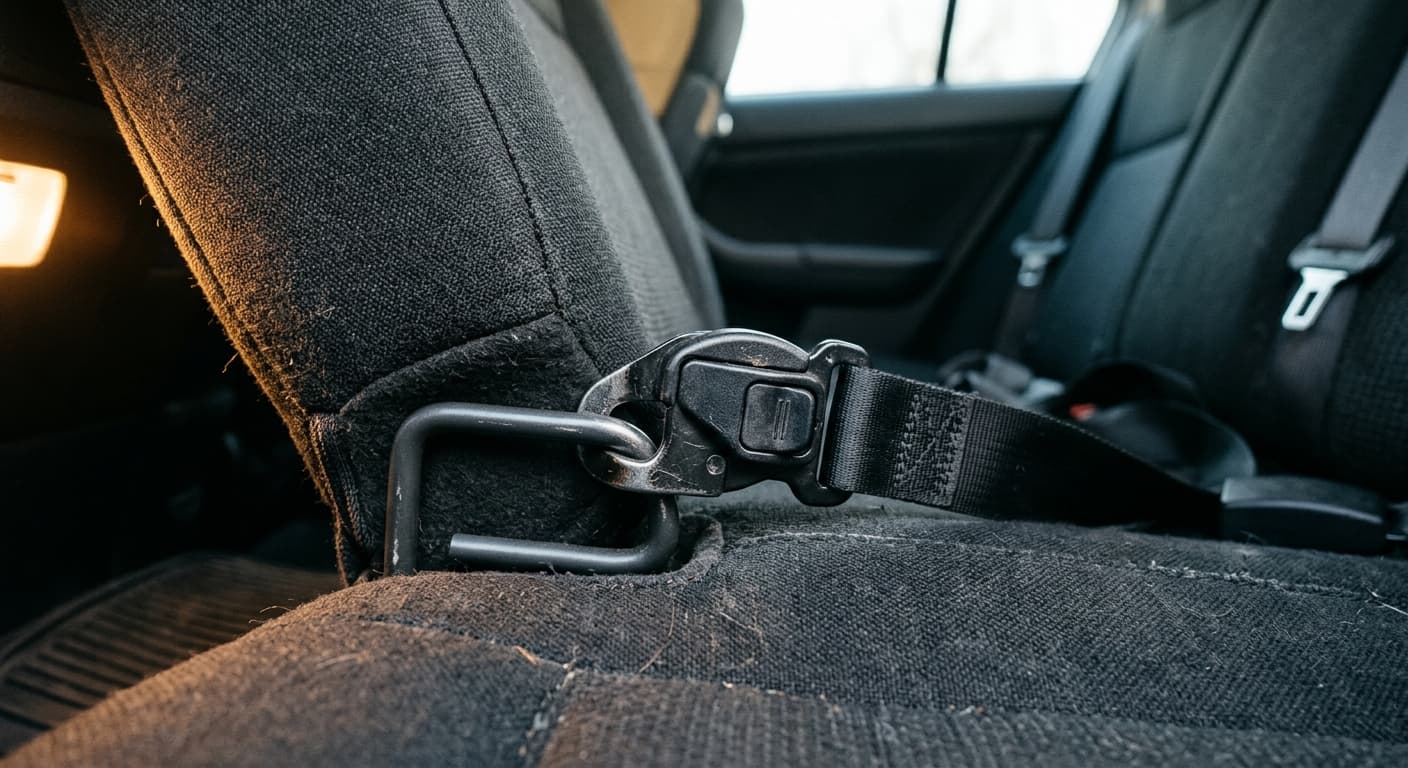
West Virginia requires all children under age 8 to ride in a federally approved child passenger safety device. Children who are 4'9" or taller, or who have reached age 8, may use a standard safety belt instead of a car seat or booster seat.
What Are the Height and Weight Requirements for Car Seats in West Virginia?
West Virginia has some of the broadest car seat safety laws, the law only requires all children under the age of 8 years to be restrained in a child passenger safety device system that meets federal standards.
Although the law does not specify exact height and age restrictions, best practices dictate that:
Infants should ride rear-facing until they are at least 2 years old or until they exceed the manufacturer's weight and height limits.
Children should use a forward-facing seat equipped with an internal harness once they outgrow their rear-facing seats.
Booster seats should be used when children outgrow their forward-facing seats.
West Virginia law allows children 8 years or older or those 4'9'' or taller to graduate to safety belts.
Best practices dictate that children should ride in the back seat until age 13.
What is West Virginia's Car Seat Law?
The law requires all children under the age of 8 years to be restrained in a child passenger safety device system that meets federal standards. The state allows children 4'9" or taller to use safety belts. West Virginia does not mention the specific age, weight, or height requirements for the different types of car seats.
What Are the Laws on Rear Facing Car Seats in West Virginia?
West Virginia Law does not specify exactly when you should transition. However, infants should ride rear-facing for as long as possible.
According to AAP (American Academy of Pediatrics), infants should ride rear-facing until they are at least 2 years old or until they exceed the manufacturer's weight and height limits. Babies riding in the forward-facing position are at greater risk of injury. In case of a crash, the baby's large head may be thrown forward resulting in the baby's spinal cord being stretched, and this can cause serious injuries. However, a rear-facing seat prevents this from happening by cradling the baby's head, neck, and spine in the event of a head-on collision. Infants can ride on infant-only seats until they are at least 1 year old. These seats are perfect for newborns and can also double as infant carriers. To stay longer in the rear-facing position, infants should transition to convertible seats which have higher weight limits (up to 40 pounds). Children can remain rear-facing up to age 4.
What Are the Forward Facing Car Seat Laws in West Virginia?
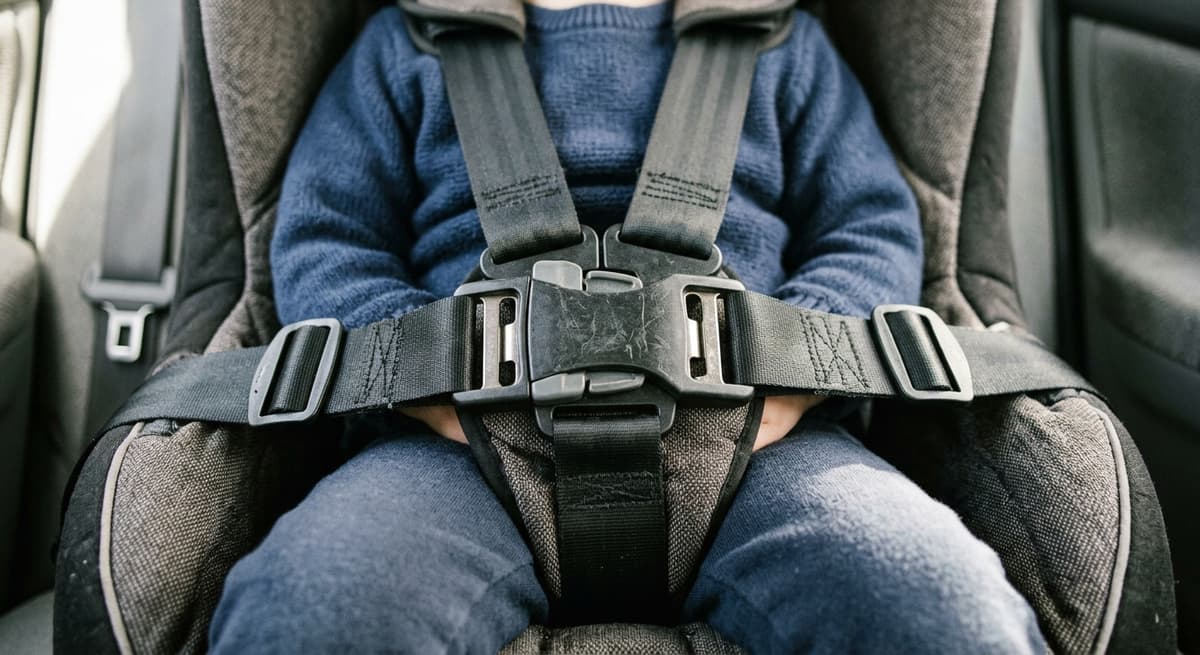
Children should use a forward-facing seat equipped with an internal harness once they outgrow their rear-facing seats. A seat with a five-point harness is recommended. The straps help in distributing the impact forces across the hips and chest areas to protect the child's fragile body parts. Place the retainer clip at the same level as the infant's armpit so that the shoulder straps can remain snug. For a proper fit, make sure that you can't pinch extra strap material above the child's shoulders. There are various types of forward-facing seats. The ones that are widely used are combination seats, forward-facing only seats, and convertible seats. If your child was using a convertible seat in the rear-facing position, you can turn the seat to face forward and use it as a forward-facing seat. Most seats can support up to 65 pounds, so this means children can ride on them until age 7, depending on their growth rate.
What Are the Booster Seat Laws in West Virginia?
Booster seats should be used when children outgrow their forward-facing seats. It is recommended that a child should weigh a minimum of 40 pounds before graduating to booster seats. West Virginia law allows children 8 years or older or those 4'9" or taller to graduate to safety belts. Booster seats are used to raise a child so that safety belts can fit properly. A proper fit means the lap portion lies low across the upper thighs while the shoulder portion lies snug across the center of the chest.
Booster seats come in two sizes: high-back and backless booster seats. A high-back booster seat is much bigger and provides head support, while a backless booster seat can only be used in cars equipped with headrests. Booster seats should only be used with lap-shoulder belts. Using a lap-only belt is not recommended. When it comes to graduating to seat belts, your child should be tall enough (height of 4'9") to fit in safety belts, even though the law allows children 8 years or older to stop using booster seats. Achieving the right height is important because a shorter height can cause the seat belt straps to be misplaced, and this can lead to severe neck and stomach injuries.
Before using safety belts, the child should be able to sit all the way back against the seat with knees bent at the edge of the seat without slouching.
When Can a Child Sit in the Front Seat in West Virginia?
The law does not mention the specific requirements for children to sit in the front seat. The AAP recommends children should ride in the back seat until age 13. If you must ride with a child in the front seat, make sure the passenger-side airbag is disabled or turned off.
Do Children Need to Wear a Seat Belt in West Virginia?
The law requires children in this age group who are 8 years or older or those 4'9''or taller that are not in a child safety restraint to be restrained with a federally approved safety belt.
Is it Illegal to Leave a Child Alone in a Car in West Virgnia?
There are no laws regarding leaving children unattended in cars. It is not recommended that you leave your child unattended in a vehicle for any length of time.
Is it Illegal to Smoke in a Car With a Child Present?
It is not illegal to smoke in a car with child passengers. However, we do not recommend smoking in a vehicle with children present.
Are Car Seats Required in Taxis in West Virginia?
The law exempts cars for hire from complying with the state's car seat laws. This means that any vehicle with a hired driver is exempt from car seat laws.
However, we recommend following best practices whenever possible.
Do You Need to Replace a Car Seat After an Accident in West Virginia?
There is no law regarding the replacement of car seats. However, the National Highway Traffic Safety Administration recommends replacing car seats after a severe or moderate accident.
More West Virginia Laws
- Murder Sentencing Guidelines - Minimum to Maximum for Every State (2026)
- West Virginia Car Seat Laws
- West Virginia Child Support Laws
- West Virginia Hit and Run Laws (2026 Guide)
- West Virginia Lemon Law: Complete Guide for 2026
- West Virginia Recording Laws
- West Virginia Sexting Laws (2026 Guide)
- West Virginia Statute of Limitations
- West Virginia Whistleblower Laws
Related West Virginia Child and Vehicle Safety Laws
More West Virginia Laws
Frequently Asked Questions
What Are the Height and Weight Requirements for Car Seats in West Virginia?
West Virginia has some of the broadest car seat safety laws, the law only requires all children under the age of 8 years to be restrained in a child passenger safety device system that meets federal standards. Although the law does not specify exact height and age restrictions, best practices dictate that: Infants should ride rear-facing until they are at least 2 years old or until they exceed the manufacturer's weight and height limits.
What is West Virginia's Car Seat Law?
The law requires all children under the age of 8 years to be restrained in a child passenger safety device system that meets federal standards. The state allows children 4'9" or taller to use safety belts. West Virginia does not mention the specific age, weight, or height requirements for the different types of car seats.
What Are the Laws on Rear Facing Car Seats in West Virginia?
West Virginia Law does not specify exactly when you should transition. However, infants should ride rear-facing for as long as possible. According to AAP (American Academy of Pediatrics), infants should ride rear-facing until they are at least 2 years old or until they exceed the manufacturer's weight and height limits. Babies riding in the forward-facing position are at greater risk of injury. In case of a crash, the baby's large head may be thrown forward resulting in the baby's spinal cord being stretched, and this can cause serious injuries.
What Are the Forward Facing Car Seat Laws in West Virginia?
Children should use a forward-facing seat equipped with an internal harness once they outgrow their rear-facing seats. A seat with a five-point harness is recommended. The straps help in distributing the impact forces across the hips and chest areas to protect the child's fragile body parts. Place the retainer clip at the same level as the infant's armpit so that the shoulder straps can remain snug. For a proper fit, make sure that you can't pinch extra strap material above the child's shoulders.
What Are the Booster Seat Laws in West Virginia?
Booster seats should be used when children outgrow their forward-facing seats. It is recommended that a child should weigh a minimum of 40 pounds before graduating to booster seats. West Virginia law allows children 8 years or older or those 4'9" or taller to graduate to safety belts. Booster seats are used to raise a child so that safety belts can fit properly. A proper fit means the lap portion lies low across the upper thighs while the shoulder portion lies snug across the center of the chest.
When Can a Child Sit in the Front Seat in West Virginia?
The law does not mention the specific requirements for children to sit in the front seat. The AAP recommends children should ride in the back seat until age 13. If you must ride with a child in the front seat, make sure the passenger-side airbag is disabled or turned off.
Do Children Need to Wear a Seat Belt in West Virginia?
The law requires children in this age group who are 8 years or older or those 4'9''or taller that are not in a child safety restraint to be restrained with a federally approved safety belt.
Is it Illegal to Leave a Child Alone in a Car in West Virgnia?
There are no laws regarding leaving children unattended in cars. It is not recommended that you leave your child unattended in a vehicle for any length of time.
Updates
Independently fact-checked against the cited primary sources; governing law re-checked for recent changes
Governing law re-checked for recent changes
Reviewed and approved by an editor
The Law Behind This Article
This article rests on the statutory provisions below, held in our own legal record and retrieved from the official source. Tap a section to read the operative text.
West Virginia Code
§ 17C-15-46Child passenger safety devices required; child safety seats and booster seats.In forcecited in 2 of our articles
Every driver who transports a child under the age of eight years in a passenger automobile, van or pickup truck other than one operated for hire shall, while the motor vehicle is in motion and operated on a street or highway of this state, provide for the protection of the child by properly placing, maintaining and securing the child in a child passenger safety device system meeting applicable federal motor vehicle safety standards: Provided, That if a child is under the age of eight years and at least four feet nine inches tall, a safety belt shall be sufficient to meet the requirements of this section. Any person who violates any provision of this section is guilty of a misdemeanor and, upon conviction thereof, shall be fined not less than $10 nor more than $20. A violation of this section does not by virtue of the violation constitute evidence of negligence or contributory negligence or comparative negligence in any civil action or proceeding for damages.
Official text (excerpt) · last checked 2026-07-30 · Read the full text in our law library · Verify at code.wvlegislature.gov
Search our full record of US law — 2.1 million sections, every state + federal →