
Virginia
Virginia Windshield Mounting Laws (2026 Guide)
Independently fact-checked against primary sources (last audited August 17, 2026). · Reviewed by the RecordingLaw editorial team. · Law checked current as of August 17, 2026. · 5 primary sources cited on this page. How we verify our legal content
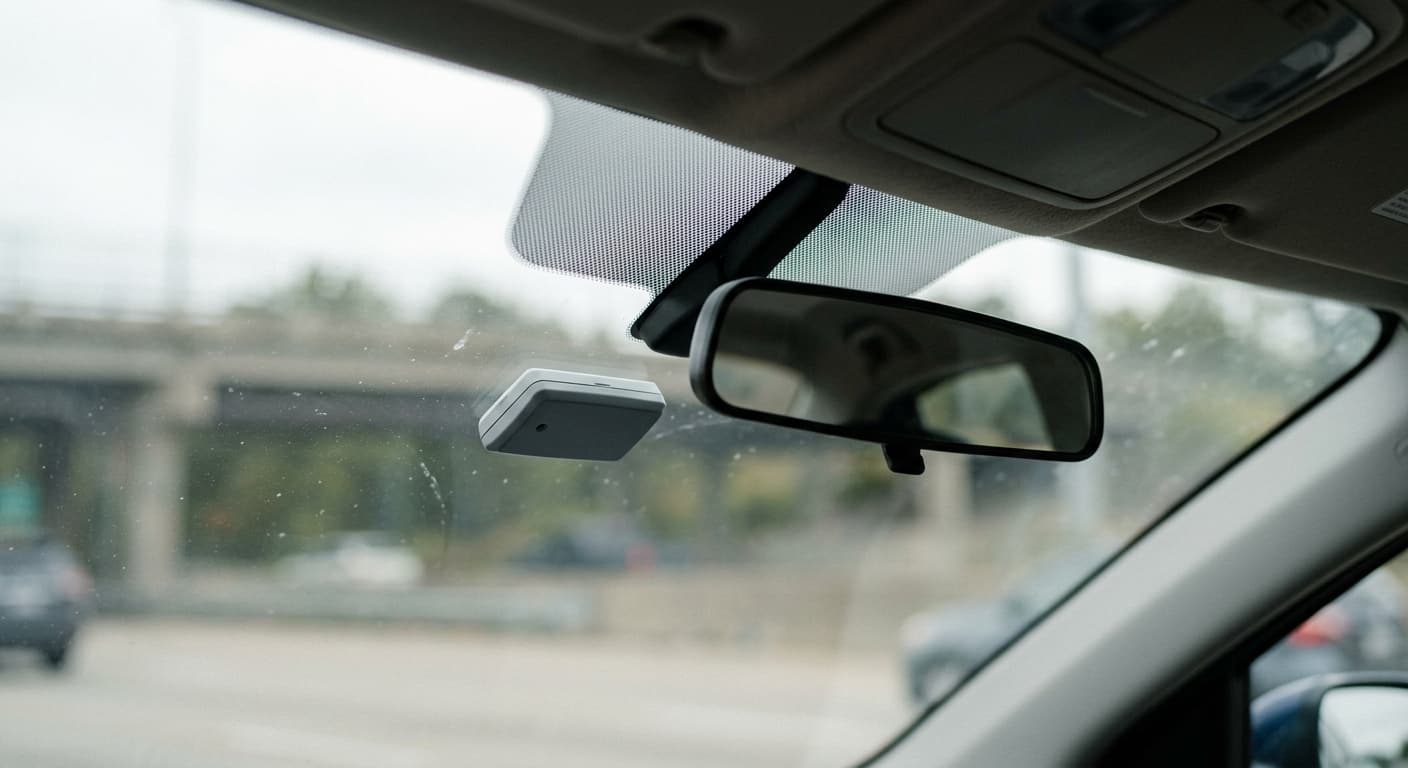
Virginia permits dashcam, GPS, and phone mounts on your windshield under Va. Code 46.2-1054, provided the device does not substantially obstruct your view. Dashcams must be wholly or mostly concealed behind the rearview mirror. At inspection, ordinary passenger vehicles are held to a general obstruction standard that treats windshield-mounted GPS units and cell phone mounts as fail-risk items; a 4-inch/7-inch wiper-sweep safe harbor exists under 19 VAC 30-70-580, but it applies only to heavy trucks (10,001 lbs GVWR or more).
Virginia regulates windshield-mounted devices and suspended objects through Va. Code 46.2-1054. The state is one of the few that explicitly permits dashcams in a defined position and limits enforcement to secondary stops only. This guide covers the full scope of the law, including device placement, penalties, and the 2020 reform that changed how officers handle this violation.
Virginia Windshield Obstruction Law (Va. Code 46.2-1054)
Under Va. Code 46.2-1054, it is unlawful to drive a motor vehicle on a highway with any object suspended from any part of the motor vehicle in a manner that substantially obstructs the driver's clear view of the highway through the windshield, front side windows, or rear window.
The law also prohibits altering a passenger-carrying vehicle in any way that obstructs the driver's view through the windshield. This covers modifications such as installing aftermarket accessories, decorative items, or non-transparent materials that block forward visibility.
The key word in the statute is "substantially." Minor items that do not meaningfully impair the driver's line of sight are not violations. A small parking tag or thin lanyard, for example, would not typically meet the threshold of substantial obstruction.
Dashcam Exception
Virginia law explicitly addresses dashboard cameras. Under 46.2-1054, the statute does not prohibit the suspension and use of any dashboard camera and any accompanying wires or attachments in a motor vehicle, provided that:
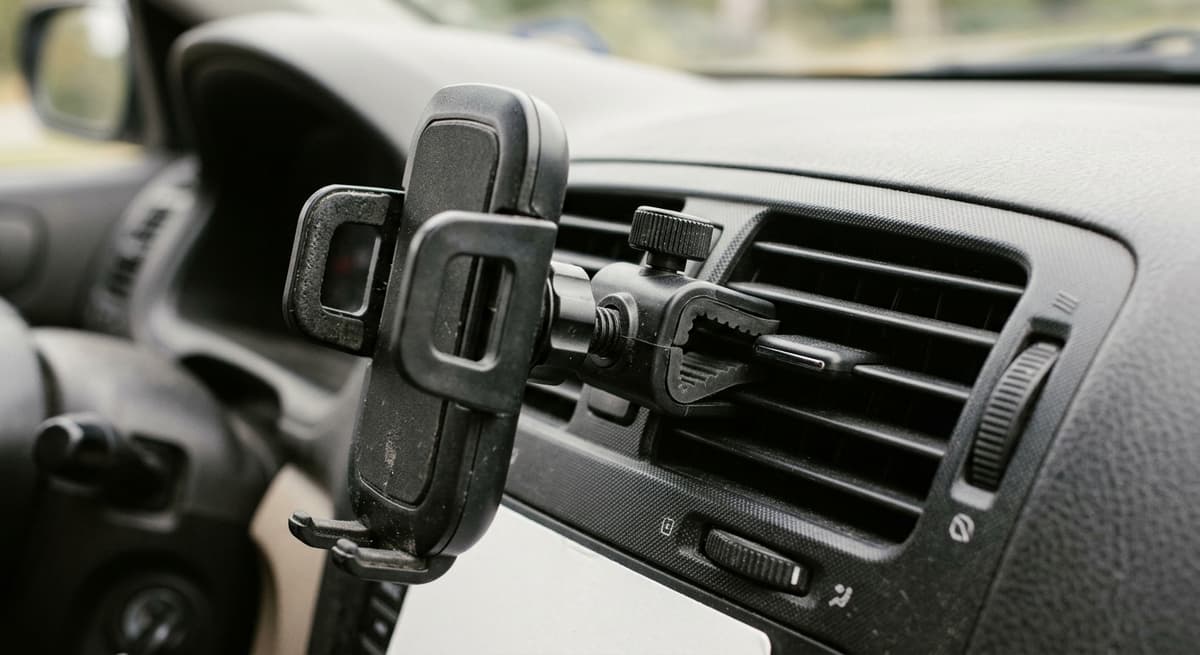
- The camera, wires, and attachments are wholly or mostly concealed behind the rearview mirror
- The camera creates no additional obstruction to the driver's view
- The suspension and use are not otherwise prohibited by Title 49 of the Code of Federal Regulations
This means a dashcam mounted directly behind the rearview mirror, where it is hidden from the driver's forward sightline, is fully legal in Virginia. The reference to federal regulations ensures that commercial motor vehicles also comply with FMCSA windshield rules.
Best Dashcam Placement
The safest and most legally compliant position for a dashcam in Virginia is centered behind the rearview mirror. The camera lens should face forward through the windshield while the body of the camera remains concealed by the mirror housing. Wires should be routed along the headliner or windshield trim to keep them out of the driver's field of view.
Secondary Enforcement Only
Virginia made a significant change to 46.2-1054 during the 2020 Special Session through HB 5058. The amendment added a provision stating that no law enforcement officer may stop a motor vehicle for a violation of this section.
This means an officer cannot pull you over solely because of a dangling object, suction-cup GPS mount, or other item on your windshield. The violation can only be cited during a stop initiated for a separate, independent reason.
Evidence Exclusion Rule
The 2020 amendment goes further than simply restricting stops. Any evidence discovered or obtained as the result of a stop made in violation of the secondary enforcement provision is inadmissible at any trial, hearing, or other proceeding. This includes evidence obtained with the driver's consent.
If an officer stops a vehicle based solely on a windshield obstruction and then discovers other violations or contraband, that evidence cannot be used in court.
GPS and Phone Mount Rules
Virginia does not have a specific statute addressing GPS devices or phone mounts on the windshield. These devices are governed by the general obstruction standard in 46.2-1054: they must not substantially obstruct the driver's clear view.
Virginia's hands-free law (Va. Code 46.2-818.2) requires drivers to use personal communications devices in hands-free mode. Drivers may use dashboard mounts, windshield mounts, or vent clips to hold their phone for hands-free navigation, provided the mount does not create a substantial obstruction.
Hands-Free Interaction
Under Virginia's hands-free law, drivers cannot hold a handheld personal communications device while operating a moving motor vehicle on Virginia highways. This prohibition applies even when the vehicle is stopped at a traffic light or stop sign.
Drivers may use hands-free technology including Bluetooth, voice commands, and mounted devices. A single touch to activate or accept a call is permitted when the device is securely mounted. The first offense carries a $125 fine, and subsequent offenses carry a $250 fine with three demerit points.
Virginia Inspection Standards
Virginia's vehicle safety inspection program applies a general obstruction standard to ordinary passenger vehicles. Under 19 VAC 30-70-580, an inspector may fail a vehicle for any distortion or obstruction that interferes with the driver's vision, including large objects hanging from the mirror and cell phone mounts, GPS devices, CB radios, or tachometers mounted on the dash or windshield.
A separate, narrower carve-out in the same regulation applies only to heavy trucks. A vehicle with a gross vehicle weight rating (GVWR) of 10,001 pounds or more will receive an approval sticker if a navigational device, video event recording device, or crash avoidance camera is mounted no more than 4 inches below the upper edge of the wiper-sweep area, or no more than 7 inches above its lower edge, and no other violations are found. This 4-inch/7-inch safe harbor does not extend to ordinary cars, SUVs, or pickups, which are almost always under the 10,001-lb threshold.
For an ordinary passenger vehicle, the safest inspection-proof placement for a dashcam or GPS mount is behind the rearview mirror, consistent with the dashcam exception under Va. Code 46.2-1054.
| Vehicle Type | Inspection Standard | Windshield-Mounted Devices |
|---|---|---|
| Passenger cars, SUVs, pickups (under 10,001 lbs GVWR) | General obstruction rule, 19 VAC 30-70-580 | Cell phone mounts, GPS devices, and similar items on the dash or windshield are fail-risk items |
| Heavy trucks (10,001 lbs GVWR or more) | Wiper-sweep safe harbor, 19 VAC 30-70-580 | Navigational devices, dashcams, and crash-avoidance cameras pass if mounted within 4 inches below or 7 inches above the wiper-sweep area |
| Any vehicle | Va. Code 46.2-1054 | Dashcams are permitted when wholly or mostly concealed behind the rearview mirror |
Windshield Tinting
Windshield tinting in Virginia is governed by Va. Code 46.2-1052. The front windshield may have a tint strip along the top (often called a "sun strip" or "visor strip") that does not extend below the AS-1 line marked by the manufacturer.
Front side windows must allow more than 50% of light to pass through. For an ordinary passenger car, rear side windows and the rear window must still allow at least 35% of light to pass through; only multipurpose passenger vehicles (SUVs) and pickup trucks may go darker than that 35% floor on those windows.
Penalties for Violations
A violation of Va. Code 46.2-1054 is a traffic infraction, not a criminal offense.
| Penalty Component | Amount |
|---|---|
| Base fine | $30 |
| Court/processing costs | $51 |
| Total | $81 |
| Demerit points | None |
| Criminal record | No (traffic infraction) |
| Primary stop allowed | No (secondary enforcement only) |
Because this is a secondary offense, the fine can only be imposed when a driver is stopped for a separate violation and the officer also observes a windshield obstruction.
Obstructed Driving View (Va. Code 46.2-855)
Virginia has a separate statute, Va. Code 46.2-855, that is often mentioned alongside windshield obstruction, but it reaches something much narrower than its name suggests. The statute makes a person "guilty of reckless driving who drives a vehicle when it is so loaded, or when there are in the front seat such number of persons, as to obstruct the view of the driver to the front or sides of the vehicle or to interfere with the driver's control over the driving mechanism of the vehicle."
The obstruction has to come from one of two specific sources: how the vehicle is loaded, or the number of people sitting in the front seat. A dashcam, GPS unit, phone mount, or air freshener hanging from the mirror is neither a load nor a front-seat passenger, so 46.2-855 does not reach windshield-mounted devices or suspended objects. Those remain governed by 46.2-1054, with its secondary enforcement limit intact.
The distinction matters because 46.2-855 is not a traffic infraction. It is reckless driving, a Class 1 misdemeanor under Va. Code 46.2-868, punishable under Va. Code 18.2-11 by up to 12 months in jail and a fine of up to $2,500. An overloaded vehicle or an overcrowded front seat is a criminal charge in Virginia, not an $81 ticket.
Exemptions
| Exemption | Authority |
|---|---|
| Dashboard cameras behind rearview mirror | Va. Code 46.2-1054 |
| Items that do not substantially obstruct view | Va. Code 46.2-1054 |
| Inspection stickers and government-required decals | Va. Code 46.2-1052 |
| Factory-installed tinting (federally compliant) | Va. Code 46.2-1052 |
| Devices within wiper-sweep zone (heavy trucks, 10,001 lbs GVWR or more, only) | 19 VAC 30-70-580 |
More Virginia Laws
Frequently Asked Questions
Can I mount a dashcam on my windshield in Virginia?
Yes. Virginia law explicitly permits dashcams as long as the camera, wires, and attachments are wholly or mostly concealed behind the rearview mirror without any additional obstruction to the driver's view. This exemption is written directly into Va. Code 46.2-1054.
Can a police officer pull me over for a dangling object on my mirror in Virginia?
No. Virginia Code 46.2-1054 is a secondary enforcement offense. No law enforcement officer may stop a motor vehicle solely for a violation of this section. You can only be cited for it during a lawful stop for a different reason.
What is the fine for windshield obstruction in Virginia?
The base fine is $30 plus $51 in court and processing costs, for a total of $81. No demerit points are assessed for this violation.
Can I mount a GPS or phone on my windshield in Virginia?
Yes, as long as the device does not substantially obstruct your clear view of the highway under Va. Code 46.2-1054. At inspection, though, Virginia's general standard for ordinary passenger vehicles treats windshield-mounted GPS units and cell phone mounts as a possible obstruction fail item under 19 VAC 30-70-580; the 4-inch/7-inch wiper-sweep safe harbor in that same regulation applies only to heavy trucks (10,001 lbs GVWR or more), not to cars, SUVs, or pickups. Dashboard and vent mounts avoid the issue entirely and are always permitted.
What happens if an officer stops me only for a windshield obstruction in Virginia?
Any evidence discovered during a stop based solely on a 46.2-1054 violation is inadmissible in court. This includes evidence found with the driver's consent. The 2020 amendment established this exclusionary rule to prevent pretextual stops.
Updates
Corrected our description of Va. Code 46.2-855: it applies only to obstruction caused by how a vehicle is loaded or by the number of people in the front seat, so it does not reach windshield-mounted devices, and we now note that it is charged as reckless driving, a Class 1 misdemeanor.
Corrected the Virginia inspection-standards guidance for windshield-mounted GPS units, phone mounts, and dashcams: the 4-inch/7-inch wiper-sweep safe harbor in 19 VAC 30-70-580 applies only to heavy trucks (10,001 lbs GVWR or more), not to ordinary passenger vehicles, which are instead subject to a general obstruction standard that can fail a windshield-mounted GPS or phone mount at inspection.
Independently fact-checked against the cited primary sources; governing law re-checked for recent changes
Corrected the rear-window tint claim: Va. Code 46.2-1052(D)(1) sets a 35% light-transmittance floor for rear windows on ordinary passenger cars; the below-35% allowance in subsection (H) applies only to multipurpose passenger vehicles (SUVs) and pickup trucks, not to any vehicle.
Governing law re-checked for recent changes
Governing law re-checked for recent changes
Reviewed and approved by an editor
The Law Behind This Article
This article rests on the statutory provisions below, held in our own legal record and retrieved from the official source. Tap a section to read the operative text.
Code of Virginia, Title 46.2: Motor Vehicles
§ 46.2-1054Suspension of objects or alteration of vehicle so as to obstruct driver's viewIn force
A. It shall be unlawful for any person (i) to drive a motor vehicle on a highway in the Commonwealth with any object or objects, other than a rear view mirror, sun visor, or other equipment of the motor vehicle approved by the Superintendent, suspended from any part of the motor vehicle in such a manner as to substantially obstruct the driver's clear view of the highway through the windshield, the front side windows, or the rear window or (ii) to alter a passenger-carrying vehicle in such a manner as to obstruct the driver's view through the windshield. However, this section shall not apply (a) when the driver's clear view of the highway through the rear window is obstructed if such motor vehicle is equipped with a mirror on each side, so located as to reflect to the driver a view of the highway for at least 200 feet to the rear of such vehicle, (b) to safety devices installed on the windshields of vehicles owned by private waste haulers or local governments and used to transport solid waste, or (c) to bicycle racks installed on the front of any bus operated by any city, county, transit authority, or transit or transportation district.
Official text (excerpt) · last checked 2026-09-08 · Read the full text in our law library · Verify at law.lis.virginia.gov
Cited in 1 court opinions in our collectionLatest citing opinion in our collection: 2001
Opinions citing this section in our collection:
- United States of America,plaintiff-Appellee v. Maurice Lashaw King,defendant-Appellant (Court of Appeals for the Ninth Circuit 2001, 244 F.3d 736)“…ith the view of the operator through the windshield.... ”); Va.Code Ann. § 46.2-1054 (Michie 1998) (“It shall be unlawful ..…”
Identified automatically from the court opinions citing this section — not a ranking of which case controls.
§ 46.2-855Driving with driver's view obstructed or control impairedIn force
A person shall be guilty of reckless driving who drives a vehicle when it is so loaded, or when there are in the front seat such number of persons, as to obstruct the view of the driver to the front or sides of the vehicle or to interfere with the driver's control over the driving mechanism of the vehicle.
Official text (excerpt) · last checked 2026-07-29 · Read the full text in our law library · Verify at law.lis.virginia.gov
§ 46.2-1052Tinting films, signs, decals, and stickers on windshields, etc.; penaltiesIn forcecited in 3 of our articles
A. As used in this article, unless the context requires a different meaning: "Front side windows" means those windows located adjacent to and forward of the driver's seat. "Holographic effect" means a picture or image that may remain constant or change as the viewing angle is changed. "Multipurpose passenger vehicle" means any motor vehicle that is (i) designed to carry no more than 10 persons and (ii) constructed either on a truck chassis or with special features for occasional off-road use. "Prism effect" means a visual, iridescent, or rainbow-like effect that separates light into various colored components that may change depending on viewing angle. "Rear side windows" means those windows located to the rear of the driver's seat. "Rear window" or "rear windows" means those windows that are located to the rear of the passenger compartment of a motor vehicle and that are approximately parallel to the windshield. B.
Official text (excerpt) · last checked 2026-09-01 · Read the full text in our law library · Verify at law.lis.virginia.gov
Cited in 5 court opinions in our collectionLatest citing opinion in our collection: 2016
In the courts (editorial summary, independently checked):United States v. Stewart (2001) held Section 46.2-1052 puts the burden on the driver to prove the pre-July 1987 grandfather exemption by receipts, so a possible exemption does not defeat reasonable suspicion for a stop. United States v. Brooks (2008) applied the statute's 50% front side window limit in upholding a tint-based stop.
Opinions citing this section in our collection:
- United States v. Michael Palmer (Court of Appeals for the Fourth Circuit 2016, 820 F.3d 640)✓An officer stopped a Nissan because its windows looked too dark, and later measured 40% and 25% transmittance against the statute's 50% and 35% limits; the court held the officer's belief the tint was illegal was an objectively reasonable basis for the stop.
- United States v. Billy Howard Stanfield (Court of Appeals for the Fourth Circuit 1997, 109 F.3d 976)“…107 (1955-96); Utah Code, 1953 § 41-6-149 (Michie 1987-96); Code of Virginia § 46.2-1052(C)(1) (Michie 1982-96); Wyoming Stat. 1…”
- United States v. Stewart (District Court, E.D. Virginia 2001, 149 F. Supp. 2d 236)✓An officer stopped a driver in a public library parking lot for tinted windows later measured at 3% transmittance; the court held the lot counts as a highway and that the pre-1987 grandfather clause puts the proof burden on the driver, so suspicion was reasonable.
Identified automatically from the court opinions citing this section — not a ranking of which case controls.
Also relied on in: Virginia Dashcam Laws: Installation, Audio, and Evidence Rules, Virginia Window Tint Laws (2026): Legal VLT Limits
§ 46.2-818.2Use of handheld personal communications devices in certain motor vehicles; exceptions; penaltyIn force
A. It is unlawful for any person, while driving a moving motor vehicle on the highways in the Commonwealth, to hold a handheld personal communications device. B. The provisions of this section shall not apply to: 1. The operator of any emergency vehicle while he is engaged in the performance of his official duties; 2. An operator who is lawfully parked or stopped; 3. Any person using a handheld personal communications device to report an emergency; 4. The use of an amateur or a citizens band radio; or 5. The operator of any Department of Transportation vehicle or vehicle operated pursuant to the Department of Transportation safety service patrol program or pursuant to a contract with the Department of Transportation for, or that includes, traffic incident management services as defined in subsection B of § 46.2-920.1 during the performance of traffic incident management services. C. A violation of this section is a traffic infraction punishable, for a first offense, by a fine of $125. A court may order the satisfactory completion of a driver improvement clinic, as provided in § 46.2-505, in lieu of a conviction only for a first violation of this section. D.
Official text (excerpt) · last checked 2026-07-29 · Read the full text in our law library · Verify at law.lis.virginia.gov
Search our full record of US law — 2.1 million sections, every state + federal →
Sources and References
- Va. Code 46.2-1054 - Suspension of objects or alteration of vehicle so as to obstruct driver's view(law.lis.virginia.gov).gov
- Va. Code 46.2-818.2 - Use of handheld personal communications devices(law.lis.virginia.gov).gov
- Va. Code 46.2-855 - Driving with driver's view obstructed(law.lis.virginia.gov).gov
- 19 VAC 30-70-580 - Glass and glazing inspection standards(law.lis.virginia.gov).gov
- Virginia HB 5058 (2020 Special Session)(legiscan.com)
- Virginia State Police - Secondary Traffic Offenses Reference(vsp.virginia.gov).gov
- Va. Code 46.2-868 - Reckless driving; penalties(law.lis.virginia.gov)
- Va. Code 18.2-11 - Punishment for conviction of misdemeanor(law.lis.virginia.gov)