
Illinois
Illinois Windshield Mounting Laws (2026 Guide)
Independently fact-checked against primary sources (last audited August 17, 2026). · Reviewed by the RecordingLaw editorial team. · Law checked current as of August 17, 2026. · 7 primary sources cited on this page. How we verify our legal content
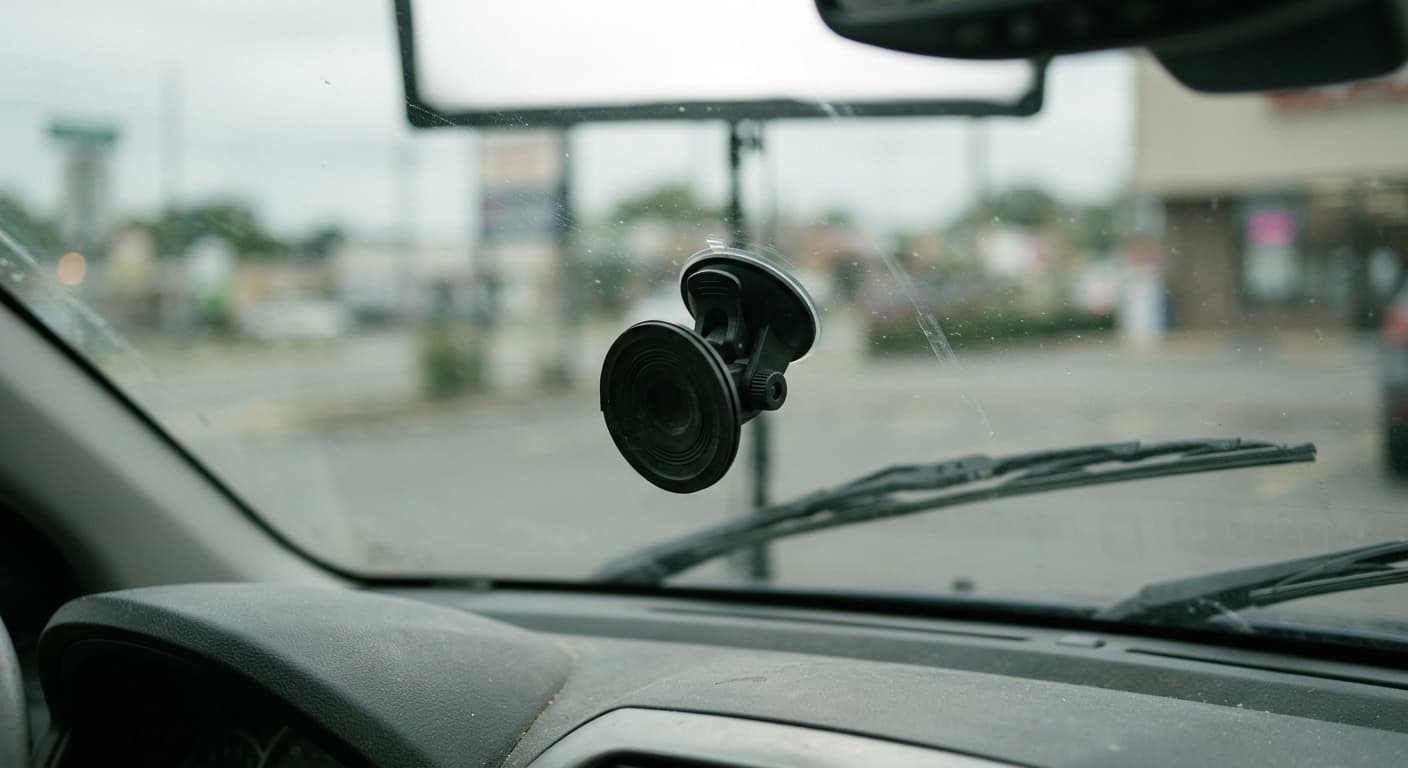
Illinois law allows dashcams, GPS devices, and phone mounts on the windshield as long as they do not materially obstruct the driver's view under 625 ILCS 5/12-503. There is no codified size limit for such devices; the standard is purely whether the device materially obstructs the driver's view, and placement on the driver's side near the lower dashboard corner is recommended to minimize that risk.
Illinois windshield mounting laws are governed by 625 ILCS 5/12-503, a section of the Illinois Vehicle Code that regulates what can be placed on or attached to a vehicle's windshield. The statute covers windshield obstructions, window tinting, device mounting, and driver visibility requirements.
A significant change took effect on January 1, 2024, when Public Act 103-0032 ended the practice of law enforcement pulling drivers over solely for minor windshield obstructions such as air fresheners, GPS devices, or disability placards.
Illinois Windshield Obstruction Law
Under 625 ILCS 5/12-503(a), no person shall drive a motor vehicle with any sign, poster, window application, reflective material, nonreflective material, or tinted film on the front windshield. The only exception is a nonreflective tinted film applied along the uppermost portion of the windshield, as long as it does not extend more than 6 inches down from the top.
This prohibition applies to aftermarket additions only. Government-required stickers and certificates issued by state or local authorities are exempt under subsection (h) of the statute.
Objects Between the Driver and Windshield
Subsections (c) and (c-5) of 625 ILCS 5/12-503 prohibit driving with objects placed or suspended between the driver and the vehicle's windows. Subsection (c) covers the rear window, side wings, and side windows immediately adjacent to the driver; subsection (c-5) separately covers the front windshield. Both use the same 'materially obstruct the driver's view' standard.
The key legal standard is "materially obstruct." A small device that does not block the driver's line of sight may be permitted. A large object that impairs forward visibility is prohibited.
Common items affected by this provision include:
- Air fresheners hanging from the rearview mirror
- Handicap placards left hanging while driving
- GPS or navigation devices mounted on the windshield
- Phone mounts attached to the windshield
- Dashcams and other recording devices
- Decorative items such as fuzzy dice or ornaments
PA 103-0032: No More Pretextual Stops (Effective January 1, 2024)
Public Act 103-0032 (House Bill 2389) added subsection (c-5) to 625 ILCS 5/12-503. This subsection states that no motor vehicle, or driver or passenger of such vehicle, shall be stopped or searched by any law enforcement officer solely on the basis of a violation or suspected violation of driving with objects between the driver and the front windshield.
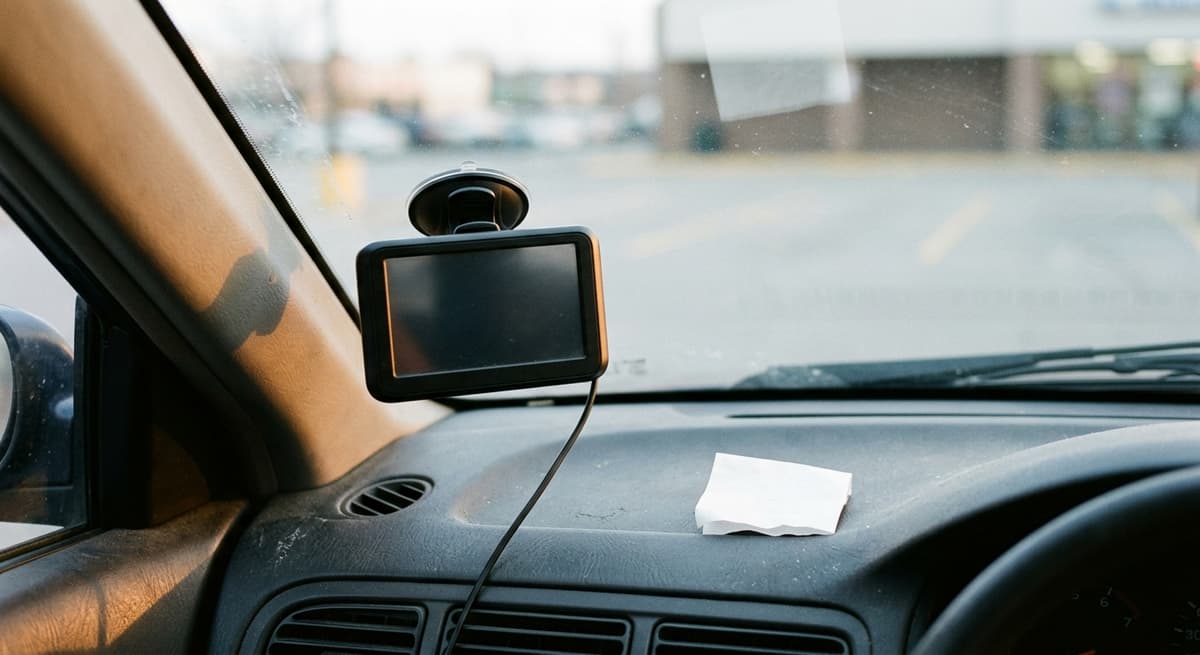
State Senator Christopher Belt, one of the bill's primary sponsors, explained the purpose of the law was to reduce pretextual traffic stops. Law enforcement had historically used minor windshield obstructions as a reason to initiate traffic stops that were actually motivated by other purposes. Research showed these stops disproportionately affected minority communities.
It remains illegal to drive with a materially obstructing object on the windshield. Officers can still issue a citation for a windshield obstruction violation during a stop initiated for a different reason, such as speeding or a broken taillight. The change only prevents a windshield obstruction from being the sole justification for a traffic stop.
GPS and Phone Mount Placement Rules
Illinois law does not contain a specific statute that mentions GPS devices, phone mounts, or navigation systems by name. These devices fall under the general windshield obstruction provisions of 625 ILCS 5/12-503.
A GPS or phone mount is permitted on the windshield as long as it does not materially obstruct the driver's view. Illinois law sets no specific size measurement for these devices; the only statutory standard is whether the device materially obstructs the driver's view under 625 ILCS 5/12-503(c-5). The recommended placement is on the driver's side of the dashboard, near the lower corner of the windshield adjacent to the A-pillar.
Tips for Legal Phone and GPS Mounting
- Mount the device as low as possible on the windshield, near the dashboard
- Keep the device and mount as small and low-profile as practical, since Illinois sets no codified size limit, only the 'materially obstruct' standard
- Do not mount directly in the driver's primary line of sight
- Consider dashboard mounts or vent mounts as alternatives that avoid windshield restrictions entirely
- Remove suction cup mounts when not in use to avoid unnecessary obstruction
Dashcam Laws in Illinois
Dashcams are legal in Illinois, but they must comply with the same windshield obstruction rules that apply to all mounted devices. There is no codified size limit for the device or its mount; the standard is whether it materially obstructs the driver's view, and the recommended placement is on the driver's side of the dashboard.
The safest placement for a dashcam is behind the rearview mirror, where it is least likely to obstruct the driver's forward view. This position also provides a centered recording angle.
Audio Recording and Two-Party Consent
Illinois is a two-party consent state for audio recording under 720 ILCS 5/14-2. This means recording a private conversation requires the consent of all parties involved.
The offense has specific elements. Under 720 ILCS 5/14-2(a)(1) and (a)(2), a person commits eavesdropping only by using an eavesdropping device "in a surreptitious manner" to overhear, transmit, or record all or any part of a "private conversation" without the consent of all parties. A dashcam mounted in plain view that occupants can see is not obviously surreptitious, and a conversation that is not private falls outside the statute altogether. Where the elements are met, the exposure is serious: a first offense is a Class 4 felony punishable by 1 to 3 years in state prison and fines up to $25,000, and a second or subsequent offense is a Class 3 felony. The practical step is to tell every passenger that the camera records audio, which addresses both the surreptitiousness element and consent.
There are exceptions to the two-party consent rule that may apply to dashcam recordings:
- Public conversations: The law only protects private conversations where parties have a reasonable expectation of privacy. Conversations in public spaces where others can overhear are generally not considered private.
- Recording law enforcement: Illinois law allows recording police officers performing their public duties. The Seventh Circuit Court of Appeals has recognized a First Amendment right to openly record officers in public.
- Video-only recording: Video recording without audio in public spaces is generally legal, as no private conversation is being captured.
The safest approach is to either disable audio recording on your dashcam or clearly inform all vehicle occupants that audio is being recorded.
Illinois Window Tinting Laws
625 ILCS 5/12-503 establishes specific window tinting standards for different vehicle windows.
Front Windshield
No tinted film is allowed on the front windshield except a nonreflective tint strip along the top that does not extend more than 6 inches from the upper edge.
Side Windows Adjacent to the Driver
Subsection (a-5) sets the following tinting standards for the front side windows:
| Rear Window Treatment | Front Side Window Requirement |
|---|---|
| Rear windows allow 30% or more light transmittance | Front side windows must allow at least 50% light transmittance (with 5% enforcement variance) |
| Rear windows allow 35% or more light transmittance | Front side windows must allow at least 35% light transmittance (with 5% enforcement variance) |
| Factory-installed tinted rear glass | Front side windows must allow at least 50% light transmittance |
A 5% variance is permitted during law enforcement inspections, meaning an officer will not cite a driver whose tint measures within 5 percentage points of the legal threshold.
Rear Windows
Perforated window screens, sun-shading material, and decorative applications are permitted on rear windows and the rear side windows behind the driver, provided the vehicle has side mirrors on both sides.
Dealer Restrictions
Under subsection (a-3), vehicle dealers cannot allow test drives or off-premises movement of vehicles with windshield or driver-side window materials that violate the tinting standards.
Installation Prohibitions
Subsection (a-10) makes it illegal for any person to install prohibited window materials. Exceptions exist for removing non-compliant materials and for installing medically authorized window treatments.
Medical Exemptions for Window Tinting
Subsection (g) of 625 ILCS 5/12-503 provides a medical exemption from tinting restrictions. A person who has been diagnosed by a licensed physician with a condition that requires protection from the direct rays of the sun may apply for an exemption.
Qualifying conditions include:
- Systemic or discoid lupus erythematosus
- Disseminated superficial actinic porokeratosis (keratosis)
- Light sensitivity as a result of a traumatic brain injury
- Albinism
The statute introduces this list with "including, but not limited to," so it is illustrative rather than exhaustive.
To obtain a medical exemption, the vehicle owner must:
- Obtain a physician certification containing the date, provider name, address, signature, patient name, address, and diagnosis
- Apply for distinctive license plates or license plate stickers from the Illinois Secretary of State using Form VSD 704
- Carry a copy of the physician certification in the vehicle at all times
- Renew the certification every 4 years and submit a copy to the Secretary of State
- Mail the application and $29 fee to the Secretary of State Special Plates Division, 501 S. Second St., Rm. 520, Springfield, Illinois 62756
Subsection (g) contains one narrowing proviso: no exemption from the requirements of subsection (a-5), the front side window standards, may be granted for a condition where protection from the direct rays of the sun can be adequately obtained by sunglasses or other eye protective devices. That proviso is limited to subsection (a-5). It does not remove any of the enumerated conditions, including light sensitivity resulting from a traumatic brain injury, from the qualifying list above.
Installers must verify that distinctive license plates are present on the vehicle before installing authorized medical window treatments.
Windshield Wipers and Defective Glass
Subsection (d) of 625 ILCS 5/12-503 requires every motor vehicle (except motorcycles) to be equipped with a device for cleaning rain, snow, or other moisture from the windshield. The device must be controlled or operated by the driver.
Drivers may not operate a vehicle when accumulated snow, ice, or other material obstructs the driver's clear view through the windshield.
Subsection (e) prohibits driving when the windshield, side windows, or rear windows are in such defective condition as to materially impair the driver's view. This includes cracked, chipped, or shattered glass.
Illinois Hands-Free Driving Law
While not directly part of the windshield mounting statute, Illinois's hands-free law under 625 ILCS 5/12-610.2 affects how drivers interact with windshield-mounted devices.
Illinois bans all handheld use of electronic communication devices while driving. Drivers may only use devices in hands-free mode, such as through Bluetooth, a headset, or voice-activated features. Touching or holding a phone, tablet, or similar device while driving is illegal.
Hands-Free Law Penalties
| Offense | Fine |
|---|---|
| First offense | $75 |
| Second offense | $100 |
| Third offense | $125 |
| Fourth and subsequent offenses | $150 |
Every violation is a moving violation that goes on the driver's record. Accumulating 3 moving violations within a year, including cell phone violations, can result in license suspension.
If using a device while driving causes an accident resulting in great bodily harm or death, the charge escalates to a Class A misdemeanor or a Class 4 felony with up to 3 years in prison.
Since January 1, 2024, Public Act 103-0310 further expanded the law to prohibit streaming video, video conferencing (including platforms like Zoom or Microsoft Teams), and accessing social media while operating a motor vehicle.
Exceptions to the Hands-Free Law
- Reporting an emergency or communicating with emergency personnel
- Using a device while the vehicle is parked on the shoulder with the transmission in neutral or park
- Using a device when normal traffic is obstructed and the vehicle is stationary
- Drivers under 19 are prohibited from all cell phone use, including hands-free, except during emergencies
Penalties for Windshield Violations
Subsection (j) of 625 ILCS 5/12-503 sets penalties for a person found guilty of violating subsection (a), (a-3), (a-5), (a-10), (b), (b-5), or (g-7). Those are the windshield-material, tinting, dealer, and installer provisions:
| Violation | Classification | Fine Range |
|---|---|---|
| First offense (windshield materials, tinting, dealer, installation) | Petty offense | $50 to $500 |
| Second or subsequent offense | Class C misdemeanor | $100 to $500 |
A Class C misdemeanor in Illinois can also carry up to 30 days in county jail in addition to the fine.
Penalties for Obstruction Violations Under (c) and (c-5)
Subsections (c) and (c-5), the object-obstruction provisions that govern dashcams, GPS units, phone mounts, and hanging air fresheners, are not among the subsections listed in (j). A violation of those subsections is penalized instead under the Illinois Vehicle Code residual penalty provision, 625 ILCS 5/16-104, which provides that a person convicted of a violation of any provision of the Code for which another penalty is not provided is guilty of a petty offense for a first or second conviction, and guilty of a Class C misdemeanor only for a third or subsequent conviction within one year after the first conviction.
Two consequences follow for the devices this page is about. A second obstruction conviction is still a petty offense, not a Class C misdemeanor, and the Class C step requires a third conviction inside a one-year window. The $50 to $500 and $100 to $500 fine bands in subsection (j) do not apply to an obstruction violation at all.
Violators may be ordered by the court to bring the vehicle into compliance with the law. This could mean removing illegal tint, taking down an obstructing device, or repairing a damaged windshield.
Additional Provisions
- Dealer liability: Under subsection (k), buying a vehicle with a noncompliant window does not create a cause of action against the dealer or manufacturer.
- Out-of-state vehicles: Under subsection (f), vehicles properly registered in other states are exempt from the tinting and material provisions in subsections (a), (a-5), (b), and (b-5).
- Home rule preemption: Under subsection (m), local municipalities cannot enact windshield laws that are inconsistent with state law.
More Illinois Laws
Frequently Asked Questions
Can I mount a GPS or phone on my windshield in Illinois?
Yes, with restrictions. Under 625 ILCS 5/12-503, objects between the driver and the windshield are prohibited if they materially obstruct the driver's view. Illinois law does not set a specific size measurement for these devices; the standard is purely whether the device materially obstructs the driver's view. The safest placement is on the driver's side of the dashboard near the lower corner of the windshield. Dashboard and vent mounts avoid windshield restrictions entirely.
Can police pull me over for an air freshener hanging from my rearview mirror in Illinois?
No. Since January 1, 2024, Public Act 103-0032 prohibits law enforcement from stopping a vehicle solely because of objects hanging from the rearview mirror or placed between the driver and the windshield. However, it is still technically illegal if the object materially obstructs the driver's view, and an officer can issue a citation for it during a stop initiated for another reason.
Is it legal to use a dashcam in Illinois?
Yes, dashcams are legal in Illinois. There is no codified size limit for the device, but it must not materially obstruct the driver's view. The issue to watch is audio. Under 720 ILCS 5/14-2, eavesdropping requires using a device in a surreptitious manner to record a private conversation without the consent of all parties. A dashcam in plain view is unlikely to meet the surreptitiousness element, but the safe course is to disable audio or tell every passenger that audio is being recorded.
What are the penalties for illegal window tint in Illinois?
Under subsection (j) of 625 ILCS 5/12-503, a first tint offense is a petty offense with a fine between $50 and $500. A second or subsequent offense is a Class C misdemeanor with a fine between $100 and $500 and the possibility of up to 30 days in county jail. The court may also order you to remove the illegal tint and bring the vehicle into compliance. These bands apply to the tinting and installation subsections, not to obstruction violations under (c) and (c-5), which are penalized under 625 ILCS 5/16-104.
Can I get a medical exemption for darker window tint in Illinois?
Yes, if a licensed physician certifies you have a qualifying condition. Subsection (g) of 625 ILCS 5/12-503 lists systemic or discoid lupus erythematosus, disseminated superficial actinic porokeratosis, light sensitivity as a result of a traumatic brain injury, and albinism, and states that the list is not limited to those conditions. You must apply for distinctive license plates through the Illinois Secretary of State using Form VSD 704, pay a $29 fee, and carry the physician certification in your vehicle. The certification must be renewed every 4 years. The statute bars an exemption from the front side window standard in subsection (a-5) only where sunglasses or other eye protective devices would adequately protect against the sun.
Updates
Corrected the penalty section to show that the subsection (j) fine bands cover tint and installation violations only, with dashcam and GPS obstruction violations penalized under 625 ILCS 5/16-104; added traumatic brain injury light sensitivity to the medical tint exemption list; and stated the surreptitious-recording and private-conversation elements of the Illinois eavesdropping statute.
Removed an invented '5 square inches' size limit for GPS, phone, and dashcam windshield mounts that does not appear in 625 ILCS 5/12-503; the actual Illinois standard is whether the device materially obstructs the driver's view. Also corrected which subsection (c vs. c-5) governs front-windshield objects.
Independently fact-checked against the cited primary sources; governing law re-checked for recent changes
Reviewed and approved by an editor
The Law Behind This Article
This article rests on the statutory provisions below, held in our own legal record and retrieved from the official source. Tap a section to read the operative text.
Illinois Compiled Statutes Chapter 625, Act 5 (Illinois Vehicle Code)
§ 12-503Windshields must be unobstructed and equipped with wipersIn forcecited in 2 of our articles
(a) No person shall drive a motor vehicle with any sign, poster, window application, reflective material, nonreflective material, or tinted film upon the front windshield, except that a nonreflective tinted film may be used along the uppermost portion of the windshield if such material does not extend more than 6 inches down from the top of the windshield. (a-3) No new or used motor vehicle dealer shall permit a driver to drive a motor vehicle offered for sale or lease off the premises where the motor vehicle is being offered for sale or lease, including when the driver is test driving the vehicle, with signs, decals, paperwork, or other material on the front windshield or on the windows immediately adjacent to each side of the driver that would obstruct the driver's view in violation of subsection (a) of this Section. For purposes of this subsection (a-3), "test driving" means when a driver, with permission of the new or used vehicle dealer or employee of the new or used vehicle dealer, drives a vehicle owned and held for sale or lease by a new or used vehicle dealer that the driver is considering to purchase or lease.
Official text (excerpt) · last checked 2026-09-07 · Read the full text in our law library · Verify at ilga.gov
Also relied on in: Illinois Window Tint Laws (2026): Legal VLT Limits
Search our full record of US law — 2.1 million sections, every state + federal →
Sources and References
- 625 ILCS 5/12-503 - Windshields must be unobstructed and equipped with wipers(ilga.gov).gov
- Public Act 103-0032 - Ends pretextual stops for windshield obstructions(ilga.gov).gov
- HB2389 Bill Status - 103rd General Assembly(ilga.gov).gov
- 720 ILCS 5/14-2 - Illinois Eavesdropping Statute(ilga.gov).gov
- 625 ILCS 5/12-610.2 - Electronic Communication Devices(ilga.gov).gov
- Illinois Secretary of State - Tinted Windows License Plates(ilsos.gov).gov
- Secretary of State - Tinted Window Certification Form VSD 704(ilsos.gov).gov
- Illinois Senate Democrats - New Belt law ends traffic stops for windshield obstructions(illinoissenatedemocrats.com)
- Illinois Legal Aid Online - Using cell phones while driving(illinoislegalaid.org)
- Reporters Committee for Freedom of the Press - Illinois Recording Guide(rcfp.org)
- 625 ILCS 5/16-104 - General penalty for Vehicle Code violations where no other penalty is provided(ilga.gov)