
Colorado
Colorado Lemon Law (2026): How to Qualify & Get a Refund
Independently fact-checked against primary sources (last audited August 17, 2026). · Reviewed by the RecordingLaw editorial team. · Law checked current as of August 17, 2026. · 7 primary sources cited on this page. How we verify our legal content
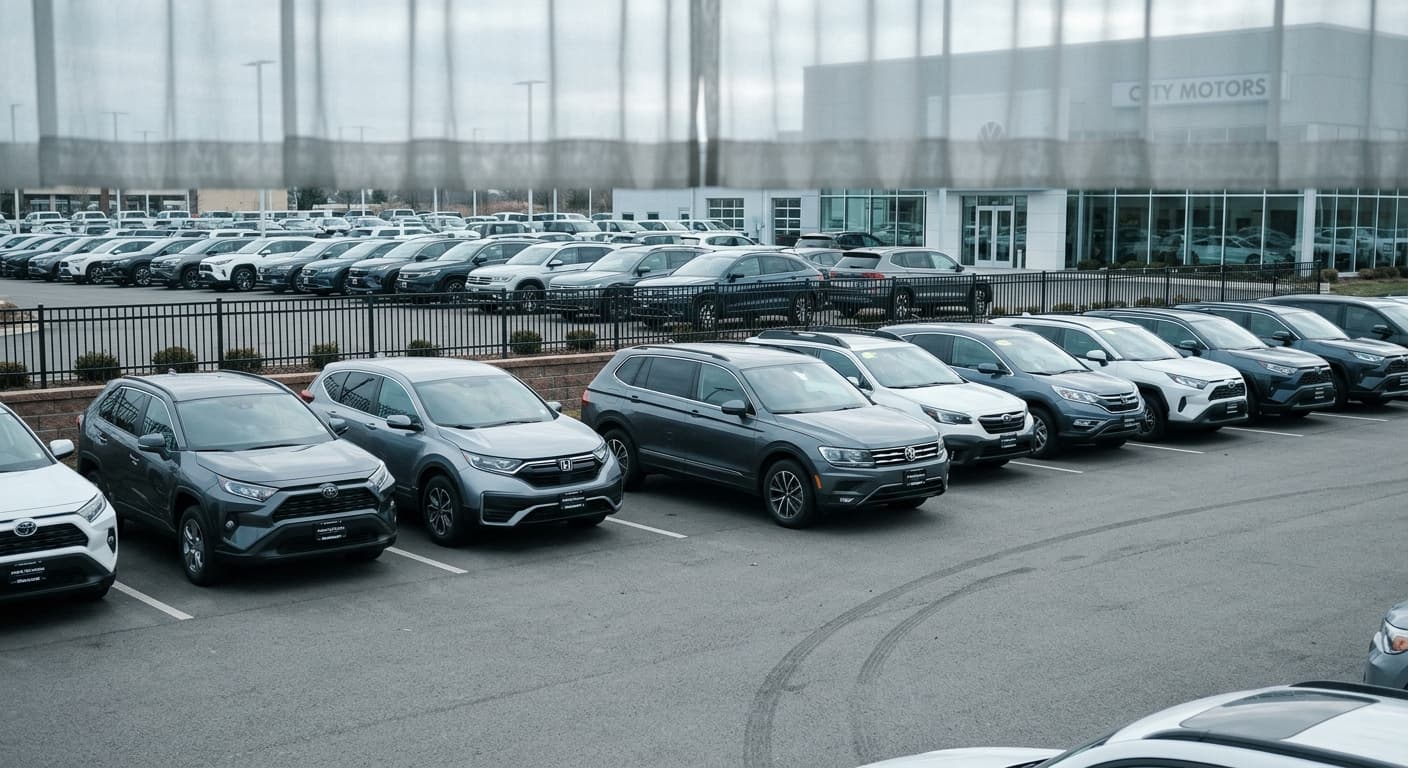
Colorado's lemon law, the Motor Vehicle Repair Act under C.R.S. § 42-10-101, covers new private passenger vehicles and triggers the lemon presumption when the same defect persists after three repair attempts, two attempts for a safety defect, or 24 business days out of service within two years or 24,000 miles.
Understanding Colorado's Updated Lemon Law
Colorado's lemon law, officially known as the Motor Vehicle Repair Act, is codified in Colorado Revised Statutes § 42-10-101 through § 42-10-109. The law provides important consumer protections for buyers and lessees of new motor vehicles that fail to conform to the manufacturer's express warranty.
On August 7, 2024, Senate Bill 24-192 took effect and brought the most significant changes to Colorado's lemon law in decades. The update lowered the threshold for a vehicle to qualify as a lemon, expanded which vehicles are covered, extended filing deadlines, and introduced new protections for buyers of lemon buyback vehicles.
The Colorado Attorney General's office issued a public advisory encouraging consumers to understand their new rights under the updated law. These changes apply to vehicles originally delivered to consumers on or after the effective date.
What Vehicles Are Covered
Colorado's lemon law covers specific types of vehicles purchased or leased in the state. The 2024 update expanded coverage to include small business vehicles.
Covered Vehicle Types
- New private passenger vehicles: Cars, sedans, coupes, and similar automobiles
- Trucks: Pickup trucks used primarily for personal purposes
- Vans: Passenger vans and minivans
- SUVs: Sport utility vehicles
- Leased vehicles: New vehicles obtained through lease agreements
- Demonstrator vehicles: Demo vehicles sold as new with warranty
- Small business vehicles: Vehicles used for both personal and business purposes (added by SB24-192)
Vehicles Not Covered
- Used vehicles (separate protections exist for lemon buyback vehicles)
- Motorcycles and vehicles with three or fewer wheels
- Motor homes as defined in C.R.S. § 42-1-102
- Vehicles modified for commercial use
- Vehicles designed to carry more than ten people (Colorado's lemon law only covers private passenger vehicles, including pickups and vans, designed to carry ten or fewer people)
Colorado's Lemon Law Presumption (Updated 2024)
Colorado law creates a rebuttable presumption that a reasonable number of repair attempts have been made when certain conditions occur within the coverage period. SB24-192 lowered these thresholds to make it easier for consumers to qualify.
The Lemon Law Presumption Applies When
| Condition | Requirement | Details |
|---|---|---|
| Repair Attempts (Same Defect) | 3 or more attempts | Same nonconformity must substantially impair use, market value, or safety |
| Repair Attempts (Safety Defect) | 2 or more attempts | Defect that is likely to cause death, serious injury, or risk of fire/explosion |
| Days Out of Service | 24 or more business days | Vehicle unavailable due to repair of one or more nonconformities |
| Coverage Period | Within 2 years or 24,000 miles | Whichever comes first from date of original delivery |
Before this presumption can be invoked, the consumer must send the manufacturer written notice by certified mail stating that repair attempts have been made and the defect remains. SB24-192 added a new precondition: the manufacturer must then be given 10 business days after receiving that notice to attempt to cure the defect before the presumption applies. That cure attempt counts as one of the repair attempts toward the total (C.R.S. § 42-10-103(2)(c)).
What Changed in 2024
The table below compares the old and new lemon law presumption requirements.
| Requirement | Before SB24-192 | After SB24-192 (Current Law) |
|---|---|---|
| Repair Attempts (Same Defect) | 4 or more | 3 or more |
| Safety Defect Repair Attempts | No separate provision | 2 or more |
| Days Out of Service | 30 business days | 24 business days |
| Coverage Period | 1 year or warranty term | 2 years or 24,000 miles |
| Statute of Limitations | 6 months after warranty or 1 year | 30 months from delivery |
| Small Business Vehicles | Not covered | Covered |
Important: Colorado uses business days for the out-of-service calculation. Business days typically exclude Saturdays, Sundays, and state holidays.
What Qualifies as a "Nonconformity"?
A nonconformity is any defect or condition that substantially impairs the use, market value, or safety of the motor vehicle. Examples include:
- Engine failures or persistent performance problems
- Transmission defects affecting drivability
- Brake system malfunctions
- Steering problems creating safety hazards
- Electrical failures affecting critical systems
- Heating and defrost system failures (particularly important in Colorado's climate)
- Four-wheel drive or all-wheel drive system defects
- Suspension problems affecting handling
Safety-Based Nonconformities
SB24-192 introduced the concept of a "safety-based nonconformity," defined as a defect that results in a condition likely to cause death or serious bodily injury if the vehicle is driven, or that creates a risk of fire or explosion. These defects receive a lower threshold of only two repair attempts before the lemon presumption applies.
Consumer Remedies: Refund or Replacement
When a vehicle qualifies as a lemon under Colorado law, the manufacturer must provide either a comparable replacement vehicle or a full refund. Under C.R.S. § 42-10-103, the manufacturer chooses which remedy to provide. The statute uses the phrase "at the manufacturer's option," so the manufacturer may prefer whichever remedy costs less in a given situation. Consumers should document their preference in writing when notifying the manufacturer.
Option 1: Replacement Vehicle
If the manufacturer chooses replacement, it must provide:
- A comparable new motor vehicle
- All applicable express warranties
- Reimbursement for incidental costs including registration and taxes
Option 2: Refund (Buyback)
If the manufacturer chooses a refund, it must provide:
- Full purchase price: Including sales tax and fees
- License and registration fees: All DMV costs
- Collateral charges: Dealer fees and similar costs
- Finance charges: Interest and loan fees paid
- Incidental damages: Towing, rental cars, and related costs
Updated Usage Deduction Formula
The manufacturer may deduct a reasonable allowance for the consumer's use of the vehicle. SB24-192 clarified the formula to ensure fair and predictable calculations.
The usage deduction is calculated as:
Usage Deduction = (Total Contract Price) x (Eligible Miles / 100,000)
"Eligible Miles" includes only:
- Miles traveled before the consumer first presented the vehicle for repair of the nonconformity
- Miles traveled during any subsequent period when the vehicle was not out of service by reason of repair
This formula protects consumers by excluding miles the vehicle spent sitting in a repair shop from the usage calculation. For example, on a $40,000 vehicle where the consumer drove 5,000 eligible miles, the usage deduction would be $2,000.
The Magnuson-Moss Warranty Act: Federal Backstop
Colorado consumers may also have rights under the federal Magnuson-Moss Warranty Act, 15 U.S.C. § 2301 et seq., regardless of whether the state lemon law applies. Magnuson-Moss allows consumers to sue in federal court for breach of a written or implied warranty on any consumer product, including vehicles. If you prevail, the manufacturer pays your attorney's fees under 15 U.S.C. § 2310(d)(2). The federal law provides an independent remedy that can be pursued alongside a Colorado state lemon law claim, and is particularly useful if your vehicle does not quite meet the state thresholds but the manufacturer has clearly breached the written warranty.
How to File a Lemon Law Claim in Colorado
Filing a successful lemon law claim in Colorado requires proper documentation and following specific procedures.
Step 1: Document Everything
- Keep all repair orders and invoices
- Record dates your vehicle entered and left the repair shop
- Document the specific problems and symptoms
- Save all correspondence with the dealer and manufacturer
- Photograph or video defects when possible
- Keep receipts for rental cars and towing
Step 2: Allow Reasonable Repair Attempts
Give the manufacturer or its authorized dealer adequate opportunity to repair the vehicle. You need at least three attempts for the same problem, two attempts for a safety-related defect, or 24 business days out of service to invoke the presumption.
Step 3: Provide Written Notice to Manufacturer
Before pursuing remedies, send written notice to the manufacturer by certified mail that includes:
- Your name and contact information
- Vehicle information (year, make, model, VIN)
- Description of the nonconformity
- Repair history summary with dates
- Your requested remedy (replacement or refund)
Once the manufacturer receives this notice, it has 10 business days to attempt to cure the defect before the repair-attempt presumption can be counted against it (C.R.S. § 42-10-103(2)(c), added by SB24-192). That cure attempt itself counts as one of the required repair attempts.
Step 4: Participate in Arbitration if Required
Under C.R.S. § 42-10-106, if the manufacturer has established an informal dispute settlement procedure that complies with federal regulations (16 C.F.R. Part 703), consumers must use that procedure before pursuing refund or replacement remedies. The 30-month statute of limitations is tolled (paused) during the arbitration process.
Not all manufacturers maintain qualifying arbitration programs. If no qualifying program exists, you can proceed directly to court.
Step 5: File a Lawsuit if Necessary
If arbitration does not resolve the dispute or no arbitration program exists, you may file a lawsuit in Colorado state court. The court shall award reasonable attorney fees to the prevailing party in any lemon law action.
Filing Deadline
You must file your lemon law claim within 30 months of the original delivery of the vehicle to you. This deadline is tolled during any period when:
- You have submitted to manufacturer arbitration under § 42-10-106
- The vehicle is out of service by reason of repair
Manufacturer Defenses
Manufacturers may raise several defenses to avoid lemon law liability in Colorado.
Common Manufacturer Defenses
| Defense | Manufacturer's Argument | Consumer's Counter |
|---|---|---|
| Consumer abuse or neglect | Defect caused by improper use or maintenance failure | Provide maintenance records showing proper care |
| Unauthorized modifications | Aftermarket parts or modifications caused the problem | Show defect existed before modifications or is unrelated |
| Defect not substantial | Problem does not substantially impair the vehicle's safety, use, or market value | Document impact on safety, daily use, and resale value |
| Insufficient repair opportunities | Manufacturer was not given adequate chance to repair | Provide complete repair history meeting the presumption |
| Accident damage | Problem resulted from collision or external event | Expert testimony showing defect is manufacturing related |
Lemon Buyback Vehicle Protections
SB24-192 added new C.R.S. § 42-10-108 and § 42-10-109, creating protections for buyers of vehicles that were previously repurchased under the lemon law.
Disclosure Requirements
Dealers selling lemon buyback vehicles must:
- Affix a permanent decal reading "Lemon Law Buyback" on the driver's door B pillar (the body post to which the driver's door latches)
- Ensure the vehicle's title indicates its lemon law buyback status
- Provide conspicuous written disclosure of the vehicle's history before sale
- Never remove the lemon law buyback decal
Third-Party Inspection and Free-Look Period
Dealers selling lemon buyback vehicles must offer one of the following:
- Third-party inspection: Allow the buyer's agent to inspect the vehicle before purchase. The agent must be qualified to use any inspection equipment and must not interfere with normal dealer operations.
- 7-day free-look period: The purchaser may return the vehicle within seven days and receive a full refund of all money paid, less shipping costs.
These protections help consumers make informed decisions about purchasing vehicles with lemon law histories.
Used Vehicle Protections
Colorado's lemon law does not cover used vehicles (other than the lemon buyback provisions above). However, used car buyers have other potential protections.
Available Protections for Used Vehicles
- Remaining manufacturer warranty: Used vehicles still under warranty may have warranty claims
- Dealer warranties: Some dealers offer limited warranties on used vehicles
- Implied warranty of merchantability: Unless properly disclaimed, vehicles must be fit for ordinary use
- Federal Magnuson-Moss Warranty Act: Provides remedies for warranty breaches on products with written warranties
- Colorado Consumer Protection Act: Protects against dealer fraud, misrepresentation, and unfair business practices
Title Branding
Colorado requires that vehicles repurchased under the lemon law have their titles branded to notify future buyers of the vehicle's history. Under the 2024 update, this branding requirement is reinforced by the physical decal requirement.
Statute of Limitations and Key Deadlines
Colorado's lemon law has specific timeframes that consumers must follow.
| Deadline | Timeframe | Details |
|---|---|---|
| Reporting Period | Within 2 years or 24,000 miles | Nonconformities must be reported within this period, whichever comes first |
| Presumption Period | Within 2 years or 24,000 miles | Repair attempts must occur within this same timeframe |
| Statute of Limitations | 30 months from delivery | Time to file a legal claim; tolled during arbitration and repair periods |
| Written Notice | Before pursuing remedies | Must notify manufacturer before seeking refund or replacement |
| Arbitration | Before court action | Required if manufacturer has a qualifying informal dispute settlement program |
Filing a Complaint with the Colorado Attorney General
Consumers who believe a manufacturer or dealer has violated the lemon law can file a complaint with the Colorado Attorney General's Consumer Protection Division. While the AG's office does not typically represent individual consumers in lemon law cases, complaints help the office identify patterns of violations and take enforcement action.
You can file a complaint online at coag.gov/file-complaint or by calling the consumer protection hotline.
More Colorado Laws
Frequently Asked Questions
How many repair attempts does Colorado require before a vehicle qualifies as a lemon?
Under the updated law effective August 7, 2024, Colorado requires three or more repair attempts for the same substantial defect, or two or more attempts for a safety-based defect (one likely to cause death, serious injury, or risk of fire or explosion). Alternatively, the vehicle qualifies if it has been out of service for 24 or more business days. These conditions must occur within two years or 24,000 miles of delivery, whichever comes first.
Who decides whether I get a refund or replacement in Colorado?
Under C.R.S. § 42-10-103, the manufacturer decides whether to offer a refund or a comparable replacement vehicle. The statute uses the phrase 'at the manufacturer's option,' meaning the manufacturer may choose whichever remedy it prefers. Consumers can negotiate, but the statute gives the initial election to the manufacturer rather than the buyer.
Does Colorado's lemon law cover used cars?
No, Colorado's lemon law only covers new motor vehicles. However, used vehicles may be protected under the original manufacturer's warranty if still in effect, the federal Magnuson-Moss Warranty Act, or the Colorado Consumer Protection Act. The 2024 update also added specific protections for buyers of used lemon buyback vehicles, including disclosure requirements and a 7-day free-look period.
What is the statute of limitations for filing a Colorado lemon law claim?
You must file your claim within 30 months of the original delivery of the vehicle. This deadline is tolled (paused) during any period when you are participating in manufacturer arbitration or when the vehicle is out of service for repair. The previous law allowed only six months after warranty expiration or one year from delivery.
Are small business vehicles covered under Colorado's lemon law?
Yes, as of August 7, 2024, Colorado's updated lemon law covers vehicles used by small businesses for both personal and business purposes. Previously, vehicles purchased by small businesses were excluded from lemon law protections.
How is the usage deduction calculated on a Colorado lemon law refund?
The usage deduction equals the total contract price multiplied by the eligible miles driven, divided by 100,000. Eligible miles include only miles driven before the first repair attempt and miles driven during periods when the vehicle was not in the shop for repairs. Miles accumulated while the vehicle was out of service do not count against you.
What is a safety-based nonconformity under Colorado's lemon law?
A safety-based nonconformity is a defect that results in a condition likely to cause death or serious bodily injury if the vehicle is driven, or that creates a risk of fire or explosion. Safety-based defects qualify for the lemon presumption after only two failed repair attempts, compared to three for non-safety defects.
Updates
Corrected the vehicle-coverage test (Colorado's lemon law covers passenger vehicles designed to carry ten or fewer people, not a 10,000-lb weight cutoff), added the manufacturer's new 10-business-day cure-window right after notice, and added the safety prong to the substantial-impairment standard, all per SB24-192 (effective August 7, 2024).
Independently fact-checked against the cited primary sources; governing law re-checked for recent changes
Governing law re-checked for recent changes
Reviewed and approved by an editor
The Law Behind This Article
This article rests on the statutory provisions below, held in our own legal record and retrieved from the official source. Tap a section to read the operative text.
Colorado Revised Statutes, Title 42: Vehicles and Traffic
§ 42-10-103Failure to conform vehicle to warranty - replacement or return of vehicleIn force
(1) If the manufacturer, the manufacturer's agent, or the manufacturer's authorized dealer is unable to conform the motor vehicle to the warranty by repairing or correcting the defect or condition that substantially impairs the use and market value of or safety of the motor vehicle after a reasonable number of attempts, the manufacturer shall, at the manufacturer's option, replace the motor vehicle with a comparable motor vehicle or accept return of the motor vehicle from the consumer and refund to the consumer the full purchase price, including the sales tax, license fees, and registration fees and any similar governmental charges, less a reasonable allowance for the consumer's use of the motor vehicle. Refunds shall be made to the consumer and lienholder, if any, as their interests may appear.
Official text (excerpt) · last checked 2026-09-08 · Read the full text in our law library · Verify at olls.info
United States Code Title 15
§ 2301DefinitionsIn forcecited in 39 of our articles
For the purposes of this chapter: The term “consumer product” means any tangible personal property which is distributed in commerce and which is normally used for personal, family, or household purposes (including any such property intended to be attached to or installed in any real property without regard to whether it is so attached or installed). The term “Commission” means the Federal Trade Commission. The term “consumer” means a buyer (other than for purposes of resale) of any consumer product, any person to whom such product is transferred during the duration of an implied or written warranty (or service contract) applicable to the product, and any other person who is entitled by the terms of such warranty (or service contract) or under applicable State law to enforce against the warrantor (or service contractor) the obligations of the warranty (or service contract). The term “supplier” means any person engaged in the business of making a consumer product directly or indirectly available to consumers. The term “warrantor” means any supplier or other person who gives or offers to give a written warranty or who is or may be obligated under an implied warranty.
Official text (excerpt) · last checked 2026-07-28 · Read the full text in our law library · Verify at uscode.house.gov
Cited in 1,671 court opinions in our collectionLatest citing opinion in our collection: 2026
In the courts (editorial summary, independently checked):Walsh v. Ford Motor Company (1986) held that except where Magnuson-Moss expressly prescribes a rule, the Act applies state written and implied warranty law, citing Section 2301(7)'s definition of implied warranty as one arising under state law. Birdsong v. Apple (2009) dismissed Act claims once the state warranty claims failed.
Opinions citing this section in our collection:
- John F. "Jack" Walsh v. Ford Motor Company (Court of Appeals for the D.C. Circuit 1986, 807 F.2d 1000)✓Ford owners sought nationwide classes over transmissions that slipped from park into reverse; reading Section 2301(7) and (6), the D.C. Circuit held Magnuson-Moss applies state warranty law except where the Act expressly prescribes a rule, and vacated class certification.
- Birdsong v. Apple, Inc. (Court of Appeals for the Ninth Circuit 2009, 590 F.3d 955)✓iPod buyers alleged the player risked hearing loss; because Section 2301(7) ties implied warranty to state law, the Ninth Circuit treated the Magnuson-Moss claim as standing or falling with the California warranty claims and affirmed dismissal once those failed.
- Robert E. Kelly Virginia L. Kelly v. Fleetwood Enterprises, Inc. (Court of Appeals for the Ninth Circuit 2004, 377 F.3d 1034)“…gnizable under the Magnuson-Moss Warranty Act (the “Act”), 15 U.S.C. § 2301 et seq. This consumer dis…”
Identified automatically from the court opinions citing this section — not a ranking of which case controls.
Also relied on in: Arkansas Lemon Law (2026): How to Qualify & Get a Refund, Washington Lemon Law (2026): How to Qualify & Get a Refund, Florida Lemon Law (2026): How to Qualify & Get a Refund
§ 2310Remedies in consumer disputesIn forcecited in 3 of our articles
Congress hereby declares it to be its policy to encourage warrantors to establish procedures whereby consumer disputes are fairly and expeditiously settled through informal dispute settlement mechanisms. The Commission shall prescribe rules setting forth minimum requirements for any informal dispute settlement procedure which is incorporated into the terms of a written warranty to which any provision of this chapter applies. Such rules shall provide for participation in such procedure by independent or governmental entities. One or more warrantors may establish an informal dispute settlement procedure which meets the requirements of the Commission’s rules under paragraph (2).
Official text (excerpt) · last checked 2026-09-08 · Read the full text in our law library · Verify at uscode.house.gov
Cited in 1,305 court opinions in our collectionLatest citing opinion in our collection: 2026
Opinions citing this section in our collection:
- In Re General Motors Corporation Engine Interchange Litigation (Court of Appeals for the Seventh Circuit 1979, 594 F.2d 1106)“…to the court's discretion not to award attorneys' fees). 15 U.S.C. § 2310 (d)(2). Thus, the dismissal of the sub…”
- John F. "Jack" Walsh v. Ford Motor Company (Court of Appeals for the D.C. Circuit 1986, 807 F.2d 1000)“…y rejected this contention, refusing to “read section 110 [ 15 U.S.C. § 2310 (1982) ] so broadly as to have it supe…”
- Terrance Golden v. Gorno Bros., Inc., D/B/A Gorno Ford (Court of Appeals for the Sixth Circuit 2005, 410 F.3d 879)“…y required under the statute's jurisdictional limitations, 15 U.S.C. § 2310 (d)(3)(B). 11…”
Identified automatically from the court opinions citing this section — not a ranking of which case controls.
Also relied on in: US Lemon Laws (2026): How to Qualify & Get a Refund, Nevada Lemon Law (2026): How to Qualify and Get a Refund
Explore the law
This article also draws on these acts and chapters (opening at their first section): Colorado Revised Statutes, Title 42: Vehicles and Traffic § 42-1-101 (Short title)
Related law for further reading — not part of this article’s citations.
Search our full record of US law — 2.1 million sections, every state + federal →
Sources and References
- Colorado Revised Statutes Title 42, Article 10(leg.colorado.gov).gov
- Senate Bill 24-192: Motor Vehicle Lemon Law(leg.colorado.gov).gov
- Colorado Attorney General: Updated Lemon Law Consumer Advisory (August 2024)(coag.gov).gov
- Colorado Attorney General: File a Consumer Complaint(coag.gov).gov
- Colorado AG Public Advisory: Lemon Law (August 6, 2024)(coag.gov).gov
- Colorado Department of Revenue: Auto Industry Public & Consumers(sbg.colorado.gov).gov
- Magnuson-Moss Warranty Act, 15 U.S.C. § 2301 et seq. (Federal Trade Commission)(ftc.gov).gov