
Utah
Utah Car Seat Laws: Requirements and Guidelines
Independently fact-checked against primary sources (last audited August 20, 2026). · Reviewed by the RecordingLaw editorial team. · Law checked current as of August 20, 2026. · 1 primary source cited on this page. How we verify our legal content
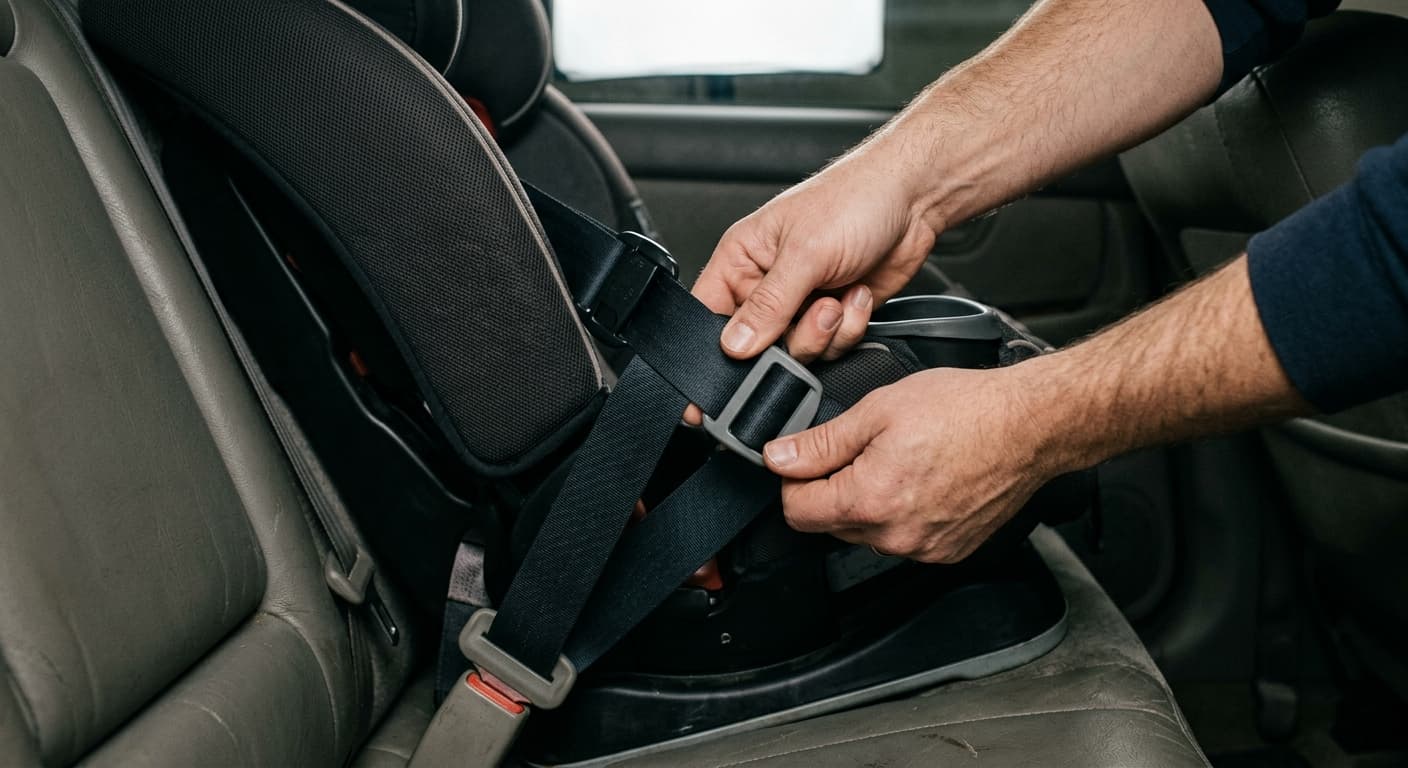
Utah requires children younger than 8 years old to ride in a federally approved child restraint device. Rear-facing and forward-facing seats cover the earliest years, and children must stay in a booster seat until they reach age 8 or 57 inches tall.
Utah Car Seat Law
Utah's car seat law requires children younger than 8 years to ride on federally approved child restraint devices. The state does not provide specific age, weight, and height requirements for the different types of car seats.
Rear-facing Car Seat Laws in Utah
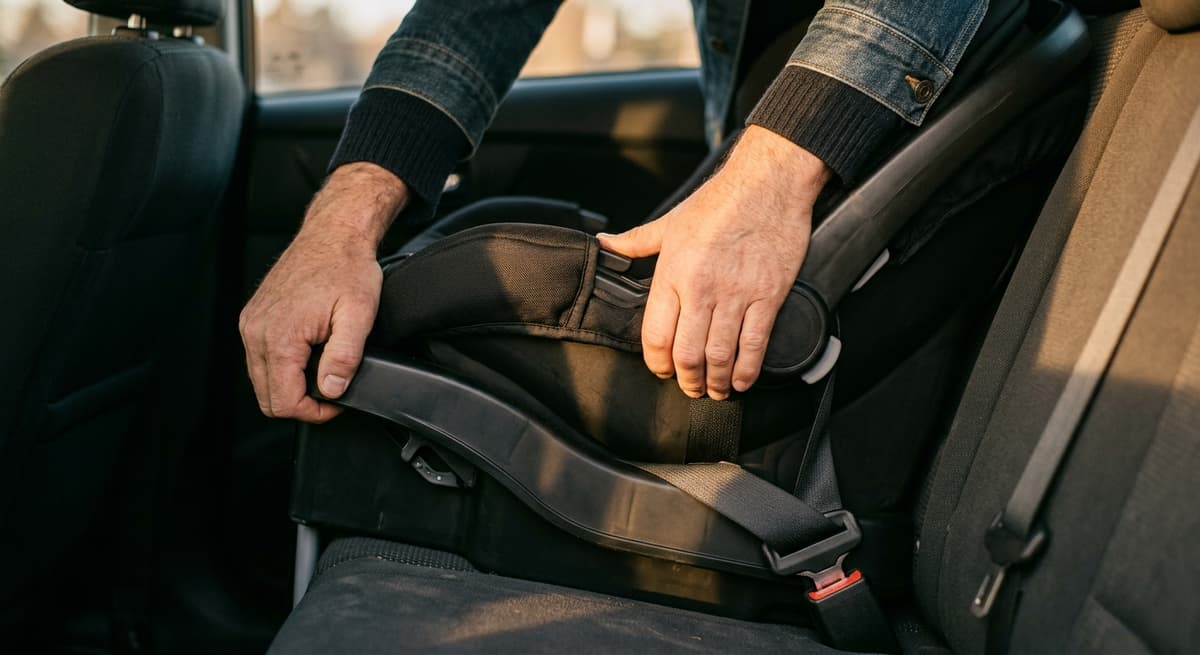
The AAP (American Academy of Pediatrics) recommends children should ride on rear-facing seats for a minimum of 2 years or until they exceed the manufacturer's weight and height requirements. This is because rear-facing seats help in protecting the child's head, neck, and spine by absorbing the crash forces and distributing them evenly over the whole body in the event of an accident. Rear-facing seats come in two sizes: infant-only seats and convertible seats. Infant-only seats are designed to fit newborns, and they can accommodate children of up to 30 pounds. Once infants outgrow the infant-only seats, they should use convertible seats which allow them to remain in the rear-facing position for a longer period due to their higher weight limits (up to 40 pounds). Use the harness straps to snugly secure your child according to the manufacturer's instructions. Also, the car seat should be installed tight in the rear seat with no more than 1-inch of movement.
Forward-Facing Car Seat Laws in Utah
Children can graduate to forward-facing seats once they outgrow the rear-facing seat's weight and height limits. This typically happens between ages 2-4 years, depending on the child's growth rate. There are various types of forward-facing seats, however the most common are forward-facing only, convertible and combination seats. A forward-facing seat should be equipped with a 5-point harness. The retainer clip should be kept at the same level as the armpit so that the harness straps can remain snug above the child's shoulders. If correctly fastened, the harness straps help in spreading the impact forces across the child's strong hips and shoulders and away from the fragile body parts in case of a car crash. Currently, manufacturers are making seats that can support up to 65 pounds, so this means children can remain forward-facing until age 7. Ensure your child's seat is tightly installed in the rear-seat according to the manufacturer's instructions.
Booster Seat Regulations in Utah
Children can transition to booster seats once they outgrow forward-facing seats. Generally, a minimum of 40 pounds and an age of 4 years are recommended before a child can ride on a booster seat. Utah law requires children to remain in booster seats until age 8 or until they are 57 inches tall. Belt-positioning booster seats are used to lift a child so that they fit in seat belts. For a proper fit, the shoulder strap should lie flat across the center of the chest, and the lap belt should lie low and snug across the upper thighs and hips. There are two types of booster seats: high-back and low back. High back booster seats support the child's head and neck if the car has no headrests, while low back boosters are used if the car has back seat headrests. While the law allows children 8 years or older to use booster seats, it is best to wait until your child is big enough for seat belts. This typically happens when the height is 57 inches. This means some children can reach age 12 while still in booster seats due to different growth rates. Also, a seat belt ready child should be able to sit all the way back against the seat with knees bent at the edge of the seat without slouching. In addition, the child should be able to ride without trying to detach the seat belt straps.
Requirements for children to use the front seat in Utah
The Utah Department of Health recommends children should ride in the back seat until age 13. The back seat is considered safest for children because it is usually farther away from the point of impact when head-on collisions occur. Also, the passenger-side airbags in the front seats are designed for adults so it's best to keep children away from them.
Law on leaving a child in a car in Utah
It is illegal to leave a child younger than 9 years unsupervised in a car in a manner that poses a risk to the child's safety. Exceptions apply if the child is accompanied by someone 9 years or older.
Law on Smoking in a car with a child in Utah
It is illegal to smoke in a car with child passengers who are younger than 16 years.
Car Seat Law regarding Commercial Vehicles in Utah
Utah law explicitly covers taxis and rideshare (transportation network service) trips. Under Utah Code Section 41-6a-1803(1)(c), an adult passenger using a taxi or a transportation network service like Uber or Lyft must restrain each supervised child younger than 8 in a child restraint device, and each supervised person at least 8 but under 16 in a properly fastened safety belt.
Law on Car Seat Replacement in Utah
The Utah Department of Health says car seats should be replaced after a moderate or severe car crash. You can still use a car seat if the car was involved in a minor crash.
More Utah Laws
Updates
Independently fact-checked against the cited primary sources; governing law re-checked for recent changes
Corrected the claim that taxi/rideshare coverage was unclear: Utah Code 41-6a-1803(1)(c) explicitly requires the supervising adult passenger in a taxi or rideshare trip to restrain each child in their care.
Governing law re-checked for recent changes
Reviewed and approved by an editor
The Law Behind This Article
This article rests on the statutory provisions below, held in our own legal record and retrieved from the official source. Tap a section to read the operative text.
Utah Code, Title 41: Motor Vehicles
§ 41-6a-1803Driver and passengers -- Seat belt or child restraint device required.In force
(1) (a) Except as provided in Subsection (1)(c), the operator of a motor vehicle operated on a highway shall: (i) wear a properly adjusted and fastened safety belt; (ii) provide for the protection of each person younger than eight years old by using a child restraint device to restrain each person in the manner prescribed by the manufacturer of the device; and (iii) provide for the protection of each person that is at least eight years old and no less than 16 years old by securing, or causing to be secured, a properly adjusted and fastened safety belt on each person. (b) Notwithstanding the requirement under Subsection (1)(a)(ii), a child under eight years old who is 57 inches tall or taller: (i) is exempt from the requirement in Subsection (1)(a)(ii) to be in a child restraint device; and (ii) shall use a properly adjusted and fastened safety belt as required in Subsection (1)(a)(iii).
Official text (excerpt) · last checked 2026-07-29 · Read the full text in our law library · Verify at le.utah.gov
Search our full record of US law — 2.1 million sections, every state + federal →
Sources and References
- Utah Code § 41-6a-1803: seat belt or child restraint device required(le.utah.gov).gov