North Dakota
North Dakota Car Seat Laws: Requirements and Guidelines
Independently fact-checked against primary sources (last audited August 20, 2026). · Reviewed by the RecordingLaw editorial team. · Law checked current as of August 20, 2026. · 1 primary source cited on this page. How we verify our legal content
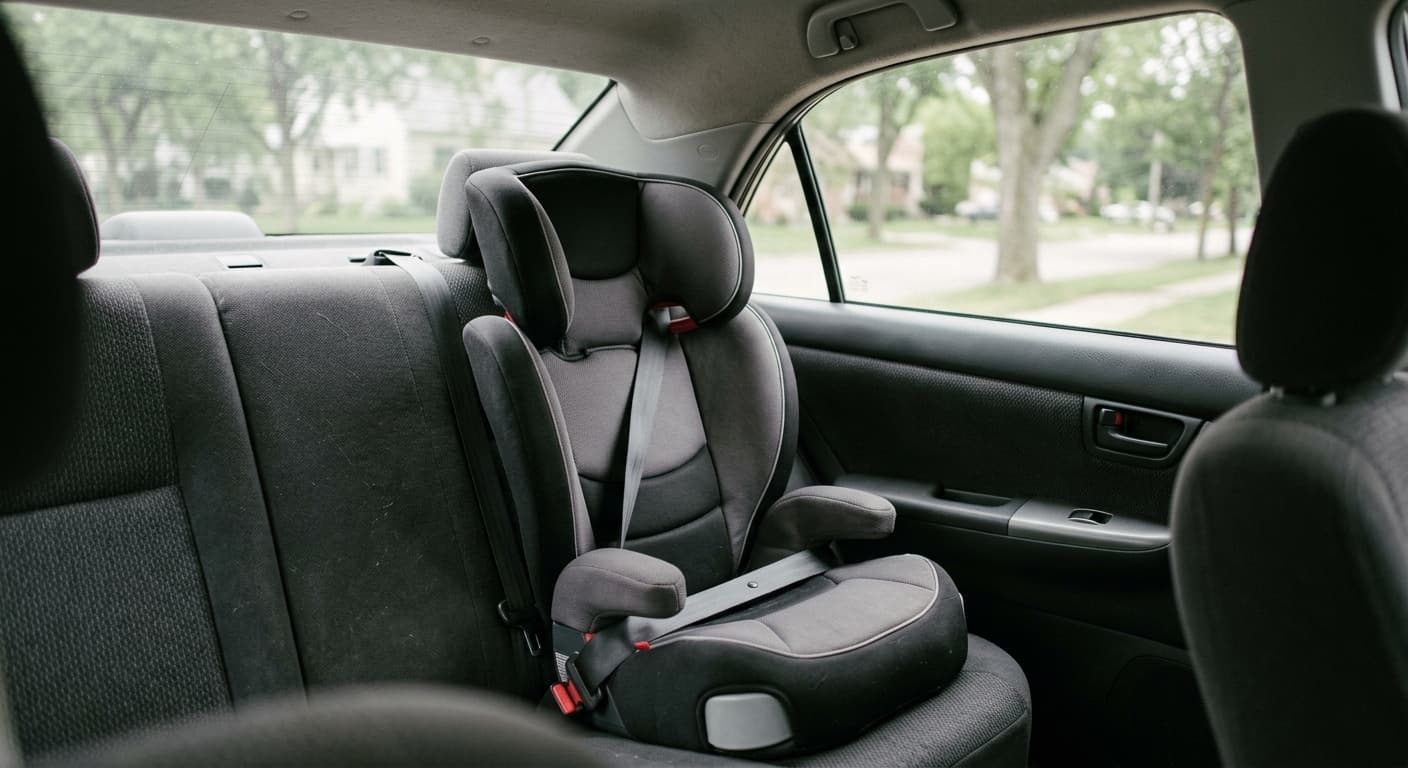
North Dakota law requires children younger than 8 to ride in an appropriate child restraint system, unless the child is at least 4 feet 9 inches (57 inches) tall, in which case a properly buckled seat belt satisfies the law (N.D.C.C. § 39-21-41.2). The North Dakota Department of Health recommends rear-facing seats until at least age 2; booster seats begin at age 4 and 40 pounds and continue until the child reaches 4 feet 9 inches tall or a seat belt fits correctly.
What Are the Height and Weight Requirements for Car Seats in North Dakota?
According to the North Dakota Department of Health, children should ride on rear-facing seats until at least age 2.
Children who are at least 2 years old or those who have outgrown the rear-facing seat limits can graduate to a forward-facing seat with a harness.
North Dakota law says children younger than 8 years must be secured in the appropriate child restraint system, unless the child is at least 4 feet 9 inches tall, in which case a properly buckled seat belt is legally sufficient.
A child should weigh at least 40 pounds and be at least 4 years old before transitioning to a booster seat.
Children should ride in the back seat until age 13.
What Are the Rear Facing Car Seat Laws in North Dakota?
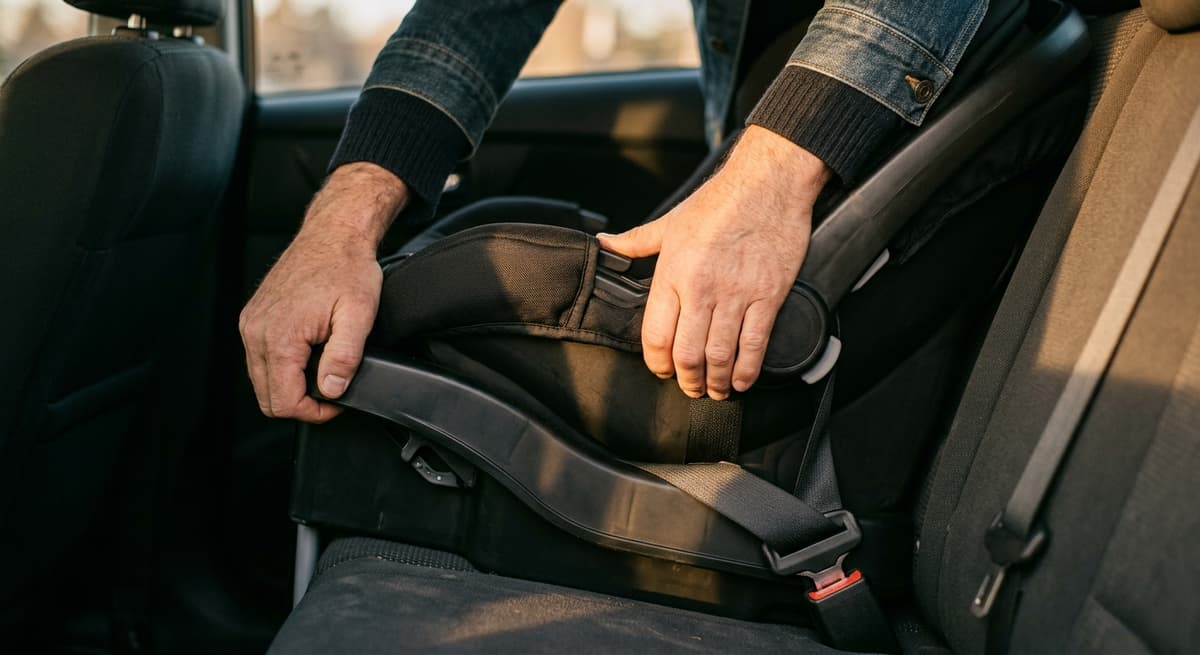
According to the North Dakota Department of Health, children should ride on rear-facing seats until at least age 2 or until they exceed the manufacturer's maximum weight and height limits. The rear-facing position is the safest for infants since their fragile and flexible bodies are protected by the back of the seat in case of a crash. Therefore, you should strive to keep your child in this position for as long as possible.
There are two types of rear-facing seats - infant-only and convertible seats. Infant-only seats are perfect for newborns and can support weights of up to 35 pounds. Once your child has exceeded the infant-only seat requirements, you can use a convertible seat which allows you to keep your child rear-facing for a longer period (up to age 4) due to its higher weight limit (up to 40 pounds). Make sure to install the seat in the rear of the car and away from an active airbag.
What Are the Forward Facing Car Seat Laws in North Dakota?
The North Dakota Department of Health says children who are at least 2 years old or those who have outgrown the rear-facing seat limits can graduate to a forward-facing seat with a harness. If you are using a convertible seat, you can turn the seat to face forward. The shoulder straps, hip straps, and crotch strap should be tightly secured over the child's body. This helps in reducing the crash forces that may be exerted on the child in case of a car crash.
You can also secure the seat together with lap-shoulder belts or lap-only belts. Use the seat until the child exceeds the manufacturer's weight and height guidelines. Typically, most seats can support up to 65 pounds. This means some kids may remain in the forward-facing position until when closer to age 7.
What Are the Booster Seat Laws in North Dakota?
North Dakota law requires children younger than 8 years to be secured in the appropriate child restraint system, unless the child is at least 4 feet 9 inches tall, in which case a properly buckled seat belt is legally sufficient. Children who have outgrown forward-facing seats but have not yet reached that height can ride in booster seats until age 8.
According to the state's department of health, a child should weigh at least 40 pounds and be at least 4 years old before transitioning to a booster seat. They further advise parents to keep their children in booster seats until they are 4'9" tall or until regular safety belts can fit correctly. A booster seat raises a child so that the lap-shoulder belt can cross over the stronger parts of the child's body. The lap belt should be snugly positioned across the upper thighs, and the shoulder belt should lie flat across the middle of the chest area. Use a high-back booster seat to support your child's head and neck if your back seats do not have headrests. Booster seats can support up to 80 pounds, so children can surpass age 8 while still safe in booster seats.
Before transitioning your child to safety belts, make sure that they are big enough to fit in them. An improper fit may expose your child to stomach and neck injuries in the event of a car crash or an abrupt stop. For a child to be considered seat belt ready, he or she should be able to sit all the way back against the seat without slouching and with knees bent at the edge of the seat.
When Can a Child Use the Front Seat in North Dakota?
There is no law that covers the specific requirements for front seats. The North Dakota Department of Health recommends children should ride in the back seat until age 13. This is in line with most experts who agree that the back seat is generally safer. Also, passenger-side airbags installed in front seats are designed for adults and can injure children if inflated during an accident.
Is it Illegal to Leave a Child Alone in a Car in North Dakota?
There is no law regarding leaving a child in a car, although we do not recommend leaving your child unattended in a vehicle for any length of time.
Is it Illegal to Smoke in a Vehicle With a Child in North Dakota
The state does not have any law regarding smoking in a car with child passengers, although it is not recommended to smoke in a vehicle with a child present.
Are Car Seats Required in Taxis and Emergency Vehicles in North Dakota?
Emergency vehicles and vehicles manufactured without seat belts are exempt from complying with the state's car seat laws. The law is not clear on whether taxis are exempted.
What is the Law on Replacing Car Seats in North Dakota?
No law covers the replacement of car seats. According to the National Highway Traffic Safety Administration, car seats should be replaced after a moderate or severe accident. You should also check for the expiry date included in the car seat or manual.
More North Dakota Laws
- Murder Sentencing Guidelines - Minimum to Maximum for Every State (2026)
- North Dakota Car Seat Laws
- North Dakota Hit and Run Laws (2026 Guide)
- North Dakota Lemon Law: Complete Guide for 2026
- North Dakota Recording Laws
- North Dakota Sexting Laws (2026 Guide)
- North Dakota Statute of Limitations
- North Dakota Whistleblower Laws
More North Dakota Laws
Frequently Asked Questions
What Are the Height and Weight Requirements for Car Seats in North Dakota?
According to the North Dakota Department of Health, children should ride on rear-facing seats until at least age 2. Children who are at least 2 years old or those who have outgrown the rear-facing seat limits can graduate to a forward-facing seat with a harness. North Dakota law requires children younger than 8 years to be secured in the appropriate child restraint system, unless the child is at least 4 feet 9 inches tall, in which case a properly buckled seat belt is legally sufficient.
What Are the Rear Facing Car Seat Laws in North Dakota?
According to the North Dakota Department of Health, children should ride on rear-facing seats until at least age 2 or until they exceed the manufacturer's maximum weight and height limits. The rear-facing position is the safest for infants since their fragile and flexible bodies are protected by the back of the seat in case of a crash. Therefore, you should strive to keep your child in this position for as long as possible.
What Are the Forward Facing Car Seat Laws in North Dakota?
The North Dakota Department of Health says children who are at least 2 years old or those who have outgrown the rear-facing seat limits can graduate to a forward-facing seat with a harness. If you are using a convertible seat, you can turn the seat to face forward. The shoulder straps, hip straps, and crotch strap should be tightly secured over the child's body. This helps in reducing the crash forces that may be exerted on the child in case of a car crash.
What Are the Booster Seat Laws in North Dakota?
North Dakota law requires children younger than 8 years to be secured in the appropriate child restraint system, unless the child is at least 4 feet 9 inches tall, in which case a properly buckled seat belt is legally sufficient. Children who have outgrown forward-facing seats but have not yet reached that height can ride in booster seats until age 8. According to the state's department of health, a child should weigh at least 40 pounds and be at least 4 years old before transitioning to a booster seat.
When Can a Child Use the Front Seat in North Dakota?
There is no law that covers the specific requirements for front seats. The North Dakota Department of Health recommends children should ride in the back seat until age 13. This is in line with most experts who agree that the back seat is generally safer. Also, passenger-side airbags installed in front seats are designed for adults and can injure children if inflated during an accident.
Is it Illegal to Leave a Child Alone in a Car in North Dakota?
There is no law regarding leaving a child in a car, although we do not recommend leaving your child unattended in a vehicle for any length of time.
Are Car Seats Required in Taxis and Emergency Vehicles in North Dakota?
Emergency vehicles and vehicles manufactured without seat belts are exempt from complying with the state's car seat laws. The law is not clear on whether taxis are exempted.
What is the Law on Replacing Car Seats in North Dakota?
No law covers the replacement of car seats. According to the National Highway Traffic Safety Administration, car seats should be replaced after a moderate or severe accident. You should also check for the expiry date included in the car seat or manual.
Updates
Corrected North Dakota's car-seat coverage rule: the law requires a child restraint system for children under 8, but a child who reaches 4 feet 9 inches tall before age 8 is legally allowed to use a seat belt instead (this height threshold was previously described only as Department of Health advice, not as part of the legal test), per N.D.C.C. § 39-21-41.2.
Independently fact-checked against the cited primary sources; governing law re-checked for recent changes
Corrected the top-line intro claim that rear-facing is legally 'required' until age 2 -- NDCC 39-21-41.2 contains no orientation requirement; rear-facing-until-2 is a Department of Health recommendation, matching how the rest of the page already (correctly) frames it.
Governing law re-checked for recent changes
Reviewed and approved by an editor
The Law Behind This Article
This article rests on the statutory provisions below, held in our own legal record and retrieved from the official source. Tap a section to read the operative text.
North Dakota Century Code
§ 39-21-41.2Child restraint devices - EvidenceIn force
If a child, under eight years of age, is present in a motor vehicle, that motor vehicle must be equipped with at least one child restraint system for the child. However, a child under the age of eight who is at least fifty-seven inches [1.45 meters] tall is not required to use a child restraint system, but must be correctly buckled in a safety belt. The child restraint system must meet the standards adopted by the United States department of transportation for those systems [49 CFR 571.213]. While the motor vehicle is in motion, the child must be properly secured in the child restraint system in accordance with the manufacturer's instructions. While the motor vehicle is moving, each child of eight through seventeen years of age who is in the motor vehicle must be in an approved child restraint system in accordance with the manufacturer's instructions or correctly buckled in a safety belt. Use of child restraint systems and safety belts is not required in motor vehicles that were not equipped with safety belts when manufactured. If a child is being transported in an emergency situation, this section does not apply.
Official text (excerpt) · last checked 2026-07-30 · Read the full text in our law library · Verify at ndlegis.gov
Search our full record of US law — 2.1 million sections, every state + federal →
Sources and References
- N.D. Cent. Code ch. 39-21 (§ 39-21-41.2): child restraint devices(ndlegis.gov).gov