
Maine
Maine Car Seat Laws: Requirements and Guidelines
Independently fact-checked against primary sources (last audited August 20, 2026). · Reviewed by the RecordingLaw editorial team. · Law checked current as of August 20, 2026. · 5 primary sources cited on this page. How we verify our legal content
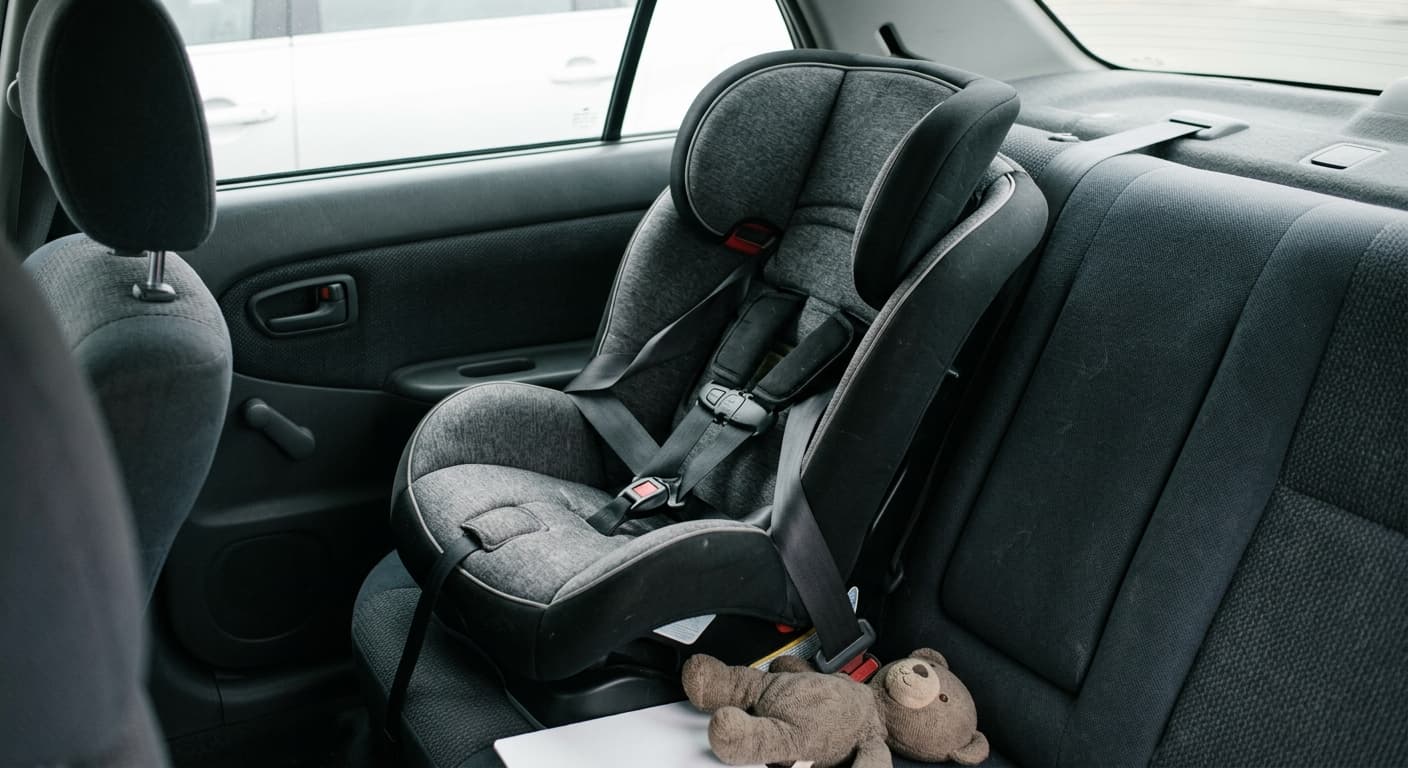
Maine requires children under 2 to ride rear-facing unless a convertible seat's manufacturer weight or height limit for the rear-facing position has been exceeded, forward-facing with a harness until 55 pounds, and in a booster until age 8 or 80 pounds or 57 inches under Title 29-A, Section 2081. Children under 12 must ride in the back seat, if possible.
Overview of Maine Car Seat Laws
Maine has some of the most detailed child passenger safety laws in the country. Title 29-A, Section 2081 of the Maine Revised Statutes sets clear requirements based on a child's age, weight, and height. The law covers rear-facing seats, forward-facing seats, booster seats, and seat belt use for older children.
Parents and caregivers should understand that Maine treats child restraint violations as primary enforcement offenses. This means a law enforcement officer can pull you over solely for a child restraint violation. Following these rules protects children and helps drivers avoid fines.
Rear-Facing Car Seat Requirements in Maine
Maine law requires all children under 2 years old to ride in a rear-facing car seat or a convertible car seat used in the rear-facing position. A child may move out of a rear-facing seat before turning 2 only if the child is in a convertible child restraint system that has exceeded the car seat manufacturer's recommended weight or height limit for the rear-facing position.
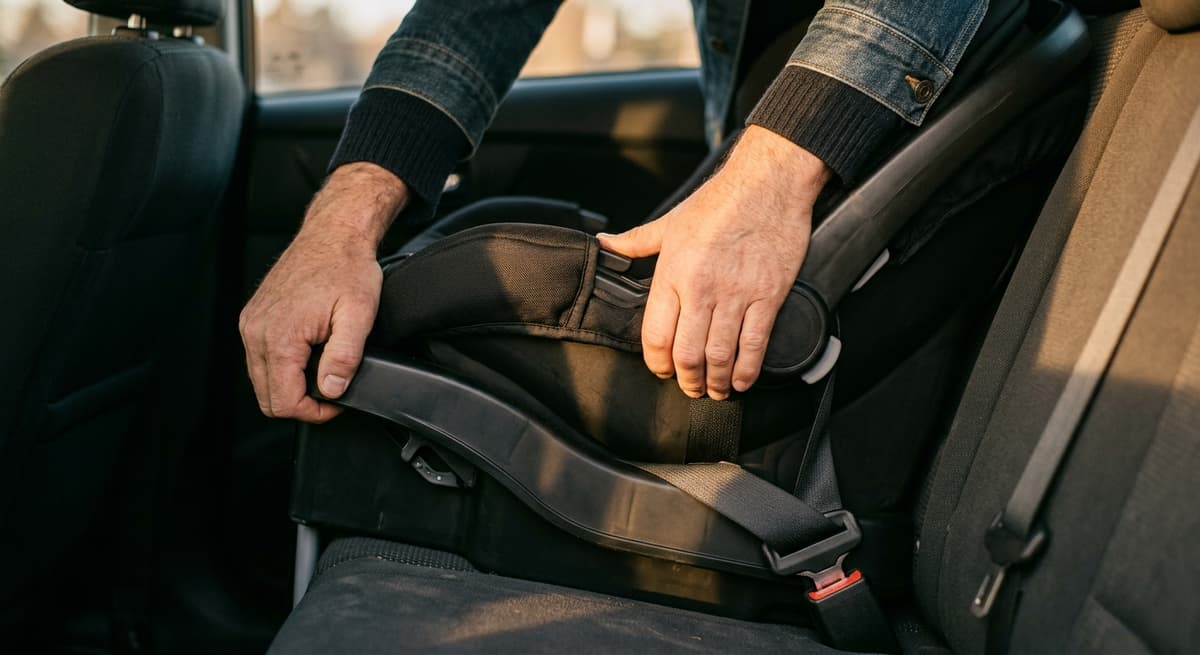
The child must be secured according to the height and weight limits set by the car seat manufacturer. There are two main types of rear-facing seats available.
Infant-only seats are designed for newborns and smaller babies. They typically support children up to about 30 to 35 pounds, depending on the model.
Convertible seats can be used rear-facing and later turned to face forward. These seats often support rear-facing children up to 40 or even 50 pounds, allowing many children to stay rear-facing until age 3 or 4.
The American Academy of Pediatrics (AAP) recommends keeping children rear-facing as long as possible. Rear-facing seats protect a child's head, neck, and spine by spreading crash forces across the back of the seat. All rear-facing seats must be installed in the back seat, away from active front airbags.
Forward-Facing Car Seat Requirements in Maine
Once a child reaches 2 years of age and has outgrown the rear-facing seat's manufacturer limits, Maine law requires the child to ride in a forward-facing car seat with an internal harness if the child weighs less than 55 pounds.
Forward-facing seats use a five-point harness system that secures the child at the shoulders, hips, and between the legs. This harness limits the child's movement during a crash and spreads impact forces across the strongest parts of the body.
Most forward-facing seats support children from about 25 pounds up to 65 pounds. This means many children can remain in a harnessed seat until age 6 or 7, depending on their growth rate. Parents should check the specific weight and height limits printed on their car seat label.
The seat should be installed in the back seat of the vehicle. Use either the LATCH (Lower Anchors and Tethers for Children) system or the vehicle seat belt, plus the top tether strap, to secure the seat. The harness straps should sit at or just above the child's shoulders for forward-facing use.
Booster Seat Requirements in Maine
Maine law requires children under 8 years old who weigh less than 80 pounds and stand shorter than 57 inches (4 feet, 9 inches) to ride in a belt-positioning booster seat or another approved child restraint system.
A booster seat raises the child so that the vehicle's lap and shoulder belt fits correctly. Proper belt fit means the lap belt sits low and snug across the upper thighs (not the stomach) and the shoulder belt crosses the center of the chest and shoulder (not the neck or face).
There are two main types of booster seats.
| Booster Type | Best For | Key Feature |
|---|---|---|
| High-back booster | Vehicles without headrests | Provides head and neck support |
| Backless booster | Vehicles with adjustable headrests | Lightweight and portable |
Both types must be used with a lap and shoulder belt together. Never use a lap-only belt with a booster seat, as it does not provide upper body protection.
The Five-Step Seat Belt Fit Test
Before moving a child out of a booster seat, use this test to check whether the adult seat belt fits properly.
- The child sits all the way back against the vehicle seat.
- The child's knees bend comfortably at the edge of the seat.
- The lap belt sits low and snug across the upper thighs.
- The shoulder belt crosses the center of the chest and shoulder.
- The child can stay seated like this for the entire trip without slouching.
If the child does not pass all five steps, he or she should continue using a booster seat.
Back Seat Requirements for Children in Maine
Maine law requires children under 12 years old to ride in the back seat whenever one is available. The back seat is the safest location in most vehicles because it places children farther from front airbags, which deploy with enough force to seriously injure a small child.
If a vehicle does not have a back seat, or if all rear seating positions are occupied by other children in car seats, a child may ride in the front seat with the seat moved as far back as possible. A rear-facing car seat should never be placed in front of an active airbag.
Seat Belt Laws for Older Children and Teens
All passengers under 18 years old must wear a seat belt while riding in a motor vehicle in Maine. Drivers are responsible for making sure every passenger under 18 is properly buckled. This applies to both the front and back seats.
The seat belt must include both a lap belt and a shoulder belt for proper protection. A lap-only belt does not provide adequate safety for children or adults.
Penalties for Car Seat Law Violations in Maine
Maine treats child restraint violations seriously. Under Title 29-A, Section 2081, fines are structured as follows.
| Offense | Fine Amount |
|---|---|
| First offense | $50 |
| Second offense | $125 |
| Third and subsequent offenses | $250 |
These fines cannot be reduced or suspended by the court. Maine enforces this law as a primary offense, meaning an officer can stop a vehicle solely because a child appears to be improperly restrained.
However, the law also specifies that a vehicle and its contents cannot be searched solely because of a child restraint violation.
Exemptions to Maine Car Seat Laws
Maine provides limited exemptions to its car seat requirements.
Taxis and limousines are exempt only from the requirement to secure adult passengers age 18 and older in a seat belt when those passengers are transported for a fee. This exemption does not extend to Maine's child restraint requirements, so taxi and limousine operators must still comply with the child restraint law for young passengers. Parents should bring a car seat when using these services whenever possible.
Medical exemptions apply to children with physical conditions that prevent the use of standard car seats. A physician must certify the condition, and the child must use the most protective alternative restraint available.
Smoking in a Vehicle with a Minor in Maine
Under Title 29-A, Section 2120 of the Maine Revised Statutes, it is illegal to smoke in a motor vehicle when any person under 18 years old is present. This law applies to the driver and all passengers, regardless of whether the windows are open.
A violation carries a fine of $50. Maine was one of the first states to pass this type of law, recognizing the health risks of secondhand smoke exposure in enclosed spaces.
Car Seat Replacement Guidelines
Maine does not have a specific law requiring car seat replacement after a crash. However, the National Highway Traffic Safety Administration (NHTSA) recommends replacing a car seat after any moderate or severe crash.
Signs that a crash was moderate or severe include visible damage to the vehicle near the car seat location, airbag deployment, or a crash where the vehicle could not be driven away. After a minor crash with no damage near the car seat and no airbag deployment, some manufacturers allow continued use. Always check the specific car seat manual for guidance.
All car seats also have an expiration date, usually printed on the bottom or back of the seat. Seats typically expire 6 to 10 years after the date of manufacture. The materials and internal structure can weaken over time, reducing the seat's ability to protect a child.
How to Choose the Right Car Seat in Maine
Selecting the correct car seat depends on a child's age, weight, and height. Here is a general guide based on Maine law and AAP recommendations.
| Stage | Age Range | Weight/Height | Seat Type |
|---|---|---|---|
| Rear-facing | Birth to 2+ years | Up to 40-50 lbs | Infant or convertible seat |
| Forward-facing | 2 to 5-7 years | 25 to 65 lbs | Harnessed car seat |
| Booster seat | 5-8 years | Under 80 lbs and under 57 in. | Belt-positioning booster |
| Seat belt | 8+ years | Over 57 in. or 80+ lbs | Vehicle lap/shoulder belt |
These ranges overlap because children grow at different rates. Always follow the limits printed on your specific car seat. When in doubt, keep a child in the more protective seat for as long as the child fits within the manufacturer's limits.
Free Car Seat Inspections and Resources
The Maine Bureau of Highway Safety offers free car seat inspections through certified Child Passenger Safety Technicians across the state. These technicians can check whether your car seat is installed correctly, whether it is the right seat for your child, and whether the seat has been recalled.
To find a certified inspection station near you, visit the NHTSA car seat inspection locator at nhtsa.gov.
More Maine Laws
Frequently Asked Questions
At what age can a child stop using a car seat in Maine?
Maine law requires children to use a car seat or booster seat until they are 8 years old, weigh at least 80 pounds, or reach 57 inches (4 feet, 9 inches) in height. After that, they must wear a seat belt. Children under 12 must still ride in the back seat, if possible.
What is the fine for a car seat violation in Maine?
The fine is $50 for a first offense, $125 for a second offense, and $250 for a third or subsequent offense. Courts cannot reduce or suspend these fines.
Can a child ride in the front seat in Maine?
Children under 12 must ride in the back seat when one is available. Older children may ride in the front seat with a properly fitted seat belt.
When can a child switch from rear-facing to forward-facing in Maine?
Maine law requires children to remain rear-facing until age 2, unless the child is in a convertible seat that has exceeded the manufacturer's recommended weight or height limit for the rear-facing position before that age. Safety experts recommend keeping children rear-facing as long as the seat allows.
Are taxis required to have car seats in Maine?
Maine's taxi and limousine exemption applies only to the seat belt requirement for adult passengers age 18 and older. It does not exempt them from the state's child restraint requirements. Parents should still bring their own car seat when using these services to keep children safe.
Updates
Corrected the smoking-in-vehicle law's protected age from under 16 to under 18, matching Maine's statutory definition of "minor."
Independently fact-checked against the cited primary sources; governing law re-checked for recent changes
Corrected the rear-facing early-exit rule (Maine ties it to the car seat manufacturer's weight/height limit, not a fixed 40 lb/40 in threshold), removed a fabricated 100-pound weight condition on the under-12 back-seat rule, and rescoped the taxi exemption to the adult seat belt law only (it does not exempt taxis from child restraint requirements).
Governing law re-checked for recent changes
Reviewed and approved by an editor
The Law Behind This Article
This article rests on the statutory provisions below, held in our own legal record and retrieved from the official source. Tap a section to read the operative text.
Maine Revised Statutes, Title 29-A: MOTOR VEHICLES AND TRAFFIC, Chapter 19: OPERATION
§ 2081Use of safety seat belts and child restraint systemsIn force
1. Definitions. As used in this section, unless the context otherwise indicates, the following terms have the following meanings. A. [PL 2019, c. 299, §2 (RP).] A-1. "Belt positioning seat" means a child restraint system that positions a child on a motor vehicle seat to improve the fit of a seat belt on the child. [PL 2019, c. 299, §2 (NEW).] A-2. "Child restraint system" means any device, except a Type I seat belt or Type II seat belt, designed for use in a motor vehicle to restrain, seat and position children who weigh 80 pounds or less and that meets the requirements of the Federal Motor Vehicle Safety Standard 213. [PL 2019, c. 299, §2 (NEW).] A-3. "Convertible child restraint system" means a child restraint system capable of positioning a child to face either in the direction of the front of the motor vehicle or the rear of the motor vehicle. [PL 2019, c. 299, §2 (NEW).] A-4.
Official text (excerpt) · last checked 2026-09-10 · Read the full text in our law library · Verify at legislature.maine.gov
Cited in 7 court opinions in our collectionLatest citing opinion in our collection: 2019
Opinions citing this section in our collection:
- State v. Bjorkaryd-Bradbury (Supreme Judicial Court of Maine 2002, 792 A.2d 1082)“…ion because the roadblock at which she was stopped violated 29-A M.R.S.A. § 2081(4)(E) (1996 tk Supp.2001),…”
- State v. Irving (Supreme Judicial Court of Maine 2003, 818 A.2d 204)“…testimony. [¶ 19] Irving also objected on the ground that 29-A M.R.S.A. § 2081(5) (Supp.2002) prohibits evidence of no…”
- State of Maine v. Dmitri L. Cannady (Supreme Judicial Court of Maine 2018, 190 A.3d 1019)“…making a traffic stop for the seatbelt violation, 29-A M.R.S. § 2081(3-A) (2017), the officer asked Ca…”
Identified automatically from the court opinions citing this section — not a ranking of which case controls.
§ 2120Smoking in vehicles when minor is presentIn force
1. Definition. As used in this section, unless the context otherwise indicates, "smoking" means inhaling, exhaling, burning or carrying a lighted cigarette, cigar, pipe, weed, plant, regulated narcotic or other combustible substance. 2. Prohibition. Smoking is prohibited in a motor vehicle by the operator or a passenger when a minor is present in that motor vehicle, regardless of whether the motor vehicle's windows are open. 3. Prohibition on inspection or search. A motor vehicle, the contents of the motor vehicle or the operator or a passenger in the motor vehicle may not be inspected or searched solely because of a violation of this section. 4. Penalty. A person who violates subsection 2 commits a traffic infraction for which a fine of $50 must be adjudged.
Official text (excerpt) · last checked 2026-07-30 · Read the full text in our law library · Verify at legislature.maine.gov
Maine Revised Statutes, Title 1: GENERAL PROVISIONS, Chapter 3: RULES OF CONSTRUCTION
§ 72Words and phrasesIn force
The following rules shall be observed in the construction of statutes relating to words and phrases, unless such construction is inconsistent with the plain meaning of the enactment, the context otherwise requires or definitions otherwise provide. [PL 1969, c. 433, §1 (RPR).] 1. Adult. "Adult" means a person who has attained the age of 18 years. 1-A. Affirmations. When a person required to be sworn is conscientiously scrupulous of taking an oath, that person may affirm. 2. Annual meeting. "Annual meeting," applied to towns, means the annual meeting required by law for choice of town officers. 2-A. Child or children. "Child or children" means a person who has not attained the age of 18 years. 2-B. Full age. "Full age" means the age of 18 and over. 2-C. Domestic partner. "Domestic partner" means one of 2 unmarried adults who are domiciled together under long-term arrangements that evidence a commitment to remain responsible indefinitely for each other's welfare. 3. General rule. Words and phrases shall be construed according to the common meaning of the language. Technical words and phrases and such as have a peculiar meaning convey such technical or peculiar meaning. 4.
Official text (excerpt) · last checked 2026-07-30 · Read the full text in our law library · Verify at legislature.maine.gov
Cited in 44 court opinions in our collectionLatest citing opinion in our collection: 2024
Opinions citing this section in our collection:
- Searle v. Town of Bucksport (Supreme Judicial Court of Maine 2010, 3 A.3d 390)“…ne v. State, 468 A.2d 1002, 1004 (Me.1983); see also 1 M.R.S. § 72(3) (2009). Also, statutes are interpret…”
- Town of York v. Cragin (Supreme Judicial Court of Maine 1988, 541 A.2d 932)“…ted by the plain meaning of "land" used in section 4956. In 1 M.R.S.A. § 72 (1979), which provides constructional g…”
- Lloyd v. Estate of Robbins (Supreme Judicial Court of Maine 2010, 997 A.2d 733)“…1 or treated as a sealed instrument pursuant to 1 M.R.S. § 72(26-B) (2009). 2 After the…”
Identified automatically from the court opinions citing this section — not a ranking of which case controls.
Search our full record of US law — 2.1 million sections, every state + federal →
Sources and References
- Title 29-A, Section 2081: Use of Safety Seat Belts and Child Restraint Systems(legislature.maine.gov).gov
- Maine Bureau of Highway Safety: Child Passenger Safety(maine.gov).gov
- Title 29-A, Section 2120: Smoking in Vehicles When Minor is Present(legislature.maine.gov).gov
- NHTSA: Car Seats and Booster Seats(nhtsa.gov).gov
- GHSA: State Child Passenger Safety Laws(ghsa.org)
- 1 M.R.S. Sec. 72(11-A): statutory definition of "minor" (under 18 years)(legislature.maine.gov).gov