
Iowa
Iowa Slip and Fall Laws: Proving Premises Liability After Koenig
Independently fact-checked against primary sources (last audited August 17, 2026). · Reviewed by the RecordingLaw editorial team. · Law checked current as of August 17, 2026. · 6 primary sources cited on this page. How we verify our legal content

To win a slip and fall claim in Iowa, you must prove the property owner failed to exercise reasonable care toward you as a lawful visitor and that this failure caused your injury. Iowa uses a unified duty standard (Koenig v. Koenig, 2009) and a modified comparative fault rule with a 51% bar.
Proving a slip and fall claim in Iowa
Iowa slip and fall cases are governed by a unified common-law duty of reasonable care established by the Iowa Supreme Court in Koenig v. Koenig, 766 N.W.2d 635 (Iowa 2009). Before that ruling, a landowner's duty depended on whether you were classified as an invitee, licensee, or trespasser. Koenig abolished those distinctions for lawful visitors and replaced them with a single question: did the property owner exercise reasonable care under all the circumstances?
The court identified a multifactor test to guide juries: the foreseeability and severity of the harm, the purpose and circumstances of the visitor's entry, the expected use of the premises, the reasonableness of the owner's inspection and repair or warning practices, the ease of correcting the condition, and the overall burden on the landowner. Whether the premises were reasonably safe is generally a jury question.
Notice remains critical. Even under the unified reasonable-care framework, you must show the owner had actual notice of the hazard (for example, an employee created the spill or a prior complaint was made) or constructive notice (the hazard existed long enough that a reasonable inspection would have found it). Courts examine surveillance footage, maintenance logs, and employee testimony to establish what the owner knew and when.
The open-and-obvious doctrine in Iowa
Iowa does not treat an open-and-obvious hazard as an automatic bar to a landowner's duty. Under the framework adopted in Koenig v. Koenig and consistent with Restatement (Second) of Torts section 343A, a possessor of land is not automatically relieved of the duty to warn or protect simply because the condition was visible. Where harm should be anticipated notwithstanding the obviousness of the condition, a duty to act can still exist.
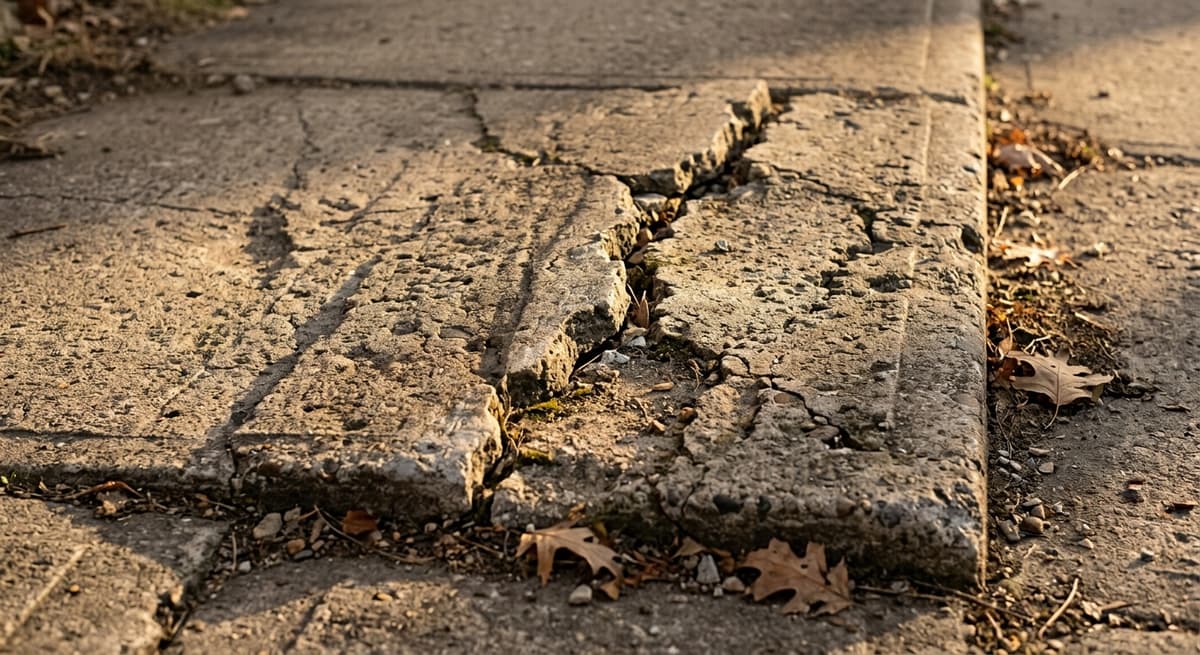
In practical terms, this is a comparative approach. If you walk directly into a hazard that was clearly visible, a jury can assign you a portion of the fault under Iowa Code chapter 668. That fault percentage reduces your recovery. However, it does not eliminate the landowner's duty as a threshold legal matter. Whether the landowner acted reasonably, and whether your own conduct was reasonable, are both questions for the jury.
This means Iowa plaintiffs are in a stronger position than those in states with a strict open-and-obvious bar. A hazard being obvious will not cause a judge to dismiss your claim outright. The inquiry remains: given all the circumstances, did the landowner act with reasonable care, and did your own conduct contribute to the fall?
Ice, snow, and natural accumulation in Iowa
Iowa does NOT follow the natural-accumulation immunity rule used in states like Illinois and Ohio. Under that rule, a property owner has no duty at all to remove ice or snow that accumulated naturally. Iowa rejects this approach.
The unified reasonable-care duty from Koenig v. Koenig extends to ice and snow hazards. There is no categorical immunity because precipitation was natural. In addition, Iowa Code section 364.12(2)(b) expressly makes abutting property owners responsible for removing natural accumulations of snow and ice from public sidewalks within a reasonable time.
Iowa does recognize the continuing-storm doctrine: an owner may wait until a storm ends plus a reasonable time before clearing accumulations, and is not liable for conditions during an actively occurring meaningful storm. The doctrine applies only to a real, ongoing accumulation of snow or ice. Once a storm has ended and a reasonable time has passed, the ordinary reasonable-care duty kicks back in fully.
The net result is that falls on icy sidewalks, parking lots, and entryways in Iowa are actionable if the owner failed to exercise reasonable care. The question is not whether the ice was natural, but whether a reasonable owner would have addressed it given the circumstances.
How fault is shared: Iowa's negligence rule
Iowa uses modified comparative fault with a 51% bar under Iowa Code section 668.3(1)(a). The statute provides that a claimant's contributory fault does not bar recovery "unless the claimant bears a greater percentage of fault than the combined percentage of fault attributed to the defendants, third-party defendants and persons who have been released pursuant to section 668.7."
This means a plaintiff who is exactly 50% at fault may still recover. Recovery is barred only when the plaintiff's fault exceeds the combined fault on the defense side of the comparison, that is, when the plaintiff's share is 51% or more. Below that threshold, damages are reduced in direct proportion to the claimant's fault percentage.
For example: if a jury finds total damages of $80,000 and assigns the plaintiff 35% of the fault, the plaintiff recovers $52,000 (65% of $80,000). If the jury assigns the plaintiff 51% or more of the fault, the plaintiff recovers nothing. The comparison is made to the combined fault of the defendants, third-party defendants and any parties released under section 668.7, which prevents defendants from escaping liability by pointing blame at each other in a way that drives each individual percentage down.
This rule also explains why the open-and-obvious and ice-and-snow questions matter so much. Defense attorneys will argue that an obvious or natural hazard means the plaintiff's own fault percentage should be high. The higher your assigned fault, the less you recover, and at 51% you walk away with nothing.
Deadlines: statute of limitations and government claims
Two deadlines apply to Iowa slip and fall cases.
Personal-injury statute of limitations: Under Iowa Code section 614.1(2), you have 2 years to file a personal-injury lawsuit. Iowa applies a discovery rule, so the clock can start when the injury is or should reasonably have been discovered, which matters when an injury worsens over time or a cause is not immediately apparent. Tolling provisions exist for minors (generally one year after turning 18) and persons with a qualifying mental illness (one year after the disability ends). For additional detail on Iowa's civil filing windows, see the Iowa statute of limitations page.
Government property: the rules split depending on which government you are suing. Iowa treats municipal claims and claims against the State under two different chapters, and only one of them lets you go straight to court.
Cities, counties, and other municipalities (Iowa Code chapter 670). Iowa Code section 670.5 requires only that a person claiming damages from a municipality "shall commence an action therefor within two years after the alleged wrongful death, loss, or injury." There is no pre-suit presentment step; the former 60-day municipal notice rule under old section 613A.5 is gone. A fall on a city sidewalk or inside a county building follows the same 2-year clock as a claim against a private owner.
The State of Iowa and its employees (Iowa Code chapter 669). Here there is a mandatory administrative step, and missing it is fatal. Section 669.13 bars a claim "unless within two years after the claim accrued, the claim is made in writing and filed with the director of the department of management under this chapter." The two-year deadline runs to that written claim, not to a lawsuit. Section 669.5 then provides that "a suit shall not be permitted for a claim under this chapter unless the attorney general has made final disposition of the claim," with one escape valve: if the attorney general has not made final disposition within six months after the written claim was made, the claimant "may, by notice in writing, withdraw the claim from consideration and begin suit under this chapter." Section 669.13 adds a cushion at the back end: if the two-year window would otherwise expire first, the time to begin suit is extended six months from the date the attorney general mails notice of final disposition, or from the date the claim is withdrawn under section 669.5. Someone who slips in a state building, waits, and then files a lawsuit inside two years without ever presenting a written claim has an unexhausted action that can be dismissed. If your fall happened on state property, treat the written claim to the director of the department of management as the deadline that matters.
What an Iowa slip and fall claim is worth
The value of an Iowa slip and fall settlement or verdict depends on your actual losses, the nature of your injury, and your assigned percentage of fault.

Economic damages cover your verifiable financial losses: emergency medical care, surgeries, ongoing treatment, physical therapy, future medical expenses, lost wages, and loss of earning capacity. Economic damages are not capped in Iowa.
Non-economic damages cover pain and suffering, emotional distress, loss of enjoyment of life, and similar intangible harms. Iowa imposes no statutory cap on non-economic damages in general personal-injury cases (note that medical malpractice claims have a separate cap; it does not apply to premises-liability slip and fall cases). Juries have broad discretion to award non-economic damages based on the severity and permanence of the injury.
Comparative-fault reduction: Whatever total damages a jury awards, they are reduced by your percentage of fault. At 50% fault you still recover half. At 51% or more, you recover nothing. Serious slip and fall injuries involving clear owner negligence, strong notice evidence, and modest plaintiff fault tend to produce the highest recoveries.
Use the Iowa Slip and Fall Settlement Calculator to estimate how your economic losses, non-economic damages, and fault percentage interact in your specific situation.
This article is general legal information, not legal advice. Premises liability law varies by state and changes, and case values depend on the specific facts. For advice about a specific fall, consult a licensed attorney in Iowa.
Related:
- Slip and Fall Laws by State (full 50-state hub)
- Iowa Slip and Fall Settlement Calculator
More Iowa Laws
Frequently Asked Questions
How do I prove a slip and fall in Iowa?
Under the unified reasonable-care standard from Koenig v. Koenig (Iowa 2009), you must show the property owner owed you a duty of reasonable care as a lawful visitor, that a dangerous condition existed on the premises, that the owner had actual or constructive notice of the hazard, that the owner failed to act with reasonable care, and that this failure caused your injury. Constructive notice is established by showing the hazard existed long enough that a reasonable inspection would have found it.
Is Iowa an open-and-obvious state?
No, not in the sense that an obvious hazard automatically bars your claim. Iowa uses a comparative approach: an open-and-obvious condition is a factor the jury considers when apportioning fault between you and the landowner, but it does not eliminate the owner's duty as a matter of law. Consistent with Koenig v. Koenig and Restatement (Second) of Torts section 343A, a landowner can still owe a duty of care even when a hazard is visible, particularly when harm was foreseeable.
Can I sue for falling on ice in Iowa?
Yes. Iowa does not follow the natural-accumulation immunity rule. Property owners owe a duty of reasonable care for ice and snow under the Koenig standard, and Iowa Code section 364.12(2)(b) specifically requires abutting owners to remove natural accumulations of snow and ice from public sidewalks within a reasonable time. The continuing-storm doctrine may excuse delay during an active storm, but once the storm ends and a reasonable time passes, the full duty applies.
How long do I have to file a slip and fall lawsuit in Iowa?
Two years from the date of injury (or discovery) under Iowa Code section 614.1(2). Iowa applies a discovery rule for latent injuries. Government claims split in two. Against a city, county, or other municipality, Iowa Code section 670.5 gives you the same two years to commence the action and requires no pre-suit notice, because the former 60-day municipal notice rule was repealed. Against the State of Iowa, Iowa Code section 669.13 requires that within two years after the claim accrues you file a written claim with the director of the department of management, and section 669.5 bars suit until the attorney general makes final disposition or six months pass and you withdraw the claim in writing.
Can I recover if I was partly at fault for my fall?
Yes, as long as your fault does not exceed the combined fault of the defendants, third-party defendants and any parties released under section 668.7. Iowa uses modified comparative fault with a 51% bar (Iowa Code section 668.3). If your fault is 50% or less, you recover damages reduced by your fault percentage. If your fault is 51% or more, you recover nothing. A plaintiff at exactly 50% fault still recovers half of their damages.
How much is an Iowa slip and fall claim worth?
Value depends on your economic losses (medical bills, lost wages, future care costs), non-economic losses (pain, suffering, loss of enjoyment of life), and your percentage of fault. Iowa has no statutory cap on non-economic damages in premises-liability cases, so serious injuries with clear owner negligence can produce substantial verdicts. Your total award is reduced by your share of fault, and eliminated entirely if your fault exceeds 50%.
Do I need to file a notice of claim before suing the government in Iowa?
It depends which government you are suing. For a city, county, or other municipality, no: Iowa Code section 670.5 requires only that you commence the action within two years, and the old 60-day municipal notice rule was repealed. For the State of Iowa, yes. Iowa Code section 669.13 requires that within two years after the claim accrues, the claim be made in writing and filed with the director of the department of management, and Iowa Code section 669.5 provides that no suit is permitted until the attorney general makes final disposition of the claim, unless six months pass with no disposition and the claimant withdraws the claim in writing and then sues. Filing a lawsuit against the State without first presenting that written claim leaves the action unexhausted and subject to dismissal.
Injured in Iowa? Get a free case review from a personal-injury attorney
If someone else's negligence caused your injury, you may be owed compensation for medical bills, lost wages, and pain and suffering. Get a free, no-obligation review from a Iowa personal-injury attorney. Most work on contingency, so there is no upfront cost.
Updates
Corrected the government-claims section: Iowa requires no pre-suit notice for claims against cities and counties, but a claim against the State of Iowa must be presented in writing to the director of the department of management within two years before suit, and the quotation of the comparative-fault statute was completed.
Fixed the Koenig v. Koenig case-law citation link, which had pointed at the Iowa Code 670.5 statute PDF instead of the actual court opinion; no legal claims on the page changed.
Independently fact-checked against the cited primary sources; governing law re-checked for recent changes
Governing law re-checked for recent changes
Governing law re-checked for recent changes
Reviewed and approved by an editor
The Law Behind This Article
This article rests on the statutory provisions below, held in our own legal record and retrieved from the official source. Tap a section to read the operative text.
Iowa Code, Chapter 668: LIABILITY IN TORT
§ 668.3Comparative fault — effect — payment method.In forcecited in 6 of our articles
1. a. Contributory fault shall not bar recovery in an action by a claimant to recover damages for fault resulting in death or in injury to person or property unless the claimant bears a greater percentage of fault than the combined percentage of fault attributed to the defendants, third-party defendants and persons who have been released pursuant to section 668.7, but any damages allowed shall be diminished in proportion to the amount of fault attributable to the claimant. b. Contributory fault shall not bar recovery in an action by a claimant to recover damages for loss of services, companionship, society, or consortium, unless the fault attributable to the person whose injury or death provided the basis for the damages is greater in percentage than the combined percentage of fault attributable to the defendants, third-party defendants, and persons who have been released pursuant to section 668.7, but any damages allowed shall be diminished in proportion to the amount of fault attributable to the person whose injury or death provided the basis for the damages. 2.
Official text (excerpt) · last checked 2026-09-08 · Read the full text in our law library · Verify at legis.iowa.gov
Cited in 116 court opinions in our collectionLatest citing opinion in our collection: 2026
Opinions citing this section in our collection:
- Reed v. Chrysler Corp. (Supreme Court of Iowa 1992, 494 N.W.2d 224)“…ct a person to strict liability. A plaintiff's fault, under Iowa Code section 668.3, does not bar recovery; it serves only…”
- Todd A. Mulhern, Individually and as Representative of the Estate of Elizabeth M. Von Linden v. Catholic Health Initiatives A/K/A Catholic Health Initiatives Iowa Corp. D/B/A Mercy Franklin Center and/or Mercy Hospital and/or Mercy Psychiatric Services (Supreme Court of Iowa 2011, 799 N.W.2d 104)“…e estate’s objection. The jury was informed, as required by Iowa Code section 668.3(5), that the estate would be barred fro…”
- Kragel v. Wal-Mart Stores, Inc. (Supreme Court of Iowa 1995, 537 N.W.2d 699)“…7, and a third-party defendant. Iowa Code § 668.2 (1991). Iowa Code section 668.3 provides the procedure for instructing…”
Identified automatically from the court opinions citing this section — not a ranking of which case controls.
Also relied on in: Medical Malpractice Laws in Iowa (2026): Deadlines & Caps, Truck Accident Laws in Iowa (2026): Deadlines & Liability, Iowa Wrongful Death Laws (2026): Deadlines & Who Can Sue
Iowa Code, Chapter 364: POWERS AND DUTIES OF CITIES
§ 364.12Responsibility for public places.In force
1. As used in this section, “property owner” means the contract purchaser if there is one of record, otherwise the record holder of legal title. 2. A city shall keep all public grounds, streets, sidewalks, alleys, bridges, culverts, overpasses, underpasses, grade crossing separations and approaches, public ways, squares, and commons open, in repair, and free from nuisance, with the following exceptions: a. Public ways and grounds may be temporarily closed by resolution. Following notice as provided in section 362.3, public ways and grounds may be vacated by ordinance. b. The abutting property owner is responsible for the removal of the natural accumulations of snow and ice from the sidewalks within a reasonable amount of time and may be liable for damages caused by the failure of the abutting property owner to use reasonable care in the removal of the snow or ice. If damages are to be awarded under this section against the abutting property owner, the claimant has the burden of proving the amount of the damages.
Official text (excerpt) · last checked 2026-07-29 · Read the full text in our law library · Verify at legis.iowa.gov
Cited in 26 court opinions in our collectionLatest citing opinion in our collection: 2026
Opinions citing this section in our collection:
- French v. Iowa District Court for Jones County (Supreme Court of Iowa 1996, 546 N.W.2d 911)“…nuisance.. The city did not seek reimbursement pursuant to Iowa Code section 364.12(4) or some other appropriate statute. P…”
- Graber v. City of Ankeny (Supreme Court of Iowa 2003, 656 N.W.2d 157)“…has since been repealed and is now contained as modified in Iowa Code section 364.12 (2001). Iowa Code section 364.12 provid…”
- Goodenow v. City Council of Maquoketa (Supreme Court of Iowa 1998, 574 N.W.2d 18)“…referred to as City), and seeking a declaratory ruling that Iowa Code section 364.12(2)(c) (1995) and title VI, chapter 20 o…”
Identified automatically from the court opinions citing this section — not a ranking of which case controls.
Iowa Code, Chapter 614: LIMITATIONS OF ACTIONS
§ 614.1Period.In forcecited in 13 of our articles
Actions may be brought within the times limited as follows, respectively, after their causes accrue, and not afterwards, except when otherwise specially declared: 1. Penalties or forfeitures under ordinance. Those to enforce the payment of a penalty or forfeiture under an ordinance, within one year. 2. Injuries to person or reputation — relative rights — statute penalty. Those founded on injuries to the person or reputation, including injuries to relative rights, whether based on contract or tort, or for a statute penalty, within two years. 2A. With respect to products. a.
Official text (excerpt) · last checked 2026-09-08 · Read the full text in our law library · Verify at legis.iowa.gov
Cited in 459 court opinions in our collectionLatest citing opinion in our collection: 2026
In the courts (editorial summary, independently checked):Iowa courts pick the subsection by the nature of the right sued upon. Sandbulte v. Farm Bureau Mutual Insurance Co. (1984) applied the five-year unwritten-contract period of 614.1(4), not the two-year injury period, to an insurer bad-faith claim. Rathje v. Mercy Hospital (2008) read 614.1(9)(a) to run from knowledge of injury and cause.
Opinions citing this section in our collection:
- Sandbulte v. Farm Bureau Mutual Insurance Co. (Supreme Court of Iowa 1984, 343 N.W.2d 457)✓Insureds sued their carrier for bad faith failure to defend and for failing to advise on adequate coverage; the Iowa Supreme Court held both claims rested on implied contracts, so the five-year period of section 614.1(4) applied, not the two-year period of 614.1(2).
- Miller v. Boone County Hospital (Supreme Court of Iowa 1986, 394 N.W.2d 776)✓A mother sued a county hospital nearly two years after its staff allegedly gave negligent advice about her feverish infant; the Iowa Supreme Court struck the 60-day notice rule of section 613A.5 on equal protection grounds and held chapter 614 supplies the limitation period.
- Hamm v. Allied Mutual Insurance Co. (Supreme Court of Iowa 2000, 612 N.W.2d 775)✓After settling with an underinsured driver, insureds sued their own carrier for underinsured motorist benefits; the Iowa Supreme Court held the policy set no limitation period of its own, so section 614.1(5)'s ten-year contract period ran from the insurer's denial.
Identified automatically from the court opinions citing this section — not a ranking of which case controls.
Also relied on in: Iowa Dog Bite Laws: Liability and Victim Rights, Iowa Hit and Run Laws: Penalties and What to Do, Iowa Defamation Laws: Libel, Slander & Suing (2026)
Iowa Code, Chapter 669: STATE TORT CLAIMS
§ 669.13Limitation of actions.In force
1. Except as provided in section 614.8, a claim or suit otherwise permitted under this chapter shall be forever barred, unless within two years after the claim accrued, the claim is made in writing and filed with the director of the department of management under this chapter. The time to begin a suit under this chapter shall be extended for a period of six months from the date of mailing of notice to the claimant by the attorney general as to the final disposition of the claim or from the date of withdrawal of the claim under section 669.5, if the time to begin suit would otherwise expire before the end of the period. 2.
Official text (excerpt) · last checked 2026-07-29 · Read the full text in our law library · Verify at legis.iowa.gov
Cited in 21 court opinions in our collectionLatest citing opinion in our collection: 2026
Opinions citing this section in our collection:
- Paula Segura and Ricardo Segura v. State of Iowa (Supreme Court of Iowa 2017, 889 N.W.2d 215)“…of the department of management under this chapter. Iowa Code § 669.13(1). Thus, the Code only requires the pe…”
- Drahaus v. State (Supreme Court of Iowa 1998, 584 N.W.2d 270)“…in two years from the date the claim accrued as required by Iowa Code section 669.13 (1993). 1 We will regard J…”
- Vachon v. State (Supreme Court of Iowa 1994, 514 N.W.2d 442)“…laim Iowa Code section 614.1(9) governs. The State contends Iowa Code section 669.13 controls. II. Standard of Review…”
Identified automatically from the court opinions citing this section — not a ranking of which case controls.
Iowa Code, Chapter 670: TORT LIABILITY OF GOVERNMENTAL SUBDIVISIONS
§ 670.5Limitation of actions.In force
Except as provided in section 614.8, a person who claims damages from any municipality or any officer, employee or agent of a municipality for or on account of any wrongful death, loss, or injury within the scope of section 670.2 or section 670.8 or under common law shall commence an action therefor within two years after the alleged wrongful death, loss, or injury.
Official text (excerpt) · last checked 2026-07-29 · Read the full text in our law library · Verify at legis.iowa.gov
Cited in 18 court opinions in our collectionLatest citing opinion in our collection: 2025
Opinions citing this section in our collection:
- Joshua Venckus v. City of Iowa City (Supreme Court of Iowa 2019, 930 N.W.2d 792)“…rred by the IMTCA, Iowa Code chapter 670 (2018). Iowa Code section 670.5 provides, Except as provided in…”
- Jane Doe v. New London Community School District (Supreme Court of Iowa 2014, 848 N.W.2d 347)“…tations in the Iowa Municipal Tort Claims Act (IMTCA). See Iowa Code § 670.5 (2005). 1 Doe resisted and maintained…”
- Rucker v. Humboldt Community School District (Supreme Court of Iowa 2007, 737 N.W.2d 292)“…s a municipal employee. See Iowa Code § 670.2 . *294 Iowa Code section 670.5 provides a time period within which a p…”
Identified automatically from the court opinions citing this section — not a ranking of which case controls.
Search our full record of US law — 2.1 million sections, every state + federal →
Sources and References
- Iowa Code section 670.5 — Municipal Tort Claims Act(legis.iowa.gov).gov
- Iowa Code section 669.13 — State Tort Claims Act, Claim Filing(legis.iowa.gov).gov
- Iowa Code section 668.3 — Modified Comparative Fault, 51% Bar(legis.iowa.gov).gov
- Iowa Code section 614.1(2) — 2-Year Personal-Injury Statute of Limitations(legis.iowa.gov).gov
- Iowa Code section 364.12(2)(b) — Sidewalk Snow and Ice Removal(legis.iowa.gov).gov
- Koenig v. Koenig, 766 N.W.2d 635 (Iowa 2009)(iowacourts.gov).gov
- Iowa Code section 669.5 - When suit permitted (State Tort Claims Act exhaustion)(legis.iowa.gov)
- Iowa Code section 669.13 - State Tort Claims Act, two-year written claim to the director of the department of management(legis.iowa.gov)