
Tennessee
Tennessee Pornography Laws (2026): Legality, Age Verification, and Penalties
Independently fact-checked against primary sources (last audited August 20, 2026). · 1 primary source cited on this page. How we verify our legal content

Pornography itself is not illegal to view or possess in Tennessee. State law targets the production, distribution, and public exhibition of obscene material, not private adult viewing, under the private-possession baseline the U.S. Supreme Court set in Stanley v. Georgia. Since January 2025, commercial pornography websites operating in Tennessee have had to verify a visitor's age under the Protect Tennessee Minors Act, a law that has remained in continuous effect while a federal appeal over its constitutionality is still unresolved.
Is Pornography Legal in Tennessee?
Tennessee's obscenity law, Tenn. Code Ann. § 39-17-902, criminalizes producing, importing, preparing, publishing, distributing, exhibiting, or offering to distribute obscene matter, along with directing or producing obscene live performances. The statute is built around conduct, distribution and exhibition, not around simple possession. An adult who privately owns or views material that would meet Tennessee's legal definition of obscenity is not committing a crime under this section.
That distinction traces back to Stanley v. Georgia, 394 U.S. 557 (1969), in which the Supreme Court held that the First and Fourteenth Amendments bar states from making mere private possession of obscene material a crime. The Court grounded that ruling in a person's right to read or view what they choose inside their own home, while expressly leaving states free to regulate commercial distribution, sale, and child sexual abuse material. Tennessee's statute reflects that line: promotion and exhibition are criminalized, private adult possession is not.
Ordinary, non-obscene pornography involving only adults is legal to produce, sell, and distribute in Tennessee under state law. Producers of sexually explicit material are separately bound by 18 U.S.C. § 2257, a federal record-keeping law that requires documenting each performer's age and identity. That obligation comes from federal law, not from anything in Tennessee's own statutes.
Tennessee's Age-Verification Law for Adult Websites
Tennessee's Protect Tennessee Minors Act, codified starting at Tenn. Code Ann. § 39-17-912, took effect January 1, 2025. It requires commercial websites where a substantial share of the content is obscene or harmful to minors to verify that a visitor is 18 or older before granting access.
A federal district court preliminarily blocked enforcement, and the Sixth Circuit Court of Appeals granted Tennessee's request to stay that injunction on an emergency basis on January 13, 2025 (Free Speech Coalition v. Skrmetti, No. 24-6158). That stay let the law take effect and remain in force, but it is a procedural ruling pending appeal, not a decision on the law's constitutional merits. Following the U.S. Supreme Court's June 2025 ruling in Free Speech Coalition v. Paxton, which upheld a similar Texas age-verification law under intermediate scrutiny, the parties asked the Sixth Circuit to send the Tennessee case back to the district court for further proceedings in light of that decision. As of this writing, the Sixth Circuit's docket does not show a final ruling on the merits of Tennessee's law.
The Protect Tennessee Minors Act is a separate law from Tennessee's parental-consent statute for minors' social media accounts, which is being litigated in a different case (NetChoice v. Skrmetti) before the same appeals court. The two should not be confused; only the adult-content age-verification law is discussed here.
Tennessee's CSAM and Harmful-to-Minors Laws
Tennessee criminalizes possessing, producing, or distributing child sexual abuse material under Tenn. Code Ann. § 39-17-1003 (sexual exploitation of a minor). The law covers material depicting a minor engaged in sexual activity or patently offensive simulated sexual activity. Consent is not a defense, and prosecutors do not need to prove the minor's actual identity or age to bring a charge. A base offense is a Class D felony; possessing more than 50 images can be charged as a Class C felony, and more than 100 images as a Class B felony. A conviction requires sex offender registration. Because § 39-17-1003 is not among the lifetime violent sexual offenses listed in Tenn. Code Ann. § 40-39-202(31), a registrant may petition to terminate the registration requirement 10 years after supervision ends under Tenn. Code Ann. § 40-39-207.

Separately, Tenn. Code Ann. § 39-17-914 bars displaying material harmful to minors for sale or rental anywhere minors are lawfully present, unless the material is sealed, binder-racked, or otherwise kept out of sight. A violation is a Class C misdemeanor for each day it continues.
Sexting between minors, and the separate legal exposure minors and adults face for sending or requesting explicit images involving anyone under 18, is covered in depth on RecordingLaw's Tennessee sexting laws page. That page addresses the sexting-specific charging framework; this page focuses on Tennessee's general pornography, obscenity, and age-verification law.
Revenge Porn and Non-Consensual Intimate Images in Tennessee
Tennessee's unlawful exposure statute, Tenn. Code Ann. § 39-17-318, makes it a crime to distribute an image of another person's intimate parts, or of them engaged in sexually explicit conduct, when the image was taken under an understanding that it would stay private, done with intent to cause the person emotional distress, and it actually does. A violation is a Class A misdemeanor.
That state law now sits alongside the federal TAKE IT DOWN Act, enacted May 19, 2025, which created a separate federal crime for publishing or threatening to publish non-consensual intimate images, including AI-generated forgeries, and requires covered websites to remove reported images within 48 hours once a complaint is verified. RecordingLaw's revenge porn laws by state guide covers both the state and federal layers of this protection in detail.
Public Indecency and Indecent Exposure in Tennessee
Tenn. Code Ann. § 39-13-511 addresses two related but distinct offenses. General public indecency, engaging in sexual conduct in a public place, is a Class C misdemeanor. Indecent exposure, intentionally exposing genitals or buttocks in a way likely to offend, or done for sexual arousal, is a Class B misdemeanor. That charge escalates to a Class A misdemeanor when the victim is under 13, and to a Class E felony with a prior conviction or aggravating factors such as exposure on school property. Breastfeeding is expressly exempt from the statute.
Adult Business Licensing in Tennessee
Tennessee regulates adult bookstores, theaters, cabarets, escort agencies, and similar businesses through the Adult-Oriented Establishment Registration Act of 1998 (Tenn. Code Ann. §§ 7-51-1101 to -1122) and a companion set of operational restrictions (§§ 7-51-1401 to -1408). The framework is a county-adoption model: a county must opt in and create an adult-oriented establishment board, or designate an existing county massage registration board to serve that role, before any licensing requirement applies locally. Where adopted, Tennessee law separately requires these establishments to close between midnight and 8 a.m. and to stay closed on Sundays and legal holidays, though a local ordinance may set stricter hours. Because adoption is county by county, whether an adult business needs a license, and what that license requires, depends on where in Tennessee it operates.
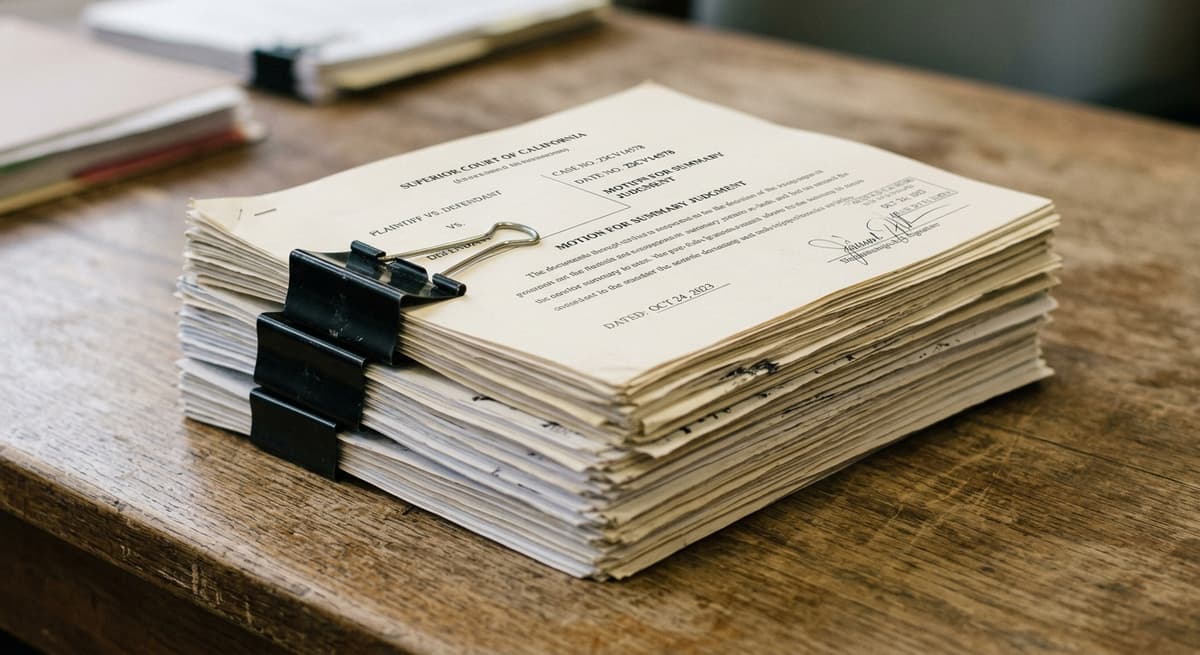
Penalties for Pornography-Related Offenses in Tennessee
| Offense | Tennessee Code | Penalty |
|---|---|---|
| Obscenity, distribute or exhibit (1st offense) | § 39-17-902 | Class A misdemeanor |
| Obscenity, distribute or exhibit (2nd or later offense) | § 39-17-902 | Class E felony |
| Display of material harmful to minors | § 39-17-914 | Class C misdemeanor per day |
| Sexual exploitation of a minor, CSAM possession | § 39-17-1003 | Class D felony (Class C above 50 images, Class B above 100 images) |
| Unlawful exposure (revenge porn) | § 39-17-318 | Class A misdemeanor |
| Indecent exposure | § 39-13-511 | Class B misdemeanor (up to Class E felony with priors/aggravators) |
Practical Considerations
Tennessee's Protect Tennessee Minors Act is in force today, but its constitutionality remains technically unresolved on appeal. It should not be described as upheld on the merits, only as currently enforceable under a stay. Federal record-keeping obligations under 18 U.S.C. § 2257 apply to producers regardless of anything in Tennessee's own statutes. And an employer's device or network policy, or a platform's own terms of service, can restrict access to lawful adult content even where Tennessee law itself does not.
This article provides general legal information about Tennessee law and is not a substitute for legal advice. Consult an attorney for guidance specific to your situation.
Related Tennessee Resources
More Tennessee Laws
- Tennessee Sexting Laws
- Tennessee Deepfake Laws
- Tennessee Surveillance Camera Laws
- Tennessee Statute of Limitations

Frequently Asked Questions
Is it legal to watch porn in Tennessee?
Yes. Private adult viewing and possession of pornography is legal in Tennessee. State obscenity law under Tenn. Code Ann. § 39-17-902 targets producing, distributing, and exhibiting obscene material, not simple private possession.
Does Tennessee require age verification for porn sites?
Yes. Since January 1, 2025, the Protect Tennessee Minors Act has required commercial websites where a substantial portion of the content is obscene or harmful to minors to verify a visitor's age before granting access. The law is in effect under a federal appeals court stay while its constitutionality is still being litigated.
Has a court struck down Tennessee's age-verification law?
No. As of this writing, no federal appeals court has issued a final ruling on the merits of the Protect Tennessee Minors Act. The Sixth Circuit stayed a lower court injunction in January 2025, allowing the law to take effect, but that stay is a procedural ruling pending appeal, not a decision on the law's constitutionality.
What is the penalty for distributing obscene material in Tennessee?
A first offense is a Class A misdemeanor under Tenn. Code Ann. § 39-17-902. A second or later offense is a Class E felony, as is selling obscene material to a K-12 school or using a minor in an obscene production.
Is possessing child sexual abuse material a felony in Tennessee?
Yes. Tenn. Code Ann. § 39-17-1003 makes possession a Class D felony at minimum, rising to a Class C felony above 50 images and a Class B felony above 100 images. A conviction requires sex offender registration, but because this offense is not among the lifetime violent sexual offenses listed in § 40-39-202(31), a registrant may petition to terminate the registration requirement 10 years after supervision ends under § 40-39-207.
What is Tennessee's revenge porn law?
Tenn. Code Ann. § 39-17-318 makes it a Class A misdemeanor to distribute an intimate image of someone, taken under an understanding it would stay private, with intent to cause and actually causing emotional distress. Federal remedies under the 2025 TAKE IT DOWN Act are also available.
Can I be charged with indecent exposure for exposing myself in public in Tennessee?
Yes. Under Tenn. Code Ann. § 39-13-511, indecent exposure is a Class B misdemeanor, escalating to a Class A misdemeanor if the victim is under 13 and to a Class E felony with priors or aggravating factors such as exposure on school property.
Do adult bookstores and strip clubs need a license in Tennessee?
It depends on the county. Tennessee's Adult-Oriented Establishment Registration Act only applies where a county has opted in and created a licensing board. Where adopted, these businesses also face state-set hours of operation restrictions.
Updates
Independently fact-checked against the cited primary sources
The Law Behind This Article
This article rests on the statutory provisions below, held in our own legal record and retrieved from the official source. Tap a section to read the operative text.
Tennessee Code Annotated
§ 39-13-511Indecent exposure.In force
(a)(1) A person commits the offense of indecent exposure who: (A) In a public place or on the private premises of another, or so near thereto as to be seen from the private premises: (i) Intentionally: (a) Exposes the person's genitals or buttocks to another;…
Official text (excerpt) · last checked 2021-05-21 · Read the full text in our law library
Cited in 17 court opinions in our collectionLatest citing opinion in our collection: 2026
Opinions citing this section in our collection:
- State of Tennessee v. Roger F. Johnson (Court of Criminal Appeals of Tennessee 2019)“…present on the property, the offense is a Class E felony. Tenn. Code Ann. § 39-13-511 (2014). The Defendant was indic…”
- John Doe v. Robert E. Cooper, Jr., as Attorney General for State of Tennessee (Court of Appeals of Tennessee 2010)“…primary or secondary residence 4 or 1 Tenn. Code Ann. § 39-13-511(b)(1) states, a person commits the offe…”
- State v. Dominy (Tennessee Supreme Court 1999, 6 S.W.3d 472)“…the Code, including public indecency or indecent exposure, Tenn.Code Ann. § 39-13-511, prostitution, Tenn.Code Ann. § 39-13-5…”
Identified automatically from the court opinions citing this section — not a ranking of which case controls.
§ 39-17-1003Offense of sexual exploitation of a minor.In forcecited in 3 of our articles
(a) It is unlawful for any person to knowingly possess material that includes a minor engaged in: (1) Sexual activity; or (2) Simulated sexual activity that is patently offensive. (b) A person possessing material that violates subsection (a) may be charged in a separate count for each individual…
Official text (excerpt) · last checked 2021-05-21 · Read the full text in our law library
Cited in 54 court opinions in our collectionLatest citing opinion in our collection: 2022
Opinions citing this section in our collection:
- State v. Pickett (Tennessee Supreme Court 2007, 211 S.W.3d 696)“…(c) A violation of this section is a Class E felony. Tenn. Code Ann. § 39-17-1003 (2003) (emphasis added).1 1…”
- State of Tennessee v. Thomas Whited (Tennessee Supreme Court 2016, 506 S.W.3d 416)“…session, distribution, and production of child pornography. Tenn. Code Ann. §§ 39-17-1003 to - 1005; see also State v. Sprunger,…”
- State of Tennessee v. Jared Scott Aguilar (Court of Criminal Appeals of Tennessee 2013, 437 S.W.3d 889)“…ctions of six counts of sexual exploitation of a minor, see T.C.A. § 39-17-1003(a)(1), claiming that the trial court er…”
Identified automatically from the court opinions citing this section — not a ranking of which case controls.
Also relied on in: Tennessee Sexting Laws: Legal Consequences and Penalties, Tennessee Deepfake Laws: AI Images, Voice Cloning & Penalties (2026)
§ 39-17-318Unlawful exposure.In forcecited in 3 of our articles
(a) A person commits unlawful exposure who, with the intent to cause emotional distress, distributes an image of the intimate part or parts of another identifiable person if: (1) The image was photographed or recorded under circumstances where the parties agreed or understood that the image would…
Official text (excerpt) · last checked 2021-05-21 · Read the full text in our law library
Cited in 1 court opinions in our collectionLatest citing opinion in our collection: 2025
Opinions citing this section in our collection:
- State of Tennessee v. Kentrel Moragne (Court of Criminal Appeals of Tennessee 2025)“…mage was a party to the agreement or understanding . . . .” T.C.A. § 39-17-318(a)(1) (Emphasis added).…”
Identified automatically from the court opinions citing this section — not a ranking of which case controls.
§ 39-17-902Producing, importing, preparing, distributing, processing or appearing in obscene material or exhibition — Distribution to or employment of minors.In force
(a) It is unlawful to knowingly produce, send or cause to be sent, or bring or cause to be brought, into this state for sale, distribution, exhibition or display, or in this state to prepare for distribution, publish, print, exhibit, distribute, or offer to distribute, or to possess with intent to…
Official text (excerpt) · last checked 2021-05-21 · Read the full text in our law library
Cited in 3 court opinions in our collectionLatest citing opinion in our collection: 2005
Opinions citing this section in our collection:
- State v. Pendergrass (Court of Criminal Appeals of Tennessee 1999, 13 S.W.3d 389)“…distribution of obscene matter, a Class A misdemeanor. See Tenn. Code Ann. § 39-17-902(a), (c)(1) (1997). Pendergrass was als…”
- State v. Marshall (Tennessee Supreme Court 1993, 859 S.W.2d 289)“…are currently codified, in substantially the same form, as T.C.A. §§ 39-17-902(a) and § 39-17-901(10), respectively.…”
- State of Tennessee v. Richard Allen Butler and State of Tennessee v. Re'Licka DaJuan Allen (Court of Criminal Appeals of Tennessee 2005)“…educational, governmental or other similar justification.” Tenn. Code Ann. § 39-17-902(e) (2003).…”
Identified automatically from the court opinions citing this section — not a ranking of which case controls.
§ 39-17-912[Reserved.]Reservedcited in 2 of our articles
Official text (excerpt) · last checked 2026-09-03 · Read the full text in our law library · Verify at govinfo.gov
Also relied on in: Tennessee Age Verification Law: Protect Tennessee Minors Act Explained
§ 39-17-914Display for sale or rental of material harmful to minors.In force
(a) It is unlawful for a person to display for sale or rental a visual depiction, including a videocassette tape or film, video game, computer software game, or a written representation, including a book, magazine or pamphlet, that contains material harmful to minors anywhere minors are lawfully…
Official text (excerpt) · last checked 2021-05-21 · Read the full text in our law library
Cited in 3 court opinions in our collectionLatest citing opinion in our collection: 2024
Opinions citing this section in our collection:
- Davis-Kidd Booksellers, Inc. v. McWherter (Tennessee Supreme Court 1993, 866 S.W.2d 520)“…harmful to minors anywhere minors are lawfully admitted." Tenn.Code Ann. § 39-17-914(a) (1991) (emphasis added) [1] . The…”
- Friends of George's, Inc. v. Steven Mulroy (Court of Appeals for the Sixth Circuit 2024, 108 F.4th 431)“…ly admitted.” 866 S.W.2d at 522 (emphasis omitted) (quoting Tenn. Code Ann. § 39-17-914(a) (1991)). In the introductory paragra…”
- East Brooks Books, Inc. v. Shelby County, Tennessee (Court of Appeals for the Sixth Circuit 2009)“…of adult material “anywhere minors are lawfully admitted.” Tenn. Code Ann. § 39-17-914; Davis-Kidd Booksellers v. McWherter, 8…”
Identified automatically from the court opinions citing this section — not a ranking of which case controls.
§ 40-39-202Part definitions.In force
As used in this part, unless the context otherwise requires: (1) “Conviction” means a judgment entered by a Tennessee court upon a plea of guilty, a plea of nolo contendere, a finding of guilt by a jury or the court notwithstanding any pending appeal or habeas corpus proceeding arising from the…
Official text (excerpt) · last checked 2021-05-21 · Read the full text in our law library
Cited in 50 court opinions in our collectionLatest citing opinion in our collection: 2025
Opinions citing this section in our collection:
- State of Tennessee v. Carl Allen a/k/a Artie Perkins (Tennessee Supreme Court 2020)“…with the Tennessee department of correction or the board.” Tenn. Code Ann. § 40-39-202(14). 8 Tennessee Cod…”
- State of Tennessee v. Walter Townsend (Court of Criminal Appeals of Tennessee 2017)“…for judicial diversion and excluding sexual battery), with T.C.A § 40-39-202(A)(i)(listing sexual battery as a “sexu…”
- State of Tennessee v. Gregory Scott Barnum (Court of Criminal Appeals of Tennessee 2016)“…g a sexual offense or has another qualifying conviction[.]” Tenn. Code Ann. § 40-39-202(19) (2014) (emphasis added). The Act do…”
Identified automatically from the court opinions citing this section — not a ranking of which case controls.
§ 40-39-207Request for termination of registration requirements — Tolling of reporting period — Review of decisions to deny termination of reporting requirements — Lifetime registration.In force
(a)(1) Except as otherwise provided in subdivision (a)(3), unless a plea was taken in conjunction with § 40-35-313, no sooner than ten (10) years after termination of active supervision on probation, parole, or any other alternative to incarceration, or no sooner than ten (10) years after discharge…
Official text (excerpt) · last checked 2021-05-21 · Read the full text in our law library
Cited in 25 court opinions in our collectionLatest citing opinion in our collection: 2024
Opinions citing this section in our collection:
- State of Tennessee v. Carl Allen a/k/a Artie Perkins (Tennessee Supreme Court 2020)“…ation requirements in the Chancery Court for Shelby County. Tenn. Code Ann. § 40-39-207(g)(1). Although the record on appeal he…”
- Ronald Miller v. Mark Gywn, Director Of The Tennessee Bureau Of Investigation (Court of Appeals of Tennessee 2018)“…rom the SOR. However, in 2014, the General Assembly amended Tenn. Code Ann. § 40-39-207 (2014 & Supp.2017), to require lifetime…”
- Matthew B. Foley v. State of Tennessee (Court of Criminal Appeals of Tennessee 2020)“…10 - available to Petitioner. See T.C.A. § 40-39-207(a); see also State v. Lindsey Seymour,…”
Identified automatically from the court opinions citing this section — not a ranking of which case controls.
§ 7-51-1102Part definitions.In force
As used in this part, unless the context otherwise requires: (1) “Adult bookstore” means a business that offers, as its principal or predominate stock or trade, sexually oriented material, devices, or paraphernalia, whether determined by the total number of sexually oriented materials, devices or…
Official text (excerpt) · last checked 2021-05-21 · Read the full text in our law library
Cited in 9 court opinions in our collectionLatest citing opinion in our collection: 2021
Opinions citing this section in our collection:
- American Show Bar Series, Inc. v. Sullivan County (Court of Appeals of Tennessee 2000, 30 S.W.3d 324)“…each of the provisions challenged by the plaintiffs. A. T.C.A. § 7-51-1102(23) defines “specified anatomical areas…”
- AMERICAN SHOW BAR SERIES v. Sullivan Cty. (Court of Appeals of Tennessee 2000, 30 S.W.3d 324)“…h of the provisions challenged by the plaintiffs. A. T.C.A. § 7-51-1102(23) defines "specified anatomical areas…”
- Gene Lovelace Enterprises, LLC v. City of Knoxville (Court of Appeals of Tennessee 2021)“…d establishment or the providing of adult entertainment[.] Tenn. Code Ann. § 7-51-1102(2), (9). Further, the preamble to the l…”
Identified automatically from the court opinions citing this section — not a ranking of which case controls.
United States Code Title 18
§ 2257Record keeping requirementsIn forcecited in 33 of our articles
Whoever produces any book, magazine, periodical, film, videotape, digital image, digitally- or computer-manipulated image of an actual human being, picture, or other matter which— contains one or more visual depictions made after November 1, 1990 of actual sexually explicit conduct; and is produced in whole or in part with materials which have been mailed or shipped in interstate or foreign commerce, or is shipped or transported or is intended for shipment or transportation in interstate or foreign commerce; shall create and maintain individually identifiable records pertaining to every performer portrayed in such a visual depiction.
Official text (excerpt) · last checked 2026-07-28 · Read the full text in our law library · Verify at uscode.house.gov
Cited in 68 court opinions in our collectionLatest citing opinion in our collection: 2025
In the courts (editorial summary, independently checked):Connection Distributing Co. v. The Honorable Janet Reno (1998) affirmed denial of a preliminary injunction against section 2257. Free Speech Coalition, Inc. v. Attorney General of the United States (2012) reviewed it as content neutral under intermediate scrutiny, a standard the Third Circuit later replaced with strict scrutiny.
Opinions citing this section in our collection:
- United States v. X-Citement Video, Inc. (Supreme Court of the United States 1994, 513 U.S. 64)“…rformers with independent penalties for failure to comply. 18 U. S. C. §§ 2257 (a) and (i) (1988 ed. and Supp. V); Am…”
- Connection Distributing Co. v. The Honorable Janet Reno (Court of Appeals for the Sixth Circuit 1998, 154 F.3d 281)✓A swingers magazine that ran readers' sexually explicit ads challenged section 2257's age record and labeling duties; the court treated the statute as content neutral, found no substantial likelihood of First Amendment success, and affirmed denial of a preliminary injunction.
- Free Speech Coalition, Inc. v. Attorney General of the United States (Court of Appeals for the Third Circuit 2012, 677 F.3d 519)✓Adult film producers, photographers and sex educators challenged section 2257's recordkeeping duties; the court held the statutes content neutral and found they advance protecting children, but vacated dismissal of the First and Fourth Amendment claims for record development.
Identified automatically from the court opinions citing this section — not a ranking of which case controls.
Also relied on in: How to File a DMCA Takedown on Xvideos (2026 Guide), West Virginia Voyeurism Laws: Hidden Cameras and Privacy Violations, Illinois Pornography Laws (2026): Legality & No AV Law Yet
Search our full record of US law — 2.1 million sections, every state + federal →
Sources and References
- Tenn. Code Ann. § 39-17-902 (obscenity, producing/distributing)(law.justia.com)
- Tenn. Code Ann. § 39-17-1003 (sexual exploitation of a minor)(law.justia.com)
- Tenn. Code Ann. § 39-17-914 (display of material harmful to minors)(law.justia.com)
- Tenn. Code Ann. § 39-17-318 (unlawful exposure)(law.justia.com)
- Tenn. Code Ann. § 39-13-511 (indecent exposure/public indecency)(law.justia.com)
- Tenn. Code Ann. §§ 7-51-1101 to -1122 (Adult-Oriented Establishment Registration Act)(law.justia.com)
- Tennessee Attorney General: Sixth Circuit grants stay of injunction against Protect Tennessee Minors Act(tn.gov).gov
- Stanley v. Georgia, 394 U.S. 557 (1969)(law.cornell.edu)