
South Dakota
South Dakota Police Report: How to Get a Crash Report, Incident Report, or Body Camera Footage
Independently fact-checked against primary sources (last audited August 11, 2026). · Law checked current as of August 11, 2026. · 4 primary sources cited on this page. How we verify our legal content
South Dakota is one of only a handful of states where police-filed crash reports are not confidential by default. The South Dakota Codified Laws say so directly: accident reports and the information in them are "not privileged and may not be held confidential." That openness runs through a dedicated online system, safesd.gov, rather than a records request to the investigating agency.
A South Dakota police report actually breaks into two separate channels. A crash report comes from the South Dakota Office of Highway Safety through safesd.gov. An incident report covering a crime, arrest, or general police call comes from the local department or sheriff's office that handled it, under a more discretionary set of public-records rules. Body camera footage in South Dakota has no dedicated access statute at all. This guide covers all three.
Information last verified on 2026-08-10. This article has not yet been reviewed by a licensed lawyer.
Getting a Copy of a South Dakota Crash Report
South Dakota crash reports are ordered through safesd.gov, the South Dakota Office of Highway Safety's online request system (built on the state's sdbuy.primepublicsafety.com platform). Because SDCL 32-34-13 makes crash reports non-confidential, the state does not restrict who can request one the way many other states restrict access to parties and their representatives.
The statute is direct about the confidentiality question. SDCL 32-34-13 provides that "reports pursuant to §§ 32-34-7 to 32-34-12, inclusive, and the information contained in such reports is not privileged and may not be held confidential." South Dakota shares that openness with a small minority of states, including Nevada, New Jersey, Indiana, North Dakota, and New York, against the more common default of confidential-unless-you're-a-party.
Ordering online costs a $4 locate and provide fee plus a $6 online convenience fee, for roughly $10 total. Requesters who prefer to pay by cash, check, or money order can use the mail-in form available on safesd.gov instead. Either way, the request must wait at least 10 days after the date of the crash, and the system needs at least two of the following to locate the report: the crash date, the driver's last name, or the county where the crash happened.
Not every crash produces a report a requester can pull through this system. Safesd.gov will not process requests for crashes on private property, crashes that happened within the last 10 days, crashes invoking South Dakota's Marsy's Law victim-rights protections, or crashes below the state's minimum reporting threshold. Reports themselves are retained for 15 years from the date of the crash.
Because South Dakota's crash reports are not privileged by statute, they still carry personal information about the people involved, driver's license numbers, addresses, and similar data pulled from motor vehicle records. Federal law layers a separate restriction on top of the state's openness: the Driver's Privacy Protection Act, 18 U.S.C. § 2721, limits what personal information tied to a motor vehicle record an agency may disclose to a requester outside a statutorily permitted purpose, regardless of how open the underlying state record is.
Talk to a family-law attorney: free case review
Every case has details a formula cannot capture. Get a free, no-obligation review from a family-law attorney.
Getting a Copy of a South Dakota Police Incident Report
An incident report, covering an arrest, a theft, a disturbance call, or any other police response that is not a traffic crash, is not available through safesd.gov. Requests go directly to the records unit of the department or sheriff's office that responded, and South Dakota's public-records framework treats those records differently from the affirmatively non-confidential crash reports above.
SDCL 1-27-1.5 sets out South Dakota's list of records exempt from mandatory inspection and copying. Subdivision (5) covers "records developed or received by law enforcement agencies and other public bodies charged with duties of investigation or examination of persons, institutions, or businesses, if the records constitute a part of the examination, investigation, intelligence information, citizen complaint or inquiry, informant identification, or strategic or tactical information used in law enforcement training." Note what the text does not say: there is no "active investigation" qualifier in the South Dakota provision, so closing a case does not by itself lift the exemption. Two carve-outs written into the same subdivision run the other way and favor requesters. It does not apply to records "relating to the presence of and amount or concentration of alcohol or drugs in any body fluid of any person," and it does not apply to a 911 recording or a transcript of a 911 recording "if the agency or a court determines that the public interest in disclosure outweighs the interest in nondisclosure."
Subdivision (5) is also not the whole framework. It states that "this law in no way abrogates or changes §§ 23-5-7 and 23-5-11," which leaves SDCL 23-5-11 as the more specific provision governing criminal justice records. That statute exempts confidential criminal justice information and criminal history information from disclosure and lets the lawful custodian withhold them. But it also carries the strongest affirmative hook a South Dakota requester has: information, if maintained, "about calls for service revealing the date, time, and general location and general subject matter of the call is not confidential criminal justice information and shall be released to the public," unless that information contains criminal intelligence, identity information that would jeopardize an ongoing investigation, or identity information associated with a mental health or a chemical dependency or abuse intervention. A records unit that will not even confirm the date, time, general location, and general nature of a call is withholding something the statute says shall be released, and citing 23-5-11 by name is the most useful thing a requester can put in writing.
Beyond that mandatory floor, the subdivision (5) exemption is discretionary rather than absolute. A custodian can release all, part, or none of an incident report depending on whether disclosure would interfere with an ongoing matter, and South Dakota's Marsy's Law victim-rights framework can further limit what identifying information about a victim is released.
Because this exemption is applied case by case, expect the response to vary by department and by the sensitivity of the incident. A closed case with no ongoing prosecution is far more likely to be released in full than an open investigation.
Body Camera Footage in South Dakota
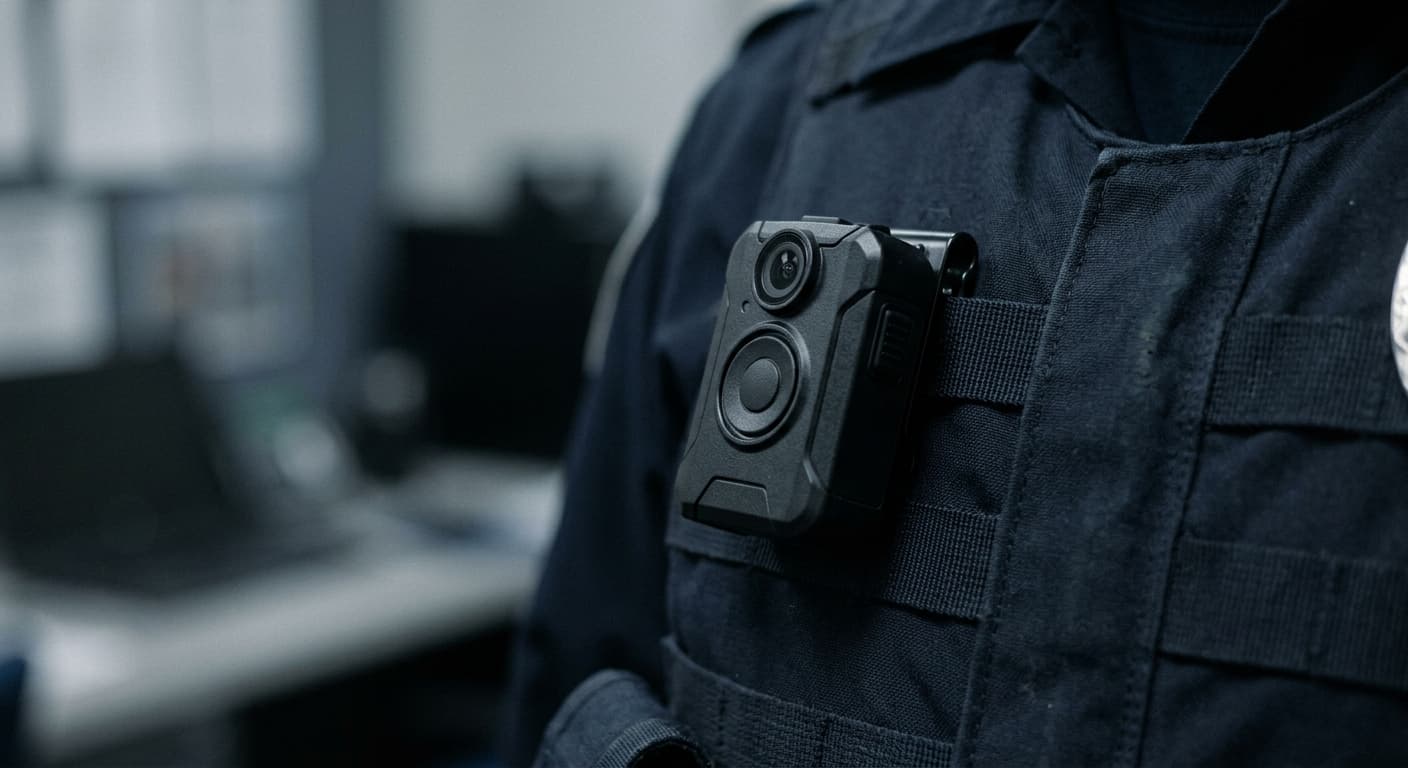
South Dakota has no dedicated body-worn camera statute governing when the public can obtain footage. Requests are handled under the same general law-enforcement records exemption at SDCL 1-27-1.5 that covers incident reports, alongside SDCL 23-5-11 for criminal justice information, or under an individual department's own policy where one exists. That means there is no statewide fee schedule, retention floor, or standard timeline to point to, and the outcome depends heavily on which agency recorded the footage and what it involved.

For the broader legal landscape, see How to Request Body Cam Footage and South Dakota Body Camera Laws.
Related Resources
Police Reports by State covers how every state's crash-report and incident-report channels work. See also How to File a Police Report, How to Read a Police Report, Are Police Reports Public?, South Dakota Body Camera Laws, South Dakota Car Accident Laws, South Dakota Public Records Laws, and South Dakota Court Records.
Disclaimer
This article provides general information about how to request police crash reports, incident reports, and body camera footage in South Dakota. It is not legal advice. Fees, portals, and agency practices change; confirm current details directly with safesd.gov, the responding agency, or a South Dakota attorney before relying on anything here for a specific situation.

Last updated: 2026-08-10. Fees and portals reflect their published status as of August 2026.
Frequently Asked Questions
Is a South Dakota crash report a public record?
Generally yes. SDCL 32-34-13 states that South Dakota accident reports and the information they contain are not privileged and may not be held confidential, unlike the default rule in most states.
How much does a South Dakota crash report cost?
Ordering online through safesd.gov costs a $4 locate and provide fee plus a $6 online convenience fee. Mail requests are paid by cash, check, or money order instead of the online fee.
How soon can I request my South Dakota crash report?
Online requests through safesd.gov cannot be processed until at least 10 days after the crash date. Reports for private-property crashes cannot be processed either.
Can South Dakota police refuse to tell me anything about a call?
Not entirely. SDCL 23-5-11 says information about calls for service revealing the date, time, general location, and general subject matter of the call is not confidential criminal justice information and shall be released to the public, unless it contains criminal intelligence, identity information that would jeopardize an ongoing investigation, or identity information tied to a mental health or chemical dependency or abuse intervention.
Does South Dakota release police body camera footage?
South Dakota has no dedicated body camera access statute. Requests fall under the general law-enforcement records exemption at SDCL 1-27-1.5, SDCL 23-5-11, or the individual agency’s own policy, decided case by case.
How long does South Dakota keep crash reports on file?
South Dakota retains crash reports for 15 years from the date of the crash.
What information do I need to request a South Dakota crash report?
The safesd.gov system requires at least two of the following: the date of the crash, the driver’s last name, or the county where the crash occurred.
Updates
Corrected the description of South Dakota's law enforcement records exemption and added SDCL 23-5-11, which requires agencies to release the date, time, general location, and general subject matter of calls for service.
Independently fact-checked against the cited primary sources; governing law re-checked for recent changes
The Law Behind This Article
This article rests on the statutory provisions below, held in our own legal record and retrieved from the official source. Tap a section to read the operative text.
South Dakota Codified Laws, Chapter 32-34: ACCIDENTS AND ACCIDENT REPORTS
§ 32-34-13Accident reports not privileged--Fees for locating and furnishing reports.In force
Reports pursuant to §§ 32-34-7 to 32-34-12, inclusive, and the information contained in such reports is not privileged and may not be held confidential. The secretary of public safety shall collect four dollars for each request to locate a report on file. The secretary shall furnish to any person requesting a search, at no additional cost, any report located by the search. All sums collected shall be deposited in the state highway fund.
Official text (excerpt) · last checked 2026-09-02 · Read the full text in our law library · Verify at sdlegislature.gov
South Dakota Codified Laws, Chapter 1-27: PUBLIC RECORDS AND FILES
§ 1-27-1.5Records not open to inspection and copying.In forcecited in 4 of our articles
The following records are not subject to §§ 1-27-1, 1-27-1.1, 1-27-1.3, and § 1-27-1.23: (1) Personal information in records regarding any student, prospective student, or former student of any educational institution, if the records are maintained by and in the possession of a public entity, other than routine directory information specified and made public in accordance with 20 U.S.C. § 1232g (January 1, 2009); (2) Medical records, including all records of drug or alcohol testing, treatment, or counseling, other than records of births and deaths.
Official text (excerpt) · last checked 2026-09-03 · Read the full text in our law library · Verify at sdlegislature.gov
Cited in 7 court opinions in our collectionLatest citing opinion in our collection: 2020
In the courts (editorial summary, independently checked):Argus Leader Media v. Hogstad (2017) read section 1-27-1.5(20) to cover a contract only if its parties are in a civil or criminal action, so a city settlement contract that declared itself confidential stayed open. Mercer v. South Dakota Attorney General Office (2015) applied subdivision (5) to death investigation records.
Opinions citing this section in our collection:
- Mercer v. South Dakota Attorney General Office (South Dakota Supreme Court 2015, 864 N.W.2d 299)✓A pro se requester sought state records on the death of a former state tourism secretary; the court held section 1-27-1.5(5) exempts law enforcement investigation records from disclosure, so the Attorney General could withhold them and no redacted alternative was required.
- In Re the Discipline of Tornow (South Dakota Supreme Court 2013, 2013 S.D. 61)“…ic record “based on the clear and unambiguous provisions of SDCL 1-27-1.5(12).” Tornow characterized the phone ca…”
- Argus Leader Media v. Hogstad (South Dakota Supreme Court 2017, 902 N.W.2d 778)“…emier Center. The city attorney denied the request, citing SDCL 1-27-1.5(20) and the agreement’s confidentiality…”
Identified automatically from the court opinions citing this section — not a ranking of which case controls.
Also relied on in: South Dakota Recording Laws (2026): One-Party Consent Rules, South Dakota Police Body Camera Laws: No Mandate, No Access Rule, Are Autopsy Reports Public in South Dakota? (2026)
United States Code Title 18
§ 2721Prohibition on release and use of certain personal information from State motor vehicle recordsIn forcecited in 11 of our articles
A State department of motor vehicles, and any officer, employee, or contractor thereof, shall not knowingly disclose or otherwise make available to any person or entity: personal information, as defined in 18 U.S.C. 2725(3), about any individual obtained by the department in connection with a motor vehicle record, except as provided in subsection (b) of this section; or highly restricted personal information, as defined in 18 U.S.C. 2725(4), about any individual obtained by the department in connection with a motor vehicle record, without the express consent of the person to whom such information applies, except uses permitted in subsections (b)(1), (b)(4), (b)(6), and (b)(9): Provided, That subsection (a)(2) shall not in any way affect the use of organ donation information on an individual’s driver’s license or affect the administration of organ donation initiatives in the States.
Official text (excerpt) · last checked 2026-07-28 · Read the full text in our law library · Verify at uscode.house.gov
Cited in 377 court opinions in our collectionLatest citing opinion in our collection: 2026
In the courts (editorial summary, independently checked):Maracich v. Spears (2013) held an attorney's solicitation of clients is not a permissible purpose under the DPPA litigation exception in 2721(b)(4). Reno v. Condon (2000) upheld the statute's restrictions on disclosing state motor vehicle records as a valid exercise of the commerce power that does not conscript state officers.
Opinions citing this section in our collection:
- Maracich v. Spears (Supreme Court of the United States 2013, 570 U.S. 48)✓Lawyers used South Carolina DMV records to mail over 34,000 car buyers letters recruiting them as clients; the Supreme Court held that sending communications with the predominant purpose of solicitation is not a use exempt under the section 2721(b)(4) litigation exception.
- Reno v. Condon (Supreme Court of the United States 2000, 528 U.S. 141)✓South Carolina, whose law let almost anyone buy DMV records, argued the federal driver-privacy law commandeered the states; the Supreme Court held section 2721 regulates states as owners of databases and upheld it under the Commerce Clause.
- Pichler v. UNITE (Court of Appeals for the Third Circuit 2008)✓Union organizers copied license plates from a company parking lot and pulled the owners' DMV records to make house calls; the Third Circuit held union organizing is not among the permissible uses in section 2721(b), and a parallel lawful purpose does not excuse it.
Identified automatically from the court opinions citing this section — not a ranking of which case controls.
Also relied on in: How to Request Body Cam Footage: State Laws and the Request Process, Police Reports by State: How to Get a Copy, What They Cost, and What's Public, Are Police Reports Public Record? What's Open and What's Not
Search our full record of US law — 2.1 million sections, every state + federal →
Sources and References
- SDCL § 32-34-13, Accident reports not privileged; fees for locating and furnishing reports(sdlegislature.gov).gov
- SDCL § 1-27-1.5, Records not open to inspection and copying(sdlegislature.gov).gov
- safesd.gov, South Dakota Office of Highway Safety crash report request system(safesd.gov).gov
- 18 U.S.C. § 2721, Driver's Privacy Protection Act (prohibition on release of personal information from motor vehicle records)(uscode.house.gov).gov
- SDCL § 23-5-11, Confidential criminal justice information exempt; calls for service released to the public(sdlegislature.gov)