
Illinois
Illinois Police Reports: Crash Reports, Incident Reports, and Bodycam Footage
Independently fact-checked against primary sources (last audited August 11, 2026). · Law checked current as of August 11, 2026. · 6 primary sources cited on this page. How we verify our legal content
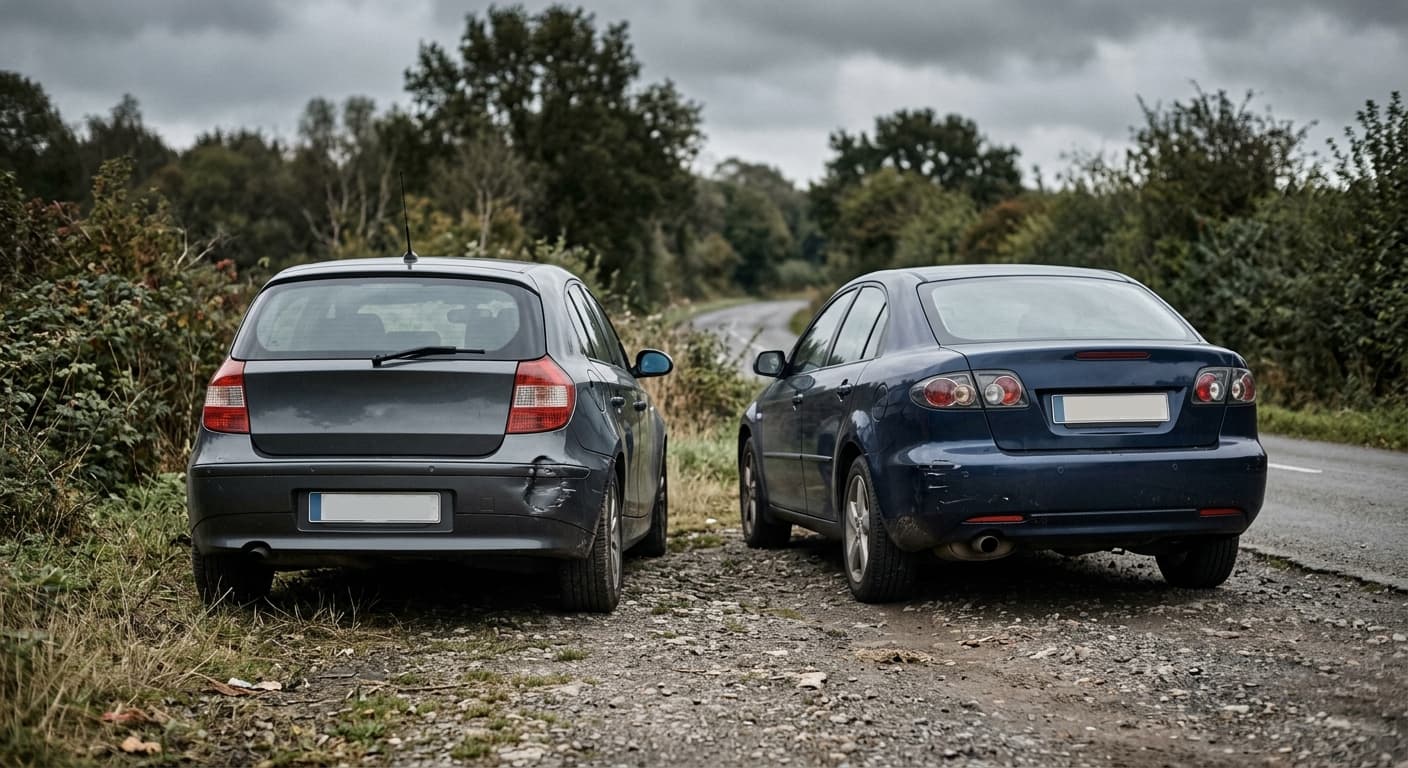
Illinois runs a genuinely two-tier system for crash reports. The copy filed up to the state, held by the Illinois Department of Transportation, is confidential by default and usable only for statistical purposes. The copy held by the local agency that actually investigated the crash is carved back out of Illinois's general public records law enforcement exemption and must be disclosed. Illinois also runs one of the most detailed dedicated body camera statutes in the country, the Law Enforcement Officer-Worn Body Camera Act.
This guide covers Illinois's two crash report purchase channels, the two-tier confidentiality structure behind them, the local incident report process, and the bodycam act's disclosure rules.
Information last verified on 2026-08-11. This article has not yet been reviewed by a licensed lawyer.
How to Get a Copy of an Illinois Crash Report
Illinois runs two separate purchase channels depending on which agency investigated. For a crash investigated by the Illinois State Police, use the ISP E-Pay portal at isp.illinois.gov/CrashReports/EPay, but only after checking that the crash report's "Investigated By" box actually says Illinois State Police; ISP itself notes that it "rarely handles traffic crashes occurring on municipal streets." ISP E-Pay charges what it calls "the statutorily set fee of $5.00" plus a service fee of 2.35 percent with a $1.00 minimum for a card transaction, allows up to 30 reports per transaction, and can take 10 or more business days to process since requests are worked in the order received. Every report sold through E-Pay is a redacted version under Illinois FOIA guidelines.
The statute behind that $5.00 figure is 625 ILCS 5/11-416, and it sets two tiers, not one. The Illinois State Police "shall be paid a fee of $5 for each such copy, or in the case of a crash which was investigated by a crash reconstruction officer or crash reconstruction team, a fee of $20 shall be paid." The same ceilings apply to everyone else: other State law enforcement agencies and law enforcement agencies of local authorities "may receive a fee not to exceed $5 for each copy," or not to exceed $20 for a reconstruction-investigated crash. So the report from a serious-injury or fatality crash, the kind a reconstruction team works, can lawfully cost $20 rather than $5.
For a crash investigated by a local agency, which is most Illinois crashes, BuyCrash is the purchase channel instead. Illinois also lets drivers involved in certain qualifying minor crashes, single-vehicle, property-damage-only, no injuries, occurring on an Interstate, US, or Illinois route, complete their crash report entirely online through isp.illinois.gov/CrashReports at no cost.
A Freedom of Information Act request to the local investigating agency is a genuine alternative to buying the report through BuyCrash, because 5 ILCS 140/7(1)(d)(iv) requires local agencies to release crash reports. It is not automatically a free one. The Illinois FOIA fee provision, 5 ILCS 140/6(b), opens with "Except when a fee is otherwise fixed by statute" before granting the first 50 black and white, letter or legal sized copies at no charge, and 625 ILCS 5/11-416 is exactly such a statute, so the agency can still charge up to $5, or up to $20 for a reconstruction-investigated crash, on a FOIA request for a paper copy. What does defeat the statutory copy fee is asking for the record in electronic format: under 5 ILCS 140/6(a), "statutory fees applicable to copies of public records when furnished in a paper format shall not be applicable to those records when furnished in an electronic format," except to the extent the General Assembly expressly provides otherwise.
Illinois's Two-Tier Crash Report Confidentiality
Illinois's crash report confidentiality runs on two levels, and understanding both explains why a "confidential" state statute and an open local report can both be true at once. Section 11-412 of the Illinois Vehicle Code makes the Department of Transportation's own central-repository copy "for the confidential use of the Department and the Secretary of State," usable to third parties only for statistical or analytical purposes, and exempt from FOIA at that level. But the Illinois Freedom of Information Act's general law enforcement exemption, 5 ILCS 140/7(1)(d)(iv), specifically carves crash reports back out: "the identities of witnesses to traffic crashes, traffic crash reports, and rescue reports shall be provided by agencies of local government, except when disclosure would interfere with an active criminal investigation." In short, the state's own central copy stays confidential; the local agency's copy of that same report does not.
Talk to a family-law attorney: free case review
Every case has details a formula cannot capture. Get a free, no-obligation review from a family-law attorney.
How to Get an Illinois Police Incident Report
Incident reports unrelated to a crash are requested from the responding agency under the Illinois Freedom of Information Act, 5 ILCS 140. Illinois FOIA law sets the same response clock for every public body in the state, including Chicago Police Department: under 5 ILCS 140/3(d), a public body must comply with or deny a request within 5 business days of receipt, and 5 ILCS 140/3(e) allows the public body to extend that window by up to 5 more business days under specified circumstances. Chicago PD's Freedom of Information Section has reportedly accepted requests by mail, fax, or online submission, though this guide could not independently confirm those intake channels on the department's own site. Illinois's general FOIA law enforcement exemption at 5 ILCS 140/7(1)(d) covers records compiled for administrative enforcement and law enforcement purposes, but, as described above, it does not shield crash reports or the identities of crash witnesses from local agencies.

Body Camera Footage in Illinois
Illinois has one of the most detailed dedicated bodycam statutes among the states, the Law Enforcement Officer-Worn Body Camera Act, 50 ILCS 706/10-20. The default rule is that a bodycam recording is not subject to FOIA disclosure. That default flips for any recording that gets flagged, meaning it relates to a complaint, a firearm discharge, a use of force, an arrest or detention, or a death or bodily harm; a flagged recording must be disclosed, unless the subject has a reasonable expectation of privacy and is a victim or witness rather than someone arrested, in which case the agency first needs written permission from that subject or their legal representative. Separately, the subject of the encounter, their attorney, or the officer involved or their legal representative can always obtain the recording on request. Any recording disclosed under the Act must be redacted to remove bystanders who are not the officer, the subject, or otherwise directly involved. The Act also sets activation rules, including a 30-second pre-event buffer and a 10-hour minimum storage capacity requirement. For the state's fuller legal picture, see Illinois's body camera laws.
Corrections and Practical Notes
No dedicated correction process for an Illinois crash report was located for this guide. If a report contains an error, contact the investigating agency, whether ISP or a local department, directly.

Related Resources
Police Reports by State covers the full 50-state picture. See also how to file a police report, how to read a police report, are police reports public, how to request body camera footage, Illinois bodycam laws, Illinois car accident laws, Illinois public records laws, and Illinois court records.
Disclaimer
This article provides general information about Illinois's police report and public records process. It is not legal advice. Fees, portals, and eligibility rules change; verify current details with the agencies named above or a licensed Illinois attorney before relying on anything here for a specific situation.

Last updated: 2026-08-11. Fees and portals reflect their published status as of August 2026.
Frequently Asked Questions
Where do I buy an Illinois crash report?
The Illinois State Police E-Pay portal if ISP itself investigated the crash, or BuyCrash if a local agency investigated, which covers most Illinois crashes.
How much does an Illinois State Police crash report cost?
Under 625 ILCS 5/11-416 the copy fee is $5.00 per report, or $20 if the crash was investigated by a crash reconstruction officer or crash reconstruction team. ISP E-Pay adds a card service fee of 2.35 percent with a $1.00 minimum.
Why is my Illinois crash report both confidential and public?
The Illinois Department of Transportation's central-repository copy is confidential under 625 ILCS 5/11-412, but the local investigating agency's own copy of the same report is carved out of the state's FOIA law enforcement exemption and must be disclosed.
Can I get an Illinois crash report for free?
Not automatically. Local agencies must disclose crash reports and crash-witness identities under 5 ILCS 140/7(1)(d)(iv), but disclosure is not the same as free: 5 ILCS 140/6(b) grants its 50-free-pages floor only where a fee is not otherwise fixed by statute, and 625 ILCS 5/11-416 fixes one, so a paper copy can still cost up to $5, or up to $20 for a reconstruction-investigated crash. Requesting the report in electronic format is what defeats the paper-copy statutory fee, under 5 ILCS 140/6(a).
How does Illinois's body camera disclosure law work?
Under the Law Enforcement Officer-Worn Body Camera Act, footage is closed to FOIA by default, but a recording flagged for a complaint, firearm discharge, use of force, arrest, or death or bodily harm must generally be disclosed, subject to a privacy exception for uninvolved victims and witnesses.
Updates
Corrected the crash report cost guidance: named the fee statute 625 ILCS 5/11-416 and its second $20 tier for reconstruction-investigated crashes, and replaced the claim that a FOIA request makes a local crash report free with the actual rule that the statutory copy fee survives a paper-copy request and only an electronic-format request defeats it.
Independently fact-checked against the cited primary sources; governing law re-checked for recent changes
The Law Behind This Article
This article rests on the statutory provisions below, held in our own legal record and retrieved from the official source. Tap a section to read the operative text.
Illinois Compiled Statutes Chapter 5, Act 140 (Freedom of Information Act)
§ 3(a) Each public body shall make available to any person for inspection or copying all public records, except as otherwise provided in Sections 7 and 8.5 of this ActIn forcecited in 3 of our articles
Notwithstanding any other law, a public body may not grant to any person or entity, whether by contract, license, or otherwise, the exclusive right to access and disseminate any public record as defined in this Act. (b) Subject to the fee provisions of Section 6 of this Act, each public body shall promptly provide, to any person who submits a request, a copy of any public record required to be disclosed by subsection (a) of this Section and shall certify such copy if so requested. (c) Requests for inspection or copies shall be made in writing and directed to the public body. Written requests may be submitted to a public body via personal delivery, mail, telefax, or other means available to the public body. Electronic requests under this Section must appear in their entirety within the body of the electronic submission. As a cybersecurity measure, no public body shall be required to open electronically attached files or hyperlinks to view or access details of a request.
Official text (excerpt) · last checked 2026-09-03 · Read the full text in our law library · Verify at ilga.gov
Also relied on in: Illinois Public Records Laws: The Illinois FOIA (5 ILCS 140) Explained, Are Autopsy Reports Public in Illinois? (2026 Guide)
§ 7ExemptionsIn force
(1) When a request is made to inspect or copy a public record that contains information that is exempt from disclosure under this Section, but also contains information that is not exempt from disclosure, the public body may elect to redact the information that is exempt. The public body shall make the remaining information available for inspection and copying. Subject to this requirement, the following shall be exempt from inspection and copying: (a) Records created or compiled by a State public defender agency or commission subject to the State Public Defender Act that contain: individual client identity; individual case file information; individual investigation records and other records that are otherwise subject to attorney-client privilege; records that would not be discoverable in litigation; records under Section 2.15; training materials; records related to attorney consultation and representation strategy; or any of the above concerning clients of county public defenders or other defender agencies and firms. This exclusion does not apply to deidentified, aggregated, administrative records, such as general case processing and workload information.
Official text (excerpt) · last checked 2026-07-29 · Read the full text in our law library · Verify at ilga.gov
Cited in 203 court opinions in our collectionLatest citing opinion in our collection: 2026
Opinions citing this section in our collection:
- Southern Illinoisan v. Illinois Department of Public Health (Illinois Supreme Court 2006, 218 Ill. 2d 390)“…sed this denial on sections 7(l)(a) and (l)(b) of the FOIA (5 ILCS 140/7(l)(a), (l)(b) (West 1998)), which prote…”
- Lieber v. Board of Trustees of Southern Illinois University (Illinois Supreme Court 1997)“…law was clearly meant to invoke section 7(l)(a) of the Act (5 ILCS 140/7(l)(a) (West 1994)), which exempts from…”
- Illinois Education Ass'n v. Illinois State Board of Education (Illinois Supreme Court 2003)“…mpt from disclosure pursuant to section 7(l)(n) of the Act (5 ILCS 140/7(l)(n) (West 2000)). The IEA appealed, a…”
Identified automatically from the court opinions citing this section — not a ranking of which case controls.
Illinois Compiled Statutes Chapter 625, Act 5 (Illinois Vehicle Code)
§ 11-412Motor vehicle crash reports confidentialIn force
(a) All required written motor vehicle crash reports and supplemental reports shall be without prejudice to the individual so reporting and shall be for the confidential use of the Department and the Secretary of State and, in the case of second division vehicles operated under certificate of convenience and necessity issued by the Illinois Commerce Commission, of the Commission, except that the Administrator or the Secretary of State or the Commission may disclose the identity of a person involved in a motor vehicle crash when such identity is not otherwise known or when such person denies his presence at such motor vehicle crash and the Department shall disclose the identity of the insurance carrier, if any, upon demand. The Secretary of State may also disclose notations of crash involvement maintained on individual driving records.
Official text (excerpt) · last checked 2026-07-29 · Read the full text in our law library · Verify at ilga.gov
Cited in 2 court opinions in our collectionLatest citing opinion in our collection: 2020
Opinions citing this section in our collection:
- TTX Co. v. Whitley (Appellate Court of Illinois 1998)“…hat the confidential documents were inadmissible in court. 625 ILCS 5/11-412 (West 1994); 735 ILCS 5/8-2102 (West 19…”
- Mancini Law Group, P.C. v. Schaumburg Police Department (Appellate Court of Illinois 2020, 2020 IL App (1st) 191131-U)“…nt reports in its possession, subject to narrow exceptions. 625 ILCS 5/11-412 (West 2018); Arnold v. Thurston, 240 Il…”
Identified automatically from the court opinions citing this section — not a ranking of which case controls.
Illinois Compiled Statutes Chapter 50, Act 706 (Law Enforcement Officer-Worn Body Camera Act)
§ 10-20RequirementsIn forcecited in 2 of our articles
(a) The Board shall develop basic guidelines for the use of officer-worn body cameras by law enforcement agencies. The guidelines developed by the Board shall be the basis for the written policy which must be adopted by each law enforcement agency which employs the use of officer-worn body cameras. The written policy adopted by the law enforcement agency must include, at a minimum, all of the following: (1) Cameras must be equipped with pre-event recording, capable of recording at least the 30 seconds prior to camera activation, unless the officer-worn body camera was purchased and acquired by the law enforcement agency prior to July 1, 2015. (2) Cameras must be capable of recording for a period of 10 hours or more, unless the officer-worn body camera was purchased and acquired by the law enforcement agency prior to July 1, 2015. (3) Cameras must be turned on at all times when the officer is in uniform and is responding to calls for service or engaged in any law enforcement-related encounter or activity that occurs while the officer is on duty. (A) If exigent circumstances exist which prevent the camera from being turned on, the camera must be turned on as soon as practicable.
Official text (excerpt) · last checked 2026-08-31 · Read the full text in our law library · Verify at ilga.gov
Cited in 8 court opinions in our collectionLatest citing opinion in our collection: 2025
In the courts (editorial summary, independently checked):NBC Subsidiary v. Chicago Police Department (2025) found, on a ground it called unnecessary, that witnesses and a victim on a public street had a reasonable expectation of privacy under 10-20(b)(1), so release needed written permission. People v. Dunn (2023) applied 10-20(a)(3)'s activation duty but denied relief for lack of prejudice.
Opinions citing this section in our collection:
- NBC Subsidiary v. Chicago Police Department (Appellate Court of Illinois 2025, 2025 IL App (1st) 240629)✓A TV station sought body camera video of a fatal hit-and-run under FOIA; the court affirmed on another FOIA exemption, then held as an added ground that the witnesses and the victim filmed in an ambulance had a reasonable expectation of privacy under section 10-20(b)(1).
- NBC Subsidiary (WMAQ-TV) LLC v. Chicago Police Department (Appellate Court of Illinois 2025, 2025 IL App (1st) 240629-U)“…Enforcement Officer-Worn Body Camera Act (Body Camera Act) (50 ILCS 706/10-20(b) (West 2022)), and (3) addition…”
- Lambert v. City of Chicago (Appellate Court of Illinois 2023, 2023 IL App (1st) 220265-U)“…r the Illinois Body-Worn Camera Act (the Body Camera Act) (50 ILCS 706/10-20(b) (West 2020)); and (2) that its disc…”
Identified automatically from the court opinions citing this section — not a ranking of which case controls.
Also relied on in: Illinois Police Body Camera Laws: Mandate & Retention (2026)
Search our full record of US law — 2.1 million sections, every state + federal →
Sources and References
- 5 ILCS 140/3, Freedom of Information Act, time to respond(ilga.gov).gov
- 625 ILCS 5/11-412, Motor vehicle crash reports confidential(ilga.gov).gov
- 5 ILCS 140/7, Freedom of Information Act exemptions(ilga.gov).gov
- 50 ILCS 706/10-20, Law Enforcement Officer-Worn Body Camera Act, Requirements(ilga.gov).gov
- Illinois State Police, Crash Reports E-Pay portal(isp.illinois.gov).gov
- Illinois State Police, Crash Reports(isp.illinois.gov).gov
- 625 ILCS 5/11-416, Copies of crash reports, $5 and $20 fee tiers(ilga.gov)
- 5 ILCS 140/6, Freedom of Information Act, authority to charge fees(ilga.gov)