
North Carolina
North Carolina Police Body Camera Laws: Access & Court Petitions
Independently fact-checked against primary sources (last audited August 20, 2026). · Reviewed by the RecordingLaw editorial team. · Law checked current as of August 20, 2026. · 1 primary source cited on this page. How we verify our legal content
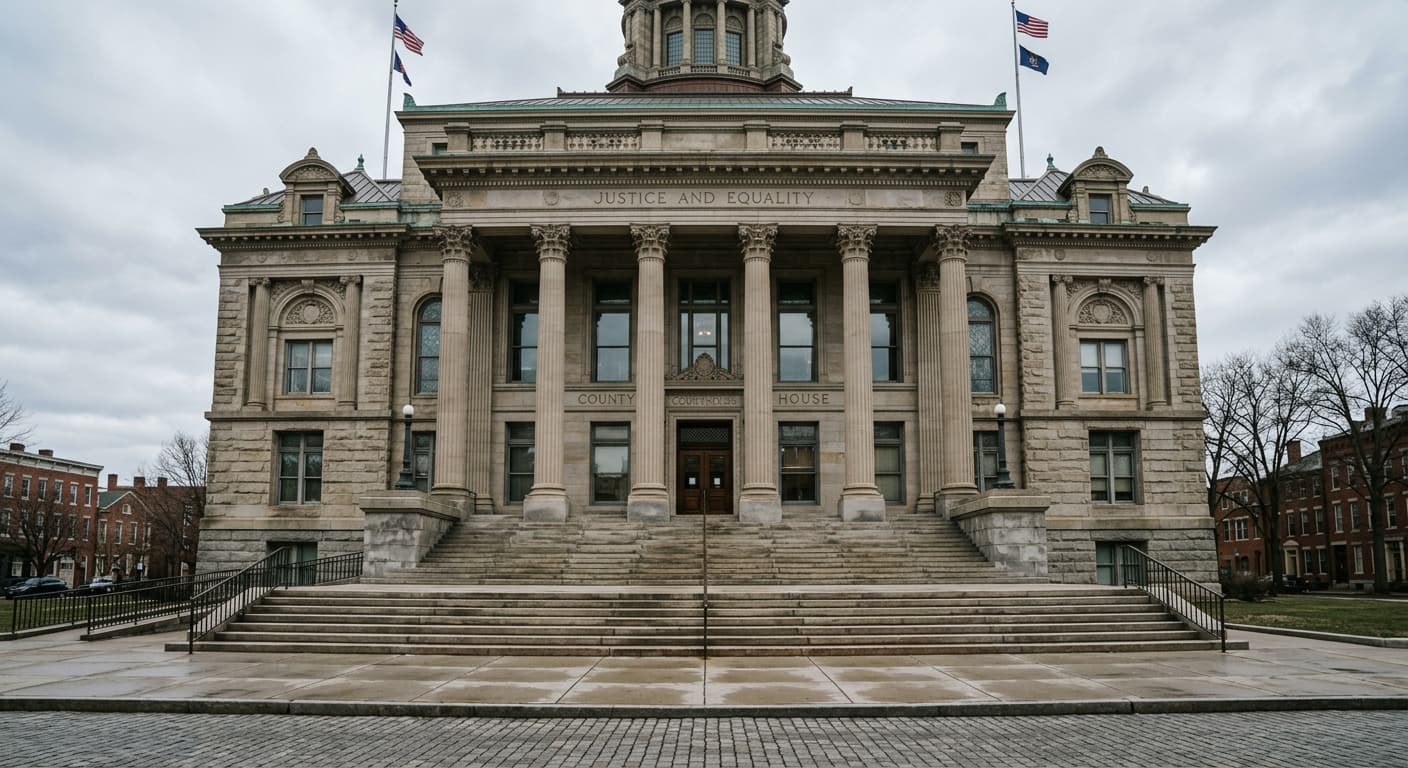
North Carolina law enforcement recordings, including body-worn camera and dashboard camera footage, are not public records. Under N.C. Gen. Stat. § 132-1.4A, a requester who wants a copy generally has to file a superior court petition, and a court can order release only after weighing specific statutory factors.
This guide is part of our Police Bodycam Laws by State series.
Jurisdiction scope: This article addresses North Carolina state law governing police body-worn and dashboard camera recordings: the public-records exclusion, the disclosure and release procedures, and the superior court petition process under N.C. Gen. Stat. § 132-1.4A. It does not address a civilian's right to record law enforcement, which is covered separately in our guide to recording laws.
Is North Carolina police bodycam footage a public record?
No. N.C. Gen. Stat. § 132-1.4A, enacted in 2016 through House Bill 972 and signed by then-Governor Pat McCrory, states that a recording made by a law enforcement agency's body-worn camera or dashboard camera is not a public record under G.S. 132-1, and it is not a personnel record either, according to the North Carolina General Assembly's official statute text. Before 2016, agencies already withheld most recordings under the general law enforcement records exception in G.S. 132-1.4, according to Coates' Canons; the new law replaced that discretionary exemption with an explicit rule and a dedicated request process, which the National Freedom of Information Coalition has flagged as one of the more restrictive frameworks in the country. The statute splits access into two tracks: disclosure, a limited right to view footage, and release, obtaining an actual copy.

Who can request to view a North Carolina bodycam recording?
A limited set of people can ask an agency to let them view, though not necessarily copy, a recording: the person whose image or voice appears in it, a personal representative of an adult who consents, a parent or guardian of a minor depicted, a representative of an incapacitated person, and the personal representative of a deceased person's estate. The requester must submit the request in writing, giving the agency's custodian the date and approximate time of the recorded activity, or otherwise describing it with enough detail to identify the specific recording. The agency then decides, in its own discretion, whether to allow disclosure, and it can permit viewing of only the portions relevant to that person's own involvement while withholding the rest. If the agency denies the request, the person can appeal to superior court, where a judge reviews whether the agency abused its discretion in refusing to let the person view the footage, according to the Robinson Firm's summary of the disclosure process, RF Law Firm.
How do you get a copy of North Carolina bodycam footage?
An actual copy is not available just by asking. Either the custodial agency itself, or any person seeking release, including someone who does not qualify for the disclosure track above, may file a civil action in superior court in a county where any part of the recording was made, stating the date and approximate time of the activity or otherwise identifying it with reasonable particularity. The court can conduct an in-camera review and, in deciding whether to order release, must weigh statutory standards including whether release advances a compelling public interest, whether the footage holds other confidential information, its evidentiary value in a pending proceeding, the risk of harm to a person's reputation or safety, and whether release would jeopardize an active investigation, according to RF Law Firm's breakdown of the release procedure. Even a favorable order can limit release to only the relevant portions, and the statute separately bars a person allowed to view footage from recording or copying what they see.
One channel sits outside that petition process. Subsection (h) of the statute directs a custodial agency to disclose or release a recording to the district attorney for review of potential criminal charges, to comply with discovery requirements in a criminal prosecution, for use in criminal proceedings in district court, or for any other law enforcement purpose, and it separately allows release for training, for use inside the agency, to another agency, for suspect identification or apprehension, and to locate a missing or abducted person. That matters most in felony cases: North Carolina's criminal discovery article applies to cases within the original jurisdiction of the superior court and requires the State, on a defendant's motion, to make available the complete files of the law enforcement agencies involved, according to the General Assembly's text of G.S. 15A-901 and G.S. 15A-903. A defendant in that posture ordinarily receives bodycam footage from the prosecutor as part of discovery rather than by filing a petition. The petition route described in this section is what governs the general public, journalists, and other requesters who have no discovery channel of their own.
What happens when footage shows a death or serious injury?
The statute sets a faster process for the highest-stakes footage. When a recording depicts a death or serious bodily injury, an eligible requester submits a notarized request, the agency must file a petition in superior court within 3 business days, and the court must issue an order, granting disclosure in full, with redactions, deferring it, or denying it, no later than 7 business days after filing. Notice goes to the head of the custodial agency, any officer depicted, the investigating agency if different, the district attorney, and the original requester, so each can be heard before the court rules.
| Track | Who can use it | What it gets you | Deciding standard |
|---|---|---|---|
| Disclosure (viewing) | Person depicted, or representative of a minor, incapacitated adult, or deceased person's estate | View relevant portions, no copy | Agency discretion; appeal reviewed for abuse of discretion |
| Release (copy) | Custodial agency or any requester | An actual copy, in whole or part | Compelling public interest and related statutory factors, weighed by a superior court judge |
| Death or serious injury | Same eligible requesters, expedited | Court order within 7 business days of the petition | Same statutory factors, on an accelerated timeline |
| Law enforcement channel, subsection (h) | District attorney, and other agencies for listed purposes | Recording released to the DA, reaching defendants through criminal discovery | Mandatory for the listed prosecutorial purposes; no petition needed |
Does North Carolina require police to wear body cameras?
No. North Carolina has no statewide law requiring departments to purchase or issue body cameras, unlike a small group of states such as Colorado, Connecticut, Illinois, Maryland, New Jersey, New Mexico, and South Carolina that mandate use statewide. Adoption, budget, and activation policy are set locally, and each agency that uses body-worn or dashboard cameras must adopt its own written policy. G.S. 132-1.4A does not itself fix a retention period; it requires agencies to retain recordings at least as long as the schedule maintained by the North Carolina Department of Natural and Cultural Resources, Division of Archives and Records, requires. In that schedule, Standard 20, item 20.41 covers law enforcement audio and video recordings and instructs agencies to destroy them in office after 30 days if not made part of a case file, and to follow the felony or misdemeanor case file instructions if they are, according to the state's 2021 Program Records Schedule: Local Government Agencies.
State v. Chemuti: the NC Supreme Court closes the subpoena shortcut
A 2025 ruling shows how strictly North Carolina courts enforce the petition structure. Mooresville police charged Charlotte Chemuti in October 2023 with resisting a public officer. In December 2023, her attorney served a Rule 45 subpoena in district court seeking the officers' bodycam video of her arrest, and a trial judge ordered Mooresville to comply. The town appealed, and while the Court of Appeals sided with Chemuti in October 2024, the North Carolina Supreme Court reversed in a 5-2 decision on October 17, 2025, according to the Carolina Journal's coverage. Writing for the majority, Justice Richard Dietz held that G.S. 132-1.4A's petition procedure supplants a subpoena and is the exclusive means to obtain these recordings, even for a defendant seeking footage of their own arrest; Justice Allison Riggs dissented, arguing the text does not clearly require a court order in every case. The U.S. Supreme Court declined to review the ruling in March 2026.
Read the holding for what it decides: a requester cannot compel a recording from the agency directly by subpoena, so the superior court petition is the route for the general public and for any defendant without a discovery channel. It does not touch subsection (h), which still requires the agency to hand recordings to the district attorney, including to comply with criminal discovery. Chemuti's own case was a district court misdemeanor prosecution, outside the discovery article that covers cases in the original jurisdiction of the superior court, which is why the subpoena was the avenue her attorney reached for.
Is it illegal to record police in North Carolina?
That is a different question from the one this page answers. North Carolina generally recognizes a person's right to record an on-duty officer performing public duties in a public place, as covered in our separate guide to recording laws linked above. The rules on this page apply only to footage the police themselves record and to the public's ability to later obtain a copy of it.
More North Carolina Laws
Frequently Asked Questions
Is North Carolina police bodycam footage a public record?
No. N.C. Gen. Stat. § 132-1.4A expressly states that law enforcement body-worn camera and dashboard camera recordings are not public records, and access instead runs through the statute's disclosure and release procedures.
How do I get a copy of North Carolina police bodycam footage?
As a member of the public you must file a civil petition in superior court in a county where the recording was made. The court decides whether to order release after weighing statutory factors, including whether disclosure serves a compelling public interest. A criminal defendant in a felony case is in a different position, because subsection (h) requires the agency to release recordings to the district attorney to meet discovery obligations.
Can I just view bodycam footage of my own arrest without going to court?
You can submit a written request to the agency if you are the person depicted, but the agency decides in its discretion whether to allow viewing. A denial can be appealed to superior court, where the judge asks whether the agency abused its discretion.
How fast does North Carolina release bodycam footage of a death or serious injury?
On an expedited track. After a notarized request, the agency must petition superior court within 3 business days, and the court must rule within 7 business days of the petition being filed.
Can a criminal defendant subpoena bodycam footage in North Carolina?
No. The North Carolina Supreme Court held in State v. Chemuti (Oct. 17, 2025) that a Rule 45 subpoena cannot be used to compel a recording from the agency, and that G.S. 132-1.4A's petition procedure is the method for doing so. Footage can still reach a defendant another way: subsection (h) requires the agency to release recordings to the district attorney, including to comply with discovery requirements in a criminal prosecution.
Does North Carolina require every police department to use body cameras?
No. North Carolina has no statewide body camera mandate. Adoption and policy are set locally by each agency, unlike states such as Colorado or South Carolina that require statewide use.
How long must North Carolina agencies keep bodycam footage?
G.S. 132-1.4A does not set its own fixed number of days. It requires agencies to follow the records retention and disposition schedule maintained by the Department of Natural and Cultural Resources. Item 20.41 of that schedule tells agencies to destroy recordings in office after 30 days if they are not made part of a case file, and to follow the felony or misdemeanor case file schedule if they are.
Is it illegal to record on-duty police in North Carolina?
No, recording an on-duty officer performing public duties in a public place is generally protected. That is a separate question from public access to police-recorded bodycam footage covered on this page.
Updates
Added the G.S. 132-1.4A(h) law enforcement channel, under which an agency must release recordings to the district attorney to meet criminal discovery obligations, and corrected the source for the 30-day retention rule to the state Archives 2021 records schedule.
Independently fact-checked against the cited primary sources; governing law re-checked for recent changes
Governing law re-checked for recent changes
Reviewed and approved by an editor
The Law Behind This Article
This article rests on the statutory provisions below, held in our own legal record and retrieved from the official source. Tap a section to read the operative text.
North Carolina General Statutes, Chapter 132: Public Records.
§ 132-1.4ALaw enforcement agency recordingsIn forcecited in 5 of our articles
(a) Definitions. - The following definitions apply in this section: (1) Body-worn camera. - An operational video or digital camera or other electronic device, including a microphone or other mechanism for allowing audio capture, affixed to the uniform or person of law enforcement agency personnel and positioned in a way that allows the camera or device to capture interactions the law enforcement agency personnel has with others. (2) Custodial law enforcement agency. - The law enforcement agency that owns or leases or whose personnel operates the equipment that created the recording at the time the recording was made. (3) Dashboard camera. - A device or system installed or used in a law enforcement agency vehicle that electronically records images or audio depicting interaction with others by law enforcement agency personnel. This term does not include body-worn cameras. (4) Disclose or disclosure. - To make a recording available for viewing or listening to by the person requesting disclosure, at a time and location chosen by the custodial law enforcement agency. This term does not include the release of a recording. (5) Personal representative.
Official text (excerpt) · last checked 2026-08-31 · Read the full text in our law library · Verify at ncleg.gov
Also relied on in: North Carolina Laws on Recording Police: Rights, Body Cameras, and HB 972, North Carolina Recording Laws (2026): One-Party Consent Rules, North Carolina Public Records Law and Body-Camera Access (2026)
Search our full record of US law — 2.1 million sections, every state + federal →
Sources and References
- N.C. Gen. Stat. § 132-1.4A, Law enforcement agency recordings, official statute text(ncleg.gov).gov
- Carolina Journal, NC Supreme Court confirms process for defendants to seek police bodycam footage (State v. Chemuti, Oct. 17, 2025)(carolinajournal.com)
- RF Law Firm, North Carolina's Body Camera Footage Laws, disclosure and release procedure summary(rflaw.net)
- National Freedom of Information Coalition, Police Camera Footage Will No Longer Be Made Public In North Carolina(nfoic.org)
- UNC School of Government, Coates' Canons, How Public Are Law Enforcement Vehicle or Body Camera Videos? (retention background)(canons.sog.unc.edu)
- NC Dept. of Natural and Cultural Resources, Division of Archives and Records, Program Records Schedule: Local Government Agencies (Oct. 1, 2021), Standard 20 item 20.41, law enforcement audio and video recording retention(archives.ncdcr.gov)
- N.C. Gen. Stat. § 15A-903, disclosure of evidence by the State, complete files of all law enforcement agencies involved(ncleg.gov)
- N.C. Gen. Stat. § 15A-901, criminal discovery article applies to cases within the original jurisdiction of the superior court(ncleg.gov)