
South Dakota
South Dakota E-Scooter Laws: Sidewalk, Helmet & Age Rules (2026)
Independently fact-checked against primary sources (last audited July 23, 2026). · 4 primary sources cited on this page. How we verify our legal content
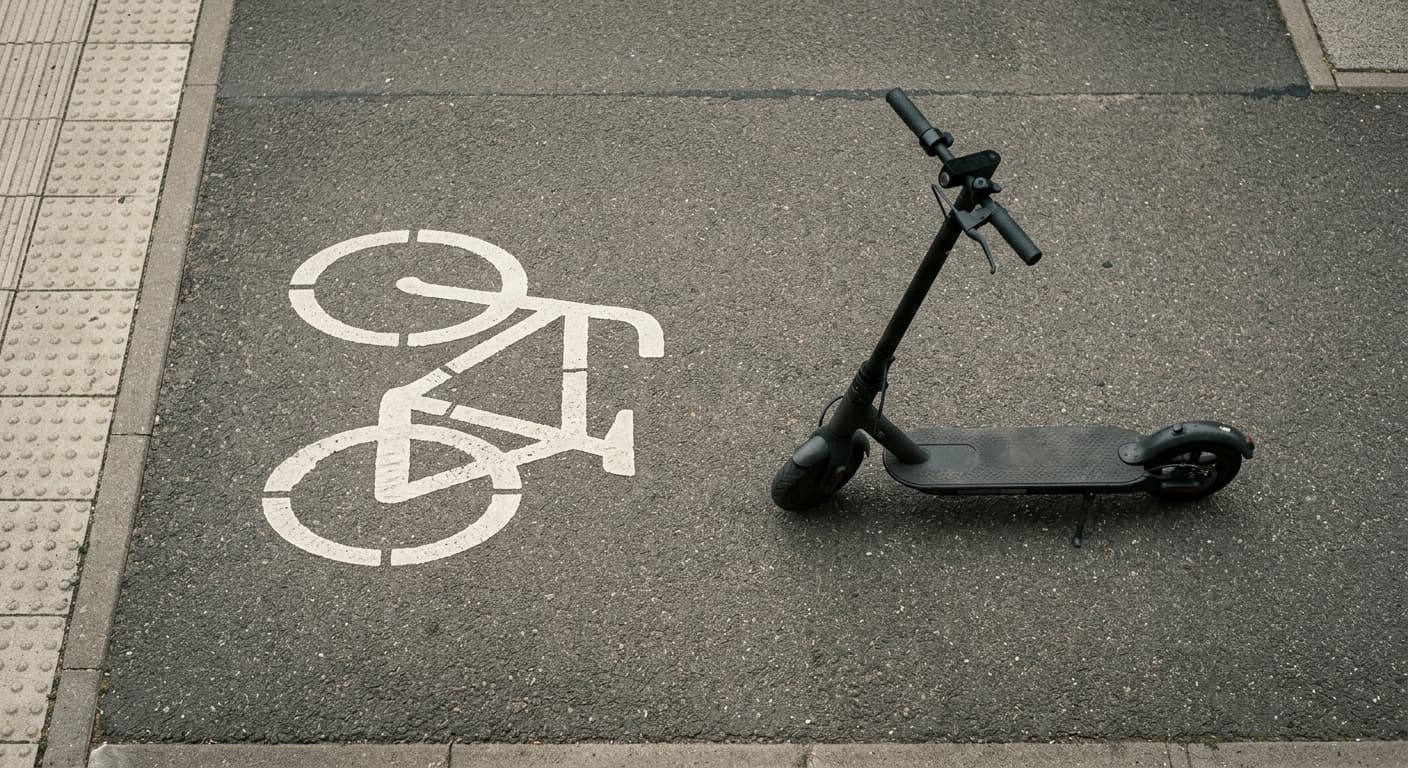
This article is general information about South Dakota e-scooter laws and is not legal advice. If your device is larger or faster than the small "motorized foot scooter" category described here, or if you were cited under a Sioux Falls ordinance, check current state and local rules or consult a South Dakota attorney. Information last verified on 23 July 2026.
Are e-scooters legal in South Dakota?
Yes, and South Dakota is unusual among nearby states because it defines a small, slow scooter category and exempts it from the state's motor vehicle and motorcycle laws almost entirely. SDCL § 32-26-21.4 defines a "motorized foot scooter" as "a wheeled conveyance, with handlebars, designed to be stood or sat upon by the operator, and powered by an electric motor that is capable of propelling the device with or without human propulsion," with no more than two wheels of 12 inches or smaller diameter and a maximum motor speed of 15 mph on a flat surface. An electric bicycle is expressly not a motorized foot scooter under this definition.
This statutory device is structurally separate from the larger, more powerful "electric motor scooter" that some riders use, which is reported to fall under South Dakota's general "motorcycle" definition instead, with different, stricter requirements described below. Several secondary sources merge these two categories into one set of rules; South Dakota law does not.
What counts as an e-scooter in South Dakota
A statutorily defined "motorized foot scooter" has handlebars, is designed to be stood or sat upon, has no more than two wheels of 12 inches or smaller diameter, and has a motor capped at 15 mph on a flat surface with no more than a 1 percent grade. A device that exceeds these thresholds, meaning larger wheels or a higher top speed, falls outside this definition. Search results referencing a South Dakota attorney general opinion (not independently opened this session) indicate such a larger device is treated as a "motorcycle" under SDCL § 32-20-1(3) instead, which carries its own license and insurance requirements. This distinction, small/slow versus large/fast, is the key fact for anyone trying to figure out which South Dakota rules apply to their specific device.

Where you can ride
SDCL § 32-26-21.1 provides that "No person may drive any vehicle other than a bicycle, motorized foot scooter, or an electric personal assistive device upon a sidewalk or sidewalk area except upon a permanent or duly authorized temporary driveway." The carve-out is written into the prohibition itself rather than added as a separate exception: a motorized foot scooter is one of the three devices excluded from the sidewalk ban, so state law leaves sidewalk riding permitted by default, the opposite default from several neighboring states.
The same section then provides that "The local governing body of a municipality may restrict a bicycle, motorized foot scooter, or an electric personal assistive device from operating upon a sidewalk or sidewalk area." A city can therefore narrow or close that default locally, and the rule that actually governs a given sidewalk may be municipal rather than statewide.
Streets and paths run the other way. SDCL § 32-26-21.6 gives a municipality authority to "adopt, by ordinance, traffic regulations permitting the use of a motorized foot scooter on any street, bike path, or multi-use path within its platted boundaries." That is a grant of local permitting power, not a statewide authorization, and South Dakota law contains no provision that by itself allows a motorized foot scooter on a street, bike path, or multi-use path. So absent a city ordinance adopted under § 32-26-21.6, street and path use has no affirmative basis in state law, and the sidewalk default does not carry over to the roadway. Check the ordinance for the specific city you are riding in. Whether a specific city, including Sioux Falls, has adopted such an ordinance was not independently confirmed for this research.
Rider rules
- Age: No statewide age minimum was found for a statutorily defined motorized foot scooter, a consequence of its exemption from chapter 32-20, the motorcycle chapter that would otherwise set age rules for two- and three-wheeled powered vehicles.
- Helmet: No statewide helmet requirement applies to a qualifying motorized foot scooter, for the same reason.
- License, registration, insurance: SDCL § 32-26-21.5 exempts a motorized foot scooter from a list of chapters including 32-20, South Dakota's motorcycle and moped chapter. That means no driver's license, no registration, and no insurance requirement under that framework for a device that qualifies as a motorized foot scooter.
- Larger devices: A device that exceeds the 15 mph/12-inch wheel thresholds and is instead treated as a "motorcycle" would need a Class 1 driver's license and liability insurance, per the attorney general opinion referenced above. This reading was not independently confirmed against the opinion's own text this session.
Penalties
SDCL § 32-26-21.1 makes a violation of that section a Class 2 misdemeanor, but the prohibition it penalizes reaches vehicles other than a bicycle, motorized foot scooter, or electric personal assistive device. Riding a qualifying motorized foot scooter on a sidewalk is not a violation of that section under state law, so the Class 2 misdemeanor does not reach it. Where a city has restricted sidewalk riding by ordinance under the same section, any penalty comes from that city's own code. No further statewide fine schedule specific to motorized foot scooters was located in the sections reviewed for this research.

Enforcement in practice
No statewide enforcement data specific to motorized foot scooters was located for this research. Older reporting describes Sioux Falls pausing a scooter ordinance to wait for a state law change, but that reporting predates South Dakota's 2021 statutory fix creating the motorized foot scooter definition and its municipal street-authorization clause, and was not independently reopened this session, so it is not presented as the city's current position. Enforcement patterns do not change the underlying legal status described above.
Sioux Falls e-scooter rules
Sioux Falls is South Dakota's largest city. Its municipal code is reported to define "motorized foot scooter" using language that closely mirrors the state definition, which would be internally consistent with SDCL § 32-26-21.4, but the city code itself was not independently opened for this research, so treat this as corroborating rather than independently confirmed. Whether Sioux Falls has adopted its own ordinance permitting street or bike-path use under SDCL § 32-26-21.6 was not confirmed this session; check the current Sioux Falls municipal code directly.
See also RecordingLaw's South Dakota DUI Laws and South Dakota Car Accident Laws pages, and the E-Scooter Laws by State hub to compare South Dakota's rules to other states.
Frequently Asked Questions
Is there a minimum age to ride an e-scooter in South Dakota?
No statewide age minimum was found for a statutorily defined motorized foot scooter (15 mph or less, 12-inch or smaller wheels), because that device is exempted from the chapter that would otherwise set age rules.
Do I need a helmet to ride an e-scooter in South Dakota?
No statewide helmet requirement applies to a qualifying motorized foot scooter. A larger, faster device that falls under South Dakota's motorcycle definition instead may carry different requirements.
Can I ride an e-scooter on the sidewalk in South Dakota?
Yes, by default statewide, for a device that meets the small "motorized foot scooter" definition. SDCL 32-26-21.1 bans sidewalk driving by any vehicle other than a bicycle, motorized foot scooter, or electric personal assistive device, so a qualifying scooter is carved out and its rider does not violate that section by riding on a sidewalk. The Class 2 misdemeanor in that section reaches vehicles that are not carved out. A municipality may restrict it by ordinance, and street or path use is a separate question that depends on a local ordinance under SDCL 32-26-21.6.
Do I need a license or insurance for an e-scooter in South Dakota?
Not for a device that meets the statutory "motorized foot scooter" definition (15 mph or less, 12-inch or smaller wheels); that category is exempt from South Dakota's motorcycle license and insurance chapter. A larger or faster device may be treated as a motorcycle instead, which does carry those requirements.
What's the difference between a motorized foot scooter and an electric motor scooter in South Dakota?
A motorized foot scooter is a statutorily defined small, slow device (15 mph or less, wheels 12 inches or smaller) that is exempt from motor vehicle and motorcycle rules. A larger or faster electric motor scooter is reported to fall under the general motorcycle definition instead, with license and insurance requirements. These are two separate categories under South Dakota law.
Are Sioux Falls' e-scooter rules different from the rest of South Dakota?
Sioux Falls' municipal definition is reported to mirror the state definition, but whether the city has adopted its own street or bike-path ordinance was not confirmed in this research. Check the current Sioux Falls municipal code directly.
Injured in South Dakota? Get a free case review from a personal-injury attorney
If someone else's negligence caused your injury, you may be owed compensation for medical bills, lost wages, and pain and suffering. Get a free, no-obligation review from a South Dakota personal-injury attorney. Most work on contingency, so there is no upfront cost.
Updates
Corrected the sidewalk section: the quotations of SDCL 32-26-21.1 now match the statute's actual text, the Class 2 misdemeanor is no longer described as applying to motorized foot scooter riders (the statute carves those devices out of the sidewalk ban), and the page now states that street and path use depends on a local ordinance under SDCL 32-26-21.6.
Independently fact-checked against the cited primary sources
The Law Behind This Article
This article rests on the statutory provisions below, held in our own legal record and retrieved from the official source. Tap a section to read the operative text.
South Dakota Codified Laws, Chapter 32-26: RULES OF THE ROAD
§ 32-26-21.1Driving on sidewalk prohibited--Municipal restrictions on bicycle, motorized foot scooter, or electric personal assistive device operation--Violation as misdemeanor.In force
No person may drive any vehicle other than a bicycle, motorized foot scooter, or an electric personal assistive device upon a sidewalk or sidewalk area except upon a permanent or duly authorized temporary driveway. The local governing body of a municipality may restrict a bicycle, motorized foot scooter, or an electric personal assistive device from operating upon a sidewalk or sidewalk area. A violation of this section is a Class 2 misdemeanor.
Official text (excerpt) · last checked 2026-09-07 · Read the full text in our law library · Verify at sdlegislature.gov
Search our full record of US law — 2.1 million sections, every state + federal →
Sources and References
- South Dakota Codified Laws § 32-26-21.4 ("motorized foot scooter" definition)(sdlegislature.gov).gov
- South Dakota Codified Laws § 32-26-21.5 (chapter exemptions for motorized foot scooters)(sdlegislature.gov).gov
- South Dakota Codified Laws § 32-26-21.1 (sidewalk operation; municipal authority)(sdlegislature.gov).gov
- South Dakota Codified Laws § 32-26-21.6 (municipal street/bike-path authorization)(sdlegislature.gov).gov
- RecordingLaw.com, South Dakota DUI Laws(recordinglaw.com)
- RecordingLaw.com, South Dakota Car Accident Laws(recordinglaw.com)
- South Dakota Codified Laws § 32-26-21.1 (driving on sidewalk prohibited; municipal restrictions on bicycle, motorized foot scooter, or electric personal assistive device; violation as misdemeanor)(sdlegislature.gov)
- South Dakota Codified Laws § 32-25-27 (low-speed vehicles; cross-referenced by § 32-26-21.6)(sdlegislature.gov)