
Ohio
Ohio E-Scooter Laws: Sidewalk, Helmet & Age Rules (2026)
Independently fact-checked against primary sources (last audited July 23, 2026). · Law checked current as of August 8, 2026. · 2 primary sources cited on this page. How we verify our legal content
This article is general information about Ohio e-scooter laws and is not legal advice. If you were cited or injured while riding, consult an Ohio attorney or check your municipality's current ordinance directly. Information last verified on 23 July 2026.
Are e-scooters legal in Ohio?
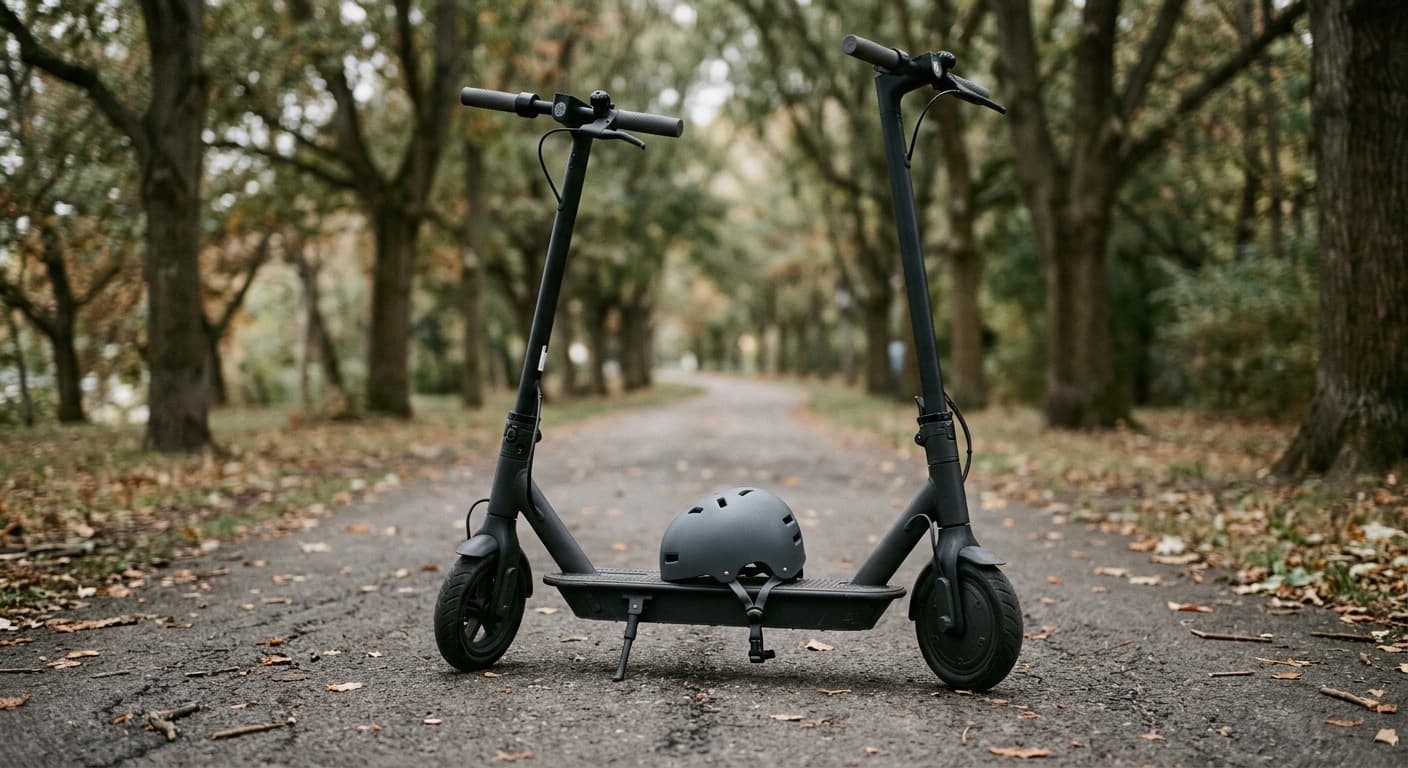
Yes. Ohio regulates e-scooters through ORC 4511.514 ("Low-speed micromobility devices"), effective April 15, 2021 under House Bill 295 of the 133rd General Assembly. Ohio's statutory term is broader than just "scooter": "low-speed micromobility device" also covers other small wheeled devices, and the definition in ORC 4511.01(WWW) describes "a device weighing less than one hundred pounds that has handlebars, is propelled by an electric motor or human power, and has an attainable speed on a paved level surface of not more than twenty miles per hour when propelled by the electric motor." A standard stand-up throttle e-scooter fits this definition.
What counts as an e-scooter in Ohio
Under ORC 4511.01(WWW), a low-speed micromobility device is defined by three features: it weighs less than 100 pounds, it has handlebars, and it is propelled by an electric motor or human power with an attainable speed on a paved level surface of no more than 20 mph when the motor is doing the work. That 20 mph figure appears twice in Ohio law, once in the device definition itself and again as an operating speed cap described below, so a device built to exceed 20 mph under power would fall outside this category and outside the protections and permissions this statute grants.

Where you can ride
ORC 4511.514 allows operation on public streets, highways, sidewalks, shared-use paths, and bike lanes. That statewide baseline is subject to local regulation: municipalities, counties, townships, and park districts in Ohio may regulate, restrict, or prohibit low-speed micromobility device operation within their jurisdiction. The insurance power in the statute is narrower than it is often described. ORC 4511.514(F)(3) lets a local authority require the owner or operator of a low-speed micromobility device rental service or sharing program to maintain commercial general liability insurance related to operating the devices, with limits of up to one million dollars per occurrence and two million dollars per aggregate. It does not authorize a local authority to make an individual rider carry insurance to ride a device they own.
Rider rules
- Age: Ohio's age rules are rental rules. ORC 4511.514(C) provides that "no person who is under sixteen years of age shall rent a low-speed micromobility device," and also bars knowingly renting one to, or on behalf of, someone under 16. The section imposes no minimum age for operating a device you own, though a municipality, county, township, or park district may add its own restrictions under ORC 4511.514(F)(1).
- Helmet: No statewide helmet requirement was found in ORC 4511.514.
- Speed: A low-speed micromobility device cannot be operated faster than 20 mph, matching the device's own definitional speed ceiling.
- Lighting: Required at night only. ORC 4511.514(B)(3) bars operating the device at night unless the device or its rider carries a front lamp emitting white light visible from at least 500 feet and a red rear reflector visible from 100 to 600 feet. There is no statewide daytime lighting requirement.
- Right-of-way: Riders must yield to pedestrians and give an audible signal before passing.
- License, registration, insurance: None required by the state statute for private operation. The statute's local insurance provision reaches rental and sharing operators, not individual riders.
Penalties
A violation of Ohio's low-speed micromobility device rules is a minor misdemeanor. ORC 4511.514(E)(1) states that "whoever violates this section is guilty of a minor misdemeanor," and (E)(2) adds that unless a mens rea is otherwise specified in the section, an offense under it is a strict liability offense and ORC 2901.20 does not apply. In practical terms, a prosecutor does not have to show you meant to break the rule; proof that you broke it is enough.

Enforcement in practice
No statewide e-scooter enforcement data was verified for this page. Enforcement of Ohio's roadway and local-ordinance rules is a local police matter, and how actively a given city enforces them can vary. Enforcement patterns do not change what the statute requires, and the absence of visible ticketing in a given area is not the same as a rule not applying there.
Columbus e-scooter rules
Columbus is Ohio's largest city and regulates e-scooters through its own Code of Ordinances, reported to be Chapter 2173 ("Bicycles, Motorcycles and Mobility Devices"). This page's research could not directly access the Municode text of that chapter, so specific figures reported elsewhere, such as a stricter 15 mph local speed cap, mandatory bike-lane use, sidewalk-riding bans in Downtown and the Short North, a cap on the number of permitted shared-device companies, and parking requirements, were not independently confirmed and should be checked against Columbus's current Code of Ordinances or columbus.gov before being treated as current fact.
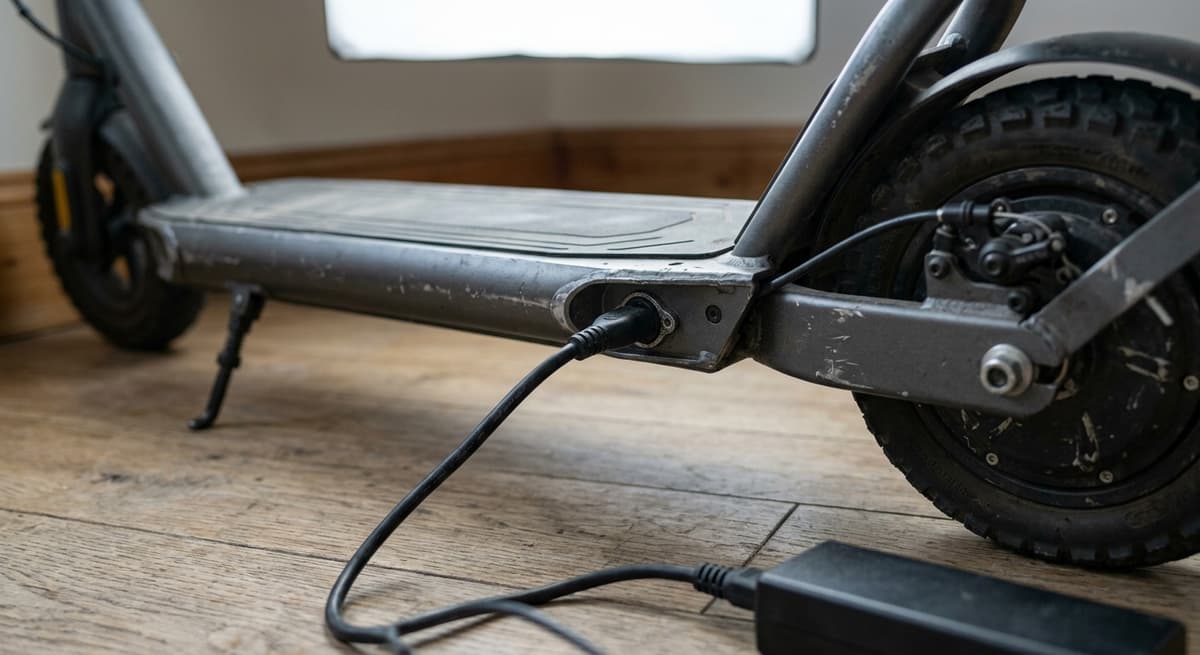
If a crash involving an e-scooter happens on an Ohio road, ordinary negligence law and, where alcohol or drugs are involved, DUI law can still apply. See RecordingLaw's Ohio DUI Laws and Ohio Car Accident Laws pages for more, and RecordingLaw's E-Scooter Laws by State hub to compare Ohio with other states.
Frequently Asked Questions
Can I ride an e-scooter on the sidewalk in Ohio?
Yes, state law permits low-speed micromobility devices on sidewalks along with streets, highways, shared-use paths, and bike lanes, unless a local authority has restricted it.
Do I need a license or insurance to ride an e-scooter in Ohio?
The state statute does not require a license or insurance to ride privately. Its insurance provision lets a local authority require commercial general liability coverage from rental and sharing operators, not from individual riders.
How old do you have to be to ride an e-scooter in Ohio?
Ohio requires renters of a shared low-speed micromobility device to be at least 16. ORC 4511.514 sets no minimum age for riding a scooter you own, though a local authority may impose its own restrictions.
Do I need a helmet in Ohio?
No statewide helmet requirement was found for low-speed micromobility devices in Ohio.
How fast can an e-scooter legally go in Ohio?
20 mph. That is both the device's definitional speed ceiling and the statute's operating speed cap.
Are Columbus's e-scooter rules different from the state's?
Columbus is reported to apply a stricter local speed cap and sidewalk restrictions in parts of downtown, but this page could not independently verify the city's current Code of Ordinances text, so check Columbus's own current rules.
Injured in Ohio? Get a free case review from a personal-injury attorney
If someone else's negligence caused your injury, you may be owed compensation for medical bills, lost wages, and pain and suffering. Get a free, no-obligation review from a Ohio personal-injury attorney. Most work on contingency, so there is no upfront cost.
Updates
Corrected the Ohio e-scooter rules against the text of ORC 4511.514: lighting equipment is required at night only, the local insurance power applies to rental and sharing operators (up to $1 million per occurrence and $2 million per aggregate) rather than to individual riders, the 16-and-older rule is a rental rule with no minimum age for operating a device you own, and the minor-misdemeanor penalty and its strict-liability designation are now confirmed against the statute.
Governing law re-checked for recent changes
Independently fact-checked against the cited primary sources
The Law Behind This Article
This article rests on the statutory provisions below, held in our own legal record and retrieved from the official source. Tap a section to read the operative text.
Ohio Revised Code
§ 4511.514Low-speed micromobility devicesIn force
(A)(1) A low-speed micromobility device may be operated on the public streets, highways, sidewalks, and shared-use paths, and may be operated on any portions of roadways set aside for the exclusive use of bicycles in accordance with this section.
Official text (excerpt) · last checked 2026-09-07 · Read the full text in our law library · Verify at codes.ohio.gov
§ 4511.01Traffic laws - operation of motor vehicles definitionsIn force
As used in this chapter and in Chapter 4513. of the Revised Code: (A) "Vehicle" means every device, including a bicycle, motorized bicycle, and an electric bicycle, in, upon, or by which any person or property may be transported or drawn upon a highway.
Official text (excerpt) · last checked 2026-07-31 · Read the full text in our law library · Verify at codes.ohio.gov
Cited in 299 court opinions in our collectionLatest citing opinion in our collection: 2026
Opinions citing this section in our collection:
- Norris v. Ohio Standard Oil Co. (Ohio Supreme Court 1982, 70 Ohio St. 2d 1)“…21 and 4511.25, together with “right of way” as defined in R. C. 4511.01 (UU), were violated and whose negligenc…”
- State v. Darrah (Ohio Supreme Court 1980, 64 Ohio St. 2d 22)“…ice, the disobedience of which constitutes a misdemeanor. R. C. 4511.01 (QQ) essentially defines a traffic cont…”
- Manufacturer's National Bank v. Erie County Road Commission (Ohio Supreme Court 1992, 63 Ohio St. 3d 318)“…Although not in effect at the time of the accident, present R.C. 4511.01(UU)(2) is helpful and defines “right-of…”
Identified automatically from the court opinions citing this section — not a ranking of which case controls.
Search our full record of US law — 2.1 million sections, every state + federal →
Sources and References
- Ohio Revised Code 4511.514, Low-speed micromobility devices(codes.ohio.gov).gov
- Ohio Revised Code 4511.01(WWW), definitions, low-speed micromobility device(codes.ohio.gov).gov
- RecordingLaw.com, Ohio DUI Laws(recordinglaw.com)
- RecordingLaw.com, Ohio Car Accident Laws(recordinglaw.com)