
New Hampshire
New Hampshire E-Scooter Laws: Sidewalk, Helmet & Age Rules (2026)
Independently fact-checked against primary sources (last audited July 23, 2026). · Law checked current as of August 9, 2026. · 3 primary sources cited on this page. How we verify our legal content
This article is general information about New Hampshire e-scooter law and is not legal advice. Coverage depends on your specific device, so anyone with a citation or a fast scooter that falls outside the statutory definition should talk to a New Hampshire-licensed attorney or check gc.nh.gov directly. Information last verified on 7 September 2026.
Are e-scooters legal in New Hampshire?
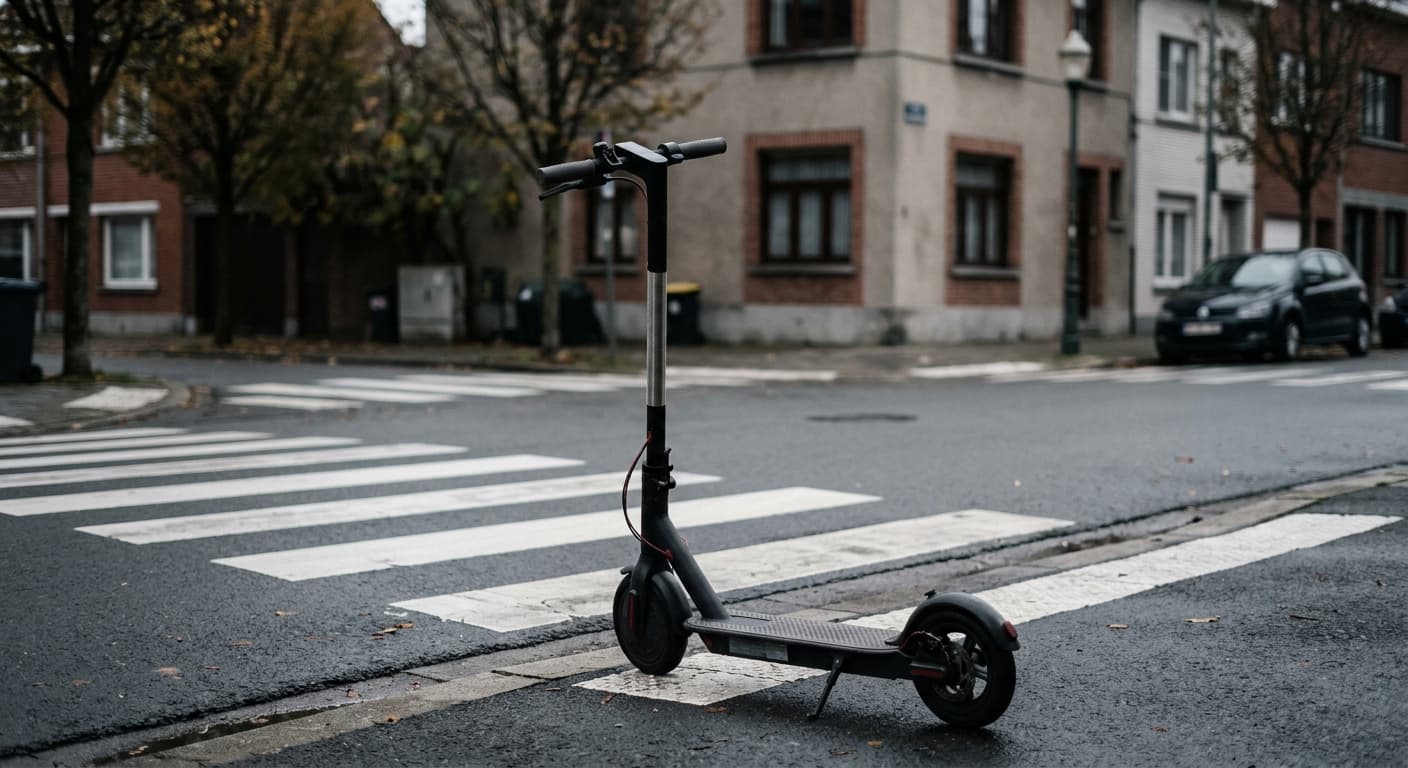
Yes, and for most riders the governing law is easy to find once you know what it is called. New Hampshire does not use the phrase "electric scooter" in its statutes, but RSA chapter 269 regulates the "electric personal assistive mobility device," or EPAMD, and RSA 269:1 defines that as "a self-propelled device, regardless of the number of wheels, designed to transport only one person, solely powered by an electric propulsion system, with a maximum speed of less than 20 miles per hour." A standard stand-up electric kick scooter meets every element of that definition. For how neighboring states with differently worded statutes compare, see the e-scooter laws hub.
The consequence is spelled out in RSA 269:2, titled "Applicable Law," which says an EPAMD "shall not be considered a 'vehicle' within the meaning of the law of this state." That single sentence pulls a qualifying scooter out of the motor-vehicle scheme entirely, so the registration, title, and driver's-license machinery that applies to cars and motorcycles does not reach it.
Two readings that circulate online are worth correcting, because both point the wrong direction. The first treats RSA 259:60 as the source of the exemption and then reasons that stand-up scooters are excluded from it. RSA 259:60's mention of electric personal assistive mobility devices sits in paragraph IV, which by its own terms applies only to the road toll statutes, so it is not a general motor-vehicle exemption at all, and the devices it names are exactly the ones a stand-up scooter fits. The general exemption comes from RSA 269:2.
The second reading holds that a scooter defaults to "motor-driven cycle" treatment under RSA 259:65, which would imply registration and a license. That fails on chapter 259's own terms before chapter 269 is even reached. RSA 259:65 covers "any motorcycle or motor scooter with a motor which produces not to exceed 5 horse-power, and any bicycle with motor attached except any electric bicycle." RSA 259:63 in turn defines "Motorcycle" as "every motor vehicle having a seat or saddle for the use of the rider and designed to travel on not more than 3 wheels in contact with the ground." A stand-up kick scooter has no seat or saddle and no bicycle drivetrain, and "motor scooter" is not defined anywhere in Title XXI.
What counts as an e-scooter in New Hampshire
The operative test is the RSA 269:1 definition, and the load-bearing element is the speed cap. An EPAMD must have "a maximum speed of less than 20 miles per hour." Shared-fleet scooters and most consumer models top out around 15 to 18 mph and sit comfortably inside the definition. A privately owned performance scooter capable of 25 or 30 mph does not, and New Hampshire law does not clearly say what such a device is. Nothing below should be assumed to apply to it.
The phrase "regardless of the number of wheels" matters too. It is the reason the definition is not limited to the two-wheeled self-balancing device the chapter was originally written around in 2002, and it is why a conventional two-wheel kick scooter is squarely inside it.
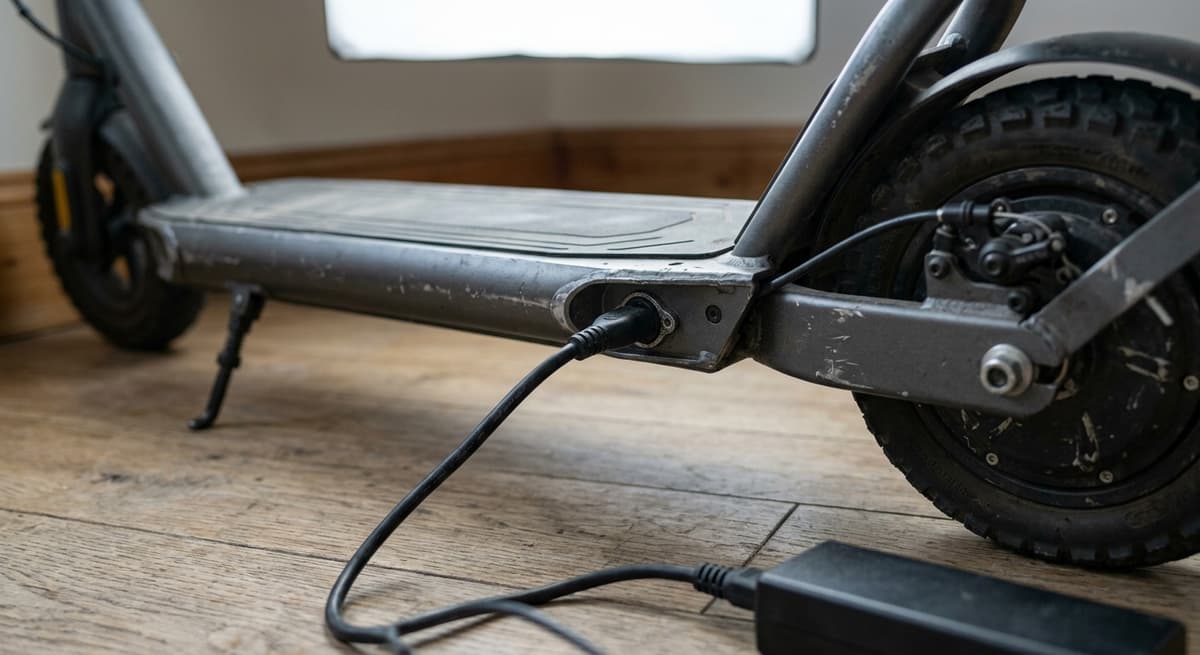
Electric bicycles are a separate category with their own rules under RSA 265:144-a. That statute governs a pedaled vehicle with an electric assist motor and does not reach a stand-up, non-pedal device, so its class system and its Class 3 age and helmet rules are not the ones to look at for a scooter.
Where you can ride
RSA 269:4, "Operation Permitted on Sidewalks and Roadways," answers this directly. Paragraph I gives the operator "the rights and duties of pedestrians prescribed in RSA 265:34-40," which is what makes sidewalk riding permissible as a matter of state law. Paragraph II covers roadways: an operator moving slower than the flow of traffic must ride on the right portion of the way, "except when it is unsafe to do so or when necessary to avoid hazardous conditions," a list the statute fills out with fixed and moving objects, vehicles, bicycles, pedestrians, animals, broken pavement, glass, sand, puddles, ice, and opening doors of parked vehicles.
Two related rules follow. RSA 269:5 requires an operator on a sidewalk or roadway to exercise due care to avoid colliding with, and to yield the right-of-way to, people traveling on foot. RSA 269:6 permits parking on a sidewalk unless an official traffic control device says otherwise, forbids parking on a roadway in a way that blocks a legally parked motor vehicle, and makes the owner of the device responsible for any parking violation. RSA 269:7 prohibits carrying hazardous materials on an EPAMD.
State law is the floor, not the ceiling. Municipalities can and do restrict specific sidewalks, downtown blocks, or park paths, so check local rules for the city you are riding in.
Rider rules
License: none. RSA 269:2 removes an EPAMD from "vehicle" status, and chapter 269 imposes no operator's license requirement of its own.
Registration and title: neither is required for a device that meets the RSA 269:1 definition, for the same reason.
Age: chapter 269 sets no minimum age for operating an EPAMD.
Helmet: there is no state helmet mandate for EPAMDs. New Hampshire's only micromobility helmet rule, in RSA 265:144-a, applies to riders under 18 on a Class 3 electric bicycle, which is a different category.
Equipment: RSA 269:3 does impose real requirements. An EPAMD must have front, rear, and side reflectors and a braking system that, when used, "will enable the operator to bring the device to a controlled stop." For nighttime operation the device must carry a lamp emitting a white light to illuminate the way ahead.
Penalties
RSA 269:9 sets a specific and unusually mild schedule for violations of the chapter: a written warning for a first offense, a $5 fine for a second offense, and a $10 fine for a third and any subsequent offense. That schedule covers the riding, equipment, and parking rules above.

A device that exceeds the 20 mph cap is outside chapter 269 and therefore outside this penalty schedule as well. Local ordinances carry their own fines separately.
Impaired-operation rules apply broadly on New Hampshire roads; see New Hampshire DUI laws for that framework.
Enforcement in practice
No statewide New Hampshire enforcement data specific to e-scooters, such as citation or seizure statistics, was located for this article. In practice the questions that generate contact with police are local ones, sidewalk and downtown restrictions and parking, rather than the state chapter, whose penalties top out at $10.
Two bills that did not become law
Two recent attempts to give New Hampshire a separately named electric-scooter category both failed, and it is worth being precise about what their failure did and did not mean. HB 1445 (2024) would have added definitions of "electric scooter" and "electric unicycle" to the Title XXI definitions. HB 715 (2025), "relative to personal electric vehicles," would have created a broader "personal electric vehicle" category covering scooters, electric unicycles, hoverboards, and similar devices, and would have exempted them from the state's electric-vehicle registration surcharge. Neither became law.
That left chapter 269 standing, not a void. The bills would have layered a new named category on top of an EPAMD chapter that already covers most scooters; their failure means the EPAMD framework remains the operative law rather than meaning New Hampshire has no framework at all. The clearest thing the failed bills do tell you is that the edge case is real: a dedicated category would have settled the status of faster devices that fall outside the 20 mph definition, and no such category exists yet.
Manchester e-scooter rules
Manchester has its own municipal ordinance addressing scooters, Chapter 75, "Motorized Scooters," in the city code. This article was not able to obtain a clean, confirmed text extraction of that ordinance, and secondary aggregator descriptions of its terms, commonly citing a 16-plus age minimum, no helmet mandate, a local registration fee, and permitted street and sidewalk use, were not independently verified against the ordinance itself. Anyone riding in Manchester should check the current ordinance text through the city or amlegal.com's code library directly rather than relying on unverified secondary summaries, including the general description here.

If a scooter is involved in a collision with a vehicle, New Hampshire car accident laws cover the general fault and insurance framework that would likely extend to that kind of crash.
Frequently Asked Questions
Are e-scooters legal in New Hampshire?
Yes. A stand-up e-scooter with a maximum speed under 20 mph meets the definition of an 'electric personal assistive mobility device' in RSA 269:1 and is regulated by RSA chapter 269. RSA 269:2 provides that such a device is not a 'vehicle' under state law.
Do I need a license to ride an e-scooter in New Hampshire?
No. RSA 269:2 removes an electric personal assistive mobility device from 'vehicle' status, and chapter 269 imposes no operator's license, registration, or title requirement. A scooter capable of more than 20 mph falls outside that definition and its status is unresolved.
Can I ride an e-scooter on the sidewalk in New Hampshire?
Yes under state law. RSA 269:4, I gives the operator the rights and duties of a pedestrian, and RSA 269:5 requires yielding to people on foot. Cities can restrict specific sidewalks or districts, so check local rules.
Do I have to wear a helmet on an e-scooter in New Hampshire?
No. Chapter 269 contains no helmet requirement for electric personal assistive mobility devices. New Hampshire's helmet rule for electric bicycles applies only to riders under 18 on Class 3 e-bikes, a separate category.
What equipment does New Hampshire require on an e-scooter?
RSA 269:3 requires front, rear, and side reflectors and a braking system that will enable the operator to bring the device to a controlled stop. For nighttime operation the device must carry a lamp emitting a white light to illuminate the way ahead.
What's the fine for a scooter violation in New Hampshire?
RSA 269:9 sets a written warning for a first offense, a $5 fine for a second offense, and $10 for a third and any subsequent offense. Local ordinances carry their own separate penalties.
Injured in New Hampshire? Get a free case review from a personal-injury attorney
If someone else's negligence caused your injury, you may be owed compensation for medical bills, lost wages, and pain and suffering. Get a free, no-obligation review from a New Hampshire personal-injury attorney. Most work on contingency, so there is no upfront cost.
Updates
Corrected the legal framework: New Hampshire regulates most stand-up e-scooters as electric personal assistive mobility devices under RSA chapter 269, which sets sidewalk and roadway rules, equipment requirements, and a fine schedule, and expressly provides that such a device is not a vehicle, replacing the article's earlier statement that no state category exists.
Governing law re-checked for recent changes
Independently fact-checked against the cited primary sources
The Law Behind This Article
This article rests on the statutory provisions below, held in our own legal record and retrieved from the official source. Tap a section to read the operative text.
New Hampshire Revised Statutes Annotated, TITLE XXI MOTOR VEHICLES, CHAPTER 269 ELECTRIC PERSONAL ASSISTIVE MOBILITY DEVICES
§ 269:4Operation Permitted on Sidewalks and Roadways.In force
I. An operator of an EPAMD shall have the rights and duties of pedestrians prescribed in RSA 265:34-40. II. When propelling an EPAMD upon a way at a speed less than the normal speed of traffic moving in the same direction at that time and place, the operator of an EPAMD shall remain on the right portion of the way as far as practicable except when it is unsafe to do so or when necessary to avoid hazardous conditions, including, but not limited to, fixed or moving objects, vehicles, bicycles, pedestrians, animals, broken pavement, glass, sand, puddles, ice, or opening doors of parked vehicles.
Official text (excerpt) · last checked 2026-09-07 · Read the full text in our law library · Verify at gc.nh.gov
New Hampshire Revised Statutes Annotated, TITLE XXI MOTOR VEHICLES, CHAPTER 259 WORDS AND PHRASES DEFINED
§ 259:60Motor Vehicle.In force
"Motor vehicle" shall mean: I. Except where otherwise specified in this title, any self-propelled vehicle not operated exclusively on stationary tracks, including ski area vehicles; II. As used in RSA 261:148 relative to municipal permits for registration, includes all trailers and semi-trailers as defined herein and travel trailers as determined by the commissioner of revenue administration; however, snowmobiles as defined herein, mobile homes, house trailers, electric bicycles, and mopeds shall not be so included; III. For purposes of the financial responsibility statutes, any self-propelled vehicle not operated exclusively upon stationary tracks, except farm tractors, crawler-type tractors, electric bicycles, and mopeds; IV. For purposes of the road toll statutes, all vehicles, engines, machines, or mechanical contrivances, except electric bicycles and electric personal assistive mobility devices as defined in RSA 269:1, which are propelled on the public highways by internal combustion engines, electric motors, steam engines, or other alternate sources of energy except human or animal power. V.
Official text (excerpt) · last checked 2026-07-29 · Read the full text in our law library · Verify at gc.nh.gov
Cited in 5 court opinions in our collectionLatest citing opinion in our collection: 2015
Opinions citing this section in our collection:
- State v. Hart (Supreme Court of New Hampshire 1988, 130 N.H. 325)“…a public way at the time of his arrest. We first look to RSA 259:60, I, which defines a motor vehicle as “[…”
- State v. Osgood (Supreme Court of New Hampshire 1992, 135 N.H. 436)“…d in pertinent part as “any self-propelled vehicle . . . .” RSA 259:60. Nothing in the statute requires that a…”
- State of New Hampshire v. Aniano Mendez-Torres (Supreme Court of New Hampshire 2015)“…he was stopped was a “motor vehicle” within the meaning of RSA 259:60. We briefly set forth the evid…”
Identified automatically from the court opinions citing this section — not a ranking of which case controls.
§ 259:65Motor-Driven Cycle.In force
"Motor-driven cycle" shall mean any motorcycle or motor scooter with a motor which produces not to exceed 5 horse-power, and any bicycle with motor attached except any electric bicycle.
Official text (excerpt) · last checked 2026-07-29 · Read the full text in our law library · Verify at gc.nh.gov
Search our full record of US law — 2.1 million sections, every state + federal →
Sources and References
- RSA 259:60, Motor Vehicle (definitions and exclusions)(gc.nh.gov).gov
- RSA 259:65, Motor-driven cycle(gc.nh.gov).gov
- RSA 265:144-a, Electric Bicycles(gc.nh.gov).gov
- LegiScan, New Hampshire HB 715 (2025) status tracking(legiscan.com)
- RSA 269:1, Definition of Electric Personal Assistive Mobility Device (EPAMD)(gc.nh.gov)
- RSA 269:2, Applicable Law (an EPAMD is not a vehicle under state law)(gc.nh.gov)
- RSA 269:3, Equipment (reflectors, braking system, white front lamp)(gc.nh.gov)
- RSA 269:4, Operation Permitted on Sidewalks and Roadways(gc.nh.gov)
- RSA 269:5, Special Rules for Operation (due care, yield to pedestrians)(gc.nh.gov)
- RSA 269:6, Parking(gc.nh.gov)
- RSA 269:7, Hazardous Materials(gc.nh.gov)
- RSA 269:9, Fines and Penalties(gc.nh.gov)
- RSA 259:63, Motorcycle (seat or saddle element)(gc.nh.gov)