
Florida
Florida DUI Laws: Penalties, BAC Limit & License (2026)
Independently fact-checked against primary sources (last audited August 18, 2026). · Reviewed by the RecordingLaw editorial team. · Law checked current as of August 18, 2026. · 5 primary sources cited on this page. How we verify our legal content
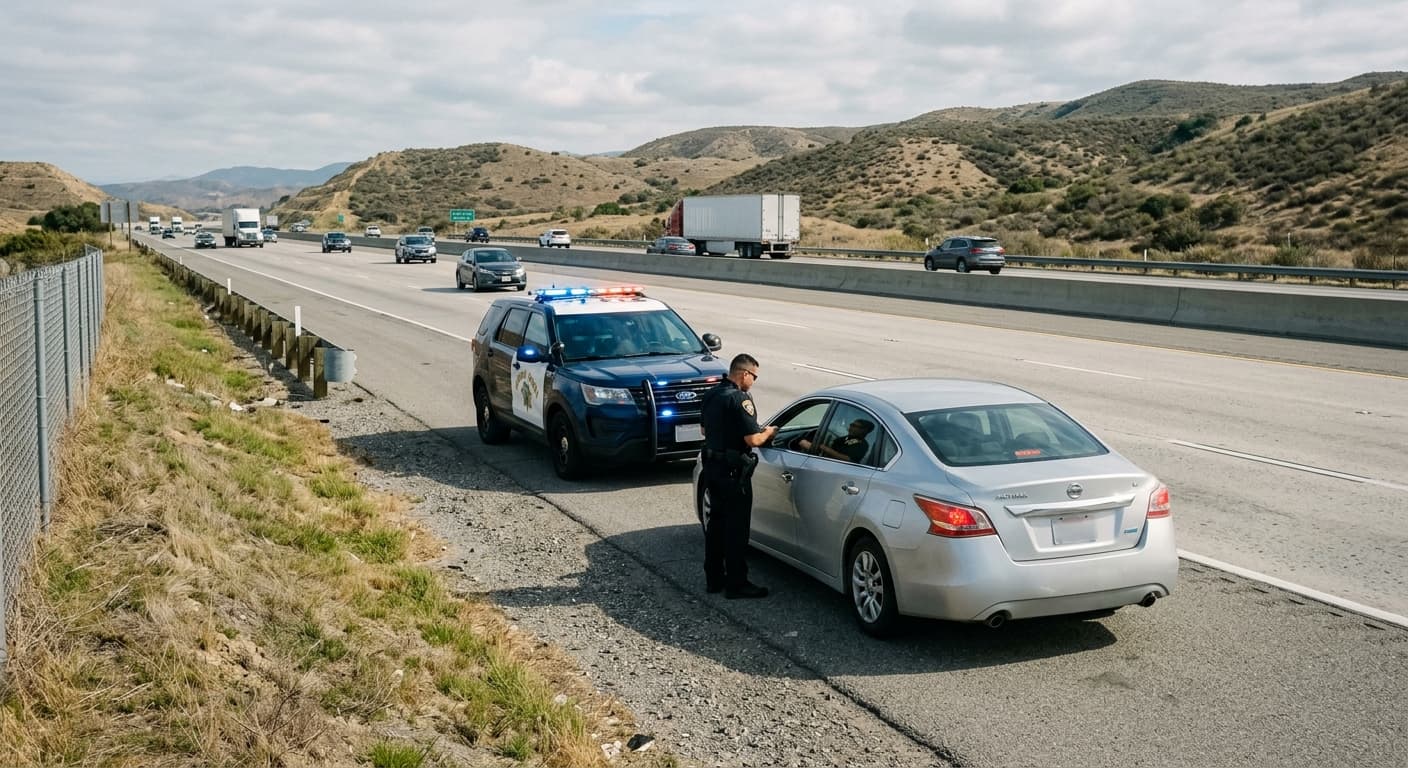
In Florida the offense is called driving under the influence (DUI), and Florida Statute 316.193 makes it unlawful to drive with a blood-alcohol or breath-alcohol level of 0.08 or more, or while impaired by alcohol or a controlled substance. A first DUI carries a fine of $500 to $1,000, up to six months in jail, probation, and a license revocation of at least 180 days.
This guide is part of our DUI Laws by State series.
What counts as a DUI in Florida
Florida charges the offense as driving under the influence under Statute 316.193. The statute creates two paths: driving while normal faculties are impaired by alcohol or a chemical or controlled substance, or driving with a blood-alcohol or breath-alcohol level of 0.08 grams or more. Because the impairment prong does not require a specific number, a driver below 0.08 can still be convicted if the State proves impaired faculties. Commercial drivers face a 0.04 limit, and drivers under 21 fall under Florida's zero-tolerance law, which suspends the license for driving with a 0.02 or higher reading. The 0.08 figure is the federal benchmark adopted by every state except Utah, which uses 0.05, as the National Highway Traffic Safety Administration describes. A reading of 0.15 or more, or a minor in the vehicle, raises the mandatory penalties even on a first offense.
First-offense DUI penalties in Florida (jail, fines, suspension)
A first DUI is a misdemeanor. Under Section 316.193(2) and (6), the penalty is a fine of not less than $500 nor more than $1,000, imprisonment of not more than six months, probation not to exceed one year, and a minimum of 50 hours of community service (or an additional fine in lieu of unfinished hours). The court must also order completion of a DUI program substance-abuse course and a 10-day vehicle impoundment. If the BAC was 0.15 or higher or a minor was in the vehicle, the fine rises to $1,000 to $2,000 and jail exposure increases to up to nine months. A conviction revokes the driving privilege for at least 180 days up to one year, handled by the Florida DHSMV.

| First-offense item | Florida rule (statute or agency) |
|---|---|
| Offense level | Misdemeanor (Fla. Stat. 316.193) |
| Jail | Up to 6 months (316.193(2)(a)) |
| Fine | $500 to $1,000 (316.193(2)(a)) |
| Community service | Minimum 50 hours (316.193(6)) |
| Conviction revocation | 180 days to 1 year (DHSMV) |
| Admin suspension (fail) | 6 months (DHSMV) |
| Admin suspension (refuse) | 1 year first refusal (DHSMV) |
| IID (0.15%+ or minor) | Mandatory 6 months (316.193(4)) |
Watch out: The DHSMV administrative suspension and the criminal court case run on separate tracks. You can resolve or reduce the criminal charge and still lose your license through the DHSMV, and you generally must request a formal review hearing within 10 days of arrest to contest the administrative suspension.
Ignition interlock requirements in Florida
Florida does not require an ignition interlock device on a standard first DUI. Under Section 316.193(4), the device becomes mandatory for at least six continuous months when a first offender had a BAC of 0.15 or higher or was driving with a person under 18 in the vehicle. The court has discretion to order an IID for at least six continuous months on other first offenses, with no statutory cap on the term. For a second offense, the IID is mandatory for at least one year, and the required terms climb for later offenses. The Florida DHSMV administers the program, and the device requires a breath sample before the engine starts and at random intervals while driving. The driver pays for installation, monitoring, and removal.
License suspension and the administrative (ALS) process in Florida
Florida runs two suspension systems at once. The administrative suspension is an immediate DHSMV action based on the arrest, separate from the criminal court case. As the Florida DHSMV explains, a driver 21 or older who fails the test at 0.08 or more faces a six-month suspension on a first offense, while a driver who refuses faces a one-year suspension. The arresting officer issues a notice that serves as a 10-day temporary permit, after which the suspension takes effect unless the driver requests a formal review within 10 days. A driver who failed the test must serve 30 days hard with no driving before hardship eligibility, and a first refusal requires 90 days. A separate conviction-based revocation of 180 days to one year can follow. DUI school is required before any reinstatement.
Repeat offenses and the Florida look-back period
Florida uses two different windows for repeat DUIs. A second conviction within five years of a prior carries a mandatory minimum of 10 days in jail (at least 48 hours consecutive), a higher fine of $1,000 to $2,000, and a five-year license revocation, under Section 316.193. The felony threshold uses a 10-year window: a third DUI within 10 years of a prior is a third-degree felony, punishable by up to five years in prison and a 10-year revocation. A third conviction outside 10 years remains a misdemeanor with higher penalties. A fourth DUI is a third-degree felony regardless of timing. DUI causing serious bodily injury is a third-degree felony, and DUI manslaughter is a second-degree felony, both regardless of offense number.

Watch out: Refusing the test does not protect your license, and refusing is a crime in its own right. A first refusal triggers a one-year administrative suspension, longer than the six-month suspension for failing, and under Statute 316.1939 refusing a lawful breath or urine test is a second-degree misdemeanor on a first refusal and a first-degree misdemeanor on a second or subsequent refusal, which also carries an 18-month suspension.
Refusing a breath or blood test in Florida
Florida's implied-consent law means that by driving in the state, you have agreed to submit to a breath, blood, or urine test if lawfully arrested for DUI. According to the Florida DHSMV, a first refusal results in a one-year license suspension, and a second or subsequent refusal results in an 18-month suspension. Refusing is also a separate crime, not just a license matter. Under Statute 316.1939, a driver who refuses a lawful test after being given the required warning commits a second-degree misdemeanor for a first refusal and a first-degree misdemeanor for a second or subsequent refusal. That criminal provision reaches a breath or urine test, not a blood test requested under Section 316.1932(1)(c), and the officer must warn the driver of the second-degree misdemeanor exposure before the refusal counts. The refusal suspension is administrative and applies on top of any criminal penalty, and the refusal is admissible as evidence in the criminal case. Because the one-year refusal suspension is longer than the six-month suspension for failing the test, and a refusal still does not stop the prosecution, refusing usually makes the license consequences worse.
Can you expunge or seal a DUI in Florida
Florida does not allow a DUI conviction to be sealed or expunged. Under Statute 316.656, a court cannot withhold adjudication of guilt for a DUI, which means a DUI plea or finding becomes a conviction, and Florida's sealing and expungement statute, Section 943.0585, excludes any record that ended in a conviction. The narrow exceptions involve cases that did not result in a DUI conviction: if the charge was dismissed, you were acquitted, or the case was reduced to reckless driving with a withhold of adjudication and you have no prior record, the arrest record may be eligible to be sealed or expunged. A DUI conviction itself, however, is permanent and stays on the record indefinitely.
What to do after a DUI arrest in Florida
A Florida DUI creates two separate matters: a criminal case in court and an administrative license case at the DHSMV. The deadlines are short, so a common first step is to act within 10 days of arrest, either by requesting a formal review hearing or by applying for an immediate hardship license under the eligible-reviewee option, because missing that window generally means the administrative suspension takes effect automatically. The criminal case proceeds on its own schedule from arraignment through resolution. General information cannot tell you how your case will come out, since the outcome depends on the specific facts, the evidence, and your record. Many people consult a licensed Florida DUI attorney to understand the charge, the 10-day deadline, and the options for both the criminal case and the DHSMV case. Keep the arrest paperwork, the notice of suspension, and any test results in a safe place.
More Florida Laws
Frequently Asked Questions
What is the BAC limit in Florida?
The per se limit is 0.08 blood- or breath-alcohol level under Statute 316.193. Commercial drivers are limited to 0.04, and drivers under 21 face a 0.02 zero-tolerance limit that suspends the license administratively.
How long do you lose your license for a first DUI in Florida?
A first DUI conviction revokes the license for a minimum of 180 days up to one year. Separately, the DHSMV imposes a six-month administrative suspension for failing the test, or one year for refusing it, even before any conviction.
Is a first DUI a felony in Florida?
No. A first DUI is a misdemeanor. A DUI becomes a third-degree felony on a third offense within 10 years, or on a fourth offense regardless of timing. DUI causing serious injury or DUI manslaughter is a felony at any offense number.
Do you need an interlock for a first DUI in Florida?
Not for a standard first offense. An ignition interlock is mandatory for at least six months if the BAC was 0.15 or higher or a minor was in the vehicle, under Section 316.193(4). The court may order one for at least six months on other first offenses, and the statute sets no upper limit.
What happens if you refuse a breathalyzer in Florida?
Under implied consent, refusing the test triggers a one-year administrative suspension on a first refusal, longer than the six-month suspension for failing. Refusing is also a crime: under Statute 316.1939, a first refusal of a lawful breath or urine test is a second-degree misdemeanor, and a second or subsequent refusal is a first-degree misdemeanor and an 18-month suspension. The refusal is admissible in court.
How long does a DUI stay on your record in Florida?
A DUI conviction stays on the record permanently because Florida does not allow it to be sealed or expunged. For repeat penalties, a prior counts for five years for an enhanced second offense and 10 years for the felony threshold.
Can you get a DUI expunged in Florida?
No. A DUI conviction cannot be sealed or expunged because Statute 316.656 bars a withhold of adjudication and Section 943.0585 excludes convictions. Only a dismissed, acquitted, or reduced case with no conviction may allow the arrest record to be cleared.
What is the look-back period for DUI in Florida?
Florida uses a five-year window for enhanced second-offense penalties and a 10-year window for the third-offense felony threshold under Statute 316.193. A fourth DUI is a felony regardless of how long ago the priors occurred.
Facing a warrant, DUI, or criminal charge in Florida? Get a free case review
An active warrant or a criminal charge like DUI puts your freedom, license, and record at risk, and deadlines to act, like challenging a license suspension or resolving a warrant before an arrest, can be just days away. Get a free, confidential review from a Florida criminal defense attorney. Acting quickly protects your options.
Updates
Corrected the refusal sections to reflect that under Florida Statute 316.1939 a first refusal of a lawful breath or urine test is itself a second-degree misdemeanor, not only an administrative license suspension.
Independently fact-checked against the cited primary sources; governing law re-checked for recent changes
Corrected the discretionary first-offense ignition interlock term: 316.193(2)(c) sets a floor of at least 6 continuous months with no cap, not a 'up to six months' ceiling.
Governing law re-checked for recent changes
Reviewed and approved by an editor
The Law Behind This Article
This article rests on the statutory provisions below, held in our own legal record and retrieved from the official source. Tap a section to read the operative text.
Florida Statutes
§ 316.193Driving under the influence; penalties.In forcecited in 2 of our articles
(1) A person is guilty of the offense of driving under the influence and is subject to punishment as provided in subsection (2) if the person is driving or in actual physical control of a vehicle within this state and:(a) The person is under the influence of alcoholic beverages, any chemical substance set forth in s. 877.111, or any substance controlled under chapter 893, when affected to the extent that the person’s normal faculties are impaired; (b) The person has a blood-alcohol level of 0.08 or more grams of alcohol per 100 milliliters of blood; or (c) The person has a breath-alcohol level of 0.08 or more grams of alcohol per 210 liters of breath. (2)(a) Except as provided in paragraph (b), subsection (3), or subsection (4), any person who is convicted of a violation of subsection (1) shall be punished:1. By a fine of:a. Not less than $500 or more than $1,000 for a first conviction. b. Not less than $1,000 or more than $2,000 for a second conviction; and 2. By imprisonment for:a. Not more than 6 months for a first conviction. b. Not more than 9 months for a second conviction. 3.
Official text (excerpt) · last checked 2026-09-04 · Read the full text in our law library · Verify at leg.state.fl.us
Cited in 244 court opinions in our collectionLatest citing opinion in our collection: 2026
In the courts (editorial summary, independently checked):Florida courts have addressed how section 316.193 is charged and punished. State v. Woodruff (1995) held the statute defines one DUI offense, with felony and misdemeanor DUI requiring identical elements of proof, and Toledo v. State (1991) held charging a fourth DUI as a misdemeanor in county court was within prosecutorial discretion.
Opinions citing this section in our collection:
- Gardner v. State (District Court of Appeal of Florida 1985, 10 Fla. L. Weekly 553)✓Gardner was charged with DUI solely on a Florida Uniform Traffic Citation and moved to dismiss it as too vague; the court held that a citation alleging a violation of section 316.193 without naming subsection (1)(a) or (1)(b) adequately charges the offense.
- Thompson v. Office of the Public Defender of the Ninth Judicial Circuit In & For Orange County (District Court of Appeal of Florida 1980, 387 So. 2d 541)✓A public defender sought to withdraw from four indigent DUI cases, arguing section 316.193 offenses are neither felonies nor misdemeanors; reading the statutes together, the court held a 316.193 violation is a criminal offense punishable by jail and so a misdemeanor.
- Toledo v. State (District Court of Appeal of Florida 1991, 580 So. 2d 335)✓Toledo, who had three prior DUI convictions, was tried for a fourth in county court and argued section 316.193(2)(b) required a circuit court trial; the court answered that certified question no, holding the charging decision was the prosecutor's, and affirmed.
Identified automatically from the court opinions citing this section — not a ranking of which case controls.
Also relied on in: Manslaughter Degrees Explained: First, Second, and Third
§ 943.0585Court-ordered expunction of criminal history records.In forcecited in 4 of our articles
(1) ELIGIBILITY.—A person is eligible to petition a court to expunge a criminal history record if:(a) An indictment, information, or other charging document was not filed or issued in the case giving rise to the criminal history record. (b) An indictment, information, or other charging document was filed or issued in the case giving rise to the criminal history record, was dismissed or nolle prosequi by the state attorney or statewide prosecutor, or was dismissed by a court of competent jurisdiction or a judgment of acquittal was rendered by a judge, or a verdict of not guilty was rendered by a judge or jury. (c) The person is not seeking to expunge a criminal history record that is ineligible for court-ordered expunction under s. 943.0584. (d) The person has never, as of the date the application for a certificate of expunction is filed, been adjudicated guilty in this state of a criminal offense or been adjudicated delinquent in this state for committing any felony or any of the following misdemeanors, unless the record of such adjudication of delinquency has been expunged pursuant to s. 943.0515:1. Assault, as defined in s. 784.011; 2. Battery, as defined in s. 784.03; 3.
Official text (excerpt) · last checked 2026-09-01 · Read the full text in our law library · Verify at leg.state.fl.us
Cited in 27 court opinions in our collectionLatest citing opinion in our collection: 2024
In the courts (editorial summary, independently checked):Florida courts have applied section 943.0585 to expunction petitions. State v. Silva (1997) held the FDLE certificate of eligibility is a condition precedent, so agencies need not act on an expunction order entered without one. Randall v. Florida Dept. of Law Enforcement (2001) held a full pardon does not erase an adjudication of guilt.
Opinions citing this section in our collection:
- Randall v. Florida Dept. of Law Enforcement (District Court of Appeal of Florida 2001, 791 So. 2d 1238)✓Randall, pardoned in 1998 for a 1985 notary felony, was refused a certificate of eligibility for expunction under section 943.0585(2)(e); the court held a full pardon removes punishment but not the adjudication of guilt, so the refusal stood and the record stayed intact.
- State v. Silva (District Court of Appeal of Florida 1997, 691 So. 2d 529)✓Silva won an expunction order after a pretrial diversion program without first obtaining the FDLE certificate of eligibility; the court held that certificate is a condition precedent under section 943.0585, so the order could reach only her court records, not agency records.
- In Re: Amendments to Florida Rules of Criminal Procedure 3.692 and 3.989 - 2019 Fast-Track Report (Supreme Court of Florida 2019)“…County, who will comply with the procedures set forth in section 943.0585, Florida Statutes, and appropriate regulations of the Flo…”
Identified automatically from the court opinions citing this section — not a ranking of which case controls.
Also relied on in: How Long Does a Felony Stay on Your Record? (2026), Florida Background Check Laws (2026 Guide), Florida Expungement Laws: Seal vs. Expunge, FDLE Certificate of Eligibility, and Eligibility Rules (2026)
Search our full record of US law — 2.1 million sections, every state + federal →
Sources and References
- Florida Statute 316.193, DUI offense, 0.08 per se limit, first-offense penalties, interlock, and felony enhancement(leg.state.fl.us).gov
- Florida DHSMV, DUI administrative suspension, refusal penalties, and hardship reinstatement(flhsmv.gov).gov
- Florida Statute 943.0585, court-ordered expunction (DUI convictions excluded)(leg.state.fl.us).gov
- Florida DHSMV, DUI and ignition interlock device (IID) program overview(flhsmv.gov).gov
- NHTSA, drunk driving and the 0.08% federal BAC standard(nhtsa.gov).gov
- Florida Statute 316.1939, refusal to submit to testing, second-degree misdemeanor for a first refusal and first-degree misdemeanor for a second or subsequent refusal(leg.state.fl.us)