
Pennsylvania
Pennsylvania AI Laws and Regulation (2026)
Independently fact-checked against primary sources (last audited August 20, 2026). · Reviewed by the RecordingLaw editorial team. · Law checked current as of August 20, 2026. · 13 primary sources cited on this page. How we verify our legal content
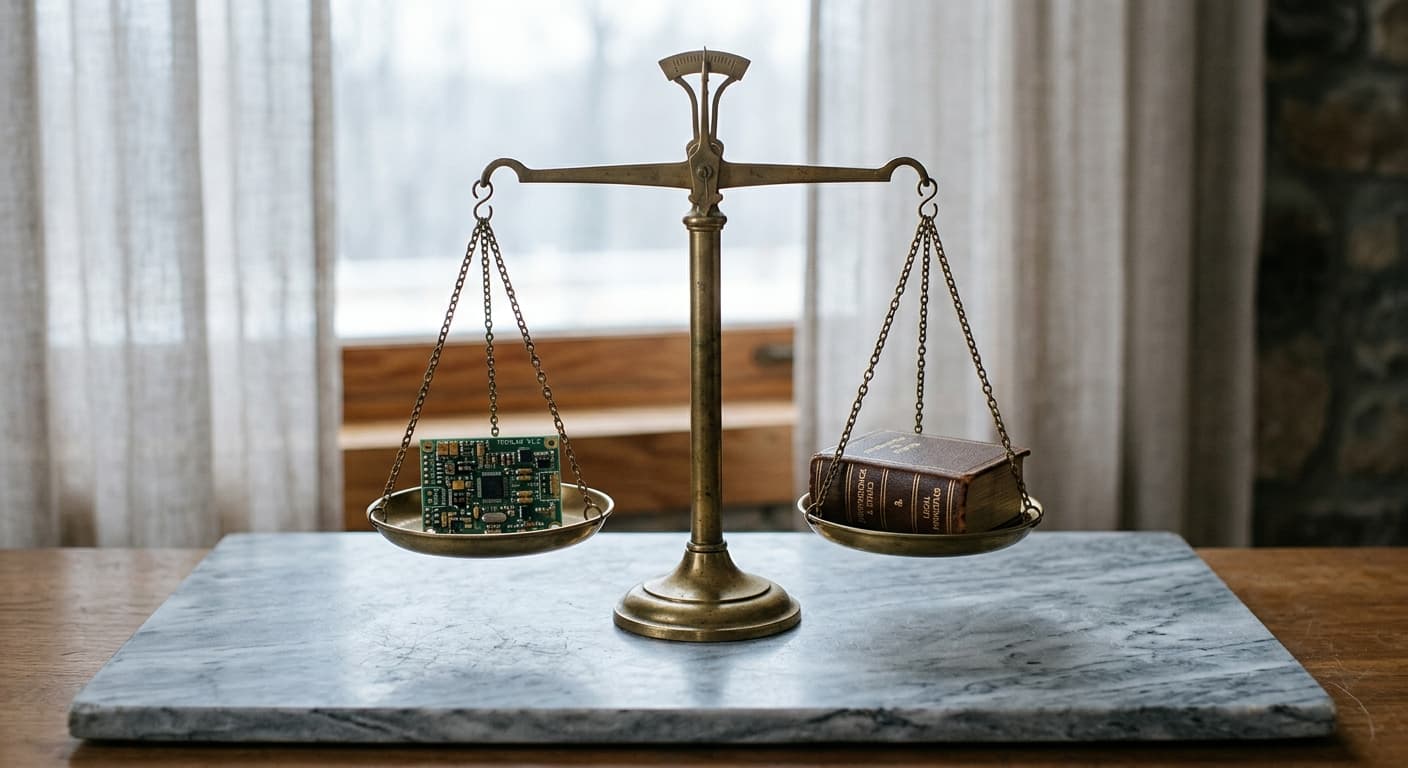
Pennsylvania regulates AI through two enacted criminal laws: Act 125 of 2024 extends the state's sexual-image offenses to AI-generated deepfake material, and Act 35 of 2025 makes it a misdemeanor to distribute an AI forgery of a real person as genuine with intent to defraud or injure, rising to a felony when that is done through a scheme to defraud, coerce or commit theft. Executive Order 2023-19 governs AI use within state agencies.
Pennsylvania has taken a multi-pronged approach to artificial intelligence regulation, combining enacted criminal laws targeting deepfakes and digital forgery with aggressive executive-branch AI governance and a growing legislative pipeline. Governor Josh Shapiro has positioned the Commonwealth as a national leader in government AI adoption while simultaneously signing laws to protect residents from AI-generated harms.
This article covers every enacted Pennsylvania AI law, pending legislation, executive policies, and federal considerations as of March 2026.
This article is for informational purposes only and does not constitute legal advice. Consult a Pennsylvania-licensed attorney for guidance on specific situations.
Act 125 of 2024: AI-Generated Deepfake Images (Enacted)
Pennsylvania's first enacted AI law is Act 125 of 2024, derived from Senate Bill 1213. The bipartisan legislation, sponsored by Sen. Tracy Pennycuick (R-24), Sen. Jimmy Dillon (D-5), and Sen. Lisa Boscola (D-18), passed the Senate unanimously in June 2024 and was signed into law in October 2024.
What the Law Addresses
Act 125 amends Titles 18 (Crimes and Offenses) and 61 (Prisons and Parole) of the Pennsylvania Consolidated Statutes to address the use of AI to generate deepfake child sexual abuse material. The AI substance is all in Title 18. The Title 61 amendments in Sections 8 through 10 of the act are parole-eligibility conforming changes that follow from renaming child pornography as child sexual abuse material throughout the code, not AI provisions. Prior to this law, Pennsylvania made it illegal to share intimate images without consent but did not clearly address AI-generated content.
Key Provisions
Section 3 of the act rewrote 18 Pa.C.S. 6312(c) and (d), and Section 2 rewrote 18 Pa.C.S. 3131, so that the following now reach artificially generated material:
- Selling, distributing, delivering, disseminating, transferring or displaying artificially generated child sexual abuse material, or possessing it for any of those purposes, under 18 Pa.C.S. 6312(c)
- Intentionally viewing, or knowingly possessing or controlling, artificially generated child sexual abuse material, under 18 Pa.C.S. 6312(d)
- Disseminating an artificially generated sexual depiction of an individual with intent to harass, annoy or alarm them, under 18 Pa.C.S. 3131(a)(2)
Act 125 did not amend 18 Pa.C.S. 6312(b), the provision covering photographing or causing a child to engage in a prohibited sexual act. Generating the material is therefore not itself the added offense, and is reached only through the possession, control and distribution prongs above.
Penalties
Disseminating an artificially generated sexual depiction under 18 Pa.C.S. 3131 is graded a first-degree misdemeanor when the person depicted is a minor and a second-degree misdemeanor when the person depicted is not. The law provides law enforcement with the authority to prosecute individuals who distribute or possess AI-generated child sexual abuse materials that were previously difficult to prosecute under existing statutes.
Act 35 of 2025: Digital Forgery Law (Enacted)
On July 7, 2025, Governor Josh Shapiro signed Act 35 of 2025 (formerly Senate Bill 649), establishing criminal penalties for distributing deepfakes with fraudulent or injurious intent. The act was not effective on signing. Section 2 of the enrolled act reads that it shall take effect in 60 days, so 18 Pa.C.S. 4101.1 has applied since September 5, 2025.
What the Law Criminalizes
Act 35 adds 18 Pa.C.S. 4101.1, the offense of digital forgery, to Pennsylvania's forgery and fraudulent practices chapter.
The offense has a narrower reach than the phrase "AI impersonation" suggests. Under Section 4101.1(a), a person is guilty only if, with intent to defraud or injure anyone, or with knowledge and intent that the person is facilitating a fraud or injury to be perpetrated by anyone, the person both generates or creates and distributes a forged digital likeness as genuine, and knows or reasonably should know that the visual representation or audio recording is a forged digital likeness.
Both halves matter. A nonconsensual deepfake or voice clone that is created but never distributed is not an offense under this section, and neither is one distributed without fraudulent or injurious intent. The law targets people who use AI to defraud or harm Pennsylvanians.
Penalty Structure
| Offense | Classification | Severity |
|---|---|---|
| Distributing a forged digital likeness as genuine with intent to defraud or injure | First-degree misdemeanor | Up to 5 years imprisonment |
| The same offense committed through involvement in a scheme to defraud, coerce or commit theft of monetary assets or property | Third-degree felony | Up to 7 years imprisonment |
Intent to defraud or injure is an element of every violation, so it is not what raises the grade. Under Section 4101.1(b)(2), the third-degree felony applies only when the violation is committed through involvement in a scheme to defraud, coerce or commit theft of monetary assets or property, including schemes like faking a relative's voice to trick older adults into sending money.
Exceptions and Defenses
The law provides exceptions for:
- Constitutionally protected activity (satire, parody, commentary)
- A law enforcement officer engaged in the performance of official duties
- A provider or developer of any technology used in the creation of a visual representation or audio recording
- Any information service, system or access software provider that provides or enables computer access by multiple users to a computer server, including specifically a service or system that provides access to the internet
The last two exceptions are written without conditions. Subsection (c) attaches no requirement that a technology provider, developer or internet service have avoided facilitating the forgery.
An affirmative defense exists when the defendant took reasonable action to notify viewers or listeners that the forged digital likeness was not genuine.
Executive Order 2023-19: Government AI Governance
Governor Shapiro signed Executive Order 2023-19 in September 2023, establishing the framework for AI use within Pennsylvania state government. The order set clear principles for generative AI use: accuracy, transparency, security, fairness, and employee empowerment.
Generative AI Governing Board
The executive order created the Generative AI Governing Board to oversee AI policy and implementation across all Commonwealth agencies. The board is responsible for reviewing AI deployments, setting standards, and ensuring ethical use.
OpenAI Pilot Program
In January 2024, Pennsylvania launched a first-in-the-nation pilot program with OpenAI, providing state employees access to ChatGPT for work tasks. The pilot results showed employees reported an average time savings of 95 minutes per day using AI for writing, research, summarization, and IT support.
University of Pennsylvania Partnership
In October 2025, the Shapiro Administration announced a Cooperative Agreement for AI Advising Services with the University of Pennsylvania to advance responsible AI use across state government.
National Recognition
Under Governor Shapiro, Pennsylvania became one of the top three states in the nation for AI readiness, according to the July 2025 Code for America Government AI Landscape Assessment.
Commonwealth AI Policy (January 2026)
Pennsylvania's Office of Administration published an updated Artificial Intelligence Policy effective January 13, 2026, replacing the previous August 2025 version. The policy applies to all offices, departments, boards, commissions, and councils under the Governor's jurisdiction.
Key Policy Requirements
The AI policy establishes guidelines for integrating AI into Commonwealth operations. Notable provisions include:
- No final employment decisions by AI: The policy prohibits using generative AI to make final decisions that affect employment
- Data protection: Sensitive government data requires approved AI systems with appropriate security controls
- Transparency: Agencies must document AI use in decision-making processes
- Human oversight: AI outputs must be reviewed by qualified personnel before being used in consequential decisions
Joint State Government Commission AI Report (January 2026)
In January 2026, Pennsylvania's Joint State Government Commission released a 389-page report titled "Artificial Intelligence: Advisory Committee Recommendations on the Adoption and Use of AI in Pennsylvania." The report, mandated by House Resolution 170, provides a comprehensive assessment of AI's impact across healthcare, education, government, and law enforcement.
Key Recommendations
The report's recommendations include:
Government Oversight
- Create a Chief Artificial Intelligence Officer position for the Commonwealth
- Review AI legislation every three to five years
- Require AI developers to assess systems' potential impact on privacy, due process, and equal protection
Business and Employment
- Require employers and businesses to disclose when and how AI is used
- Communicate when automated decision-making tools make "high-risk decisions" such as hiring, college admissions, and healthcare decisions
- Give employees "reasonable advance notice" before deploying AI tools that could affect their employment
- Require employers to report when AI displaces employees
Education
- AI should only be implemented when empirical evidence supports student benefit
- AI tools should be available to all students equitably
- Teachers and educators should receive training on ethical AI responsibilities
Political Advertising
- Require disclosure when AI is used for political and election-related purposes
SAFECHAT Act: AI Chatbot Child Safety (SB 1090, 2026 Pending)
The Safeguarding Adolescents from Exploitative Chatbots and Harmful AI Technology Act (SAFECHAT Act, SB 1090) passed the Pennsylvania Senate 49-1 on March 17, 2026. The bill was sponsored by Senators Pennycuick and Miller.
Key Requirements
The SAFECHAT Act would require AI companion operators to:
- Issue "clear and conspicuous" notification that an AI companion is artificially generated
- Establish protocols to prevent chatbots from producing content related to suicide, self-harm, or violence
- Direct users to crisis resources when high-risk language is detected
- Implement age-appropriate standards for chatbots interacting with minors
Penalties
| Violation Type | Maximum Fine |
|---|---|
| Chatbot disclosure failures | $50,000 per violation |
| Content safeguard failures resulting in harm to a minor | $500,000 per incident |
Current Status
The SAFECHAT Act now awaits consideration in the Pennsylvania House of Representatives.

AI in Healthcare: HB 1925 (Pending)
House Bill 1925 proposes new regulations for AI use in healthcare and insurance. Introduced on October 6, 2025, the bill would amend the Health and Safety and Insurance titles of Pennsylvania law.
Key Provisions
HB 1925 would require:
- Healthcare providers, insurers, and managed care plans to disclose when AI is used in clinical decision-making or utilization review
- AI tools cannot override human judgment; a qualified professional must make the final determination
- Insurers must reveal when AI drives a denial or prior authorization decision
- Facilities and insurers must submit compliance information to the Department of Health or Insurance
Current Status
HB 1925 remains in the House Communications and Technology Committee, where a public hearing was held on the proposal.

AI in Elections (Pending)
Pennsylvania does not yet have an enacted law regulating AI in elections, although the House has passed legislation addressing the issue.
House Deepfake Disclosure Bill
The Pennsylvania House unanimously passed a bill requiring campaigns to disclose when they use AI-generated deepfakes that mimic a candidate's appearance or voice. Campaigns that fail to disclose could be fined for every day the ad runs. Candidates would be able to sue other candidates, political parties, or PACs for "knowingly and intentionally" disseminating undisclosed deepfakes within 90 days of an election.
The bill currently sits in the state Senate Communications and Technology Committee.
Senate Proposals
Senator Lindsey M. Williams (D-Allegheny) announced on March 17, 2026 that she will introduce separate legislation requiring political advertisements to disclose if AI was used in their creation.
AI Data Centers and Economic Development (SB 939, Pending)
Senate Bill 939, sponsored by Sen. Greg Rothman (R), aims to position Pennsylvania as a hub for AI infrastructure. The bill would establish an Office of Transformation and Opportunity and create an AI, Data Center, and Emerging Technology Regulatory Sandbox Program.
Regulatory Sandbox
The sandbox program would allow companies to test innovative AI products or services for up to 12 months without obtaining a license that might otherwise be required, under government oversight.
SB 939 was amended and approved by the Senate Committee on Communications and Technology in February 2026 with a unanimous 10-0 vote.
AI in Employment
Pennsylvania has not enacted AI-specific employment legislation. However, the Commonwealth's January 2026 AI Policy prohibits state agencies from using generative AI to make final employment decisions. The Joint State Government Commission's report recommends extending similar requirements to the private sector.
Existing anti-discrimination laws under the Pennsylvania Human Relations Act apply to AI-powered employment tools. Employers using automated systems in hiring must ensure compliance with state and federal equal employment opportunity requirements.
The state legislature has also considered proposals requiring the Department of Labor and Industry to study AI's future impact on the labor force.
Federal AI Policy and Pennsylvania
Federal AI policy intersects with Pennsylvania's regulatory efforts in several ways.
Executive Order 14365 (December 2025)
President Trump's Executive Order 14365 aims to preempt state AI laws that "unduly impede" innovation. This creates potential tension with Pennsylvania's pending AI healthcare regulation (HB 1925) and SAFECHAT Act.
However, the order's carve-outs for child safety measures could protect the SAFECHAT Act. Pennsylvania's enacted deepfake laws (Act 125 and Act 35) address criminal conduct rather than AI development, making them less susceptible to preemption challenges.
Governor Shapiro's AI Approach
Governor Shapiro has positioned Pennsylvania as both pro-innovation and pro-protection, creating an AI Task Force to address harmful AI chatbots while maintaining the Commonwealth's AI-friendly business environment. This balanced approach may serve as a model for navigating federal preemption pressures.
Summary of Pennsylvania AI Laws and Actions
| Law/Action | Year | Status | Topic | Key Provision |
|---|---|---|---|---|
| Exec. Order 2023-19 | 2023 | Active | Government AI governance | Created Generative AI Governing Board |
| Act 125 (SB 1213) | 2024 | Signed Oct. 29, 2024; effective Dec. 28, 2024 | AI-generated CSAM | Extends CSAM distribution and possession offenses to artificially generated material |
| Act 35 (SB 649) | 2025 | Signed July 7, 2025; effective Sept. 5, 2025 | Digital forgery | Distributing an AI forgery to defraud or injure is an M1; F3 in a scheme to defraud, coerce or steal |
| Commonwealth AI Policy | 2026 | Active | Government AI standards | Prohibits AI from making final employment decisions |
| JSGC AI Report | 2026 | Advisory | Comprehensive AI recommendations | 389-page report recommending Chief AI Officer |
| SB 1090 (SAFECHAT) | 2026 | Passed Senate 49-1 | Child safety | AI chatbot safeguards, fines up to $500,000 |
| HB 1925 | 2025 | Pending in committee | Healthcare AI | Requires AI disclosure in clinical decisions |
| SB 939 | 2025 | Pending | AI data centers | Regulatory sandbox for AI companies |
| Election deepfake bill | 2025 | Passed House, pending in Senate | Election AI | Requires disclosure of AI in campaign ads |
More Pennsylvania Laws
Explore other Pennsylvania law topics on Recording Law:
Frequently Asked Questions
Does Pennsylvania have an AI law?
Yes. Pennsylvania has two enacted AI laws. Act 125 of 2024 (SB 1213) extends existing offenses to AI-generated sexual imagery, covering the dissemination of an artificially generated sexual depiction of a person to harass them, and the distribution, viewing or possession of artificially generated child sexual abuse material. Act 35 of 2025 (SB 649), the Digital Forgery Law, took effect on September 5, 2025 and makes it a first-degree misdemeanor to distribute a forged digital likeness as genuine with intent to defraud or injure, rising to a third-degree felony when that is done through involvement in a scheme to defraud, coerce or commit theft. Several additional AI bills are pending, including the SAFECHAT Act (SB 1090) for chatbot safety and HB 1925 for healthcare AI transparency.
What are the penalties for AI deepfakes in Pennsylvania?
Under Act 35 of 2025, distributing a forged digital likeness as genuine with intent to defraud or injure anyone is a first-degree misdemeanor (up to 5 years imprisonment). It rises to a third-degree felony (up to 7 years) only when the violation is committed through involvement in a scheme to defraud, coerce or commit theft of monetary assets or property. Creating a deepfake without distributing it, or distributing one without fraudulent or injurious intent, is not an offense under this section. Under Act 125 of 2024, disseminating an artificially generated sexual depiction to harass someone is a first-degree misdemeanor when the person depicted is a minor and a second-degree misdemeanor otherwise, while distributing, viewing or possessing artificially generated child sexual abuse material is charged under 18 Pa.C.S. 6312.
Does Pennsylvania regulate AI in elections?
Not yet through enacted law. The Pennsylvania House unanimously passed a bill requiring disclosure of AI-generated deepfakes in campaign advertising, but the bill is pending in the Senate Communications and Technology Committee. Candidates could sue for undisclosed deepfakes distributed within 90 days of an election. Senator Lindsey Williams also announced plans to introduce separate AI political advertising disclosure legislation in March 2026.
What is the SAFECHAT Act in Pennsylvania?
The SAFECHAT Act (SB 1090) is the Safeguarding Adolescents from Exploitative Chatbots and Harmful AI Technology Act. It passed the Pennsylvania Senate 49-1 on March 17, 2026. The bill would require AI chatbot operators to notify users they are interacting with AI, implement suicide prevention protocols, prevent harmful content generation, and direct users to crisis resources. Violations carry fines of up to $50,000 per disclosure failure and up to $500,000 per incident when content safeguard failures harm a minor.
How does Pennsylvania regulate AI in state government?
Governor Shapiro signed Executive Order 2023-19 in September 2023, creating the Generative AI Governing Board and setting principles for AI use in government. The Commonwealth updated its official AI Policy on January 13, 2026, which prohibits using generative AI for final employment decisions, requires human oversight of AI outputs, and mandates data security controls. Pennsylvania also launched a first-in-the-nation OpenAI pilot program for state employees in January 2024.
Updates
Corrected the Digital Forgery Law section against the enrolled text of Act 35 of 2025: the law took effect September 5, 2025 rather than on signing, the offense requires both fraudulent or injurious intent and actual distribution of the forgery, the third-degree felony applies only to a scheme to defraud, coerce or commit theft, and the technology-provider and internet-service exceptions are stated as written; also corrected the Act 125 summary to reflect that it extends distribution and possession offenses rather than creating a standalone offense of generating the material.
Independently fact-checked against the cited primary sources; governing law re-checked for recent changes
Reviewed and approved by an editor
The Law Behind This Article
This article rests on the statutory provisions below, held in our own legal record and retrieved from the official source. Tap a section to read the operative text.
Pennsylvania Consolidated Statutes Title 18 (Crimes and Offenses)
§ 4101.1Digital forgeryIn forcecited in 3 of our articles
(a) Offense defined.--A person is guilty of digital forgery if, with intent to defraud or injure anyone, or with knowledge and intent the person is facilitating a fraud or injury to be perpetrated by anyone, the person: (1) generates or creates and distributes a forged digital likeness as genuine; and (2) knows or reasonably should know the visual representation or audio recording is a forged digital likeness. (b) Grading.-- (1) A person who violates this section is guilty of a misdemeanor of the first degree. (2) A person who violates this section through involvement in a scheme to defraud, coerce or commit theft of monetary assets or property is guilty of a felony of the third degree.
Official text (excerpt) · last checked 2026-09-03 · Read the full text in our law library · Verify at palegis.us
Also relied on in: Pennsylvania Deepfake Laws: AI Images, Voice Cloning & Penalties (2026)
Search our full record of US law — 2.1 million sections, every state + federal →
Sources and References
- Act 125 of 2024 (SB 1213) law information(palegis.us).gov
- Governor Shapiro Signs New Digital Forgery Law (Act 35)(pa.gov).gov
- Pennsylvania Artificial Intelligence Policy (January 2026)(pa.gov).gov
- Joint State Government Commission AI Report(jsg.legis.state.pa.us).gov
- Governor Shapiro Takes Action to Protect Pennsylvanians Using AI(pa.gov).gov
- Shapiro Administration Leads in Ethical Use of AI(pa.gov).gov
- OpenAI generative AI pilot for Commonwealth employees(pa.gov).gov
- Legislation to Combat AI-Generated Deepfake Images of Minors Set for Enactment(pasenategop.com).gov
- SAFECHAT Act passes Pennsylvania Senate(pasenate.com).gov
- House Bill 1925 (AI in healthcare)(palegis.us).gov
- Senate Bill 939 (AI data centers)(palegis.us).gov
- Executive Order 14365 on AI state preemption(whitehouse.gov).gov
- PA House passes deepfake political ad disclosure bill(lancasteronline.com)
- 5 takeaways from new state government report on AI(cityandstatepa.com)
- Deepfake laws take effect in Pennsylvania(crowell.com)
- Digital Forgery Law protects Pennsylvanians from AI scams(pa.gov).gov
- Act 35 of 2025 (SB 649), enrolled text adding 18 Pa.C.S. 4101.1 (digital forgery), including the 60-day effective-date clause(palegis.us)
- Act 125 of 2024 (SB 1213), enrolled text amending 18 Pa.C.S. 3131, 6312 and 6321 and 61 Pa.C.S. 4503, 4601 and 6137.1(palegis.us)