Right of First Refusal Alberta
Independently fact-checked against primary sources (last audited August 5, 2026). · 6 primary sources cited on this page. How we verify our legal content
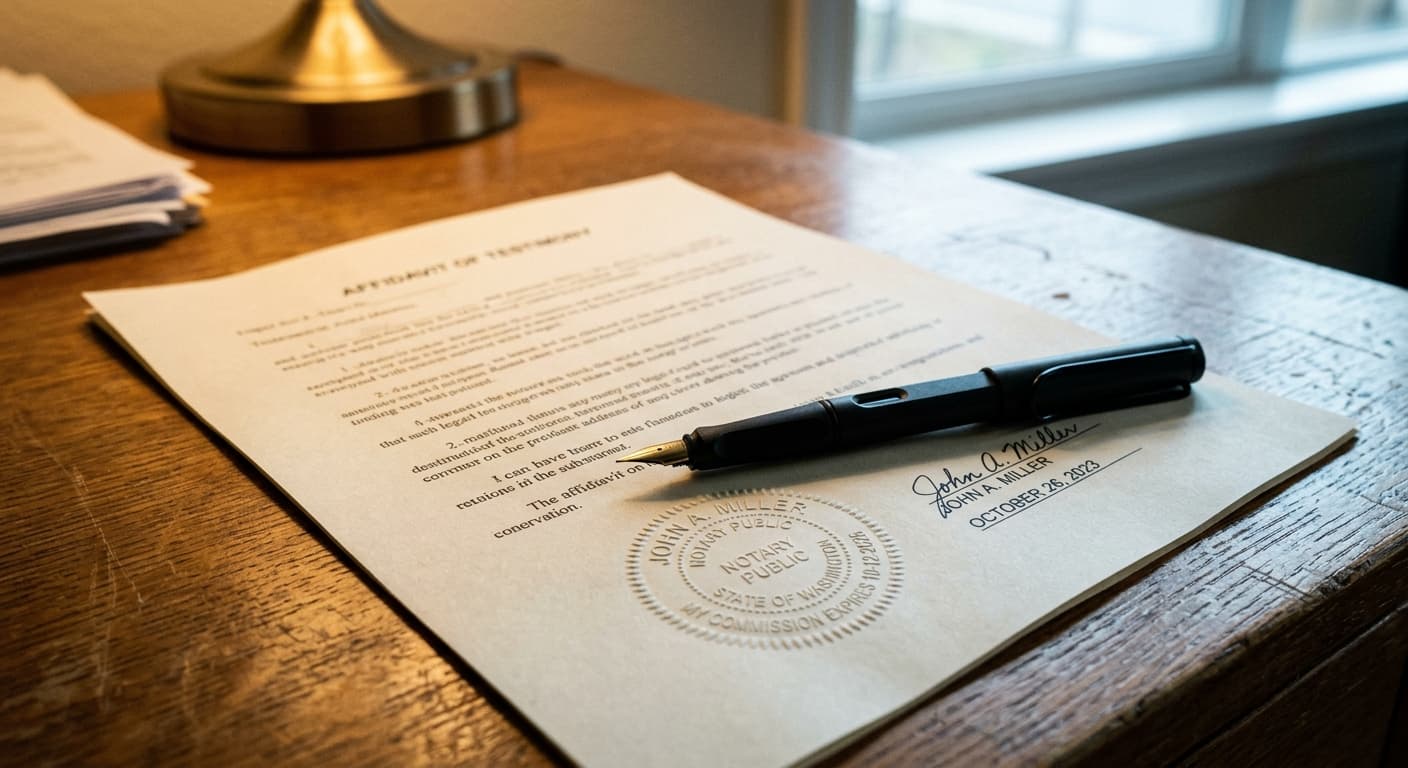
Alberta's Right of First Refusal is an optional clause in a parenting order or parenting agreement that requires the guardian whose parenting time it is to offer the other guardian a chance to care for the child before contacting a third party, such as a babysitter or family member. It covers planned and last-minute absences alike, and no Alberta statute requires it.
A note on terminology: Alberta's Family Law Act, SA 2003, c F-4.5 (office consolidation current as of June 11, 2025) does not use the words "custody", "custodial parent" or "access" for parenting arrangements. It allocates guardianship powers and parenting time between guardians (s 32). The federal Divorce Act moved to the same language. This article uses the statutory terms, because those are the words on Alberta court forms. Older orders and agreements may still say "custody", and they remain valid.
Under Alberta's Family Law Act and the federal Divorce Act, there is no fixed age at which a child gains a legal right to refuse to see a parent. Section 18(2)(b)(iv) of the Family Law Act directs the court to consider "the child's views and preferences, to the extent that it is appropriate to ascertain them." Section 16(3)(e) of the Divorce Act uses almost identical wording, requiring the court to give "due weight to the child's age and maturity." The views of an older, mature teenager typically carry more practical weight.
A Right of First Refusal clause, where one exists, requires that if you cannot care for your child during your parenting time, you must first offer that time to the child's other guardian before asking a caregiver, family member, stepparent, or anyone else.
Below is what Alberta parents need to know about how the clause works and what it actually takes to enforce one.
- If separating parents agree, a parenting agreement may contain a Right of First Refusal clause.
- A court may include the clause in a parenting order under section 32(2)(d) of the Family Law Act.
- You may vary an existing parenting order to add or remove the clause under section 34.
- Enforcing the clause means applying to the court for an enforcement order under section 40, not calling police in the first instance.
- A dispute resolution process can be built into a parenting order under section 32(2)(c), but only if the people bound by it have agreed to it.
- The Right of First Refusal clause is not mandatory, and the Family Law Act does not name it.
What is Alberta's Right of First Refusal?
Under Alberta's Family Law Act and Canada's Divorce Act, separating parents negotiate a parenting arrangement that can also address safety concerns, such as domestic violence. During those negotiations, parents may include a "Right of First Refusal" clause.

Where a parenting arrangement includes the clause, the guardian who cannot cover their own parenting time must offer that time to the other guardian first. In plain terms, you contact the other parent and find out whether they are available before you contact a babysitter, a family member, or anyone else.
What to remember about Alberta's Right of First Refusal
- You must notify the other guardian if you cannot care for the child because of work, travel, medical appointments, vacation, illness, or any other reason the clause covers.
- The clause applies to both planned and last-minute situations.
- If the other guardian is unavailable, you may then contact a third party.
- The clause only reaches as far as its own wording. A clause that never says what length of absence triggers it, how notice is given, or how long the other guardian has to respond, is harder to enforce than one that does.
Can a court order include a Right of First Refusal?
Yes, but the authority is narrower and more specific than it is often described.
Section 32(1) of the Family Law Act is the trigger for a court order: where a child has more than one guardian and those guardians cannot agree in exercising their guardianship powers, and where they are parents living separate and apart, the court may make an order on application by one or more of them.
Section 32(2) then sets out what a parenting order may contain:
"(a) an allocation, generally or specifically, of the powers, responsibilities and entitlements of guardianship among the guardians;
(b) an allocation of parenting time, which may be by way of a schedule, unless a schedule is unnecessary in the circumstances;
(c) a dispute resolution process for any or all future disputes regarding guardianship or parenting arrangements, if the process has been agreed to by the persons who are bound by that process;
(d) any other provisions that the court considers appropriate."
Family Law Act, SA 2003, c F-4.5, s 32(2)
Two points follow. First, a Right of First Refusal fits under section 32(2)(d) as a provision the court considers appropriate. The Act never names the clause. Second, section 32(2) describes a court-made parenting order, not a private agreement. The phrase "parenting agreement" does not appear anywhere in the Family Law Act.
Note also the qualifier in section 32(2)(c). A court cannot simply impose a dispute resolution process; the people bound by it must have agreed to it.
Does a filed parenting agreement become a court order in Alberta?
Not automatically, and the distinction decides whether the enforcement route below is open to you at all.
Section 86 of the Family Law Act provides that "where the court makes an order under this Act, the court may incorporate in its order all or part of a written agreement made by some or all of the parties to the proceeding." The verb is "may", and it operates only when the court is already making an order.
This matters for enforcement. The Division 4 enforcement scheme applies to a "time with a child clause", which section 38(1)(g) defines as a provision granting time with a child at determinable times, on determinable days or dates or for determinable periods that is contained in a parenting or contact order under the Family Law Act, a parenting or contact order under the Divorce Act, or a similar order under comparable legislation. Both halves of that definition carry weight: the clause must sit in an order, and it must grant time at determinable times or for determinable periods. A private agreement that has never been incorporated into an order does not carry a time with a child clause, so section 40 is not available for it.
Watch out: If your Right of First Refusal lives only in a signed separation agreement, confirm whether it was ever incorporated into a court order. If it was not, your first step is obtaining an order, not enforcing one.
Can a stepparent block a Right of First Refusal in Alberta?
A stepparent has no standing to override a parenting order. If the other guardian refuses to honour a Right of First Refusal clause that sits in an order, that may be a denial of time under section 38(1)(b) of the Family Law Act. It is not automatic: section 38(1)(b) defines a denial of time as denial of a right under a time with a child clause, and section 38(1)(g) limits that term to a provision granting time at determinable times, on determinable days or dates or for determinable periods. A Right of First Refusal triggers whenever the other guardian happens to be unavailable, so whether section 40 reaches it can be argued either way. That is one more reason a clause that specifies its trigger, notice method and response window is on firmer ground than one that does not.
Start by reading your own order or agreement. Many include a dispute resolution process under section 32(2)(c). Where that process sets out clear steps for what happens when one guardian cannot care for the child, follow it, or speak to a lawyer.
Bear in mind that the Family Law Act does not require a dispute resolution process. Section 32(2)(c) permits one, and only where the people bound by it agreed. If your order is silent, there is no built-in process to follow.
How to enforce the Right of First Refusal if a stepparent blocks access to a child
A stepparent who blocks your time is not the person the Family Law Act acts against. The respondent is the guardian bound by the order.
Where negotiation fails, the route is an application for an enforcement order under section 40, described in the next section. Calling police first will not usually produce a result, because an officer's duty under section 44 arises only where the court has already granted a specific direction.
How to enforce a Right of First Refusal in Alberta
Enforcement under Alberta's Family Law Act is a court process. Division 4 (sections 38 to 45) governs it.
Under section 40(1), a person with a right under a time with a child clause may apply to the court, and if the court is satisfied there has been a denial of time within 12 months of the application being brought, it may make any enforcement order appropriate in the circumstances. Missing that 12-month window closes off section 40.
Section 40(2) lists what an enforcement order may contain:
- Compensatory time in substitution for the time that was denied.
- Security for performance of the obligation, in the form and amount the court sets.
- Reimbursement of necessary expenses actually incurred, which section 38(2) defines to include travel costs, the cost of locating the child and securing time with the child, and lost wages.
- A penalty of up to $100 for each day of denial, to a maximum of $5,000, and in default of payment imprisonment for up to 90 days.
- Imprisonment, continuous or intermittent, to a maximum of 90 days.
- A direction that an enforcement officer act under section 44.
- Any other direction intended to induce compliance.
Section 40(3) restricts the last three of those. The court may impose a penalty, imprisonment, or an enforcement officer direction only if satisfied that none of the other remedies would be effective. Section 40(5) also allows the court to refuse to make an enforcement order where it is of the opinion that the denial of time was "excusable in the particular circumstances".
Will police enforce a Right of First Refusal in Alberta?
Only in narrow circumstances, and never on the strength of a parenting order alone.
An "enforcement officer" under section 38(1)(c) includes a police officer as defined in the Police Act. But section 44(1) engages only where an enforcement order already contains a section 40(2)(f) direction. The court may include that direction only where it is satisfied, based on the respondent's history of denial of time or other reasonable and probable grounds, that a denial of time will occur, and only where no lesser remedy would work.
Where that direction exists, the officer must act at the applicant's request and "on production of a certified copy of the enforcement order", take reasonable steps to find the child, and bring the child to the applicant. A generic custody document or parenting order will not do; it must be the certified enforcement order.
Watch out: Even with a valid section 40(2)(f) direction, section 44(3) provides that an enforcement officer is not required to bring the child to the applicant if the officer determines that, in the immediate circumstances, it is not in the child's best interests. Turning up at a police station with a parenting order and identification is not a working plan.
Section 39(1) preserves other remedies that exist at law, including a court's general contempt power. Division 4 is the route the Family Law Act builds for denial of parenting time.
Mandatory steps before you can file in Alberta
An Alberta Court of Justice practice directive, first effective December 18, 2023 and updated October 14, 2025, imposes mandatory pre-court requirements on Family Law Act applications. Since October 14, 2025 it applies in Edmonton, St. Albert, Stony Plain, Sherwood Park, Leduc, Fort Saskatchewan and Calgary.
Before filing any document that commences a family law action, or any new application after one has been commenced, an applicant must complete:
- The online Parenting After Separation (PAS) course, required where children under 18 or other dependent children are affected. The PAS certificate is filed with the application. If more than two years have passed since you took it, you must take it again.
- A meeting with a Family Court Counsellor, unless you are represented by a lawyer.
- Alternative Dispute Resolution, attended with a provider acceptable to the court within a maximum of six months before filing.
The fourth requirement, financial disclosure, applies to applications for child support, spousal support, or adult interdependent partner support, so it is usually not triggered by a parenting-time enforcement application on its own.
A Justice of the Court of Justice may waive or defer these requirements in urgent circumstances, which the directive describes as a risk of immediate harm to a party or child, imminent risk of abduction, risk of severe economic harm, or where the other party refuses to participate, cannot be located, or is subject to an order prohibiting contact.
If you are outside those seven locations, confirm the current requirements with the courthouse where you would file, because the directive names specific locations and its scope has changed once already.
What is a Mandatory Right of First Refusal in Alberta?
A Mandatory Right of First Refusal requires you to contact the other guardian before leaving the child with anyone else, without exception. That can create friction. It may limit time the child spends with extended family, and it can require notice even before leaving the child with a new spouse.
For instance, if you remarry, must you notify the other parent before leaving the child with your new partner? A clause that does not answer that question will eventually be argued about.
Draft the trigger clearly, or expect disputes.
What to remember
- A Right of First Refusal clause does not have to be mandatory, and does not have to apply to every absence.
- If you remarry or repartner, consider whether the arrangement still fits.
- If the other guardian will not agree to a change, you may apply to vary the parenting order under section 34 of the Family Law Act.
- Under section 34(3), the court must satisfy itself that the child's needs or circumstances have changed since the order was made, and must then consider only the best interests of the child.
- A well-drafted clause states when it applies, how notice is given, and how long the other guardian has to respond.
When can a child decide which parent to live with in Alberta?
In Alberta, the court may consider a child's views at any age, weighing them according to the child's age and maturity. There is no fixed age, such as 12, at which a child's views become controlling.
Section 18(1) of the Family Law Act requires the court to take into consideration only the best interests of the child. Section 18(2)(a) requires the court to ensure the greatest possible protection of the child's physical, psychological and emotional safety, and section 18(2)(b) lists the needs and circumstances the court weighs, including the child's views and preferences at subparagraph (iv).
As a child matures, their stated preference tends to carry more practical weight, and a court may find it impractical to enforce parenting time against the wishes of an older teenager. The decision remains governed by the child's best interests rather than the child's choice.
One place where age is decisive: under section 25(2), no order terminating a guardianship may be made in respect of a child 12 or older without that child's consent, though section 25(3) lets the court dispense with consent for good and sufficient reasons.
What to do if a guardian is abusive?
Both statutes put the child's safety first. Section 18(2)(a) of the Family Law Act requires the greatest possible protection of the child's physical, psychological and emotional safety, and section 16(2) of the Divorce Act requires "primary consideration to the child's physical, emotional and psychological safety, security and well-being."
Section 18(2)(b)(vi) requires the court to consider any family violence, including its impact on the child's safety and well-being, the ability of the person who engaged in the violence to care for the child, and whether it is appropriate to order the guardians to co-operate at all. Section 18(3) defines family violence to include causing or attempting to cause physical harm, forced confinement, sexual abuse, or causing someone to reasonably fear for their safety.
If a child is in immediate danger, that is a police and child-protection matter, not a parenting-time dispute. Child protection in Alberta runs under separate legislation, the Child, Youth and Family Enhancement Act, not the Family Law Act.
How to get out of a Right of First Refusal in Alberta?
You may apply to vary the parenting order under section 34 of the Family Law Act, or agree to a change out of court through negotiation or mediation. Where the clause sits in a court order, a private agreement does not amend the order by itself; section 86 lets the court incorporate the agreement into an order, so the change takes effect once the court acts on it.
How to negotiate a new parenting arrangement in Alberta
Instead of going to court, consider the following.
- Family court assistance. Family Court Counsellors help with safety screening for family violence, understanding options for resolving child-related disputes, negotiating agreements, and preparing court applications. This is also the Resolution Services contact the Court of Justice practice directive points litigants toward.
- Family mediation. Alberta's Family Mediation Program helps separating parents negotiate parenting arrangements. The free program is means-tested: both parties must agree to mediate, one parent must have a gross income of $60,000 or less per year, and there must be at least one dependent child under 18 or still eligible for child support.
- Negotiation through lawyers, if you have the resources or are eligible for legal aid.
What to remember
- The court weighs a child's opinion based on age and maturity. There is no fixed age, such as 14, at which a child's preference automatically controls.
- The court is not required to follow a child's preference. Both the Family Law Act and the Divorce Act require a best-interests decision.
- Attending a Family Court Counsellor meeting and ADR is not optional in the seven locations named above; it is a precondition to filing.
When can parenting time be restricted in Alberta?
The Family Law Act does not set out a checklist of grounds for cutting off a guardian's parenting time. It sets a standard at section 18, and the court applies it to the evidence. Relevant factors include any family violence, the history of care for the child, the ability and willingness of each person to meet the child's needs, and any civil or criminal proceedings relevant to the child's safety.
Terminating a guardianship is a separate and higher step. Under section 25(1), the court may terminate a guardianship only on application by a guardian or proposed guardian, only where another guardian is in place or about to be appointed, and only where the guardian consents or the court considers it necessary or desirable "for reasons that appear to it to be sufficient." Where the child is 12 or older, section 25(2) requires the child's consent unless the court dispenses with it.
What happens if one parent does not follow a court order in Alberta?
If the order contains a time with a child clause, meaning a provision granting time at determinable times, on determinable days or dates or for determinable periods, and a guardian denies the other their time, the remedy is an application for an enforcement order under section 40 of the Family Law Act, brought within 12 months of the denial. A straight refusal to hand over the child for scheduled parenting time fits that definition squarely; a refused Right of First Refusal offer may or may not, as explained above. The court chooses from the section 40(2) remedies, and reserves penalties, imprisonment, and enforcement officer directions for cases where nothing else would be effective.
If the arrangement was never made into an order, section 40 does not apply. Obtaining an order is the first step, subject to the mandatory pre-court requirements described above.
At what age can a child say they don't want to see a parent in Alberta?
There is no fixed age, such as 12, at which a child gains a legal right to refuse to see a parent. The court weighs the child's views in light of the child's age and maturity, under section 18(2)(b)(iv) of the Family Law Act and section 16(3)(e) of the Divorce Act, and decides according to the child's best interests.
What to do if your child refuses parenting time in Alberta
- Tell the other guardian promptly and work on a solution together. Document what happened and when.
- Speak to a lawyer if the refusal involves safety concerns.
- If the other guardian is denying time without cause, apply for an enforcement order under section 40 within 12 months, after completing the mandatory pre-court requirements where they apply.
Related Canadian Guides
Frequently Asked Questions
Is a Right of First Refusal mandatory in Alberta parenting agreements?
No. It is an optional clause parents can include in a parenting agreement, or that a court can include in a parenting order under section 32(2)(d) of Alberta's Family Law Act, which permits any other provisions the court considers appropriate. The Act does not name the clause and does not require it.
What law governs parenting arrangements and Right of First Refusal clauses in Alberta?
Alberta's Family Law Act, SA 2003, c F-4.5 governs guardianship, parenting orders, and enforcement of time with a child. Married spouses going through a divorce may instead be under the federal Divorce Act. Neither statute uses the phrase Right of First Refusal.
Does filing a parenting agreement with the court make it enforceable in Alberta?
Not on its own. Section 86 of the Family Law Act says the court may incorporate all or part of a written agreement into an order it makes, which is discretionary. The Division 4 enforcement scheme applies to a time with a child clause in an order, so an agreement never incorporated into an order cannot be enforced under section 40.
What happens if a parent violates a Right of First Refusal clause in Alberta?
Where the clause is in an order, the other guardian may apply for an enforcement order under section 40 of the Family Law Act within 12 months of the denial of time. The court may order compensatory time, security, reimbursement of necessary expenses, a penalty of up to $100 per day to a maximum of $5,000, imprisonment of up to 90 days, or a direction to an enforcement officer.
Will police enforce a Right of First Refusal order in Alberta?
Only where the court has included a section 40(2)(f) direction in an enforcement order, which section 40(3) permits only if no other remedy would be effective. The officer acts on production of a certified copy of that enforcement order, not a general parenting order, and under section 44(3) need not bring the child if doing so is not in the child's immediate best interests.
Do I have to do anything before filing a Family Law Act application in Alberta?
In Edmonton, St. Albert, Stony Plain, Sherwood Park, Leduc, Fort Saskatchewan and Calgary, yes. Since October 14, 2025 an Alberta Court of Justice practice directive requires the Parenting After Separation course, a Family Court Counsellor meeting unless you are represented by a lawyer, and Alternative Dispute Resolution before filing, unless a Justice waives or defers them for urgent circumstances.
Can a parent deny parenting time over a Right of First Refusal disagreement in Alberta?
Withholding a child without a valid safety reason is a denial of time under section 38(1)(b) of the Family Law Act and can trigger an enforcement order. Section 40(5) does let the court refuse an enforcement order where it considers the denial excusable in the circumstances.
Is there a fixed age when a child in Alberta can refuse to see a parent?
No. Alberta has no fixed age, such as 12 or 14, at which a child gains a legal right to refuse to see a parent. Section 18(2)(b)(iv) of the Family Law Act directs the court to consider the child's views and preferences, and section 16(3)(e) of the Divorce Act gives them due weight according to the child's age and maturity.
Updates
Corrected this page against the current Alberta Family Law Act. The enforcement guidance was wrong in a way that mattered: it suggested you could take a custody order and ID to police, when enforcement actually requires a court application for an enforcement order within 12 months, and police assistance only follows a specific court direction. Also fixed the statutory citation for what a parenting order may contain, clarified that filing an agreement does not by itself make it a court order, added Alberta's mandatory pre-court requirements that took effect October 14, 2025, and replaced a mislinked child-protection page with Alberta's family court assistance service. A follow-up review restored the full statutory definition of a time with a child clause (a provision granting time at determinable times, days, dates or periods) and clarified that whether section 40 enforcement reaches a Right of First Refusal clause depends on that definition, noted that Alberta's free Family Mediation Program is means-tested, and added the lawyer exemption to the summary of the pre-filing requirements.
Independently fact-checked against the cited primary sources
Corrected against the consolidated Family Law Act, SA 2003, c F-4.5. Fixed the central statutory citation: the list of what an order may contain is section 32(2), not 32(1), and it describes a court-made parenting order, not a private parenting agreement (a term the Act never uses). Rewrote the enforcement guidance, which had described contacting police with a certified custody order and ID as a walk-up remedy: enforcement runs through a section 40 application within 12 months of a denial of time, and police assistance requires a section 40(2)(f) direction the court may grant only where no other remedy would work. Corrected the claim that filing an agreement makes it a court order (section 86 is discretionary). Added Alberta's mandatory pre-court requirements effective October 14, 2025 for seven named locations. Replaced a child-protection link that did not match its description with Alberta's family court assistance page. Replaced US-style custody vocabulary with the Act's guardianship and parenting time language, and grounded the parenting-time restriction and guardianship termination sections in sections 18 and 25 instead of an unsourced list of grounds.
Refreshed for accuracy: repaired three broken WordPress-migration links (one internal cross-link and two dead-anchor alberta.ca links), corrected two spots that incorrectly stated a fixed age of 14 for a child's preference (Alberta uses no fixed age, only a maturity-based standard), removed a US child-custody link that had been placed on this Alberta page in error, added primary citations to Alberta's Family Law Act and the federal Divorce Act, reformatted several run-together bullet lists for correct rendering, added a FAQ section, rewrote the truncated meta description, and swapped generic related-guide links for Alberta-specific pages.
Independently fact-checked against the cited primary sources
Sources and References
- Family Law Act, SA 2003, c F-4.5 (Alberta King's Printer office consolidation, current as of June 11, 2025). Section 32(2) sets out what a parenting order may contain, section 34 governs variation, sections 38 to 45 govern enforcement of time with a child, and section 86 governs incorporation of a written agreement into a court order.(kings-printer.alberta.ca).gov
- Alberta's family law legislation overview, covering the Family Law Act and related statutes.(alberta.ca).gov
- Divorce Act, RSC 1985, c 3 (2nd Supp.), the federal statute governing divorcing spouses. Section 16(3)(e) requires the court to give due weight to the child's views and preferences according to age and maturity.(laws-lois.justice.gc.ca).gov
- Alberta Court of Justice, Family Pre-Court Practice and Procedure Changes practice directive (effective December 18, 2023, updated October 14, 2025), setting mandatory pre-court requirements for Family Law Act applications in seven named locations.(albertacourts.ca).gov
- Alberta family court assistance and Resolution Services. Family Court Counsellors help with safety screening, resolving parenting disputes, negotiating agreements, and preparing court applications.(alberta.ca).gov
- Alberta's Family Mediation Program helps separating or divorcing parents negotiate parenting arrangements.(alberta.ca).gov