Westchester License Plate Reader Lawsuit: 1.6 Billion Scans (2026)
Independently fact-checked against primary sources (last audited June 13, 2026). · 2 primary sources cited on this page. How we verify our legal content
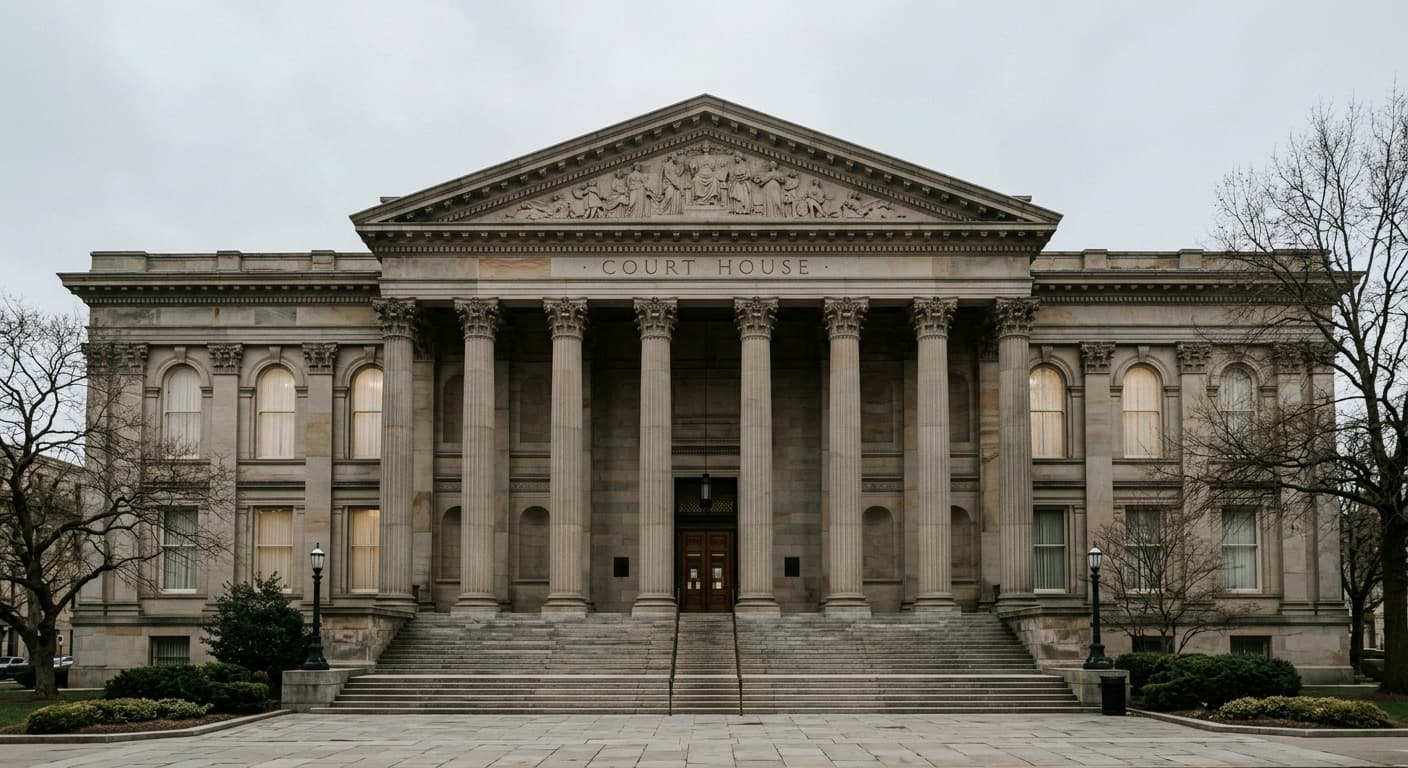
Westchester License Plate Reader Lawsuit: Motorists Challenge a 1.6 Billion Scan Surveillance Network
Four Westchester County motorists filed a proposed class action in New York Supreme Court on June 9, 2026, alleging that the county's network of roughly 575 automated license-plate readers has amassed approximately 1.6 billion vehicle records and shares that database with more than 50 outside agencies, including U.S. Immigration and Customs Enforcement. The complaint seeks a declaration that the program violates the New York State Constitution and an injunction halting its operation.
Information last verified on June 13, 2026. This is a developing story; we update it as the record changes.
Jurisdiction and scope: This article covers a civil action filed in New York Supreme Court (Westchester County) raising claims under the New York State Constitution and federal constitutional doctrine. It provides general legal information only and does not constitute legal advice. See a licensed attorney for guidance specific to your situation.
What Happened
On June 9, 2026, four motorists filed a proposed class action in Westchester County Supreme Court, the trial-level court under New York's court system, in the case Umemoto v. Westchester County Police Department. The index number had not been made publicly available as of June 13, 2026.
The plaintiffs are represented by the New York Civil Liberties Union, the Policing Project at NYU School of Law, the Knight First Amendment Institute at Columbia University, and the international law firm Freshfields. They allege the county built and operates a network of at least 575 automated license-plate-reader cameras, identified in reporting as Flock Safety devices, that have captured approximately 1.6 billion license-plate reads, held in a searchable database for at least two years.
According to the complaint, the county shares access to that database with more than 50 outside agencies, including the FBI, the DEA, and U.S. Immigration and Customs Enforcement. The complaint characterizes the program as an "indiscriminate surveillance system" and a warrantless dragnet that, the plaintiffs allege, was built and deployed without authorization from any elected body. One named plaintiff's vehicle was allegedly recorded more than 2,400 times; another's was captured 1,134 times between 2023 and 2026. All allegations remain unproven at this stage of litigation.
What the Law Actually Says
The central constitutional provision at issue is New York Constitution, Article I, Section 12, which provides that the right of the people "to be secure in their persons, houses, papers and effects, against unreasonable searches and seizures, shall not be violated, and no warrants shall issue, but upon probable cause." New York's provision tracks the federal Fourth Amendment but has been interpreted independently by the state's courts, and in some circumstances affords broader protection.
The load-bearing New York precedent is People v. Weaver, 12 N.Y.3d 433 (2009). The New York Court of Appeals held that police placement of a GPS tracker on a vehicle constituted an unlawful search under Article I, Section 12, even without a trespass analysis. The court grounded its ruling in New Yorkers' constitutional "right to be let alone," warning that GPS data will reveal "trips the indisputably private nature of which takes little imagination to conjure," and that the technology yields "a highly detailed profile, not simply of where we go, but by easy inference, of our associations, political, religious, amicable and amorous, to name only a few." The court further held that New Yorkers have a reasonable expectation that their every move will not be continuously and indefinitely monitored by a technical device without their knowledge. Weaver was decided before mass-ALPR networks existed at this scale, but its reasoning directly concerns prolonged, automated location surveillance.
At the federal level, Carpenter v. United States, 585 U.S. 296 (2018), held that the government's acquisition of seven days or more of historical cell-site location information is a "search" requiring a warrant under the Fourth Amendment. Writing for a 5-4 majority, Chief Justice Roberts described such records as an "all-encompassing record" of a person's locations and movements. Roberts invoked what scholars call the mosaic theory: that the aggregation of individually innocuous data points over time produces a comprehensive portrait of private life that the Constitution protects. Courts have debated how far Carpenter extends to ALPR records specifically; the Westchester plaintiffs appear to invoke both Weaver under the state constitution and Carpenter under federal doctrine as supporting authorities.
Mass-retention ALPR programs face a high bar under both frameworks because, unlike a single traffic stop, they create a persistent, retrospective record that can be mined to reconstruct where a driver worshipped, sought medical care, or met with an attorney. The more scans retained, the more powerful (and, the plaintiffs argue, the more constitutionally suspect) that record becomes. For broader context on how New York treats public recording and surveillance, see our New York public recording laws guide and our New York recording laws hub.

Analysis: Why This Matters
The following is analysis from the Recording Law Editorial Team.
The Westchester case stands out from most local ALPR challenges in three respects: scale, federal-agency data sharing, and the absence of any claimed legislative authorization.
Scale. A network of 575 cameras accumulating 1.6 billion reads is qualitatively different from a patrol car with a reader mounted on its roof. According to the reporting and the plaintiffs' own framing, the Westchester network has been described as one of the largest municipal ALPR challenges filed to date. That scale matters doctrinally: both Weaver and Carpenter focused on the duration and comprehensiveness of surveillance, not on whether any individual capture was lawful.
The ICE data-sharing angle. The complaint's allegation that Westchester shared database access with ICE, the FBI, and the DEA adds a dimension that goes beyond standard local-law privacy litigation. If accurate (and the allegation is unproven), data captured for local traffic enforcement purposes would have been made available to federal immigration authorities. That raises questions under both state constitutional doctrine and any applicable state or local policy, though the complaint as reported focuses on the constitutional search-and-seizure claim rather than a statutory data-privacy theory.
Legislative authorization. The plaintiffs' argument that the county acted without approval from any elected legislative body is a governance claim that operates independently of the constitutional one. Even if a court declined to rule on the constitutional merits, a finding that the county lacked legal authority to launch the program could require it to seek county legislature approval before continuing. New York courts have held that government agencies may not act beyond the scope of their delegated authority.
Contrast with the Colorado Flock case. This case is distinct from the Boulder, Colorado Flock Safety ALPR lawsuit filed earlier this year, which targets a different municipal program under different state law. The Westchester suit involves a far larger camera deployment, a claimed data-sharing relationship with federal immigration authorities, and a state constitutional framework (Article I, Section 12 and Weaver) that has no equivalent in Colorado. The two cases together suggest a broader litigation effort challenging the legal foundations of mass-retention ALPR programs across jurisdictions.
What remains unsettled. Whether Weaver's GPS-tracking rationale extends to passive, road-mounted ALPR cameras is an open question. Some courts have distinguished ALPRs from GPS trackers on the ground that cameras capture vehicles on public roads where there is no reasonable expectation of privacy in travel visible to the public. The plaintiffs' theory is that the aggregate, long-term, mass-retention character of a 1.6-billion-scan database changes the analysis, consistent with the mosaic reasoning in Carpenter. No New York court has resolved that question at this scale. For the intersection of data privacy and law in New York, see our New York data privacy laws guide.
How This Affects You
What ALPRs are. Automated license-plate readers are cameras, typically mounted on fixed poles or patrol vehicles, that photograph every passing vehicle, extract the plate number using optical-character recognition, and log the time, location, and an image of the vehicle. A modern ALPR can process thousands of plates per hour.
Why mass retention matters. A single plate capture on a public road is generally treated as information visible to the public. The concern identified in cases like Weaver and Carpenter is different: when thousands of captures are aggregated over months or years in a searchable database, the result is a detailed map of a person's movements, associations, and routines. The Westchester complaint alleges that search tools can mine the county's database to reveal where people live, work, worship, and seek medical care.
Data-sharing and federal agencies. If a local government shares ALPR data with federal agencies, information captured in a routine drive to work could, in principle, be queried by immigration or drug-enforcement authorities without any involvement by local police. No court has yet issued a definitive ruling on whether such sharing, standing alone, creates an independent constitutional violation. The Westchester litigation squarely raises that question.
What to do if you are concerned about ALPR surveillance. There is no federal opt-out right from ALPR programs on public roads. State and local laws vary. If you believe ALPR data has been used against you unlawfully, consult a licensed attorney in your jurisdiction. For context on how New York treats surveillance and recording on public roads, see our New York recording laws guide.
For the broader legal landscape, including the federal case law courts are applying and how ALPR statutes vary by state, see Automated License Plate Reader (ALPR) Laws Explained.
This is general legal information, not legal advice. This article describes a pending lawsuit and the applicable constitutional doctrine in New York and at the federal level. The allegations described above are unproven; the case is in its earliest stage as of June 13, 2026. Legal standards under the New York State Constitution and the federal Fourth Amendment continue to develop, particularly as applied to automated license-plate-reader technology. This article does not create an attorney-client relationship. Consult a licensed attorney in your jurisdiction for advice specific to your circumstances.
Related articles
- Boulder, Colorado Flock Safety ALPR Lawsuit (a separate Colorado case)
- New York Recording Laws Hub
- Recording in Public in New York
- New York Data Privacy Laws
Last updated: 2026-06-13. This is a developing story; details verified as of 2026-06-13.
Frequently Asked Questions
Are license plate readers legal in New York?
As of June 2026, no New York statute or court decision has categorically prohibited automated license-plate readers. The Westchester lawsuit, filed June 9, 2026, alleges (unproven) that the county's specific program violated the New York State Constitution because of its scale, retention period, and alleged lack of legislative authorization. Whether that argument succeeds will depend on how the court applies People v. Weaver (2009) and related precedent to mass-ALPR systems. The legality of any individual ALPR program in New York turns on how it is operated, who can access the data, and whether it has proper legal authorization.
Can police share ALPR data with ICE?
No federal statute categorically prohibits a local law enforcement agency from sharing ALPR database access with ICE or other federal agencies. The Westchester complaint (June 2026) alleges (unproven) that the county shared access with ICE, the FBI, and the DEA. Whether that sharing is permissible under the New York Constitution or any applicable state policy is one of the unsettled questions the litigation raises. State and local policies vary; consult a licensed attorney for advice specific to your situation.
What is the Umemoto v. Westchester County Police Department lawsuit about?
Umemoto v. Westchester County Police Department is a proposed class action filed in Westchester County Supreme Court on June 9, 2026. Four motorists, represented by the NYCLU, the Policing Project at NYU, the Knight First Amendment Institute at Columbia, and Freshfields, allege (unproven) that Westchester's roughly 575-camera ALPR network has captured approximately 1.6 billion license-plate reads, retains the data for at least two years, and shares it with more than 50 outside agencies without proper legislative authorization, in violation of the New York State Constitution, Article I, Section 12.
What does People v. Weaver say about location surveillance in New York?
In People v. Weaver, 12 N.Y.3d 433 (2009), the New York Court of Appeals held that attaching a GPS tracker to a vehicle constituted an unlawful search under New York Constitution Article I, Section 12 because prolonged location monitoring reveals private information about political, religious, and personal associations. The court grounded the ruling in New Yorkers' right to be let alone and their reasonable expectation that their movements will not be continuously and indefinitely monitored. Plaintiffs in the Westchester ALPR case invoke Weaver as the primary state constitutional anchor.
How does Carpenter v. United States apply to license plate readers?
Carpenter v. United States, 585 U.S. 296 (2018), held that acquiring more than seven days of historical cell-site location records is a Fourth Amendment search requiring a warrant. The Supreme Court reasoned that comprehensive, long-term location data produces an all-encompassing record of a person's private life. Courts have not uniformly extended Carpenter to ALPR records, but the mosaic-theory reasoning (the more data points aggregated, the more constitutionally significant) is directly relevant to a database of 1.6 billion scans. The Westchester suit may give a New York court the opportunity to address that question.
How is the Westchester case different from the Boulder Flock ALPR lawsuit?
The Boulder, Colorado Flock ALPR case (filed in 2026) challenges a different municipal program under Colorado law. The Westchester case is distinct in scale (roughly 575 cameras), in its allegation of data-sharing with federal immigration authorities (ICE), and in the governing legal framework (New York Constitution Article I, Section 12 and People v. Weaver rather than Colorado law). The two cases are separate litigation brought by different counsel in different jurisdictions.
What relief are the Westchester plaintiffs seeking?
The plaintiffs in Umemoto v. Westchester County Police Department seek a declaration that the ALPR program violates the New York State Constitution, Article I, Section 12 (search and seizure), and a preliminary and permanent injunction barring the operation of the system while the case proceeds. They also seek class-action status on behalf of all persons whose vehicle movements were recorded by the network.
How long does Westchester County retain ALPR data?
According to the complaint filed June 9, 2026 (unproven allegations), Westchester County retains license-plate-reader records for at least two years. The complaint alleges the database had accumulated approximately 1.6 billion vehicle reads as of the time of filing. Whether that retention period is lawful under the New York Constitution is one of the central contested questions in the litigation.
Updates
Independently fact-checked against the cited primary sources
Sources and References
- Knight First Amendment Institute case page for Umemoto v. Westchester County Police Department, complaint filed June 9, 2026(knightcolumbia.org)
- People v. Weaver, 12 N.Y.3d 433 (2009), New York Court of Appeals(nycourts.gov).gov
- New York State Constitution, Article I, Section 12 (unreasonable searches and seizures), via the New York State Senate(nysenate.gov).gov
- Carpenter v. United States, 585 U.S. 296 (2018), via Cornell Legal Information Institute(law.cornell.edu)
- Insurance Journal, Motorists Sue NY County Over 1.6 Billion License Plate Scans, June 12, 2026(insurancejournal.com)
- NBC New York, Westchester County drivers sue to stop deployment of nearly 600 license plate readers, June 2026(nbcnewyork.com)