
Canada
Is There a Statute of Limitations in Canada? Criminal and Civil Rules Explained
Independently fact-checked against primary sources (last audited August 15, 2026). · 13 primary sources cited on this page. How we verify our legal content
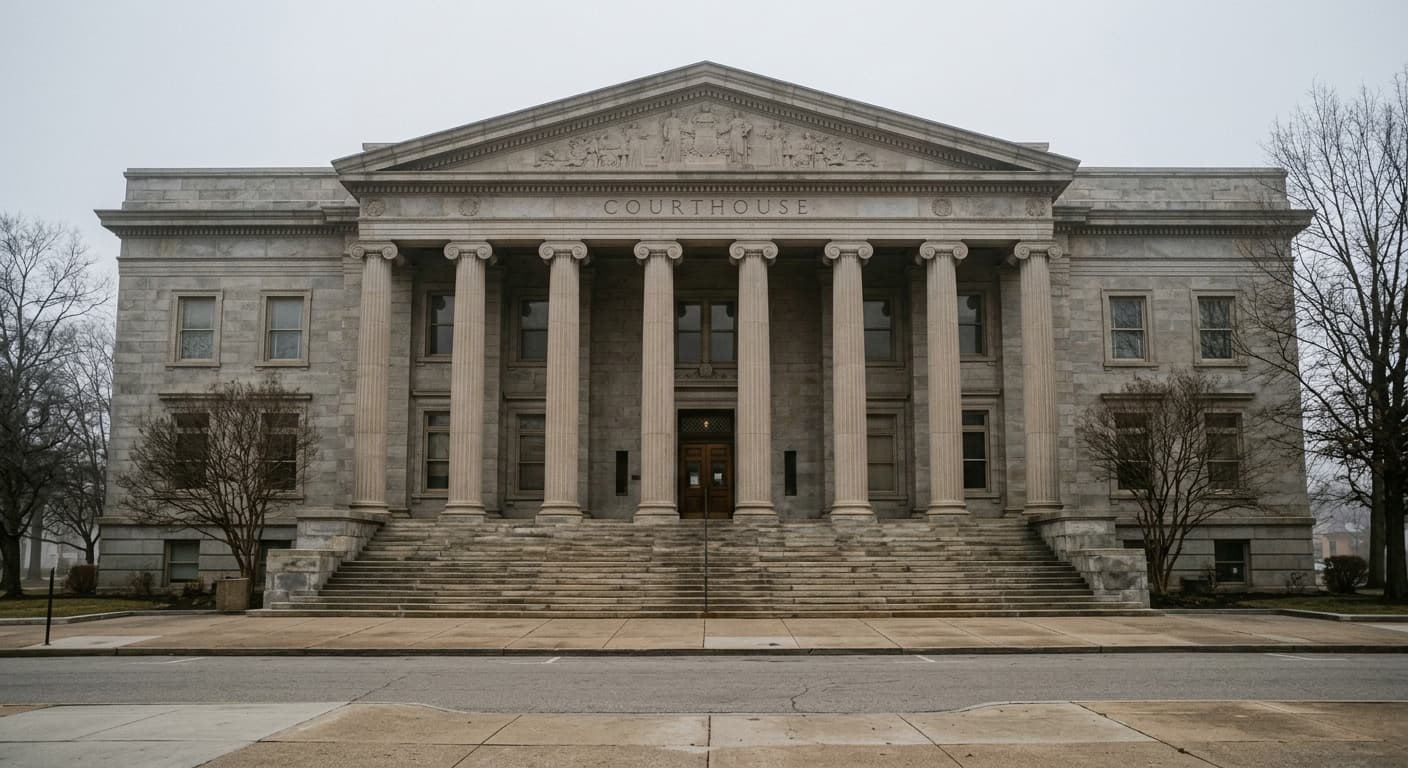
Canada has no general statute of limitations for indictable criminal offences, a 12-month deadline under Criminal Code section 786(2) for summary conviction offences, and civil lawsuit deadlines set separately by each province and territory, typically 2 years from discovery of the claim plus a longer outer limit.
Information last verified on 2026-08-15. This article has not yet been reviewed by a licensed lawyer.
The US question, translated for Canadian law
"Statute of limitations" is the everyday US term for how long the government or a private claimant has to bring a case before the law bars it. Readers searching that phrase in Canada are usually asking one of two very different questions, and Canadian law answers them very differently depending on which one it is.
Criminal prosecutions in Canada are governed by the federal Criminal Code, and for the most serious category of offences there is, with one narrow exception, no deadline at all. Civil lawsuits, on the other hand, are governed by provincial and territorial law, which means the deadline to sue someone depends entirely on where the claim arises, and it runs on a real clock that a claimant can miss.
Criminal cases: no general limitation period for indictable offences
For indictable offences, the category that covers murder, sexual assault, fraud, and most serious crimes, the Criminal Code sets no general time limit on when charges can be laid. This is confirmed by absence: the Code's provisions for indictable proceedings contain no general prosecution time bar, and the only limitation clause in the Code, section 786(2), is explicitly scoped to summary conviction offences under Part XXVII.
That absence is why decades-old prosecutions are legally possible in Canada, including historical sexual assault cases and cold-case murder charges. There is no countdown that runs out on the Crown's ability to charge someone with an indictable offence, only the practical reality that evidence and witnesses degrade over time and a prosecutor has to be satisfied there is still a reasonable prospect of conviction.
This absence of a time bar also means an old charge or a conviction from decades ago does not disappear on its own. A record only clears through Canada's record suspension (pardon) process, and understanding the difference between that process and expungement matters more, practically, than any limitation period.
Summary conviction offences: the 12-month clock
The one place a real deadline exists on the criminal side is for summary conviction offences, the less serious end of the Criminal Code. Section 786(2) sets the rule plainly:

"No proceedings shall be instituted more than 12 months after the time when the subject matter of the proceedings arose, unless the prosecutor and the defendant so agree."
That 12-month window is relatively recent. Bill C-75 extended it from a 6-month limit to the current 12 months, in force September 19, 2019. Before that amendment the Crown had half as long to start a summary prosecution. The 12-month clock can also be waived by agreement between the prosecutor and the accused, so it is not an absolute bar in every case, but absent that agreement, a summary charge started more than a year after the alleged conduct is out of time.
Many hybrid offences, meaning offences the Crown can choose to prosecute either summarily or by indictment, fall inside this 12-month window only if the Crown elects the summary route. If the Crown proceeds by indictment instead, the no-general-limit rule above applies.
A charge involving domestic violence or historical sexual assault
Because indictable offences carry no general time limit, domestic violence charges and historical sexual assault allegations, both frequently prosecuted years after the underlying conduct, are not barred simply by the passage of time the way a US statute of limitations might bar them. Anyone facing an allegation from years or decades earlier, or considering reporting conduct from years earlier, should treat the criminal timeline as open rather than assume an old event is automatically out of reach.
Civil claims: a deadline set by each province, not by Ottawa
Civil lawsuits work in the opposite direction. Property, contract, and personal injury disputes fall under provincial and territorial jurisdiction in Canada, so each province and territory has its own limitations statute, and the deadline to sue can differ meaningfully depending on where the claim arises. There is no single federal civil limitation period.
Most of the common law provinces converged on a similar two-part model after a wave of reform starting in the 2000s and 2010s: a shorter "basic" period that starts running once the claimant discovers the claim, and a longer "ultimate" period that runs from the underlying act or omission regardless of when it was discovered. Older provinces and territories still use a different, categorical structure built around specific types of claims, and Quebec uses neither, it has its own Civil Code prescription regime.
That basic-plus-ultimate pattern is not universal. Alberta is the one common law province where the ultimate period is shorter, 10 years from when the claim arose rather than the 15 years used almost everywhere else. Quebec does not use this framework at all; its Civil Code sets a general 3-year prescription period, with a separate rule for claims connected to sexual violence, violence suffered during childhood, or spousal violence. Prince Edward Island, Newfoundland and Labrador, and the northern territories still run older, categorical regimes built around specific claim types rather than a single discovery-based rule.
Nearly every jurisdiction that has reformed its limitation law since the early 2010s has also removed the time limit entirely for sexual assault claims. The details are conditioned differently province to province: some remove the limit unconditionally, others only where the claimant was a minor or the relationship involved a position of trust, authority, or dependency, so the exact wording of the applicable Act matters for any specific claim.
The exact basic period, ultimate period, and sexual assault carve-out for each of Canada's 13 provinces and territories, verified against each jurisdiction's current consolidated statute, is set out in Statute of Limitations in Canada by Province, RecordingLaw's dedicated civil limitation guide.
Sexual assault and abuse claims: the recurring exception
Every jurisdiction surveyed for this article that has been reformed since the early 2010s removes the time limit entirely for sexual assault claims, and most extend a version of that removal to other sexual misconduct and to non-sexual assault within an intimate, trust, or dependency relationship, such as a caregiver or a family member. The details differ (some provinces make the removal unconditional, others require the claimant to show a minor age, disability, or a specific relationship at the time), so the exact wording of the relevant Act matters, but the pattern across the country is the same: claims connected to sexual violence are treated as an exception to the ordinary limitation clock everywhere this was checked.
Quebec: a different legal system, not just a different number
Quebec's private law runs on the Civil Code, not the common law, so "statute of limitations" is not really the right frame there, the correct term is prescription. Article 2925 CCQ sets a general prescriptive period of 3 years for most personal or movable real rights claims. Bodily injury claims connected to a potentially criminal act have their own rule under article 2926.1 CCQ: a 10-year prescriptive period running from when the victim becomes aware the injury is attributable to the act, but no time bar at all if the injury results from sexual violence, violence suffered during childhood, or spousal violence. A separate 3-year period applies only to a claim brought against an aggressor's heirs, running from the aggressor's death.
Yukon: not answered here
Yukon's Limitation of Actions Act could not be independently confirmed for this article; every attempt to access the territory's official legislation site was blocked. Do not assume the neighbouring provinces' 2-year and 15-year figures apply there. Confirm the current Act with a Yukon lawyer or the territorial government.
What to do if you are not sure a deadline has already passed
A civil limitation period is a real bar, unlike the criminal side's mostly open timeline, and missing it can end a valid claim before it is ever heard. Because the "basic" period usually starts on discovery rather than the date of the underlying event, and because an old conviction can still surface years later on a criminal record check regardless of how much time has passed, working out where a specific claim or charge stands is not a calculation to make without advice. Anyone contacted by police about an old allegation should also understand what rights actually apply during that conversation in Canada, covered in Miranda rights in Canada. Anyone facing a possible civil claim close to a deadline, or a criminal matter connected to conduct from years earlier, should speak with a licensed lawyer in the relevant province or territory promptly rather than rely on general figures like the ones in this article.

Disclaimer
This article provides general information about criminal and civil limitation periods in Canada and is not legal advice. Yukon's limitation rules could not be verified for this article and are not reported here. Nunavut's figures reflect a November 8, 2022 consolidation only; a later 2023 amendment exists but was not reviewed for this article. Ontario's figures were independently re-verified directly against the government's current consolidation on the date this article was last verified. Saskatchewan's figures are cross-checked against a Law Society of Saskatchewan practitioner manual rather than a freshly dated government consolidation, because the government's own PDF does not display a currency date. Minors' and persons-under-disability tolling rules were not researched in detail for any province. If you are facing a criminal charge, believe a civil claim's deadline may be close, or are unsure which province's law applies to your situation, consult a licensed lawyer in the relevant jurisdiction promptly.
Frequently Asked Questions
Does Canada have a statute of limitations for criminal charges like the United States?
Only partly. Indictable offences, which cover most serious crimes, have no general time limit under the Criminal Code, so charges can be laid years or decades later. Summary conviction offences do have a deadline: section 786(2) of the Criminal Code requires the Crown to start proceedings within 12 months, unless both sides agree to extend it.
Can someone in Canada be charged with murder or sexual assault decades after it happened?
Yes. No Criminal Code provision sets a general limitation period for indictable offences, so both murder and historical sexual assault can be prosecuted many years after the fact, subject only to the evidence still being available and the Crown deciding to proceed.
What is the time limit to sue someone in Canada?
It depends on the province or territory, because civil limitation periods are set by provincial and territorial law, not federal law. Most common law provinces, including Ontario and British Columbia, give a claimant 2 years from discovering the claim to start a lawsuit, with an outer limit of 15 years (10 years in Alberta) regardless of discovery. Quebec uses a different system, a 3-year general prescription period under the Civil Code. Our dedicated civil limitation guide, Statute of Limitations in Canada by Province, sets out the exact figures for all 13 provinces and territories.
Is there a time limit to sue for sexual assault in Canada?
In most of Canada, no, though the details vary. Ontario, British Columbia, Alberta, Saskatchewan, Manitoba, New Brunswick, Nova Scotia, Prince Edward Island, and Quebec remove the limitation or prescription period entirely for sexual assault claims regardless of the relationship between the parties. Newfoundland and Labrador, the Northwest Territories, and Nunavut also remove the time limit for sexual assault, but only where the claim involves a minor, a dependent person, or a specific intimate, trust, or dependency relationship with the perpetrator, so someone assaulted by a stranger in those three jurisdictions should not assume the same unconditional removal applies.
Does the 2-year civil limitation period in Ontario start on the date of the incident?
No. Ontario's Limitations Act, 2002 starts the 2-year clock on the date the claim is discovered, meaning the date a reasonable person in the claimant's position would have known about the injury and that a legal claim was available, which is not always the same day the underlying event happened. An outer 15-year limit still applies from the act or omission itself, regardless of when it was discovered.
What is the statute of limitations in Yukon?
This could not be confirmed. Every attempt to access Yukon's official legislation website for this article was blocked, so no reliable figure for Yukon's basic or ultimate limitation period can be reported here. Anyone with a claim connected to Yukon should confirm the current Limitation of Actions Act directly with a Yukon lawyer or the territorial government rather than relying on rules from other provinces.
Is Quebec's rule the same as the rest of Canada?
No. Quebec is a civil law jurisdiction and does not use the discovery/ultimate limitation structure the common law provinces use. Instead, the Civil Code of Quebec sets a general prescription period of 3 years for most personal or movable real rights claims, with a separate, longer period, or no time bar at all, for specific claims such as bodily injury from a potentially criminal act.
If there is no criminal limitation period, does an old charge or conviction ever go away on its own?
No, and that is a separate question from limitation periods. A conviction stays on a person's record until they successfully complete Canada's record suspension, formerly called a pardon, process. The mere passage of time does not erase it or exclude it from being cited if related conduct is later prosecuted.
Updates
Restructured to defer the detailed provincial civil limitation table to our dedicated civil guide (canada/consumer-protection/statute-of-limitations-canada); criminal coverage unchanged.
Independently fact-checked against the cited primary sources
Bill C-75 extended the summary conviction limitation period in Criminal Code section 786(2) from 6 months to 12 months.
Sources and References
- Criminal Code, RSC 1985, c C-46, section 786(2) (time limit for summary conviction proceedings)(laws-lois.justice.gc.ca).gov
- Limitations Act, 2002, SO 2002, c 24, Sched B (Ontario)(ontario.ca).gov
- Limitation Act, SBC 2012, c 13 (British Columbia)(bclaws.gov.bc.ca).gov
- Limitations Act, RSA 2000, c L-12, full consolidated text (Alberta)(kings-printer.alberta.ca).gov
- The Limitations Act, SS 2004, c L-16.1, full consolidated text (Saskatchewan)(publications.saskatchewan.ca).gov
- The Limitations Act, CCSM c L150, current consolidation (Manitoba)(web2.gov.mb.ca).gov
- Limitation of Actions Act, SNB 2009, c L-8.5, full consolidated text (New Brunswick)(laws.gnb.ca).gov
- Limitation of Actions Act, SNS 2014, c 35, full consolidated text (Nova Scotia)(nslegislature.ca).gov
- Statute of Limitations, RSPEI 1988, c S-7, including section 5.1 (Prince Edward Island)(princeedwardisland.ca).gov
- Limitations Act, SNL 1995, c L-16.1, full text (Newfoundland and Labrador)(assembly.nl.ca).gov
- Limitation of Actions Act, RSNWT 1988, c L-8, full consolidated text (Northwest Territories)(justice.gov.nt.ca).gov
- Limitation of Actions Act, C.S.Nu., c L-100, official consolidation (Nunavut)(nunavutlegislation.ca).gov
- Civil Code of Quebec, CCQ-1991, articles 2925 and 2926.1 (prescription; this URL is the article 2925 version page, confirmed to render the full text where the generic document landing page truncates before Book Eight)(legisquebec.gouv.qc.ca).gov