
Washington
Washington Windshield Mounting Laws (2026 Guide)
Independently fact-checked against primary sources (last audited August 17, 2026). · Reviewed by the RecordingLaw editorial team. · Law checked current as of August 17, 2026. · 6 primary sources cited on this page. How we verify our legal content
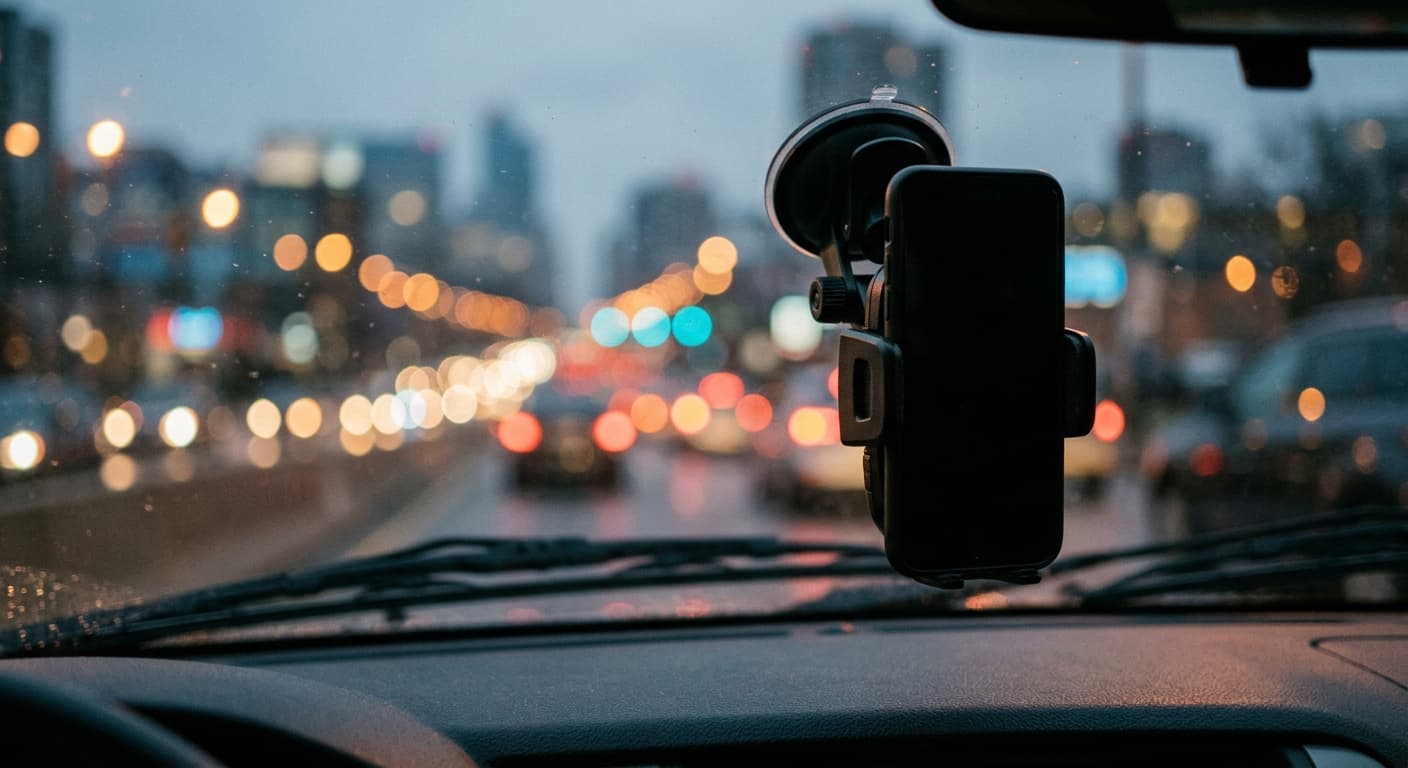
Washington allows dashcams, GPS units, and phone mounts on the windshield as long as the device does not obstruct the driver's clear view. RCW 46.37.410 prohibits any nontransparent material, including a mounted device, that obstructs the driver's clear view of the highway; the statute sets no dimensional size limit for mounted devices.
Washington state regulates windshield-mounted devices through RCW 46.37.410, which prohibits nontransparent materials that obstruct the driver's view. The state sets no dimensional size limit for a mounted device by statute, and it has a strict hands-free electronic device law. This guide covers every aspect of Washington's windshield mounting restrictions.
Washington Windshield Obstruction Law (RCW 46.37.410)
Under RCW 46.37.410, no person may drive any motor vehicle with any sign, poster, or other nontransparent material upon the front windshield, side wings, or side or rear windows of such vehicle that obstructs the driver's clear view of the highway or any intersecting highway.
The statute applies to all motor vehicles operated on public highways in Washington. Every motor vehicle must be equipped with a front windshield manufactured of safety glazing materials in accordance with RCW 46.37.430. Vehicles without windshields require the operator to wear glasses, goggles, or face shields.
The law also requires every motor vehicle windshield to be equipped with a device for cleaning rain, snow, or other moisture, controllable by the driver.
Windshield-Mounted Device Rules
Washington does not set a dimensional size limit for windshield-mounted devices. The only statutory standard under RCW 46.37.410 is functional: nontransparent material, including a mounted device, may not obstruct the driver's clear view of the highway.
| Position | Standard | Examples |
|---|---|---|
| Driver's side | Must not obstruct the driver's clear view (RCW 46.37.410) | Small GPS units, compact dashcams |
| Passenger's side | Must not obstruct the driver's clear view (RCW 46.37.410) | Larger GPS units, phone mounts |
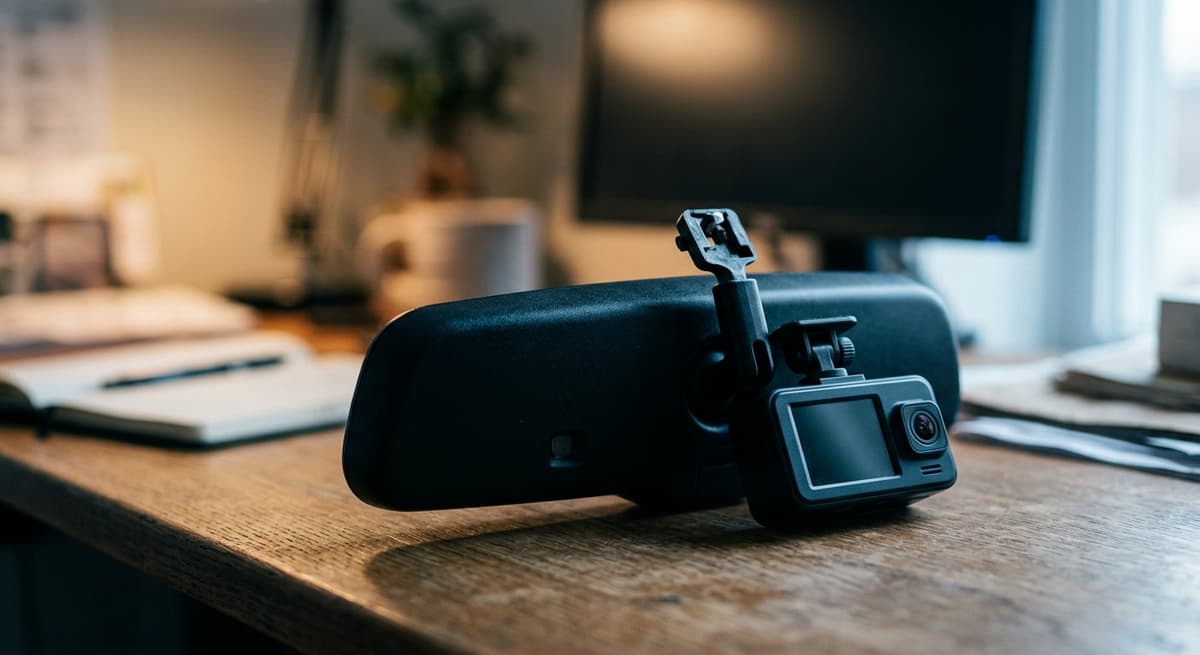
| Behind rearview mirror | Must not obstruct view | Dashcams, toll transponders |
This obstruction standard applies to the device's full footprint, including any mounting bracket or suction cup. A device large enough, or positioned so, that it blocks the driver's clear view may be cited as a windshield obstruction regardless of its exact size.
Forward Obstruction Rule (WAC 204-10-024)
WAC 204-10-024 sets a forward-obstruction standard: no obstruction forward of the windshield may extend more than 2 inches upward into the horizontally forward projected vision area of the windshield. The rule sits in chapter 204-10 WAC, titled "Equipment standards," which the Washington State Patrol adopted under WAC 204-10-010 "by authority of RCW 46.37.005, 46.37.320, 46.37.400, and 46.37.530(1)(b)" to set "standards for motor vehicle equipment for which approval is required in chapter 46.37 RCW."
The only exceptions the rule names are windshield wiper components and hood ornaments identical to those originally installed by a recognized manufacturer.
How far this standard reaches is unresolved. Neither WAC 204-10-024 nor the chapter's scope section limits the standard to any particular class of vehicle; the chapter covers ordinary equipment categories such as brakes, steering, mirrors and exhaust, and the windows rule speaks in general terms about a vehicle and its operator. At the same time, Washington runs no periodic safety-inspection program for ordinary passenger cars, so there is no routine checkpoint at which the 2-inch measurement would be applied to a factory-built vehicle. Treat it as a published equipment standard whose roadside application to an ordinary car's dashcam or GPS mount is an open question, and treat the statutory clear-view test in RCW 46.37.410 as the rule you will actually be measured against.
GPS and Phone Mount Rules
Washington does not have a specific statute that authorizes or prohibits GPS or phone mounts by name. These devices fall under the general obstruction standard of RCW 46.37.410, which sets no dimensional size limit.
A GPS or phone mount is legal wherever it does not obstruct the driver's clear view of the highway. Mounting a large tablet or oversized device in the direct line of sight is more likely to obstruct that view and result in a citation, regardless of the device's exact dimensions.
The safest placement options in Washington are:
- A compact mount kept out of the driver's line of sight
- A dashboard mount that does not extend into the windshield area
- A vent clip mount that keeps the device off the windshield entirely
- Behind the rearview mirror if the device does not obstruct the driver's view
Hands-Free Interaction
Washington's distracted driving law (RCW 46.61.672) is one of the strictest in the country. It is illegal to hold a personal electronic device while driving, including when the vehicle is stopped in traffic or at a red light.
Drivers may use a mounted device with only a single touch or swipe to start an app, such as navigation or music. Beyond that single touch, all interaction must be voice-controlled or through the vehicle's built-in system.
The penalties for violating the hands-free law are separate from windshield obstruction fines:
| Offense | Fine |
|---|---|
| First hands-free violation | $136 |
| Second violation within 5 years | Two times the first-offense fine (RCW 46.61.672(4)) |
These fines are reported to insurance companies and can affect insurance rates.
Dashcam Placement
Washington does not have a specific dashcam statute. Dashcams are subject to the same rules as any other windshield-mounted device under RCW 46.37.410.
A dashcam must not obstruct the driver's clear view of the highway; Washington sets no dimensional size limit for it. The most common and legally compliant placement is behind the rearview mirror, where the camera is largely hidden from the driver's sightline.
Dashboard-mounted cameras that do not attach to the windshield are not subject to windshield obstruction rules.
Audio Recording
Washington is a two-party consent state for audio recording. If your dashcam records audio inside the vehicle, all occupants must consent to the recording. A dashcam that records video only does not require consent. Many drivers post a small notice in the vehicle informing passengers that audio and video recording is in progress.
Obstructions to Driver's View (RCW 46.61.615)
Washington has a separate statute, RCW 46.61.615, that addresses obstructions to the driver's view from vehicle loading or excess passengers. No person may drive a vehicle when it is so loaded, or when there are more than three persons in the front seat, such that the driver's view to the front or sides is obstructed or the driver's control over the driving mechanism is interfered with.
This statute carries its own base fine of $48. Neither IRLJ 6.2's penalty schedule nor RCW 46.63.110 provides for an accident-triggered increase to this fine.
Windshield Tinting
Washington regulates window tinting under RCW 46.37.430. The windshield itself is excluded from the general 24% VLT standard; along the top 6 inches, the statute requires only that the film stay transparent, with no numeric minimum. Below that strip, the windshield must remain clear.
Front side windows must allow at least 24% visible light transmission (VLT). For an ordinary passenger car, rear side windows and the rear window must also meet that 24% VLT standard; only vehicles the manufacturer identifies as a truck, motor home, or multipurpose passenger vehicle, along with hearses, collector vehicles, limousines, buses-for-hire, ambulances, and rescue squad vehicles, may go darker than 24% on windows behind the driver.
A vehicle with illegal window tinting may fail its vehicle inspection and will be cited separately from any windshield obstruction violation.
When Washington Does Inspect Windshields
Washington does not have a periodic safety-inspection program for ordinary passenger vehicles, so a standard car's windshield-mounted dashcam or GPS unit is not checked on a schedule. In practice the check happens at a traffic stop, when an officer sees a device sitting in the driver's sightline. The Washington State Patrol publishes the equipment requirements a vehicle has to meet. The windshield standards that can be raised are:
- The windshield is free of cracks, chips, or damage that impairs visibility
- No nontransparent material obstructs the driver's view
- Windshield wipers are functional and controlled by the driver
- No forward obstruction extends more than 2 inches into the projected vision area, under the WAC 204-10-024 standard discussed above
Because there is no inspection appointment to fail, the practical consequence of a windshield obstruction in Washington is a traffic infraction rather than a blocked registration step.
Penalties for Violations
Windshield obstruction under RCW 46.37.410 is classified as a traffic infraction under Washington law.
| Violation | Fine |
|---|---|
| Windshield obstruction (RCW 46.37.410) | $48 |
| Obstructed driver view (RCW 46.61.615) | $48 |
| Hands-free violation, first offense (RCW 46.61.672) | $136 |
| Hands-free violation, second within 5 years | Two times the first-offense fine |
Traffic infractions in Washington do not carry jail time or criminal penalties. However, multiple equipment violations may result in a vehicle being ordered off the road until repairs are made.
Exemptions
| Exemption | Authority |
|---|---|
| Windshield wiper components | WAC 204-10-024 |
| Hood ornaments identical to those originally installed by a recognized manufacturer | WAC 204-10-024 |
| Federal, state, or local certificates or decals required by law, if sized and placed so they do not impair the driver's ability to safely operate the vehicle | RCW 46.37.430(6)(b) |
| Devices that do not obstruct the driver's clear view | RCW 46.37.410 |
| Factory-installed windshield tinting (federally compliant) | RCW 46.37.430 |
More Washington Laws
Frequently Asked Questions
Can I mount a GPS or phone on my windshield in Washington?
Yes. Washington sets no dimensional size limit for windshield-mounted devices. RCW 46.37.410 only requires that the device not obstruct your clear view of the highway. Dashboard and vent clip mounts avoid windshield restrictions entirely.
Are dashcams legal in Washington state?
Yes. Dashcams are legal as long as they do not obstruct the driver's view; Washington sets no dimensional size limit for windshield-mounted devices. The most common legal placement is behind the rearview mirror. Note that Washington is a two-party consent state for audio recording, so all vehicle occupants must consent if your dashcam records audio.
What is the fine for windshield obstruction in Washington?
The base fine for a windshield obstruction violation under RCW 46.37.410 is $48, per Washington's monetary penalty schedule for infractions. This is a traffic infraction with no jail time or criminal penalties.
Can I use my phone for GPS navigation while driving in Washington?
You may use a mounted phone for navigation, but Washington's hands-free law (RCW 46.61.672) limits your interaction to a single touch or swipe to start the app. All other interaction must be voice-controlled. Holding the phone while driving is illegal, even at red lights. First-offense fines are $136.
Does Washington have a windshield tint law?
Yes. RCW 46.37.430 excludes the windshield from its 24% VLT standard; the top 6 inches may be tinted as long as the film stays transparent, with no numeric minimum set by statute. Below that line, the windshield must remain clear. Front side windows must allow at least 24% light transmission, and on an ordinary passenger car, so must the rear windows; only trucks, motor homes, multipurpose passenger vehicles, hearses, collector vehicles, limousines, buses-for-hire, ambulances, and rescue squad vehicles may go darker than 24% behind the driver.
Updates
Corrected the exemption for government-required certificates and decals to its actual authority, RCW 46.37.430(6)(b), and rewrote the WAC 204-10-024 forward-obstruction discussion to state honestly that the rule is not limited on its face to kit, homemade, or assembled vehicles and that its application to an ordinary passenger car is unresolved.
Removed a fabricated 5-inch/7-inch windshield-mount size limit (Washington's actual standard is only that a device must not obstruct the driver's view, with no statutory dimensions), corrected a kit/homemade/assembled-vehicle equipment-approval rule (WAC 204-10-024) that was mispresented as a general passenger-vehicle inspection standard, and removed an unsupported $73 accident-triggered fine increase not found in the state's penalty schedule.
Independently fact-checked against the cited primary sources; governing law re-checked for recent changes
Corrected two RCW 46.37.430 tint claims: the windshield is EXCLUDED from the 24% VLT standard (the top-6-inch strip rule requires transparency, not a numeric percentage), and rear windows on an ordinary passenger car are NOT exempt from the 24%/35% standard (only trucks, motor homes, multipurpose passenger vehicles, hearses, limousines, buses-for-hire, and ambulances may go darker).
Added collector vehicles and rescue squad vehicles to the RCW 46.37.430(5)(b) rear-window tint exemption list, which the rewrite had omitted alongside the vehicle types already listed.
Governing law re-checked for recent changes
Corrected the stated $235 second-offense hands-free fine, which contradicted the statute's own doubling rule (RCW 46.61.672(4) sets the second offense at two times the base amount, not a fixed $235); replaced with the doubling rule since the underlying base-fine schedule (RCW 46.63.110) is not in our linked corpus.
Governing law re-checked for recent changes
Reviewed and approved by an editor
The Law Behind This Article
This article rests on the statutory provisions below, held in our own legal record and retrieved from the official source. Tap a section to read the operative text.
Revised Code of Washington
§ 46.37.410Windshields required, exception—Must be unobstructed and equipped with wipers.In forcecited in 2 of our articles
(1) All motor vehicles operated on the public highways of this state shall be equipped with a front windshield manufactured of safety glazing materials for use in motor vehicles in accordance with RCW 46.37.430, except, however, on such vehicles not so equipped or where windshields are not in use, the operators of such vehicles shall wear glasses, goggles, or face shields pursuant to RCW 46.37.530(1)(b). (2) No person shall drive any motor vehicle with any sign, poster, or other nontransparent material upon the front windshield, side wings, or side or rear windows of such vehicle which obstructs the driver's clear view of the highway or any intersecting highway. (3) The windshield on every motor vehicle shall be equipped with a device for cleaning rain, snow, or other moisture from the windshield, which device shall be so constructed as to be controlled or operated by the driver of the vehicle.
Official text (excerpt) · last checked 2026-09-08 · Read the full text in our law library · Verify at app.leg.wa.gov
Cited in 3 court opinions in our collectionLatest citing opinion in our collection: 2019
Opinions citing this section in our collection:
- State v. Wayman-Burks (Court of Appeals of Washington 2002, 114 Wash. App. 109)“…windshield was not an obstruction upon the windshield under RCW 46.37.410, she moved to suppress the evidence bec…”
- State v. Byrd (Court of Appeals of Washington 2002, 110 Wash. App. 259)“…Wash. App. 608, 610-11 , 949 P.2d 845 (1998). [11] RCW 46.37.410(2); Seattle Municipal Code 11.84.140.…”
- State Of Washington v. Carmen Rose Lee (Court of Appeals of Washington 2019, 435 P.3d 847)“…inoperative brake light, in violation of RCW 46.37.070 and RCW 46.37.410. Detectives lawfully checked Peterson's…”
Identified automatically from the court opinions citing this section — not a ranking of which case controls.
Also relied on in: Washington Dashcam Laws: Mounting Rules, Audio Recording, and Evidence (2026)
§ 46.61.672Using a personal electronic device while driving.In forcecited in 2 of our articles
(1) A person who uses a personal electronic device while driving a motor vehicle on a public highway is guilty of a traffic infraction and must pay a fine as provided in RCW 46.63.110(3). (2) Subsection (1) of this section does not apply to: (a) A driver who is using a personal electronic device to contact emergency services; (b) The use of a system by a transit system employee for time-sensitive relay communication between the transit system employee and the transit system's dispatch services; (c) An individual employed as a commercial motor vehicle driver who uses a personal electronic device within the scope of such individual's employment if such use is permitted under 49 U.S.C. Sec. 31136 as it existed on July 23, 2017; and (d) A person operating an authorized emergency vehicle. (3) The state preempts the field of regulating the use of personal electronic devices in motor vehicles while driving, and this section supersedes any local laws, ordinances, orders, rules, or regulations enacted by any political subdivision or municipality to regulate the use of a personal electronic device by the operator of a motor vehicle.
Official text (excerpt) · last checked 2026-07-29 · Read the full text in our law library · Verify at app.leg.wa.gov
Cited in 1 court opinions in our collectionLatest citing opinion in our collection: 2025
Opinions citing this section in our collection:
- Chase L. McClurg v. Paul David Winters, et ux (Court of Appeals of Washington 2025)“…3 No. 40153-7-III McClurg v. Winters RCW 46.61.672; h. Failing to keep proper…”
Identified automatically from the court opinions citing this section — not a ranking of which case controls.
Also relied on in: Washington Smart Glasses Recording Laws (2026)
§ 46.37.430Safety glazing—Sunscreening or coloring.In forcecited in 3 of our articles
(1)(a) No person may sell any motor vehicle as specified in this title, nor may any motor vehicle as specified in this title be registered unless such vehicle is equipped with safety glazing material of a type that meets or exceeds federal standards under 49 C.F.R. Sec. 571.205. (b) The foregoing provisions apply to all passenger-type motor vehicles, including passenger buses and school buses, but in respect to trucks, including truck tractors, the requirements as to safety glazing material apply to all glazing material used in doors, windows, and windshields in the drivers' compartments of such vehicles except as provided by subsection (4) of this section.
Official text (excerpt) · last checked 2026-09-01 · Read the full text in our law library · Verify at app.leg.wa.gov
Cited in 1 court opinions in our collectionLatest citing opinion in our collection: 2019
Opinions citing this section in our collection:
- United States v. Jose Miranda-Jimenez (Court of Appeals for the Ninth Circuit 2019)“…le’s windows were likely improperly tinted in violation of Wash. Rev. Code § 46.37.430(5)(a). The officer’s mistake as to the…”
Identified automatically from the court opinions citing this section — not a ranking of which case controls.
Also relied on in: Window Tint Laws by State (2026): Legal VLT Limits, Washington Window Tint Laws (2026): Legal VLT Limits
§ 46.61.615Obstructions to driver's view or driving mechanism.In force
(1) No person shall drive a vehicle when it is so loaded, or when there are in the front seat such a number of persons, exceeding three, as to obstruct the view of the driver to the front or sides of the vehicle or as to interfere with the driver's control over the driving mechanism of the vehicle. (2) No passenger in a vehicle shall ride in such position as to interfere with the driver's view ahead or to the sides, or to interfere with his or her control over the driving mechanism of the vehicle.
Official text (excerpt) · last checked 2026-07-29 · Read the full text in our law library · Verify at app.leg.wa.gov
Cited in 1 court opinions in our collectionLatest citing opinion in our collection: 1977
Opinions citing this section in our collection:
- Griffin v. Gehret (Court of Appeals of Washington 1977, 17 Wash. App. 546)“…duct by the minor could constitute contributory negligence, RCW 46.61.615, and the jury was so instructed.…”
Identified automatically from the court opinions citing this section — not a ranking of which case controls.
§ 46.63.110Monetary penalties.In force
(1)(a) A person found to have committed a traffic infraction shall be assessed a monetary penalty. No penalty may exceed $250 for each offense unless authorized by this chapter or title. (b) The court may waive or remit any monetary penalty, fee, cost, assessment, or other monetary obligation associated with a traffic infraction unless the specific monetary obligation in question is prohibited from being waived or remitted by state law. (2) The monetary penalty for a violation of (a) RCW 46.55.105(2) is $250 for each offense; (b) RCW 46.61.210(1) is $500 for each offense. No penalty assessed under this subsection (2) may be reduced. (3) The supreme court shall prescribe by rule a schedule of monetary penalties for designated traffic infractions. This rule shall also specify the conditions under which local courts may exercise discretion in assessing fines and penalties for traffic infractions. The legislature respectfully requests the supreme court to adjust this schedule every two years for inflation.
Official text (excerpt) · last checked 2026-07-29 · Read the full text in our law library · Verify at app.leg.wa.gov
Cited in 6 court opinions in our collectionLatest citing opinion in our collection: 2016
Opinions citing this section in our collection:
- State v. Johnson (Washington Supreme Court 2014, 179 Wash. 2d 534)“…heduled hearing, this statute is inapplicable. ¶21 Former RCW 46.63.110(6), however, addresses situations in wh…”
- Burman v. State (Court of Appeals of Washington 1988, 50 Wash. App. 433)“…nd attorney's fees. In 1982, the Legislature amended RCW 46.63.110(3) 1 to provide that the $…”
- Hadley v. Maxwell (Washington Supreme Court 2001, 144 Wash. 2d 306)“…s reform also established a schedule of monetary penalties. RCW 46.63.110. This fee schedule has led critics to a…”
Identified automatically from the court opinions citing this section — not a ranking of which case controls.
Search our full record of US law — 2.1 million sections, every state + federal →
Sources and References
- RCW 46.37.410 - Windshields required, must be unobstructed(app.leg.wa.gov).gov
- WAC 204-10-024 - Forward Obstruction Standard (WSP Kit/Homemade/Assembled Vehicle Equipment Approval)(app.leg.wa.gov).gov
- RCW 46.61.672 - Using a personal electronic device while driving(app.leg.wa.gov).gov
- RCW 46.61.615 - Obstructions to driver's view or driving mechanism(app.leg.wa.gov).gov
- Washington State Patrol - Vehicle Equipment Requirements(wsp.wa.gov).gov
- IRLJ 6.2 - Monetary Penalty Schedule for Infractions(courts.wa.gov).gov
- RCW 46.37.430 - Safety glazing and tinting, including the subsection (6)(b) exemption for required federal, state, or local certificates and decals(app.leg.wa.gov)
- WAC 204-10-010 - Promulgation and scope of chapter 204-10 WAC, Equipment standards(apps.leg.wa.gov)