
Pennsylvania
Pennsylvania Windshield Mounting Laws (2026 Guide)
Independently fact-checked against primary sources (last audited August 17, 2026). · Reviewed by the RecordingLaw editorial team. · Law checked current as of August 7, 2026. · 9 primary sources cited on this page. How we verify our legal content
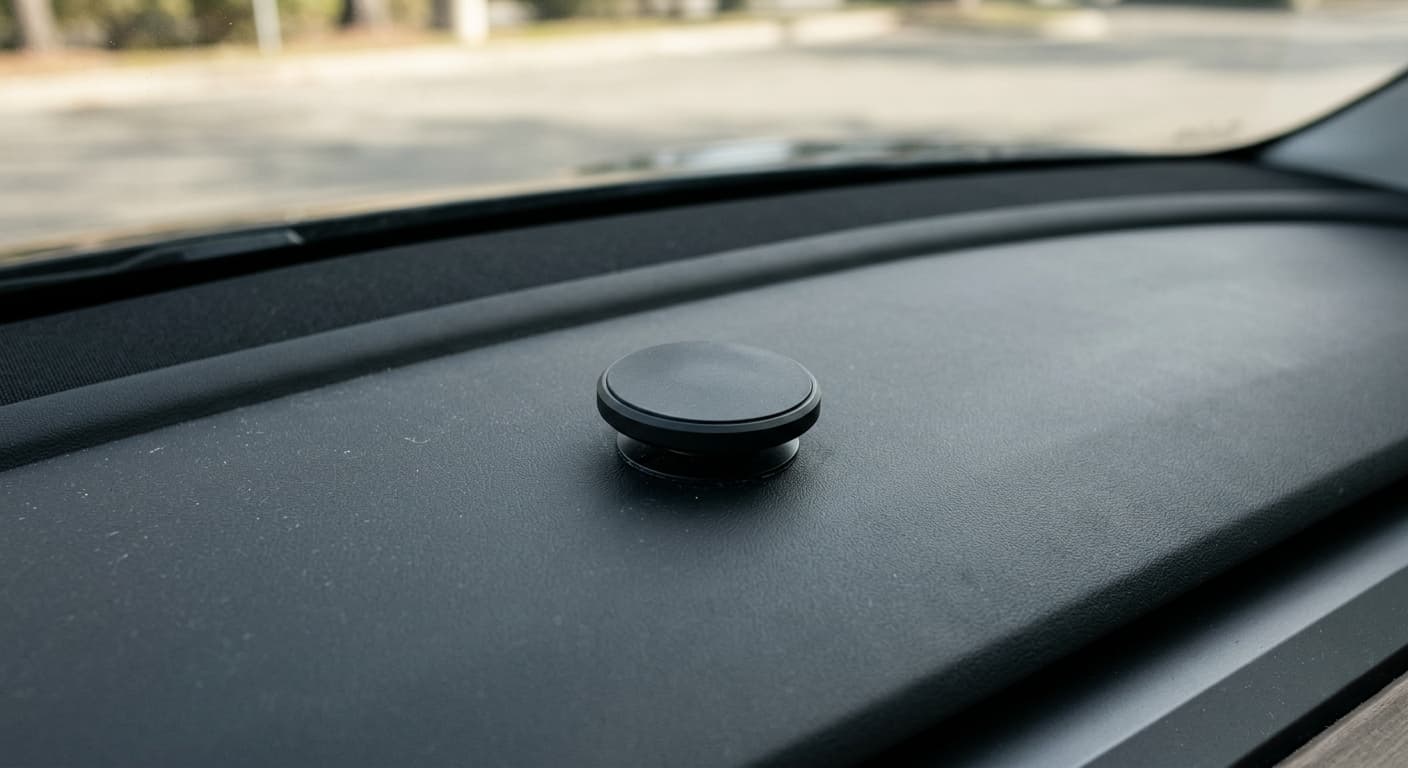
Pennsylvania prohibits GPS units, phone holders, and suction cup mounts on the front windshield under 75 Pa.C.S. 4524, which allows only inspection certificates and officially required stickers. Dashcams have no explicit windshield exemption for private vehicles. Use a dashboard or vent-clip mount to stay legal.
Pennsylvania has one of the strictest windshield obstruction laws in the country. Under 75 Pa.C.S. 4524, the state uses a whitelist approach: only inspection certificates, mass transit identification stickers, and other officially required stickers may be placed on the front windshield. Everything else that could obstruct the driver's view is prohibited.
This means GPS units, phone mounts, and suction cup holders attached to the windshield fall outside the narrow list of approved items. Combined with Paul Miller's Law, Pennsylvania's new hands-free driving statute that took effect on June 5, 2025, drivers face a legal landscape that demands careful attention to how and where they mount electronic devices in their vehicles.
The Core Statute: 75 Pa.C.S. 4524
Pennsylvania's windshield obstruction law is found in Title 75, Section 4524 of the Pennsylvania Consolidated Statutes. The statute covers six subsections that address different types of obstructions and exemptions.
Subsection (a): Front Windshield Obstructions
The law states that no person shall drive any motor vehicle with any sign, poster, or other nontransparent material upon the front windshield that materially obstructs, obscures, or impairs the driver's clear view of the highway or any intersecting highway.
The only exceptions are:
- Inspection certificates (Pennsylvania's annual safety inspection sticker)
- Sticker identification signs on mass transit vehicles
- Other officially required stickers mandated by law
Ice and snow on the front windshield that materially obstruct the driver's view are also prohibited. Pennsylvania takes this seriously, and drivers are expected to fully clear the windshield before driving.
Subsection (b): Side and Rear Window Obstructions
No person shall drive with any sign, poster, or other nontransparent material, including ice or snow, on the side wings, side windows, or rear windows that materially obstruct the driver's view. One notable exception: the placement of a registration permit on the side or rear window is not considered a material obstruction.
Subsection (c): Rearview Mirror and Other Obstructions
The statute prohibits any object or material hung from the inside rearview mirror or otherwise placed in a position that materially obstructs the driver's vision through the front windshield. This includes air fresheners, parking passes, and other items commonly hung from the mirror. The provision also covers anything attached in a manner that constitutes a safety hazard.
Subsection (d): Windshield Wiper Requirements
Every motor vehicle (except motorcycles and special mobile equipment) must have a functioning wiper system capable of clearing rain, snow, or moisture from the windshield, controllable by the driver.
Subsection (e): Sun Screening and Tint Restrictions
Pennsylvania prohibits any sun screening device or material that prevents a person from seeing into the vehicle through the windshield, side wings, or side windows.
Read that subsection carefully, because it contains no percentage at all. The statutory test in 4524(e)(1) is purely visual: whether a person can see or view the inside of the vehicle. The familiar 70 percent figure lives in PennDOT's regulations, not in the Vehicle Code. 67 Pa. Code 175.2 defines "material which does not permit a person to see or view the inside of the vehicle" as material that reduces light transmittance below 70 percent, or below the percentage FMVSS No. 205 allowed when the vehicle was built, and 67 Pa. Code 175.67 prohibits such material on an inspected vehicle.
Minimum light transmittance, from Table X in 67 Pa. Code Subchapter O as summarized in PennDOT's Vehicle Window Tint fact sheet:
| Vehicle and Window | Minimum Light Transmittance |
|---|---|
| Windshield, every vehicle type | 70% |
| Front side windows and wings, every vehicle type | 70% |
| Rear side windows and wings, passenger cars | 70% |
| Rear window, passenger cars | 70% |
| Rear side windows and rear window, trucks and multipurpose passenger vehicles | No requirement |
Two notes on that table. PennDOT defines a multipurpose passenger vehicle as one built on a truck chassis or specifically designed for occasional off-road use, which is what puts most SUVs, vans, and pickups in the relaxed row. And tint applied to the rear window of a pre-1998 passenger car must carry a permanently installed label reading "Complies with VESC-20" along with the manufacturer name or registration number.
Exemptions from tint restrictions include:
- Factory-installed tinted windows from the manufacturer
- Hearses, ambulances, and government vehicles
- Vehicles with a currently valid PennDOT certificate of exemption for medical reasons
Subsection (f): Police Vehicle Exception
Section 4524 does not apply to mobile video recording equipment installed in a vehicle used exclusively for official police purposes.
Why GPS and Phone Windshield Mounts Are Problematic in Pennsylvania
Unlike states such as California or Alabama that explicitly allow devices mounted on the windshield in designated areas, Pennsylvania's statute takes the opposite approach. The whitelist in subsection (a) names only inspection certificates and officially required stickers as permissible windshield items.
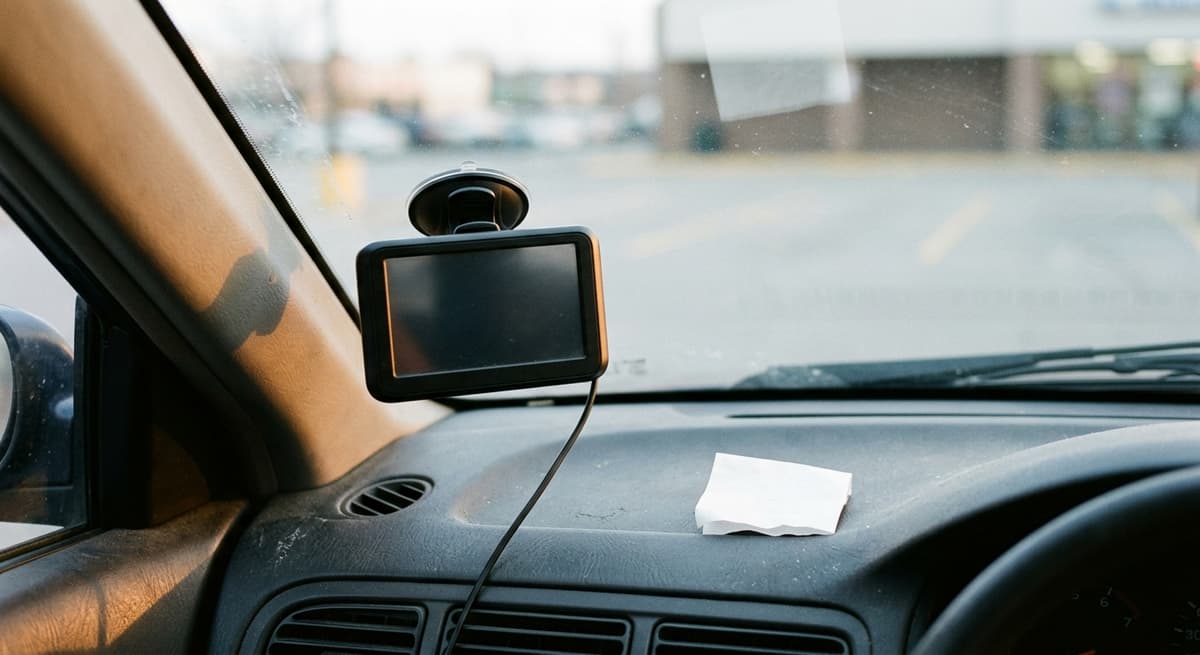
A GPS device, phone mount, or suction cup holder is not an inspection certificate. It is not an officially required sticker. Under a strict reading of the law, any nontransparent material on the windshield that obstructs the driver's view is a violation, and these devices clearly qualify as nontransparent material.
The key legal phrase is "materially obstructs, obscures or impairs the driver's clear view." Some drivers argue that a small device does not materially obstruct their view. However, whether a particular mount crosses that line is a fact question, decided first by the officer at the roadside and then, if you contest the ticket, by a magisterial district judge. We have not identified a published Pennsylvania appellate decision squarely upholding a citation for a windshield-mounted GPS unit or phone mount, so treat the risk here as enforcement discretion rather than settled case law.
The safest legal option in Pennsylvania is to use a dashboard mount, vent-clip mount, or a mount attached to the center console. These placements keep the device accessible without placing anything on the windshield.
Paul Miller's Law: Pennsylvania's Hands-Free Driving Requirement
On June 5, 2024, Governor Josh Shapiro signed Senate Bill 37 into law. Known as Paul Miller's Law, the statute adds 75 Pa.C.S. 3316.1 to the Vehicle Code and became effective on June 5, 2025.
The law is named after Paul Miller Jr., who was killed in a crash with a tractor trailer in Monroe County in 2010 after a distracted driver reached for their phone.
What the Law Prohibits
Paul Miller's Law bans the use of handheld interactive mobile devices while driving. The statute defines "use an interactive mobile device" narrowly, as exactly three physical acts:
- Using at least one hand to hold, or supporting with another part of the body, an interactive mobile device
- Dialing or answering an interactive mobile device by pressing more than a single button
- Reaching for an interactive mobile device in a manner that requires the driver to maneuver out of a seated, properly restrained driving position
The definition turns on how you handle the device, not on what you are doing with it. Typing a message, scrolling social media, or taking a photo is caught only because you have to hold the phone to do it, and the holding is the violation.
Text-based communication has its own separate section. 75 Pa.C.S. 3316 prohibits using an interactive mobile device to send, read, or write a text message, instant message, email, or other written communication while the vehicle is in motion. Under 3316.1(h), an officer may not charge a driver under both sections for an offense committed at the same time and place.
These prohibitions apply even when the vehicle is temporarily stopped at a traffic light, stop sign, or in congestion.
Permitted Uses Under Paul Miller's Law
Drivers may still:
- Use a device to contact emergency services (911) to prevent injury or property damage
- Use GPS or navigation through a hands-free mount (the device must be set up before driving)
- Make phone calls through Bluetooth, speakerphone, or voice-activated systems using a single button press
- Use devices when the vehicle is safely parked off the roadway
How This Connects to Windshield Mounts
Paul Miller's Law creates a tension with the windshield obstruction statute. The hands-free law encourages drivers to mount devices for hands-free use, but the windshield obstruction law does not permit devices on the windshield. The practical solution is to use a dashboard or vent mount that complies with both statutes.
Enforcement Timeline
| Date | Enforcement Level |
|---|---|
| June 5, 2025 | Law takes effect. Written warnings issued for violations. |
| June 6, 2026 | Summary citations begin. $50 fine plus court costs for violations. |
For the first year, officers issue only written warnings. Beginning June 6, 2026, violations carry a $50 fine as a summary offense, plus applicable court costs.
Impact on Commercial Drivers
The violation carries no points for non-commercial drivers and is not recorded on the personal driving record. For commercial drivers, the violation is recorded as a non-sanction violation, which could affect commercial driving qualifications and employer policies.
Electronic Toll Transponder Exemption
Pennsylvania drivers who use E-ZPass or other electronic toll collection devices receive a specific legal exemption. Under 74 Pa.C.S. 8117, an electronic toll collection device affixed to the front windshield in accordance with regulations is not considered a violation of 75 Pa.C.S. 4524. This means your E-ZPass transponder can legally remain on the windshield.
Dashcam Rules in Pennsylvania
Dashcams occupy a gray area under Pennsylvania law. The statute in subsection (f) exempts mobile video recording equipment only in vehicles used exclusively for official police purposes. Private dashcams do not fall under this exemption.
However, dashcams are widely used in Pennsylvania, and enforcement against them is uncommon when they are mounted in a way that does not obstruct the driver's view. The recommended placement is directly behind the rearview mirror, where the camera records the road without blocking any additional visibility beyond what the mirror already occupies.
Pennsylvania is also an all-party consent state for audio recording under 18 Pa.C.S. 5704. If your dashcam records audio inside the vehicle, all occupants must consent to the recording. Many drivers disable audio recording or post a visible notice in the vehicle to address this requirement.
Medical Exemptions for Window Tint
Pennsylvania allows a medical exemption for window tint that would otherwise violate subsection (e). To qualify:
- The vehicle owner, registrant, or a household member who regularly drives or rides in the vehicle must have a qualifying medical condition.
- A licensed physician or optometrist must certify the condition to PennDOT.
- PennDOT, in consultation with its Medical Advisory Board, determines whether the condition justifies the exemption.
- The tint must comply with applicable federal regulations.
- The certificate of exemption must be carried in the vehicle and shown to police on request.
If the vehicle is sold or transferred to someone who does not qualify, the exemption becomes void. The seller must remove all sun screening material and destroy the exemption certificate before transferring the vehicle.
Penalties for Windshield Obstruction Violations
Violating 75 Pa.C.S. 4524 is classified as a summary offense. Under 75 Pa.C.S. 6502, the default fine for a summary offense under Title 75 where no specific penalty is stated is $25 plus court costs.
This violation does not carry points on your driver's license. However, a citation creates a record that could be relevant in insurance claims or civil liability situations, particularly if an accident occurs while the vehicle has an obstructed windshield.
What to Expect If You Are Cited
- The officer issues a summary citation (non-traffic citation in most cases)
- You may pay the fine or contest it before a magisterial district judge
- The fine itself is modest, but court costs and processing fees can add to the total
- No license points are assessed for equipment violations under Chapter 45
Ice and Snow Removal Requirements
Pennsylvania explicitly includes ice and snow in the windshield obstruction statute. Drivers must clear the front windshield of ice and snow before driving. Side and rear windows must also be cleared.
While the $25 fine for windshield obstruction applies, Pennsylvania also has a separate law addressing snow and ice on vehicles: 75 Pa.C.S. 3721, known as Christine's Law. It requires drivers to make reasonable efforts to clear accumulated ice or snow from the vehicle, including the hood, trunk, and roof, within 24 hours after snow or ice stops falling, or face a $50 fine per offense. If snow or ice dislodges or falls from a moving vehicle and strikes another vehicle or a pedestrian, causing death or serious bodily injury, the driver faces a fine of $200 to $1,500 per offense. Christine's Law took effect in 2022 (P.L.1585, No.90) and replaced the former 75 Pa.C.S. 3720, which is now repealed.
Comparison: Pennsylvania vs. Neighboring States
Pennsylvania's whitelist approach stands in contrast to several neighboring states:
| State | Windshield Mount Approach |
|---|---|
| Pennsylvania | Whitelist: only inspection stickers and officially required items allowed |
| New York | Devices allowed in a 7-inch square in the lower left corner |
| New Jersey | No specific windshield mount provision; general obstruction standard applies |
| Ohio | Devices allowed if they do not materially obstruct the driver's view |
| Delaware | General obstruction standard; no specific device allowance |
| Maryland | GPS allowed on the windshield if it does not obstruct the driver's view |
Pennsylvania is among the most restrictive states for windshield-mounted devices in the country.
More Pennsylvania Laws
Frequently Asked Questions
Can I mount my GPS or phone on the windshield in Pennsylvania?
Pennsylvania law (75 Pa.C.S. 4524) uses a whitelist approach that only allows inspection certificates, mass transit stickers, and officially required stickers on the front windshield. GPS units and phone mounts are not on this list and can result in a citation if they materially obstruct your view. The safest legal option is a dashboard mount, vent-clip mount, or center console mount.
What is Paul Miller's Law and how does it affect device use while driving?
Paul Miller's Law (75 Pa.C.S. 3316.1) took effect on June 5, 2025, and prohibits holding or supporting an interactive mobile device while driving in Pennsylvania. Drivers must use hands-free methods such as Bluetooth, voice commands, or a mounted device. For the first year through June 5, 2026, officers issue written warnings only. After that, violations carry a $50 fine plus court costs.
Are dashcams legal on a Pennsylvania windshield?
Dashcams are widely used in Pennsylvania, but the windshield obstruction law (75 Pa.C.S. 4524) only formally exempts police vehicle video equipment. Private dashcams are tolerated when mounted behind the rearview mirror in a position that does not obstruct the driver's view. Keep in mind that Pennsylvania is an all-party consent state for audio recording, so all vehicle occupants must consent if your dashcam records sound.
What is the penalty for a windshield obstruction violation in Pennsylvania?
A windshield obstruction violation under 75 Pa.C.S. 4524 is a summary offense. The default fine is $25 plus court costs under 75 Pa.C.S. 6502. No points are added to your license. However, having an obstruction on your windshield at the time of an accident could affect insurance claims or civil liability.
Is my E-ZPass transponder legal on the windshield in Pennsylvania?
Yes. Electronic toll collection devices like E-ZPass are specifically exempted. Under 74 Pa.C.S. 8117, a toll transponder affixed to the windshield in accordance with regulations does not constitute a violation of the windshield obstruction law (75 Pa.C.S. 4524).
Updates
Corrected the window tint section to attribute the 70 percent light transmittance standard to PennDOT's regulations rather than to 75 Pa.C.S. 4524, narrowed the Paul Miller's Law summary to the three acts the statute actually defines as using an interactive mobile device, and removed an unsupported claim about how Pennsylvania courts have ruled on windshield-mounted devices.
Independently fact-checked against the cited primary sources
Corrected the snow/ice-dislodging citation: 75 Pa.C.S. 3720 was repealed July 11, 2022 (P.L.1585, No.90) and replaced by 75 Pa.C.S. 3721 ("Christine's Law"). The page previously presented the repealed section as current law with a $200-$1,000 penalty; it now cites 3721 and states the correct penalty structure ($50 per offense for failing to clear accumulated snow/ice, $200-$1,500 per offense if dislodged snow/ice causes death or serious bodily injury).
Governing law re-checked for recent changes
Reviewed and approved by an editor
The Law Behind This Article
This article rests on the statutory provisions below, held in our own legal record and retrieved from the official source. Tap a section to read the operative text.
Pennsylvania Consolidated Statutes Title 75 (Vehicles)
§ 4524Windshield obstructions and wipersIn forcecited in 6 of our articles
(a) Obstruction on front windshield.--No person shall drive any motor vehicle with any sign, poster or other nontransparent material upon the front windshield which materially obstructs, obscures or impairs the driver's clear view of the highway or any intersecting highway except an inspection certificate, sticker identification sign on a mass transit vehicle or other officially required sticker and no person shall drive any motor vehicle with any ice or snow on the front windshield which materially obstructs, obscures or impairs the driver's clear view of the highway or any intersecting highway. (b) Obstruction on side and rear windows.--No person shall drive a motor vehicle with any sign, poster or other nontransparent material, including ice or snow, upon the side wings or side or rear windows of the vehicle which materially obstructs, obscures or impairs the driver's clear view of the highway or any intersecting highway. The placement of a registration permit upon the side or rear window of a vehicle shall not be considered a material obstruction.
Official text (excerpt) · last checked 2026-09-08 · Read the full text in our law library · Verify at palegis.us
Cited in 70 court opinions in our collectionLatest citing opinion in our collection: 2026
In the courts (editorial summary, independently checked):Pennsylvania courts read section 4524 subsection by subsection. Commonwealth v. Brubaker (2010) held a tint conviction under section 4524(e)(1) fails where the officer could see into the vehicle, whatever a meter showed. Commonwealth v. Holmes (2011) held a stop under section 4524(c) illegal where the officer never described the object.
Opinions citing this section in our collection:
- Commonwealth v. Holmes (Supreme Court of Pennsylvania 2011, 609 Pa. 1)✓An officer stopped a car after testifying only that objects hung from the rearview mirror obstructing the driver's view; the court held that with no description of the objects or how they impaired vision there was no reasonable suspicion of a section 4524(c) violation.
- Commonwealth v. Rodriguez (Superior Court of Pennsylvania 2013, 2013 Pa. Super. 302)✓A Pennsylvania constable cited for driving his own black-tinted BMW argued the car was an exempt government vehicle; the court held constables are not government employees and affirmed the conviction, finding no exemption under section 4524(e)(2)(i).
- Commonwealth v. Santiago, A., Aplt. (Supreme Court of Pennsylvania 2019, 209 A.3d 912)“…es a dissenting opinion in which Justice Donohue joins. 75 Pa.C.S. § 4524(e)(1). The Commonwealth concedes…”
Identified automatically from the court opinions citing this section — not a ranking of which case controls.
Also relied on in: Pennsylvania Dashcam Laws: Mounting Rules, Audio Recording, and Evidence (2026), Pennsylvania Window Tint Laws (2026): Legal VLT Limits
§ 3316.1Prohibiting use of interactive mobile deviceIn forcecited in 3 of our articles
(a) Motor vehicle.--Except as provided under subsection (b), no driver shall use an interactive mobile device while driving a motor vehicle. (b) Emergency use exception.--Using an interactive mobile device shall be permissible by a driver of a motor vehicle if necessary to communicate with a law enforcement official or other emergency services to prevent injury to persons or property. (c) Penalties.--Except as provided for in subsection (g), a person who violates this section commits a summary offense and shall, upon conviction, be sentenced to pay a fine of $50. (d) Preemption of local ordinances.--In accordance with section 6101 (relating to applicability and uniformity of title), this section supersedes and preempts all ordinances of any municipality with regard to the use of an interactive mobile device by a driver of a motor vehicle. (e) Seizure.--Nothing in this section shall be construed to authorize the seizure or forfeiture of an interactive mobile device, unless otherwise provided by law.
Official text (excerpt) · last checked 2026-07-29 · Read the full text in our law library · Verify at palegis.us
Also relied on in: Pennsylvania's 'Paul Miller's Law' Takes Effect: Handheld Phones Now Banned Behind the Wheel
§ 6502Summary offensesIn forcecited in 2 of our articles
(a) Violations of this title.--It is a summary offense for any person to violate any of the provisions of this title unless the violation is by this title or other statute of this Commonwealth declared to be a misdemeanor or felony. Every person convicted of a summary offense for a violation of any of the provisions of this title for which another penalty is not provided shall be sentenced to pay a fine of $25. (b) Violations of regulations.--It is a summary offense for a person to violate any provision of any regulation promulgated under the authority of this title. A person convicted of violating any provision of a regulation promulgated under the authority of this title shall pay the fine established in the section of this title on which the regulation is based or, if no fine is established in that section of this title, the fine shall be $25. (c) Title 18 inapplicable.--Title 18 (relating to crimes and offenses), insofar as it relates to fines and imprisonment for convictions of summary offenses, is not applicable to this title.
Official text (excerpt) · last checked 2026-07-29 · Read the full text in our law library · Verify at palegis.us
Cited in 27 court opinions in our collectionLatest citing opinion in our collection: 2025
Opinions citing this section in our collection:
- Commonwealth v. McGinnis (Supreme Court of Pennsylvania 1986, 511 Pa. 520)“…the summary conviction instead of the mandatory $25.00 (see 75 Pa.C.S. 6502(b), now part of 75 Pa.C.S. 6502(a)). Th…”
- Commonwealth v. Samuels (Supreme Court of Pennsylvania 2001, 566 Pa. 109)“…se punishable solely by the imposition of a $25 fine. See 75 Pa.C.S. § 6502. Pursuant to the MPC and Section 305(a)…”
- Commonwealth v. Soboleski (Superior Court of Pennsylvania 1992, 421 Pa. Super. 311)“…his Commonwealth declared to be a misdemeanor or a felony." 75 Pa.C.S. § 6502(a). The underlying offense here, a sect…”
Identified automatically from the court opinions citing this section — not a ranking of which case controls.
§ 3720Snow and ice dislodged or falling from moving vehicle (Repealed)Repealed
Official text (excerpt) · last checked 2026-07-29 · Read the full text in our law library · Verify at palegis.us
Pennsylvania Consolidated Statutes Title 74 (Transportation)
§ 8117Electronic toll collectionIn forcecited in 2 of our articles
(a) Liability of owner.-- (1) If an operator of a vehicle fails to pay the prescribed toll at any location where tolls are collected by means of electronic toll collection, the owner of the vehicle shall be liable to the commission for failure of the operator of the vehicle to comply with this section if the violation is evidenced by information obtained from a toll collection system. (2) The registration plate number of the vehicle as recorded by a toll collection system shall establish an inference that the owner of the vehicle was then operating the vehicle. The inference shall be overcome if the owner provides a written statement indicating the following: (i) that the owner was not operating the vehicle at the time of travel; and (ii) (Deleted by amendment). (iii) (Deleted by amendment). (iv) the name and residence address of the operator of the vehicle at the time of travel. (3) Failure to send the required information within 30 days of the original invoice date shall result in the owner being liable for the total amount due.
Official text (excerpt) · last checked 2026-07-29 · Read the full text in our law library · Verify at palegis.us
Cited in 2 court opinions in our collectionLatest citing opinion in our collection: 2022
Opinions citing this section in our collection:
- Com. v. Ruffin, D. (Superior Court of Pennsylvania 2022, 282 A.3d 796)“…ronic toll collection system as authorized under 74 Pa.C.S. § 8117 (relating to electronic toll…”
- Pennsylvania Turnpike Commission v. Murphy (Commonwealth Court of Pennsylvania 2011, 25 A.3d 1294)“…tion for liability imposed pursuant to this section. 74 Pa.C.S. § 8117(b)(5) (Emphasis added) Id.…”
Identified automatically from the court opinions citing this section — not a ranking of which case controls.
Pennsylvania Consolidated Statutes Title 18 (Crimes and Offenses)
§ 5704Exceptions to prohibition of interception and disclosure of communicationsIn forcecited in 19 of our articles
It shall not be unlawful and no prior court approval shall be required under this chapter for: (1) An operator of a switchboard, or an officer, agent or employee of a provider of wire or electronic communication service, whose facilities are used in the transmission of a wire communication, to intercept, disclose or use that communication in the normal course of his employment while engaged in any activity which is a necessary incident to the rendition of his service or to the protection of the rights or property of the provider of wire or electronic communication service. However, no provider of wire or electronic communication service shall utilize service observing or random monitoring except for mechanical or service quality control checks. (2) Any investigative or law enforcement officer or any person acting at the direction or request of an investigative or law enforcement officer to intercept a wire, electronic or oral communication involving suspected criminal activities, including, but not limited to, the crimes enumerated in section 5708 (relating to order authorizing interception of wire, electronic or oral communications), where: (i) (Deleted by amendment).
Official text (excerpt) · last checked 2026-07-29 · Read the full text in our law library · Verify at palegis.us
Cited in 126 court opinions in our collectionLatest citing opinion in our collection: 2026
In the courts (editorial summary, independently checked):Commonwealth v. Schaeffer (1987) concluded Article I, Section 8 requires a warrant for one party consensual electronic eavesdropping, reading 5704(2) as only exempting that practice, not authorizing it. Commonwealth v. Baumhammers (2008) held 5704(14)(i)(C) permits disclosing a recorded inmate call in any criminal prosecution.
Opinions citing this section in our collection:
- Commonwealth v. Baumhammers (Supreme Court of Pennsylvania 2008, 599 Pa. 1)✓The Commonwealth used a recorded jail phone call between an inmate and his parents at his murder trial; the court held section 5704(14) was not violated because all three knew the call was being recorded, and the contents were properly divulged for a criminal prosecution.
- Commonwealth v. Arrington (Supreme Court of Pennsylvania 2014, 624 Pa. 506)✓A murder defendant sought to suppress a call the victim recorded, on which he asked repeatedly whether he was being taped and said he did not care; the court addressed whether that amounted to prior consent under section 5704(4) but did not resolve it, finding any error harmless.
- Commonwealth v. Schaeffer (Supreme Court of Pennsylvania 1987, 370 Pa. Super. 179)✓Police sent a wired informant into Schaeffer's home to record a marijuana buy without a warrant; the en banc court read section 5704(2) as only exempting participant monitoring from the Wiretap Act, not authorizing it, and held the state constitution still required a warrant.
Identified automatically from the court opinions citing this section — not a ranking of which case controls.
Also relied on in: Pennsylvania Audio Recording Laws: All-Party Consent Rules and Felony Penalties (2026), Pennsylvania Phone Call Recording Laws: Consent Rules and Penalties (2026), Pennsylvania Recording Laws (2026): All-Party Consent Rules
Search our full record of US law — 2.1 million sections, every state + federal →
Sources and References
- 75 Pa.C.S. 4524 - Windshield obstructions and wipers(legis.state.pa.us).gov
- Paul Miller's Law - PennDOT Announcement(pa.gov).gov
- Governor Shapiro Signs Paul Miller's Law(pa.gov).gov
- 75 Pa.C.S. 3316.1 - Prohibiting use of interactive mobile device(palegis.us).gov
- 75 Pa.C.S. 6502 - Summary offenses (penalties)(law.justia.com)
- 74 Pa.C.S. 8117 - Electronic toll collection(legis.state.pa.us).gov
- 18 Pa.C.S. 5704 - Exceptions to prohibition of interception and disclosure of communications(legis.state.pa.us).gov
- 75 Pa.C.S. 3721 - Snow and ice (Christine's Law)(legis.state.pa.us).gov
- PennDOT - Distracted Driving(pa.gov).gov
- Senate Bill 37 - Bill Information(legis.state.pa.us).gov
- 67 Pa. Code 175.2 - Definitions (material which does not permit a person to see or view the inside of the vehicle: below 70% light transmittance)(pacodeandbulletin.gov)
- 67 Pa. Code 175.67 - Glazing (sun screening devices prohibited; Table X reference)(pacodeandbulletin.gov)
- 67 Pa. Code Chapter 175, Subchapter O - Vehicle Sun Screening Devices (Table X, acceptable light transmittance levels)(pacodeandbulletin.gov)
- PennDOT Fact Sheet - Vehicle Window Tint (April 2025)(pa.gov)
- 75 Pa.C.S. 3316 - Prohibiting text-based communications(palegis.us)