
Mississippi
Mississippi Whistleblower Laws: Protections and How to Report
Independently fact-checked against primary sources (last audited August 20, 2026). · Reviewed by the RecordingLaw editorial team. · Law checked current as of August 20, 2026. · 6 primary sources cited on this page. How we verify our legal content
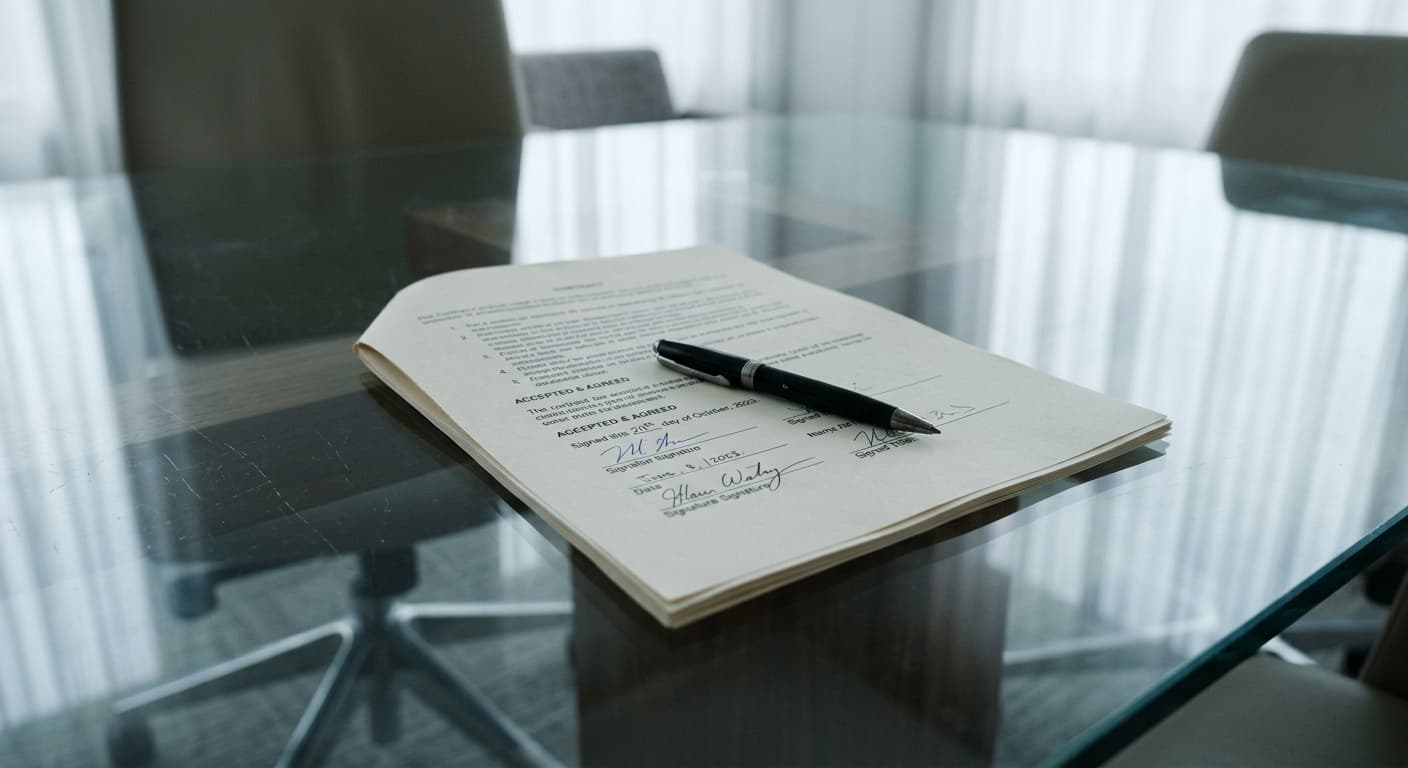
Mississippi protects public employees who report improper governmental actions under Miss. Code Ann. sections 25-9-171 through 25-9-177, the state Whistleblower Protection Act. Private-sector employees are not covered by the statute, but may find protection through the McArn common law exception when the reported conduct involves criminal activity.
What Are Mississippi's Whistleblower Laws?
Mississippi's whistleblower laws protect employees who report illegal activity, government waste, or other misconduct from retaliation by their employers. The primary state statute is the Mississippi Whistleblower Protection Act, found in Miss. Code Ann. sections 25-9-171 through 25-9-177. This law specifically shields public employees from reprisal when they provide information or testimony to a state investigative body.

Mississippi is an employment-at-will state, meaning employers can generally terminate employees for any lawful reason or no reason at all. Whistleblower protections serve as an important exception to this rule. Both state statutes and common law court decisions create safeguards for workers who speak up about wrongdoing.
This page covers state-level protections. Make sure to also review Federal Whistleblower Laws that may apply to Mississippi workers.
Who Is Protected Under the Mississippi Whistleblower Protection Act?
The Mississippi Whistleblower Protection Act applies exclusively to public employees. Under Miss. Code Ann. section 25-9-171, an "employee" means any individual employed by or holding office in any department or agency of state or local government. This includes workers at:
- State government agencies and departments
- County and municipal governments
- Public schools and school districts
- State-funded entities and commissions
- Other political subdivisions of the state
Private-sector employees are not covered by this statute. However, they may have other options for protection, including the McArn common law exception and federal whistleblower statutes (discussed below).
What Is a "Whistleblower" Under Mississippi Law?
The statute defines a "whistleblower" as an employee who in good faith:
- Reports an alleged improper governmental action to a state investigative body, starting an investigation
- Provides information to a state investigative body during an ongoing investigation
- Is believed by the employer to have made such a report or provided such information, even if the employee did not actually do so
That third point is significant. An employee who is merely perceived as a whistleblower receives the same legal protection as an employee who actually reported misconduct.
What Counts as "Improper Governmental Action"?
Under Miss. Code Ann. section 25-9-171, "improper governmental action" means any action by a government employee performed in the course of official duties that:
- Violates any federal or state law or regulation
- Constitutes an abuse of authority
- Results in substantial abuse, misuse, destruction, waste, or loss of public funds or public resources
The action does not need to be within the scope of the employee's official job duties. Any action taken in the performance of official functions that meets the criteria above qualifies.
Where Must Reports Be Filed?
To receive protection under the Mississippi Whistleblower Protection Act, reports must go to a recognized "state investigative body." The statute defines these as:

| State Investigative Body | Role |
|---|---|
| Attorney General of Mississippi | Chief law enforcement officer of the state |
| Mississippi State Auditor | Audits government finances and investigates fraud; accepts tips via Report Fraud portal |
| Mississippi Ethics Commission | Investigates ethics violations by public officials and employees |
| PEER Committee (Joint Legislative Committee on Performance Evaluation and Expenditure Review) | Legislative oversight of government programs |
| Any standing committee of the Mississippi Legislature | Legislative committees with oversight authority |
| Any district attorney in the state | Prosecutes criminal matters at the local level |
Reporting to a supervisor, coworker, or the media does not trigger statutory whistleblower protection. The report must go to one of the investigative bodies listed above.
Prohibited Retaliation Against Public Employees
Under Miss. Code Ann. section 25-9-173, it is unlawful for any government agency to take the following actions against an employee in retaliation for providing information or testimony to a state investigative body:
- Termination or discharge
- Suspension
- Demotion
- Reduction in pay or hours
- Alteration of employment terms or conditions
- Any other form of discrimination or adverse action
This protection applies regardless of whether the employee's information or testimony was provided under oath.
Remedies Available to Public Employee Whistleblowers
Under Miss. Code Ann. section 25-9-175, a public employee who suffers retaliation may recover:
- Back pay for lost wages
- Reinstatement to the previous job position
- Injunctive relief to stop ongoing retaliation
- Compensatory damages for harm suffered
- Court costs and reasonable attorney's fees
However, total damages are capped. Under Miss. Code Ann. section 11-46-15, the maximum recovery against a governmental entity is $500,000. This cap includes all damages, costs, and attorney's fees combined.
Punitive damages and pre-judgment interest are not available in whistleblower claims against government employers.
Burden of Proof
The employee must prove by a preponderance of the evidence that the retaliatory action would not have occurred "but for" the employee's report or testimony to a state investigative body. This means the whistleblowing activity must be the deciding factor behind the employer's adverse action.
Penalties for Government Agencies That Retaliate
Under Miss. Code Ann. section 25-9-177, government agencies that violate the whistleblower statute face additional penalties:
- A civil fine of up to $10,000 per violation
- Each member of the agency's governing board or authority may be held individually liable for the fine
- If the agency has no governing board, the fine is payable by the agency's executive director
These fines are separate from and in addition to the compensatory damages owed to the employee.
Common Law Protection: The McArn Exception
Private-sector employees in Mississippi are not covered by the Whistleblower Protection Act. However, the Mississippi Supreme Court created an important exception to the at-will employment doctrine in McArn v. Allied Bruce-Terminix Co., Inc., 626 So. 2d 603 (Miss. 1993).
In that case, an employee was fired after refusing to falsify chemical treatment reports and for reporting the company's fraudulent practices. The court established that Mississippi's public policy prevents employers from terminating employees who:
- Refuse to participate in illegal activity at the direction of their employer
- Report criminal conduct by their employer or coworkers
Limitations of the McArn Exception
The McArn exception is narrow. Mississippi courts have clarified several important limits:
- The activity complained of must be actually illegal, not merely unethical or improper
- The conduct must warrant criminal penalties, not just civil penalties
- The employee must have been terminated specifically because of the refusal or report
- The exception covers both refusing to participate in crime and reporting criminal activity
This common law protection fills a gap for private-sector workers, but it only applies when criminal conduct is involved.
Mississippi Vulnerable Persons Act Protections
Mississippi provides additional whistleblower protection for individuals who report abuse, neglect, or exploitation of vulnerable adults. Under the Mississippi Vulnerable Persons Act (Miss. Code Ann. section 43-47-7), anyone with knowledge or reasonable belief that a vulnerable person is being abused, neglected, or exploited must immediately report the situation to:
- The Mississippi Department of Human Services, or the county department of human services where the vulnerable person is located
- The Department of Child Protection Services, if the vulnerable person is a minor
Vulnerable persons who are patients or residents of care facilities are reported under a separate statute, Section 43-47-37.
Retaliation Protection for Vulnerable Persons Reporters
No employer may discharge, demote, alter terms of employment, or otherwise discriminate against any person for:
- Making a report under the Vulnerable Persons Act
- Testifying in an official proceeding under the Act
Penalties for Failing to Report
Persons who knowingly fail to make a required report, or who try to prevent another person from making a report, face:
- Misdemeanor criminal charges
- A fine of up to $5,000
- Imprisonment in county jail for up to 6 months
- Or both fine and imprisonment
How to File a Vulnerable Persons Complaint
To report abuse, neglect, or exploitation of a vulnerable adult in Mississippi:
- Call Mississippi Department of Human Services, Adult Protective Services: 844-437-6282
- Online via the Medicaid Fraud Control Unit complaint form
Federal Whistleblower Protections for Mississippi Workers
Both public and private employees in Mississippi may have additional protections under federal law. Key federal whistleblower statutes include:
| Federal Law | Who It Protects | Filing Deadline |
|---|---|---|
| Federal False Claims Act (31 U.S.C. section 3730) | Employees who report fraud against the federal government | 6 years from violation or 3 years from discovery |
| Sarbanes-Oxley Act | Employees of publicly traded companies who report securities fraud | 180 days |
| Dodd-Frank Act | Persons who report securities law violations to the SEC | 6 years |
| OSHA Whistleblower Statutes | Workers who report workplace safety violations | 30 days |
| Title VII of the Civil Rights Act | Employees who report workplace discrimination | 180 days (or 300 days with state agency) |
Mississippi does not have a state-level False Claims Act with qui tam (whistleblower reward) provisions. The state's Medicaid Fraud Control Act (Miss. Code Ann. sections 43-13-201 through 43-13-233) addresses Medicaid fraud but does not include a qui tam mechanism. Mississippi employees who discover fraud involving federal funds may still file qui tam claims under the federal False Claims Act, which allows whistleblowers to receive between 15% and 30% of the government's recovery.
To file a federal whistleblower complaint, employees can use the OSHA Online Whistleblower Complaint Form or call OSHA at 1-800-321-OSHA (6742).
Statute of Limitations for Whistleblower Claims
The deadlines for filing whistleblower retaliation claims in Mississippi vary by statute:
| Type of Claim | Filing Deadline | Authority |
|---|---|---|
| Public employee retaliation (state statute) | 3 years from retaliatory action | Miss. Code Ann. section 25-9-175 |
| Common law wrongful discharge (McArn) | 3 years from termination | Mississippi general statute of limitations |
| OSHA safety complaints | 30 days | 29 U.S.C. section 660(c) |
| Sarbanes-Oxley claims | 180 days | 18 U.S.C. section 1514A |
| Federal False Claims Act | 3 years from discovery, max 10 years | 31 U.S.C. section 3731 |
Missing the filing deadline will almost certainly bar your claim, so it is important to act quickly after experiencing retaliation.
How to File a Whistleblower Complaint in Mississippi
The steps for filing depend on whether you are a public or private employee and the type of misconduct you are reporting.
For Public Employees
- Document everything. Keep records of the misconduct you observed, including dates, locations, people involved, and any evidence.
- Report to a state investigative body. File your report with the Attorney General, State Auditor, Ethics Commission, PEER Committee, a legislative committee, or a district attorney.
- Preserve evidence of retaliation. If your employer takes adverse action after your report, document the timing, the action taken, and any statements by supervisors.
- Consult an attorney. A lawyer experienced in Mississippi employment law can help you file a civil lawsuit within the three-year statute of limitations.
- File suit in court. Public employees must file their retaliation claims in an appropriate Mississippi court.
For Private Employees
- Identify the applicable law. Determine whether federal statutes (OSHA, Sarbanes-Oxley, Dodd-Frank, False Claims Act) or Mississippi common law applies to your situation.
- File with the appropriate agency. For federal claims, file with OSHA, the SEC, or the relevant federal agency within the required deadline.
- Consider a qui tam action. If your employer is defrauding the federal government, you may file a qui tam lawsuit under the federal False Claims Act.
- Consult an attorney. The McArn common law exception requires proving that the activity was criminal in nature, so legal guidance is strongly recommended.
Recent Developments
In the 2025 Mississippi legislative session, HB 49 was introduced to create a new Office of Inspector General within the executive branch. If enacted, this bill would add the Office of Inspector General to the list of recognized state investigative bodies under the Whistleblower Protection Act. The bill would give the Inspector General authority to investigate whistleblower complaints of workplace reprisal and retaliatory action. Mississippi workers should monitor this legislation for potential changes to the reporting process.
More Mississippi Laws
Frequently Asked Questions
Does Mississippi's whistleblower law protect private-sector employees?
No. The Mississippi Whistleblower Protection Act (Miss. Code Ann. sections 25-9-171 through 25-9-177) only protects public employees. Private-sector workers may find protection under the McArn v. Allied Bruce-Terminix common law exception if the misconduct involves criminal activity, or under federal whistleblower statutes such as OSHA, Sarbanes-Oxley, or the False Claims Act.
What is the statute of limitations for a whistleblower retaliation claim in Mississippi?
For claims under the state Whistleblower Protection Act, the statute of limitations is three years from the date of the retaliatory action. Federal whistleblower claims have shorter deadlines, ranging from 30 days (OSHA) to 180 days (Sarbanes-Oxley). Missing the deadline will likely bar your claim entirely.
How much can a Mississippi public employee recover in a whistleblower retaliation lawsuit?
A public employee can recover back pay, reinstatement, injunctive relief, compensatory damages, and attorney's fees. However, total recovery against a governmental entity is capped at $500,000 under Miss. Code Ann. section 11-46-15. Punitive damages are not available in these claims.
Who do I report government misconduct to in Mississippi?
To receive protection under the state whistleblower statute, you must report to a recognized state investigative body. These include the Attorney General, the State Auditor, the Mississippi Ethics Commission, the PEER Committee, any standing committee of the Mississippi Legislature, or any district attorney in the state. Reports made only to supervisors or the media are not protected under the statute.
Can I file a qui tam (whistleblower reward) lawsuit in Mississippi?
Mississippi does not have a state-level qui tam statute. However, if you have evidence of fraud against the federal government (such as Medicaid fraud or defense contract fraud), you may file a qui tam lawsuit under the federal False Claims Act. Successful whistleblowers can receive between 15% and 30% of the government's recovery.
Updates
Independently fact-checked against the cited primary sources; governing law re-checked for recent changes
Corrected the Mississippi Vulnerable Persons Act section: Miss. Code Ann. section 43-47-7 directs general reports to the Department of Human Services (not the State Department of Health or Medicaid Fraud Control Unit), and the maximum fine for knowingly failing to report is $5,000, not $500.
Governing law re-checked for recent changes
Reviewed and approved by an editor
The Law Behind This Article
This article rests on the statutory provisions below, held in our own legal record and retrieved from the official source. Tap a section to read the operative text.
Mississippi Code of 1972 Annotated
§ 11-46-15Limitation of liability; exemplary or punitive damages; interest; attorney’s fees; reduction of award.In force
(1) In any claim or suit for damages against a governmental entity or its employee brought under the provisions of this chapter, the liability shall not exceed the following for all claims arising out of a single occurrence for all damages permitted under this chapter: (a) For claims or causes of…
Official text (excerpt) · last checked 2020-07-08 · Read the full text in our law library
Cited in 70 court opinions in our collectionLatest citing opinion in our collection: 2025
Opinions citing this section in our collection:
- City of Jackson v. Perry (Mississippi Supreme Court 2000, 764 So. 2d 373)“…00 according to the MTCA. The City argues that pursuant to Miss. Code Ann. § 11-46-15 (1)(a)(Supp.1999), the City of Jackson…”
- LW v. McComb Separate Mun. School Dist. (Mississippi Supreme Court 1999, 754 So. 2d 1136)“…gn which then covers claims in excess of the amounts set by Miss.Code Ann. § 11-46-15 (Supp.1998) to the extent of the policy…”
- Mississippi Dept. of Mental Health v. Hall (Mississippi Supreme Court 2006, 936 So. 2d 917)“…hen, applying the cap on compensatory damages as set out in Miss.Code Ann. § 11-46-15 (Rev.2002), [5] the circuit judge ente…”
Identified automatically from the court opinions citing this section — not a ranking of which case controls.
§ 25-9-171Definitions.In force
For purposes of Sections 25-9-171 through 25-9-177, the following terms shall have the meanings ascribed to them herein: “Abuse” means acting in an arbitrary and capricious manner that adversely affects the accomplishment of a function of any governmental entity. “Governmental entity” means a…
Official text (excerpt) · last checked 2020-07-08 · Read the full text in our law library
Cited in 7 court opinions in our collectionLatest citing opinion in our collection: 2025
Opinions citing this section in our collection:
- Harris v. Mississippi Valley State Univ. (Mississippi Supreme Court 2004, 873 So. 2d 970)“…ials. Mississippi's Whistle Blowing statutes are located in Miss.Code Ann. § 25-9-171, et seq. (Rev.2002). The statute define…”
- Rosetta Harris v. Mississippi Valley State University (Mississippi Supreme Court 2002)“…als. Mississippi's Whistle Blowing statutes are located in Miss. Code Ann. § 25-9-171, et seq. (Rev. 2002). The statute defin…”
- Bryant v. Mississippi Military Department (District Court, S.D. Mississippi 2007, 519 F. Supp. 2d 622)“…lation of the Mississippi Whistleblower Protection Statute, Miss.Code Ann. § 25-9-171, et seq., intentional and/…”
Identified automatically from the court opinions citing this section — not a ranking of which case controls.
§ 25-9-177Actions to recover civil fines and other penalties.In force
Actions to recover civil fines and other remedies provided for under Section 25-9-175 may be instituted in the Circuit Court for the First Judicial District of Hinds County or in the circuit court of the public employee’s residence.…
Official text (excerpt) · last checked 2020-07-08 · Read the full text in our law library
Cited in 4 court opinions in our collectionLatest citing opinion in our collection: 2024
Opinions citing this section in our collection:
- Blackwell v. BD. OF ANIMAL HEALTH (Court of Appeals of Mississippi 2001, 784 So. 2d 996)“…s not have jurisdiction over these types of claims based on Miss.Code Ann. § 25-9-177 (Rev.1999). The act provides as follows…”
- Mark P. Johnson v. George Miller, Sr., individual capacity; Donald Mitchell, individual capacity; and Clarksdale Public Utilities Commission (Mississippi Supreme Court 2024)“…uthorized under Sections 25-9-175 and this section. Miss. Code Ann. § 25-9-177 (Rev. 2024). ¶13. As the Fifth Circu…”
- Bryant v. Military Department of Mississippi Ex Rel. Mississippi Air National Guard (District Court, S.D. Mississippi 2005, 381 F. Supp. 2d 586)“…ught in the circuit courts of Mississippi. See Miss.Code Ann. § 25-9-177. In Martinez, supra, t…”
Identified automatically from the court opinions citing this section — not a ranking of which case controls.
§ 43-47-7Reporting abuse, neglect, or exploitation; establishment of central register; confidentiality.In force
(1)(a) Except as otherwise provided by Section 43-47-37 for vulnerable persons in care facilities and by Section 43-7-65 for the State Ombudsman Program, any person including, but not limited to, the following, who knows or suspects that a vulnerable person has been or is being abused, neglected or…
Official text (excerpt) · last checked 2020-07-08 · Read the full text in our law library
Cited in 3 court opinions in our collectionLatest citing opinion in our collection: 2023
Opinions citing this section in our collection:
- State v. Baptist Memorial Hospital-Golden Triangle (Mississippi Supreme Court 1998, 726 So. 2d 554)“…port such information to the Department of Human Services. Miss.Code Ann. § 43-47-7 (1993). ¶ 16. The statutory exception…”
- Brandi's Hope Community Services, LLC, Wanda Keith and Danny O. Cowart v. Heather Denice Walters (Court of Appeals of Mississippi 2023)“…t of human services where the vulnerable person is located. Miss. Code Ann. § 43-47-7(1)(a) (Rev. 2015). 8 “In…”
- State v. BMH-GT (Mississippi Supreme Court 1998, 726 So. 2d 554)“…559 such information to the Department of Human Services. Miss.Code Ann. § 43-47-7 (1993). ¶ 16. The statutory exception…”
Identified automatically from the court opinions citing this section — not a ranking of which case controls.
Search our full record of US law — 2.1 million sections, every state + federal →
Sources and References
- Mississippi Whistleblower Protection Act (Miss. Code Ann. sections 25-9-171 through 25-9-177)(law.justia.com)
- Miss. Code Ann. section 25-9-171 - Definitions(law.justia.com)
- Miss. Code Ann. section 25-9-177 - Civil fines and penalties(law.justia.com)
- Miss. Code Ann. section 11-46-15 - Limitation of liability ($500,000 cap)(law.justia.com)
- McArn v. Allied Bruce-Terminix Co., Inc., 626 So. 2d 603 (Miss. 1993)(law.justia.com)
- Mississippi Vulnerable Persons Act (Miss. Code Ann. section 43-47-7)(law.justia.com)
- Mississippi State Auditor - Report Fraud(osa.ms.gov).gov
- Mississippi Attorney General - Medicaid Fraud Control Unit Complaint Form(ago.state.ms.us).gov
- OSHA Whistleblower Protection Program(whistleblowers.gov).gov
- OSHA Online Whistleblower Complaint Form(osha.gov).gov
- U.S. Equal Employment Opportunity Commission(eeoc.gov).gov
- Mississippi Medicaid Fraud Control Act (Miss. Code Ann. sections 43-13-201 through 43-13-233)(law.justia.com)
- Mississippi HB 49 (2025) - Office of Inspector General(billstatus.ls.state.ms.us).gov