
Utah
Utah Lemon Law (2026): How to Qualify & Get a Refund
Independently fact-checked against primary sources (last audited August 17, 2026). · Reviewed by the RecordingLaw editorial team. · Law checked current as of August 17, 2026. · 11 primary sources cited on this page. How we verify our legal content
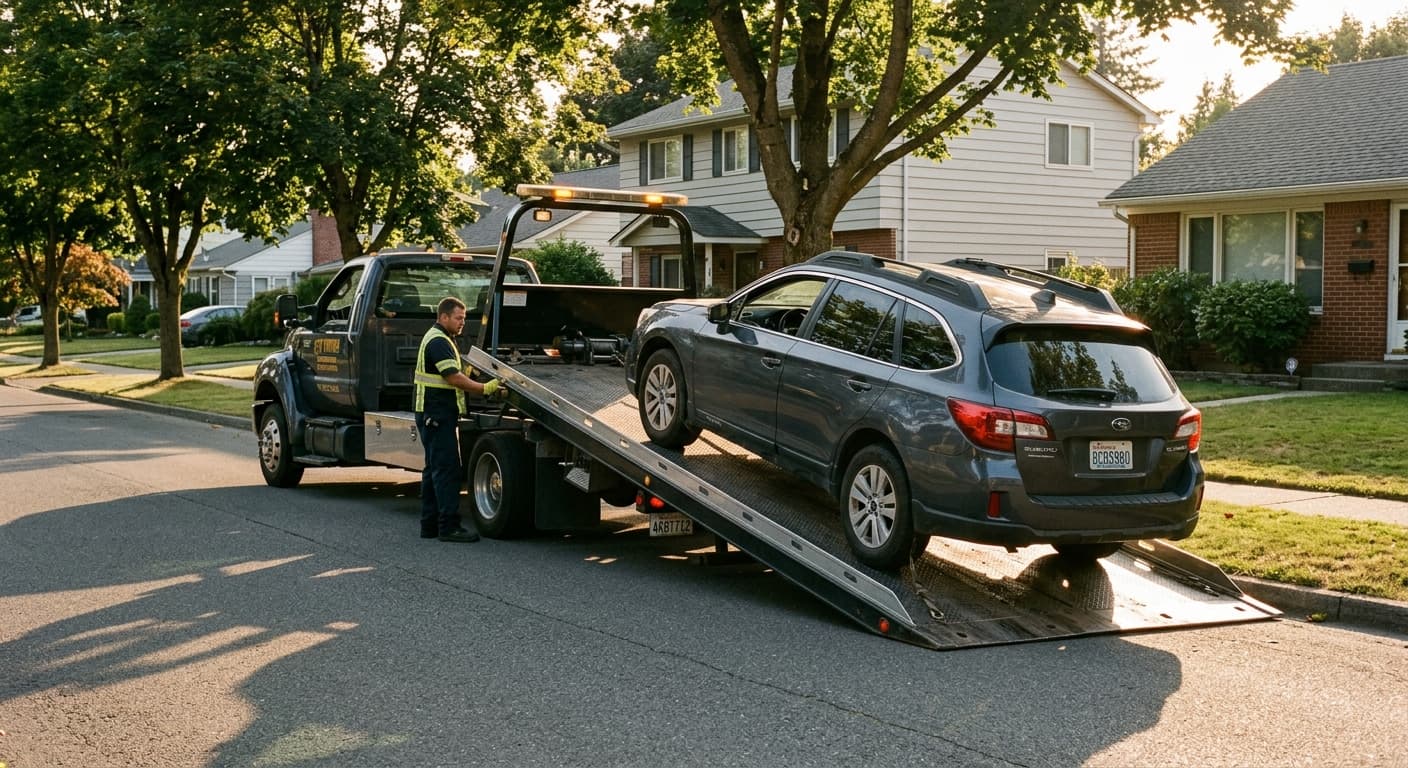
Utah's New Motor Vehicle Warranties Act (Utah Code § 13-20-5) gives new-vehicle buyers the right to a replacement or full refund if a manufacturer cannot fix a substantial defect after four repair attempts or 30 cumulative business days out of service. The coverage window is capped at the shorter of the express warranty term or one year from delivery, one of the narrowest eligibility periods in the country. The manufacturer, not the consumer, chooses between replacement and refund.
What Is Utah's Lemon Law?
Utah's lemon law is officially called the New Motor Vehicle Warranties Act, found in Utah Code Title 13, Chapter 20. This law protects consumers who purchase or lease new motor vehicles that turn out to have serious, unfixable defects. If a manufacturer cannot repair a substantial defect after a reasonable number of attempts, the consumer may be entitled to a replacement vehicle or a full refund.
The law was first enacted in 1985 and expanded in 1990 to include leased vehicles and motor homes. The Utah Division of Consumer Protection administers and enforces the statute under Administrative Rule R152-20.
What Vehicles Are Covered
Utah's lemon law covers specific categories of new motor vehicles. Understanding coverage is essential before pursuing a claim.
Covered Vehicle Types
- Passenger cars: Sedans, coupes, hatchbacks, and similar vehicles sold or leased as new in Utah
- Trucks and SUVs: Pickup trucks, SUVs, and vans with a gross laden weight under 14,000 pounds
- Motor homes: The self-propelled vehicle and chassis only (not the living quarters, dwelling, office, or commercial portions)
- Motorcycles: Only those designed primarily for use on paved highways
- Leased vehicles: New vehicles under lease agreements are covered the same as purchased vehicles
- Electric and hybrid vehicles: Covered under the same terms as gasoline-powered vehicles, provided they meet weight and type requirements
Vehicles Not Covered
- Living quarters, dwelling, office, or commercial space portions of motor homes
- Road tractors or truck tractors as defined in Utah Code
- Mobile homes
- Vehicles with gross laden weight over 14,000 pounds (except motor home chassis and farm tractors)
- Off-road motorcycles designed primarily for unimproved terrain
- Electric assisted bicycles, mopeds, motor assisted scooters, and motor-driven cycles
- Vehicles purchased or leased for the purpose of resale or sublease
Who Qualifies as a Consumer
Under Utah Code § 13-20-2, a "consumer" is any individual who enters into an agreement or contract for the transfer, lease, or purchase of a new motor vehicle, other than for purposes of resale or sublease, during the protection period. This definition includes both buyers and lessees.
Utah's Lemon Law Eligibility Period
Utah's eligibility window is one of the narrowest in the country. Under Utah Code § 13-20-5, the coverage period is the express warranty term OR one year following the date of original delivery, whichever ends first.
That "whichever ends first" language matters. Most new-car express warranties run three years or longer, but the lemon law caps your rights at one year regardless. If you first report a defect at month 13, even if the manufacturer's warranty is still active, you have already lost your lemon law protection. There is no mileage-based extension in the Utah statute.
The practical effect: document defects and start the repair-attempt clock as early as possible. Waiting to see if the problem "works itself out" can cost you your legal rights entirely.
Utah's Lemon Law Presumption
Under Utah Code § 13-20-5, the law creates a rebuttable presumption that a reasonable number of repair attempts have been made when certain conditions are met. Once this presumption applies, the burden shifts to the manufacturer to prove the vehicle does not qualify as a lemon.
When the Presumption Applies
| Condition | Requirement | Time Period |
|---|---|---|
| Repair Attempts (Same Defect) | 4 or more attempts to fix the same nonconformity | Within warranty term or 1 year from delivery, whichever is earlier |
| Days Out of Service | 30 or more cumulative business days | Within warranty term or 1 year from delivery, whichever is earlier |
Important: Utah calculates the out-of-service period using business days, not calendar days. This distinction matters because 30 business days equals roughly six calendar weeks, giving manufacturers more time before the threshold is reached.
What "Substantially Impairs" Means
For the lemon law to apply, the defect must substantially impair the use, market value, or safety of the motor vehicle. Minor cosmetic issues or normal wear typically do not qualify. The defect must be significant enough to affect how you drive the vehicle, reduce its resale value, or create a safety hazard.
Extension of Time Periods
The warranty term, one-year period, and 30-day out-of-service period may be extended if repair services become unavailable due to:
- War or invasion
- Strike or labor dispute
- Fire, flood, or other natural disaster
These extensions prevent consumers from losing their rights because of circumstances outside anyone's control.
Consumer Remedies: Refund vs. Replacement
When a vehicle qualifies as a lemon under Utah Code § 13-20-4, the manufacturer must provide one of two remedies. Under Utah's statute, the manufacturer (not the consumer) decides whether to offer a replacement vehicle or a refund. Whichever option the manufacturer selects, it must comply within a reasonable time.
Option 1: Replacement Vehicle
The manufacturer must replace the defective vehicle with a comparable new motor vehicle. This means:
- Same make and model, or a vehicle acceptable to the consumer
- Equipped with similar features and options
- All applicable manufacturer warranties intact
- Manufacturer must also reimburse the consumer for towing charges and the cost of alternative transportation incurred because of the defect
Option 2: Full Refund (Buyback)
The manufacturer must accept return of the vehicle and provide a full refund including:
- The full purchase price of the vehicle
- All collateral charges such as sales tax, license fees, registration fees, and similar government charges
- Finance charges and incidental damages where applicable
Reasonable Allowance for Use
The manufacturer may deduct a reasonable allowance for the consumer's use of the vehicle. Under Utah Administrative Rule R152-20, this allowance is calculated using a specific formula:
| Component | Calculation |
|---|---|
| Per-mile rate | Purchase price divided by 100,000 |
| Minimum rate | $0.10 per mile |
| Maximum rate | $0.21 per mile |
| Miles counted | Only miles driven before the first defect report and during periods when the vehicle was not in the shop |
| Miles excluded | Mileage at time of delivery and mileage during repair periods |
For example, a vehicle purchased for $35,000 would have a per-mile rate of $0.35, but because this exceeds the $0.21 maximum, the rate is capped at $0.21 per mile. If the consumer drove 3,000 qualifying miles, the deduction would be $630.
Leased Vehicle Refund Provisions
When a leased vehicle qualifies as a lemon, the process works differently:
- The manufacturer must refund to the lessor all payments made under the lease
- The refund includes trade-in value, inception payment, and security deposit
- The manufacturer makes all payments to the lessor and lienholder necessary to obtain clear title
- Any excess from those payments goes to the lessee
- Once the lessor receives payment, the consumer is relieved of all future lease obligations
Title Transfer Requirements
Upon receiving a refund or replacement, the consumer, lienholder, or lessor must provide the manufacturer with clear title and possession of the defective vehicle.
How to File a Lemon Law Claim in Utah
Utah has a unique procedural requirement: your claim must be investigated by the Division of Consumer Protection before you can file a lawsuit. Here is the step-by-step process.
Step 1: Document Everything
Thorough documentation strengthens your claim significantly. Keep records of:
- All repair orders, invoices, and receipts
- Dates your vehicle was dropped off and picked up from the shop
- Specific symptoms and complaints reported at each visit
- All correspondence with the dealer and manufacturer (emails, letters, texts)
- Photos or videos showing the defect
- A log of how the defect affects your daily use of the vehicle
Step 2: Report the Defect During the Coverage Period
You must report the nonconformity to the manufacturer, its agent, or an authorized dealer during:
- The term of the express warranty, OR
- Within one year following original delivery of the vehicle
- Whichever period ends first
Failure to report within this window can bar your claim entirely.
Step 3: Allow Repair Attempts
Give the manufacturer a reasonable opportunity to repair the vehicle. To trigger the lemon law presumption, this typically means allowing:
- At least 4 repair attempts for the same defect, OR
- The vehicle to be out of service for a cumulative total of 30 or more business days
Step 4: Use Manufacturer Dispute Resolution (If Required)
Under Utah Code § 13-20-7, if the manufacturer has an informal dispute settlement procedure that complies with federal FTC regulations under 16 CFR Part 703, you must use that procedure before you can receive a refund or replacement. Many major manufacturers participate in programs like BBB Auto Line for this purpose.
If the manufacturer does not have a qualifying program, you can skip this step.
Step 5: File a Complaint with the Division of Consumer Protection
Under Utah Code § 13-20-6, you cannot file a lawsuit until your claim has been investigated and evaluated by the Division. To file:
- Submit a complaint online at services.dcp.utah.gov
- Call the Division at (801) 530-6601
- Toll-free: 1-800-721-7233
- Attach all supporting documentation, including repair records and correspondence
The Division will review your complaint, investigate the facts, and provide an evaluation. Do not send original documents, as materials submitted will not be returned.
Step 6: File a Lawsuit (If Necessary)
After the Division investigates and evaluates your claim, you may file a civil lawsuit if the matter remains unresolved. Under the statute, the court may award reasonable attorney fees to the prevailing party in lemon law cases.
Manufacturer Defenses
Under Utah Code § 13-20-4(4), there are two statutory affirmative defenses to a lemon law claim.
| Defense | What the Manufacturer Must Prove | How to Counter |
|---|---|---|
| No substantial impairment (defense a) | The defect does not substantially impair the consumer's use AND does not substantially impair the market value or safety of the vehicle. The manufacturer must prove both prongs; failing either means this defense fails. | Document how the defect disrupts daily driving, reduces resale value, or creates a safety hazard. |
| Abuse, neglect, or unauthorized modification (defense b) | The nonconformity resulted from the consumer's abuse, neglect, or unauthorized modifications or alterations. | Maintain detailed maintenance records showing proper care and document that any modifications are unrelated to the defect. |
Federal Overlay: Magnuson-Moss Warranty Act
Even if a vehicle falls outside Utah's one-year lemon law window, federal law may still apply. The Magnuson-Moss Warranty Act (15 U.S.C. § 2301 et seq.) is the federal lemon law backstop. It allows consumers to sue for breach of any written or implied warranty covering a consumer product, including a motor vehicle. If a manufacturer's express warranty is still active and the manufacturer refuses to honor it, Magnuson-Moss provides a path to federal court and allows recovery of attorney fees. This is particularly relevant for vehicles just past the one-year Utah window but still within a longer manufacturer warranty.
Used Vehicle Protections in Utah
Utah's New Motor Vehicle Warranties Act covers only new motor vehicles. However, used vehicle buyers are not entirely without legal options.
Limited Coverage Under the Lemon Law
- The statute applies to "new motor vehicles" with active manufacturer express warranties
- A subsequent purchaser who buys a vehicle still within the warranty period or one-year window may have some protections
- Once the warranty term and one-year period both expire, the lemon law no longer applies
Alternative Legal Protections for Used Car Buyers
- Federal Magnuson-Moss Warranty Act: Covers any vehicle with an unexpired manufacturer warranty or qualifying service contract, regardless of whether the buyer is the original purchaser
- Utah Consumer Sales Practices Act: Prohibits deceptive and unconscionable trade practices by dealers
- Common law claims: Breach of express or implied warranty, fraud, and misrepresentation
- FTC Used Car Rule: Requires dealers to display a Buyers Guide on every used vehicle, disclosing warranty terms or "as-is" status
Recreational Vehicle Trailer Mediation
Utah provides special mediation provisions for recreational vehicle trailers under Utah Code § 13-20-8. These provisions are separate from the standard lemon law process.
When Mediation Is Required
Owners of new recreational vehicle trailers (travel trailers, camping trailers, and fifth wheel trailers) and manufacturers must engage in mediation when all of the following conditions are met:
- The owner notified the manufacturer in writing about the nonconformity
- The defect affects the structural or functional integrity of the roof, subfloor, or wall
- The manufacturer has made at least four attempts to correct the problem
- The nonconformity persists after those four attempts
- The owner submitted a written request for mediation
- The defect substantially impairs the use, value, or safety of the trailer
How the Mediation Process Works
- Mediation takes place in the county where the trailer was purchased
- The Consumer Arbitration Program for Recreation Vehicles conducts the mediation
- The manufacturer pays all mediation costs
- If mediation fails to resolve the dispute, the owner retains the right to pursue other legal remedies
Key Deadlines and Time Limits
Meeting all applicable deadlines is critical to preserving your lemon law rights.
| Deadline | Details |
|---|---|
| Reporting the defect | Must report during warranty term or within 1 year of delivery, whichever ends first |
| Repair attempts for presumption | Must occur within warranty term or 1 year of delivery, whichever ends first |
| Out-of-service days for presumption | Must accumulate within warranty term or 1 year of delivery, whichever ends first |
| Manufacturer dispute resolution | Must complete before seeking refund/replacement under § 13-20-4 (if manufacturer has qualifying program) |
| Division of Consumer Protection review | Must complete before filing any civil lawsuit |
Note: The manufacturer must still honor repair obligations even after the warranty term or one-year period expires, as long as the nonconformity was first reported during the coverage period.
Tips for Strengthening Your Utah Lemon Law Claim
Follow these practical steps to give your claim the best chance of success:
- Always use authorized dealers for repairs. Repairs by independent mechanics may not count toward the four-attempt threshold.
- Describe the same symptoms consistently. Each repair order should reference the same defect so there is a clear record of repeated attempts.
- Request written repair orders every time. Never leave the dealership without documentation of your visit, even if the technician says nothing was found.
- Keep a personal log. Track every day your vehicle is in the shop, including drop-off and pickup dates.
- Send written notices. Notify the manufacturer in writing (certified mail or email with delivery confirmation) about the ongoing defect.
- Do not make unauthorized modifications. Aftermarket parts or modifications can give the manufacturer a defense to your claim.
More Utah Laws
Frequently Asked Questions
How many repair attempts does Utah require before a vehicle qualifies as a lemon?
Under Utah Code § 13-20-5, a vehicle may qualify as a lemon after four or more repair attempts for the same nonconformity, or if the vehicle has been out of service for 30 or more cumulative business days. These conditions must occur within the warranty term or one year from delivery, whichever ends first.
Does Utah count calendar days or business days for the out-of-service period?
Utah uses business days, not calendar days, for the 30-day out-of-service threshold. Because weekends and holidays are excluded, 30 business days translates to roughly six calendar weeks.
Who decides whether I get a replacement or a refund under Utah's lemon law?
The manufacturer decides. Under Utah Code § 13-20-4, the manufacturer may either replace the vehicle with a comparable new one or accept the return and issue a full refund. Consumers do not get to select between these two remedies.
Do I have to use the manufacturer's dispute resolution program before filing a claim?
Yes. Under Utah Code § 13-20-7, if the manufacturer has an informal dispute settlement procedure that complies with FTC regulations (16 CFR Part 703), you must exhaust that process before you can receive a refund or replacement under the lemon law. If the manufacturer does not have a qualifying program, this step is not required.
Can I file a lemon law lawsuit without going through the Division of Consumer Protection?
No. Under Utah Code § 13-20-6, a consumer may commence a civil action only after the claim has been investigated and evaluated by the Division of Consumer Protection. This is a mandatory prerequisite to filing suit.
How is the reasonable use allowance calculated in a Utah lemon law buyback?
Under Administrative Rule R152-20, the per-mile rate equals the purchase price divided by 100,000, with a minimum of $0.10 per mile and a maximum of $0.21 per mile. The allowance applies only to miles driven before the first defect report and during periods when the vehicle was not in the shop for repairs.
Does Utah's lemon law cover leased vehicles?
Yes. Utah expanded its lemon law in 1990 to cover leased vehicles. If a leased vehicle qualifies, the manufacturer must refund to the lessor all lease payments, trade-in value, inception payment, and security deposit. The lessee is then relieved of all future lease obligations.
Are electric and hybrid vehicles covered under Utah's lemon law?
Yes. Utah's lemon law covers all new motor vehicles that meet the statutory requirements, regardless of powertrain type. Electric vehicles, plug-in hybrids, and traditional hybrids are all covered as long as they have a gross laden weight under 14,000 pounds and are purchased or leased as new in Utah.
Updates
Independently fact-checked against the cited primary sources; governing law re-checked for recent changes
Governing law re-checked for recent changes
Corrected the vehicle weight ceiling for lemon law coverage from 12,000 lbs to the statute's actual 14,000 lbs (Utah Code 13-20-2(4)(b)(iv)), fixed in four places, and removed a citation to an unlinked, unverifiable section.
Governing law re-checked for recent changes
Reviewed and approved by an editor
The Law Behind This Article
This article rests on the statutory provisions below, held in our own legal record and retrieved from the official source. Tap a section to read the operative text.
Utah Code, Title 13: Commerce and Trade
§ 13-20-2Definitions.In force
As used in this chapter: (1) "Consumer" means an individual who enters into an agreement or contract for the transfer, lease, purchase of a new motor vehicle other than for purposes of resale, or sublease during the duration of the period defined under Section 13-20-5. (2) "Manufacturer" means manufacturer, importer, distributor, or anyone who is named as the warrantor on an express written warranty on a motor vehicle. (3) "Motor home" means a self-propelled vehicular unit, primarily designed as a temporary dwelling for travel, recreational, and vacation use. (4) (a) "Motor vehicle" includes: (i) a motor home, as defined in this section, but only the self-propelled vehicle and chassis sold in this state; (ii) a motor vehicle, as defined in Section 41-1a-102, sold in this state; and (iii) a motorcycle, as defined in Section 41-1a-102, sold in this state if the motorcycle is designed primarily for use and operation on paved highways.
Official text (excerpt) · last checked 2026-07-29 · Read the full text in our law library · Verify at le.utah.gov
§ 13-20-4Nonconforming motor vehicles -- Replacement -- Refund -- Criteria -- Defenses.In force
(1) If the manufacturer, its agent, or its authorized dealer is unable to conform the motor vehicle to any applicable express warranty by repairing or correcting any defect or condition that substantially impairs the use, market value, or safety of the motor vehicle after a reasonable number of attempts, the manufacturer shall replace the motor vehicle with a comparable new motor vehicle or accept return of the vehicle from the consumer and refund to the consumer the full purchase price including all collateral charges, less a reasonable allowance for the consumer's use of the vehicle. Refunds shall be made to the consumer, and any lienholders or lessors as their interests may appear. (2) A reasonable allowance for use is that amount directly attributable to use by the consumer prior to the consumer's first report of the nonconformity to the manufacturer, its agent, or its authorized dealer, and during any subsequent period when the vehicle is not out of service because of repair. (3) Upon receipt of any refund or replacement under Subsection (1), the consumer, lienholder, or lessor shall furnish to the manufacturer clear title to and possession of the motor vehicle.
Official text (excerpt) · last checked 2026-07-29 · Read the full text in our law library · Verify at le.utah.gov
§ 13-20-5Reasonable number of attempts to conform.In force
(1) It is presumed that a reasonable number of attempts have been undertaken to conform a motor vehicle to the applicable express warranties, if: (a) the same nonconformity has been subject to repair four or more times by the manufacturer, its agent, or its authorized dealer within the express warranty term or during the one-year period following the date of original delivery of the motor vehicle to a consumer, whichever is earlier, but the nonconformity continues to exist; or (b) the vehicle is out of service to the consumer because of repair for a cumulative total of 30 or more business days during the warranty term or during the one-year period, whichever is earlier. (2) The term of an express warranty, the one-year period, and the 30-day period shall be extended by any period of time during which repair services are not available to the consumer because of a war, invasion, strike, fire, flood, or other natural disaster.
Official text (excerpt) · last checked 2026-07-29 · Read the full text in our law library · Verify at le.utah.gov
§ 13-20-6Enforcement -- Limited liability of dealer -- No limit on other rights or remedies.In force
(1) The Division of Consumer Protection shall, or a consumer may, enforce the rights created under this chapter. An action may be commenced by a consumer only after the claim has been investigated and evaluated by the division. (2) This chapter may not be interpreted as imposing any liability on an authorized dealer or creating a cause of action by a consumer against a dealer under this chapter, except regarding any written express warranties made by the dealer apart from the manufacturer's own warranties. (3) This chapter does not limit the rights or remedies which are otherwise available to a consumer under any other law. (4) In an action initiated under this section by the consumer, the court may award attorneys' fees to the prevailing party.
Official text (excerpt) · last checked 2026-07-29 · Read the full text in our law library · Verify at le.utah.gov
Cited in 2 court opinions in our collectionLatest citing opinion in our collection: 2021
Opinions citing this section in our collection:
- Utah Physic. for Healthy Env't v. Diesel Power Gear (Court of Appeals for the Tenth Circuit 2021, 21 F.4th 1229)“…aws that exempt the sale of “as-is” vehicles, see, e.g., Utah Code Ann. § 13-20-6(2) (limiting motor-vehicle-dealer li…”
- Pincast v. General RV Center (District Court, E.D. Michigan 2019)“…w specifically says that it does not limit other remedies. Utah Code Ann. § 13-20-6. The official Consumer Complaint Form a…”
Identified automatically from the court opinions citing this section — not a ranking of which case controls.
§ 13-20-7Use of dispute settlement procedure.In force
If a manufacturer has established an informal dispute settlement procedure which complies with Title 16, Code of Federal Regulations, Part 703, then Section 13-20-4 concerning refunds or replacement does not apply to any consumer who has not first resorted to this procedure.
Official text (excerpt) · last checked 2026-07-29 · Read the full text in our law library · Verify at le.utah.gov
§ 13-20-8Mediation concerning nonconformity in recreational vehicle trailer.In force
(1) An owner who purchases a new recreational vehicle trailer and the manufacturer of the recreational vehicle trailer shall engage in mediation concerning resolution of a nonconformity in the recreational vehicle trailer, as provided in this section, if: (a) the owner notifies the manufacturer in writing of the nonconformity; (b) the nonconformity is manifest in the structural or functional integrity of the roof, subfloor, or wall of the recreational vehicle trailer; (c) following notification under Subsection (1)(a), the manufacturer makes at least four attempts to correct the nonconformity, but the nonconformity persists; (d) following at least four attempts by the manufacturer to correct the nonconformity, the owner submits to the manufacturer a written request for mediation; (e) the nonconformity substantially impairs the use, value, or safety of the recreational vehicle trailer; and (f) the nonconformity does not include a defect or condition that occurs as a result of: (i) the use of the recreational vehicle trailer for business or commercial purposes; or (ii) abuse, neglect, modification, or alteration of the recreational vehicle trailer by a person other than the…
Official text (excerpt) · last checked 2026-07-29 · Read the full text in our law library · Verify at le.utah.gov
United States Code Title 15
§ 2301DefinitionsIn forcecited in 39 of our articles
For the purposes of this chapter: The term “consumer product” means any tangible personal property which is distributed in commerce and which is normally used for personal, family, or household purposes (including any such property intended to be attached to or installed in any real property without regard to whether it is so attached or installed). The term “Commission” means the Federal Trade Commission. The term “consumer” means a buyer (other than for purposes of resale) of any consumer product, any person to whom such product is transferred during the duration of an implied or written warranty (or service contract) applicable to the product, and any other person who is entitled by the terms of such warranty (or service contract) or under applicable State law to enforce against the warrantor (or service contractor) the obligations of the warranty (or service contract). The term “supplier” means any person engaged in the business of making a consumer product directly or indirectly available to consumers. The term “warrantor” means any supplier or other person who gives or offers to give a written warranty or who is or may be obligated under an implied warranty.
Official text (excerpt) · last checked 2026-07-28 · Read the full text in our law library · Verify at uscode.house.gov
Cited in 1,671 court opinions in our collectionLatest citing opinion in our collection: 2026
In the courts (editorial summary, independently checked):Walsh v. Ford Motor Company (1986) held that except where Magnuson-Moss expressly prescribes a rule, the Act applies state written and implied warranty law, citing Section 2301(7)'s definition of implied warranty as one arising under state law. Birdsong v. Apple (2009) dismissed Act claims once the state warranty claims failed.
Opinions citing this section in our collection:
- John F. "Jack" Walsh v. Ford Motor Company (Court of Appeals for the D.C. Circuit 1986, 807 F.2d 1000)✓Ford owners sought nationwide classes over transmissions that slipped from park into reverse; reading Section 2301(7) and (6), the D.C. Circuit held Magnuson-Moss applies state warranty law except where the Act expressly prescribes a rule, and vacated class certification.
- Birdsong v. Apple, Inc. (Court of Appeals for the Ninth Circuit 2009, 590 F.3d 955)✓iPod buyers alleged the player risked hearing loss; because Section 2301(7) ties implied warranty to state law, the Ninth Circuit treated the Magnuson-Moss claim as standing or falling with the California warranty claims and affirmed dismissal once those failed.
- Robert E. Kelly Virginia L. Kelly v. Fleetwood Enterprises, Inc. (Court of Appeals for the Ninth Circuit 2004, 377 F.3d 1034)“…gnizable under the Magnuson-Moss Warranty Act (the “Act”), 15 U.S.C. § 2301 et seq. This consumer dis…”
Identified automatically from the court opinions citing this section — not a ranking of which case controls.
Also relied on in: Arkansas Lemon Law (2026): How to Qualify & Get a Refund, Washington Lemon Law (2026): How to Qualify & Get a Refund, Florida Lemon Law (2026): How to Qualify & Get a Refund
Search our full record of US law — 2.1 million sections, every state + federal →
Sources and References
- Utah New Motor Vehicle Warranties Act (Full Chapter Text)(le.utah.gov).gov
- Utah Code § 13-20-5: Presumption of Reasonable Repair Attempts(le.utah.gov).gov
- Utah Code § 13-20-4: Manufacturer Remedy Requirements(le.utah.gov).gov
- Utah Code § 13-20-6: Division of Consumer Protection Enforcement(le.utah.gov).gov
- Utah Code § 13-20-7: Informal Dispute Settlement Procedures(le.utah.gov).gov
- Utah Code § 13-20-8: Recreational Vehicle Trailer Mediation(le.utah.gov).gov
- Utah Code § 13-20-2: Definitions(le.utah.gov).gov
- Utah Administrative Rule R152-20: Reasonable Use Allowance Formula(adminrules.utah.gov).gov
- Utah Division of Consumer Protection(dcp.utah.gov).gov
- Utah DCP Online Complaint Portal(services.dcp.utah.gov).gov
- FTC 16 CFR Part 703: Informal Dispute Settlement Procedures(ftc.gov).gov