
Maine
Maine Lemon Law (2026): How to Qualify & Get a Refund
Independently fact-checked against primary sources (last audited August 17, 2026). · Reviewed by the RecordingLaw editorial team. · Law checked current as of August 17, 2026. · 15 primary sources cited on this page. How we verify our legal content
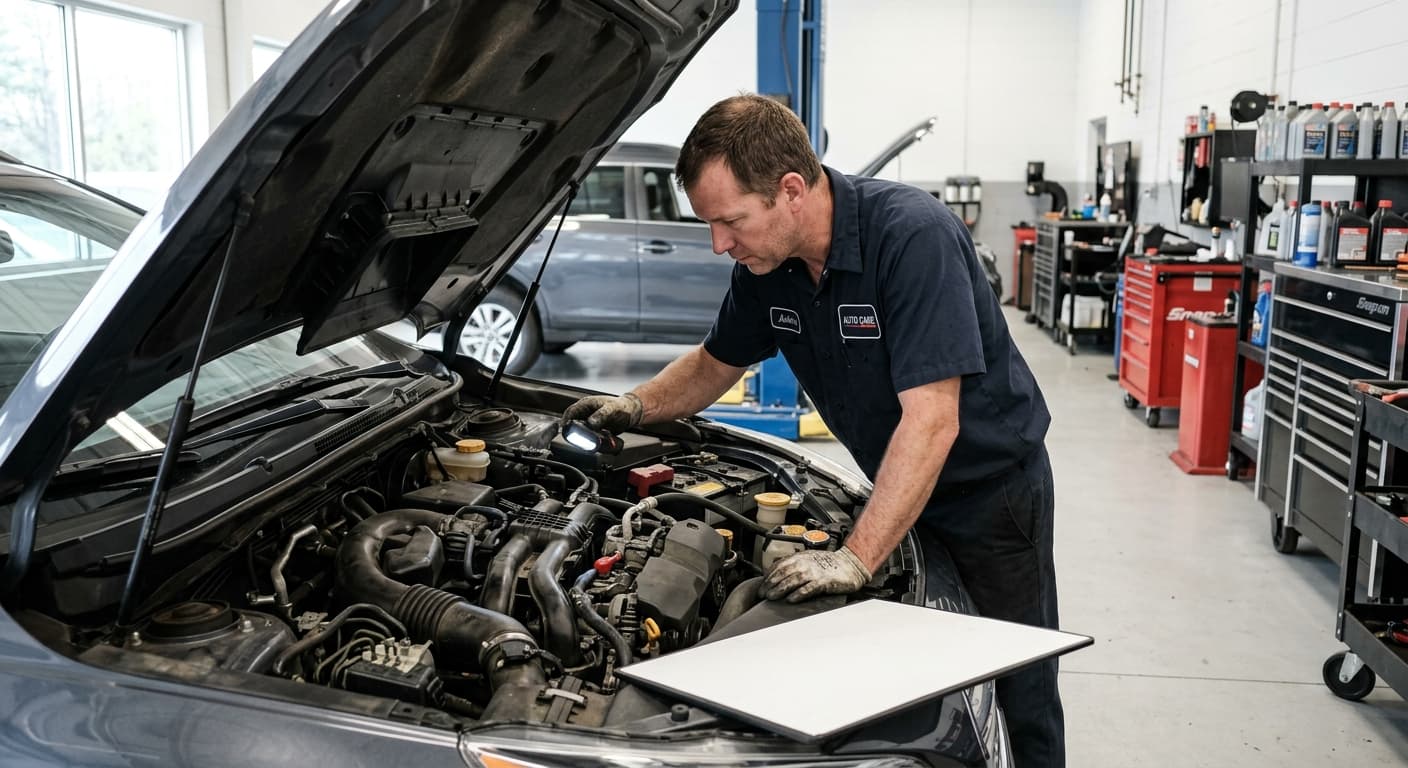
Maine's lemon law, codified at 10 M.R.S.A. § 1163, covers new motor vehicles within 3 years or 18,000 miles of delivery. A consumer qualifies for a refund or replacement when the same defect survives three repair attempts or the vehicle is out of service for 15 or more cumulative business days. The consumer chooses between the two remedies.
Maine's lemon law gives consumers strong protections when a new vehicle has a substantial defect that the manufacturer cannot fix. Codified at 10 M.R.S.A. §§ 1161 through 1169, the law requires manufacturers to either replace the vehicle or issue a full refund after a reasonable number of repair attempts. The Maine Attorney General's Office administers a free state-certified arbitration program that makes the process accessible to all consumers.
This guide covers every aspect of Maine's lemon law: which vehicles qualify, how the presumption works, what remedies you can pursue, and a step-by-step walkthrough of filing a claim.
What Vehicles Are Covered
Maine's lemon law covers motor vehicles purchased or leased in the state that are designed for passenger or property conveyance on public highways. Understanding which vehicles qualify is essential before pursuing a claim.
Covered Vehicle Types
- Passenger cars: Sedans, coupes, hatchbacks, and similar vehicles
- Trucks: Pickup trucks and similar vehicles under 8,500 pounds gross vehicle weight
- SUVs and crossovers: Sport utility vehicles and crossover vehicles
- Vans and minivans: Including passenger and cargo configurations
- Motorcycles: Street-legal motorcycles purchased with manufacturer warranties
- Leased vehicles: Vehicles leased by consumers for personal use
Vehicles Not Covered
- Vehicles used primarily for commercial purposes with a gross vehicle weight of 8,500 pounds or more
- Vehicles owned by governmental entities
- Vehicles owned by businesses or commercial enterprises that register 3 or more motor vehicles
- Off-road vehicles not designed for public highway use
- Boats, recreational vehicles (living quarters portion), and similar non-highway vehicles
Under 10 M.R.S.A. § 1161, the term "consumer" specifically excludes governmental entities and any business or commercial enterprise that registers three or more motor vehicles. This limitation ensures that the law primarily protects individual consumers rather than fleet purchasers or commercial operations.
Used Vehicle Coverage
While the lemon law primarily targets new vehicles, used vehicles may qualify in limited circumstances. If you purchased a used vehicle that is still within the original manufacturer's express warranty period and within 3 years of original delivery with fewer than 18,000 miles, the lemon law protections may still apply. Subsequent owners can also be eligible for state lemon law arbitration under these conditions.
Maine's Lemon Law Presumption
Under 10 M.R.S.A. § 1163(3), Maine law creates a presumption that a reasonable number of repair attempts have been made if certain conditions are met. When this presumption applies, the burden shifts to the manufacturer to prove the vehicle is not defective or that additional repair attempts would be successful.
The Lemon Law Presumption Applies When:
| Condition | Requirement | Details |
|---|---|---|
| Repair Attempts (Same Problem) | 3 or more attempts | Same nonconformity must substantially impair use, safety, or value |
| Brake or Steering Defects | 1 or more attempts | For serious failures of braking or steering systems |
| Days Out of Service | 15 or more business days | Cumulative total for repair of any covered defects |
| Timeframe | Within 3 years or 18,000 miles | Whichever comes first from date of original delivery |
Important: Maine uses business days rather than calendar days for calculating time out of service. This is more favorable to consumers, as weekends and holidays do not count against the 15-day threshold. A business day is defined as any day during which service departments of authorized dealers are normally open for business. In practical terms, 15 business days equals roughly three calendar weeks.
What Qualifies as a "Substantial" Defect?
The defect must substantially impair the use, safety, or value of the motor vehicle. Examples of qualifying defects include:
- Engine problems causing stalling, loss of power, or failure to start
- Transmission defects affecting shifting or drivability
- Brake system malfunctions or failures
- Steering problems creating safety hazards
- Electrical system failures affecting critical vehicle functions
- Airbag or safety restraint system defects
- Persistent warning lights indicating serious mechanical issues
- Water leaks causing interior damage or mold
Minor issues such as cosmetic defects, minor squeaks and rattles, or problems that do not affect safety, use, or resale value typically do not qualify for lemon law relief.
How to File a Lemon Law Claim in Maine
Filing a lemon law claim in Maine follows a specific process. Here is a step-by-step walkthrough based on the Maine Attorney General's Lemon Law page.
Step 1: Document All Repair Attempts
Keep detailed records of every visit to the dealer for the same problem. Request a copy of the repair order each time. You will need to show that the vehicle was repaired at least 3 times for the same defect, or that it was out of service for 15 or more business days.
Step 2: Contact the Lemon Law Arbitration Program
Call the Maine Attorney General's Lemon Law Arbitration Program at (207) 626-8848 or email lemon.law@maine.gov to request an application and a Final Opportunity to Repair Notice form.
Program Contact Information:
| Detail | Information |
|---|---|
| Office | Attorney General, Consumer Protection Division |
| Address | 6 State House Station, Augusta, ME 04333-0006 |
| Phone | (207) 626-8848 |
| Fax | (207) 626-8812 |
| lemon.law@maine.gov |
Step 3: Send the Final Opportunity to Repair Notice
Under 10 M.R.S.A. § 1163(3-A), you must send written notice to the manufacturer by certified mail with return receipt requested. This letter informs the manufacturer that you want a refund or replacement and gives them one final chance to fix the vehicle. The manufacturer then has 7 business days to attempt the repair.
For serious brake or steering failures, this notice can be sent after just one repair attempt.
Step 4: Complete and Submit the Application
File your lemon law application after the manufacturer's 7-business-day final repair opportunity expires without resolution, and while the defect and your claim still fall within the 3-year or 18,000-mile coverage period. Include copies of all repair orders, your purchase or lease agreement, and the certified mail receipt from the Final Opportunity to Repair Notice.
Step 5: Attend the Arbitration Hearing
The state must schedule your hearing within 45 days of accepting your application. You do not need an attorney, though you may hire one. Bring all documentation, including repair records, photos, and correspondence with the manufacturer or dealer.
Step 6: Receive the Decision
If the arbitrator rules in your favor, you choose between a replacement vehicle or a full refund. The manufacturer is bound by the decision if you accept it. If you are not satisfied with the outcome, you retain the right to pursue your claim in court.
Notice Requirements
Maine's lemon law includes specific notice requirements that consumers must follow to preserve their rights. Under 10 M.R.S.A. § 1163(6), manufacturers may require written notification of a claim, but only if they have clearly and conspicuously disclosed this requirement to the consumer.
Manufacturer Notice Requirements
If a manufacturer requires written notice, they must:
- Clearly and conspicuously disclose this requirement in the warranty or owner's manual
- Include the name and address where consumers should send written notification
- Provide this information at the time the vehicle is delivered to the consumer
Consumer Notice Options
Under 10 M.R.S.A. § 1163(6-A), consumers may also satisfy any manufacturer notice requirement by notifying the authorized dealer in writing. When this occurs, the dealer acts as the manufacturer's agent and must immediately communicate the consumer's claim to the manufacturer.
Consumer Remedies: Refund vs. Replacement
When a vehicle qualifies as a lemon under Maine law, the consumer has the right to choose between two remedies: a full refund or a replacement vehicle.
Option 1: Vehicle Buyback (Refund)
Under 10 M.R.S.A. § 1163(2), the refund must include:
- Full purchase price: Or, if leased, all lease payments made to date
- Finance charges: Any paid finance charges on the purchased or leased vehicle
- Collateral charges: Including sales tax, registration fees, and similar government charges
- Incidental costs: Reasonable costs for towing, storage, and alternative transportation
Usage Deduction: The manufacturer may deduct a reasonable allowance for the consumer's use of the vehicle. Under 10 M.R.S.A. § 1161(4), this allowance is capped at the lesser of two amounts:
- One-third of the IRS standard mileage rate (the IRS standard business mileage rate, $0.76 per mile as of July 2026, up from $0.725 for the first half of the year and subject to change) multiplied by the total of: (a) miles reported at the time of the arbitration application, plus (b) any miles the consumer drove the vehicle beyond 20,000 miles, OR
- 10% of the purchase price of the vehicle
This cap is more favorable to consumers than many other states provide.
Option 2: Replacement Vehicle
Consumers may instead elect to receive a comparable replacement motor vehicle. However, Maine law specifically provides that the consumer may reject any offered replacement and receive a refund instead. This gives consumers significant leverage in negotiations with manufacturers.
Treatment of Liens and Security Interests
Refunds are made to the consumer and lienholder as their interests appear. If a consumer accepts a replacement vehicle, the secured party must consent to transferring the security interest to the replacement vehicle, provided it is comparable in value to the original.
State-Certified Arbitration Process
Maine offers a state-certified arbitration program administered by the Office of the Attorney General. Under 10 M.R.S.A. § 1165, consumers must first resort to either a manufacturer's informal dispute settlement procedure (if one exists that complies with federal regulations) or the state-certified arbitration before pursuing court remedies.
Benefits of State-Certified Arbitration
- Free to consumers: No filing fee for state-certified arbitration
- Faster resolution: Decision within 45 days of application acceptance
- Less formal: No attorney required, though consumers may hire one
- Binding on manufacturer: Decisions are binding on the manufacturer if consumer accepts
- Neutral arbitrators: Selected by the Department of the Attorney General
The $1 Arbitration Fund
Under 10 M.R.S.A. § 1169, authorized new car dealers collect a $1 lemon law arbitration program fee from the purchaser as part of each new motor vehicle sale agreement. This fee funds the state-certified arbitration program, keeping it free for consumers who file claims.
Manufacturer Dispute Settlement Procedures
If a manufacturer operates an informal dispute settlement procedure that meets 16 C.F.R. Part 703 requirements, the consumer must use that procedure first. The manufacturer's procedure must complete its duties within 40 days after receiving notice of the dispute, or the consumer may proceed directly to state-certified arbitration or court.
Appealing an Arbitration Decision
If the consumer is not satisfied with the arbitration outcome, they retain the right to pursue their claim in court. The arbitration decision is not binding on the consumer unless they choose to accept it.
Continuing Damages and Enhanced Penalties
Maine's lemon law provides additional financial consequences for manufacturers that fail to comply promptly with arbitration decisions.
$25 Per Day Continuing Damages
Under 10 M.R.S.A. § 1169, if a state-certified arbitration resulting in a refund or replacement is upheld by the court, the consumer may recover continuing damages of up to $25 per day. This applies for each day after the vehicle was returned to the manufacturer that the consumer was without use of the vehicle. The damages do not apply if the manufacturer provided a comparable loaner vehicle free of charge.
Double Award for Frivolous Appeals
If a manufacturer appeals an arbitration decision and loses, the prevailing consumer must be awarded reasonable attorney's fees and costs. If the court finds that the manufacturer's appeal had no reasonable basis or was frivolous, the court must double the total award to the consumer. This provision discourages manufacturers from using appeals as a delay tactic.
Attorney's Fees
Under 10 M.R.S.A. § 1167, courts may award reasonable attorney's fees and costs to consumers who successfully enforce their rights under the lemon law. This makes it easier for consumers to find attorneys willing to take lemon law cases on a contingency basis.
Federal Backstop: Magnuson-Moss Warranty Act
Maine's state law exists alongside the federal Magnuson-Moss Warranty Act (15 U.S.C. §§ 2301-2312), which provides an independent avenue for consumers whose warranties are not honored. Under Magnuson-Moss, if a manufacturer fails to fulfill its written warranty obligations within a reasonable time, the consumer may sue in federal court for damages, costs, and attorney's fees. Federal claims are not subject to Maine's 3-year or 18,000-mile thresholds, which can be important when defects are first discovered outside the state law window but clearly arose within it. Most Maine lemon law attorneys evaluate both state and federal claims together.
Manufacturer Defenses
Manufacturers may raise several affirmative defenses to avoid lemon law liability. Under 10 M.R.S.A. § 1164, these defenses are limited to specific circumstances.
Valid Affirmative Defenses
| Defense | Manufacturer's Argument | Consumer's Counter |
|---|---|---|
| Lack of substantial impairment | Defect does not substantially impair use, safety, or value | Document how defect affects daily use, safety concerns, or resale value |
| Consumer abuse or neglect | Problem caused by consumer misuse | Provide maintenance records showing proper care |
| Unauthorized modifications | Aftermarket parts or alterations caused defect | Show defect existed before modifications or is unrelated |
The burden of proving these defenses rests with the manufacturer. Consumers should maintain detailed records of all maintenance performed and avoid making significant modifications to the vehicle while pursuing a lemon law claim.
Title Branding and Disclosure
Maine has strong requirements for disclosing vehicles that have been returned under the lemon law. Under 10 M.R.S.A. § 1163(7) and (8), strict disclosure rules apply.
Resale Disclosure Requirements
A vehicle returned to a manufacturer under the lemon law may not be resold without clear and conspicuous written disclosure to any subsequent purchaser (whether consumer or dealer) of:
- That the vehicle was returned under Chapter 203-A
- That the vehicle did not conform to the manufacturer's express warranties
- The specific ways in which the vehicle failed to conform
Title Branding
Under 29-A M.R.S.A. § 670, vehicles subject to lemon law disclosure requirements must have their titles branded. Vehicles surrendered as a result of a settlement of state-certified arbitration must be affixed with a written disclosure stating the vehicle was the subject of a Maine Lemon Law settlement agreement when first offered for retail sale.
Unfair Trade Practices Connection
One of the strongest features of Maine's lemon law is its connection to the Maine Unfair Trade Practices Act (UTPA).
Under 10 M.R.S.A. § 1166, any violation of the lemon law constitutes prima facie evidence of an unfair or deceptive trade practice under Title 5, Chapter 10. This means consumers can pursue additional remedies under the UTPA, which provides:
- A six-year statute of limitations (much longer than the lemon law coverage period)
- Recovery of actual damages
- Reasonable attorney's fees and costs
- Potential injunctive relief
This connection is particularly valuable for consumers whose vehicles have passed the lemon law's 3-year or 18,000-mile threshold, as they may still have viable claims under the UTPA if the manufacturer violated the lemon law during the coverage period.
Electric Vehicle Considerations
Electric vehicles are covered under Maine's lemon law just like conventional vehicles. However, EVs present unique considerations due to their different technology.
Common EV Defects That May Qualify
- Battery pack failures or significant capacity degradation
- Charging system malfunctions (onboard charger, charge port)
- Range substantially below manufacturer specifications
- Electric motor or drivetrain problems
- Thermal management system failures
- Software issues affecting vehicle operation or safety
- Regenerative braking system malfunctions
EV-Specific Challenges
- Software updates: Manufacturers may claim over-the-air updates resolved issues
- Battery warranty: Separate battery warranties may complicate coverage analysis
- Dealer expertise: Limited EV service experience at some dealerships
- Documentation: Software and electrical issues may require specialized diagnostic records
Statute of Limitations
Understanding the time limits for filing a Maine lemon law claim is critical for protecting your rights.
Coverage Period
The lemon law presumption applies during the express warranty term, within 3 years following original delivery, or within the first 18,000 miles of operation, whichever occurs earliest. Under 10 M.R.S.A. § 1163(1), the manufacturer's repair obligation continues even after these periods expire, provided the consumer reported the nonconformity within the applicable timeframe.
Extended Periods
Under 10 M.R.S.A. § 1163(4), the warranty term, mileage limit, and out-of-service period are extended by any time during which repair services were unavailable due to war, invasion, strike, fire, flood, or other natural disaster.
UDAP Claims
Because violations of Maine's lemon law constitute prima facie unfair trade practices under 10 M.R.S.A. § 1166, consumers may also pursue claims under Maine's Unfair Trade Practices Act (5 M.R.S.A. § 205-A et seq.), which has a six-year statute of limitations.
More Maine Laws
Frequently Asked Questions
How many repair attempts does Maine require before a vehicle is considered a lemon?
Under Maine's lemon law presumption, a vehicle may qualify as a lemon after three or more repair attempts for the same substantial defect, or after only one repair attempt for a serious brake or steering system failure. Alternatively, if the vehicle has been out of service for 15 or more cumulative business days for repairs, it may also qualify. These conditions must occur within 3 years of delivery or 18,000 miles, whichever comes first.
How do I start a lemon law claim in Maine?
Contact the Maine Attorney General's Lemon Law Arbitration Program at (207) 626-8848 or email lemon.law@maine.gov to request an application and a Final Opportunity to Repair Notice form. You will need to send the notice to the manufacturer by certified mail, giving them 7 business days for a final repair attempt. After that, submit your completed application with copies of all repair orders and your purchase or lease agreement.
Does Maine's lemon law cover leased vehicles?
Yes, leased vehicles are covered under Maine's lemon law. Under 10 M.R.S.A. § 1161(1), a consumer includes lessees of motor vehicles. If your leased vehicle qualifies as a lemon, you may be entitled to a refund of all lease payments made, plus incidental costs.
What is the difference between business days and calendar days under Maine's law?
Maine uses business days, which is more favorable to consumers. Business days are days when authorized dealer service departments are normally open. Weekends and holidays typically do not count. So 15 business days is roughly equivalent to three weeks of calendar time.
Can a manufacturer charge me for using the vehicle before the defect appeared?
Yes, the manufacturer may deduct a reasonable allowance for use. However, Maine law caps this deduction at the lesser of: one-third of the IRS mileage rate multiplied by total eligible miles (miles at the time of your arbitration application plus any miles you drove beyond 20,000), or 10% of the purchase price. This is a more favorable cap than many states provide.
What happens if the manufacturer ignores or appeals the arbitration decision?
If a manufacturer appeals an arbitration decision and loses, the consumer is awarded reasonable attorney's fees and costs. If the court determines the appeal was frivolous or had no reasonable basis, the court must double the total award. Consumers can also recover up to $25 per day in continuing damages for each day the vehicle remains out of use after being returned to the manufacturer.
What if I bought a used car that turns out to be a former lemon?
Maine requires that lemon buyback vehicles have branded titles and that sellers provide clear written disclosure of the vehicle's history. If a seller failed to disclose that your vehicle was a former lemon, you may have claims under Maine's Unfair Trade Practices Act in addition to potential fraud claims.
Does federal law provide any additional protection beyond Maine's lemon law?
Yes. The federal Magnuson-Moss Warranty Act (15 U.S.C. §§ 2301-2312) provides an independent right to sue in federal court when a manufacturer fails to honor a written warranty within a reasonable time. Federal claims are not capped by Maine's 3-year or 18,000-mile window, so they can be valuable when defects surface late but clearly originated during the coverage period. Attorney's fees are also recoverable under Magnuson-Moss.
Updates
Updated the usage-allowance formula to the IRS's current standard mileage rate ($0.76 per mile as of July 2026, after a mid-year increase from $0.725) and pointed the source link at the IRS's live rates page instead of a since-superseded rate announcement.
Independently fact-checked against the cited primary sources; governing law re-checked for recent changes
Governing law re-checked for recent changes
Governing law re-checked for recent changes
Reviewed and approved by an editor
The Law Behind This Article
This article rests on the statutory provisions below, held in our own legal record and retrieved from the official source. Tap a section to read the operative text.
Maine Revised Statutes, Title 10: COMMERCE AND TRADE, Part 3: REGULATION OF TRADE, Chapter 203-A: MANUFACTURER WARRANTIES ON MOTOR VEHICLES
§ 1163Rights and dutiesIn force
1. Repair of nonconformities. If a motor vehicle does not conform to all express warranties, the manufacturer, its agent or authorized dealer shall make those repairs necessary to conform the vehicle to the express warranties if the consumer reports the nonconformity to the manufacturer, its agent or authorized dealer during the term of the express warranties, within a period of 3 years following the date of original delivery of the motor vehicle to a consumer or during the first 18,000 miles of operation of that motor vehicle, whichever occurs earliest. This obligation exists notwithstanding the fact that the repairs are made after the expiration of the appropriate time period. A. [PL 1989, c. 570, §2 (RP).] B. [PL 1989, c. 570, §2 (RP).] 2. Failure to make effective repair.
Official text (excerpt) · last checked 2026-09-08 · Read the full text in our law library · Verify at legislature.maine.gov
Cited in 3 court opinions in our collectionLatest citing opinion in our collection: 2007
Opinions citing this section in our collection:
- Daimlerchrysler Corp. v. Executive Director (Supreme Judicial Court of Maine 2007, 922 A.2d 465)“…at the time of the motor vehicle’s original purchase. See 10 M.R.S. § 1163(2)(B). [¶ 4] On December 5, 2003, DCC…”
- DaimlerChrysler v. EXEC. DIR., REV. SERVS. (Supreme Judicial Court of Maine 2007, 922 A.2d 465)“…at the time of the motor vehicle's original purchase. See 10 M.R.S. § 1163(2)(B). [¶ 4] On December 5, 2003, DCC…”
- Jolovitz v. Alfa Romeo Distributors of North America (Supreme Judicial Court of Maine 2000, 760 A.2d 625)“…the vehicle is delivered to the consumer. See 10 M.R.S.A. § 1163(1) (1997). If the manufacturer, agent o…”
Identified automatically from the court opinions citing this section — not a ranking of which case controls.
§ 1169State motor vehicle dispute arbitration and mediationIn force
1. Neutral motor vehicle arbitration. All manufacturers shall submit to state-certified motor vehicle arbitration if arbitration is requested by the consumer within 3 years from the date of original delivery to the consumer of a motor vehicle or within the term of the express warranties, whichever comes first, and the State has accepted the application as making proper Maine Lemon Law claims. State-certified arbitration must be performed by one or more neutral arbitrators selected by the Department of the Attorney General operating in accordance with the rules adopted pursuant to this chapter. The Attorney General may contract with an independent entity to provide arbitration or the Attorney General's office may appoint neutral arbitrators. Each party to an arbitration is entitled to one rejection of a proposed arbitrator. 2. Written findings. Each arbitration results in a written finding of whether the motor vehicle in dispute meets the standards set forth by this chapter for vehicles that are required to be replaced or refunded.
Official text (excerpt) · last checked 2026-07-30 · Read the full text in our law library · Verify at legislature.maine.gov
Cited in 2 court opinions in our collectionLatest citing opinion in our collection: 2007
Opinions citing this section in our collection:
- Daimlerchrysler Corp. v. Executive Director (Supreme Judicial Court of Maine 2007, 922 A.2d 465)“…(1) following a Maine Lemon Law arbitration decision, see 10 M.R.S. § 1169, and (2) following a decision of an ind…”
- DaimlerChrysler v. EXEC. DIR., REV. SERVS. (Supreme Judicial Court of Maine 2007, 922 A.2d 465)“…(1) following a Maine Lemon Law arbitration decision, see 10 M.R.S. § 1169, and (2) following a decision of an ind…”
Identified automatically from the court opinions citing this section — not a ranking of which case controls.
§ 1161DefinitionsIn force
As used in this chapter, unless the context indicates otherwise, the following terms have the following meanings. [PL 1983, c. 145 (NEW).] 1. Consumer. "Consumer" means the purchaser, other than for purposes of resale, or the lessee, of a motor vehicle, any person to whom the motor vehicle is transferred during the duration of an express warranty applicable to the motor vehicle and any other person entitled by the terms of the warranty to enforce the obligations of the warranty, except that the term "consumer" shall not include any governmental entity, or any business or commercial enterprise which registers 3 or more motor vehicles. 2. Manufacturer. "Manufacturer" means manufacturer, importer, distributor or anyone who is named as the warrantor on an express written warranty on a motor vehicle. 3. Motor vehicle. "Motor vehicle" means any motor driven vehicle, designed for the conveyance of passengers or property on the public highways that is sold or leased in this State, except that the term "motor vehicle" does not include any vehicle used primarily for commercial purposes with a gross vehicle weight of 8,500 pounds or more. 4. Reasonable allowance for use.
Official text (excerpt) · last checked 2026-07-30 · Read the full text in our law library · Verify at legislature.maine.gov
Cited in 4 court opinions in our collectionLatest citing opinion in our collection: 2007
Opinions citing this section in our collection:
- Guiggey v. Bombardier (Supreme Judicial Court of Maine 1992, 615 A.2d 1169)“…y under 11 M.R.S.A. § 2-314 and violating the provisions of 10 M.R.S.A. § 1161, et seq. (Supp.1991) regarding warranti…”
- Jolovitz v. Alfa Romeo Distributors of North America (Supreme Judicial Court of Maine 2000, 760 A.2d 625)“…vrolet oh Jolovitz’s claims for violation of the Lemon Law, 10 M.R.S.A §§ 1161— 1169 (1997 & Supp.1999);…”
- Daimlerchrysler Corp. v. Executive Director (Supreme Judicial Court of Maine 2007, 922 A.2d 465)“…ities when applied in conjunction with the Maine Lemon Law, 10 M.R.S. §§ 1161-1169 (2006). We determine that DCC is n…”
Identified automatically from the court opinions citing this section — not a ranking of which case controls.
Maine Revised Statutes, Title 5: ADMINISTRATIVE PROCEDURES AND SERVICES, Part 1: STATE DEPARTMENTS, Chapter 10: UNFAIR TRADE PRACTICES
§ 213Private remediesIn force
1. Court action. Any person who purchases or leases goods, services or property, real or personal, primarily for personal, family or household purposes and thereby suffers any loss of money or property, real or personal, as a result of the use or employment by another person of a method, act or practice declared unlawful by section 207 or by any rule or regulation issued under section 207, subsection 2 may bring an action either in the Superior Court or District Court for actual damages, restitution and for such other equitable relief, including an injunction, as the court determines to be necessary and proper. There is a right to trial by jury in any action brought in Superior Court under this section. 1-A. Settlement offer. At least 30 days prior to the filing of an action for damages, a written demand for relief, identifying the claimant and reasonably describing the unfair and deceptive act or practice relied upon and the injuries suffered, must be mailed or delivered to any prospective respondent at the respondent's last known address.
Official text (excerpt) · last checked 2026-07-30 · Read the full text in our law library · Verify at legislature.maine.gov
Cited in 131 court opinions in our collectionLatest citing opinion in our collection: 2025
Opinions citing this section in our collection:
- Advanced Construction Corp. v. Pilecki (Supreme Judicial Court of Maine 2006, 901 A.2d 189)“…s fees and costs incurred in connection with said action.” 5 M.R.S. § 213(2). [¶26] The Pileckis’ attorney…”
- Bartner v. Carter (Supreme Judicial Court of Maine 1979, 405 A.2d 194)“…ation of the Maine Unfair Trade Practices Act, specifically 5 M.R.S.A. § 213 (1979). The action arose out of the pur…”
- VanVoorhees v. Dodge (Supreme Judicial Court of Maine 1996, 679 A.2d 1077)“…90 (Supp. 1995), and the Maine Unfair Trade Practices Act, 5 M.R.SA. § 213 (1989 & Supp.1995) (UTPA). We affirm th…”
Identified automatically from the court opinions citing this section — not a ranking of which case controls.
Maine Revised Statutes, Title 29-A: MOTOR VEHICLES AND TRAFFIC, Chapter 7: TITLE TO VEHICLES
§ 670Maine Lemon Law vehicleIn force
This section applies to any motor vehicle subject to the disclosure requirements of Title 10, section 1163, subsection 7. A manufacturer to whom the motor vehicle was returned pursuant to Title 10, section 1163, subsection 2 shall return the title of the motor vehicle to the Secretary of State with an application for a new title in the name of the manufacturer. The Secretary of State shall issue a certificate of title that includes the following brand: "Lemon Law Buyback." All subsequent certificates of title to that vehicle must contain the same brand. [PL 2007, c. 383, §18 (NEW).]
Official text (excerpt) · last checked 2026-07-30 · Read the full text in our law library · Verify at legislature.maine.gov
Search our full record of US law — 2.1 million sections, every state + federal →
Sources and References
- Maine Lemon Law Statute (Title 10, Chapter 203-A, §§ 1161-1169)(legislature.maine.gov).gov
- Maine Attorney General: The Maine Lemon Law and State Arbitration(maine.gov).gov
- 10 M.R.S.A. § 1169: State Motor Vehicle Dispute Arbitration and Mediation(mainelegislature.org).gov
- 29-A M.R.S.A. § 670: Maine Lemon Law Vehicle Title Branding(mainelegislature.org).gov
- Maine Unfair Trade Practices Act (Title 5, Chapter 10)(legislature.maine.gov).gov
- Maine Attorney General: Consumer Complaints(maine.gov).gov
- IRS Standard Mileage Rates(irs.gov).gov
- 16 C.F.R. Part 703: Informal Dispute Settlement Procedures(ecfr.gov).gov
- 5 M.R.S.A. § 213: Private Remedies Under Maine UTPA(legislature.maine.gov).gov
- 10 M.R.S.A. § 1161 - Definitions (including usage allowance formula)(legislature.maine.gov).gov
- 10 M.R.S.A. § 1163 - Remedies, presumption, and notice(legislature.maine.gov).gov
- 10 M.R.S.A. § 1169 - State motor vehicle dispute arbitration and penalties(legislature.maine.gov).gov
- Maine Attorney General - Lemon Law Program(maine.gov).gov
- IRS Standard Mileage Rates (76 cents per mile as of July 2026)(irs.gov).gov
- Magnuson-Moss Warranty Act, 15 U.S.C. §§ 2301-2312(uscode.house.gov).gov