
Wisconsin
Wisconsin Squatters Rights and Adverse Possession Laws (2026)
Independently fact-checked against primary sources (last audited August 18, 2026). · Reviewed by the RecordingLaw editorial team. · Law checked current as of August 9, 2026. How we verify our legal content
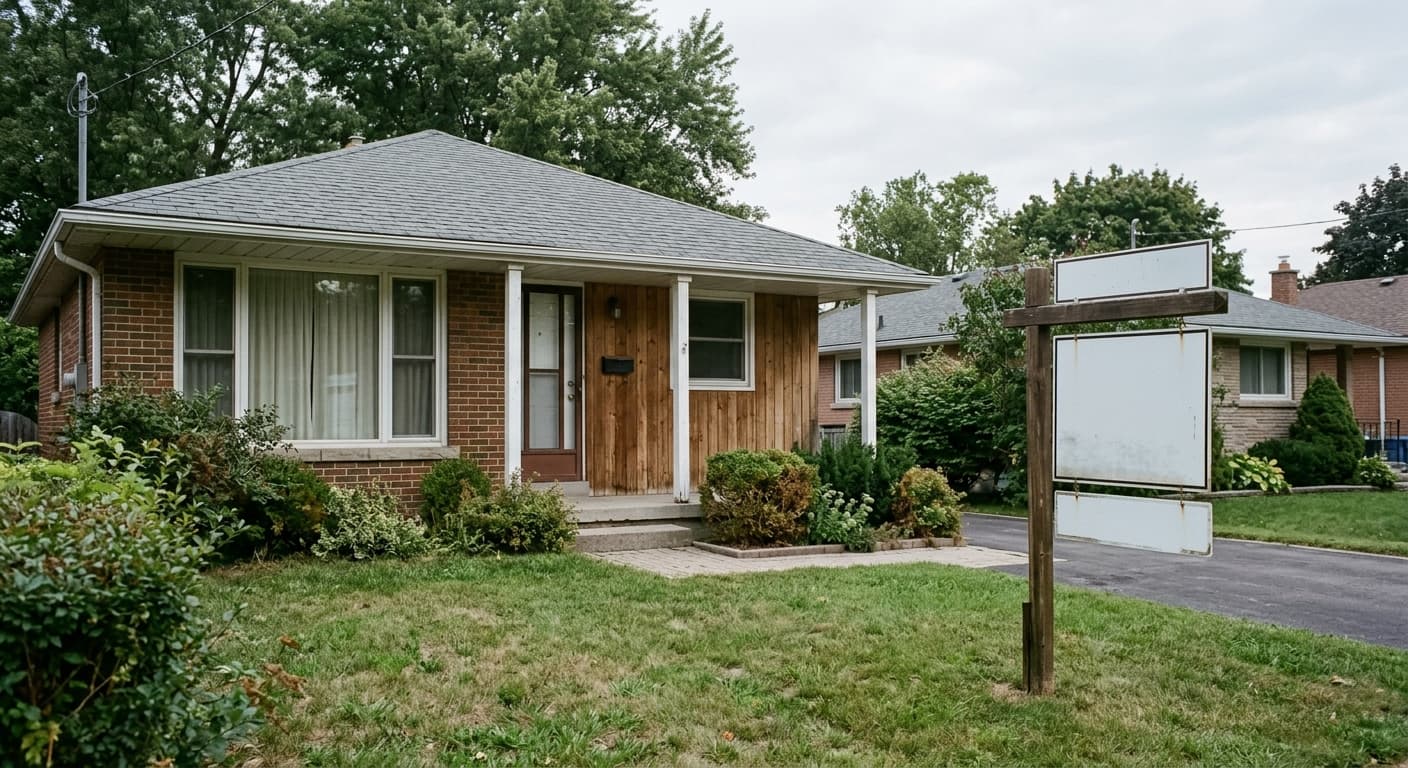
Wisconsin recognizes three separate adverse possession tracks: a 20-year baseline period for open land claims, a 10-year period for claimants holding a recorded written instrument, and a 7-year period for claimants with recorded title who also paid all property taxes. Property owners must follow the formal eviction process under Wisconsin's small-claims statutes to remove squatters.
Information last verified on May 27, 2026. This article provides general legal information, not legal advice.
Jurisdiction scope: This article covers Wisconsin state law. For a comparison of squatter and adverse possession rules in all 50 states, see the national squatters rights guide.
Adverse Possession in Wisconsin: The 20, 10, and 7-Year Tracks
Wisconsin codifies adverse possession in three consecutive statutes within Chapter 893, each with a different time period and a different set of qualifying conditions.

The 20-Year Track: Wis. Stat. § 893.25
Section 893.25 is Wisconsin's foundational adverse possession provision. A claimant who possesses real estate adversely for 20 uninterrupted years may bar a recovery action by the record owner. The statute does not require a written instrument or any tax payment.
Under § 893.25(2), land is possessed adversely only when the claimant is in actual, continued occupation under a claim of title, exclusive of any other right, and the land is either protected by a substantial enclosure or is usually cultivated or improved. Courts have interpreted the statute to also require that possession be open and notorious so that a reasonable owner would have notice of the occupancy.
The statute expressly contains no requirement of good faith entry. A claimant who enters knowing the land belongs to someone else can still satisfy § 893.25 if all other elements are met for the full 20-year period.
Because no written document or tax payment is involved, § 893.25 is the track most likely to apply to a traditional squatter who builds a fence, farms a strip of land, or occupies a vacant structure over many decades without permission.
Public Land Is Exempt: Wis. Stat. § 893.29
Section 893.25(1) bars the owner's recovery action after 20 years "except as provided by s. 893.14 and 893.29," and § 893.29 is the limit that matters most in practice. Under § 893.29(1), no title to or interest in real property belonging to the state, or to a city, village, town, county, school district, sewerage commission, sewerage district, or any other unit of government in Wisconsin, may be obtained by adverse possession. Occupying a public park, a school parcel, a road right-of-way, or any other government-owned land produces no claim no matter how long or how openly the occupation runs. Section 893.29(1m) applies the same bar in the other direction, so a unit of government cannot take private property by adverse possession either.
Section 893.25(1) also supplies the mechanism for converting a completed period into recorded ownership: a person who satisfies the statute may commence an action to establish title under Wis. Stat. ch. 841. Running the 20 years bars the record owner's action to recover possession, but it is the ch. 841 judgment that produces a title the claimant can record, insure, or convey.
The 10-Year Track: Wis. Stat. § 893.26
Section 893.26 reduces the period to 10 years when the claimant originally entered possession under a good-faith claim of title founded on a written instrument, and that instrument was recorded with the register of deeds within 30 days of entry.
Good faith is presumed under § 893.26(5) unless rebutted by evidence. The statute covers situations such as a faulty deed, a boundary-line dispute based on a recorded survey, or a judgment that turned out to be defective. Once the instrument is on record and the claimant has maintained actual, continued occupation of all or a material portion of the described property for 10 years, the record owner's action is barred.
Section 893.26(3) limits the geographic scope of a § 893.26 claim: possession of one lot does not constitute possession of any other lot in a subdivided tract.
The 7-Year Track: Wis. Stat. § 893.27
Section 893.27 provides the shortest period, 7 years, for claimants who satisfy all of the § 893.26 conditions and meet two additional requirements. First, every transfer of the claimed interest must be recorded with the county register of deeds within 30 days of execution. Second, the claimant or a predecessor in interest must have paid all real estate taxes, or payments in lieu of taxes, for the entire 7-year period following initial entry.
The tax-payment requirement is what distinguishes the 7-year track. It reflects a legislative judgment that a claimant who maintains both a recorded chain of conveyances and a continuous tax-payment record has made a sufficiently documented claim to justify the shorter limitations period.
Elements Common to All Three Tracks
Regardless of which track applies, Wisconsin courts require that possession be:
- Actual: The claimant physically uses or occupies the land.
- Continuous: Occupation is uninterrupted for the full statutory period. Seasonal use can satisfy continuity if consistent with how similar land is typically used.
- Exclusive: The claimant does not share possession with the record owner or the general public.
- Open and notorious: The occupation is visible and would give a reasonable owner notice that someone is asserting a claim.
- Under claim of title: The claimant treats the land as their own, which Wisconsin courts treat as the statutory equivalent of the common-law "hostile" element.
Tacking
Wisconsin permits a claimant to add, or "tack," the adverse possession periods of prior claimants in privity with them. A buyer who purchases property from someone who had already occupied it adversely for several years can add those years to their own period to reach the required total. Privity of possession is required; a stranger cannot claim the benefit of a prior occupant's time.
How to Remove a Squatter in Wisconsin
Wisconsin law does not permit a property owner to remove a squatter by force, by changing locks, by shutting off utilities, or by removing belongings. These acts are prohibited even when the occupant has no legal right to be on the property. The only lawful path is the formal eviction process.
Step 1: Determine Whether a Termination Notice Is Required
Whether the owner must serve a notice before filing depends on whether the occupant is a tenant at all. The 28-day termination notice in Wis. Stat. § 704.19 reaches only two categories, listed in § 704.19(1): a periodic tenancy, whether from year-to-year, month-to-month, or on any other periodic basis, and a tenancy at will. Section 704.01(5) defines a tenant at will as one "holding with the permission of the tenant's landlord," so an occupant who moved in without the owner's consent is not a tenant at will and § 704.19 does not reach them. Section 704.055(1) makes the same point from the other side, defining a trespasser as a person "who is not a tenant and who enters or remains in residential rental property without the consent of the landlord."
For an occupant who never had a tenancy, the eviction statute supplies the predicate on its own. Wis. Stat. § 799.40(1) allows a person entitled to possession to commence an eviction action to remove "any person who is not entitled to either the possession or occupancy of such real property," and it imposes no tenancy-termination notice requirement for that route. Wisconsin law does not make an owner wait 28 days before filing against a true squatter.
The risk runs the other way, which is why the tenancy question has to be settled first. If the occupant can show facts that made them a tenant, such as an oral agreement, rent the owner accepted, or permission from a prior owner or from someone with authority over the property, then a § 704.19 termination notice is required and filing without one can get the eviction dismissed. Where the occupant's status is genuinely unclear, serving a 28-day notice costs only time and removes that defense.
When notice is required, it must be served by one of the methods in Wis. Stat. § 704.21: personal service on the occupant, leaving a copy at the premises with a competent adult, or, if personal service is impossible, posting on the main door and mailing a copy.

Step 2: File an Eviction Action in Circuit Court
If the occupant does not leave, the owner files an eviction complaint in the circuit court for the county where the property is located. Eviction actions in Wisconsin are classified as small-claims cases under Wis. Stat. ch. 799, regardless of the amount of rent at issue. The complaint must identify the property, state the grounds for eviction, and request a writ of restitution under Wis. Stat. § 799.44.
Filing fees are set by each county. The court issues a summons carrying a return date, which is the occupant's first appearance. Wis. Stat. § 799.05(3)(b) sets that date in an eviction action at not less than 5 days nor more than 25 days from the issue date for a summons served on a Wisconsin resident, and service must be made at least 5 days before the return date. The longer 8-to-30-day return window in the same paragraph governs other small-claims cases and expressly excludes eviction actions, so an eviction reaches its first court date faster than an ordinary small-claims suit.

Step 3: Attend the Hearing
At the eviction hearing, the owner presents evidence that the occupant has no right to remain. For a squatter, this means showing ownership of the property and that no lease or rental agreement grants the occupant permission to stay. The occupant may contest the action. If the court finds in the owner's favor, it enters a judgment for eviction and orders a writ of restitution.
Step 4: Writ of Restitution and Physical Removal
Under Wis. Stat. § 799.44 and § 799.45, the court issues a writ of restitution directing the sheriff or a court officer to remove the occupant and restore possession to the owner. The writ typically specifies a date by which the occupant must leave voluntarily; if they do not, law enforcement carries out the physical removal. The owner must coordinate with the sheriff's office to schedule the lockout.
No Expedited Removal Law in Wisconsin
As of May 2026, Wisconsin has not enacted a standalone expedited squatter-removal statute comparable to laws passed in Florida (2024) or other states. Property owners in Wisconsin must use the standard ch. 799 eviction procedure described above. If the squatter claims a color of title or raises an adverse possession defense, the case will be litigated as a contested eviction or a separate quiet title action in circuit court.
Legal disclaimer: This article is general legal information about Wisconsin adverse possession and squatter removal procedures. It is not legal advice and does not create an attorney-client relationship. Wisconsin property law can be complex, and outcomes depend on specific facts. Consult a licensed Wisconsin real estate or landlord-tenant attorney for advice about your situation.
For adverse possession and squatter removal rules in other states, see the national squatters rights guide.
Content last reviewed: May 27, 2026.
More Wisconsin Laws
Frequently Asked Questions
How long does a squatter have to stay in Wisconsin to claim the property?
The minimum period is 7 years under Wis. Stat. § 893.27, but only if the squatter holds a recorded deed and paid all property taxes throughout those 7 years. Without a recorded deed and tax payments, the period is 20 years (§ 893.25) or 10 years with a recorded instrument (§ 893.26). No period is long enough on government-owned land, because Wis. Stat. § 893.29 bars adverse possession of property belonging to the state or a unit of local government.
Does a squatter have to pay property taxes to claim adverse possession in Wisconsin?
Tax payment is required only for the 7-year track under Wis. Stat. § 893.27. It is not required for the 20-year track under § 893.25 or the 10-year track under § 893.26. For most squatters who lack any recorded document, the 20-year track applies and no tax payment is needed.
Can I physically remove a squatter from my Wisconsin property myself?
No. Wisconsin law prohibits self-help eviction. Changing locks, removing a squatter's belongings, or cutting off utilities without a court order can expose the property owner to civil liability. The owner must file an eviction action under Wis. Stat. ch. 799 and obtain a writ of restitution before the sheriff can remove the occupant.
How long does it take to evict a squatter in Wisconsin?
For an occupant who was never a tenant, no 28-day termination notice is required, so the owner can file the eviction action under Wis. Stat. § 799.40(1) right away. Wis. Stat. § 799.05(3)(b) then sets the return date at not less than 5 nor more than 25 days from the issue date of the summons. If the occupant was in fact a tenant, a 28-day notice under § 704.19 has to run first. After judgment, the sheriff schedules the physical removal on the writ of restitution, and contested cases take longer.
What notice must I give a squatter before filing for eviction in Wisconsin?
Often none. The 28-day notice in Wis. Stat. § 704.19 applies only to periodic tenancies and tenancies at will, and § 704.01(5) defines a tenant at will as someone holding with the landlord's permission. A person who entered without consent is a trespasser under § 704.055(1), not a tenant, and § 799.40(1) allows an eviction action against any person not entitled to possession or occupancy without a tenancy-termination notice. If there is any chance the occupant became a tenant through an oral agreement, accepted rent, or permission from a prior owner, serve a § 704.19 notice using a method in § 704.21: personal service, leaving a copy with a competent adult at the premises, or posting on the main door and mailing a copy.
Can a squatter's adverse possession claim be stopped before the statutory period runs out?
Yes, but not by simply walking onto the land. Under Wis. Stat. § 893.32, an entry does not interrupt adverse possession unless the owner commences an action against the possessor within one year after the entry and before the limitation period runs, or unless the entry actually terminates the adverse possession and is followed by the owner's own possession. Wisconsin also provides a recording route in § 893.305: the record title holder records an affidavit of interruption together with a survey certified no earlier than 5 years before recording, gives notice by certified mail to a known occupant or by class 1 published notice when the person is unknown, and records proof that notice was given. Filing suit and regular inspection of vacant or remote parcels remain the most practical protections.
Does Wisconsin have a color-of-title doctrine for adverse possession?
Yes. Under Wis. Stat. § 893.26, a claimant who entered under a defective but recorded written instrument (sometimes called color of title) can use the 10-year period rather than the 20-year period. The instrument must have been recorded within 30 days of entry, and the claimant must have entered in good faith, which is presumed unless rebutted.
Updates
Corrected the removal steps to reflect that Wisconsin's 28-day notice under Wis. Stat. § 704.19 applies only to actual tenancies while § 799.40(1) allows an eviction action against a non-tenant occupant, replaced the eviction hearing timing with the 5-to-25-day return date set by § 799.05(3)(b), rewrote the guidance on interrupting an adverse possession claim to follow §§ 893.32 and 893.305, and added the § 893.29 bar on adverse possession of government land along with the ch. 841 action for establishing title.
Independently fact-checked against the cited primary sources
Governing law re-checked for recent changes
Governing law re-checked for recent changes
Reviewed and approved by an editor
The Law Behind This Article
This article rests on the statutory provisions below, held in our own legal record and retrieved from the official source. Tap a section to read the operative text.
Wisconsin Statutes, Chapter 893: Limitations Of Commencement Of Actions And Proceedings; Procedure For Claims Against Governmental Units
§ 893.25Adverse possession, not founded on written instrument.In force
(1) An action for the recovery or the possession of real estate and a defense or counterclaim based on title to real estate are barred by uninterrupted adverse possession of 20 years, except as provided by s. 893.14 and 893.29. A person who, in connection with his or her predecessors in interest, is in uninterrupted adverse possession of real estate for 20 years, except as provided by s. 893.29, may commence an action to establish title under ch. 841. (2) Real estate is possessed adversely under this section: (a) Only if the person possessing it, in connection with his or her predecessors in interest, is in actual continued occupation under claim of title, exclusive of any other right; and (b) Only to the extent that it is actually occupied and: 1. Protected by a substantial enclosure; or 2. Usually cultivated or improved. Judicial Council Committee’s Note, 1979: This provision collects in one section all material relating to 20-year adverse possession, without change in substance. Previous ss. 893.08 and 893.09, together with part of previous s. 893.10, are integrated here.
Official text (excerpt) · last checked 2026-09-08 · Read the full text in our law library · Verify at docs.legis.wisconsin.gov
Cited in 15 court opinions in our collectionLatest citing opinion in our collection: 2025
Opinions citing this section in our collection:
- Tomczak v. Bailey (Wisconsin Supreme Court 1998, 218 Wis. 2d 245)“…ites of successful adverse possession claims. See, e.g., Wis. Stat. § 893.25 (2)(a) (1995-96) (requiring actual con…”
- Richard S. Wilcox v. Estate of Ralph Hines (Wisconsin Supreme Court 2014, 355 Wis. 2d 1)“…to whether "claim of title" 5 has been established under Wis. Stat. § 893.25 (2011-12). 6 The titleholders assert…”
- STEUCK LIVING TRUST v. Easley (Court of Appeals of Wisconsin 2010, 325 Wis. 2d 455)“…h do not constitute a substantial enclosure as required by Wis. Stat. § 893.25 (2)(b)1. (2007-08). 2 Finally, we conc…”
Identified automatically from the court opinions citing this section — not a ranking of which case controls.
§ 893.26Adverse possession, founded on recorded written instrument.In force
(1) An action for the recovery or the possession of real estate and a defense or counterclaim based upon title to real estate are barred by uninterrupted adverse possession of 10 years, except as provided by s. 893.14 and 893.29. A person who in connection with his or her predecessors in interest is in uninterrupted adverse possession of real estate for 10 years, except as provided by s. 893.29, may commence an action to establish title under ch. 841. (2) Real estate is held adversely under this section or s.
Official text (excerpt) · last checked 2026-07-29 · Read the full text in our law library · Verify at docs.legis.wisconsin.gov
§ 893.27Adverse possession; founded on recorded title claim and payment of taxes.In forcecited in 2 of our articles
(1) An action for the recovery or the possession of real estate and a defense or counterclaim based upon title to real estate are barred by uninterrupted adverse possession of 7 years, except as provided by s. 893.14 or 893.29. A person who in connection with his or her predecessors in interest is in uninterrupted adverse possession of real estate for 7 years, except as provided by s. 893.29, may commence an action to establish title under ch. 841. (2) Real estate is possessed adversely under this section as provided by s. 893.26 (2) to (5) and only if: (a) Any conveyance of the interest evidenced by the written instrument or judgment under which the original entry was made is recorded with the register of deeds of the county in which the real estate lies within 30 days after execution; and (b) The person possessing it or his or her predecessor in interest pays all real estate taxes, or other taxes levied, or payments required, in lieu of real estate taxes for the 7-year period after the original entry. Judicial Council Committee’s Note, 1979: This section is new.
Official text (excerpt) · last checked 2026-07-29 · Read the full text in our law library · Verify at docs.legis.wisconsin.gov
Also relied on in: Squatters Rights by State: Adverse Possession Laws (2026)
Wisconsin Statutes, Chapter 704: Landlord And Tenant
§ 704.19Notice necessary to terminate periodic tenancies and tenancies at will.In forcecited in 2 of our articles
(1) Scope of section. The following types of tenancies, however created, are subject to this section: (a) A periodic tenancy, whether a tenancy from year-to-year, from month-to-month, or for any other periodic basis according to which rent is regularly payable; and (b) A tenancy at will. (2) Requirement of notice. (a) A periodic tenancy or a tenancy at will can be terminated by either the landlord or the tenant only by giving to the other party written notice complying with this section, unless any of the following conditions is met: 1. The parties have agreed expressly upon another method of termination and the parties’ agreement is established by clear and convincing proof. 2. Termination has been effected by a surrender of the premises. 3. Subsection (6) applies. (b) 1. A periodic tenancy can be terminated by notice under this section only at the end of a rental period. In the case of a tenancy from year-to-year the end of the rental period is the end of the rental year even though rent is payable on a more frequent basis. 2. Notwithstanding subd.
Official text (excerpt) · last checked 2026-07-29 · Read the full text in our law library · Verify at docs.legis.wisconsin.gov
Cited in 1 court opinions in our collectionLatest citing opinion in our collection: 2005
Opinions citing this section in our collection:
- Vander Wielen v. Van Asten (Court of Appeals of Wisconsin 2005, 287 Wis. 2d 726)“…y arguments first. ¶ 18. According to the landlord, Wis. Stat. § 704.19 , when applied to the facts as found by…”
Identified automatically from the court opinions citing this section — not a ranking of which case controls.
Also relied on in: Wisconsin Landlord-Tenant Laws (2026): Deposits, Notice, and Tenant Rights
§ 704.21Manner of giving notice.In force
(1) Notice by landlord. Notice by the landlord or a person in the landlord’s behalf must be given under this chapter by one of the following methods: (a) By giving a copy of the notice personally to the tenant or by leaving a copy at the tenant’s usual place of abode in the presence of some competent member of the tenant’s family at least 14 years of age, who is informed of the contents of the notice; (b) By leaving a copy with any competent person apparently in charge of the rented premises or occupying the premises or a part thereof, and by mailing a copy by regular or other mail to the tenant’s last-known address; (c) If notice cannot be given under par. (a) or (b) with reasonable diligence, by affixing a copy of the notice in a conspicuous place on the rented premises where it can be conveniently read and by mailing a copy by regular or other mail to the tenant’s last-known address; (d) By mailing a copy of the notice by registered or certified mail to the tenant at the tenant’s last-known address; (e) By serving the tenant as prescribed in s. 801.11 for the service of a summons. (2) Notice by tenant.
Official text (excerpt) · last checked 2026-07-29 · Read the full text in our law library · Verify at docs.legis.wisconsin.gov
Cited in 1 court opinions in our collectionLatest citing opinion in our collection: 2014
Opinions citing this section in our collection:
- Anthony Gagliano & Co., Inc. v. Openfirst, LLC (Wisconsin Supreme Court 2014, 355 Wis. 2d 258)“…on two faulty reasons: (1) The majority opinion applies Wis. Stat. § 704.21 (3) to the instant case. This statute p…”
Identified automatically from the court opinions citing this section — not a ranking of which case controls.
Wisconsin Statutes, Chapter 799: Procedure In Small Claims Actions
§ 799.44Order for judgment; writ of restitution.In force
(1) Order for judgment. In an eviction action, if the court finds that the plaintiff is entitled to possession, the court shall immediately enter an order for judgment for the restitution of the premises to the plaintiff. If an additional cause of action is joined under s. 799.40 (2) and plaintiff prevails thereon, the court shall enter judgment for such other relief as the court orders. Judgment shall be entered accordingly as provided in s. 799.24. (2) Writ of restitution. At the time of ordering judgment for the restitution of premises, the court shall immediately order that a writ of restitution be issued, and the writ may be delivered to the sheriff for execution in accordance with s. 799.45. No writ shall be executed if received by the sheriff more than 30 days after its issuance. (3) Stay of writ of restitution. At the time of ordering judgment, upon application of the defendant with notice to the plaintiff, the court may, in cases where it determines hardship to exist, stay the issuance of the writ by a period not to exceed 30 days from the date of the order for judgment.
Official text (excerpt) · last checked 2026-07-29 · Read the full text in our law library · Verify at docs.legis.wisconsin.gov
Cited in 1 court opinions in our collectionLatest citing opinion in our collection: 1983
Opinions citing this section in our collection:
- Arlene C. Wolf-Lillie v. Gerald M. Sonquist, Kenosha County Sheriff (Court of Appeals for the Seventh Circuit 1983, 699 F.2d 864)“…799.40(1). 2 . See Wis.Stat. § 799.44(1). 3 . See Wis.St…”
Identified automatically from the court opinions citing this section — not a ranking of which case controls.
Explore the law
This article also draws on these acts and chapters (opening at their first section): Wisconsin Statutes, Chapter 704: Landlord And Tenant § 704.01 (Definitions.) · Wisconsin Statutes, Chapter 799: Procedure In Small Claims Actions § 799.01 (Applicability of chapter.)
Related law for further reading — not part of this article’s citations.
Search our full record of US law — 2.1 million sections, every state + federal →
Sources and References
- Wis. Stat. § 893.25 — Adverse Possession, Not Founded on Written Instrument(docs.legis.wisconsin.gov)
- Wis. Stat. § 893.26 — Adverse Possession, Founded on Recorded Written Instrument(docs.legis.wisconsin.gov)
- Wis. Stat. § 893.27 — Adverse Possession, Founded on Recorded Title and Payment of Taxes(docs.legis.wisconsin.gov)
- Wis. Stat. ch. 704 — Landlord and Tenant(docs.legis.wisconsin.gov)
- Wis. Stat. ch. 799 — Small Claims Procedure (Evictions)(docs.legis.wisconsin.gov)
- Wis. Stat. § 893.29 — No Adverse Possession by or Against the State or a Political Subdivision(docs.legis.wisconsin.gov)
- Wis. Stat. § 893.32 — Interruption of Adverse Possession by Entry(docs.legis.wisconsin.gov)
- Wis. Stat. § 893.305 — Interruption of Adverse Possession or Adverse Use by Affidavit(docs.legis.wisconsin.gov)
- Wis. Stat. § 799.40 — Eviction Actions(docs.legis.wisconsin.gov)
- Wis. Stat. § 799.05 — Small Claims Summons, Complaint and Return Date(docs.legis.wisconsin.gov)
- Wis. Stat. § 704.055 — Disposition of Personalty Left by Trespasser (defines trespasser)(docs.legis.wisconsin.gov)
- Wis. Stat. § 704.01 — Landlord and Tenant Definitions (tenant at will)(docs.legis.wisconsin.gov)