
Texas
Texas Police Bodycam Laws: Public Access Rules 2026
Independently fact-checked against primary sources (last audited August 20, 2026). · Reviewed by the RecordingLaw editorial team. · Law checked current as of August 20, 2026. · 6 primary sources cited on this page. How we verify our legal content
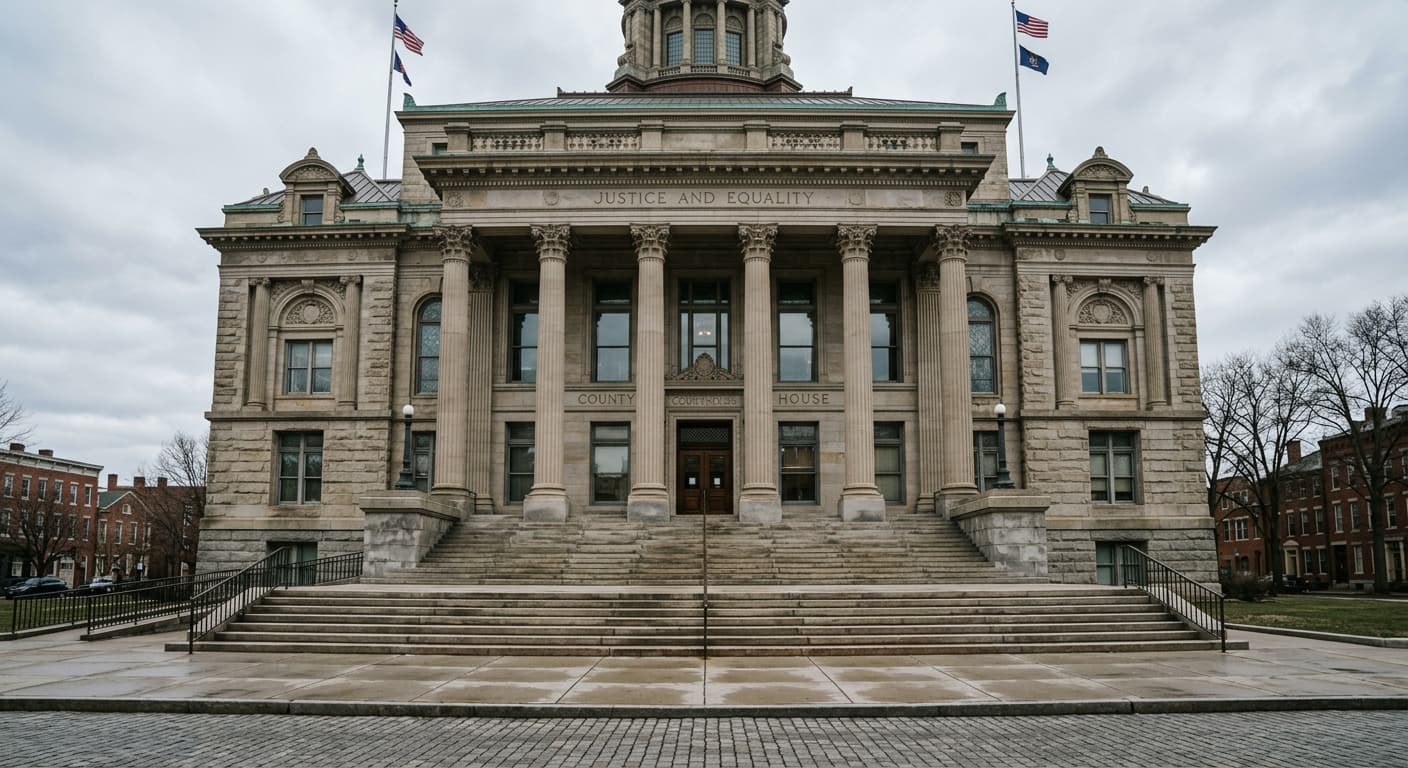
Texas has no statewide law requiring police departments to use body cameras, but agencies that do run a program follow Tex. Code Crim. Proc. art. 2B.0101 et seq. Footage is generally exempt from the Public Information Act unless it is evidence in a criminal prosecution, and footage of an officer's use of deadly force is separately barred from public release until the related cases are over.
This page covers whether Texas police must use body cameras, how the state's 2025 recodification changed the citation for that law, and how the public can request footage. It does not cover whether a civilian may record an on-duty Texas officer, a separate and well-settled question addressed on Recording Law's guide to recording police.
Are Texas police required to wear body cameras?
No single Texas law forces every department to equip officers with body cameras. Article 2B.0106(a) only requires an agency to adopt a body-worn camera policy if it "receives a grant to provide body worn cameras to the agency's peace officers or... otherwise operates a body worn camera program." The statute regulates agencies that already have cameras, whether state-funded or self-funded, rather than ordering every agency to buy them.
Coverage is uneven as a result. Large departments including Houston, Dallas, San Antonio, Fort Worth, and Austin police run established programs, and Texas Department of Public Safety troopers wear cameras, but a small rural sheriff's office may have none. The state does subsidize adoption: the Governor's Office, Public Safety Office runs an annual Body-Worn Camera Grant Program (roughly $10 million for FY2027) that pays for cameras and digital storage, on the condition that the receiving agency's policy complies with the current statute and that the agency covers 25 percent of the cost as a local match.

What must a Texas agency's body camera policy cover?
Once an agency operates a program, article 2B.0106(b) sets a detailed floor for its written policy. The policy must ensure cameras are activated only for a law enforcement purpose and must include guidelines for when to start or stop recording that account for privacy in sensitive situations and locations. It must also address data retention, requiring at least 90 days of storage, along with storage, backup, and data-security practices, and how a camera and its footage are collected as evidence.
Two provisions balance officer and public interests directly. Article 2B.0106(b)(4) entitles an officer to review footage of an incident they were involved in before being required to give a statement about it. Article 2B.0106(c) bars an agency from requiring an officer to keep the camera on for an entire shift, but article 2B.0106(d) requires the opposite once recording starts during an investigation: the camera must stay on for the officer's entire active participation unless deactivated consistent with policy.
A companion provision, article 2B.0108, governs the officer's real-time judgment call. An officer follows agency policy on when to activate, and may choose not to record, or may stop recording, for an encounter unrelated to an investigation. If an officer does not activate the camera in response to a call for assistance, article 2B.0108(c) requires the officer to document the reason in the incident report or case file. Article 2B.0108(d) holds any safety-based justification for not recording to a "reasonable officer under the same or similar circumstances" standard, not the individual officer's own judgment alone.
Is Texas police body camera footage a public record?
Generally, no. Article 2B.0112(c) makes information recorded by a body camera exempt from the Public Information Act's general disclosure duty in Tex. Gov't Code § 552.021, with one major exception in article 2B.0112(d): information that is or could be used as evidence in a criminal prosecution remains subject to ordinary disclosure under Chapter 552.
A member of the public who wants footage must submit a written request that includes the date and approximate time of the recording, the specific location, and the name of one or more individuals known to be a subject of the recording (art. 2B.0112(a)). That is the statute's own wording, and it is narrower than it sounds: a bystander who merely appears in the frame is not necessarily a subject of the recording. Missing one of those details does not bar a later, more complete request (art. 2B.0112(b)).
Once a request comes in, the agency can seek to withhold the evidentiary portion through the standard attorney general ruling process, assert any other Chapter 552 exception, or redact confidential content and release the rest (art. 2B.0112(e)). Two categories are off-limits without the depicted person's written authorization: footage recorded in a private space, and footage tied to an investigation of a fine-only misdemeanor that did not result in arrest (art. 2B.0112(f)). A further rule closes the file entirely, with no written-authorization pathway at all: under article 2B.0112(h), a recording is confidential and excepted from Chapter 552 if it both was not required to be made under the subchapter, another law, or agency policy, and does not relate to a law enforcement purpose. The attorney general sets a standard copying fee, though an agency may waive or reduce it in the public interest (art. 2B.0112(g)).
Can the public get footage of an officer-involved shooting?
Not while the matter is open, and the evidence exception is not the way in. Readers often reason that because article 2B.0112(d) keeps material that is or could be used as evidence in a criminal prosecution subject to ordinary disclosure, footage of a shooting must be obtainable precisely because it is evidence. Article 2B.0111 says otherwise.
Article 2B.0111(a) imposes a separate, flat bar. A recording that documents an incident involving the use of deadly force by a peace officer, or that is otherwise related to an administrative or criminal investigation of an officer, may not be deleted, destroyed, or released to the public until all criminal matters have been finally adjudicated and all related administrative investigations have concluded. That restriction operates on its own. It does not wait on an attorney general ruling, and being evidence does not lift it.
Two openings exist, and neither is a right a requester can demand. Under article 2B.0111(c), the agency may release such a recording to the public if the agency determines that the release furthers a law enforcement purpose, which is a discretionary call by the agency. Under article 2B.0111(b), an agency may permit an individual depicted in the recording, or the authorized representative of a depicted person who has died, to view it if the agency determines the viewing furthers a law enforcement purpose and the representative was not a witness to the incident; the viewer may not duplicate the recording or capture video or audio from it, and the statute provides that such a viewing is not a release of public information under Chapter 552. Article 2B.0111(d) separately leaves intact an agency's authority under Tex. Gov't Code § 552.108 to withhold information about a closed criminal investigation that did not end in a conviction or a grant of deferred adjudication community supervision.
How fast can I get a copy, and what if my request is large?
Body camera requests run on a different clock than an ordinary Public Information Act request. Article 2B.0113 gives an agency up to 20 business days, rather than the usual 10, to ask the attorney general for a ruling on whether a recording can be withheld, up to 20 business days to respond to the requester, and up to 25 business days to submit the required supporting materials to both the attorney general and the requester.
Requesters who ask for a lot of footage face a separate rule. Article 2B.0114 defines a "voluminous request" as more than five separate incidents, more than five requests from the same person within 24 hours, or requests that together add up to more than five hours of video within 24 hours. For a request that size, the agency is treated as having "promptly produced" the footage, satisfying Tex. Gov't Code § 552.221, if it acts within 20 business days.
What happens when an officer skips the camera, or leaks footage?
Texas treats non-activation as a documentation and discipline issue rather than a separate criminal offense: article 2B.0108 requires a written explanation, evaluated against a reasonable-officer standard, and leaves the consequences to the employing agency's own policy. Unauthorized release runs the other direction and does carry criminal exposure. Under article 2B.0110, a peace officer or other agency employee who releases body camera footage without the agency's permission commits a Class A misdemeanor, the same grade as offenses like assault causing bodily injury.
A real dispute over Texas bodycam footage
On November 8, 2025, a Medina County sheriff's deputy fatally shot Michael Anthony Duarte, a 39-year-old food-content creator known online as @foodwithbearhands, at a rental property in Castroville during a mental health disturbance call; authorities said Duarte had threatened to kill the deputy and charged at her before she fired. The Texas Rangers opened an investigation, and multiple news outlets requested the deputy's body camera footage. The Medina County Sheriff's Office, through outside counsel, petitioned the Texas attorney general to block release, citing the open Rangers investigation and the deputy's personal information.
That petition runs through the procedure in article 2B.0112(e) and article 2B.0113, but the substantive bar sits elsewhere. A recording of a deputy's use of deadly force is squarely what article 2B.0111(a) covers, so it may not be released to the public until all criminal matters are finally adjudicated and all related administrative investigations have concluded, whatever the attorney general concludes about the Chapter 552 exceptions.
The outcome in Medina County contrasts with how Fort Worth police handled the October 2019 shooting of Atatiana Jefferson, killed by since-convicted former officer Aaron Dean while she was inside her own home. Fort Worth released about a minute of body camera footage the same day, well before the 2025 recodification, showing how much room an agency has to release quickly even when it is not compelled to. That discretion is now codified at article 2B.0111(c), which lets an agency release a recording covered by article 2B.0111(a) when it determines that the release furthers a law enforcement purpose. Dean was convicted of manslaughter in December 2022, with the released and later full body camera footage central to the case.
This article provides general legal information about Texas body camera and public-records rules as of mid-2026. It is not legal advice. For help with a specific records request, consult a Texas attorney or the custodian agency's public information officer.
For how other states handle bodycam mandates and public access, see Recording Law's Police Bodycam Laws hub.
More Texas Laws
Frequently Asked Questions
Do Texas police officers have to wear body cameras?
No. Texas has no statewide mandate. Only an agency that receives a body-worn camera grant or otherwise runs a program must adopt a policy under Tex. Code Crim. Proc. art. 2B.0106.
What happened to Texas Occupations Code section 1701.655?
It was repealed and recodified as Tex. Code Crim. Proc. art. 2B.0106, effective January 1, 2025, under H.B. 4504 (88th Legislature). The substance carried over largely unchanged; only the citation changed, though some older materials still reference the old Occupations Code numbering.
Is body camera footage a public record in Texas?
Generally no. Article 2B.0112(c) exempts it from the Public Information Act, except information that is or could be used as evidence in a criminal prosecution, which stays subject to disclosure under article 2B.0112(d). Separately, article 2B.0111(a) bars public release of footage of an officer's use of deadly force, or footage otherwise related to an investigation of an officer, until all criminal matters are finally adjudicated and all related administrative investigations have concluded.
Can I get body camera footage of a Texas officer-involved shooting?
Not while the matter is open. Article 2B.0111(a) provides that such a recording may not be deleted, destroyed, or released to the public until all criminal matters have been finally adjudicated and all related administrative investigations have concluded, and that bar does not depend on an attorney general ruling. The agency may still release it earlier if it determines that release furthers a law enforcement purpose (art. 2B.0111(c)), and it may permit a depicted individual, or a deceased person's authorized representative who was not a witness, to view the recording without duplicating it (art. 2B.0111(b)).
How long must Texas police keep body camera video?
An agency's policy must set a retention period of at least 90 days under article 2B.0106(b)(2)(A). Agencies may, and often do, retain footage longer under their own records schedules.
How do I request Texas body camera footage?
Submit a written request to the agency with the date and approximate time of the recording, the specific location, and the name of one or more individuals known to be a subject of the recording, per article 2B.0112(a). The agency may take up to 20 to 25 business days on a bodycam-specific attorney general ruling under article 2B.0113.
Can a Texas officer be disciplined for not turning on the camera?
Yes. Article 2B.0108 requires the officer to document the reason for not recording, judged against a reasonable-officer standard, and leaves discipline to the employing agency's policy rather than a separate statutory penalty.
Is it a crime to leak Texas body camera footage?
Yes, for people inside the system. Article 2B.0110 makes it a Class A misdemeanor for a peace officer or other agency employee to release body camera footage without the agency's permission.
Updates
Added Texas Code of Criminal Procedure art. 2B.0111, which bars public release of body camera footage of an officer’s use of deadly force until the related criminal and administrative matters conclude, corrected the officer-involved-shooting analysis and case study accordingly, added the art. 2B.0112(h) confidentiality rule, and restated the records-request name requirement in the statute’s own wording.
Independently fact-checked against the cited primary sources; governing law re-checked for recent changes
Reviewed and approved by an editor
The Law Behind This Article
This article rests on the statutory provisions below, held in our own legal record and retrieved from the official source. Tap a section to read the operative text.
Texas Code of Criminal Procedure
§ 2b.0106Art. 2B.0106. BODY WORN CAMERA POLICYIn force
(a) A law enforcement agency that receives a grant to provide body worn cameras to the agency's peace officers or that otherwise operates a body worn camera program shall adopt a policy for the use of body worn cameras. (b) A policy described by Subsection (a) must ensure that a body worn camera is activated only for a law enforcement purpose and must include: (1) guidelines for when a peace officer should activate a camera or discontinue a recording currently in progress, considering the need for privacy in certain situations and at certain locations; (2) provisions relating to: (A) data retention, including a provision requiring the retention of video for at least 90 days; (B) storage of video and audio; (C) creation of backup copies of the video and audio; (D) maintenance of data security; and (E) the collection of a body worn camera, including the applicable video and audio recorded by the camera, as evidence; (3) guidelines for public access, through open records requests, to recordings that are public information; (4) provisions entitling an officer to access any recording of an incident involving the officer before the officer is required to make a statement about…
Official text (excerpt) · last checked 2026-08-31 · Read the full text in our law library · Verify at statutes.capitol.texas.gov
Cited in 1 court opinions in our collectionLatest citing opinion in our collection: 2026
Opinions citing this section in our collection:
- Miramontes (District Court, S.D. Texas 2026)“…eration, just that they must have a policy. See generally Tex. Code Crim. Proc. art. 2B.0106.…”
Identified automatically from the court opinions citing this section — not a ranking of which case controls.
§ 2b.0112Art. 2B.0112. RELEASE OF INFORMATION RECORDED BY BODY WORN CAMERAIn forcecited in 2 of our articles
(a) A member of the public who submits a written request to a law enforcement agency for information recorded by a body worn camera must include with the request: (1) the date and approximate time of the recording; (2) the specific location where the recording occurred; and (3) the name of one or more individuals known to be a subject of the recording. (b) Failure to provide all of the information required by Subsection (a) does not preclude the requestor from making a future request for the same recorded information. (c) Except as provided by Subsection (d), information recorded by a body worn camera and held by a law enforcement agency under this subchapter is not subject to Section 552.021, Government Code. (d) Information that is or could be used as evidence in a criminal prosecution is subject to Section 552.021, Government Code.
Official text (excerpt) · last checked 2026-07-28 · Read the full text in our law library · Verify at statutes.capitol.texas.gov
Also relied on in: Texas Police Report: How to Get a Crash Report from CRIS, an Incident Report, or Bodycam Footage
Search our full record of US law — 2.1 million sections, every state + federal →
Sources and References
- Tex. Code Crim. Proc. art. 2B.0106 (Body Worn Camera Policy)(statutes.capitol.texas.gov).gov
- Tex. Code Crim. Proc. art. 2B.0112 (Release of Information Recorded by Body Worn Camera)(statutes.capitol.texas.gov).gov
- Tex. Code Crim. Proc. art. 2B.0113 (Body Worn Camera Recordings; Request for Attorney General Decision) and art. 2B.0114 (Production in Response to Voluminous Requests)(statutes.capitol.texas.gov).gov
- Tex. Code Crim. Proc. art. 2B.0108 (Recording Interactions with Public) and art. 2B.0110 (Offense)(statutes.capitol.texas.gov).gov
- Act of May 23, 2023, 88th Leg., R.S., Ch. 765 (H.B. 4504), recodifying Occupations Code Subchapter N as Code of Criminal Procedure Chapter 2B, Subchapter C, eff. January 1, 2025(legis.state.tx.us).gov
- Body-Worn Camera Grant Program, FY2027, Office of the Texas Governor, Public Safety Office(egrants.gov.texas.gov).gov
- KSAT, "Medina County Sheriff's Office asks Texas AG to block bodycam video release showing fatal shooting of food influencer"(ksat.com)
- CBS News Texas, "Body camera footage shown during day 2 of Aaron Dean's murder trial" (Atatiana Jefferson case)(cbsnews.com)
- Tex. Code Crim. Proc. art. 2B.0111 (Recordings as Evidence)(statutes.capitol.texas.gov)