
South Carolina
South Carolina Police Body Camera Laws: Mandate & FOIA Exemption
Independently fact-checked against primary sources (last audited August 20, 2026). · Reviewed by the RecordingLaw editorial team. · Law checked current as of August 20, 2026. · 3 primary sources cited on this page. How we verify our legal content
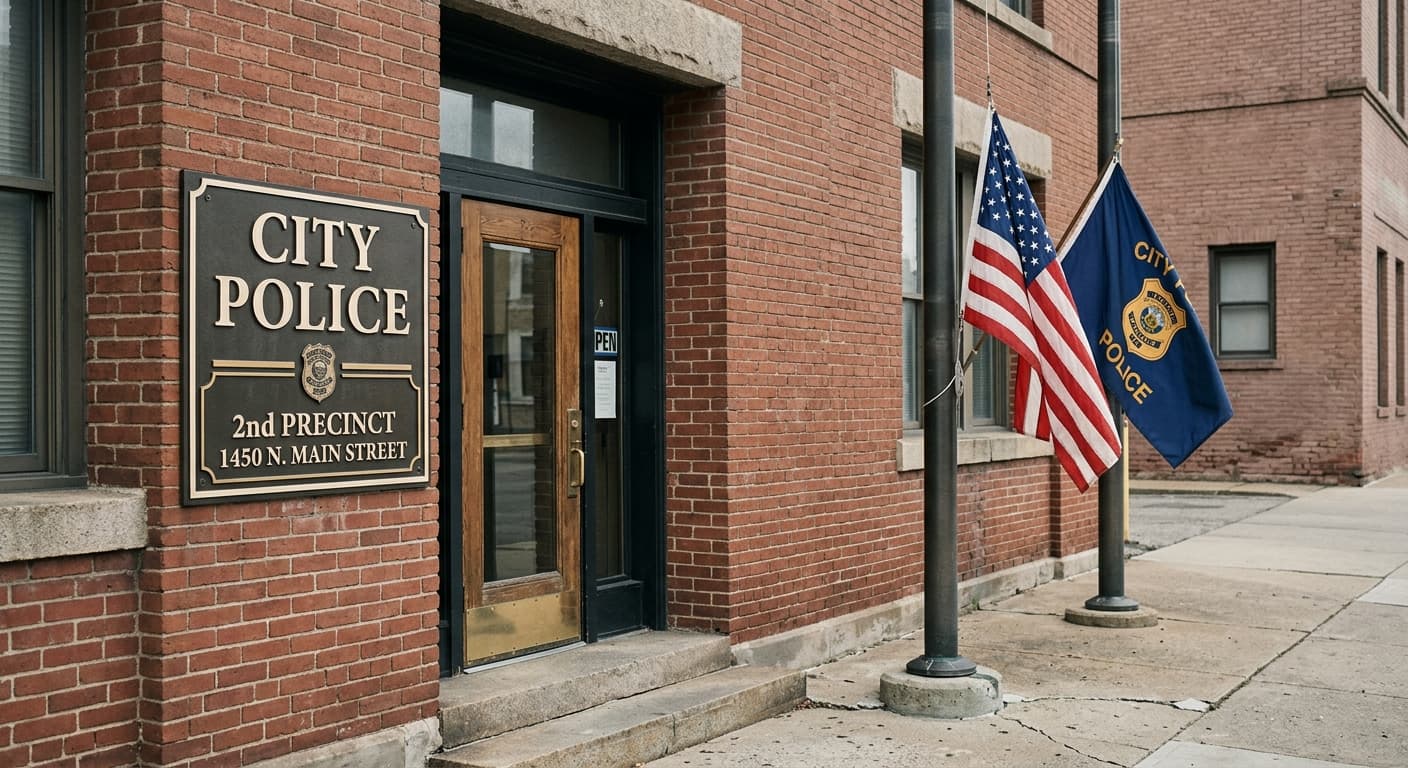
South Carolina was the first state to require statewide police body camera use, a law passed weeks after a North Charleston officer shot Walter Scott in the back and a bystander's cell phone video, not any police camera, caught it. That same law, S.C. Code Ann. § 23-1-240, also makes the footage exempt from the state's public records law.
This guide is part of our Police Bodycam Laws by State series.
Jurisdiction scope: This article addresses South Carolina law governing police body cameras: the statewide mandate under S.C. Code Ann. § 23-1-240, its FOIA exemption, and the narrow list of people who can obtain footage. It does not address a civilian's right to record law enforcement, which is covered separately in our guide to recording laws.
The Walter Scott case: why South Carolina mandated bodycams
On April 4, 2015, North Charleston police officer Michael Slager stopped 50-year-old Walter Scott for a non-functioning brake light. After Scott ran from the stop, Slager fired eight shots, hitting him five times in the back. Slager's patrol car dashcam recorded the initial traffic stop but not the shooting itself; he was not wearing a body camera. A bystander, Feidin Santana, filmed the shooting on his cell phone, and that footage, not any camera under police control, showed Scott running away when Slager opened fire, directly contradicting Slager's report that Scott had grabbed his Taser and that he feared for his life.
Slager was fired and charged with murder. His 2016 state trial ended in a mistrial after the jury deadlocked. He then pleaded guilty in federal court to violating Scott's civil rights and, in December 2018, was sentenced to 20 years in federal prison. Within weeks of the shooting, South Carolina lawmakers introduced a body camera bill, later tied to Scott's name, and the General Assembly passed it that spring. Governor Nikki Haley signed it into law on June 10, 2015, less than ten weeks after Scott's death.
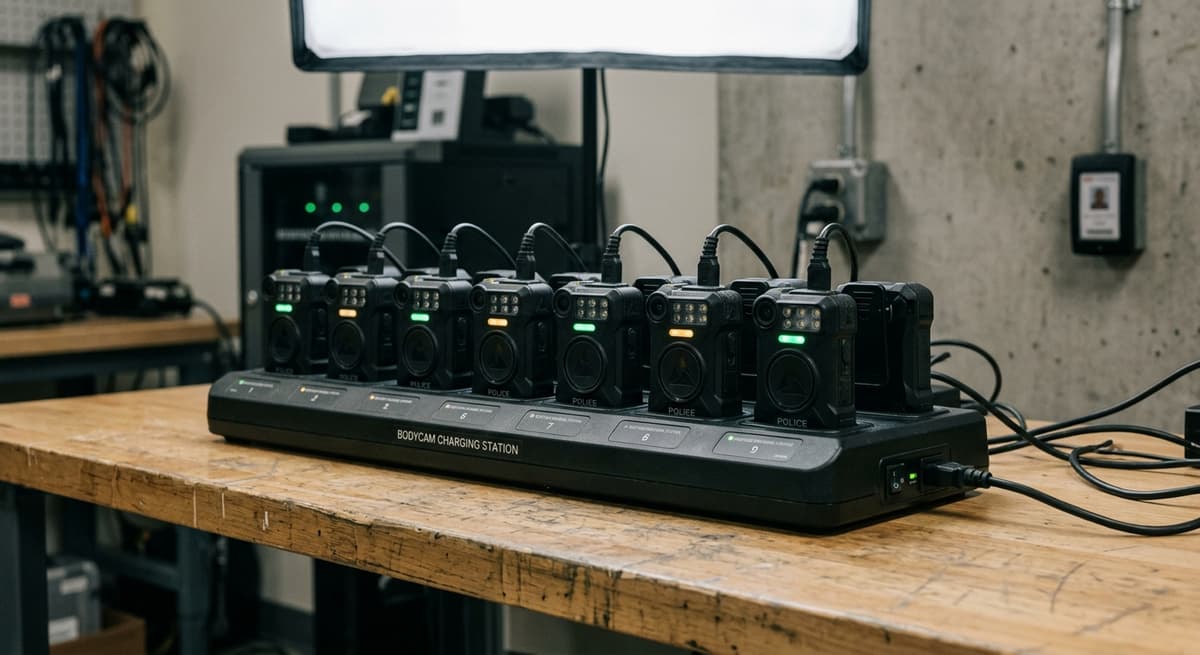
Does South Carolina require police to wear body cameras?
Yes, but the duty in the statute runs to departments rather than to individual officers. S.C. Code Ann. § 23-1-240(B) directs state and local law enforcement agencies, under the direction of the LETC, to implement the use of body-worn cameras pursuant to guidelines the council establishes. Section 23-1-240(C) gave the council 180 days from the law's effective date to study implementation, costs, and procedures, and it is those guidelines, not the statute itself, that specify which law enforcement officers must wear a camera and when it must be activated. Because the mandate depended on those guidelines and on funding, rollout was uneven in the years immediately after passage. That is not just a practical funding gap: § 23-1-240(E)(2) states that "a state or local law enforcement agency is not required to implement the use of body-worn cameras pursuant to this section until the agency has received full funding," a statutory exemption from the mandate for an unfunded agency, not merely an appropriations shortfall the legislature failed to cure. Reporting by South Carolina newspapers found that several departments struggled to fully equip officers because the legislature did not appropriate enough money to match the mandate in the years immediately after the law's 2015 effective date.
Is South Carolina bodycam footage a public record?
No. Section 23-1-240(G)(1) states in direct terms that "data recorded by a body-worn camera is not a public record subject to disclosure under the Freedom of Information Act." That single sentence is what makes South Carolina's framework unusual: the same law that made the state a national leader on bodycam adoption also closed the resulting footage to the general public by default, years before most other states even had a dedicated bodycam statute.
A 2024 opinion from the Office of the South Carolina Attorney General confirmed that this exemption holds even when footage is submitted to the LETC for review of possible officer misconduct; submission for that internal review does not convert the recording into a disclosable public record.
Who can get South Carolina bodycam footage, and how?
The statute splits requesters into two groups, and only the first gets footage on demand. Under § 23-1-240(G)(2), SLED, the attorney general, and a circuit solicitor "may request and must receive" footage for any legitimate criminal justice purpose, and under (G)(4) a law enforcement agency may request and must receive a recording relevant to an internal investigation into officer misconduct or discipline.
Private parties are on a different footing. Section 23-1-240(G)(5) says the following people "are also entitled to request and receive such data pursuant to the South Carolina Rules of Criminal Procedure, the South Carolina Rules of Civil Procedure, or a court order," which means their access runs through discovery or a judge rather than through a direct demand to the department:
- The person who is the subject of the recording
- A criminal defendant, if the recording is relevant to a pending criminal action
- A civil litigant, if the recording is relevant to a pending civil action
- A person whose property was seized or damaged in relation to, or is otherwise involved with, a crime the recording relates to
- A parent or legal guardian of a minor or incapacitated person who is the subject of the recording or the criminal defendant
- An attorney for any of the people above
Beyond those categories, § 23-1-240(G)(3) gives the law enforcement agency itself, SLED, the attorney general, or a circuit solicitor discretion to release footage voluntarily, but nothing in § 23-1-240 obligates them to do so for a member of the public or press who falls outside the listed categories.
| Question | South Carolina rule (§ 23-1-240) |
|---|---|
| Statewide equipment mandate | Yes, since June 2015, first state to require it, but the duty falls on agencies and is contingent on full funding per § 23-1-240(E)(2) |
| Default public-records status | Exempt; not subject to FOIA under (G)(1) |
| Who may request and must receive footage | SLED, the attorney general, and circuit solicitors for any legitimate criminal justice purpose under (G)(2); a law enforcement agency for an internal misconduct investigation under (G)(4) |
| Private-party access under (G)(5) | Recording subject, certain criminal defendants and civil litigants, affected property owners, parents or guardians, and their attorneys, but only pursuant to the SC Rules of Criminal Procedure, the SC Rules of Civil Procedure, or a court order |
| Who may release footage at their discretion | The agency, SLED, the attorney general, or a circuit solicitor under (G)(3) |
| Retention (non-investigative footage) | Minimum 14 days (per LETC guidelines issued under § 23-1-240, not the statute's text) |
| Retention (other footage) | Per SC Preservation of Evidence Act / expungement schedules |
How long does South Carolina keep bodycam footage?
Section 23-1-240 itself sets no retention period; it only directs the Law Enforcement Training Council to develop guidelines covering the retention and release of data. The LETC's Body-Worn Camera Guidelines, issued December 7, 2015, set that floor: recordings that are non-investigative, not tied to an arrest, and not part of an internal investigation must be kept for a minimum of 14 days. Recordings of an arrest or an offense listed in the state's Preservation of Evidence Act, or covered by an applicable expungement law, instead follow the retention requirements in those laws, which can require much longer retention depending on the case.
Is it illegal to record police in South Carolina?
That is a separate question from the one this page addresses. South Carolina generally recognizes a person's right to record an on-duty officer performing public duties in a public place. For a full explanation of that right and how it differs from the rules on police-generated bodycam footage discussed here, see Is It Illegal to Record Someone?
More South Carolina Laws
Frequently Asked Questions
Does South Carolina require police departments to use body cameras?
Yes, but with a funding condition, and the statutory duty runs to departments rather than to individual officers. S.C. Code Ann. § 23-1-240(B), signed into law June 10, 2015, requires state and local law enforcement agencies to implement body-worn cameras under guidelines from the Law Enforcement Training Council, and those guidelines specify which officers must wear one. That made South Carolina the first state with a statewide mandate. Under § 23-1-240(E)(2), an agency is not required to actually implement the mandate until it has received full funding through the statute's Body-Worn Cameras Fund.
Is police bodycam footage a public record in South Carolina?
No. Section 23-1-240(G)(1) expressly states that body-worn camera data is not a public record subject to disclosure under South Carolina's Freedom of Information Act.
Who can get a copy of South Carolina bodycam footage?
Two different rules apply. SLED, the attorney general, and circuit solicitors may request and must receive footage for any legitimate criminal justice purpose under § 23-1-240(G)(2), and a law enforcement agency may do the same for an internal misconduct investigation under (G)(4). Private parties, meaning the person recorded, a parent or guardian of a minor or incapacitated subject, a criminal defendant or civil litigant in a relevant pending case, a person whose property was seized or damaged, and their attorneys, are entitled under (G)(5) to request and receive the footage only pursuant to the South Carolina Rules of Criminal Procedure, the South Carolina Rules of Civil Procedure, or a court order. In practice that means their access runs through discovery or a judge, not a direct demand to the department.
Why did South Carolina pass a body camera law in 2015?
The law followed the April 4, 2015 killing of Walter Scott by North Charleston officer Michael Slager. Slager's own dashcam did not capture the shooting; a bystander's cell phone video did, and it contradicted his official account.
How long must South Carolina agencies keep bodycam footage?
That retention floor comes from the Law Enforcement Training Council's guidelines issued under § 23-1-240, not the statute's own text: non-investigative, non-arrest footage not tied to an internal investigation must be kept at least 14 days, and footage connected to an arrest or a covered offense follows the state's Preservation of Evidence Act and expungement law instead.
Can a South Carolina agency release bodycam footage even though it's exempt from FOIA?
Yes. Under § 23-1-240(G)(3) the recording agency, SLED, the attorney general, or a circuit solicitor may release footage at their discretion, but nothing in § 23-1-240 requires them to do so for a requester outside the statute's guaranteed-access categories.
Is it illegal to record on-duty police in South Carolina?
No, recording an on-duty officer performing public duties in a public place is generally protected. That is a separate question from public access to police-recorded bodycam footage covered on this page.
Updates
Corrected who can obtain South Carolina bodycam footage: the statute reserves may request and must receive for SLED, the attorney general, circuit solicitors and agencies investigating misconduct, while the person recorded, defendants, civil litigants and property owners get footage only through the South Carolina Rules of Criminal or Civil Procedure or a court order, and clarified that the camera mandate binds agencies rather than individual officers.
Added South Carolina's statutory funding contingency: S.C. Code Ann. § 23-1-240(E)(2) exempts an agency from the bodycam mandate until it has received full funding, which the page previously described only as a practical appropriations shortfall rather than a legal exemption built into the statute itself.
Independently fact-checked against the cited primary sources; governing law re-checked for recent changes
Corrected the '14-day minimum retention' figure to show it comes from the Law Enforcement Training Council's Body-Worn Camera Guidelines issued under S.C. Code § 23-1-240, not from the statute's own text, which sets no retention period; added the official LETC guidelines document as a citation.
Governing law re-checked for recent changes
Reviewed and approved by an editor
The Law Behind This Article
This article rests on the statutory provisions below, held in our own legal record and retrieved from the official source. Tap a section to read the operative text.
South Carolina Code of Laws, Title 23: LAW ENFORCEMENT AND PUBLIC SAFETY
§ 23-1-240Body-worn cameras; definition; guidelines; policies and procedures; fund; data releaseIn forcecited in 5 of our articles
(A) For purposes of this section, "body-worn camera" means an electronic device worn on a person's body that records both audio and video data. (B) State and local law enforcement agencies, under the direction of the Law Enforcement Training Council, shall implement the use of body-worn cameras pursuant to guidelines established by the Law Enforcement Training Council. (C) Within one hundred eighty days after the effective date of this section, the Law Enforcement Training Council shall conduct a thorough study of the use, implementation procedures, costs, and other related aspects associated with body-worn cameras in jurisdictions with body-worn cameras currently in use or which begin their use during this period. The Law Enforcement Training Council shall develop guidelines for the use of body-worn cameras by state and local law enforcement agencies within one hundred eighty days of the effective date of this act.
Official text (excerpt) · last checked 2026-08-31 · Read the full text in our law library · Verify at scstatehouse.gov
Also relied on in: South Carolina Audio Recording Laws: One-Party Consent Rules and Penalties (2026), South Carolina Video Recording Laws: Where You Can and Cannot Record (2026), South Carolina Freedom of Information Act: How to Request Public Records
Search our full record of US law — 2.1 million sections, every state + federal →
Sources and References
- S.C. Code Ann. § 23-1-240, body-worn cameras; definition; guidelines; policies and procedures; fund; data release(scstatehouse.gov).gov
- South Carolina Legislature, 2015-2016 Bill 47, body-worn cameras worn by law enforcement (enacted; signed by Gov. Nikki Haley June 10, 2015)(scstatehouse.gov).gov
- U.S. Department of Justice, Office of Public Affairs, "Former North Charleston, South Carolina, Police Officer Michael Slager Sentenced to 20 Years in Prison for Federal Civil Rights Offense"(justice.gov).gov
- Municipal Association of South Carolina, "Are Agencies Required to Release Body-Worn Camera Footage?"(masc.sc)
- NBC News, "Dash Cam Video Shows Walter Scott Before Shooting by Michael Slager"(nbcnews.com)
- The Post and Courier, "Despite celebrated 2015 law, body cameras for SC law enforcement lack state funding"(postandcourier.com)
- South Carolina Law Enforcement Training Council, Body-Worn Camera Guidelines (issued Dec. 7, 2015 pursuant to S.C. Code § 23-1-240; sets the 14-day non-investigative retention floor)(masc.sc)