
Pennsylvania
Pennsylvania Bodycam Laws: The 60-Day Request Rule Explained
Independently fact-checked against primary sources (last audited August 20, 2026). · Reviewed by the RecordingLaw editorial team. · Law checked current as of August 20, 2026. · 3 primary sources cited on this page. How we verify our legal content
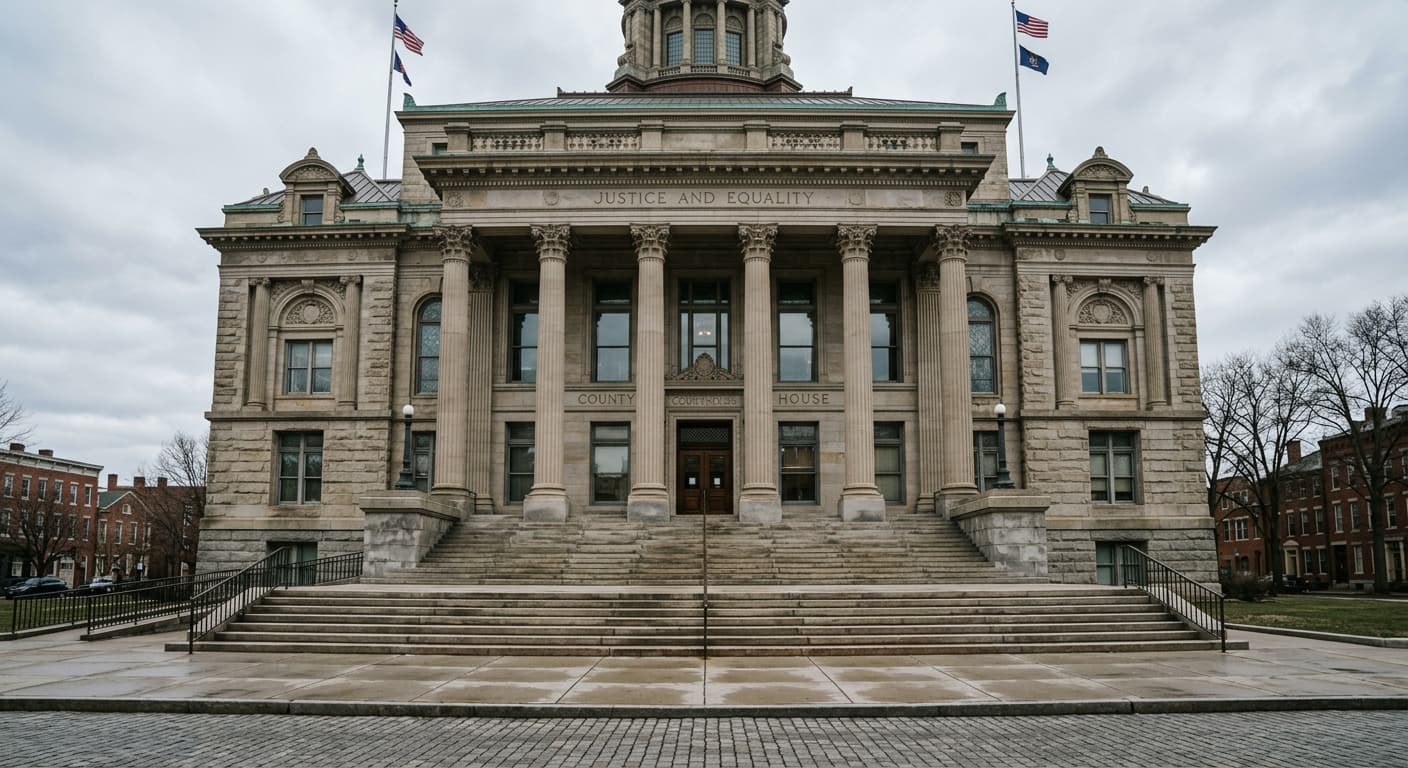
Pennsylvania does not process police bodycam requests under its Right-to-Know Law at all. Act 22 of 2017 removed these recordings from that law entirely and built a separate, tighter process: a written request delivered in person or by certified mail within 60 days of the recording date, or access is effectively gone.
This guide is part of our Police Bodycam Laws by State series. It covers whether Pennsylvania departments must use bodycams, how the Act 22 request process works, and why press-access advocates consider it one of the more restrictive frameworks in the country.
Jurisdiction scope: This article addresses Pennsylvania law governing police body-worn cameras under Act 22 of 2017, codified at 42 Pa.C.S. Chapter 67A: mandate status, the request process, denial grounds, and appeals. It does not address a civilian's own right to record an on-duty officer, a different question covered in our guide on recording someone without their consent.
Does Pennsylvania Require Police to Use Body Cameras?
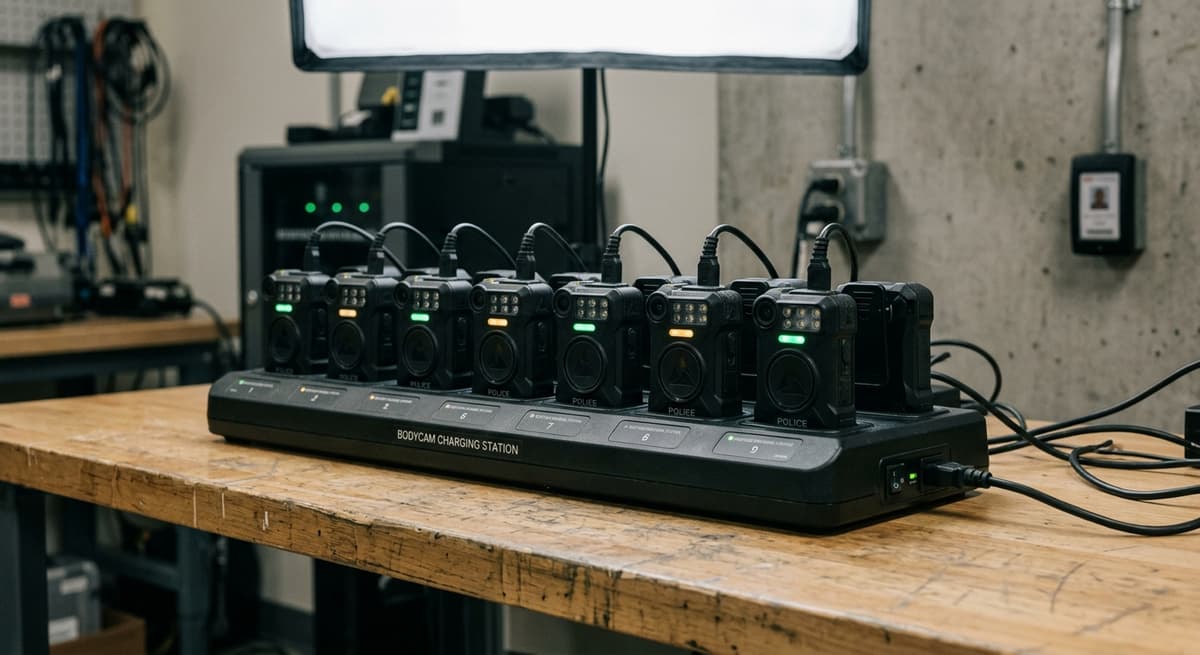
No. Act 22 of 2017, signed by Governor Tom Wolf on July 7, 2017, authorizes Pennsylvania law enforcement agencies to use body cameras and regulates how they must do it, but it does not order any department to buy or issue them. Adoption remains a local decision made by each municipal department, county sheriff's office, or the Pennsylvania State Police on its own budget and timeline. An agency whose officers make these recordings must establish and publish a written policy addressing officer training, the time periods when the camera must be in operation, the proper use, maintenance and storage of the equipment, the information collected, electronic records retention, facial recognition software, discipline for policy violations, and supervisory responsibilities, as required by 42 Pa.C.S. Section 67A07(a).
Act 22 also solved a real legal problem for departments that wanted to use bodycams in the first place. Pennsylvania's Wiretapping and Electronic Surveillance Control Act, 18 Pa.C.S. Chapter 57, generally requires the consent of every party to a private conversation before it can be recorded, including conversations inside a home. Before Act 22 took effect on September 5, 2017, an officer's body camera could arguably violate that law simply by recording inside a residence during a lawful response. Act 22 fixed that by narrowing the definition of oral communication in 18 Pa.C.S. Section 5702 rather than by writing a new exception into the Wiretap Act. It deleted the older body-camera exception at 18 Pa.C.S. Section 5704(16), which now reads only that it was deleted by amendment, and placed qualifying bodycam audio outside the Act's coverage altogether.
That carve-out is conditional, and the conditions matter. It reaches a communication only where the officer is on official duty, is in uniform or otherwise clearly identifiable as a law enforcement officer, falls within one of the categories of officer the statute lists, and is using a device approved under 18 Pa.C.S. Section 5706(b)(4). A plainclothes officer who is not identifiable as law enforcement is not covered by it.
When Must a Pennsylvania Officer's Camera Be Recording?
Pennsylvania has no single statewide activation trigger written into Act 22 comparable to the continuous-recording rules some other states use. Section 67A07(a)(2) instead requires each agency's own written policy to set the time periods when the recording device must be in operation, so the specific triggers for turning a camera on, whether a traffic stop, an arrest, or any public contact, vary from one department's policy to the next. A resident who wants the exact rule for their local department should check that department's published bodycam policy directly.
The 60-Day Filing Window: Pennsylvania's Outlier Rule
This is the single most consequential feature of Pennsylvania's bodycam law, and it is a genuine outlier nationally. Under 42 Pa.C.S. Section 67A03, a person who wants a copy of a law enforcement recording must submit a written request, delivered personally or by certified mail, to the recording agency's open records officer within 60 days of the recording date; the request is not considered received until hand-delivered or marked delivered. It must specify the date, time, and location of the incident and the requester's relationship to it; a residence recording additionally requires identifying everyone present, to the extent known.
The clock starts on the date of the recording itself, not on the date a requester first learns the recording exists or first has a reason to want it. That distinction is what makes the rule unusually harsh in practice. A person hospitalized after a police encounter, a relative piecing together what happened, or a journalist following up on a tip weeks later can all lose access before they even know enough to ask for it specifically. Gunita Singh, a staff attorney with the Reporters Committee for Freedom of the Press, has put the problem directly: requesters are often seeking records precisely because "they don't have all the information at the outset," yet Act 22 demands that same missing information inside a 60-day window.
What Can Get a Request Denied
Once a request is properly filed, Section 67A05 gives the agency 30 days to respond, an interval the parties can extend by agreement. The grounds for saying no come from a different provision. Under Section 67A04(a), an agency may deny the request if the recording contains potential evidence in a criminal matter, information pertaining to an investigation, confidential information, or victim information, and reasonable redaction would not safeguard those interests. If the agency does not respond within 30 days, the request is deemed denied under Section 67A05(b) by operation of law, so silence functions the same as an explicit refusal.
| Pennsylvania bodycam fact | Rule |
|---|---|
| Statewide mandate | None; agency discretionary under Act 22 |
| Governing framework | 42 Pa.C.S. Chapter 67A (Act 22 of 2017), outside the Right-to-Know Law |
| Request deadline | 60 days from the date of the recording, hand-delivered or certified mail |
| Agency response deadline | 30 days, or the request is deemed denied |
| Appeal | Petition to the Court of Common Pleas within 30 days; $125 filing fee |
| Appeal standard | Two prongs under Section 67A06(e): the request was not denied under Section 67A04, or if it was, the denial was arbitrary and capricious; plus the public interest outweighs nondisclosure interests |
Appeals: A Steep Path to Court
Unlike the Right-to-Know Law, which routes most denials to a no-cost administrative appeal before the Office of Open Records, Act 22 denials bypass that office entirely. A requester who is denied must petition the Court of Common Pleas within 30 days and pay a filing fee, commonly cited at $125.
Section 67A06(e) then sets a two-part burden the petitioner must carry by a preponderance of the evidence. First, the petitioner must show either that the request was not denied under Section 67A04 or, if it was denied under that section, that the denial was arbitrary and capricious. Second, the petitioner must show that the public interest in disclosure or the petitioner's own interest outweighs the interests of the Commonwealth, the law enforcement agency, or an individual in nondisclosure.
Read carefully, the arbitrary-and-capricious burden attaches only to a denial actually made under Section 67A04. A requester who is met with silence and a deemed denial under Section 67A05(b) therefore carries only the balancing test, not the arbitrary-and-capricious showing. The balancing test alone still leaves courts wide room to defer to the agency. ACLU of Pennsylvania policy counsel Elizabeth Randol has summarized the risk this creates: "What's really dangerous about this is you could have those records denied forever, there's no time limit."
How Restrictive Is This in Practice?
The numbers bear out the criticism. Reporting by Spotlight PA, later corroborated by Axios Philadelphia, found that Philadelphia, Bethlehem, Erie, and Allentown together released bodycam footage in response to only 44 of 178 Act 22 requests filed over a six-year period, roughly 25 percent. A separate 2018 investigation by The Morning Call found the Pennsylvania State Police granted just 2 of 16 requests. The Pennsylvania NewsMedia Association has argued Act 22 "was not written with transparency in mind" and has pushed for amendment, while state representative Dan Miller has introduced legislation moving bodycam recordings back under the Right-to-Know Law's presumption of access. Neither effort had passed as of this writing, so the 60-day, agency-controlled process remains the operative law statewide.
Recording Police Versus Police Recording You
This article addresses the opposite question from most of the recording-law content on this site. Pennsylvania is a two-party, or all-party, consent state for recording private conversations, and Act 22's own wiretap-law fix exists because that consent requirement once created real legal risk for officers using bodycams inside a home. None of this affects a bystander's separate right to record police performing public duties in public. For that question, see our guide on whether it's illegal to record someone without their consent.
More Pennsylvania Laws
Frequently Asked Questions
Are Pennsylvania police required to use body cameras?
No. Act 22 of 2017 authorizes and regulates bodycam use for agencies that choose to adopt them, but no Pennsylvania statute mandates that every department use body cameras.
How do I request Pennsylvania police bodycam footage?
Deliver a written request in person or by certified mail to the recording agency's open records officer within 60 days of the date the recording was made, under 42 Pa.C.S. Section 67A03. The request must state the date, time, and location of the incident and your relationship to it.
Is Pennsylvania bodycam footage covered by the Right-to-Know Law?
No. Act 22 removed law enforcement audio and video recordings from the Right-to-Know Law entirely and substituted the separate process in 42 Pa.C.S. Chapter 67A, with its own request rules, denial grounds, and appeal path. Missing the 60-day filing window generally means losing practical access, since there is no general-records fallback.
On what grounds can a Pennsylvania agency deny a [bodycam footage request](/us-laws/police-reports/how-to-request-body-cam-footage)?
Under 42 Pa.C.S. Section 67A04(a), an agency can deny a request if the recording contains potential evidence in a criminal matter, information pertaining to an investigation, confidential information, or victim information, and reasonable redaction would not safeguard those interests. Section 67A05 supplies the 30-day response deadline and the deemed denial that follows agency silence, not the denial grounds themselves.
How do I appeal a denied Act 22 request in Pennsylvania?
You must petition the Court of Common Pleas within 30 days of the denial and pay a filing fee. Under 42 Pa.C.S. Section 67A06(e), the court can order release only if you show two things by a preponderance of the evidence: first, that the request was not denied under Section 67A04, or, if it was, that the denial was arbitrary and capricious; and second, that the public interest in disclosure or your own interest outweighs the interests of the Commonwealth, the agency, or an individual in nondisclosure.
Do Pennsylvania police need consent to record inside someone's home with a bodycam?
No, not from the occupant, but only if the statutory conditions are met. Act 22 narrowed the definition of oral communication in 18 Pa.C.S. Section 5702 so that bodycam audio falls outside Pennsylvania's Wiretapping and Electronic Surveillance Control Act when the recording officer is on official duty, is in uniform or otherwise clearly identifiable as a law enforcement officer, and is using a device approved under 18 Pa.C.S. Section 5706(b)(4). A plainclothes officer who is not identifiable as law enforcement does not get the benefit of that carve-out.
Updates
Corrected the statutory citations for the agency body-camera policy mandate (42 Pa.C.S. Section 67A07(a), not 67A02) and for the grounds an agency may deny a footage request (Section 67A04(a), not 67A05), corrected the court-appeal standard to the two-part test in Section 67A06(e) so readers are not told a deemed denial requires an arbitrary-and-capricious showing, extended the chapter range to Section 67A09, and added the statutory conditions under which an officer may record audio inside a home.
Independently fact-checked against the cited primary sources; governing law re-checked for recent changes
Reviewed and approved by an editor
The Law Behind This Article
This article rests on the statutory provisions below, held in our own legal record and retrieved from the official source. Tap a section to read the operative text.
Pennsylvania Consolidated Statutes Title 42 (Judiciary and Judicial Procedure)
§ 67A03Requests for law enforcement audio recordings or video recordingsIn forcecited in 2 of our articles
The following shall apply: (1) An individual who requests an audio recording or video recording made by a law enforcement agency shall, within 60 days of the date when the audio recording or video recording was made, serve a written request to the individual who is designated as the open-records officer for the law enforcement agency under section 502 of the act of February 14, 2008 (P.L.6, No.3), known as the Right-to-Know Law. Service is effective upon receipt of the written request by the open-records officer from personal delivery or certified mail with proof of service. (2) The request under paragraph (1) shall specify with particularity the incident or event that is the subject of the audio recording or video recording, including the date, time and location of the incident or event. (3) The request shall include a statement describing the requester's relationship to the incident or event that is the subject of the audio or video recording.
Official text (excerpt) · last checked 2026-08-31 · Read the full text in our law library · Verify at palegis.us
Also relied on in: Pennsylvania Police Reports: Crash Reports, Incident Reports, and Body Cam Footage
Search our full record of US law — 2.1 million sections, every state + federal →
Sources and References
- 42 Pa.C.S. Chapter 67A (Recordings by Law Enforcement Officers, added by Act 22 of 2017)(legis.state.pa.us).gov
- Act No. 22 of 2017, The Official Website of the Pennsylvania General Assembly(legis.state.pa.us).gov
- Pennsylvania Office of Open Records, "Requesting Police Recordings" (Act 22 guidance)(openrecords.pa.gov).gov
- "Red tape, lack of funding limit public's oversight of Pa. police through body cameras," Spotlight PA(spotlightpa.org)
- "Philly lags Pennsylvania cities in releasing bodycam footage," Axios Philadelphia(axios.com)
- "Inside RCFP attorneys' fight for police transparency in Pennsylvania," Reporters Committee for Freedom of the Press(rcfp.org)
- "Legal Hotline: Right-To-Know Police Dash and Body Cameras," Pennsylvania NewsMedia Association(panewsmedia.org)
- 42 Pa.C.S. Section 67A07, Audio recording or video recording policies(palegis.us)
- 42 Pa.C.S. Section 67A04, Law enforcement review (grounds for denying a recording request)(palegis.us)
- 42 Pa.C.S. Section 67A06, Judicial review (two-part standard at subsection (e))(palegis.us)
- 18 Pa.C.S. Section 5702, definition of oral communication (law enforcement bodycam exclusion)(palegis.us)