
Nevada
Nevada Police Body Camera Laws: Access & Retention
Independently fact-checked against primary sources (last audited August 20, 2026). · Reviewed by the RecordingLaw editorial team. · Law checked current as of August 20, 2026. · 3 primary sources cited on this page. How we verify our legal content
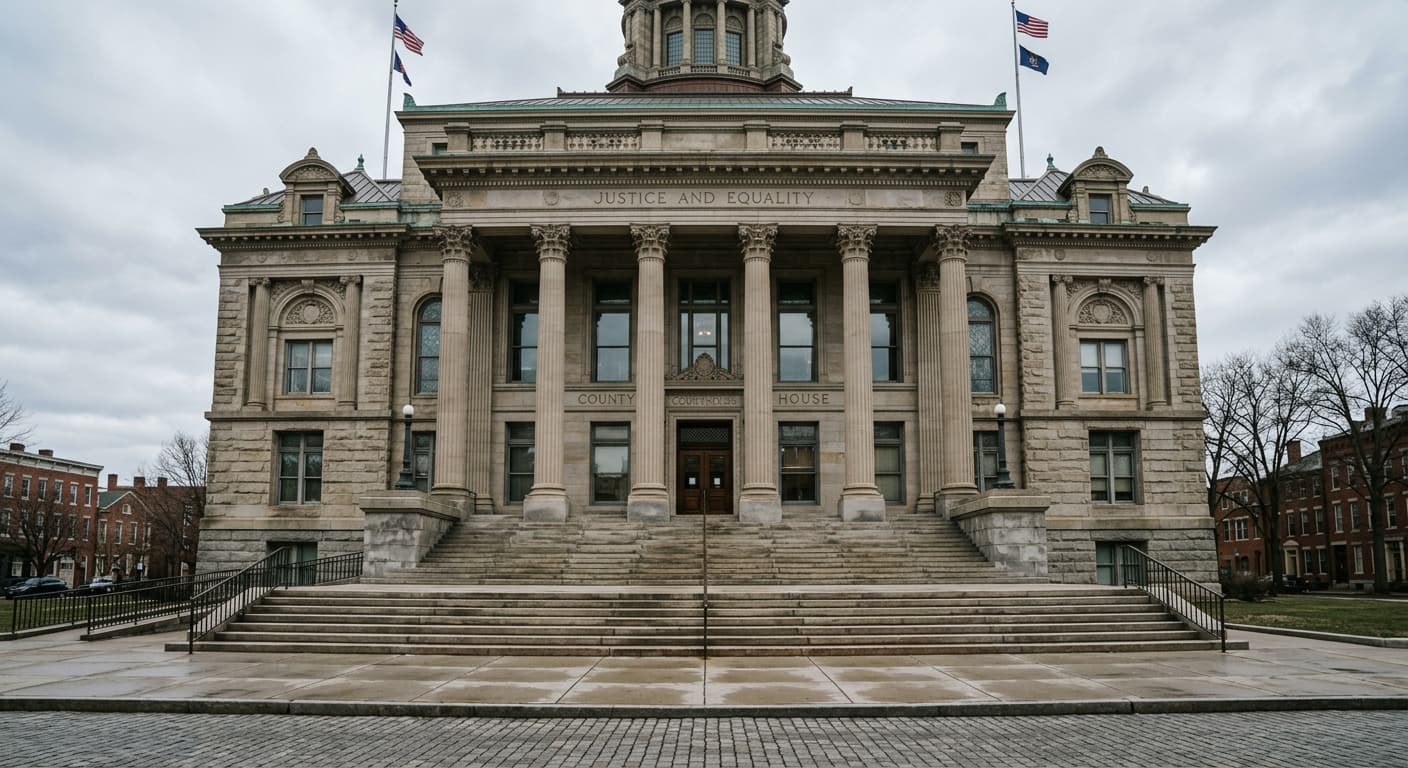
Nevada requires designated law enforcement agencies to equip officers who routinely interact with the public with body cameras, and the Nevada Supreme Court has held the resulting footage is presumptively a public record under Nev. Rev. Stat. § 289.830, though an officer's face may be redacted.
This guide is part of our Police Bodycam Laws by State series.
Jurisdiction scope: This article addresses Nevada state law governing police body-worn cameras: the equipment and activation mandate, retention floor, and public-records access rules under Nev. Rev. Stat. § 289.830, as verified in July 2026. It does not address a civilian's right to record law enforcement, a separate and well-established question addressed elsewhere on this site.
Does Nevada require police to wear body cameras?
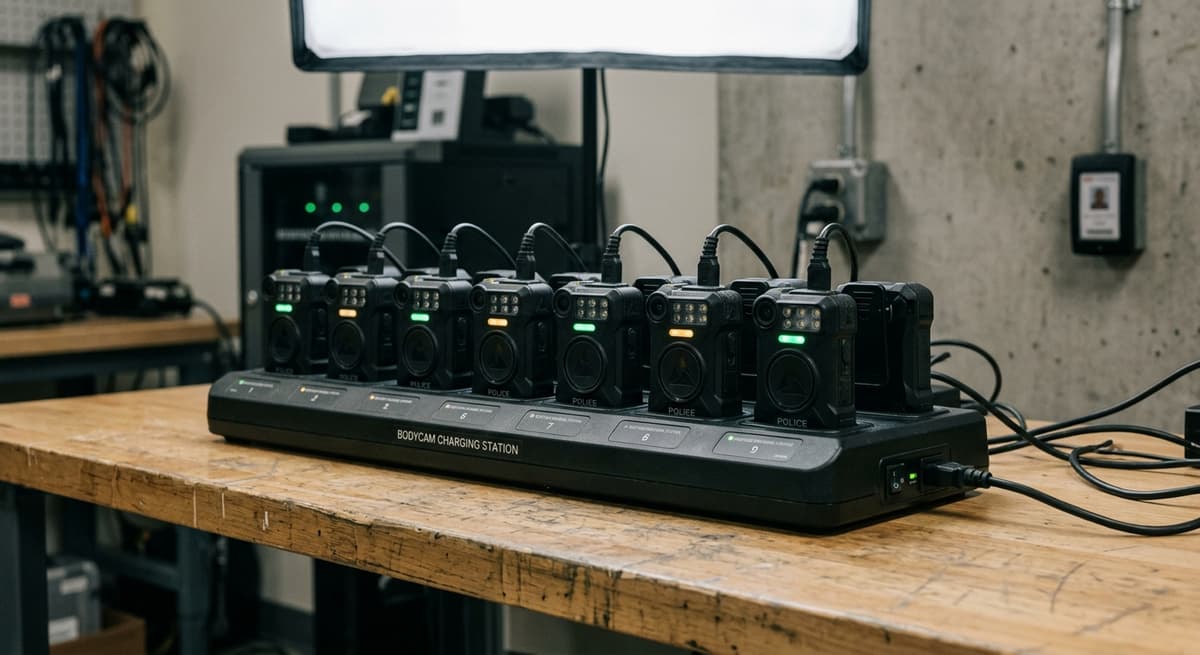
Yes, for the agencies and officers the statute names. Nev. Rev. Stat. § 289.830 requires a county sheriff's office, a metropolitan police department, an incorporated city's police department, a city or town marshal's department, the Nevada Highway Patrol, and school district police departments to require uniformed peace officers who routinely interact with the public to wear a portable event recording device while on duty, according to the official Nevada Revised Statutes. The statute was added to the NRS in 2015 and amended in 2017 and 2019; earlier versions of the law only permitted agencies to require cameras, and later amendments made the requirement mandatory for the covered agencies. Officers working in plain clothes and agencies not listed in the statute fall outside the mandate, so coverage is broad but not universal across every Nevada law enforcement function.
When must a Nevada officer's camera be recording?
Nev. Rev. Stat. § 289.830 does not put the timing rule on the individual officer directly. It requires each covered agency to adopt policies and procedures governing the use of portable event recording devices, and it dictates what those policies must contain: requiring activation whenever a peace officer responds to a call for service or at the initiation of any other law enforcement or investigative encounter between a uniformed peace officer and a member of the public, and prohibiting deactivation until the conclusion of that encounter, according to the official Nevada Revised Statutes.
The same subsection requires those policies to prohibit the recording of general activity, to protect the privacy of persons in a private residence, persons seeking to report a crime or provide information about a crime or ongoing investigation anonymously, and persons claiming to be the victim of a crime, and to establish disciplinary rules for officers who fail to operate the device in accordance with departmental policy, intentionally manipulate a recording, or prematurely erase one.
The practical effect is that the timing rules are uniform in substance across the covered agencies, because the Legislature specified what every one of their policies must say. The enforceable duty on any individual officer, though, runs through that department's policy and its disciplinary rules rather than straight from the statute. If you are trying to show that an officer should have been recording during a particular encounter, the agency's own body-worn camera policy is the document to obtain alongside the statute.
How long does Nevada require agencies to keep bodycam footage?
Agencies covered by § 289.830 must retain recorded video for not less than 15 days. That is a floor, not a ceiling: an agency's own retention schedule or policy can require longer storage, and footage tied to a pending prosecution, civil case, or internal-affairs investigation is typically kept well beyond the statutory minimum as a matter of ordinary evidence-preservation practice, even though the statute itself does not spell out an extended-retention trigger the way some other states' bodycam laws do.
Is Nevada bodycam footage a public record?
Yes, presumptively. The Nevada Supreme Court confirmed this directly in Conrad v. Reno Police Dep't, No. 84389 (Nev. June 15, 2023), holding that body-worn camera footage "is subject to both the [Nevada Public Records Act] and any confidentiality provisions limiting public disclosure," according to the Reporters Committee for Freedom of the Press's Nevada guide. That second half of the holding matters just as much as the first: the same decision upheld a police department's redaction of officers' faces from released footage, reasoning that an officer's face as it appears on camera functions like a personnel photograph, which Nev. Rev. Stat. § 289.025(1) makes confidential along with an officer's home address. Requests are also structured narrowly by statute: § 289.830 requires that requests for a recorded record be made on a per-incident basis rather than as a broad, ongoing request, and if a specific recording contains confidential material that cannot otherwise be redacted, the agency may limit the requester to viewing it in person at the location where the record is held instead of providing a copy.
| Question | Nevada rule (§ 289.830 and Conrad v. Reno Police Dep't) |
|---|---|
| Default classification | Presumptively public record |
| Request format | Per-incident basis, not an open-ended request |
| Confidential content that cannot be redacted | In-person viewing only, at the location where the record is held |
| Officer's face | May be redacted; treated as confidential under Nev. Rev. Stat. § 289.025(1) |
| Minimum retention | 15 days |
A real example: the Henderson road-rage shooting
On November 21, 2025, the Las Vegas Metropolitan Police Department released roughly an hour of body camera footage, split across five separate videos, through its Public Records Unit YouTube channel, covering the fatal shooting of 11-year-old Brandon Dominguez-Chavarria during a road-rage confrontation on the 215 Beltway near Gibson Road in Henderson, according to the Las Vegas Review-Journal. The footage showed the suspect surrendering to the first responding officer and captured the reaction of the driver whose stepson had been killed. The release illustrates how Nevada's presumptively-public framework operates in practice: rather than requiring a lawsuit to force disclosure, LVMPD's own records unit routinely posts footage from high-profile incidents once the per-incident request and redaction process under § 289.830 has run its course.
Is it legal to record the police in Nevada?
That is a separate question from what this page addresses. Nevada is generally a one-party consent state for recording conversations, and a bystander has a well-established right to record an on-duty officer performing public duties in a public place. For a full explanation of that right, and how it differs from the bodycam rules discussed here, see Is It Illegal to Record Someone? and our Nevada recording laws guide.
Disclaimer
This article provides general legal information about Nevada law governing police body cameras and public access to footage, as verified in July 2026. It does not constitute legal advice and does not create an attorney-client relationship. Readers should consult a lawyer licensed in Nevada for advice about a specific records request or incident.
Related articles
- Police Bodycam Laws by State: the complete hub
- Is It Illegal to Record Someone in Public?
- Nevada Recording Laws: One-Party Consent Rules
Last updated: 2026-07-08. Statutes cited reflect their in-force version as of 2026-07-08.
More Nevada Laws
Frequently Asked Questions
Does Nevada require police officers to wear body cameras?
Yes, for uniformed officers who routinely interact with the public at county sheriff's offices, metropolitan police departments, incorporated city police departments, city and town marshal's offices, the Nevada Highway Patrol, and school district police, under Nev. Rev. Stat. § 289.830.
Is Nevada police bodycam footage a public record?
Yes. The Nevada Supreme Court held in Conrad v. Reno Police Dep't (2023) that bodycam footage is subject to the Nevada Public Records Act, making it presumptively public, though agencies may redact confidential content such as an officer's face.
Can Nevada police redact an officer's face from bodycam footage?
Yes. The Nevada Supreme Court has held that an officer's face in bodycam footage is confidential under Nev. Rev. Stat. § 289.025(1), the same provision that protects an officer's photograph and home address, so agencies may redact it before release.
How long must Nevada agencies keep bodycam footage?
At least 15 days under Nev. Rev. Stat. § 289.830. Agencies may retain footage longer under their own policy, and footage relevant to a pending case is typically kept beyond the statutory minimum.
How do I request Nevada bodycam footage?
Requests must be made on a per-incident basis under Nev. Rev. Stat. § 289.830. If the footage contains confidential information that cannot be redacted, the agency may require the requester to view it in person at the location where the record is held rather than provide a copy.
When must a Nevada officer turn on their body camera?
Nev. Rev. Stat. § 289.830 requires each covered agency to adopt a policy that mandates activation when an officer responds to a call for service or at the initiation of any other law enforcement or investigative encounter with a member of the public, and that prohibits deactivation until the encounter concludes, subject to privacy protections for private residences, anonymous crime reporting, and crime victims. The duty on the individual officer therefore comes from the department's policy, whose required contents the statute sets.
Does every Nevada law enforcement officer have to wear a body camera?
No. Nev. Rev. Stat. § 289.830 applies to uniformed officers of the specific agencies it names who routinely interact with the public; plainclothes officers and agencies outside the statute's list are not covered.
Updates
Clarified that Nevada's body camera activation and deactivation rules are requirements the statute places on each agency's written policy, which the statute dictates the contents of, rather than duties imposed on individual officers directly.
Independently fact-checked against the cited primary sources; governing law re-checked for recent changes
Governing law re-checked for recent changes
Reviewed and approved by an editor
The Law Behind This Article
This article rests on the statutory provisions below, held in our own legal record and retrieved from the official source. Tap a section to read the operative text.
Nevada Revised Statutes, Chapter 289: PEACE OFFICERS AND OTHER LAW ENFORCEMENT PERSONNEL
§ 289.830Certain law enforcement agencies shall require certain peace officers to wear portable event recording device while on duty; adoption of policies and procedures governing use; request for and inspection of record made by device.In forcecited in 4 of our articles
1. A law enforcement agency shall require uniformed peace officers that it employs and who routinely interact with the public to wear a portable event recording device while on duty. Each law enforcement agency shall adopt policies and procedures governing the use of portable event recording devices, which must include, without limitation: (a) Except as otherwise provided in paragraph (d), requiring activation of a portable event recording device whenever a peace officer is responding to a call for service or at the initiation of any other law enforcement or investigative encounter between a uniformed peace officer and a member of the public; (b) Except as otherwise provided in paragraph (d), prohibiting deactivation of a portable event recording device until the conclusion of a law enforcement or investigative encounter; (c) Prohibiting the recording of general activity; (d) Protecting the privacy of persons: (1) In a private residence; (2) Seeking to report a crime or provide information regarding a crime or ongoing investigation anonymously; or (3) Claiming to be a victim of a crime; (e) Requiring that any video recorded by a portable event recording…
Official text (excerpt) · last checked 2026-08-31 · Read the full text in our law library · Verify at leg.state.nv.us
Cited in 4 court opinions in our collectionLatest citing opinion in our collection: 2023
Opinions citing this section in our collection:
- REPUBLICAN ATTORNEYS GEN. ASS'N VS. LAS VEGAS METRO. POLICE DEP'T (Nevada Supreme Court 2020, 458 P.3d 328)“…formation from disclosure. RAGA points to NRS 289.830(2), which states:…”
- Conrad v. Reno Police Dep't (Nevada Supreme Court 2023)“…a footage constitutes a public record under NRS 289.830(2), an officer's _photograph is…”
- Las Vegas Metro. Police Dep't v. Dist. Ct. (Am. Broad. Co.'s, Inc.) (Nevada Supreme Court 2018)“…footage, as opposed to inspection of the footage, as NRS 289.830 requires inspection if…”
Identified automatically from the court opinions citing this section — not a ranking of which case controls.
Also relied on in: Nevada Laws on Recording Police: Your Rights Under NRS 171.1233 (2026), Nevada Police Reports: How to Get a Crash Report, Incident Report, or Bodycam Video, Nevada Public Records Act: How to Request Records (2026)
§ 289.025Confidentiality of home address and photograph of peace officer in possession of law enforcement agency; exceptions.In force
1. Except as otherwise provided in subsections 2 and 3 and NRS 239.0115, the home address and any photograph of a peace officer in the possession of a law enforcement agency are not public information and are confidential. 2. The photograph of a peace officer may be released: (a) If the peace officer authorizes the release; or (b) If the peace officer has been arrested. 3. The home address of a peace officer may be released if a peace officer has been arrested and the home address is included in any of the following: (a) A report of a 911 telephone call. (b) A police report, investigative report or complaint which a person filed with a law enforcement agency. (c) A statement made by a witness. (d) A report prepared pursuant to NRS 432B.540 by an agency which provides child welfare services, which report details a plan for the placement of a child.
Official text (excerpt) · last checked 2026-07-29 · Read the full text in our law library · Verify at leg.state.nv.us
Cited in 9 court opinions in our collectionLatest citing opinion in our collection: 2025
Opinions citing this section in our collection:
- Conrad v. Reno Police Dep't (Nevada Supreme Court 2023)“…worn camera footage were confidential under NRS 289.025(1) as photographs in the possession of…”
- Knickmeyer v. State of Nevada (Court of Appeals of Nevada 2017)“…enforcement agency shall not use punitive action . . . ."); NRS 289.025 ("the home address o…”
- KNICKMEYER VS. STATE, EX. REL. EIGHTH JUD. DIST. CT. (Nevada Supreme Court 2017, 2017 NV 84)“…enforcement agency shall not use punitive action . . . ."); NRS 289.025 ("the home address o…”
Identified automatically from the court opinions citing this section — not a ranking of which case controls.
Search our full record of US law — 2.1 million sections, every state + federal →
Sources and References
- Nev. Rev. Stat. § 289.830, portable event recording devices: covered agencies, activation, 15-day minimum retention, and public-records inspection rules(leg.state.nv.us).gov
- Nev. Rev. Stat. § 289.025, confidentiality of a peace officer's photograph and home address(leg.state.nv.us).gov
- Reporters Committee for Freedom of the Press, Open Government Guide: Nevada, discussing Conrad v. Reno Police Dep't and NRS 289.830(rcfp.org)
- Las Vegas Review-Journal, police release bodycam footage of Henderson road-rage shooting that killed 11-year-old(reviewjournal.com)
- Las Vegas Metropolitan Police Department body-worn camera policy, filed with the U.S. DOJ Bureau of Justice Assistance(bja.ojp.gov).gov