
Alaska
Alaska Police Body Camera Laws (2026): Access & Retention
Independently fact-checked against primary sources (last audited August 20, 2026). · Reviewed by the RecordingLaw editorial team. · Law checked current as of August 20, 2026. · 3 primary sources cited on this page. How we verify our legal content
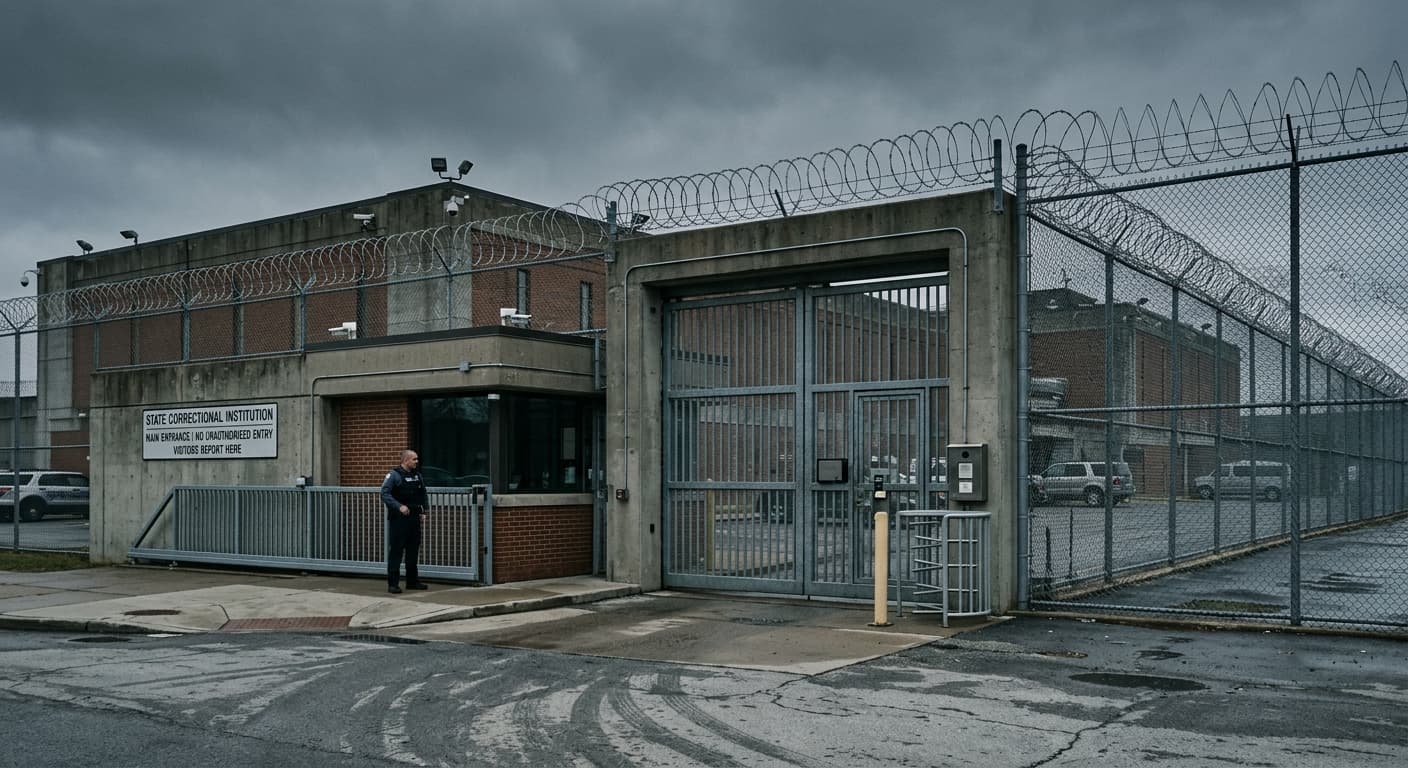
Alaska has no statute requiring police to wear body cameras and no bodycam-specific public-records rule. Deployment and disclosure both run agency by agency, from the Alaska State Troopers' internal policy to Anchorage's separate 45-day release commitment, with requests handled under the general Alaska Public Records Act.
Information last verified on 2026-07-08. This article has not yet been reviewed by a licensed lawyer.
Scope: This page covers Alaska law on police body-worn cameras: whether agencies must use them, how footage requests are handled, and how long recordings are kept. It does not cover a civilian's right to record police; for that separate question, see Is It Illegal to Record Someone in Public?
Does Alaska require police to wear body cameras?
No. Alaska has no state law requiring any police department, the Alaska State Troopers, or any borough or municipal agency to use body cameras. Deployment has happened agency by agency and largely in the last few years. The Department of Public Safety finalized a body-worn camera policy for Alaska State Troopers in May 2023, after a public comment period on a draft policy released that February, and began rolling cameras out first in Southcentral and Interior Alaska, then the Kenai Peninsula, Southeast, and Kodiak. That rollout was driven by an internal department policy, not legislation.
Anchorage took a different path. City voters approved funding for APD body cameras through a 2021 ballot measure, and the department and its police union spent roughly two more years negotiating the policy terms before officers were equipped. Because neither trooper deployment nor the Anchorage program rests on a statute, there is no state-level guarantee that any other Alaska municipality will adopt bodycams at all, or on any particular timeline. See our Police Bodycam Laws by State hub for how Alaska's approach compares to states with a statewide mandate.

How does Alaska's public records law treat bodycam footage?
Alaska has no bodycam-specific access statute. Requests for footage from any agency, state or municipal, are handled under the general Alaska Public Records Act (APRA), AS 40.25.100 to 40.25.295, the same law that governs any other government record. There is a presumption of public access, but AS 40.25.120(a)(6) lets an agency withhold "records or information compiled for law enforcement purposes" to the extent that disclosure would reasonably be expected to interfere with an enforcement proceeding, deny someone a fair trial or impartial hearing, constitute an unwarranted invasion of a suspect's, victim's, or witness's privacy, reveal a confidential source, disclose confidential investigative techniques, risk circumvention of the law, or endanger someone's life or safety.
That is a case-by-case, fact-specific exemption, not a categorical bar the way South Carolina or North Carolina treat bodycam video. In practice, most of the weight falls on the ongoing-investigation and privacy grounds, and once an investigation closes those grounds generally weaken, though Alaska's public records statute does not set a fixed post-closure release deadline the way some other states' bodycam statutes do.
Can you get a copy of Alaska bodycam footage, and how fast?
It depends entirely on which agency you ask. Alaska State Troopers footage is requested through the Department of Public Safety's records request portal under the general APRA process described above, with no published bodycam-specific timeline. Anchorage Police Department, since its policy took effect on July 22, 2024, has publicly committed to releasing unedited video of a "critical incident," meaning a serious use of force, an officer-involved shooting, or an in-custody death, within 45 days, and to arranging a family viewing within 14 days. The APD chief retains discretion to withhold a recording beyond that window but must publicly explain the reason.
That policy was tested almost immediately. Anchorage police fatally shot Kristopher Handy on May 12, 2024, before the new 45-day policy took effect. When Chief Sean Case announced the policy on July 16, 2024, he said the Handy footage would likely be released "within a week" even though the shooting predated the formal rule, illustrating that the timeline functions as department policy applied with some flexibility, not a legal deadline enforceable by a member of the public. Outside Anchorage, no comparable statewide or even second-city commitment could be confirmed for this article; readers dealing with a different Alaska department should ask that department directly what internal release policy, if any, it follows.
Cost and speed are also live political issues. Alaska Municipal League members have said body camera requests are the single most commonly received type of public records request, and that redacting video is roughly four times as labor-intensive as the video itself, about four minutes of staff review per minute of footage. A 2026 bill, House Bill 377, sponsored by Rep. Ashley Carrick, would let municipalities charge requesters for the actual personnel cost of producing records and would adjust the "five-hour rule," the existing limit in AS 40.25.110(c) under which an agency may bill a requester for staff time only when producing records for that requester exceeds five person-hours in a calendar month. That limit covers personnel costs only: an agency may still charge a copying fee up to its standard unit cost of duplication under AS 40.25.110(b), and fees for electronic services and products under AS 40.25.115. Some lawmakers say the staff-time limit is used to obtain bodycam footage at little or no cost for social media content. As of this writing, HB 377 has stalled in House committee after public feedback, and has not become law.
What gets redacted or withheld?
Alaska's public records law does not list bodycam-specific redaction categories the way some states' dedicated statutes do. In practice, agencies apply the general AS 40.25.120 grounds above, and department policy layers on additional privacy practice, for example blurring the faces of bystanders, minors, or crime victims, even where the statute does not require it item by item. Because there is no statewide bodycam statute, exactly what gets redacted and how thoroughly can vary by department, and a requester should expect the process, and any associated fee, to depend on which specific Alaska agency holds the footage.
Officer accountability for a camera that was never turned on
Alaska has no statute addressing what happens when an officer fails to activate a body camera or tampers with one. That question, where it is addressed at all, is answered by each department's internal policy rather than state law. The Alaska State Troopers' policy, for instance, sets its own activation expectations, but a violation is handled as an internal personnel matter, not a public-records or certification consequence created by statute, unlike a small number of other states that impose statutory penalties for intentional non-activation.
Disclaimer
This article provides general legal information about Alaska's body-worn camera and public-records law as verified on 2026-07-08. It does not constitute legal advice and does not create an attorney-client relationship. Readers seeking a specific recording, or advice about a specific incident, should consult a lawyer licensed in Alaska.
Related articles
Last updated: 2026-07-08. Statutes cited reflect their in-force version as of 2026-07-08.
More Alaska Laws
Frequently Asked Questions
Does Alaska require police departments to use body cameras?
No. There is no Alaska statute mandating body-worn cameras. The Alaska State Troopers adopted a body camera policy through the Department of Public Safety in 2023, and the Anchorage Police Department did so after a 2021 voter-approved ballot measure, but neither program is required by state law, and other Alaska agencies set their own course.
Is Alaska police bodycam footage a public record?
It can be, but there is no bodycam-specific rule either way. Requests go through the general Alaska Public Records Act, AS 40.25.100 to 40.25.295. An agency can withhold footage only under the specific law-enforcement exemption grounds in AS 40.25.120, such as protecting an active investigation or a person's privacy, not as a blanket exemption.
How long does it take to get police bodycam footage in Alaska?
It depends on the agency. The Anchorage Police Department has committed, as internal policy since July 2024, to releasing footage of a 'critical incident' such as a shooting within 45 days, with family viewing within 14 days. No comparable statewide timeline applies to Alaska State Troopers or other municipal departments; each sets its own process.
Does Alaska set a retention period for bodycam footage?
No state statute sets a bodycam retention period. Retention schedules are set by each agency's own policy. The Alaska State Troopers' draft schedule, for example, ranges from about 26 months for minor incidents up to decades for serious cases.
Can Alaska police charge a fee for bodycam footage requests?
Yes, within limits. Under AS 40.25.110(c), sometimes called the 'five-hour rule,' an agency may charge a requester for personnel time only once producing records for that requester exceeds five person-hours in a calendar month. That limit applies to staff-time charges only: a copying fee up to the agency's standard unit cost of duplication is still allowed under AS 40.25.110(b), as are fees for electronic services and products under AS 40.25.115. A pending 2026 bill, HB 377, would let municipalities charge for the actual personnel cost of producing footage, including redaction time, but it has not passed.
What happens if an Alaska officer does not turn on their body camera?
There is no Alaska statute addressing a failure to activate a body camera. It is handled, if at all, as an internal disciplinary matter under the individual department's own policy, not as a statutory violation with a defined public consequence.
Is there a bill to change Alaska's body camera public-records rules?
Yes. House Bill 377, introduced in the 2026 legislative session, would adjust how quickly agencies must produce body camera footage and what they can charge for redaction, but the bill stalled in House committee after public feedback and has not been enacted.
Updates
Corrected the statutory span of the Alaska Public Records Act to AS 40.25.100 to 40.25.295 and clarified that the "five-hour rule" limits staff-time charges only, not copying or electronic-record fees.
Independently fact-checked against the cited primary sources; governing law re-checked for recent changes
Governing law re-checked for recent changes
Reviewed and approved by an editor
The Law Behind This Article
This article rests on the statutory provisions below, held in our own legal record and retrieved from the official source. Tap a section to read the operative text.
Alaska Statutes, Title 40. Public Records and Recorders, Chapter 25. Public Record Disclosures
§ 40.25.120Public records; exceptions; certified copiesIn forcecited in 2 of our articles
(a) Every person has a right to inspect a public record in the state, including public records in recorders' offices, except (1) records of vital statistics and adoption proceedings, which shall be treated in the manner required by AS 18.50; (2) records pertaining to juveniles unless disclosure is authorized by law; (3) medical and related public health records; (4) records required to be kept confidential by a federal law or regulation or by state law; (5) to the extent the records are required to be kept confidential under 20 U.S.C. 1232g and the regulations adopted under 20 U.S.C.
Official text (excerpt) · last checked 2026-09-02 · Read the full text in our law library · Verify at akleg.gov
Cited in 11 court opinions in our collectionLatest citing opinion in our collection: 2023
In the courts (editorial summary, independently checked):Basey v. State (2017) held the State cannot invoke the law enforcement interference exception in AS 40.25.120(a)(6)(A) merely by pointing to a pending criminal case against the requester. Fuller v. City of Homer (2003) treated the deliberative process privilege as a state law exception under (a)(4) and held it did not apply there.
Opinions citing this section in our collection:
- Fuller v. City of Homer (Alaska Supreme Court 2003, 75 P.3d 1059)✓A resident sought city staff documents behind an annexation petition; treating the deliberative process privilege as the state law exception in AS 40.25.120(a)(4), the court found the public interest outweighed confidentiality once the petition was filed and ordered disclosure.
- Kaleb Lee Basey v. State of Alaska, Department of Public Safety, Division of State Troopers, Bureau of Investigations (Alaska Supreme Court 2020, 462 P.3d 529)✓A federal prisoner suing state troopers requested their disciplinary records; the court held those records are confidential personnel records under the State Personnel Act, bringing them within AS 40.25.120(a)(4)'s exception for records confidential by state law.
- Basey v. State, Department of Public Safety, Division of Alaska State Troopers, Bureau of Investigations (Alaska Supreme Court 2017, 408 P.3d 1173)“…records related to AST’s use of 1 AS 40.25.120(a)(6)(A). 2 AS 4…”
Identified automatically from the court opinions citing this section — not a ranking of which case controls.
Also relied on in: How to Get a Police Report in Alaska (2026): Crash & Incident Reports
Search our full record of US law — 2.1 million sections, every state + federal →
Sources and References
- Alaska Statutes § 40.25.120 (Public records; exceptions; certified copies)(akleg.gov).gov
- Alaska Department of Public Safety, Body-Worn Camera Program(dps.alaska.gov).gov
- Alaska State Legislature, House Bill 377 (2026), public records act amendments(akleg.gov).gov
- Alaska Public Media, "Anchorage police now have a 45-day deadline to release certain body camera footage" (July 24, 2024)(alaskapublic.org)
- Alaska Public Media, "Policy finalized to put body cameras on Alaska State Troopers" (May 1, 2023)(alaskapublic.org)
- Alaska Beacon, "Move to update Alaska's public records law stalls after public feedback, changes" (Apr. 30, 2026)(alaskabeacon.com)
- Alaska Public Media, "Anchorage police chief says body camera footage of Handy shooting to be released 'probably within a week'" (July 19, 2024)(alaskapublic.org)
- Alaska Statutes AS 40.25.110 (Public records open to inspection and copying; fees)(akleg.gov)
- Alaska Statutes AS 40.25.295 (Short title: AS 40.25.100 to 40.25.295 is the Alaska Public Records Act)(akleg.gov)