
Alabama
Alabama Police Body Camera Laws (2026): Access & Rules
Independently fact-checked against primary sources (last audited August 20, 2026). · Reviewed by the RecordingLaw editorial team. · Law checked current as of August 20, 2026. · 2 primary sources cited on this page. How we verify our legal content
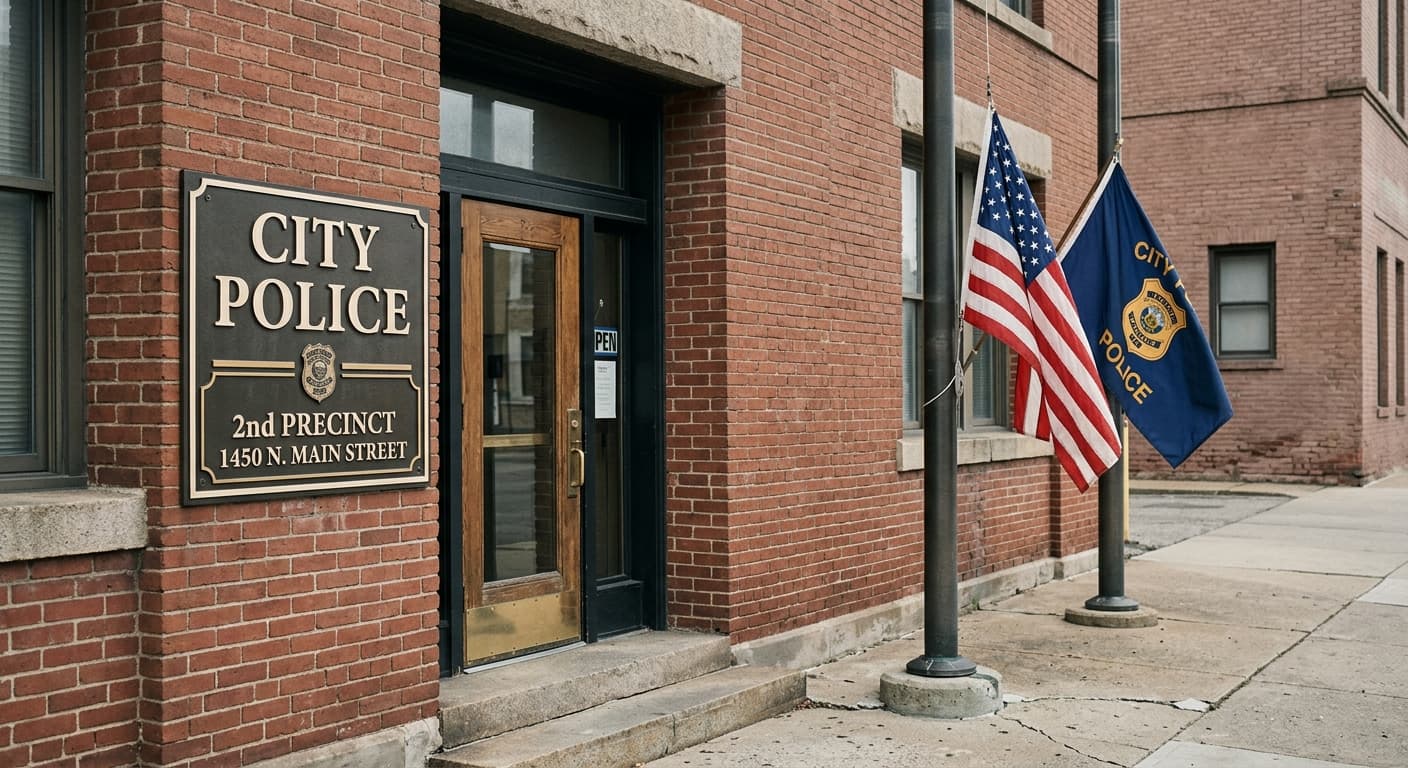
Alabama does not require any police department to use body cameras, and bodycam footage is not a public record. A 2023 law, Ala. Code 36-21-210 through 36-21-214, lets only the person shown in a recording, or their personal representative (a parent, spouse, attorney, or court-appointed guardian), request to view it, not to obtain a copy.
Information last verified on 2026-07-08. This article has not yet been reviewed by a licensed lawyer.
Scope: This page covers Alabama state law on police body-worn cameras: whether agencies must use them, how long footage is kept, and who can see or obtain a copy. It does not cover a civilian's right to record police; for that separate question, see Is It Illegal to Record Someone in Public?
Does Alabama require police to wear body cameras?
No. Alabama has never passed a statute mandating body-worn cameras for any law enforcement agency, whether a municipal police department, a sheriff's office, or the Alabama Law Enforcement Agency (ALEA). Adoption is entirely a local decision, and larger departments have generally moved faster than small, rural agencies with tighter equipment budgets.
Because there is no statewide mandate, there is also no statewide activation standard. Each department's own policy, not state law, decides when an officer must turn a camera on, when it may be turned off, and what internal consequence follows a violation. Alabama's only bodycam-specific statute, enacted in 2023, addresses what happens to footage after it is recorded, not whether or how it gets recorded in the first place. See our Police Bodycam Laws by State hub for how Alabama's local-discretion approach compares to states with a statewide mandate.
What does Alabama's 2023 body camera law actually cover?
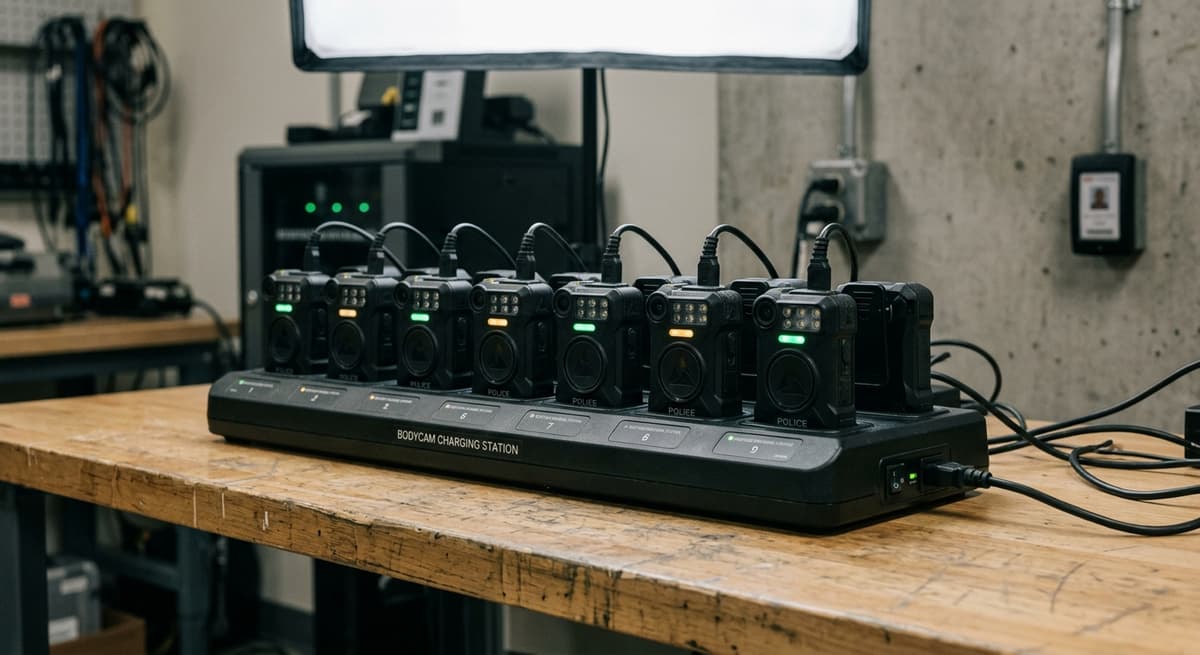
Alabama's Law Enforcement Agency Recordings Act, HB289, passed the Legislature in 2023 and is codified at Ala. Code 36-21-210 through 36-21-214. It is narrower than it sounds: the act does not regulate camera use, activation, or retention length in any detail. It regulates one thing, the procedure for requesting to view a recording that already exists.
The act defines a "custodial law enforcement agency" as whichever agency owns, leases, or operates the camera that made the recording, or whichever agency takes over the investigation afterward. In the Jabari Peoples case, for example, the Homewood Police Department transferred custody of its bodycam footage to the Alabama Law Enforcement Agency while an independent investigation was underway. The act also states plainly that recordings are not personnel records of the officer involved, and that "recording" does not include internal-affairs interview footage or interviews of suspects and witnesses, which stay governed by other confidentiality rules entirely.
Can the public get a copy of police bodycam footage in Alabama?
Not as a matter of right, but the reason is a specific statute worth naming. Alabama's general open records law, Ala. Code 36-12-40(a), does give every resident a right to "inspect and take a copy of any public record of this state," but that right applies only "except as otherwise expressly provided by applicable law." The provision that expressly provides otherwise for police video is a different statute, Ala. Code 12-21-3.1(b), which states that law enforcement investigative reports and related investigative material are not public records, and that investigative "writings or recordings" are privileged communications protected from disclosure. The 2023 bodycam act preserves that section by name: Ala. Code 36-21-212(b) says nothing in the bodycam article limits or restricts Chapter 21 of Title 12.
So the bodycam statute, not a court ruling, is the main source of Alabama's bodycam access rules: it lets only a narrow list of people view footage and never requires an agency to release a copy to anyone, including the person shown in it.
That gap became visible in several 2025 cases. After Homewood police shot and killed 18-year-old Jabari Peoples on June 23, 2025, his family and their attorneys were shown an edited, four-minute-29-second clip on August 6, 2025, the same day the Jefferson County District Attorney announced no charges against the officer; attorneys said only about ninety seconds of the clip actually depicted the shooting, and the family has since pressed for full public release, which Alabama law does not require. In Irondale, the family of Phillip Reeder reportedly waited nearly a year to view footage of his fatal August 2024 encounter with police. Public release was also denied in the Steven Perkins case in Decatur and the Jawan Dallas case in Mobile, both of which prompted protests in 2024.
Who can request to view footage, and what can be withheld?
Under Section 3 of the act, a custodial agency may disclose a recording only to a narrow list of people. Each must submit a written request to the head of the custodial law enforcement agency, and Ala. Code 36-21-212(a) gives two alternative ways to satisfy that request: state "the date and approximate time of the activity captured in the recording," or "otherwise identif[y] the activity with reasonable particularity sufficient to identify the recording." Not knowing the exact date and time therefore does not by itself defeat a request, so long as the activity is described particularly enough to pick out the recording. The people who may receive a disclosure are:
- The individual whose image or voice is the subject of the recording.
- A personal representative of a consenting adult shown in the recording (a parent, spouse, attorney, or court-appointed guardian).
- A personal representative of a minor shown in the recording.
- A personal representative of an adult under lawful guardianship.
- A personal representative of an incapacitated adult unable to consent.
- A personal representative of a deceased individual, which can include the estate's representative, a surviving spouse, parent, or adult child, the deceased's attorney, or a guardian of a surviving minor child.
Even within that list, an agency discloses only the portion of the recording relevant to the specific request, and the person viewing it may not record or copy what they are shown. A custodial agency may also charge a reasonable fee to cover the cost of redacting or editing a recording before disclosure. Critically, the agency can decline to disclose entirely, to anyone on the list, if it decides disclosure would affect an ongoing, active law enforcement investigation or prosecution, and Alabama law does not require the agency to explain that decision.
How long is footage kept, and what happens if an officer never turns the camera on?
Section 5 of the act sets no bodycam-specific retention number. Recordings must be kept for "at least the period of time required by the applicable records retention and disposition schedule," meaning the general state and local government records schedules that already apply to law enforcement files, not a separate rule written for body cameras.
Alabama law is also silent on what happens when an officer fails to activate a camera, or tampers with one. Unlike states such as Arizona that impose statewide certification consequences for intentional non-activation, Alabama has no comparable statute. Whether a missed activation results in discipline is left entirely to each department's internal policy, and there is no state law giving the public, or even the person recorded, a right to know the outcome of that internal process.
Disclaimer
This article provides general legal information about Alabama's body-worn camera and public-records law as verified on 2026-07-08. It does not constitute legal advice and does not create an attorney-client relationship. Readers seeking access to a specific recording, or advice about a specific incident, should consult a lawyer licensed in Alabama.
Related articles
- Police Bodycam Laws by State: the complete hub
- Is It Illegal to Record Someone in Public?
- Alabama Recording Laws
Last updated: 2026-07-08. Statutes cited reflect their in-force version as of 2026-07-08.
More Alabama Laws
Frequently Asked Questions
Is Alabama police bodycam footage a public record?
No. Ala. Code 36-12-40 does give every resident a right to inspect and copy public records, but only 'except as otherwise expressly provided by applicable law'. Ala. Code 12-21-3.1(b) expressly provides otherwise for police video: law enforcement investigative reports and related material are not public records, and investigative 'writings or recordings' are privileged from disclosure. A 2023 statute, Ala. Code 36-21-210 through 36-21-214, then creates only a narrow right for the person shown in the footage (or their representative) to view it, not a general public right to obtain a copy.
Who can request to see Alabama police body camera footage?
Under Ala. Code 36-21-212, only the individual shown or heard in the recording, or their 'personal representative' (a parent, spouse, attorney, court-appointed guardian, or, if the person died, specific family members or the estate's representative) can request to view it. Where the subject is a living adult, the representative may request only with that adult's consent. The agency can still deny the request if disclosure would affect an active investigation.
Can I get a copy of Alabama bodycam footage, or only watch it?
Alabama law only guarantees disclosure, meaning the agency can let an eligible requester view the footage at a time and place it chooses. The statute defines 'release' (providing an actual copy) separately, and does not require any agency to release a copy to anyone, including the person recorded.
Does Alabama require police departments to use body cameras?
No. There is no Alabama statute mandating body-worn cameras for any law enforcement agency. Whether officers wear cameras, and when they must be turned on, is decided by each city, county, or state agency individually.
How long does an Alabama police department have to keep bodycam footage?
Alabama's body camera law does not set its own retention period. Under Ala. Code 36-21-214, recordings must be kept at least as long as the agency's applicable general records retention and disposition schedule requires.
Can an Alabama agency deny access to bodycam footage during an investigation?
Yes. Even a person eligible to request footage under Ala. Code 36-21-212 can be refused under Ala. Code 36-21-213 if the custodial law enforcement agency decides that disclosure would affect an ongoing, active investigation or prosecution. The statute does not require the agency to give a reason for that decision.
What happened with the Jabari Peoples body camera footage?
Homewood police shot and killed 18-year-old Jabari Peoples on June 23, 2025. His family and their attorneys were shown an edited clip of the footage on August 6, 2025, the same day the Jefferson County District Attorney announced no charges would be filed against the officer. The family has asked for the full, unedited recording to be released publicly, which Alabama law does not require any agency to do.
Updates
Corrected the statutory basis for police video not being a public record in Alabama (Ala. Code 12-21-3.1(b), not the general open-records law), clarified that a request may identify the incident either by date and approximate time or with reasonable particularity, and widened the summary to name attorneys and court-appointed guardians as personal representatives.
Corrected the codified citation range for Alabama's 2023 body camera disclosure law: it runs from Ala. Code 36-21-210 through 36-21-214 (five sections), not through 36-21-215, which does not exist.
Independently fact-checked against the cited primary sources; governing law re-checked for recent changes
Removed an unsubstantiated claim that the Alabama Supreme Court ruled in September 2021 that bodycam/dashcam video is exempt "investigative material" under Ala. Code 36-12-40. An exhaustive search (CourtListener's Alabama Supreme Court index, the Alabama Appellate Courts portal, Alabama news/FOI organizations) found no such case; the article's own citation list never named one either. The real basis for Alabama's restrictive access is the absence of any affirmative disclosure right in the open-records statute combined with the narrow 2023 bodycam-access law. Also corrected the citation for the active-investigation refusal power: it is Ala. Code 36-21-213, not 36-21-212 (which lists only who is eligible to request footage), per the current text of the 2023 act (Act 2023-507).
Governing law re-checked for recent changes
Reviewed and approved by an editor
The Law Behind This Article
This article rests on the statutory provisions below, held in our own legal record and retrieved from the official source. Tap a section to read the operative text.
Code of Alabama 1975, Title 36: Public Officers and Employees.
§ 36-21-212Disclosure of Recordings.In forcecited in 2 of our articles
(a) Recordings in the custody of a law enforcement agency shall be disclosed to an individual or personal representative only as provided by this article. This article does not apply to the exchange of recordings between law enforcement or prosecuting agencies. An individual requesting disclosure of a recording must make a written request to the head of the custodial law enforcement agency that states the date and approximate time of the activity captured in the recording or otherwise identifies the activity with reasonable particularity sufficient to identify the recording to which the request refers. (b) Nothing in this article shall limit or restrict the application of the Alabama Rules of Civil Procedure as they may be applied to the custodial law enforcement agency, including, but not limited to Rule 45, nor Chapter 21 of Title 12. (c) A custodial law enforcement agency may only disclose a recording to the following: (1) An individual whose image or voice is the subject of the recording. (2) A personal representative of an adult individual whose image or voice is the subject of the recording if the adult individual has consented to the disclosure.
Official text (excerpt) · last checked 2026-08-31 · Read the full text in our law library · Verify at alison.legislature.state.al.us
Also relied on in: How to Get a Police Report in Alabama (2026): Crash & Incident Reports
§ 36-21-213Disclosure Requests; Fee.In force
(a) Upon receipt of the written request for disclosure, as promptly as possible, the custodial law enforcement agency shall do either of the following: (1) Disclose the portion of the recording relevant to the individual’s request. (2) Notify the requestor of the custodial law enforcement agency’s decision not to disclose the recording. A custodial law enforcement agency may choose to not disclose the recording if the disclosure would affect an ongoing active law enforcement investigation or prosecution. (b) A custodial law enforcement agency may charge a reasonable fee for redaction and editing of a recording.
Official text (excerpt) · last checked 2026-07-29 · Read the full text in our law library · Verify at alison.legislature.state.al.us
§ 36-21-214Retention of Recordings.In force
Any recording subject to this article shall be retained for at least the period of time required by the applicable records retention and disposition schedule.
Official text (excerpt) · last checked 2026-07-29 · Read the full text in our law library · Verify at alison.legislature.state.al.us
§ 36-21-210Defintions.In forcecited in 3 of our articles
As used in this article, the following terms have the following meanings: (1) BODY-WORN CAMERA. An operational video or digital camera or other electronic device, including a microphone or other mechanism to capture audio, affixed to the uniform or person of law enforcement agency personnel and positioned in a way that allows the camera or device to capture interactions between law enforcement agency personnel and others. (2) CUSTODIAL LAW ENFORCEMENT AGENCY. The law enforcement agency that owns or leases or whose personnel operates the equipment that created the recording at the time the recording was made. If another law enforcement agency takes over the investigation of the recorded incident, that agency becomes the custodial law enforcement agency for the purposes of this article. (3) DASHBOARD CAMERA. A device or system installed or used in a law enforcement agency vehicle that electronically records images or audio of interactions between law enforcement agency personnel and others. This term does not include a body-worn camera. (4) DISCLOSE or DISCLOSURE.
Official text (excerpt) · last checked 2026-07-29 · Read the full text in our law library · Verify at alison.legislature.state.al.us
Also relied on in: Alabama Recording Laws (2026): One-Party Consent Rules
§ 36-12-40Rights of Citizens to Inspect and Copy Public Writings; Exceptions.In forcecited in 3 of our articles
(a) Every resident has a right to inspect and take a copy of any public record of this state, except as otherwise expressly provided by applicable law. Provided however, registration and circulation records and information concerning the use of the public, public school, or college and university libraries of this state shall be exempted from this section. Provided further, any parent of a minor child shall have the right to inspect the registration and circulation records of any school or public library that pertain to his or her child. Notwithstanding the foregoing, records concerning security plans, procedures, assessments, measures, or systems, and any other records relating to, or having an impact upon, the security or safety of persons, structures, facilities, or other infrastructures, including without limitation information concerning critical infrastructure, as defined at 42 U.S.C. § 5195c(e), and critical energy infrastructure information, as defined at 18 C.F.R.
Official text (excerpt) · last checked 2026-09-02 · Read the full text in our law library · Verify at alison.legislature.state.al.us
Cited in 25 court opinions in our collectionLatest citing opinion in our collection: 2026
In the courts (editorial summary, independently checked):Chambers v. Birmingham News Company (1989) held that section 36-12-40 carries a presumption of disclosure, that the Stone exceptions are strictly construed, and that the party refusing disclosure bears the burden. Blankenship v. City of Hoover (1991) applied it to uphold a request form asking purpose and to excuse employee W-2 forms.
Opinions citing this section in our collection:
- Bedingfield v. Birmingham News Co. (Supreme Court of Alabama 1992, 595 So. 2d 1379)“…no exception to the requirement of public disclosure. See, Ala.Code 1975, § 36-12-40. When a trial court makes findings of…”
- Chambers v. Birmingham News Company (Supreme Court of Alabama 1989, 552 So. 2d 854)✓A county commission refused to give a newspaper the resumes and job applications it received for a new county post; the court affirmed the order releasing them, holding that § 36-12-40 carries a presumption of disclosure and that the official refusing bears the burden.
- Advertiser Co. v. Auburn University (Court of Civil Appeals of Alabama 1991, 579 So. 2d 645)✓Media companies used § 36-12-40 to force release of a law firm's investigative report on an Auburn University official, then asked that their attorney fees be taxed to the university; the court held such fee awards are discretionary, not required, and affirmed the denial.
Identified automatically from the court opinions citing this section — not a ranking of which case controls.
Also relied on in: Alabama Court Records: How to Search Alacourt, What It Costs, and How Expungement Works, Alabama Public Records Law: Requests, Deadlines, and Denials
Search our full record of US law — 2.1 million sections, every state + federal →
Sources and References
- Ala. Code §§ 36-21-210 to 36-21-214 (Law Enforcement Agency Recordings Act), enacted 2023 as HB289(alison.legislature.state.al.us).gov
- Ala. Code § 36-12-40 (general right to inspect and copy public writings; exceptions)(alison.legislature.state.al.us).gov
- WBRC, "Alabama body camera law sets procedures for video release" (Nov. 5, 2025)(wbrc.com)
- WBRC, "Who can see body camera footage in Alabama?" (July 23, 2025)(wbrc.com)
- Alabama Reflector, "Jefferson County DA: No charges in Jabari Peoples shooting" (Aug. 6, 2025)(alabamareflector.com)
- WBRC, "Family of Jabari Peoples demands full release of body camera footage after viewing edited clip" (Aug. 7, 2025)(wbrc.com)
- Ala. Code § 12-21-3.1(b) (law enforcement investigative reports, writings, and recordings are not public records and are privileged from disclosure)(alison.legislature.state.al.us)
- Ala. Code § 36-21-212 (disclosure of recordings; written request standard; persons to whom an agency may disclose)(alison.legislature.state.al.us)