
Arizona
Arizona Marriage & Divorce Records: No State Vital Record Exists
Independently fact-checked against primary sources (last audited August 4, 2026). · 5 primary sources cited on this page. How we verify our legal content

The single most useful fact about Arizona marriage and divorce records is a negative one: the state does not keep them. The Arizona Department of Health Services Bureau of Vital Records scopes itself, on its own page, to birth and death certificates. Under a heading for marriage and divorce records it does not offer a product at all; it points readers to the Arizona Courts locator.
That makes Arizona one of a small group of states, alongside Ohio, Connecticut, and the District of Columbia, where a request that starts with "I need the state's copy" has no answer. There is no state copy. ADHS directs marriage and divorce requests to the courts, so plan on a county clerk from the start.
This page covers records. For grounds, residency, and the dissolution process itself, see Arizona divorce laws. The 51-jurisdiction comparison is on the marriage and divorce records hub.
Where Arizona marriage records actually live
Marriage licenses in Arizona are issued by the Clerk of the Superior Court in each of the state's 15 counties. After the ceremony, the officiant returns the completed license to that same clerk, who records it. The recorded license, certified by the clerk, is what functions as Arizona's marriage certificate.
Three consequences follow.
First, you order from the county where the license was issued, not where the wedding was held and not where anyone lives now. Arizona allows a couple to obtain a license in any county and marry anywhere in the state, so these can differ.
Second, coverage varies by county. There is no single statewide marriage index with a published start year, and the county clerks do not all publish one either. Older records may have moved to archival custody.
Third, and cutting against that county-by-county pattern, the fee is statutory rather than local. A.R.S. section 12-284 prescribes a single schedule that every Clerk of the Superior Court charges: $83.00 for a marriage license and return of the license, $30.00 for a certified copy or abstract of a marriage application or license, $7.00 for postage and handling, and $0.50 per page for copies. Counties and individual clerks have no authority to set their own numbers. The statute does let the Arizona Supreme Court raise the schedule by the change in the average consumer price index, so what a clerk collects today runs above the base figures printed in the statute. Ask the clerk for the current adjusted amount rather than assuming the statutory base.
Arizona divorce records: decree only, no certificate
In Arizona there is nothing on the vital-records side to compare against, so this branch resolves immediately. The decree of dissolution of marriage is the only document. It is a Superior Court record, held by the Clerk of the Superior Court in the county where the case was filed. It contains the terms: property division, spousal maintenance, legal decision-making and parenting time, and any name restoration.
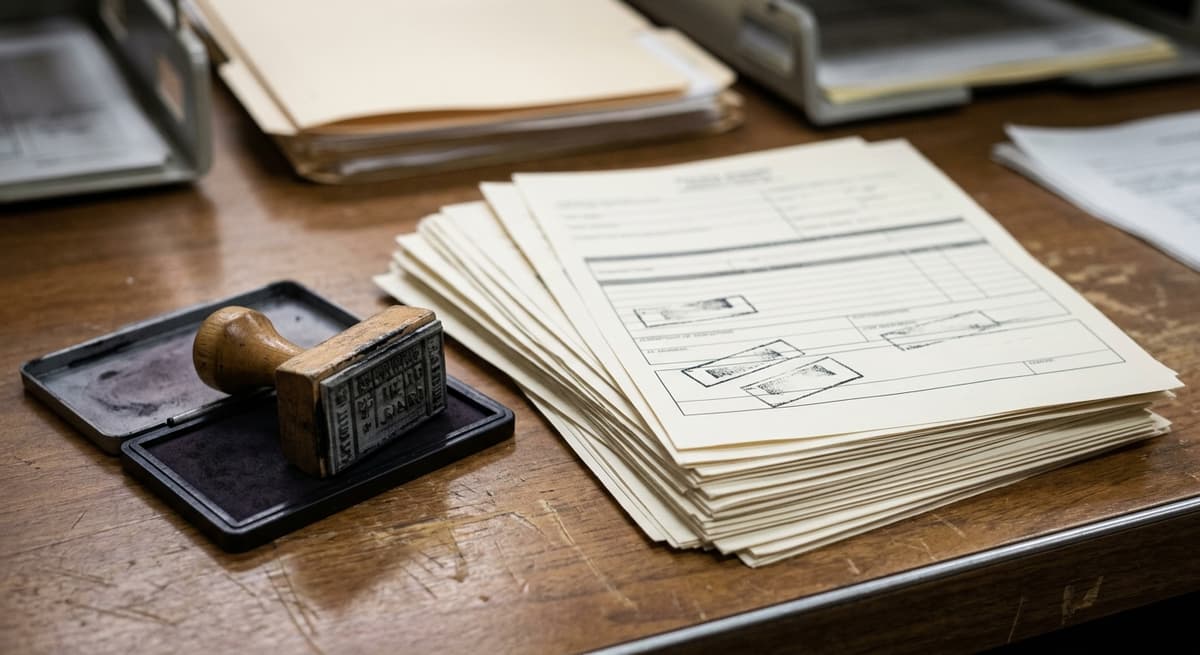
There is no Arizona equivalent of the one-page divorce verification that states like Colorado or Alabama sell. If an agency asks for a "divorce certificate" and you were divorced in Arizona, a certified copy of the decree from the clerk is the correct document to offer.
Certified copy fees on the court side come from the same statutory schedule in A.R.S. section 12-284 rather than from each clerk's own price list, and they combine a per-page copy charge with a separate certification charge. Because the Supreme Court adjusts that schedule by consumer price index, get the current amount from the clerk.
Public access to Arizona marriage and divorce files
Arizona court rules presume court records are open. That presumption is what makes divorce case files broadly available, subject to sealing and redaction in individual cases.
In practice you have two access layers.
Case information online. The Arizona Judicial Branch runs a free Public Access Case Lookup covering the great majority of Arizona courts. It shows case existence, parties, case type, and docket activity. It is a locator, not a document delivery service, and it does not cover every court in the state.
Documents from the clerk. Copies of the actual decree, and of filings in the case, come from the Clerk of the Superior Court, in person or by mail.
There are limits. Under A.R.S. section 25-121(C), the Social Security number an applicant gives the clerk under subsection (B) shall not be released to any person or entity unless the applicant requests in writing that it be released, so identifiers are stripped from what you receive. Beyond that specific redaction rule, we did not confirm on an official Arizona source that Arizona operates any confidential-marriage program or any categorical sealing regime for divorce files. Individual files can of course be sealed by court order, which is a case-specific outcome rather than a statewide category. If a clerk tells you a file is restricted, ask which order restricted it.
How to order, step by step
- Identify the county. For a marriage, the county whose clerk issued the license. For a divorce, the county where the case was filed.
- Confirm the case or record exists. Use the Judicial Branch Public Access Case Lookup for divorce cases, or call the clerk for a marriage record.
- Contact that Clerk of the Superior Court and ask for the certified-copy request process and current fee. Several counties, including Maricopa, take marriage-record requests online.
- Supply the identifying details: full names including maiden name, approximate date, and the case number if you have one.
- Pay the statutory fee. Budget for a per-page copy charge plus certification on court documents.

If the record is old enough that the clerk no longer holds it, the Arizona State Library, Archives and Public Records holds historical Superior Court marriage and divorce holdings, with coverage running roughly from 1864 into the 1970s depending on the county. Coverage genuinely differs county to county, so ask the Archives what exists for yours.
Related Arizona pages
Arizona does not recognize common-law marriage formed within the state, so there is no informal-marriage record to look for; see Arizona common-law marriage. Because Arizona marriage and divorce records are court records rather than vital records, the access framework in Arizona public records laws is directly relevant when a clerk denies a request. See also Arizona death records, which does run through ADHS, how to get a copy of your marriage certificate, and how to find out if someone is married or divorced.

Frequently Asked Questions
Does Arizona issue a state marriage certificate?
No. The Arizona Department of Health Services Bureau of Vital Records handles birth and death certificates and directs marriage and divorce requests to the courts. The functional marriage certificate in Arizona is a certified copy of the recorded marriage license from the Clerk of the Superior Court in the county that issued it.
Where do I get an Arizona divorce certificate?
Nowhere, because Arizona does not create one. The only document is the decree of dissolution of marriage, held by the Clerk of the Superior Court in the county where the case was filed. A certified copy of the decree is the correct document to give an agency that asks for proof of divorce.
Are Arizona divorce records public?
Arizona court rules presume court records are open, so divorce case files are generally available through the clerk and case information is searchable through the Judicial Branch public access lookup. Individual files or documents can be sealed or redacted by court order in a specific case.
How much does an Arizona marriage record copy cost?
The fee comes from a statewide statutory schedule, not from each county. A.R.S. section 12-284 sets $30.00 for a certified copy or abstract of a marriage application or license, $0.50 per page for copies, and $7.00 for postage and handling. Only the Arizona Supreme Court may raise those amounts, which it does by consumer price index, so the amount a clerk collects runs above the base figure in the statute. Ask your county clerk for the current adjusted total.
Which county do I order an Arizona marriage record from?
The county whose Clerk of the Superior Court issued the license. Arizona lets couples get a license in any county and marry anywhere in the state, so the issuing county is often not the wedding county. If you are unsure, start with the county where the couple lived at the time.
How do I find out whether an Arizona divorce was ever finalized?
Search the Arizona Judicial Branch Public Access Case Lookup for the case, then confirm with the Clerk of the Superior Court in that county. The docket will show whether a decree was entered. The lookup covers most but not all Arizona courts, so a blank result is not proof that no case exists.
What about a marriage from the 1800s or early 1900s?
The Arizona State Library, Archives and Public Records holds historical Superior Court marriage and divorce records, with coverage running roughly from 1864 into the 1970s depending on the county. County coverage genuinely varies, so contact the Archives with the county and approximate year before assuming a record survives.
Updates
Corrected the Social Security number confidentiality citation to A.R.S. section 25-121(C) and rewrote the fee guidance to reflect that Arizona clerk fees are set statewide by A.R.S. section 12-284 rather than county by county.
Independently fact-checked against the cited primary sources
The Law Behind This Article
This article rests on the statutory provisions below, held in our own legal record and retrieved from the official source. Tap a section to read the operative text.
Arizona Revised Statutes, Title 25 (Marital and Domestic Relations), Chapter 1 (MARRIAGE), Article 3 (Marriage License, Ceremony and Record)
§ 25-123Recording licenses; endorsement of solemnization; recording return; lost licensesIn force
A. The clerk of the superior court shall maintain a record of all marriage licenses issued. B. The person solemnizing the rites of matrimony shall endorse the act of solemnization on the license and shall return the license to the clerk within thirty days after the solemnization. The returned marriage license shall be recorded by the clerk. C. If a marriage license is lost before the endorsement of solemnization, the persons who wish to marry shall reapply to the clerk for a marriage license pursuant to section 25-121 and pay a fee pursuant to section 12-284. D. If the license that bears the endorsement of solemnization is lost, the clerk shall issue a replacement license that must be signed by the person who solemnized the marriage, the persons married and two of the witnesses to the marriage ceremony. The signed replacement license shall be returned to the clerk who shall record the license. If the persons married are unable to obtain all of the required signatures, either of them or their representative may apply to the superior court for an order to authorize the issuance of a duplicate endorsed marriage license.
Official text (excerpt) · last checked 2026-09-02 · Read the full text in our law library · Verify at azleg.gov
Search our full record of US law — 2.1 million sections, every state + federal →
Sources and References
- Arizona Department of Health Services, Bureau of Vital Records(azdhs.gov).gov
- Clerk of the Superior Court in Maricopa County, Marriage Licenses(clerkofcourt.maricopa.gov).gov
- Arizona Judicial Branch, Public Access Case Lookup(azcourts.gov).gov
- Arizona Judicial Branch, court locator(azcourts.gov).gov
- Arizona State Library, Archives and Public Records(azlibrary.gov).gov
- A.R.S. § 12-284, Superior court clerk fees (statewide schedule; Supreme Court CPI adjustment)(azleg.gov)
- A.R.S. § 25-121, Marriage license application; Social Security number confidentiality(azleg.gov)