
Pennsylvania
Pennsylvania E-Scooter Laws: Sidewalk, Helmet & Age Rules (2026)
Independently fact-checked against primary sources (last audited July 23, 2026). · 4 primary sources cited on this page. How we verify our legal content
This article is general information about Pennsylvania e-scooter law and is not legal advice. If you were cited or injured, a Pennsylvania-licensed attorney or the Pennsylvania General Assembly's own statute text can give you a current, situation-specific answer. Information last verified on 23 July 2026.
Are e-scooters legal in Pennsylvania?
This is the most important thing to understand about e-scooters in Pennsylvania: the state's Vehicle Code, Title 75, does not have a standalone category for "electric scooter" or "motorized scooter" at all. What it does have are general definitions that still capture the device. Section 102 defines a "vehicle" as "every device in, upon or by which any person or property is or may be transported or drawn upon a highway," and a "motor vehicle" as "a vehicle which is self-propelled except an electric personal assistive mobility device or a vehicle which is propelled solely by human power."
A stand-up e-scooter is self-propelled and is not human-powered, and it is not the exempted electric personal assistive mobility device, because Section 102 defines that device as "a self-balancing, two-nontandem-wheeled device." So an e-scooter is a motor vehicle with no category of its own.
That classification matters because Section 1301(a) says no person shall drive or move upon any highway "any vehicle which is not registered in this Commonwealth unless the vehicle is exempt from registration," and Section 1302's exemption list does not reach e-scooters. That list covers electric personal assistive mobility devices and human- or animal-powered vehicles, among other categories, but nothing that fits a stand-up electric scooter. Because a typical e-scooter also cannot in practice be titled or registered, it ends up a vehicle that is neither exempt nor registrable. Multiple secondary sources, including reporting that attributes direct statements to PennDOT and to Philadelphia's Office of Transportation, Infrastructure and Sustainability, describe PennDOT's practical position as: e-scooters cannot legally be titled or registered, and are therefore not legal to operate on public streets or sidewalks anywhere in Pennsylvania, only on private property. This article treats that as PennDOT's reported position rather than a direct quote from a PennDOT statement opened for this article; check current PennDOT guidance directly for anything time-sensitive.
For how Pennsylvania compares to states with a dedicated e-scooter statute, see the e-scooter laws hub.
What counts as an e-scooter in Pennsylvania
There is no device-specific definition to apply, because the law does not recognize "e-scooter" as its own vehicle type. It is worth clearing up one common misreading here: the "motor-driven cycle" category does not fit a stand-up scooter. Section 102 defines a motor-driven cycle as "a motorcycle, including a motor scooter, with a motor which produces not to exceed five brake horsepower," and it defines "motorcycle" as "a motor vehicle having a seat or saddle for the use of the rider" designed to travel on not more than three wheels. A stand-up kick-style e-scooter has no seat or saddle, so it is not a motorcycle and therefore not a motor-driven cycle.
What is left is the general category: a motor vehicle that no registration exemption covers and that cannot realistically be registered. This gap, not a permissive rule, is the reason e-scooters end up effectively unable to operate legally on Pennsylvania's public roads.
Where you can ride
Based on PennDOT's reported position, riding is limited to private property. The one significant exception in the state's history was Pittsburgh's "Move PGH" shared e-scooter program, which operated under specific state legislative authorization from July 2021 to July 2023. That authorization has since expired, and as of this writing, shared or private e-scooters are not legally permitted on Pittsburgh's public streets absent new legislative action.
Rider rules
Because Pennsylvania has no dedicated e-scooter statute, there is no state-level minimum age, helmet requirement, or licensing rule written specifically for e-scooter riders, the way there is in neighboring states like New York or New Jersey. The practical effect described above is that the registration requirement keeps e-scooters off public roads altogether, rather than bringing them onto the roads under some other vehicle class's rider rules.
Pending legislation would change this. Senate Bill 1008, PN 1183, known as Abby's Law after 12-year-old Abigail Gillon, who was killed in a June 2025 e-scooter crash in Aston, Pennsylvania, would create a dedicated "low-speed electric scooter" category (under 100 pounds, 20 mph cap), set a minimum age of 16, require a helmet for riders 16 and 17, limit scooters to a single rider, and apply bicycle traffic rules to scooter operation. It was introduced by Sen. Tim Kearney with bipartisan co-sponsorship and referred to the Senate Transportation Committee. As of this writing, it has not passed and is not current law; treat any description of its provisions as what the bill proposes, not what Pennsylvania requires today. A companion bill, House Bill 2218, has been reported as part of a package aimed at reinstating Pittsburgh's shared pilot specifically, with a reported 15 mph limit, a sidewalk ban in business districts, and a roadway ban on streets posted 35 mph or higher; it is likewise pending. For the current, precise status and text of both bills, check the Pennsylvania General Assembly's official bill-tracking site directly, since committee status can change quickly.
Penalties
Because e-scooters are not a recognized street-legal category, there is no e-scooter-specific citation or fine schedule to cite here. The exposure comes from the general unregistered- and untitled-vehicle provisions instead. Under Section 1301(d), driving or moving an unregistered vehicle on a highway is a summary offense carrying a fine of "$75 or double the registration fee, whichever is greater," reduced to $25 where the vehicle was registered in Pennsylvania within 60 days before the offense. Under Section 1101(c), failing to obtain a certificate of title when the law requires one is a separate summary offense.
Whether a particular stop produces one of those citations, a different charge, or no charge at all is the officer's decision, so treat these as the framework a rider is exposed to rather than a fixed price list.
Pennsylvania's general impaired-driving laws are written around "vehicles" broadly and could still be relevant to how an incident involving a scooter is handled; for the general framework on impaired operation in the state, see Pennsylvania DUI laws.
Enforcement in practice
No statewide Pennsylvania e-scooter citation statistics were documented in the research behind this article. Enforcement patterns do not change what the law requires, and how strictly a given department enforces this framework on a given day is not a form of permission to ride on public streets or sidewalks.
Philadelphia and Pittsburgh e-scooter rules
Philadelphia: privately owned stand-up e-scooters are reported to be illegal on all public roads and sidewalks, following the statewide titling and registration mismatch described above. A 2018 city ordinance directed the city's transportation office to draft rules for a potential dockless bike- and scooter-share program, but state law's registration and equipment requirements are reported to have prevented the city from unilaterally legalizing what state law does not permit; a city cannot legalize a vehicle category state titling law forbids.
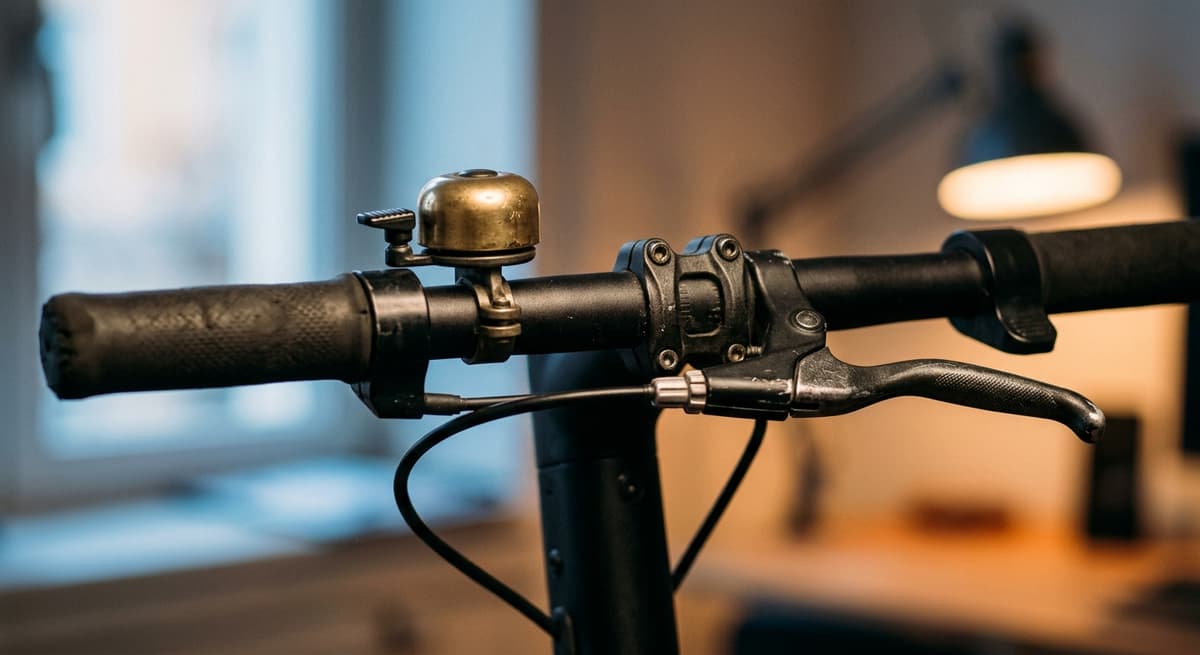
Pittsburgh: the only Pennsylvania city to have run a lawful shared e-scooter program, through the state-authorized Move PGH pilot from July 2021 to July 2023. That authorization has expired, and House Bill 2218, described above, is a pending attempt to bring a Pittsburgh program back through new legislation rather than a currently operating program.
If you were injured in a collision involving an e-scooter in Pennsylvania, whether as the rider or as someone struck by one, the general fault and insurance framework in Pennsylvania car accident laws covers many of the same questions that apply after any vehicle collision, and an attorney can explain how Pennsylvania's uncertain e-scooter legal status affects your specific situation.
Frequently Asked Questions
Are e-scooters legal in Pennsylvania?
Not on public roads or sidewalks, as a practical matter. Pennsylvania's Vehicle Code has no standalone e-scooter category, but a stand-up e-scooter is still a 'motor vehicle' under Section 102, it is not on Section 1302's list of vehicles exempt from registration, and it cannot in practice be titled or registered, so Section 1301(a)'s bar on moving an unregistered vehicle upon a highway applies. PennDOT's reported position is that e-scooters are legal only on private property.
Can I ride an e-scooter on the sidewalk in Pennsylvania?
No. Sidewalk riding falls under the same public-road restriction described above; e-scooters are reported to be limited to private property statewide.
Is there a minimum age to ride an e-scooter in Pennsylvania?
There is no current state-level age rule specific to e-scooters, because the law does not recognize them as their own vehicle category. Pending Senate Bill 1008 (Abby's Law) would set a minimum age of 16 if it becomes law.
Is Pittsburgh's e-scooter program still running?
No. Pittsburgh's state-authorized 'Move PGH' shared e-scooter pilot ran from July 2021 to July 2023 and has since expired. House Bill 2218 is a pending attempt to reinstate a program, not a currently operating one.
What is Abby's Law?
Senate Bill 1008, named for a 12-year-old killed in a June 2025 e-scooter crash, would create Pennsylvania's first dedicated low-speed e-scooter category with a minimum age of 16 and a helmet rule for 16- and 17-year-olds. It has not passed and is not current law.
Are e-scooters legal in Philadelphia?
Privately owned stand-up e-scooters are reported to be illegal on Philadelphia's public roads and sidewalks, following the same statewide titling and registration mismatch that applies across Pennsylvania.
What's the penalty for riding an e-scooter in Pennsylvania?
There is no e-scooter-specific penalty schedule. Under Section 1301(d), moving an unregistered vehicle on a highway is a summary offense with a fine of $75 or double the registration fee, whichever is greater ($25 if the vehicle was registered in Pennsylvania within the prior 60 days). Under Section 1101(c), failing to obtain a required certificate of title is a separate summary offense.
Injured in Pennsylvania? Get a free case review from a personal-injury attorney
If someone else's negligence caused your injury, you may be owed compensation for medical bills, lost wages, and pain and suffering. Get a free, no-obligation review from a Pennsylvania personal-injury attorney. Most work on contingency, so there is no upfront cost.
Updates
Corrected how Pennsylvania law classifies a stand-up e-scooter (it is a motor vehicle that cannot be registered, not a motorcycle-class "motor-driven cycle," which requires a seat or saddle) and added the actual penalty exposure under 75 Pa.C.S. sections 1301(d) and 1101(c).
Independently fact-checked against the cited primary sources
The Law Behind This Article
This article rests on the statutory provisions below, held in our own legal record and retrieved from the official source. Tap a section to read the operative text.
Pennsylvania Consolidated Statutes Title 75 (Vehicles)
§ 1301Registration and certificate of title requiredIn force
(a) Driving unregistered vehicle prohibited.--No person shall drive or move and no owner or motor carrier shall knowingly permit to be driven or moved upon any highway any vehicle which is not registered in this Commonwealth unless the vehicle is exempt from registration. (b) Proof of residency.--A person charged under this section has the burden of proving that he is a nonresident whenever he asserts a defense based on section 1303 (relating to vehicles of nonresidents exempt from registration). If he produces at the office of the issuing authority satisfactory proof that he is a nonresident and is in compliance with section 1303 within five days after being charged with a violation of this section, the issuing authority shall dismiss the charge. (c) Certificate of title prerequisite to registration.--No vehicle shall be registered unless a certificate of title has been applied for or issued if one is required by Chapter 11 (relating to certificate of title and security interests).
Official text (excerpt) · last checked 2026-09-07 · Read the full text in our law library · Verify at palegis.us
Search our full record of US law — 2.1 million sections, every state + federal →
Sources and References
- Pennsylvania Consolidated Statutes, Title 75 section 102, vehicle definitions (no standalone motorized-scooter category)(legis.state.pa.us).gov
- Senate Bill 1008 (PN 1183), 'Abby's Law', bill text, pending as of this writing(palegis.us).gov
- Pennsylvania General Assembly, official bill-tracking site, for current SB 1008 / HB 2218 status(palegis.us).gov
- Pennsylvania Department of Transportation (PennDOT), vehicle titling and registration authority(penndot.pa.gov).gov
- Pennsylvania Consolidated Statutes, Title 75 section 1301, registration of vehicles required; subsection (d) summary-offense fine(legis.state.pa.us)
- Pennsylvania Consolidated Statutes, Title 75 section 1302, vehicles exempt from registration (EPAMDs and human or animal-powered vehicles listed; e-scooters absent)(legis.state.pa.us)
- Pennsylvania Consolidated Statutes, Title 75 section 1101, certificate of title required; subsection (c) summary offense(legis.state.pa.us)