
Montana
Montana E-Scooter Laws: Sidewalk, Helmet & Age Rules (2026)
Independently fact-checked against primary sources (last audited July 23, 2026). · Law checked current as of August 8, 2026. · 5 primary sources cited on this page. How we verify our legal content
This article is general information about Montana e-scooter laws and is not legal advice. If you were cited under a Billings or other local ordinance, check the current city code directly or consult a Montana attorney. Information last verified on 7 September 2026.
Are e-scooters legal in Montana?
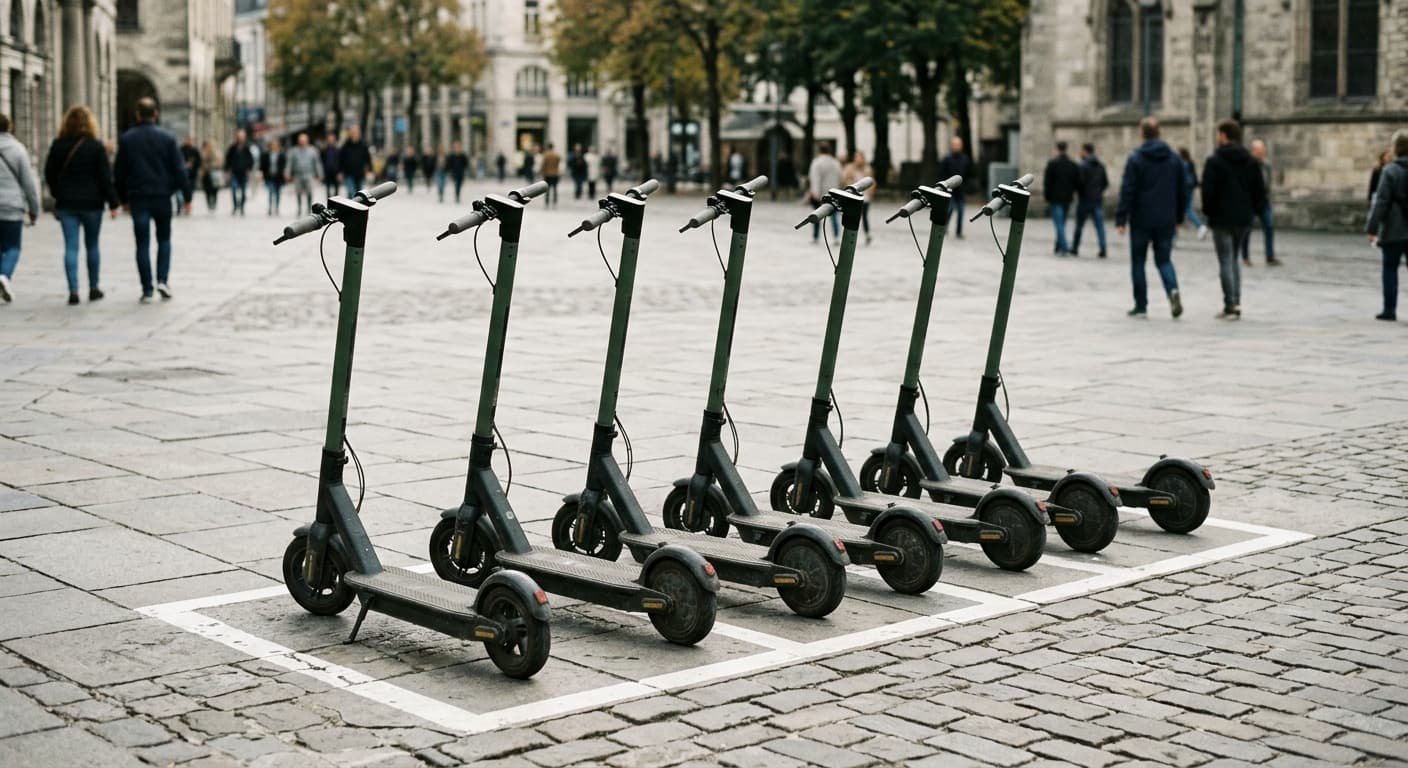
Yes. Montana regulates a stand-up electric scooter under the term "motorized scooter," defined at MCA § 61-1-101(46) as "a vehicle without a seat that may be propelled solely or in part by muscular propulsion or by an independent power source such as an engine or motor," where that power source may not be capable of propelling the device faster than 30 mph on a level surface. The definition specifically excludes an electrically assisted bicycle, so Montana treats the two devices as separate categories.
A notable feature of Montana law is that "motorized scooter" is explicitly carved out of the broader "motor vehicle" definition. MCA § 61-1-101(41)(b) states that "motor vehicle" does not include "a bicycle, a motorized scooter, or a moped..., an electric personal assistive mobility device, a motorized nonstandard vehicle, or a motorized wheelchair." That carve-out matters for the licensing and registration statutes that key off the term "motor vehicle." It does not carry over to the DUI statute, which uses the broader term "vehicle," as explained below.
What counts as an e-scooter in Montana
Under § 61-1-101(46), a motorized scooter is a seatless vehicle propelled by muscular power, an independent power source, or both, capped at a maximum device speed of 30 mph on a level surface. An electrically assisted bicycle is a separate, excluded category under Montana law and is not covered by this page.
Where you can ride
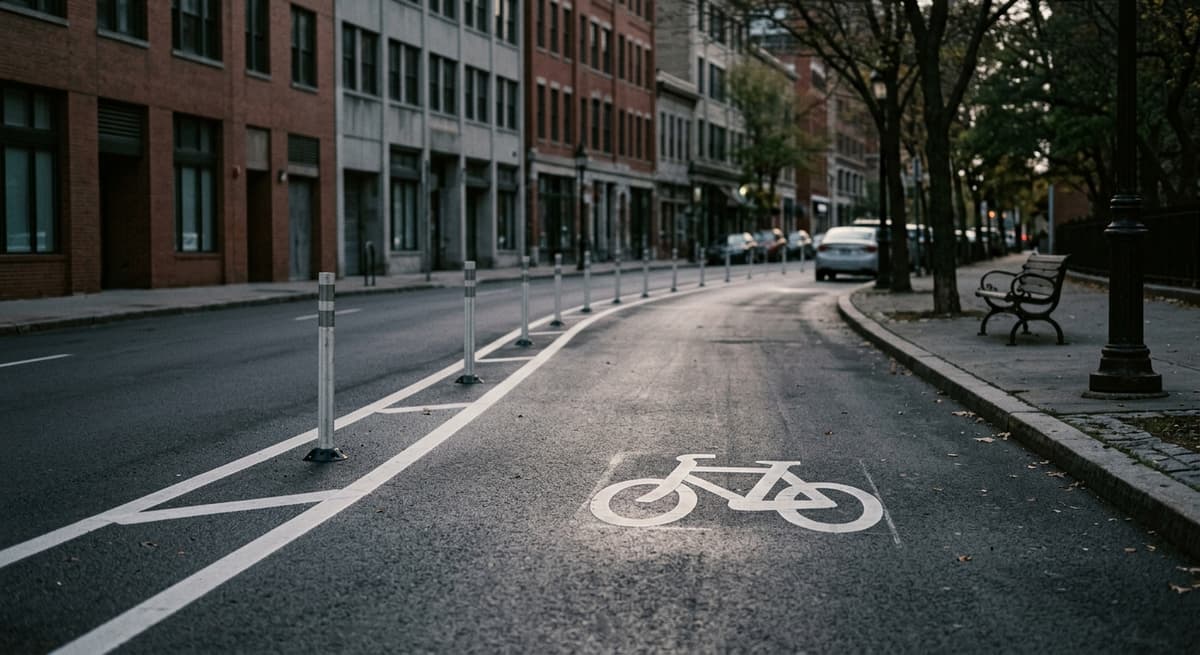
Montana's 2025 law, generally referred to as HB 588 and codified into the bicycle-rules part of the traffic code, sets a clear split between roads and sidewalks. MCA § 61-8-608 states that a motorized scooter "may be operated under human propulsion or an independent power source on a highway, in a designated bicycle lane on a highway, or on the shoulder of a highway." On a sidewalk or bicycle path, the rule is narrower: a motorized scooter "may be operated on and along a sidewalk or a bicycle path only under human propulsion and may not be operated on or along a sidewalk or bicycle path if the moped or motorized scooter is under power from an independent power source." In plain terms, you can ride the motor on the road or in a bike lane, but on a sidewalk or bike path the motor has to be off. Riders on a sidewalk or crosswalk must yield the right-of-way to pedestrians and give an audible signal before passing, and may not ride anywhere posted off-limits by an official traffic-control device.
Rider rules
- Age: No statewide minimum age to operate a motorized scooter was found in the sections reviewed for this research. That is an absence of a located requirement, not a statute that affirmatively says there is no minimum age.
- Helmet: Riders and passengers under 18 must wear protective headgear, under MCA § 61-9-417, which covers "an operator and passenger under 18 years of age of a motorcycle, moped, motorized scooter, or quadricycle" operated on the streets or highways of the state. There is no statewide helmet mandate for riders 18 or older.
- Equipment: MCA § 61-8-607(1) requires that a motorized scooter, "when in use at dawn, dusk, or nighttime," carry a white front lamp visible 500 feet, a red rear lamp or reflector visible 500 feet, and side reflective material visible 500 feet from the left and right. Those lighting requirements are tied to the time of day, not to where you are riding. Separately, § 61-8-607(2) requires at all times a brake able to stop the scooter within 25 feet from a speed of 10 mph on dry, level, clean pavement.
- License, registration, insurance: Because a motorized scooter is excluded from Montana's "motor vehicle" definition, the general vehicle licensing and registration requirements that key off that term do not apply to it under the sections reviewed for this research.
Penalties
Montana handles motorized-scooter violations through a general penalty provision rather than a device-specific fine schedule. MCA § 61-8-601(1), the opening section of the same part of the traffic code that contains the sidewalk and bike-lane rule, provides that it is "a misdemeanor for any person to do any act forbidden or fail to perform any act required in this part." Riding under motor power on a sidewalk, failing to yield to a pedestrian, or riding at night without the required lamps is therefore charged as a misdemeanor.
The helmet rule carries its own penalty route. MCA § 61-9-417(3) provides that "a person convicted of violating this section is subject to the penalty provided in 61-9-518," and § 61-9-518 sets that fine at $5. Check the citation you actually received for the charge and the amount, since a court may add surcharges on top of the base fine.
Enforcement in practice
No statewide enforcement data specific to motorized scooters was located for this research. Enforcement patterns do not change the underlying legal status described above.
A note on DUI and motorized scooters
Montana's DUI offense at MCA § 61-8-1002 is keyed to the word "vehicle," not "motor vehicle." Subsection (1)(a) reaches a person under the influence who drives "a vehicle or a commercial motor vehicle," and subsection (1)(e) again uses "a vehicle." The DUI part supplies its own definition at § 61-8-1001(15): "vehicle" has the meaning provided in § 61-1-101, "except that the term does not include a bicycle." That carve-out names bicycles only. It does not exclude motorized scooters.
The general definition the DUI part points to is broad. Section 61-1-101(86)(a) defines "vehicle" as "a device in, on, or by which any person or property may be transported or drawn on a public highway," excluding only animal-drawn devices, devices used exclusively on stationary rails or tracks, and mobility devices for people with disabilities. Montana's own definition of a motorized scooter, at § 61-1-101(46)(a), opens with the words "a vehicle without a seat."
Read together, the plain text of the DUI statute does appear to reach a motorized-scooter rider. The narrower "motor vehicle" term that excludes scooters is the term the licensing and registration statutes use, not the term the DUI offense uses. This is a statutory reading rather than a court ruling or an attorney general opinion, but a rider should assume that impaired riding on a motorized scooter can be charged as DUI, and that reckless-conduct provisions and local ordinances can apply on top of it.
Billings e-scooter rules
Billings maintains traffic and vehicle-operation provisions in its municipal code, but the specific scooter-and-sidewalk ordinance text could not be independently retrieved from the city's code host this session. Riders in Billings should check the current municipal code directly, particularly for any local sidewalk restriction that may sit alongside the statewide motor-off rule described above.
See also RecordingLaw's Montana DUI Laws and Montana Car Accident Laws pages, and the E-Scooter Laws by State hub to compare Montana's rules to other states.
Frequently Asked Questions
Is there a minimum age to ride an e-scooter in Montana?
No statewide minimum age to operate a motorized scooter was found in the Montana statutes reviewed for this research.
Do I need a helmet to ride an e-scooter in Montana?
Only if you are under 18. Montana law requires a helmet for operators and passengers under 18 on a motorcycle, moped, motorized scooter, or quadricycle. There is no statewide helmet mandate for adults, and a violation carries a $5 fine under MCA 61-9-518.
Can I ride an e-scooter on the sidewalk in Montana?
Only with the motor off. Montana law allows a motorized scooter on a sidewalk or bike path solely under human propulsion; the motor may be used on a highway, a designated bike lane, or a highway shoulder.
Does Montana's DUI law apply to e-scooters?
On a plain reading of the statute, yes. Montana's DUI offense in MCA 61-8-1002 is keyed to the word "vehicle," and the DUI definitions section excludes only a bicycle from that term, while Montana's own definition of "motorized scooter" calls it "a vehicle without a seat." The narrower "motor vehicle" term that does exclude scooters is used by the licensing and registration statutes, not by the DUI offense. This is a statutory reading rather than a court ruling, so do not treat a scooter as a DUI loophole.
Do I need to register or insure my e-scooter in Montana?
No registration or insurance requirement for a motorized scooter was found in the Montana statutes reviewed for this research, since the device is excluded from the "motor vehicle" definition those requirements key off.
What equipment does my e-scooter need in Montana?
When in use at dawn, dusk, or nighttime: a white front lamp, a rear red lamp or reflector, and side reflective material, each visible 500 feet. At all times: a brake able to stop the scooter within 25 feet from 10 mph on dry, level, clean pavement.
What is the penalty for breaking Montana's e-scooter rules?
MCA 61-8-601(1) makes it a misdemeanor to do any act forbidden or fail to perform any act required in the part of the traffic code that contains the scooter rules. A helmet violation is handled separately and carries a $5 fine under MCA 61-9-518.
Are Billings' e-scooter rules different from the rest of Montana?
Billings may have its own local ordinance, but the specific text could not be confirmed this session. Check the current Billings municipal code directly.
Injured in Montana? Get a free case review from a personal-injury attorney
If someone else's negligence caused your injury, you may be owed compensation for medical bills, lost wages, and pain and suffering. Get a free, no-obligation review from a Montana personal-injury attorney. Most work on contingency, so there is no upfront cost.
Updates
Corrected the DUI section: Montana's DUI offense is keyed to "vehicle," not "motor vehicle," so it does reach motorized-scooter riders; also added the dawn, dusk and nighttime condition on the lighting requirements and the misdemeanor and $5 helmet penalties.
Governing law re-checked for recent changes
Independently fact-checked against the cited primary sources
The Law Behind This Article
This article rests on the statutory provisions below, held in our own legal record and retrieved from the official source. Tap a section to read the operative text.
Montana Code Annotated, Title 61
§ 61-8-608Bicycles, Mopeds, Or Motorized Scooters On Sidewalks And Bike LanesIn force
61-8-608. Bicycles, mopeds, or motorized scooters on sidewalks and bike lanes. (1) Subject to the provisions of subsection (3)(b), a person operating a bicycle, moped, or motorized scooter on and along a sidewalk or across a roadway on and along a crosswalk shall yield the right-of-way to any pedestrian and shall give an audible signal before overtaking and passing any pedestrian. (2) A person may not ride a bicycle, moped, or motorized scooter on and along a sidewalk or across a roadway on and along a crosswalk where the use of a bicycle, moped, or motorized scooter is prohibited by official traffic control devices. (3) (a) Except as provided in subsections (1) and (2), a person operating a vehicle by human power on and along a sidewalk or across a roadway on and along a crosswalk has all the rights and duties applicable to a pedestrian under the same circumstances. (b) A moped or motorized scooter may be operated on and along a sidewalk or a bicycle path only under human propulsion and may not be operated on or along a sidewalk or bicycle path if the moped or motorized scooter is under power from an independent power source.
Official text (excerpt) · last checked 2026-09-07 · Read the full text in our law library · Verify at mca.legmt.gov
Cited in 1 court opinions in our collectionLatest citing opinion in our collection: 2012
Opinions citing this section in our collection:
- City of Billings v. Edward (Montana Supreme Court 2012, 366 Mont. 107)“…ycle on a sidewalk within a business district, pursuant to § 61-8-608, MCA (2009). Billings City Code (Mont.) §§ 2…”
Identified automatically from the court opinions citing this section — not a ranking of which case controls.
§ 61-8-607Lamps And Other Equipment On Bicycles,mopeds, Or Motorized ScootersIn force
61-8-607. Lamps and other equipment on bicycles,mopeds, or motorized scooters. (1) A bicycle, moped, or motorized scooter when in use at dawn, dusk, or nighttime must be equipped with: (a) a lamp on the front emitting a white light visible from a distance of at least 500 feet to the front. In lieu of a lamp affixed to the bicycle, moped, or motorized scooter, a rider may use a lamp with equal intensity and visibility affixed to the rider's helmet and facing forward. (b) facing the rear, either a lamp emitting a red light visible from a distance of at least 500 feet to the rear or a red reflector visible from a distance of at least 500 feet to the rear when illuminated by low-beam motor vehicle headlamps. In lieu of a lamp affixed to the bicycle, moped, or motorized scooter, a rider may use a red lamp with equal intensity and visibility affixed to the rider and facing the rear. (c) reflective material large and reflective enough to be visible from the left and right sides from a distance of at least 500 feet when illuminated by low-beam motor vehicle headlamps.
Official text (excerpt) · last checked 2026-07-29 · Read the full text in our law library · Verify at mca.legmt.gov
§ 61-9-417Headgear Required For Minor Motorcycle RidersIn forcecited in 2 of our articles
61-9-417. Headgear required for minor motorcycle riders. (1) (a) Except as provided in subsection (1)(b), an operator and passenger under 18 years of age of a motorcycle, moped, motorized scooter, or quadricycle operated on the streets or highways of this state shall wear protective headgear on the head. The headgear must meet standards established by the department of justice. (b) This section does not apply to an operator and passenger of an autocycle that is completely enclosed with a windshield, nonremovable doors, and a roof. (2) A person may not operate a motorcycle, moped, motorized scooter, or quadricycle upon a highway in the state unless all passengers under 18 years of age are in compliance with subsection (1). (3) A person convicted of violating this section is subject to the penalty provided in 61-9-518.
Official text (excerpt) · last checked 2026-07-29 · Read the full text in our law library · Verify at mca.legmt.gov
Also relied on in: Motorcycle Accident Laws in Montana (2026): Helmets
§ 61-1-101DefinitionsIn force
61-1-101. Definitions. As used in this title, unless the context indicates otherwise, the following definitions apply: (1) (a) "Authorized agent" means a person who has executed a written agreement with the department and is specifically authorized by the department to electronically access and update the department's motor vehicle titling, registration, or driver records, using an approved automated interface, for specific functions or purposes on behalf of a third party. (b) For purposes of this subsection (1), "person" means an individual, corporation, partnership, limited partnership, limited liability company, association, joint venture, state agency, local government unit, another state government, the United States, a political subdivision of this or another state, or any other legal or commercial entity. (2) "Authorized agent agreement" means the written agreement executed between an authorized agent and the department that sets the technical and operational program standards, compliance criteria, payment options, and service expectations by which the authorized agent is required to operate in performing specific motor vehicle or driver-related record functions.
Official text (excerpt) · last checked 2026-07-29 · Read the full text in our law library · Verify at mca.legmt.gov
Cited in 2 court opinions in our collectionLatest citing opinion in our collection: 2011
Opinions citing this section in our collection:
- In Re Holzapfel (Montana Supreme Court 2011, 362 Mont. 251)“…1 The cited definitions in subsections (46) and (50) of § 61-1-101, MCA, were renumbered in the 2011 publicatio…”
- State v. Otten (Montana Supreme Court 2011, 360 Mont. 144)“…(a)(ii), which he contends is the only correct definition. Section 61-1-101, MCA, defines numerous terms used in Title…”
Identified automatically from the court opinions citing this section — not a ranking of which case controls.
§ 61-8-1001DefinitionsIn forcecited in 2 of our articles
61-8-1001. Definitions. As used in this part, unless the context requires otherwise and unless a different meaning plainly is required, the following definitions apply: (1) "Aggravated driving under the influence" means a person is in violation of 61-8-1002(1)(a), (1)(b), (1)(c), (1)(d), or (1)(f) and: (a) the person's alcohol concentration, as shown by analysis of the person's blood, breath, oral fluid, or other bodily substance, is 0.16 or more; (b) the person is under the order of a court or the department to equip any motor vehicle the person operates with an approved ignition interlock device; (c) the person's driver's license or privilege to drive is suspended, canceled, or revoked as a result of a prior violation of driving under the influence, including a violation of 61-8-1002(1)(a), (1)(b), (1)(c), (1)(d), or (1)(f), an offense that meets the definition of aggravated driving under the influence, or a similar offense under previous laws of this state or the laws of another state; or (d) the person refuses to give a breath sample as required in 61-8-1016 and the person's driver's license or privilege to drive was suspended, canceled, or revoked under the provisions of…
Official text (excerpt) · last checked 2026-07-29 · Read the full text in our law library · Verify at mca.legmt.gov
Cited in 1 court opinions in our collectionLatest citing opinion in our collection: 2026
Opinions citing this section in our collection:
- State v. C. Horn (Montana Supreme Court 2026, 2026 MT 79)“…61-8-401, et al., MCA, were repealed and renumbered at § 61-8-1001, MCA. See 2021 Mont. Laws ch. 498, § 44. The…”
Identified automatically from the court opinions citing this section — not a ranking of which case controls.
Also relied on in: E-Scooter Laws by State: Sidewalk, Helmet & Age Rules (2026)
Search our full record of US law — 2.1 million sections, every state + federal →
Sources and References
- Montana Code Annotated § 61-1-101 (definitions, "motorized scooter" and "motor vehicle")(mca.legmt.gov).gov
- Montana Code Annotated § 61-8-608 (bicycles, mopeds, or motorized scooters on sidewalks and bike lanes)(mca.legmt.gov).gov
- Montana Code Annotated § 61-8-607 (lamps and other equipment)(mca.legmt.gov).gov
- Montana Code Annotated § 61-9-417 (headgear required for minor motorcycle riders)(mca.legmt.gov).gov
- Montana Code Annotated § 61-8-1001 (DUI chapter definitions)(mca.legmt.gov).gov
- RecordingLaw.com, Montana DUI Laws(recordinglaw.com)
- RecordingLaw.com, Montana Car Accident Laws(recordinglaw.com)
- Montana Code Annotated § 61-8-1002 (driving under the influence, offense keyed to "vehicle")(mca.legmt.gov)
- Montana Code Annotated § 61-8-601 (effect of regulations, misdemeanor penalty)(mca.legmt.gov)
- Montana Code Annotated § 61-9-518 (violation of motorcycle or quadricycle requirements, penalty)(mca.legmt.gov)